

Picture a late afternoon in a backyard where the fence catches the last of the sun. Instead of flat brown boards, the light rolls across ribbed steel and throws tiny shadows into every groove. Suddenly the edge of your yard feels like part of the design, not an afterthought.
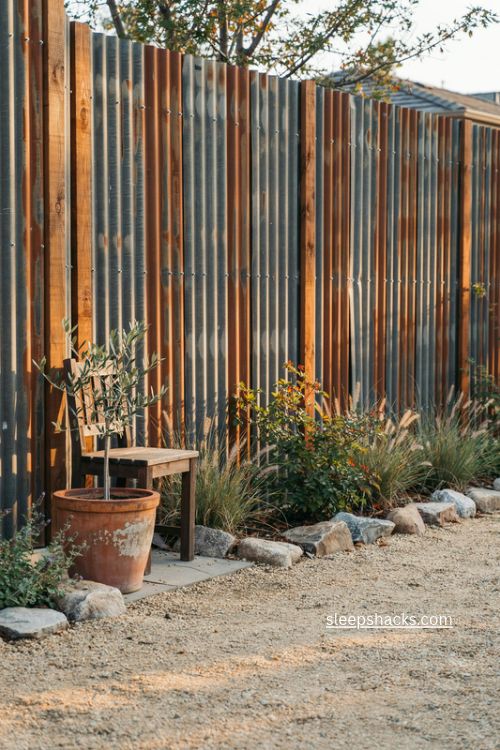
That’s the quiet power of a sheet metal fence. It’s tough, it gives you real privacy, and it asks very little of you once it’s up. Below are 15 ideas, from rusty corten to sleek black panels and wood-framed kits, so you can find the look that fits your yard, your budget, and the mood you want when you step outside.
1. Horizontal Corrugated Panels in a Wood Frame
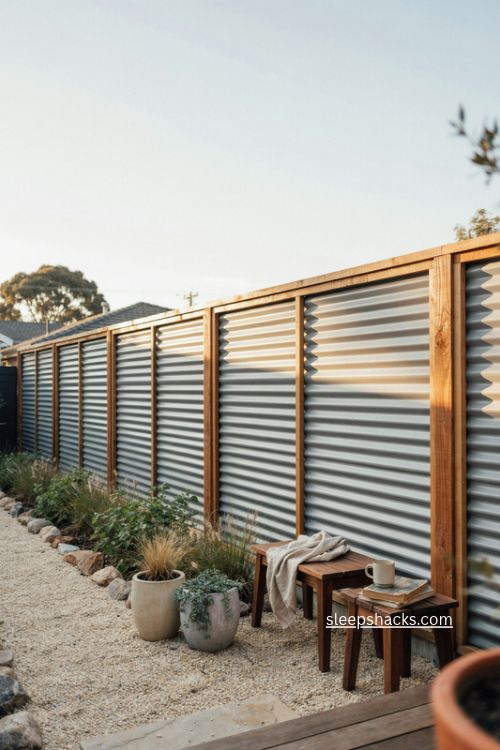
Run the ribbed panels sideways and the whole fence looks calm and modern, like a long ripple of water along the property line. A cedar or treated wood frame around each sheet gives it clean edges and a bit of warmth against the cool steel.
Horizontal lines also make a narrow yard feel wider, which helps if your space is tight. Keep the frame boards the same width all the way around so the panels read as a deliberate grid. Pick a stain that echoes your deck or siding, and the whole backyard starts to feel connected.
2. Vertical Ribs for a Classic Farmhouse Feel
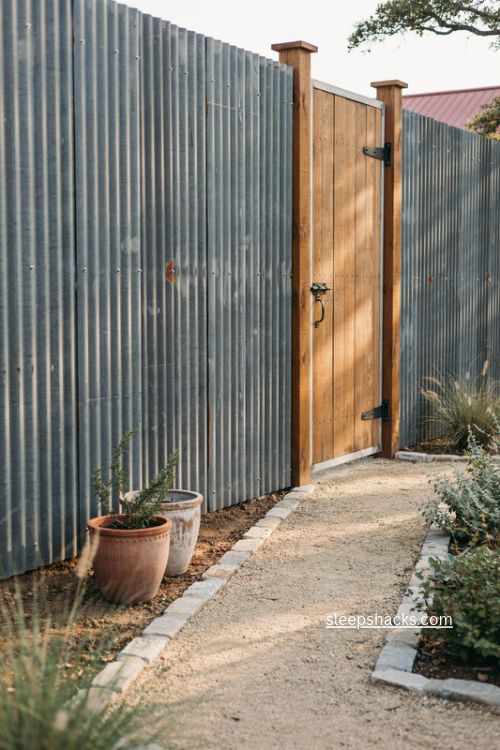
Turn the same panels upright and the mood shifts toward barn and farmhouse. The ribs stretch toward the sky, which makes even a standard six-foot fence feel a little taller and more traditional.
Vertical corrugation also sheds rain nicely, since water simply runs down the grooves instead of pooling. This look pairs well with white trim, a simple wooden gate, and a gravel path along the base. If you’re matching an older home, it’s usually the safer choice than the horizontal version.
3. Rusty Corten Steel for a Warm Patina
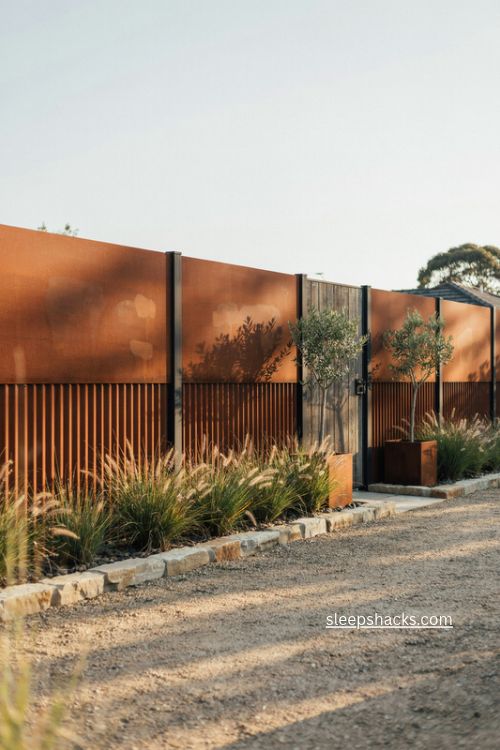
Some people spend years trying to avoid rust, and then there’s corten, which is built to develop it. The panels arrive plain and slowly weather into deep orange and brown, so your fence keeps changing with the seasons.
One real-world example pairs flat 11 gauge corten sheets on top with a lower band of 7/8″ corrugated corten, which gives you two textures in one wall. Expect the color to come in unevenly at first, and don’t rush it. Soft green grasses planted in front look especially good against that burnt tone.
4. Black Corrugated Panels for a Sleek Edge
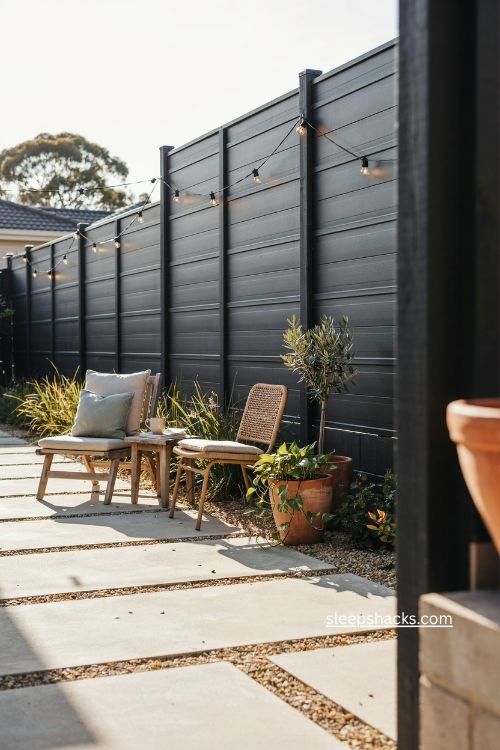
Black panels turn a fence into a backdrop. Plants, patio furniture, and string lights all stand out more because the metal quietly recedes behind them.
It’s a bold choice for a contemporary or industrial yard, and it feels crisp even on a plain suburban lot. Go with a coated finish so the color holds up outdoors, and consider black posts to match. If your yard gets hot afternoon sun, test a sample first, since dark panels hold more heat than lighter ones.
5. Metal and Cedar Slat Combos
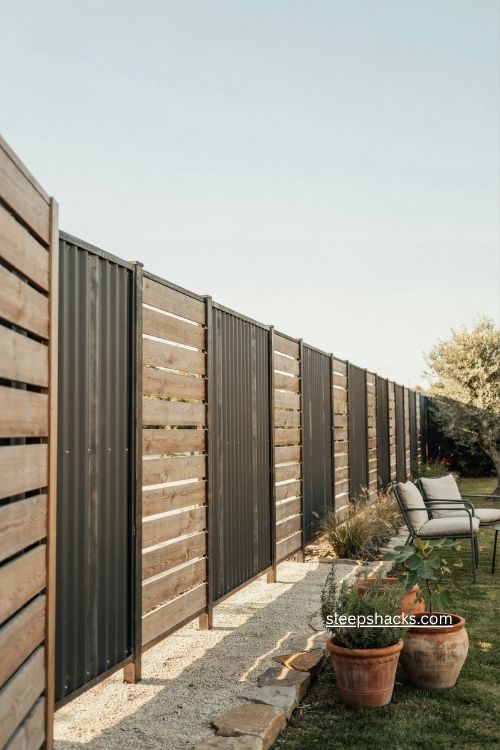
Alternating sections of cedar slats and steel panels gives you a fence with rhythm. The wood softens the industrial look, while the metal keeps things strong and low maintenance.
You might run three slatted sections, then one solid steel panel, and repeat down the line. That pattern keeps a long fence from feeling like a wall. Seal the cedar every year or two, and let the metal handle the heavy lifting where you need the most privacy, like near a patio or hot tub.
6. Stone Columns Between Steel Panels
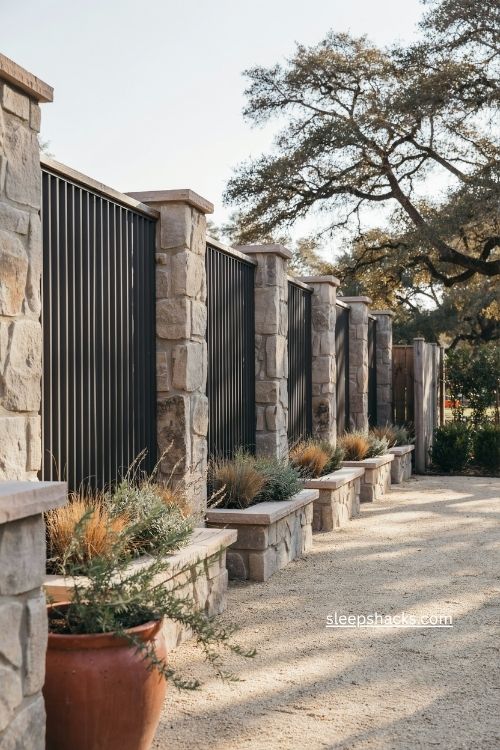
Chunky stone columns every eight feet or so make a metal fence look like it belongs to a much bigger property. The rough, earthy texture of the stone balances the smooth, ribbed steel, and the contrast feels deliberate rather than random.
This one costs more up front, so many people save it for the front of the yard or around the entry. You can set the corrugated panels between the columns in a metal or wood frame. Match the stone to your house foundation or planters for a result that looks custom without feeling fussy.
7. Decorative Inserts in Open Fencing
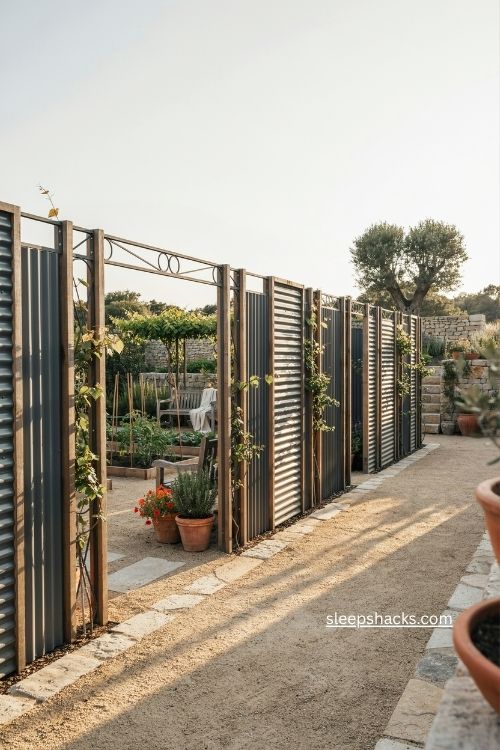
You don’t have to commit to a solid wall of steel. Try setting small corrugated panels between open sections of wood or wrought iron, so the fence alternates between solid and see-through.
That pattern gives you visual interest and still lets you glimpse the garden beyond. It’s a nice way to define a space, like a vegetable garden or a seating nook, without closing it off completely. Space the inserts evenly, and keep the open sections simple, so the metal panels are the star.
8. Narrow Gaps That Let Light Slip Through
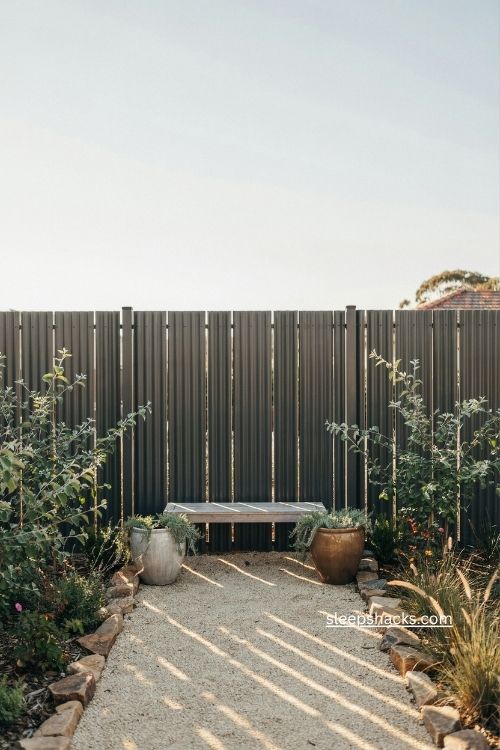
Privacy doesn’t have to mean a dark, boxed-in yard. Leave a narrow vertical gap between panels, and soft beams of daylight slip through as the sun moves across the sky.
You still block most views, but the fence feels lighter and more playful. Plan the gap width carefully, since a slim opening keeps your privacy while a wider one will show more of what’s behind. It also helps plants on both sides of the fence get a little more light than a fully solid wall would.
9. A Backlit Fence That Glows at Night
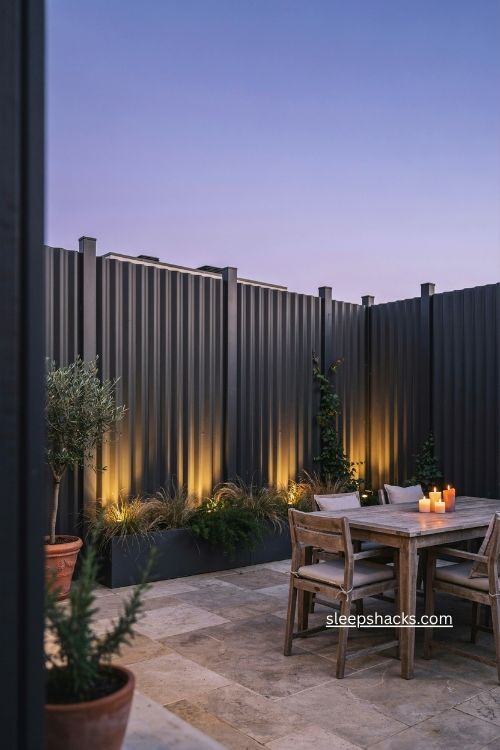
Put a strip of warm LED lighting behind those gapped panels, and your fence becomes a quiet piece of evening art. The light spills through the slim openings and washes the ribs in a soft glow.
It’s a dramatic effect that costs less than you’d expect, especially with low-voltage outdoor lights. Tuck the fixtures out of sight so you only see the light, not the cord. A glowing fence also doubles as ambient light for dinner outside, so you can skip the harsh floodlight.
10. Climbing Plants Against Steel
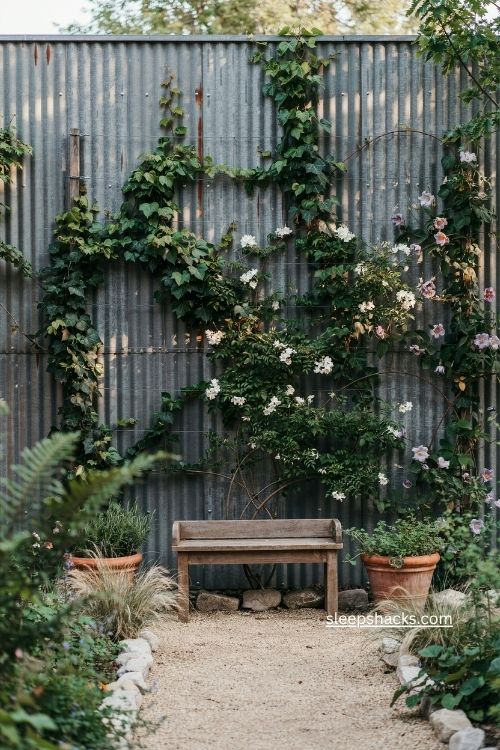
Ivy, clematis, and jasmine all love a sturdy backdrop, and a corrugated wall gives them plenty of contrast. The green and flowers soften the steel, while the metal gives the plants structure to lean against.
Jasmine adds fragrance on warm evenings, and the greenery helps cool the area around the fence. Add a few wires or a light trellis in front of the panels so the vines have something to grab, since smooth metal gives them very little to hold. It’s a simple way to make a hard material feel soft.
11. Two-Tone Panels With a Trim Strip
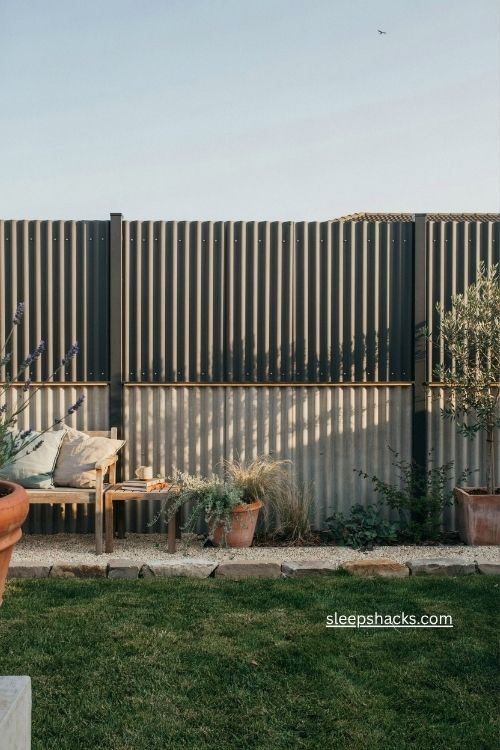
Use one color on the top half and another on the bottom, with a trim strip in between, and the fence suddenly has architecture. It looks taller, more detailed, and far more custom than a single color.
Think charcoal on top and a warm gray below, or a deep green over black. Choose colors that already exist somewhere in your yard, like your door or outdoor cushions, so the fence ties into the rest of the space. A contrasting trim strip, even a thin one, gives the whole thing a finished look.
12. Floating Panels With a Gap Below
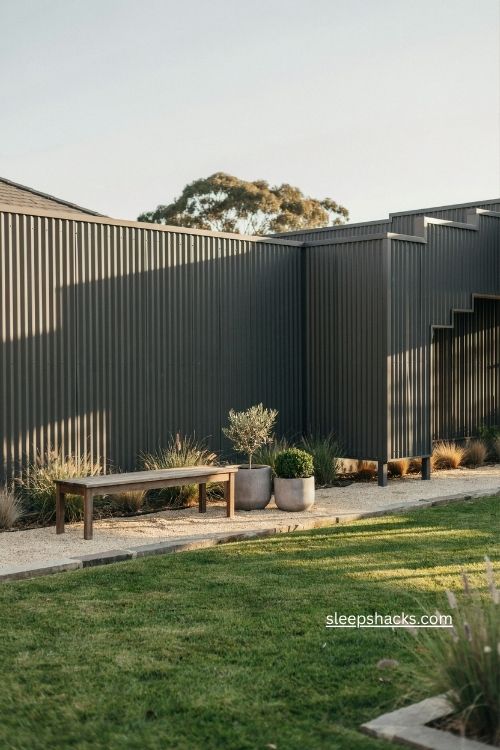
Mount the panels a few inches above the ground, and the fence seems to hover. It’s a lighter, more modern look that photographs beautifully against a lawn or gravel bed.
There’s a practical payoff too. The gap lets water flow through, keeps the metal away from damp soil, and makes mowing and trimming easier along the base. It’s also a smart fix for sloped yards, since you can step the panels so the bottom edge stays level while the ground rises and falls.
13. A Statement Metal Gate
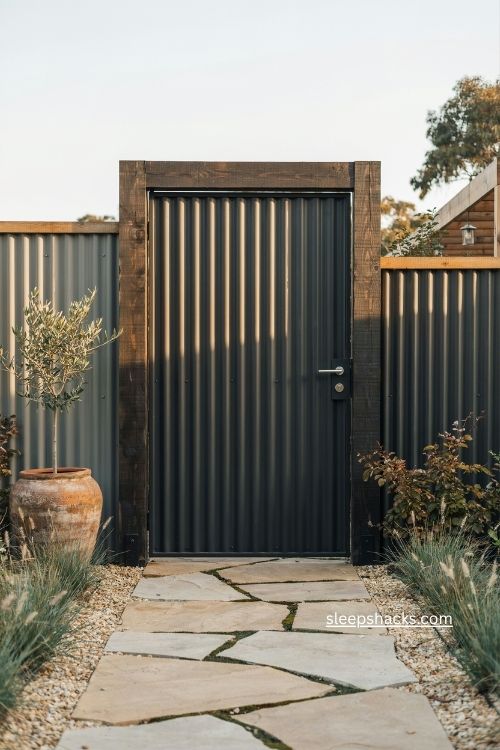
A corrugated gate gives the fence a focal point. It can match the panels for a quiet look, or you can go black for a sharper entry that people notice from the street.
Gates can be built to the height and width of your fence, from standard sizes to custom ones. Heavy panels need strong hinges and a solid post, so don’t skimp there. Add a simple handle and a wooden frame if you want it to feel a bit warmer, and you’ll have an entry that looks as good as it works.
14. Laser-Cut Corten Screens
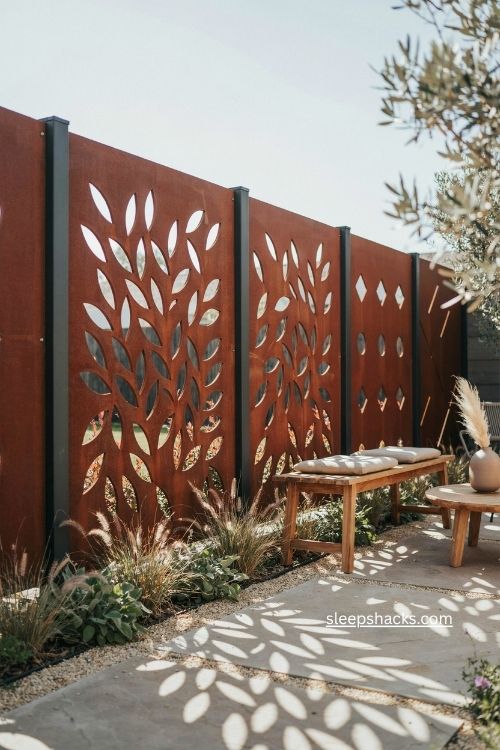
Laser-cut panels bring pattern into the picture. Leaves, geometric shapes, or simple lines are cut right into the metal, so light and shadow do the decorating.
They work especially well as a short accent section, like beside a patio or near a front door, rather than as a full fence. Because they rust to a rich brown, they glow when the sun hits them from behind. Keep the nearby planting simple, and let the cutout design carry the attention.
15. Budget-Friendly Galvanized Panels
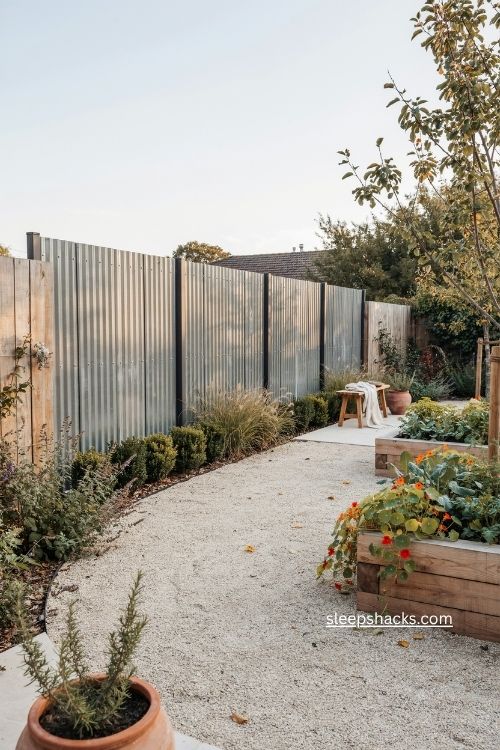
If cost is the concern, galvanized corrugated panels offer privacy without a huge price tag. They’re strong, recyclable, and need far less upkeep than a wood fence that wants regular staining or painting.
Panels are priced by gauge and finish, so a thicker sheet costs more but lasts longer. Many suppliers offer complete kits with metal posts and wood frames that a handy homeowner can put together over a weekend. Coated or galvanized steel resists rust, which means your fence should still look sharp years from now.
Final Thoughts
Start small. Grab a panel sample and hold it against your house, your deck, or whatever sits closest to the fence line, and notice whether the color and ribs feel right in your own light.
Then measure your fence line and sketch two options on paper, maybe a framed horizontal run and a vertical one with a gate. Seeing them side by side makes the decision much easier. Once you know your favorite, a fence calculator or a quick call to a supplier can turn that sketch into a real price and a real plan.
Frequently Asked Questions
Q: Is a sheet metal fence cheaper than a wood fence?
It can cost more up front depending on gauge and finish, but it needs far less staining and repair, so many people find it cheaper over time. Thicker, higher-quality panels cost more but last longer.
Q: Will a sheet metal fence rust?
Galvanized and coated panels are made to resist rust, while corten steel is designed to rust on the surface for that warm, weathered look. Choose the finish that matches the look you want.
Q: Can I install a sheet metal fence myself?
Yes, many homeowners do. Metal posts, wood frames, and complete DIY kits make it a manageable weekend project, or you can hire a contractor for gates and long runs.