

Modern Thanksgiving table settings are honestly one of the trickiest things to pull off. You want the table to feel festive without tipping into the same orange-and-brown look you’ve done every year since college.
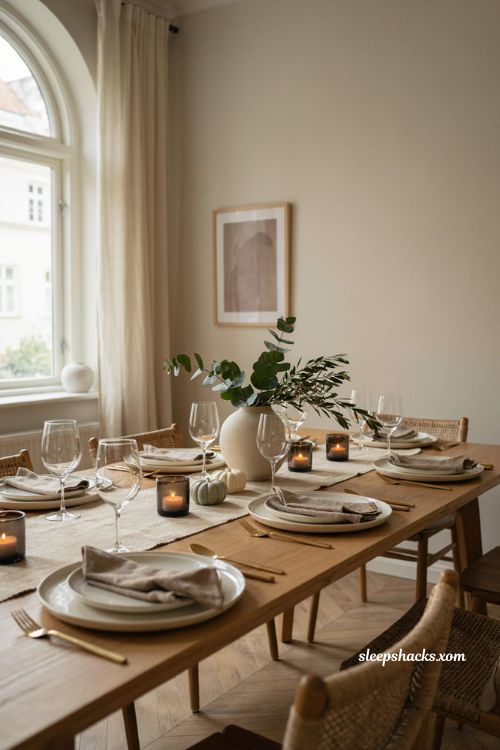
Too plain and it reads like you forgot the holiday was happening; too themed and it starts competing with the turkey for attention. The good news is that a modern take doesn’t require starting from scratch or spending a fortune on new dinnerware. A few intentional swaps — in color, texture, or how you layer the pieces — can take your table from predictable to genuinely elevated. Here are fifteen ideas to help you find a fresh direction this year.
1. Moody Copper and Grey Palette
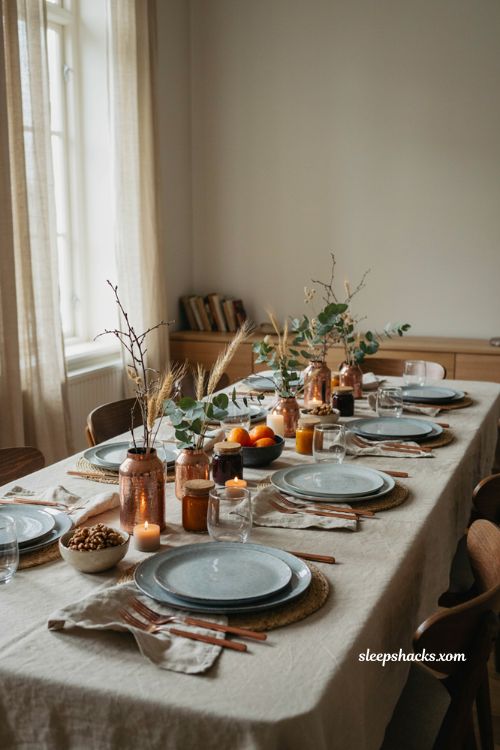
Swap the usual orange-and-gold combo for a softer mix of heather blue, warm grey, and copper accents across your plates, napkins, and small serving dishes. The muted tones feel sophisticated without looking cold or sparse. Add small individual touches, like tiny jars of preserves or apple butter at each place setting, instead of one big communal dish. It’s a palette that photographs beautifully in both daylight and candlelight, which matters if your Thanksgiving stretches into evening.
2. Matte Black and Gold Contrast
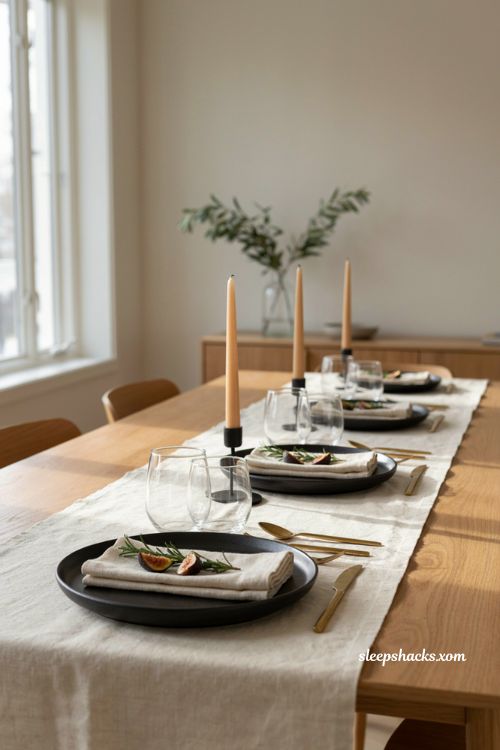
Matte black dinner plates paired with gold flatware create a striking, high-contrast look that instantly feels current rather than traditional. Keep the rest of the table simple — a plain linen runner and a few sprigs of fresh rosemary or fig tucked under each place card. The trick is restraint: this combination does most of the visual work on its own, so resist piling on extra decor. A single taper candle in a slim black holder finishes the look without crowding the plate.
3. Heirloom Pumpkins Over Orange Ones
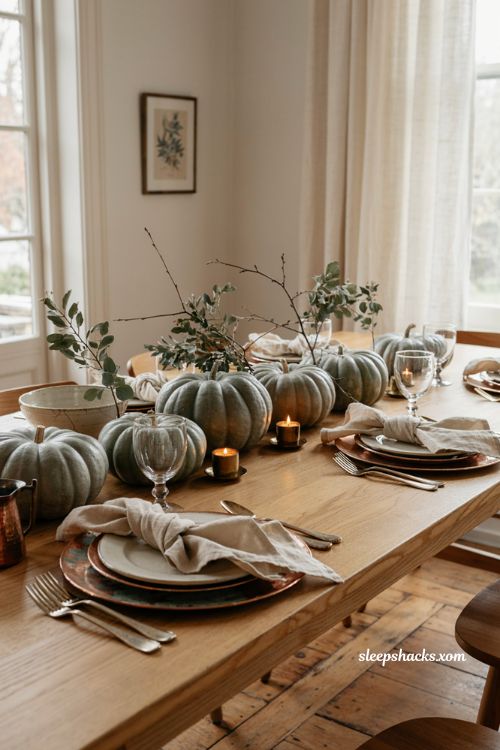
Skip the standard orange pumpkins and go with heirloom varieties in muted blues, greens, and warty textures instead. Pair them with copper chargers and votive candles for a layered look that feels collected rather than store-bought. Cluster a few different sizes together rather than spacing them evenly, since the varied heights add visual interest. This swap alone can shift an entire table from rustic-cute to genuinely elegant.
4. Foraged Branch Centerpiece
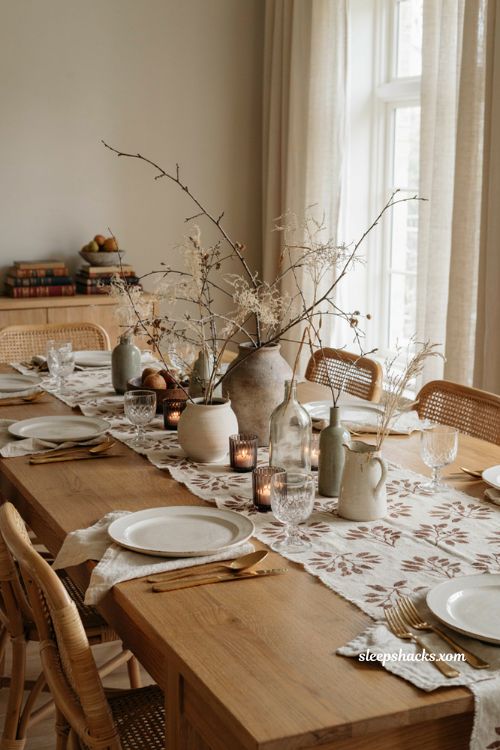
Instead of a floral arrangement, gather bare branches, dried stalks, or wispy dried grasses and arrange them loosely in a few varied vases down the table’s center. For a subtle wintry effect, lay the branches on paper first and mist them lightly with white spray paint before arranging. This approach costs almost nothing if you’re gathering from your own yard, and it holds up for weeks without wilting. Block-printed linens underneath make the whole look feel intentional rather than accidental.
5. Terra Cotta and Earth Tones
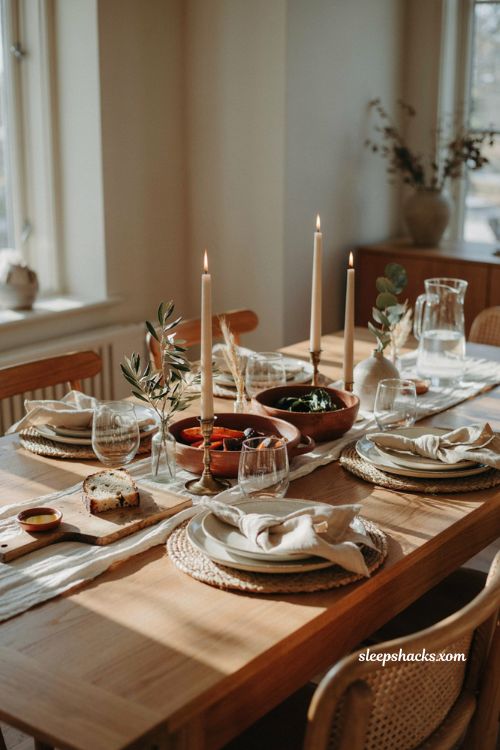
Terra cotta serving pieces bring a warm, natural texture that reads as modern-rustic rather than traditional harvest decor. Mix terra cotta bowls and platters with simple stoneware plates in cream or sand tones for a grounded, earthy palette. The unglazed texture contrasts nicely against smoother glass or metal accents, like a brass candle holder or a glass water pitcher. This combination works whether your table is casual weeknight-style or dressed up for a full formal spread.
6. Leaf-Printed Table Runner
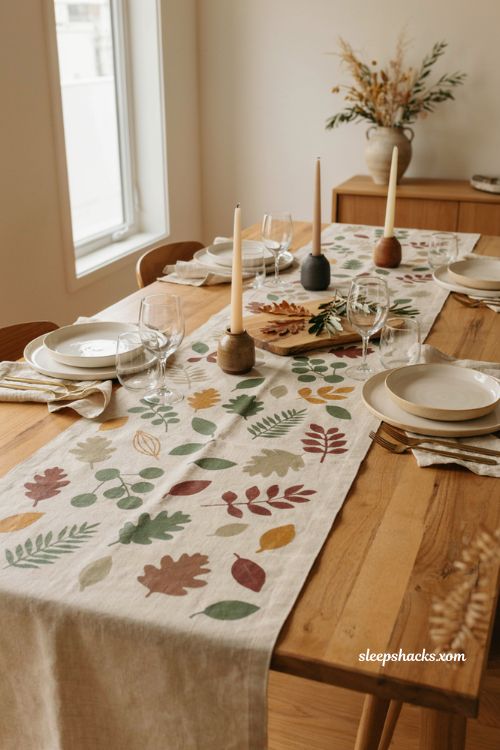
Coat real leaves in fabric paint and press them directly onto a plain linen runner for a one-of-a-kind, hand-stamped design. Lay a sheet of paper over each leaf and run a small roller or brayer across it to get a crisp, detailed imprint. Vary the leaf shapes and colors of paint across the runner’s length for a naturalistic, non-repeating pattern. Because it’s made from a plain linen base, the runner works for other fall gatherings long after Thanksgiving ends.
7. Metallic Mini Pumpkins as Place Cards
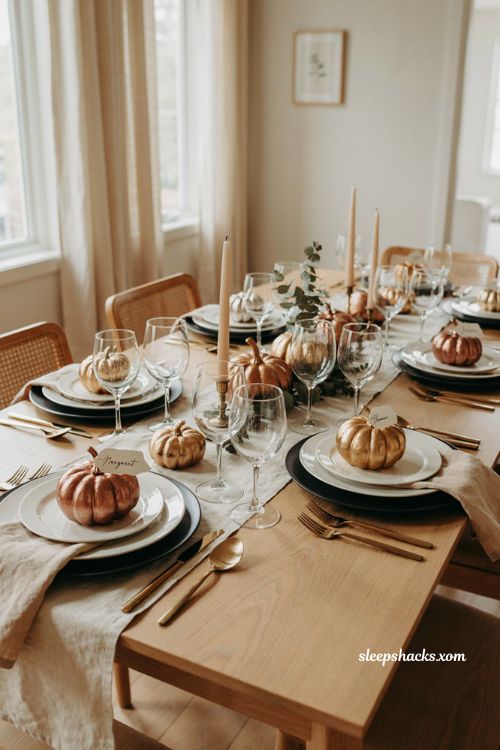
Spray-paint small pumpkins in metallic gold or bronze and set one directly on each dinner plate with a name card tucked into the stem. Larger versions of the same painted pumpkins can run down the table’s center to tie the place settings together visually. The metallic finish catches candlelight beautifully once the sun goes down, adding subtle sparkle without any glitter or sequins. This idea works particularly well if your dinnerware is a simple navy or white, since the gold reads as a clear accent color.
8. Botanical Potted Centerpieces
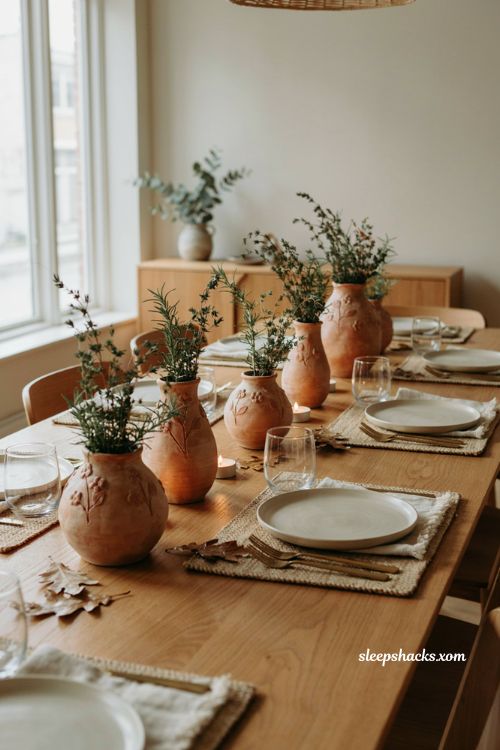
Plain terra-cotta pots become elegant centerpieces once you add small botanical clay details, like tiny painted leaves or blossoms, using silicone baking molds and air-dry clay. Arrange several pots of varying heights down the table rather than clustering them in one spot. The handmade botanical details give the pots a one-of-a-kind look that store-bought centerpieces can’t match. Once Thanksgiving wraps up, the pots can be repurposed for actual plants through the winter.
9. Dried Flower Arrangements
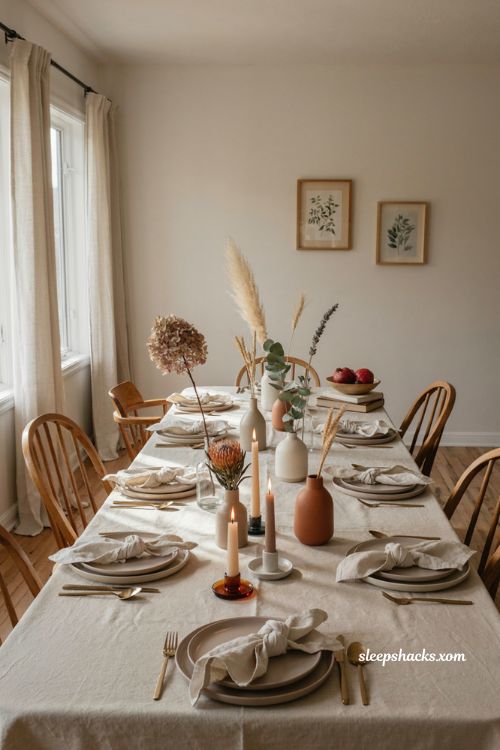
Skip fresh florals entirely and opt for dried flower stems in a single variety per vase, arranged loosely rather than tightly bunched. Stick to a spare, neutral color palette — creams, rust, and muted mauve work particularly well against most tablecloth colors. Line several small vases along the table’s length instead of one large centerpiece for a breezier, more modern feel. Since dried flowers don’t wilt, you can prepare this the week before and never worry about timing.
10. Cozy Rustic Scandinavian Look
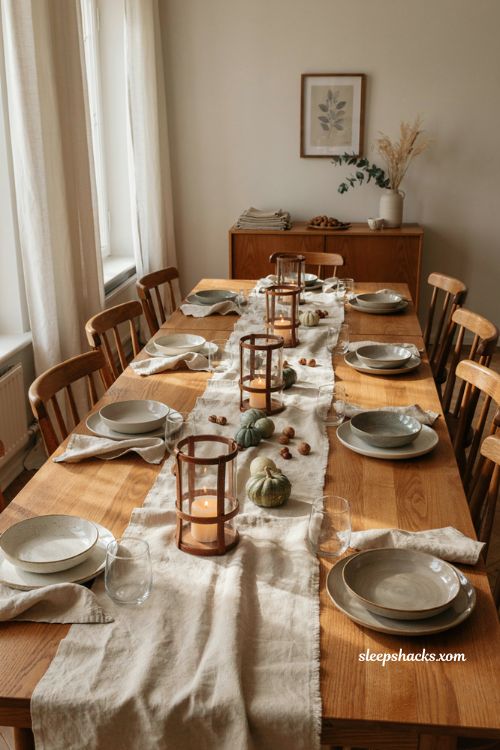
Skip flowers altogether and build your centerpiece around raw linen, leather-trimmed lanterns, and a scattering of mottled gourds and whole nuts. Beeswax candles add a warm, golden glow that suits the pared-down aesthetic better than white tapers would. This look leans into texture rather than color, so mixing rough linen against smooth glass lanterns gives it depth. It’s an especially good direction if your dining space already leans neutral or minimalist.
11. Botanical Pattern Dinnerware
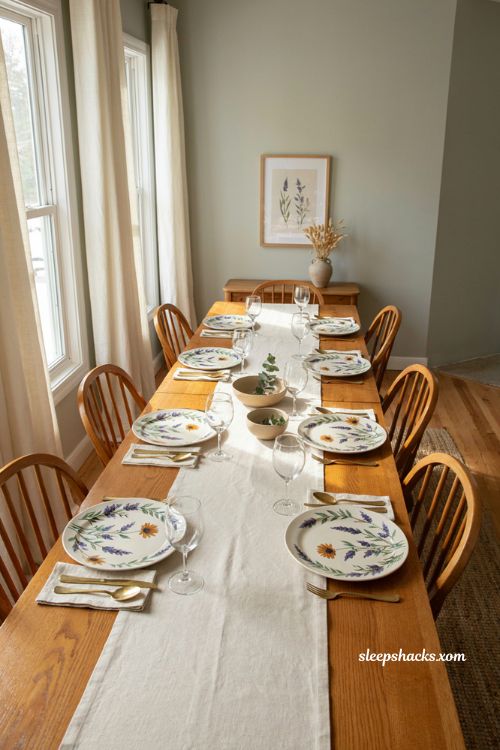
Let a botanical-print dinner plate set the color palette for the entire table, pulling accent colors like lavender, mustard, and warm brown directly from the pattern. Keep linens and glassware simple so the printed plates stay the visual anchor rather than competing with busy runners or napkins. A single stem of the same flower featured on the plate, placed at each setting, ties the whole look together. This approach works well if you already own patterned dinnerware and want an easy way to build a cohesive table around it.
12. Sculptural Branch and Vase Display
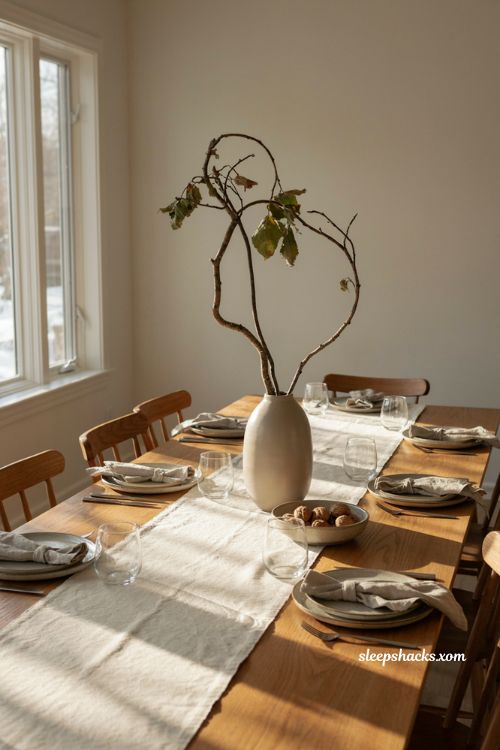
A tall, simply glazed ceramic vase filled with a loose arrangement of branches makes a striking, low-effort centerpiece that doesn’t block sightlines across the table. Choose branches with interesting shapes or leftover leaves rather than perfectly trimmed stems, since the imperfection reads as more intentional. Keep the vase itself understated — a single neutral tone lets the branches be the visual interest. This idea scales easily, whether you want one dramatic vase or several smaller ones spaced along the table.
13. Glittered Corn and Squash Accents
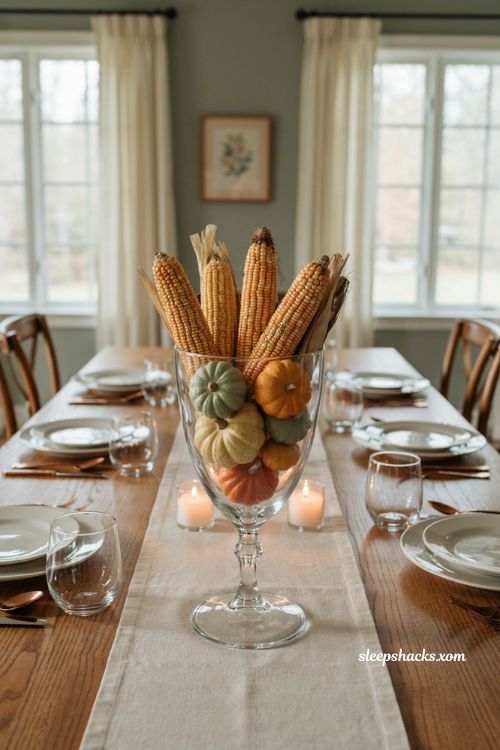
Turn a simple glass compote into a modern take on a cornucopia by filling it with a mix of glittered Indian corn and small squash. Vary how much glitter you apply — cover some ears completely and leave others with just a light dusting for contrast. This works especially well as a focal centerpiece since the sparkle catches the light from any angle. It’s also an easy way to update a traditional harvest motif without buying anything new.
14. Basket-Based Centerpieces
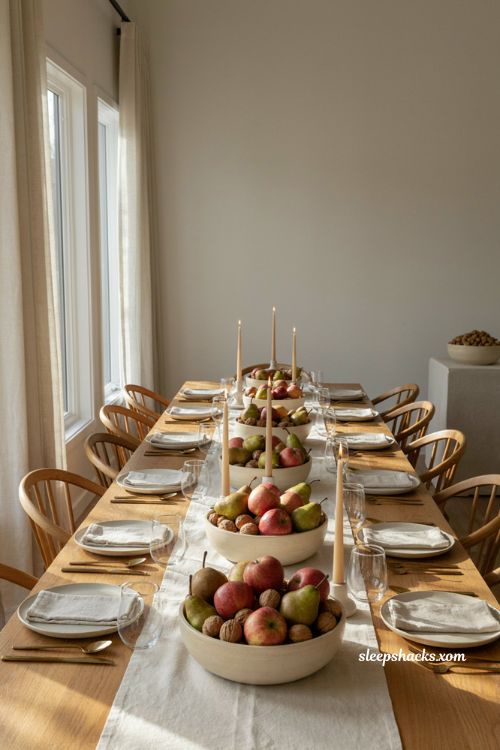
Fill a few woven baskets with apples, pears, and walnuts and run them down the length of the table for a centerpiece that’s simple, affordable, and instantly recognizable as a nod to the harvest. Painting the baskets a single glossy or matte color beforehand gives them a more polished, less rustic look. Line the fruit up loosely rather than stacking it high, so guests can still see across the table. This idea also doubles as an edible centerpiece guests can snack on after dinner.
15. Taper Candle Parade
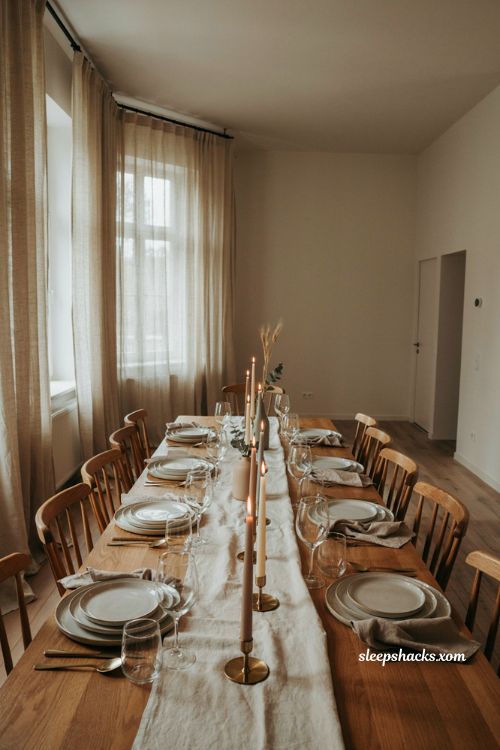
A long, evenly spaced row of taper candles down the table’s center creates ambiance that no floral centerpiece can quite replicate. Vary the candle heights slightly for visual rhythm, and choose a single warm color — cream, amber, or soft grey — so the flames stay the focal point rather than the holders. This idea pairs beautifully with almost any other item on this list, since it adds mood lighting without taking up much table space. Just be sure to trim the wicks beforehand so the flames burn evenly through dinner.
Final Thoughts
Pick one or two ideas here that actually match how your table already looks, rather than trying to overhaul the whole thing at once — a modern table setting works best when it feels like an evolution of your usual style, not a total departure from it. Keep Bryony Sheridan’s editing advice in mind, too: pull back one element before your guests arrive, since removing the one unnecessary piece almost always makes the rest of the table look more intentional. Whether you lean toward moody copper tones or a spare Scandinavian look, the goal is a table that feels considered without feeling fussy. However you set it, the people gathered around it will matter far more than the pumpkins.
Frequently Asked Questions
Q: What colors work best for a modern Thanksgiving table setting?
Muted, sophisticated tones like copper, matte black, terra cotta, and soft grey read as more modern than the traditional bright orange-and-gold combination.
Q: How do I make a Thanksgiving table look modern without buying new dinnerware?
Focus on the centerpiece and linens first — swapping in dried branches, heirloom pumpkins, or a hand-stamped leaf runner can update the whole look using pieces you already own.
Q: Should a modern Thanksgiving centerpiece be tall or low?
Low, spread-out centerpieces tend to look more current and keep sightlines open across the table, though a few taller taper candles can be mixed in without blocking conversation.