

Picture a vegetable bed at golden hour, with tomato vines climbing a clean grid of dark wire. You can see the whole garden from the patio, the light slips right through, and the dog trots along the lawn without ever touching a pepper plant.
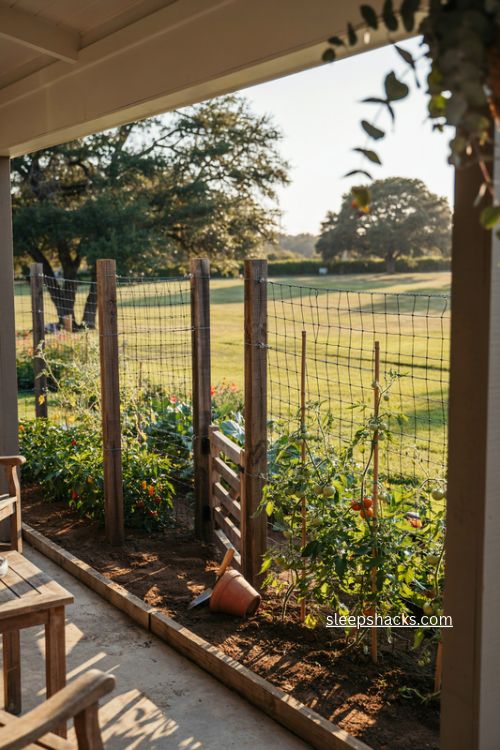
That’s the quiet appeal of hog wire. It started on farms to keep livestock in, and now it frames backyards, gates, and deck railings with a modern, almost minimalist look. These hog wire fence ideas run from simple garden borders to wood-and-wire hybrids, with a few practical building tips along the way. Pick a favorite and see how it fits your yard.
1. Start With a Simple Garden Fence
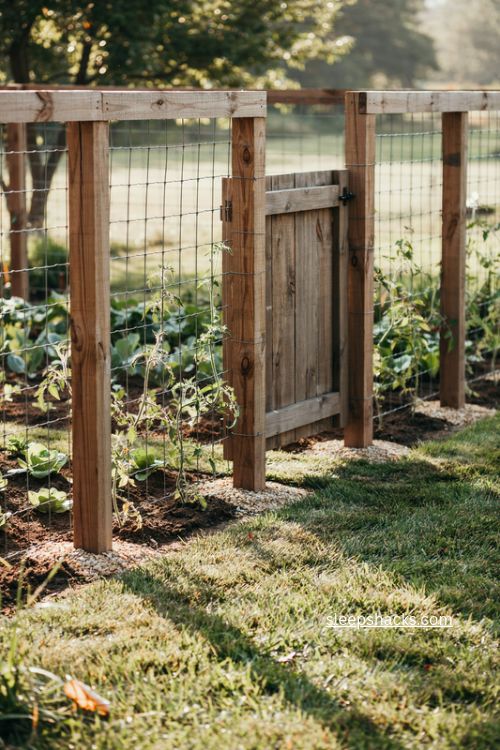
The easiest way in is a basic garden fence: sturdy posts, a 2×4 top rail, and a roll of galvanized wire stapled to the back. Set redwood or cedar posts about four feet apart and you get a clean, see-through border between lawn and garden, with plenty of room for vines to climb. It’s forgiving for first-timers, too.A 50-foot run can often be finished in a day or two for a few hundred dollars, though lumber costs vary by region. Rent a gas-powered auger if your soil is clay, and set each post about a foot deep on a bed of gravel. Skip the concrete so water doesn’t pool against the wood.
2. Frame the Panels in Cedar
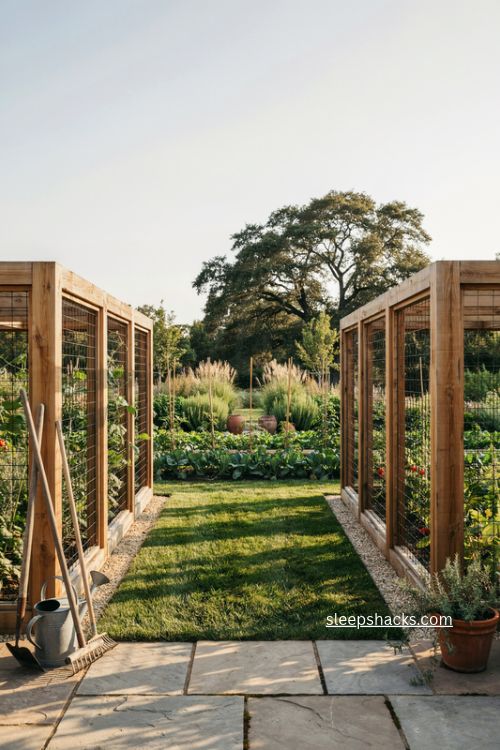
For a more upscale look, pair premade hog wire panels with a cedar frame. The thick wood border turns the wire into a picture, and the dark grid against warm wood looks sleek and a little architectural, almost like a piece of furniture standing in the yard. A shadow-box style, with boards on both sides, adds privacy but costs more wood.Framed panels also save time, since you skip stretching and stapling wire. Lay all your posts and panels on the ground first, like puzzle pieces, so any measuring surprises show up before you dig. Pressure-treated lumber tends to turn grayish-green without stain, so plan to seal it.
3. Mix Wire With Wood Slats or Metal
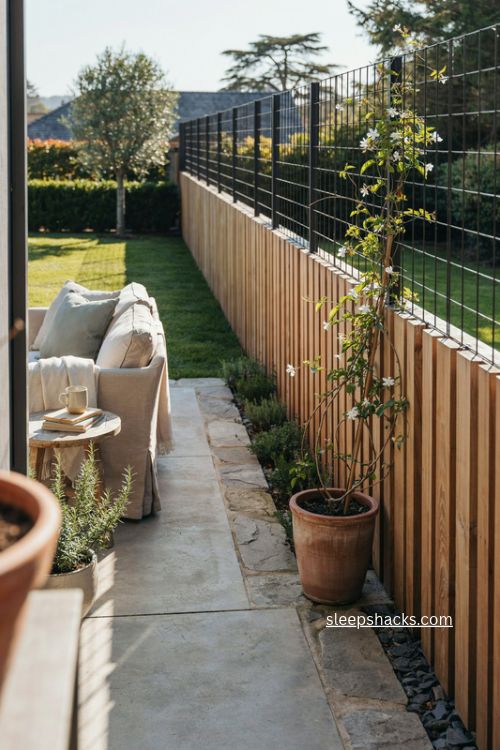
Hybrid fences give you privacy and openness in one run. Try solid wood slats or corrugated metal on the lower half, then hog wire above, so the bottom blocks sightlines and the top lets light and air through. Metal and wood contrast nicely, and you can match the wire’s black finish to your window frames.Another take is a six-foot black wood fence with a strip of hog wire along the top, which keeps the neighbors’ view of your patio low without making the yard feel boxed in. Keep the finishes in the same color family so the mix looks intentional. Use a rot-resistant wood like cedar for the solid portion.
4. Go Black for a Modern Edge
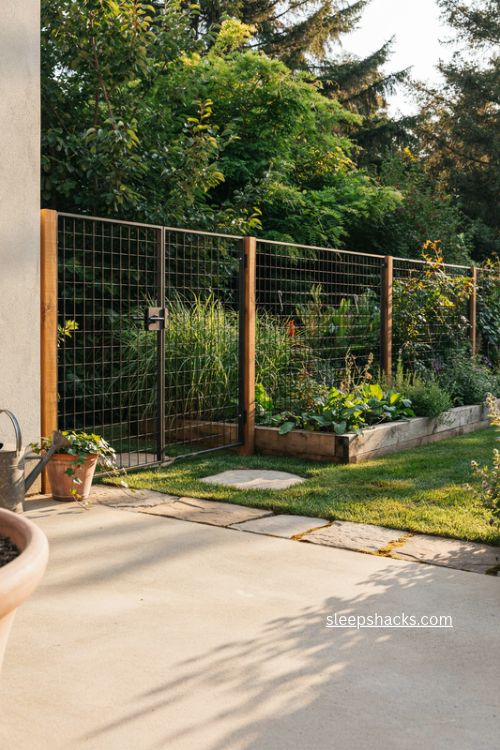
Black hog wire practically disappears into the landscape, which makes the plants in front of it the stars. Against green foliage or a pale stucco wall, the thin dark grid looks crisp and graphic instead of heavy. Pair it with black posts, or let warm wood posts add contrast.Pick a powder-coated or dip-coated finish so rust doesn’t creep in, and choose a panel height that suits your needs. A black fence also looks good with black gate hardware, so the hinges and latch feel like part of the design. Matte black reads more modern than glossy, and a quick wipe-down once or twice a year keeps it sharp.
5. Build a Trellis Gate
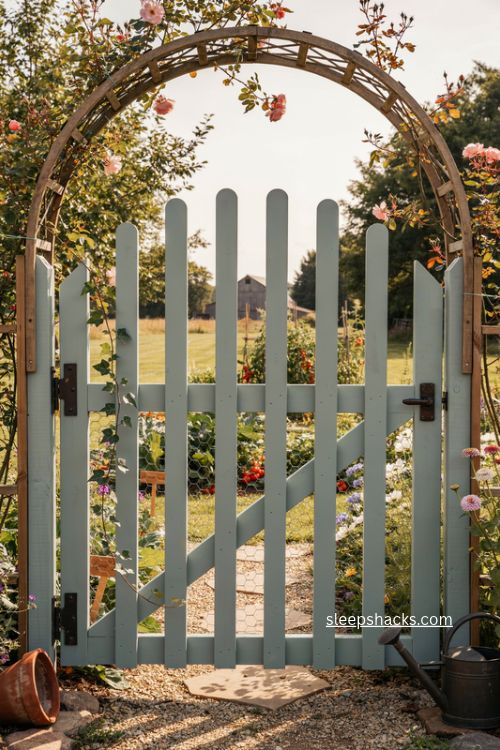
A gate is the natural place to show off. An arched picket gate topped with a trellis and filled with hog wire makes a charming entry to a vegetable or flower garden, and the wire gives climbing roses or ivy something to grab. Paint the frame a soft color, like sage or cream, to match the house trim.Make the gate 36 inches wide if you want to roll a wheelbarrow or mower through, and add a diagonal brace so the frame doesn’t sag over time. Mark the swing direction first and leave enough clearance underneath for grass or mulch. Heavy hinges and a latch you can work with one hand matter more than you’d think when your arms are full.
6. Protect the Veggie Beds
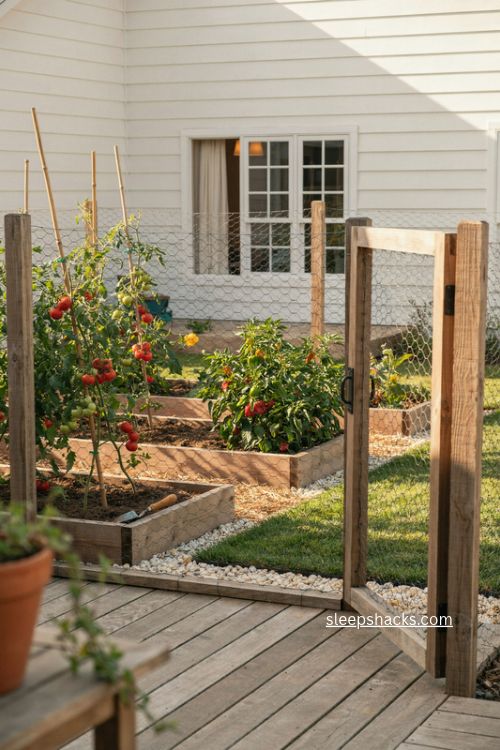
If critters or pets keep raiding your tomatoes, a hog wire enclosure is a smart fix. The grid is strong enough to keep dogs out and secure enough to discourage most animals, yet you can still see your plants from the kitchen window. One builder made theirs just so peppers and tomatoes could survive a very enthusiastic dog.Choose the height based on what you’re keeping out, since a taller fence is needed for deer and a shorter one is usually fine for dogs. Bury the bottom edge a few inches or add a rail near the ground to close small gaps. Check the corners and the gate area first, because that’s where critters always look.
7. Use It as a Deck or Porch Railing
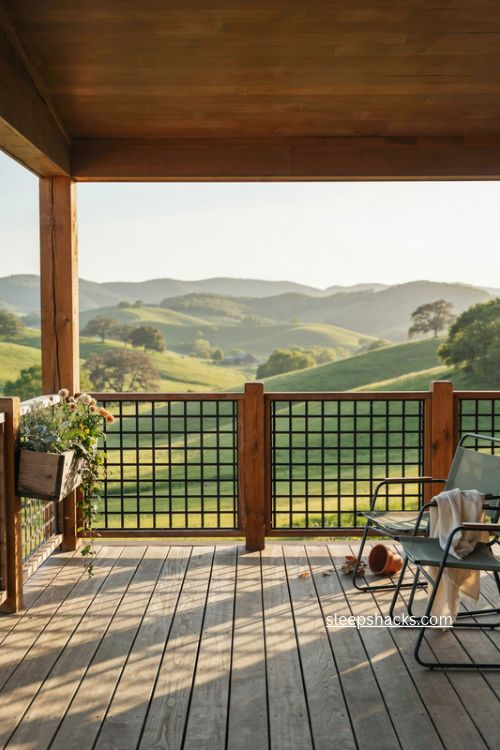
Hog wire makes a clean, contemporary deck railing. Set between wood posts and a sturdy top cap, the panels give you safety without blocking the view, and they look right at home next to cable or metal railings. On a sloped lot or a deck with a view of the water or hills, the open grid keeps everything visible.Check local building codes for railing height and spacing before you build, since requirements vary. A redwood or cedar frame keeps the look warm while a dark wire grid keeps it modern. A planter box along the top rail adds a pop of color without cluttering the view.
8. Add Hog Wire Accent Sections
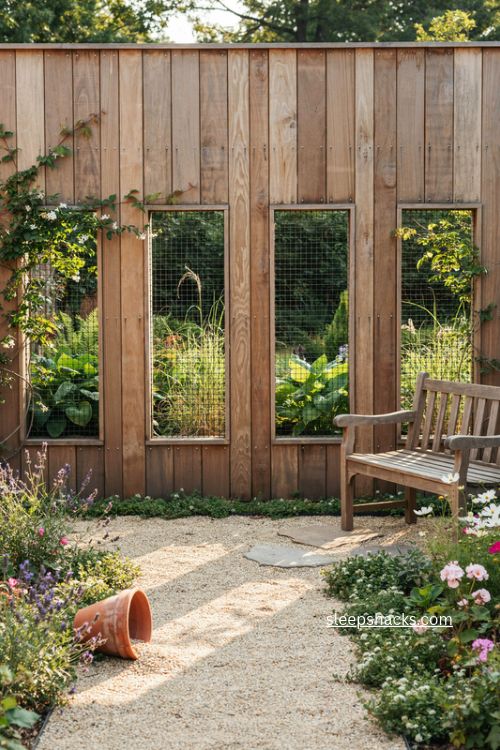
A solid fence can feel heavy, so break it up with a few hog wire inserts. A window of wire between two wood panels adds texture, lets light through, and gives you a view of the garden beyond. It’s a good way to freshen an old fence without replacing the whole thing.Place the inserts where you’d like a peek-through, such as near a bench or at the end of a path. Keep them the same height across the run so the rhythm feels deliberate, and frame each one with trim so the edges look finished. Use the same stain on the frame and the fence for a cohesive finish.
9. Screen It With Trees and Shrubs
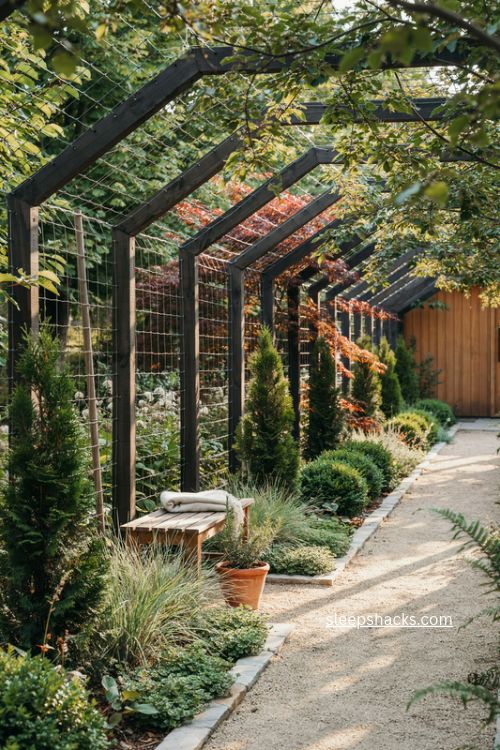
Pair hog wire with evergreen trees or a row of tall shrubs for privacy that feels natural. The fence defines the boundary, while plants fill in the gaps and soften the line over time. In a city courtyard, this looks especially polished with a few well-placed shrubs against a dark grid.Plant a few feet back from the fence so roots and branches have room to grow, and pick a mix of heights for a layered look. Water the new plants regularly during their first year. Choose species suited to your climate so they thrive without a lot of fuss.
10. Grow a Living Wall
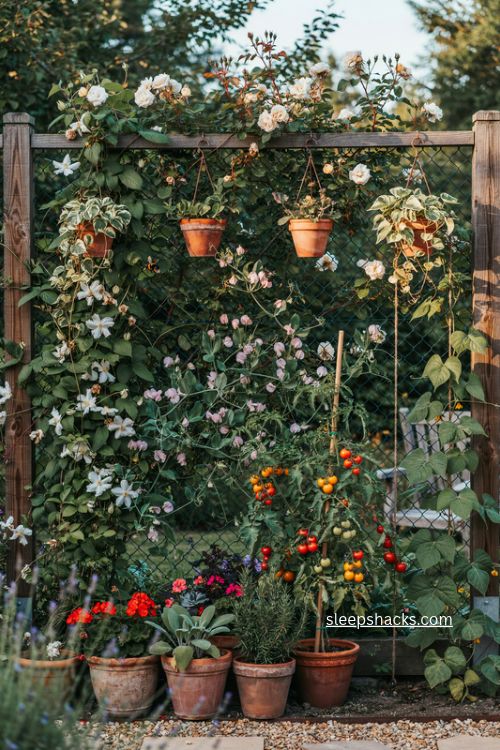
Think of hog wire as a vertical garden waiting to happen. Climbing roses, clematis, sweet peas, or even tomatoes and pole beans weave through the grid, and the fence turns green and floral as the season goes on. It’s an easy way to add height to a garden that feels flat, and white or yellow blooms look lovely against a dark grid.You can also add hooks and small planters, or hang pots right from the wire. Use sturdy S-hooks and group the pots in odd numbers so the display looks collected. Water more often in summer heat, since container plants dry out fast, and rotate seasonal color for variety.
11. Try It Indoors
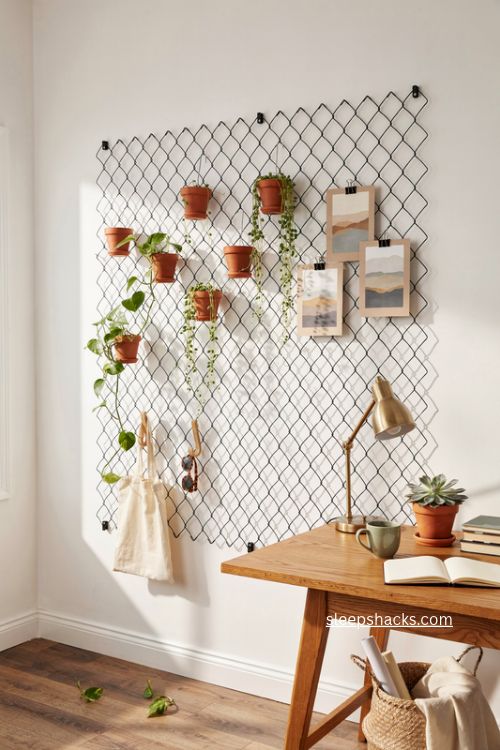
Hog wire isn’t just for outdoors. Panels make an industrial-chic stair railing, a loft divider, or a graphic wall piece in a mudroom, café, or home office, and the open grid keeps rooms feeling airy. Black wire against white walls looks especially crisp.Use a panel as a wall grid to hang photos, hooks, and small plants, or mount one above a desk for notes and cards. Sand any sharp edges and cap cut ends so nobody gets scratched, and anchor the panel to studs for strength. Hang a few small pots along the top and it doubles as a plant display.
12. Define a Pool or Patio Edge
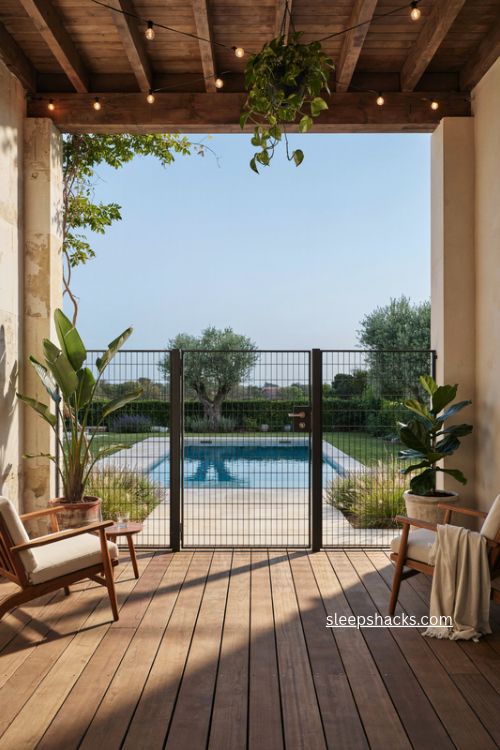
Hog wire works as a stylish pool fence and patio border. The see-through grid keeps sightlines open, so you can watch kids or guests while you relax, and it frames the space like a modern café patio. String lights overhead make evenings feel special, and the dark grid lets your pool and patio plants stay the focus.For pools, check local safety rules for height, gaps, and self-closing gates before you buy. Choose a finish that stands up to moisture and chlorine, and keep the posts tight so the fence stays rigid. Hire a pro if you’re unsure about code, since safety matters more than style here.
13. Plan It Right Before You Build
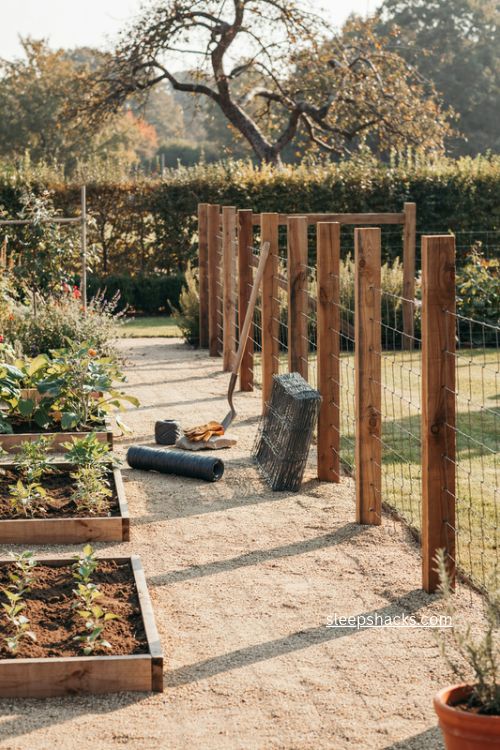
Good prep makes any hog wire fence look better. Mark your posts, dig a few test holes, and roll the wire out flat overnight so it relaxes before you staple it. Add a top bar and a bottom support so nothing sags, and use 9/16-inch staples placed directly behind a vertical wire to keep things tight.Level each post off the one before it rather than the whole line, and bury at least twelve inches of wood. In freezing climates, go below the frost line. Decide between rolls and panels, since panels cost more but install faster, and ask a friend to help hold the wire because stapling alone is a pain.
Final Thoughts
Grab a tape measure and walk your yard this weekend. Pick one spot where a fence, gate, or railing would help, and note the sun, the slope, and where the dog likes to roam.Then sketch what you’d like there, whether it’s a plain garden border or a cedar-framed panel with a trellis gate, and price out posts, wire, and hardware. A small first project is a great way to learn how hog wire behaves before you tackle the whole yard. Start with the 36-inch gate or a short garden run, take photos as you go, and let the rest grow from there.
Frequently Asked Questions
Q: Is hog wire fencing durable?
Yes. Galvanized or coated steel resists rust and holds up for years, especially when paired with rot-resistant wood like cedar or redwood. Uncoated wire will rust faster.
Q: How much does a hog wire fence cost?
One DIY garden fence of 50 feet came in under $300, but prices vary by region, lumber, and whether you choose rolls or premade panels. Gates, hardware, and posts add to the total.
Q: Do I need concrete for hog wire fence posts?
Not always. For a light wire fence, many builders set posts in packed soil over gravel, since concrete can trap water against the wood, but taller fences or windy sites may call for it.