

If your main bedroom still feels like an afterthought — the room you fall into at the end of the day without ever really decorating on purpose — you’re definitely not alone.
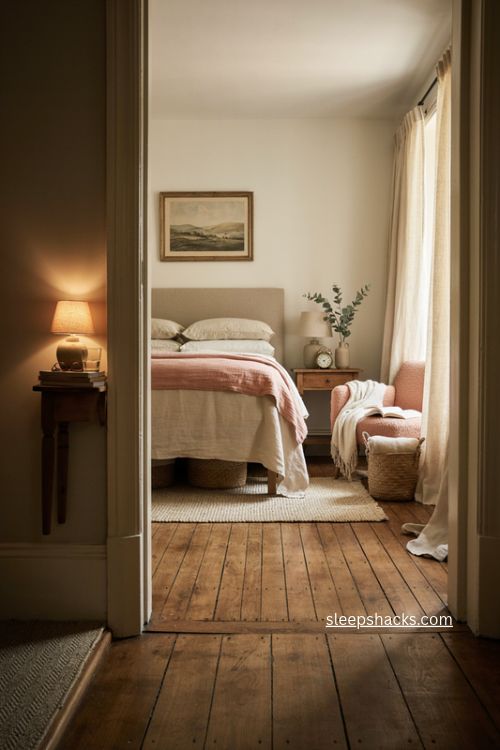
Most people spend way more time and energy on their living room or kitchen, simply because those are the spaces guests actually see. But your main bedroom deserves just as much thought, since it’s genuinely where you spend a third of your life. The good news is that turning it into an actual retreat doesn’t require a full gut renovation. These fifteen ideas, pulled straight from designers who do this for a living, will help you get there one intentional choice at a time.
1. Choose a Calming Color Palette First
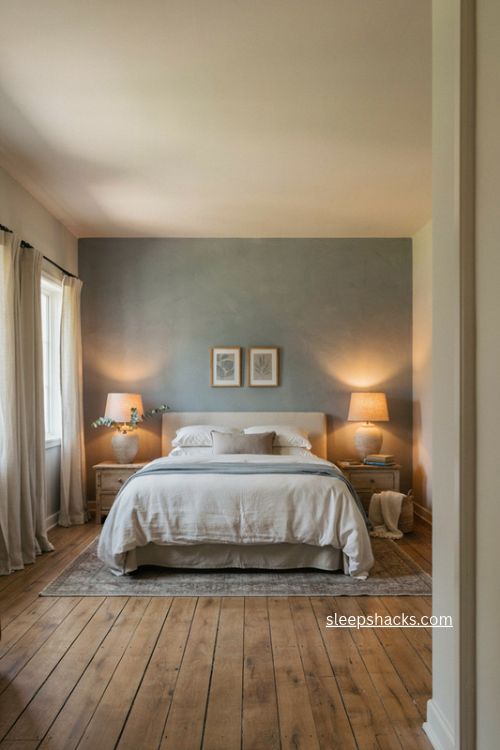
Before anything else, settle on colors that genuinely feel relaxing to you rather than whatever’s trending. Soft grays, warm neutrals, and muted blues tend to be the most universally soothing, but colorful wallpaper can work just as well if it’s balanced with quieter elements elsewhere. Since you’ll be looking at the ceiling constantly while lying in bed, think about that surface too, not just the walls. A pale, warm neutral on all four walls with one slightly deeper accent tone tends to feel intentional without becoming overwhelming.
2. Give the Ceiling Some Real Attention
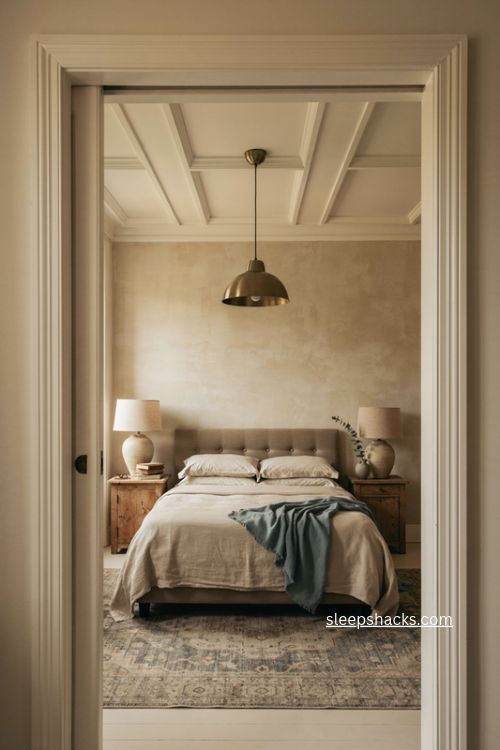
Most people decorate every surface in a bedroom except the one directly above the bed, which is honestly a missed opportunity. Crown molding, wood paneling, or a coffered ceiling design instantly adds architectural interest to a room that would otherwise feel flat. If construction isn’t in the cards, a painted ceiling in a soft complementary shade achieves a similar effect for a fraction of the cost. Even a simple statement light fixture mounted at the center can turn a blank ceiling into a genuine focal point.
3. Create a Spa-Like Ensuite Connection
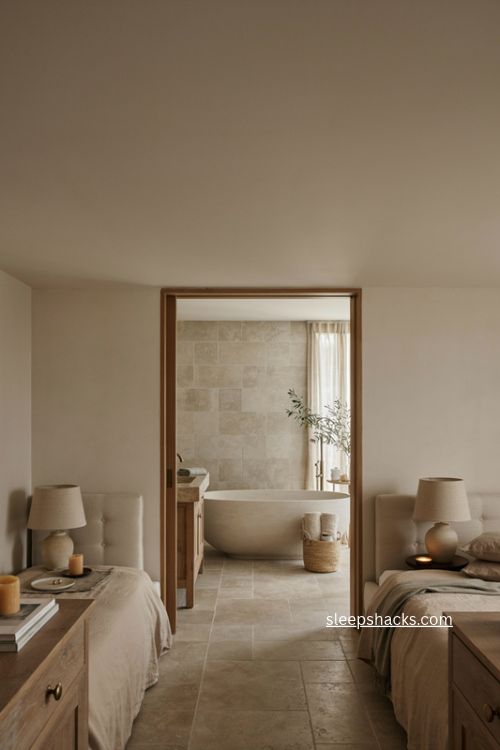
If your main bedroom has an attached bathroom, treat the transition between the two spaces as part of the same design story. Matching or coordinating tile, paint colors, and finishes between the bedroom and ensuite makes the whole suite feel more luxurious and cohesive. A freestanding soaking tub visible from the bedroom, or simply consistent lighting between both rooms, goes a long way toward that effect. Even small touches, like carrying the same wood tone from your nightstands into the bathroom vanity, tie everything together.
4. Layer Your Lighting in Three Tiers
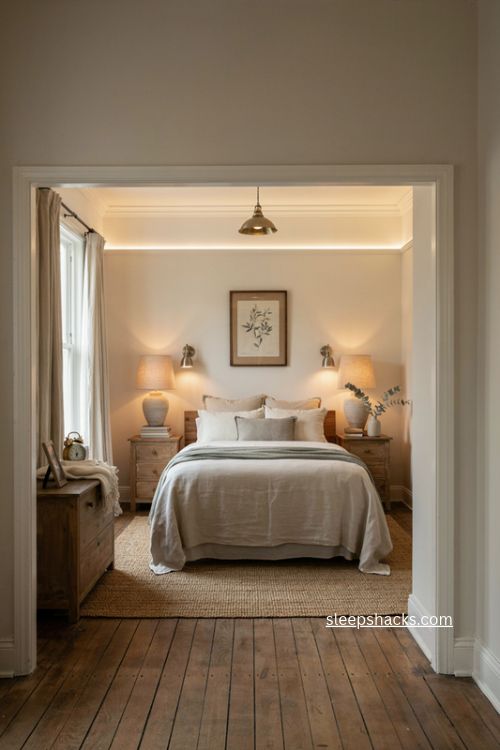
A single overhead fixture is rarely enough to make a bedroom feel finished, so think in layers instead. Start with ambient lighting for a soft overall glow, add task lighting like bedside lamps or wall-mounted sconces for reading, and finish with accent lighting to highlight artwork or an architectural feature. This kind of layering means you’re never stuck with one harsh setting for every mood, whether you’re winding down or getting ready in the morning. Dimmer switches on at least the ambient layer make the whole system even more flexible.
5. Carve Out a Private Lounge Area
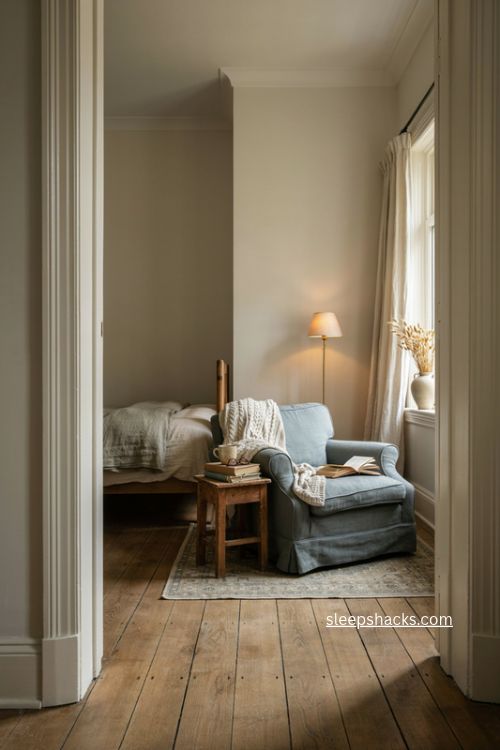
A main bedroom can be more than just a place to sleep if you give it a small, dedicated spot for relaxing. A single comfortable chaise or armchair positioned near a window, paired with a floor lamp and a small side table, creates an instant mini retreat within the room. This is especially worth doing if your bedroom has a nice view worth sitting toward. Even in a smaller room, one well-placed chair in an otherwise empty corner can completely change how the space functions.
6. Invest in Flooring That Feels Good Underfoot
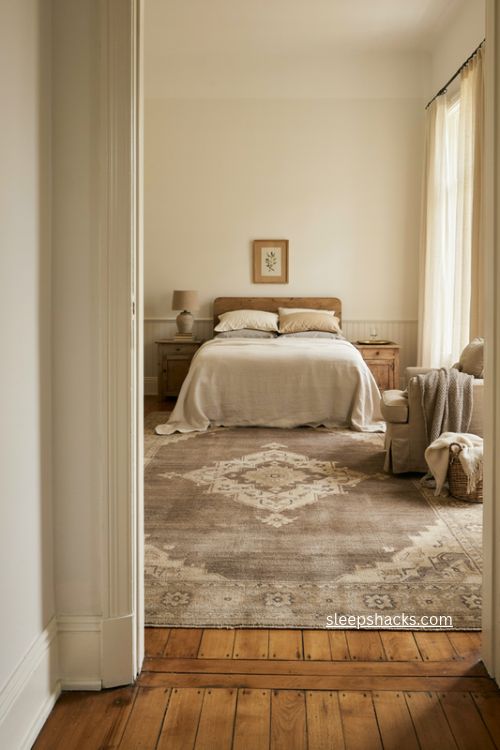
Stepping onto plush carpet or a soft, high-quality rug first thing in the morning is a small luxury that makes a real difference. If you already have hardwood, layer in a large area rug to anchor the furniture and add warmth without covering the floor entirely. Wool tends to hold up better over time than synthetic fibers, so it’s worth the investment if you’re recarpeting the whole room. Either way, the goal is flooring that feels intentional rather than like whatever was already there when you moved in.
7. Bring In Architectural Details
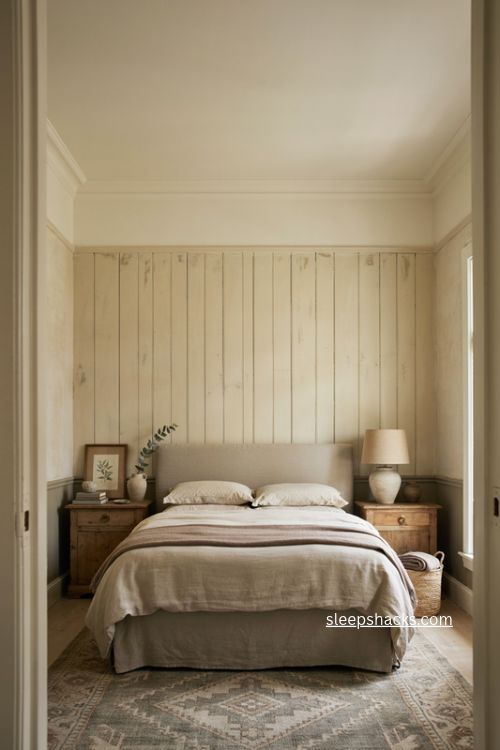
Crown molding, chair rails, or a textured accent wall can create genuine visual interest even in a fairly plain, boxy room. If your main bedroom doesn’t already have these features, faux panels or beams installed during a renovation can achieve a similar look without a full structural overhaul. A geometric accent wall behind the bed also adds dimension for a more contemporary feel. The key is following the architecture your home already has, rather than adding details that feel disconnected from the rest of the space.
8. Choose a Statement Headboard
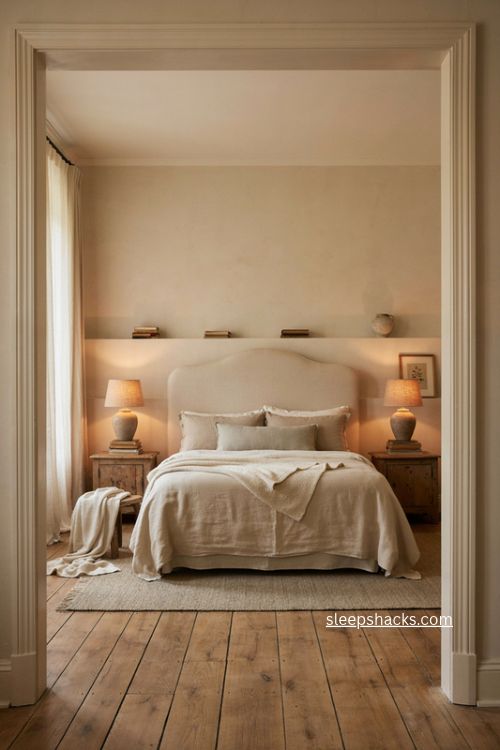
A headboard sets the tone for the entire room, so it’s worth treating as a genuine design decision rather than an afterthought. An upholstered headboard in velvet or leather adds instant texture and softness, while a salvaged or antique piece brings in character you simply can’t buy new. If reading in bed is part of your routine, look for a design with a slight recline or built-in shelving for books and a phone. Whatever style you choose, let it act as the anchor the rest of the room’s colors and textures build around.
9. Center the Bed for Instant Symmetry
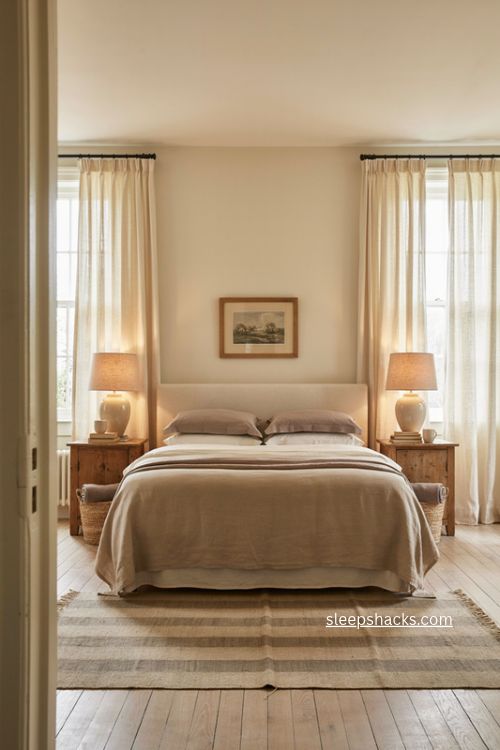
Positioning your bed centrally against the main wall and flanking it with a matching pair of nightstands and lamps creates an immediate sense of calm and balance. This kind of symmetry is one of the simplest, most reliable tricks for making a bedroom feel put-together, regardless of your overall style. A piece of art or a framed photo hung directly above the headboard reinforces that same sense of order. It’s a small layout decision, but it changes how the entire room reads the moment you walk in.
10. Try a Bold Wall Treatment
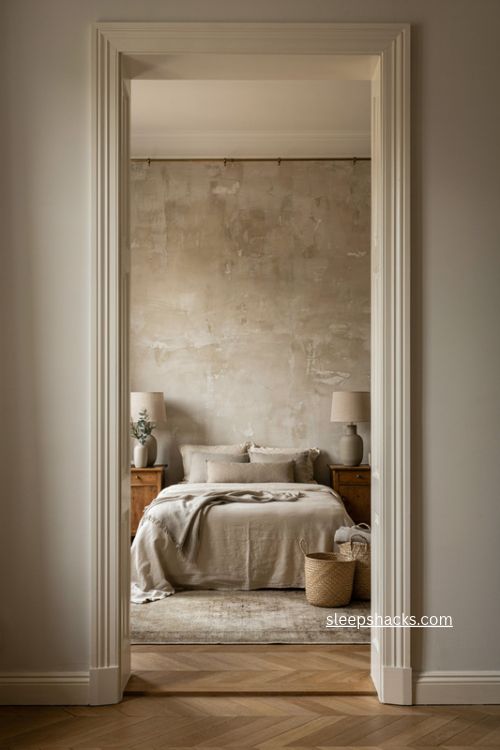
Venetian plaster, suede finishes, or a hand-painted mural bring a tactile, luxurious quality that flat paint simply can’t replicate. If you’d rather go with wallpaper, a botanical or richly patterned print can make the walls feel like the star of the room rather than just a backdrop. Wood paneling or stone veneer is another option if you’re after something warmer and more organic. Since this is usually the biggest visual commitment in the room, pick a treatment you can genuinely picture living with for years.
11. Add a Canopy or Four-Poster Bed
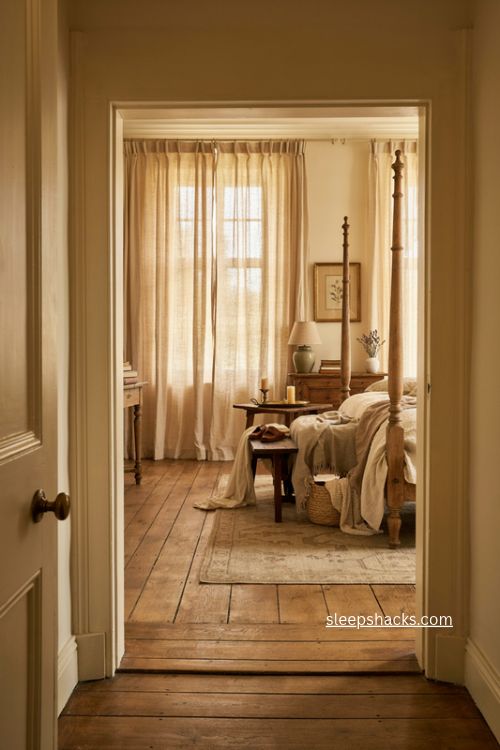
A canopy or four-poster frame does more than just look elegant — it gives the whole room a sense of height and presence that a standard bed frame can’t match. A canopy with soft, flowing fabric on top feels romantic and layered, while a bare four-poster reads as more structured and traditional. This works especially well in rooms with higher ceilings, where the extra vertical element keeps the space from feeling empty above the bed. Even a valence alone, without full drapery, can add a similar sense of intention.
12. Build a Proper Walk-In Wardrobe
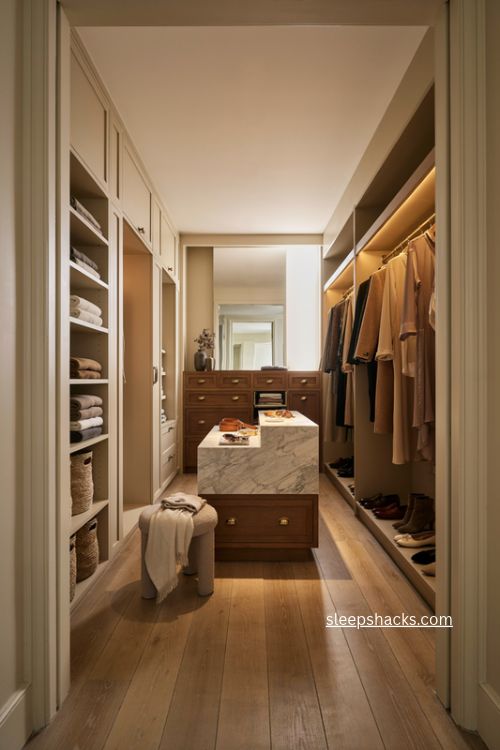
A well-organized closet system is one of those upgrades that quietly improves your daily routine more than almost anything else on this list. Start by mapping out how much hanging space, drawer storage, and shelving you actually need before designing the layout. Even lighting matters here — even illumination throughout, with accent lights on special pieces, makes getting dressed each morning noticeably easier. If space allows, a small seating area or a marble-topped island in the center elevates the whole closet into part of the main bedroom experience.
13. Add a Fireplace for Ambiance
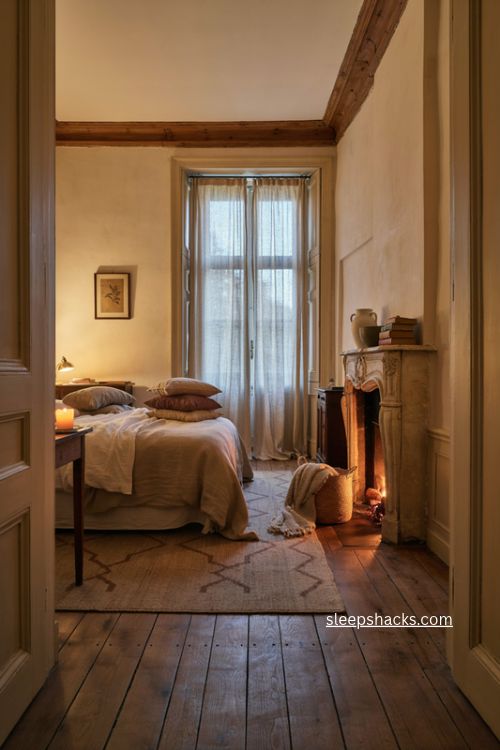
A fireplace in the main bedroom isn’t just about warmth — it instantly becomes a secondary focal point that makes the whole room feel more special. A traditional wood-burning option has real old-world charm, while a gas or electric insert offers the same ambiance with a lot less maintenance. Choose a mantel or surround that echoes other architectural details already in the room, whether that’s the molding style or the wood tone of your furniture. Even a simple flame flickering in the corner changes the whole mood of the space in the evening.
14. Hang an Oversized Mirror Instead of a Headboard
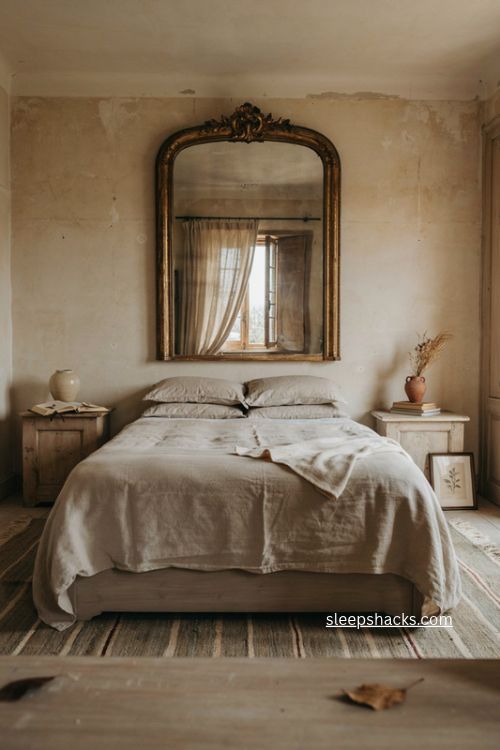
If you want something unexpected, try skipping the traditional headboard altogether and hanging a large mirror above the bed instead. It reflects light back into the room, makes the space feel more open, and gives you a chance to use an interesting vintage or antique frame as a focal point. This works particularly well in main bedrooms that don’t get a ton of natural light to begin with. Pair it with simple, uncluttered bedding so the mirror itself stays the visual star of the wall.
15. Orient the Bed Toward Your Best View
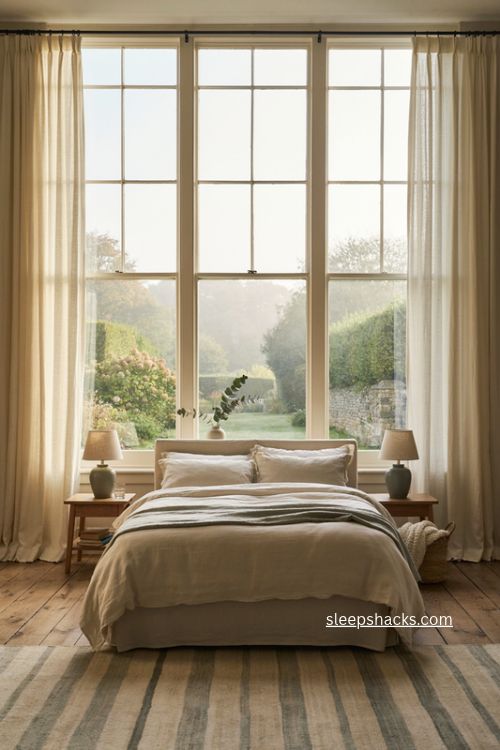
If your main bedroom has genuinely great windows — a garden, a lake, distant mountains — don’t let that go to waste behind a poorly placed bed. Positioning the bed to face the view means you’re greeted by it first thing every morning, which is a small but meaningful upgrade to your daily routine. If your view isn’t quite as impressive, a large piece of art or a soft, scenic mural on the opposite wall can create a similar sense of escape. Either way, the goal is waking up to something that makes you glad to be in the room.
Final Thoughts
At the end of the day, a well-designed main bedroom isn’t really about square footage or a big budget — it’s about treating the room where you start and end every day with the same care you’d give any space you actually show off. Maybe that means the real measure of a good main bedroom isn’t how it photographs, but how it feels the moment you close the door behind you at night. Pick one idea here, live with it for a while, and let the rest of the room slowly catch up around it.
Frequently Asked Questions
Q: What colors work best for a calming main bedroom?
Soft neutrals like warm grays, taupes, and muted blues tend to feel the most universally restful, especially when layered with varied textures rather than bold contrasting colors.
Q: Do I need a headboard in a main bedroom?
Not necessarily — an oversized mirror, a mural, or even a painted accent behind the bed can serve the same visual anchoring purpose as a traditional headboard.
Q: How can I make a main bedroom feel more spacious?
Center the bed symmetrically, keep window treatments floor-to-ceiling, and choose furniture scaled appropriately to the room rather than filling every available corner.