

There’s a certain kind of bedroom that everyone seems to have at some point — no closet, barely enough floor space for a nightstand, and clothes that somehow always end up piled on a chair.
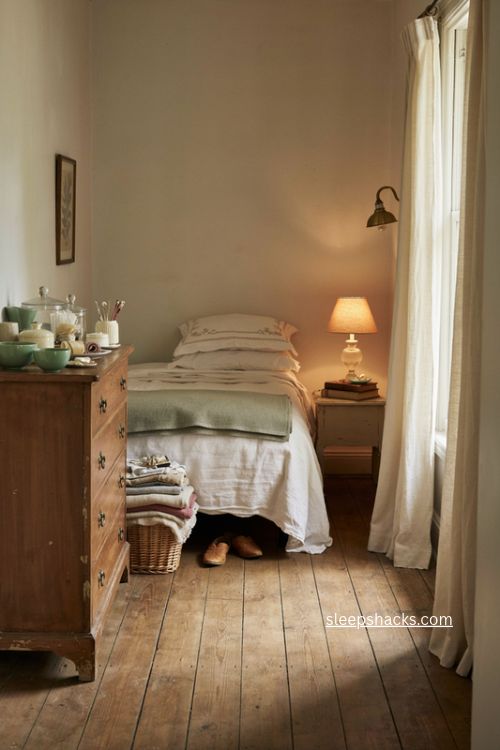
It’s one of the most common complaints designers hear, and yet some of the most creative storage solutions come out of exactly these cramped, awkward little rooms. The trick isn’t finding more space; it’s looking at the space you already have differently. Here are fifteen ways professional organizers and designers actually solve the no-closet, no-floor-space problem, without making the room feel like a storage unit.
1. Expand Storage Behind the Headboard
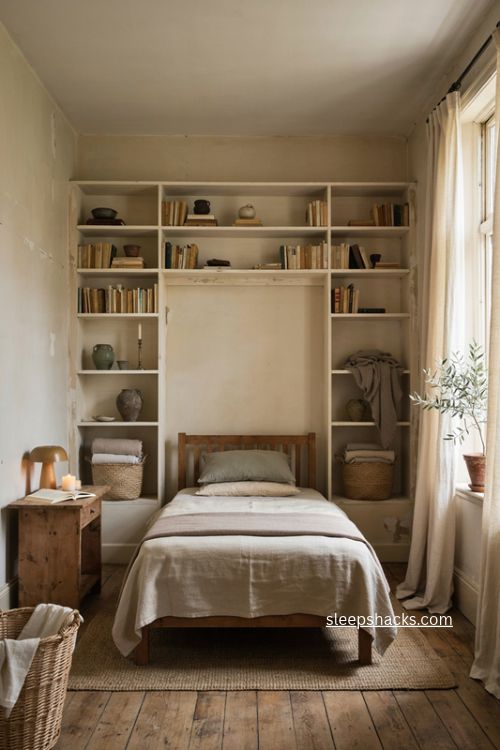
Instead of adding a separate piece of furniture, turn the wall behind your bed into a storage zone. Built-in shelves or a shallow niche behind the headboard can hold everything from bags to books to small decorative objects, all without taking up an inch of floor space. This works especially well in a room where the bed already sits against the widest wall, since that’s usually the most underused surface in the entire space. Keep the items on display fairly curated so the shelving reads as intentional styling rather than just overflow storage.
2. Use the Space Under the Bed
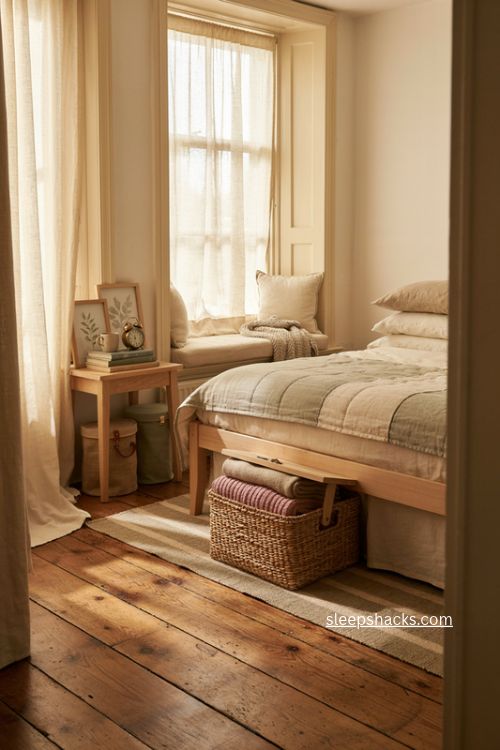
If there’s any clearance beneath your bed frame, that’s genuinely valuable real estate you’re probably wasting. Shallow, lidded bins slide in easily and are perfect for out-of-season clothing, spare linens, or anything you don’t need daily access to. A tailored bed skirt hides the bins completely, so the room still looks polished rather than like a storage overflow. This is one of the simplest upgrades on this whole list, since it usually costs less than a nice throw pillow.
3. Treat Your Nightstand Like a Mini Dresser
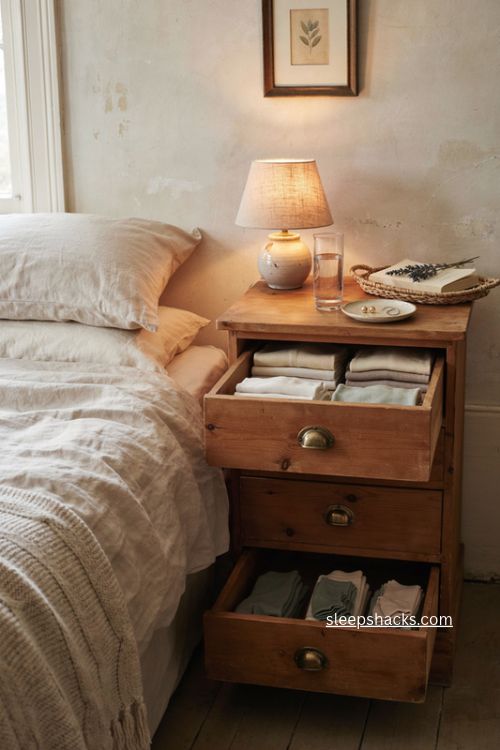
A nightstand doesn’t have to be just a flat surface for a lamp and a half-empty water glass. Oversized nightstands with two or three drawers can genuinely hold socks, pajamas, or smaller folded items, taking real pressure off an overstuffed dresser. If you already own a smaller nightstand, dedicate the bottom drawer specifically to one category, like undergarments or accessories, so it doesn’t become another catch-all. This tiny reframe turns an often-overlooked surface into one of the room’s hardest-working pieces.
4. Add a Trunk or Storage Bench
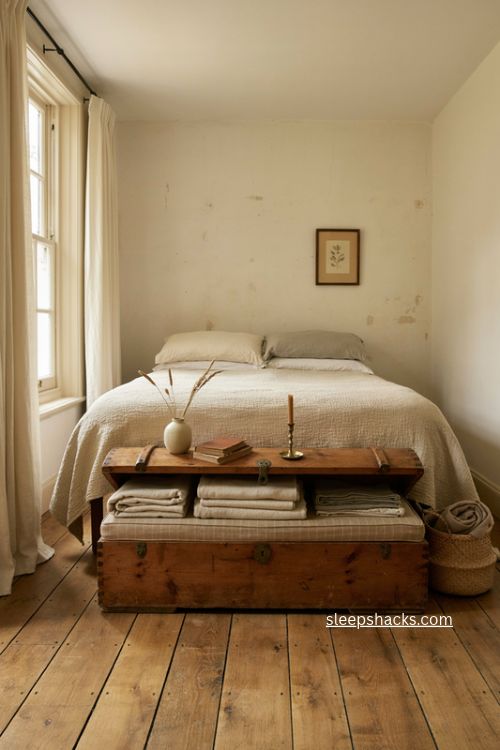
A storage bench or trunk placed at the foot of the bed does double duty as both seating and hidden storage for extra sheets, blankets, or off-season clothing. It’s a genuinely elegant solution for a room with zero closet space, since it looks like a deliberate design choice rather than a workaround. If you have the floor space, using two smaller trunks instead of one larger piece adds even more capacity without overwhelming the room visually. It’s also a handy spot for guests to sit if your room doubles as a place for conversation.
5. Build Custom Storage Around Awkward Architecture
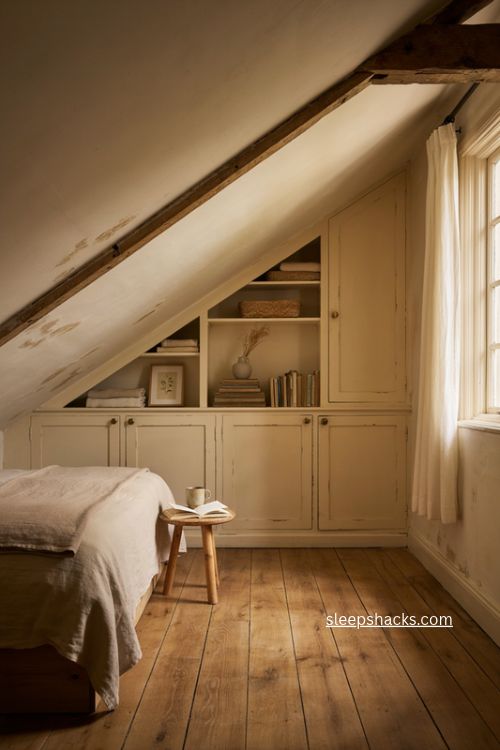
Sloped ceilings, odd nooks, and irregular wall angles are often written off as unusable, but they’re actually prime spots for custom built-ins. Cabinetry designed specifically to fit an awkward space can be shallower than a standard dresser or armoire, which is a genuine win when floor space is already tight. This kind of built-in also tends to disappear visually since it follows the room’s actual architecture instead of fighting against it. It’s a bigger investment than a store-bought dresser, but it solves the problem permanently.
6. Bring In a Statement Wardrobe
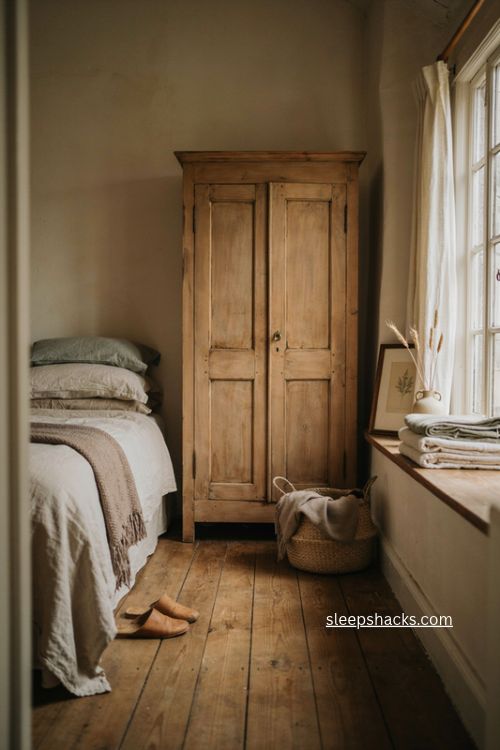
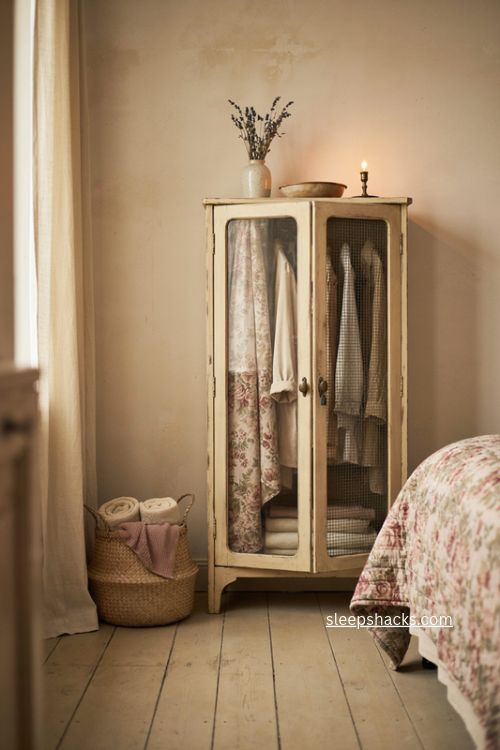
Without a built-in closet, a freestanding wardrobe or armoire becomes essential rather than optional, so you might as well make it a design feature. Placed in an awkward, empty corner, a beautiful wardrobe brings the space to life while giving you the hanging storage a closet normally would. Vintage and antique pieces bring in real character that a basic modern cabinet can’t quite replicate. Just measure the depth carefully, since a wardrobe that’s too deep can eat up more floor space than the room can comfortably spare.
7. Line Glass or Wire Doors With Fabric
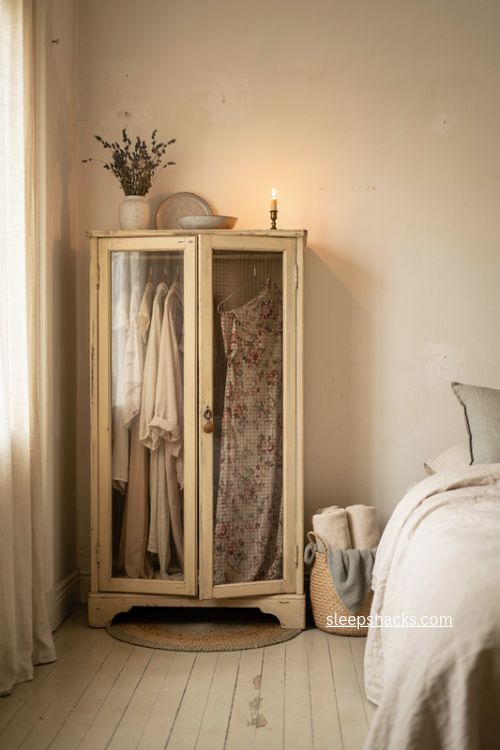
If your storage includes glass-front or wire-front cabinets, an easy trick keeps the contents from looking cluttered even when they’re not perfectly folded. Line the inside of the doors with a pretty fabric, secured with fabric tape or a light stitch, so clothes and shelves stay hidden from view. This adds a hit of pattern and color to the room while solving a genuinely practical problem. It’s an especially good fix if your storage furniture came with your rental and swapping it out entirely isn’t an option.
8. Try Barn Doors or a Rotating Closet System
For a slightly bigger upgrade, a rotating closet system tucked behind a set of barn doors or salvaged French doors can transform an awkward corner into real, closed-off storage. These systems often include a hidden mirror and dedicated shoe storage, packing an incredible amount of function into a relatively small footprint. Sourcing antique doors for the front adds instant character and makes the whole unit feel like part of the room’s original architecture. It’s a bigger project, but it effectively creates a closet where none existed before.
9. Annex an Awkward Attic or Eave Space
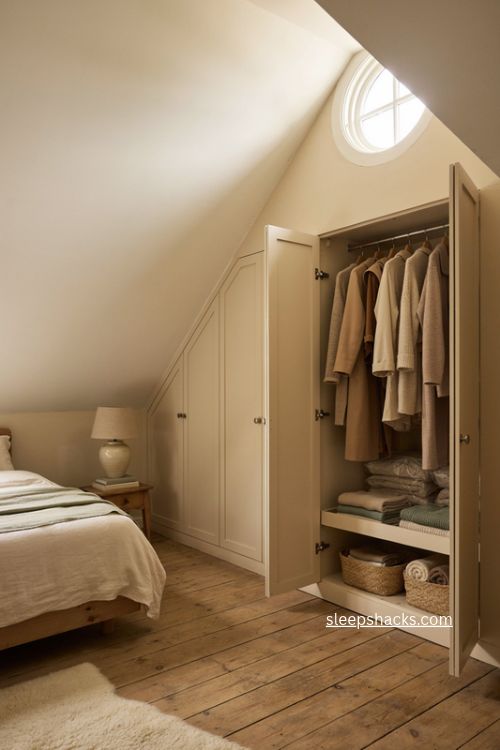
If your bedroom sits under a sloped roofline, the angled areas beneath the eaves are often dead space just waiting to be used. Installing hanging bars and pull-out shelves behind hidden, touch-latch paneling turns that unused triangle of space into genuine hanging storage. Because it’s fully concealed, the room still looks clean and uncluttered from the outside. Vacuum-sealed bags help maximize what fits inside if you’re storing bulkier items like sweaters or winter coats in there.
10. Flank the Bed With Ceiling-High Armoires
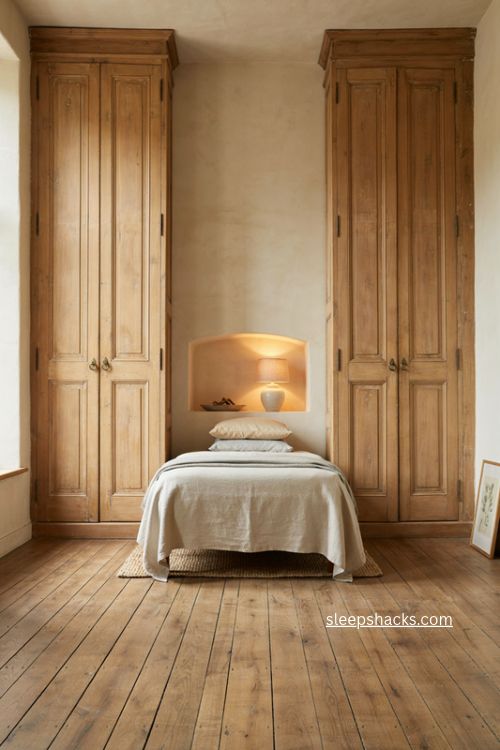
In a genuinely small room, two matching armoires positioned on either side of the bed can function as both closets and a design statement rolled into one. This approach uses vertical space efficiently, since ceiling-height storage takes up the same floor footprint as a much shorter piece of furniture. A small niche built into the wall between the armoires can even double as a bedside table, saving you from needing separate nightstands. It’s a clever way to get serious storage capacity without sacrificing the room’s overall sense of openness.
11. Invest in a Storage Bed
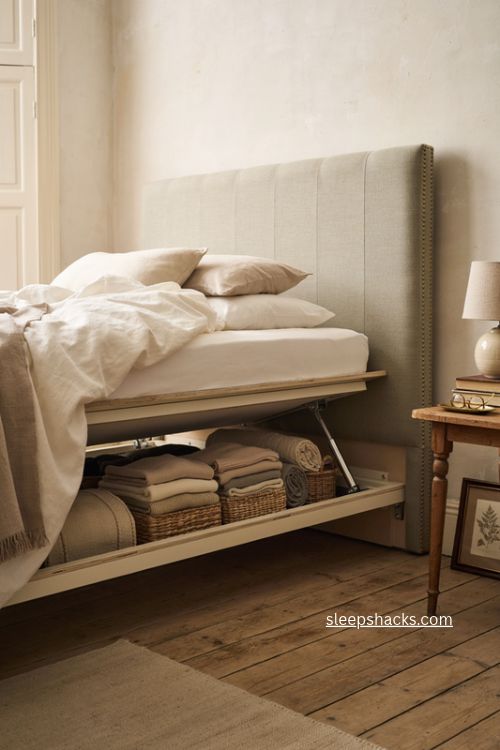
A bed with built-in storage underneath essentially gives you a second hidden closet, tucked directly beneath the mattress. Some versions use a hydraulic lift mechanism so you’re not wrestling with heavy drawers every time you need something. This is one of the most efficient upgrades for a genuinely tight room, since it doesn’t require adding a single extra piece of furniture. Look for one with a design you actually love, since the bed frame itself becomes one of the room’s most visible pieces.
12. Roll In a Cart for Flexible Storage
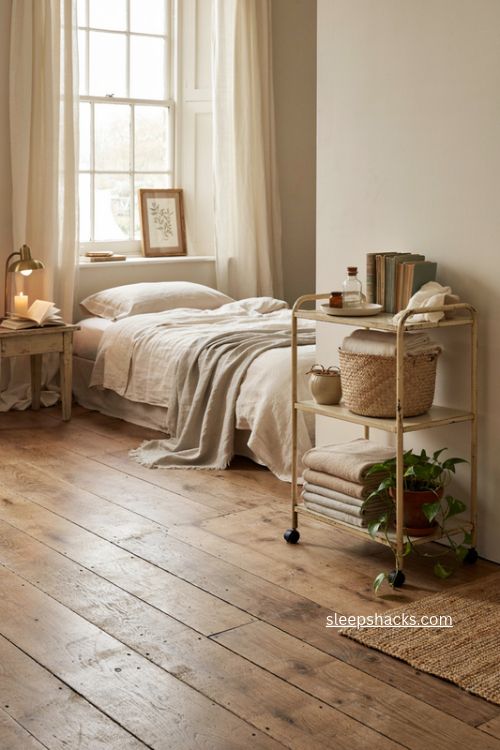
A rolling cart is one of the more overlooked bedroom storage ideas, mostly because people associate carts with kitchens rather than bedrooms. Use it as a mobile bookshelf, a nighttime skincare station, or extra storage for anything you want within reach but don’t want cluttering a fixed surface. Because it’s on wheels, you can tuck it into a corner when it’s not needed or pull it right up next to the bed. It’s a genuinely flexible solution for a room that might need to serve more than one function.
13. Rethink Your Vertical Wall Space
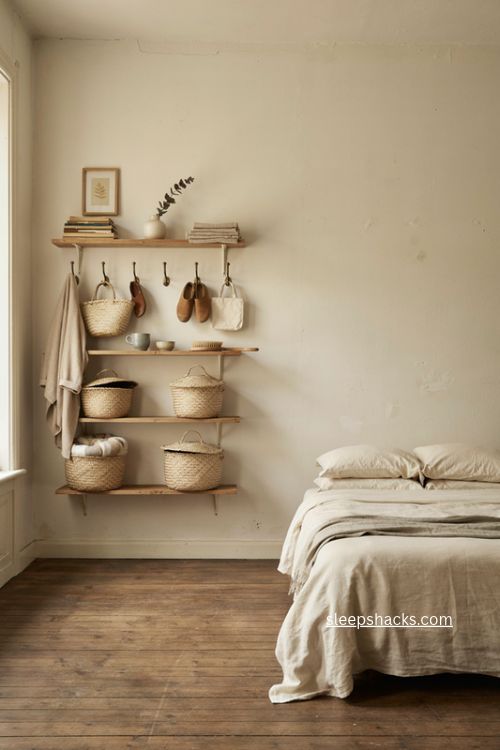
When floor space runs out, the walls themselves become the next best storage option. Floating shelves, mounted hooks, or even stacked lidded bins on a high shelf all take advantage of vertical real estate most people never think to use. This is especially useful for anything you don’t need daily access to, since a slightly higher shelf keeps things out of the way without requiring extra floor footprint. A few well-placed shelves can genuinely replace the need for an entire extra dresser.
14. Use a Room Divider as a Headboard Wall
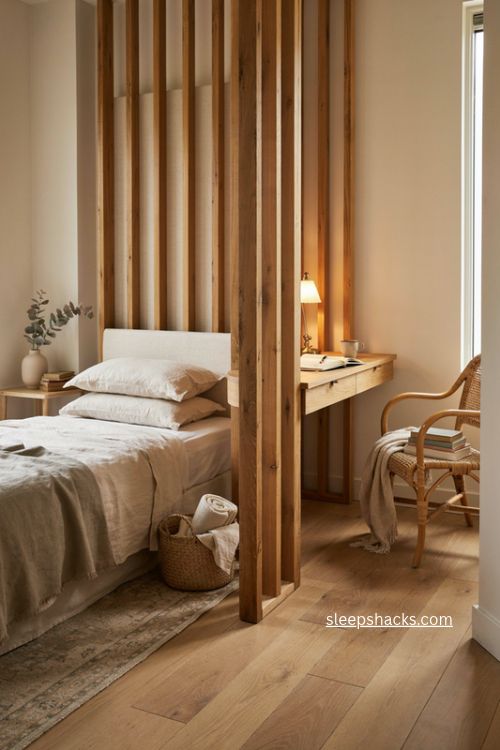
A custom headboard wall that doubles as a room divider sounds counterintuitive in a small space, but it can actually make a tight bedroom feel more functional. Dividing the room creates a sense of privacy and purpose on each side, whether that means separating a sleeping area from a small desk or reading nook. Even a simple folding screen, in velvet or bamboo depending on your style, achieves a similar effect without any construction at all. It’s proof that adding a boundary can sometimes open up a small room rather than closing it in.
15. Decant the Small Stuff Into Containers
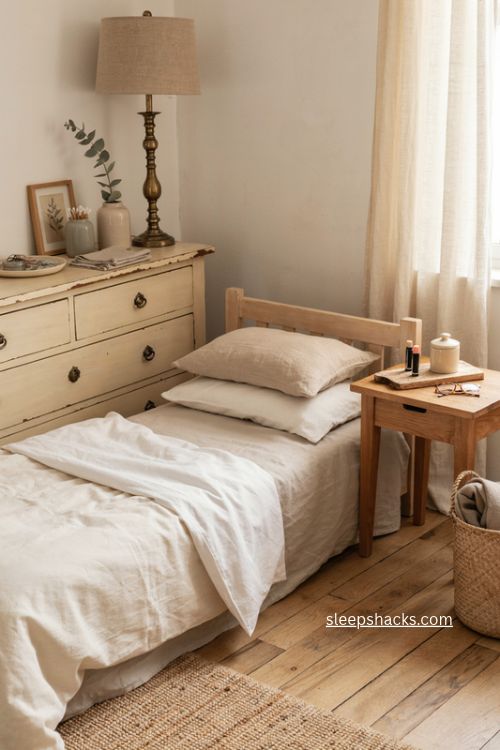
A cluttered nightstand or dresser top is often just a collection of tiny items with no designated home — hair ties, chapstick, loose change. Pretty canisters, trays, or a decorative bread board can corral these odds and ends into one tidy spot instead of letting them spread across every flat surface in the room. This trick, borrowed straight from kitchen pantry organization, works just as well for bedroom clutter. It’s a small change, but it makes every other storage solution in the room look more intentional by comparison.
Final Thoughts
Here’s the honest truth about small-bedroom storage: no single hack fixes everything, and you’ll probably need to combine two or three of these ideas before the room actually feels calm. Start with whatever’s bothering you most right now, whether that’s the pile of clothes on the chair or the total lack of hanging space, and build outward from there. Nobody’s bedroom storage system is perfect on the first try, and that’s genuinely fine. Give yourself permission to adjust as you go, and the room will get there.
Frequently Asked Questions
Q: How do I store clothes in a bedroom with no closet?
A freestanding wardrobe, ceiling-high armoires flanking the bed, or a custom built-in around an awkward wall nook are all effective substitutes for a traditional closet.
Q: What’s the best way to use space under the bed for storage?
Shallow, lidded bins are ideal for out-of-season clothing or spare linens, and a tailored bed skirt keeps everything hidden from view.
Q: Are storage beds worth it for small bedrooms?
Yes — a storage bed essentially adds a second hidden closet under the mattress without taking up any additional floor space in the room.