

There’s something about the moment you walk into a room and your mood just… shifts. That’s what happens when orange and teal share a bedroom.
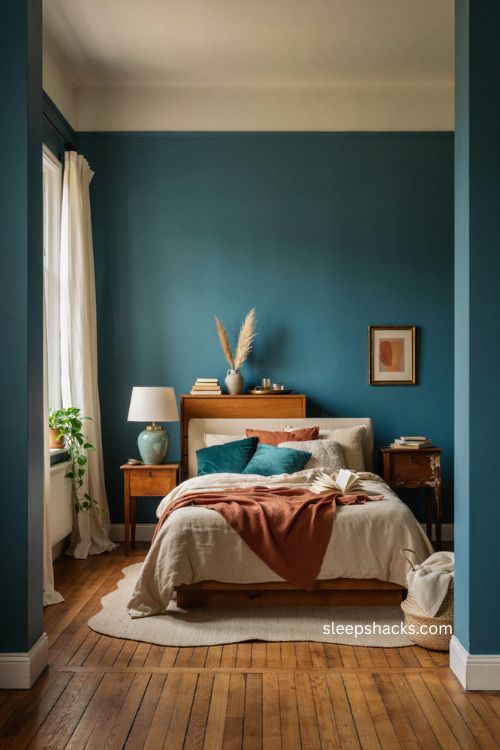
One color pulls from the ocean, the other from a sunset, and together they land somewhere between calm and electric. If you’ve been staring at beige walls wondering what’s missing, this might be it. Below are fifteen ways to bring this combination into your own space, from bold full-wall commitments to small styling touches you can swap out whenever the mood strikes. No two ideas here lean on the same trick, so whether you want drama or just a hint of color, there’s a version that fits.
1. A Teal Wall Behind Bold Bedding
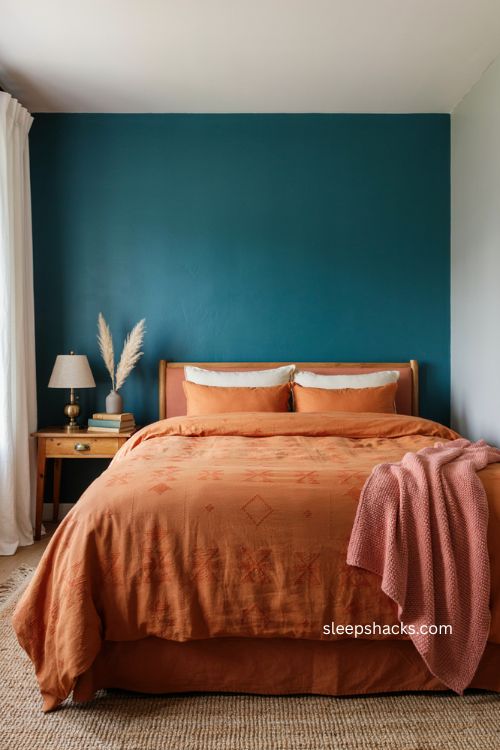
Paint just one wall — ideally the one behind your headboard — in a deep, saturated teal, and let the rest of the room stay quiet in white or soft gray. Then bring in bedding in burnt orange or tangerine, maybe with a pattern that mixes in a few coral tones. The trick to keeping this from feeling like too much is adding cream or white pillows to break up the intensity, plus a small metallic touch, like a brass lamp base, to warm things up further. It’s a low-commitment way to test the pairing before you go all-in on furniture or curtains.
2. An Upholstered Headboard in Rich Orange
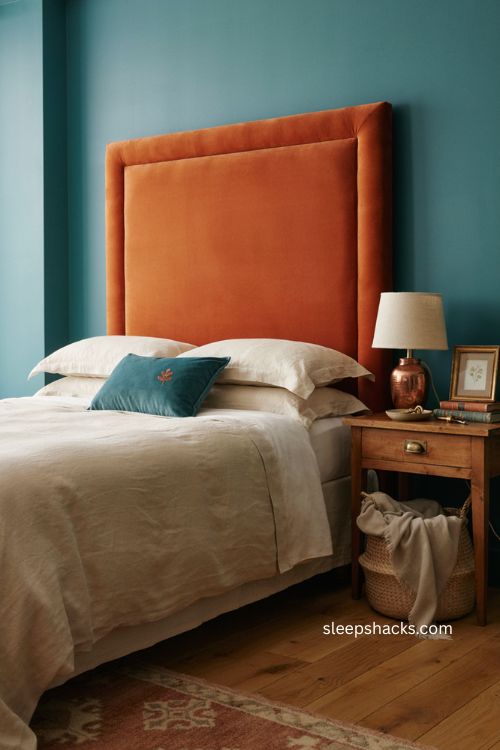
Against teal walls, a velvet or textured linen headboard in burnt orange or terracotta becomes the room’s anchor almost instantly. It draws the eye toward the bed without you having to do much else, which makes it a smart pick if you don’t want to redecorate every surface. Keep the bedding itself fairly neutral so the headboard stays the star, then tuck in one or two throw pillows that pull both colors together. Brass or copper drawer pulls on nearby nightstands echo the warmth and tie the whole look into something that feels considered rather than accidental.
3. Layered Patterns That Still Feel Calm
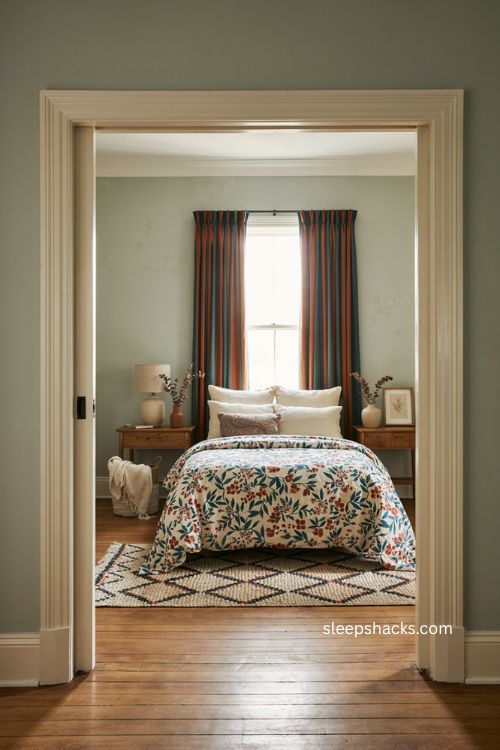
Mixing patterns sounds risky until you realize the secret is scale, not color count. Start with one larger print — a botanical or a bold floral — that already carries both teal and orange, then add a mid-sized geometric piece, and finish with something small like a fine stripe. Keep the color intensity consistent across all three so nothing fights for attention. A striped teal-and-orange curtain paired with a geometric rug and a paisley throw pillow is an easy formula. Leave breathing room between patterns with a plain white or wood-toned surface so the eye has somewhere to rest.
4. Teal Furniture, Orange Accents
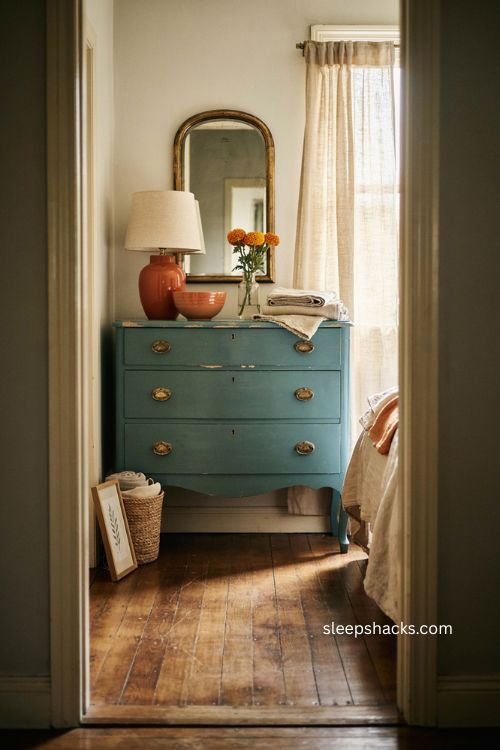
Rather than committing to paint, invest in one standout piece — a vintage teal dresser or a pair of teal nightstands — and build your orange in through accessories you can change later. Think a tangerine table lamp, a ceramic bowl, or a vase of fresh marigolds sitting on top. This setup gives you room to experiment; swap the orange pieces out for a different accent color whenever you’re ready for a refresh, without touching the furniture itself. It also means the teal piece can double as a genuine focal point, especially if it has interesting hardware or a curved, retro silhouette.
5. Geometric Art That Moves the Eye
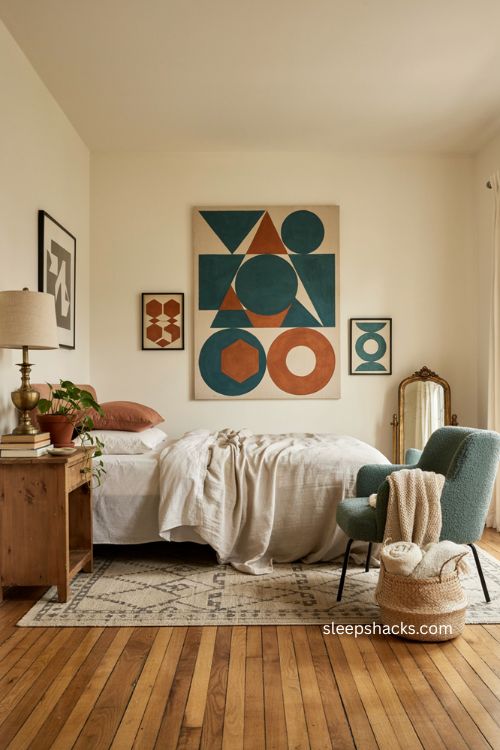
A gallery wall or a single oversized canvas featuring interlocking shapes in teal and orange gives a bedroom instant energy without requiring a single can of paint. Triangles, overlapping circles, or a bold hexagon pattern all work, and you get to control exactly how much of each color shows up. Hang the piece above the bed or over a reading chair so it becomes a natural focal point in the room. For balance, mix in one black-and-white geometric print alongside the colorful ones — it grounds the palette and keeps things from feeling too candy-colored.
6. A Two-Toned Ceiling for a Surprise Detail
Most people never think to look up, which is exactly why a split ceiling — half teal, half orange, divided by a clean white line or a strip of molding — feels so unexpected. It works especially well in rooms with a tray ceiling or exposed beams, since the architecture already gives you a natural dividing line. Keep the walls neutral so the ceiling gets to do the talking, then repeat small touches of both colors in your bedding or a throw blanket so the eye naturally travels upward and back down again.
7. Curtains That Frame the Window in Warmth

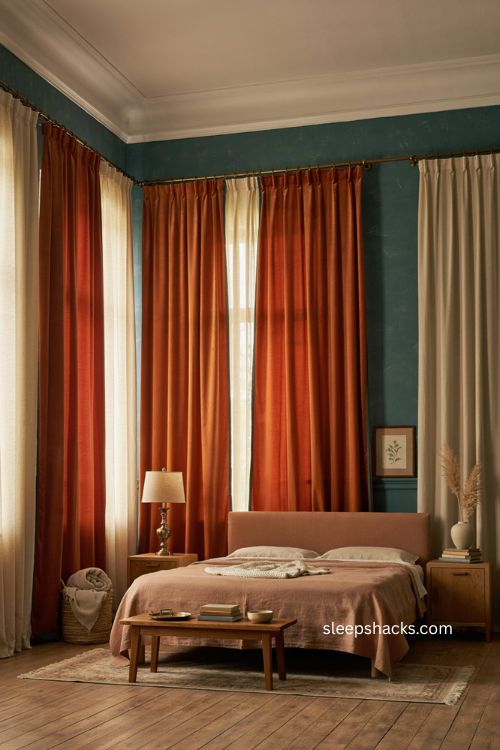
Floor-length orange curtains against teal walls change character depending on the time of day — sheer burnt orange glows softly in the morning, while a heavier velvet panel adds drama once the sun sets. Layer in white or cream sheers underneath if you want flexibility over how much light comes through. For something a bit more detailed, look for curtains with a teal trim or subtle embroidery that nods to the wall color without matching it exactly. In a room with generous windows, this becomes less of an accessory and more of an architectural feature.
8. Stripes That Reshape the Room
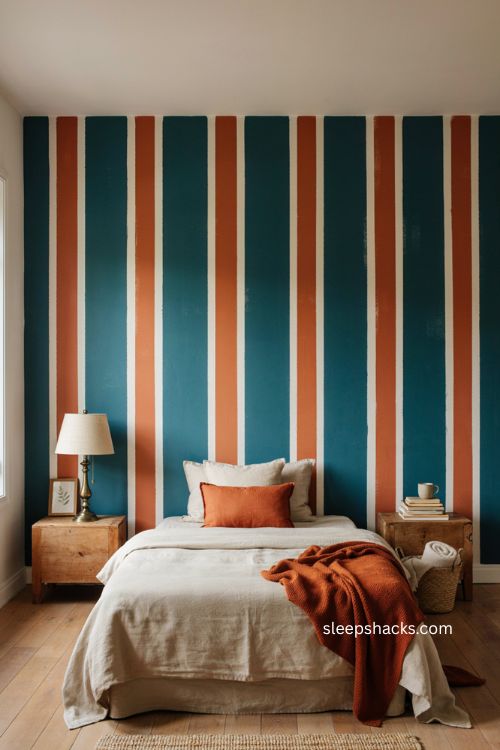
Alternating teal and orange stripes, painted either horizontally or vertically, do double duty as decor and as a visual trick — vertical stripes stretch a low ceiling upward, while horizontal ones make a narrow room feel wider. Varying the width of each stripe, maybe a thick teal band next to a thinner orange one, keeps it from feeling too rigid. This works especially well as a headboard-wall alternative, painted directly behind the bed. Use painter’s tape for sharp lines, and consider a thin white gap between colors so the stripes don’t blur into one busy mess.
9. A Boho Take With Natural Textures
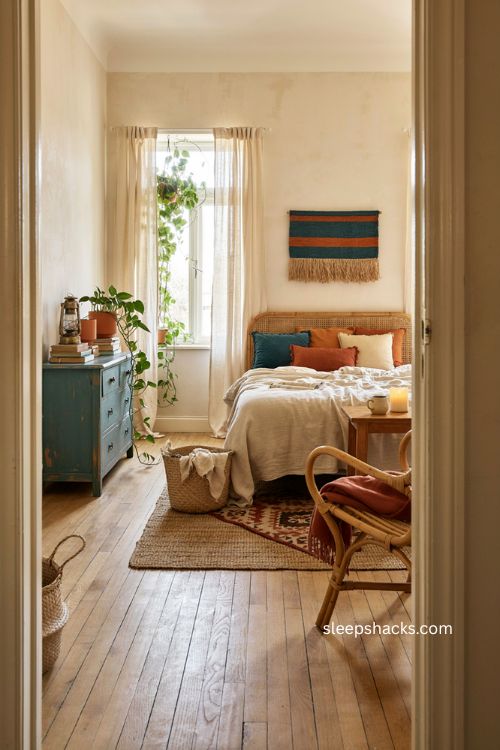
Softening this palette with rattan, jute, and woven textures turns a bold color pairing into something that feels lived-in rather than staged. A teal dresser topped with orange ceramic planters and a trailing pothos plant is a good starting point, and a woven wall hanging that includes both colors ties the whole thing together. Add a brass lantern or two, a layered rug, and several textured throw pillows in varying shades rather than one exact match. The bohemian approach forgives imperfection, which makes it a comfortable entry point if bold color still feels a little intimidating.
10. Clean Color Blocking for a Minimalist Room
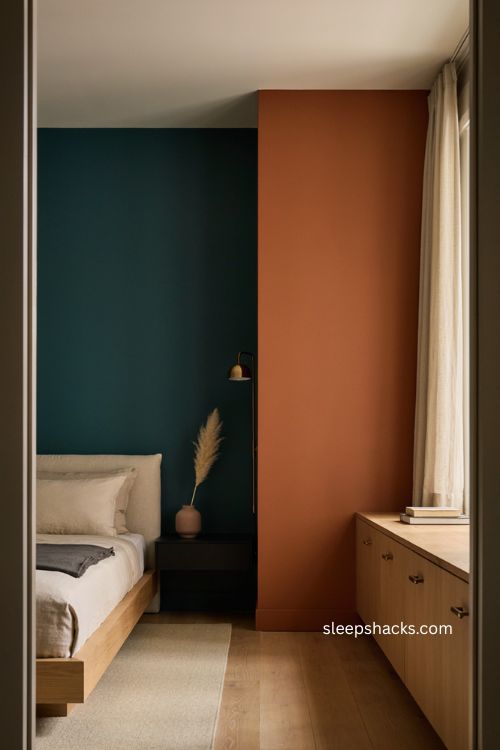
If you’d rather keep things simple, try one solid teal wall meeting one solid orange wall at a corner, with furniture kept to sleek, unfussy shapes. This style depends more on good materials and precise execution than on layering lots of accessories, so choose pieces with hidden storage and quiet silhouettes. Limit yourself to one or two statement objects, like a single abstract painting or a sculptural floor lamp, rather than filling every surface. Done well, this proves that you don’t need pattern or texture to make a bold color combination feel intentional.
11. A Vintage, Mid-Century Inspired Room
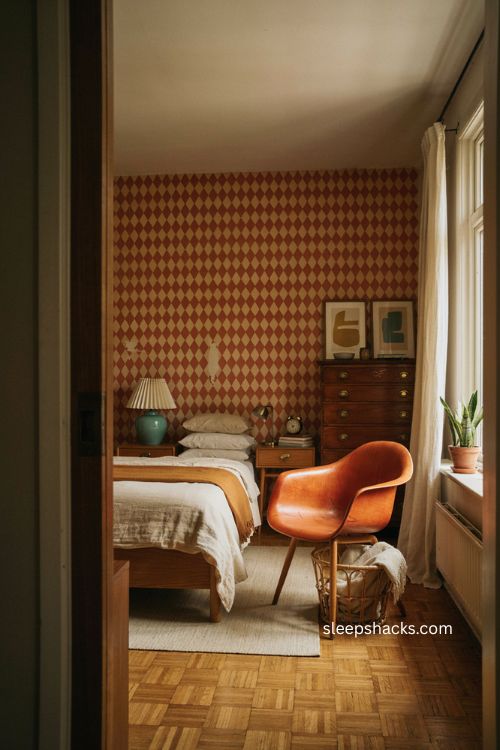
Hunting down actual vintage pieces — a molded orange plastic chair, a teal ceramic lamp with its original shade — brings a sense of history that new furniture can’t quite fake. Pair those finds with retro-style wallpaper in a geometric print and a couple of period posters for extra character. Brass hardware and warm wood tones round out the look and keep it from feeling like a costume. A modern twist, like swapping in updated drawer pulls on an otherwise vintage dresser, lets you blend the old and new without losing the room’s personality.
12. An Ombre Wall From Teal to Orange
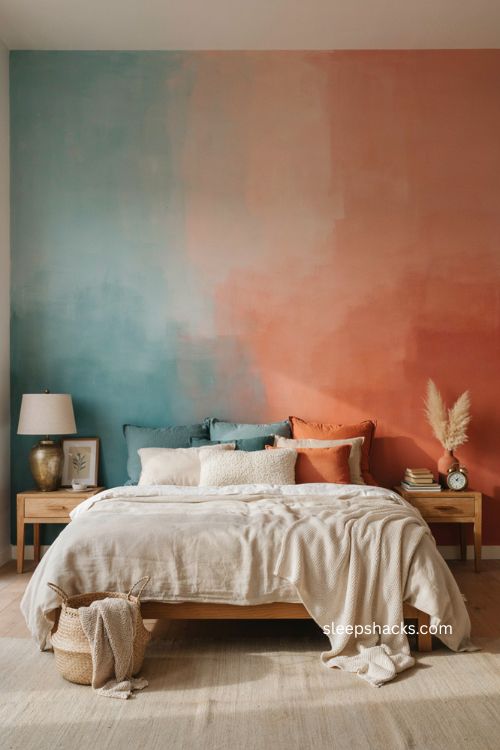
A gradient that shifts gradually from deep teal through blue-green and coral into orange gives a room the feeling of a sunset caught mid-transition. This works particularly well as a single accent wall behind the bed, using either blended paint, ombre wallpaper, or hung fabric panels if you want something less permanent. The soft transition takes the edge off what could otherwise be a stark color contrast. Echo the same gradient on a smaller scale with pillows arranged from darkest to lightest, so the effect repeats quietly throughout the room.
13. A Moroccan-Inspired Layered Look
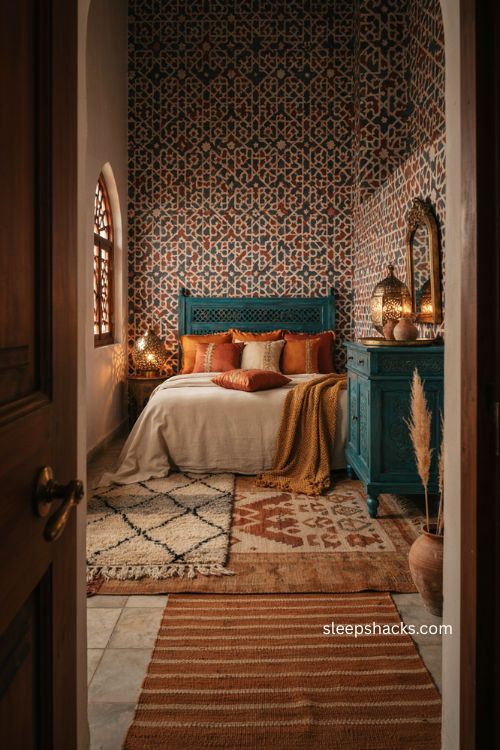
For a room with more texture and pattern than any other idea on this list, borrow from Moroccan design: tile-effect wallpaper in geometric teal-and-orange patterns, carved wood furniture painted teal, and cushions with gold embroidery. Pierced metal lanterns cast soft shadows across the walls at night, and layering two or three patterned rugs adds depth underfoot. Arched mirrors and brass trays finish the look. This approach genuinely rewards more-is-more thinking, so lean into it rather than holding back once you commit to the style.
14. Industrial Charm With Color Pops
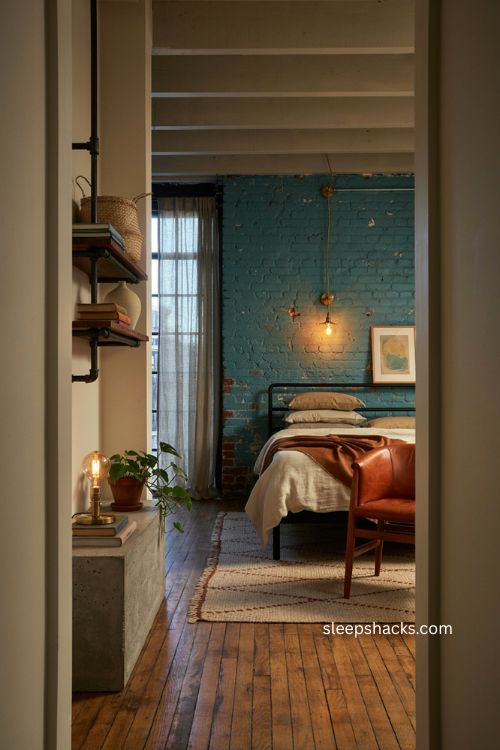
Exposed brick, a metal bed frame, and concrete-look surfaces might sound like an unlikely backdrop for teal and orange, but the contrast actually makes both colors pop harder than they would against plain drywall. An orange leather accent chair set against a teal-painted brick wall is a strong starting point, and open pipe shelving stocked with books in both colors adds another layer without extra effort. Warm-toned Edison bulbs soften the industrial edge and make the colors read richer at night. It’s proof that a cooler, more raw material palette doesn’t cancel out warmth — it can actually amplify it.
15. A Tropical Escape in Two Colors

Here, teal stands in for the ocean and orange for sunset skies and exotic blooms, built on a base of large-leafed plants, bamboo furniture, and a natural fiber rug. Add orange through tropical-print pillows or real flowers in a vase, and let teal show up through painted furniture or a feature wall. A sheer white canopy over the bed softens the boldness of the color pairing while adding a resort-like feel. On a gray morning, waking up in a room like this can genuinely make the season outside feel beside the point.
Final Thoughts
At the end of the day, orange and teal work because they balance each other out — one cools things down, the other warms them back up, and neither one lets the room go flat. You don’t need to use every idea here, and you definitely don’t need to go all-in on day one. Pick the version that matches how bold you’re actually feeling right now, whether that’s a single throw pillow or a fully painted ceiling. Start small if you’re unsure, and let the room grow bolder as your confidence does.
Frequently Asked Questions
Q: Will orange and teal make a small bedroom feel cramped?
Not if you use them intentionally — one accent wall or a few well-placed accessories usually reads as bold rather than overwhelming, even in a smaller room.
Q: What neutral colors pair best with an orange and teal bedroom?
White, cream, soft gray, and natural wood tones all work well to balance the two bold colors without competing with them.
Q: How do I keep an orange and teal bedroom from feeling too busy?
Try the 60-30-10 rule — mostly neutrals, a supporting amount of one accent color, and a smaller pop of the second — then adjust the ratio to taste.