

Here’s something that might surprise you: the best primary bedrooms rarely start with a big, dramatic idea. Most of the time, they start with one small decision — where the bed goes, which wall gets the color, whether the lighting comes from above or beside you — and everything else gets built around that.
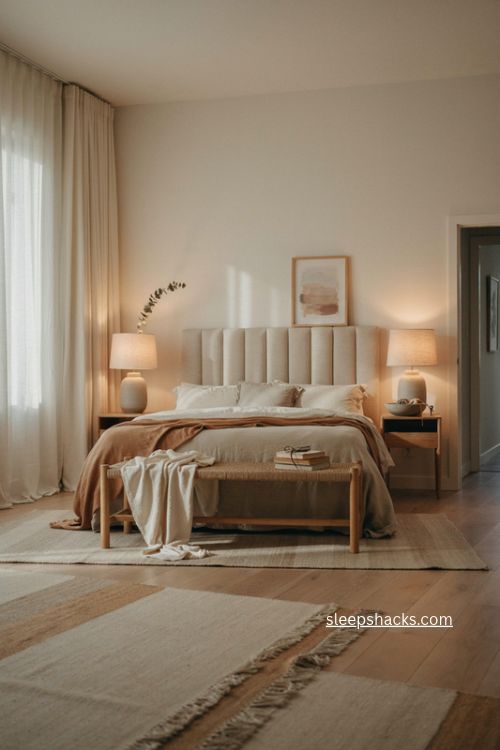
It’s the layering of small, intentional choices that ends up making a primary bedroom feel like a genuine sanctuary instead of just the room where the bed happens to be. Whether you’re working with a sprawling suite or a modest square footage, the same principles apply. Here are fifteen ways designers actually approach the room where your day starts and ends.
1. Start With a Neutral Base and Layer In Texture
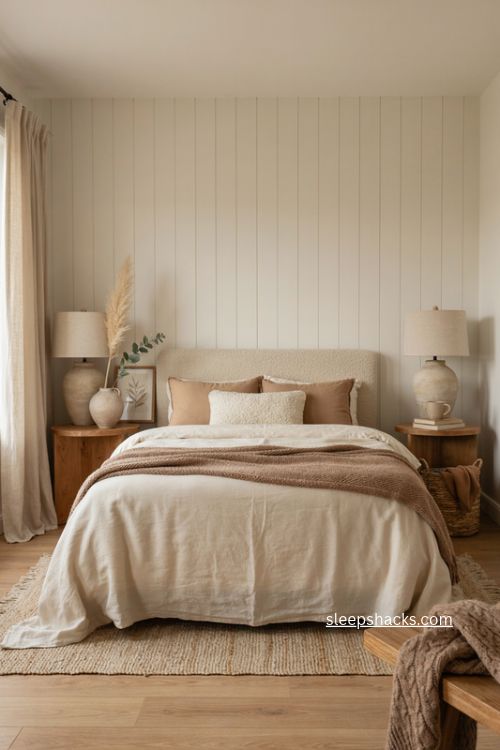
A calm primary bedroom almost always begins with warm neutrals — think cream, camel, and soft taupe on the walls rather than stark white. From there, the personality comes through texture instead of color: a bouclé throw pillow, a linen duvet, a shiplap accent panel behind the bed. This layering approach keeps the room feeling lived-in and warm rather than flat or sterile. The trick is variety — mix at least two or three different textures in the same tonal family so the eye has something to explore without introducing any jarring contrast.
2. Center the Bed for Instant Symmetry
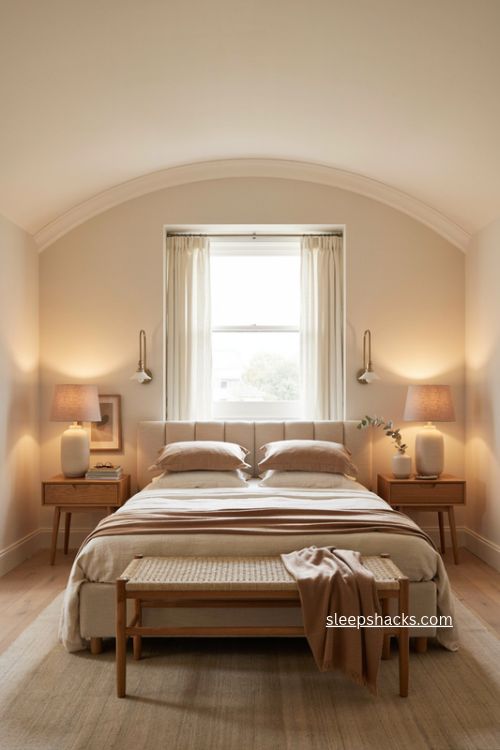
Where you place the bed sets the tone for the entire room, and centering it under a window or a vaulted ceiling creates an immediate sense of balance. Flank it with a matching pair of nightstands, lamps, or wall sconces so the eye naturally settles rather than searching for a focal point. Pendant sconces mounted on either side also free up nightstand space and draw the eye upward toward higher ceilings. This kind of symmetry is one of the simplest tricks in a designer’s toolkit, and it works in primary bedrooms of almost any size.
3. Carve Out a Seating Area
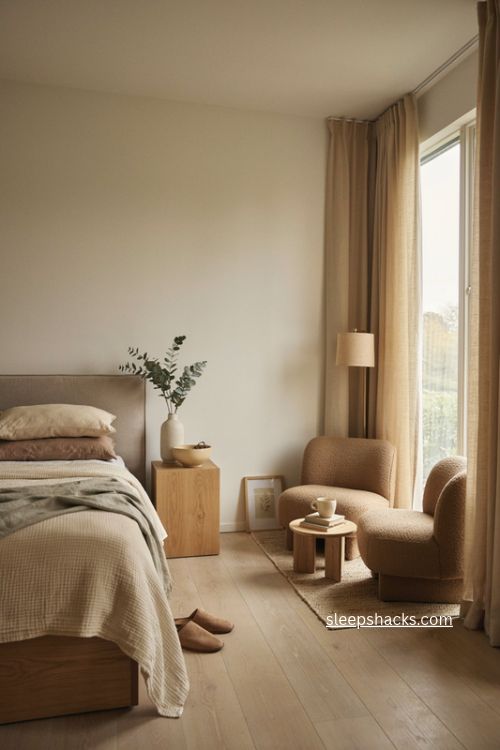
A primary bedroom is capable of being more than just a place to sleep, and a small seating nook expands what the room can actually do for you. Two chaises angled toward a window, or a single armchair tucked into an empty corner, turns unused floor space into somewhere you’d actually want to sit with coffee or a book. If your room faces a nice view, arrange the seating to frame it rather than blocking it with the bed. Even a compact primary bedroom can usually fit one chair if you’re willing to lose a little floor space elsewhere.
4. Anchor the Room With an Area Rug
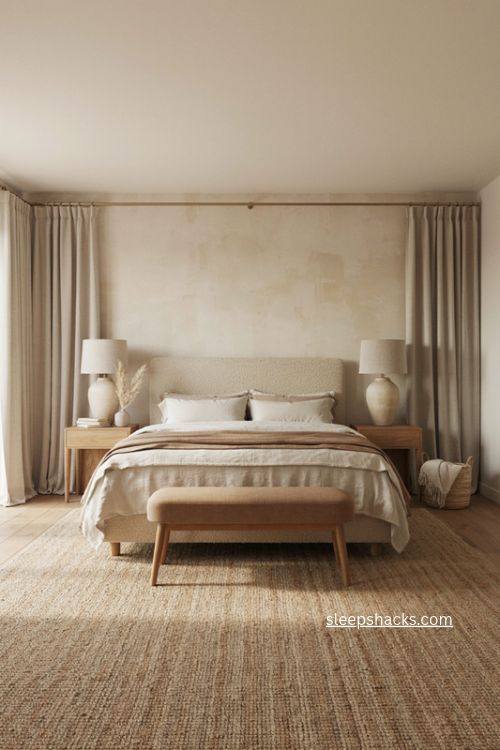
There’s a real difference between stepping onto cold flooring first thing in the morning and stepping onto something soft, and a well-placed area rug solves that instantly. Beyond comfort, the rug should relate to the room’s overall geometry — a rectangular rug under a rectangular bed, positioned so it extends evenly on all sides. Choose a texture or pattern that echoes another element in the room, whether that’s the drapery or the headboard fabric, so it feels connected rather than randomly placed. It’s a detail people notice by feel before they notice it by sight.
5. Add Molding or Paneling to the Bed Wall
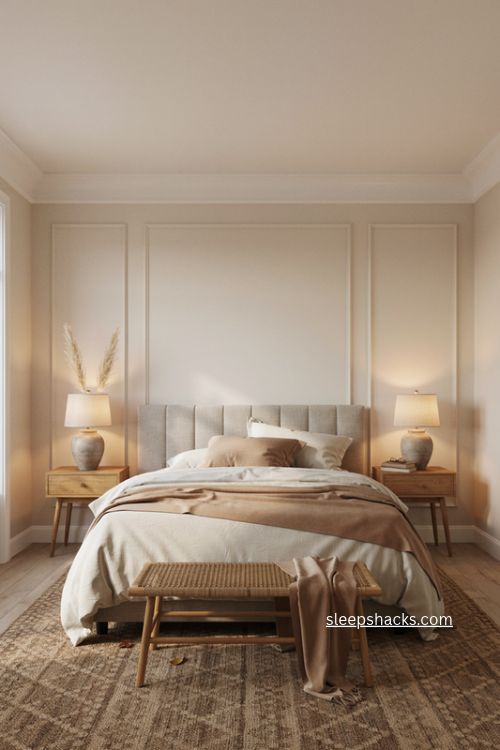
A DIY crown molding or paneling project on just the wall behind your bed is one of the highest-impact, lowest-cost primary bedroom upgrades out there. You don’t need to wrap the entire room in millwork — limiting it to a single wall still anchors the space and adds real architectural interest. Pair it with a tray ceiling or a bold area rug underneath, and the geometric lines will carry the eye through the whole room. It’s a weekend project that reads as a much bigger renovation than it actually is.
6. Go Bold With Wallpaper
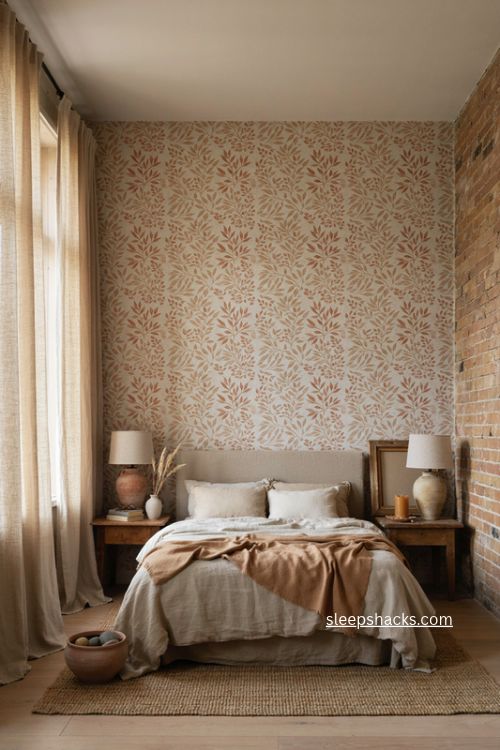
A lot of people assume a calm primary bedroom has to mean plain walls, but a well-chosen wallpaper can add plenty of personality without sacrificing that sense of peace. The key is cohesion — a pattern that complements the room’s existing textures and colors rather than fighting them. In a room with exposed brick or natural material already present, a patterned paper can actually soften those harder surfaces instead of competing with them. Think of the wallpaper as adding warmth and a sense of story to the room, not as the loudest thing in it.
7. Try a Dark, Moody Palette
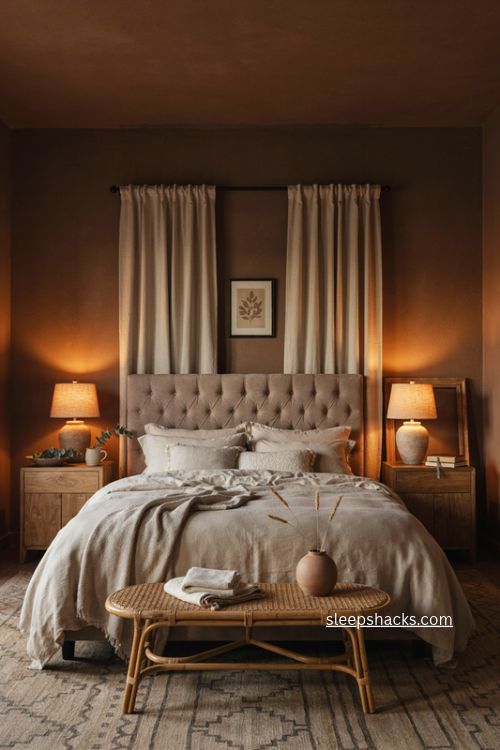
Light and airy isn’t the only way to create calm — a deep, earthy wall color can feel just as restful, sometimes more so. A dark, warm brown or charcoal on the walls and ceiling creates an enveloping, cocoon-like effect that feels especially cozy once the lights are dimmed at night. To keep it from feeling heavy, pair the bold color with softer, more restrained choices in the window treatments and bedding. That contrast between bold walls and quiet textiles is what keeps a dark bedroom feeling soothing instead of closed-in.
8. Layer In Patterned Textiles
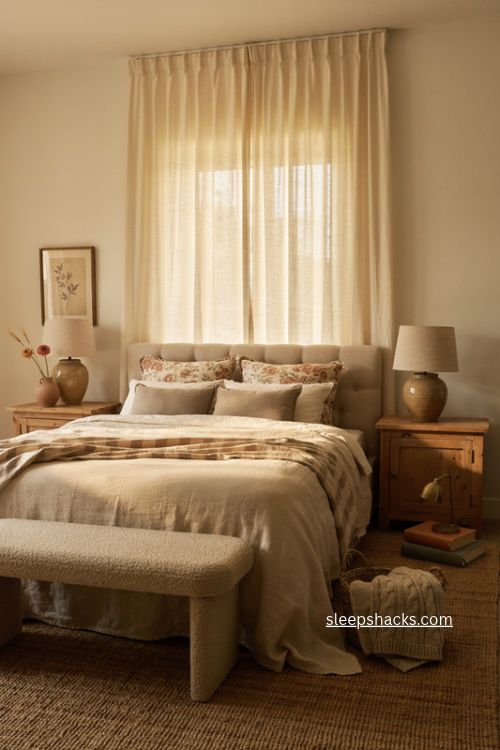
Once your big-picture color palette is settled, patterned textiles are where the room’s personality really comes through. Floral pillow covers, a textured duvet, or a printed throw at the foot of the bed add visual interest without requiring any permanent commitment. Choose patterns that echo your existing palette rather than introducing brand-new colors, so the room still reads as cohesive. This is also the easiest part of a primary bedroom to swap out seasonally if you want to refresh the space without repainting anything.
9. Paint an Accent Ceiling
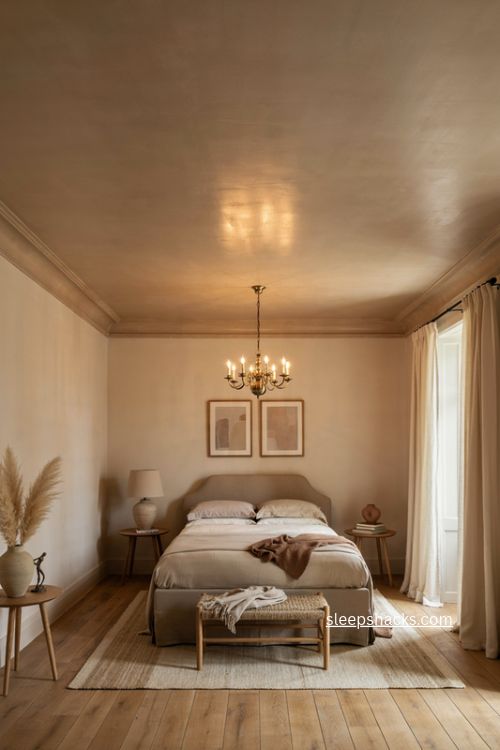
Most people default to an accent wall, but painting the ceiling instead is a genuinely unexpected way to add a focal point to a primary bedroom. A warm metallic or a soft complementary color overhead brings unexpected drama into a room without changing a single piece of furniture. It’s also one of the lowest-commitment bold moves you can make, since a ceiling color is easy to change again later if your taste shifts. Pair it with lighting that reflects a bit of that finish, like a brass or gold fixture, to tie the whole look together.
10. Hang a Statement Chandelier
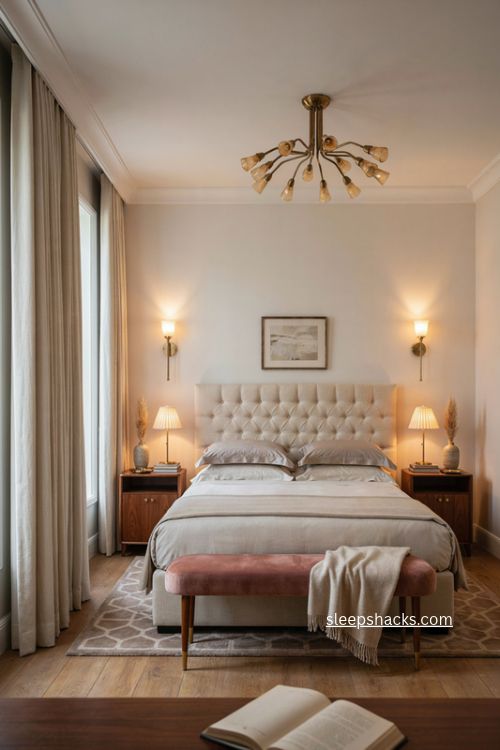
A chandelier over the bed does double duty — it draws the eye upward to make ceilings feel taller, and it adds a level of old-world charm that a simple flush-mount fixture never will. This works especially well in a primary bedroom aiming for a luxurious, hotel-suite feel, where every detail is meant to feel a little more elevated than usual. Keep the rest of the lighting layered with sconces or lamps so the chandelier isn’t doing all the work on its own. The goal is a room that feels sophisticated at night and calm during the day.
11. Consider a Murphy Bed for Smaller Suites
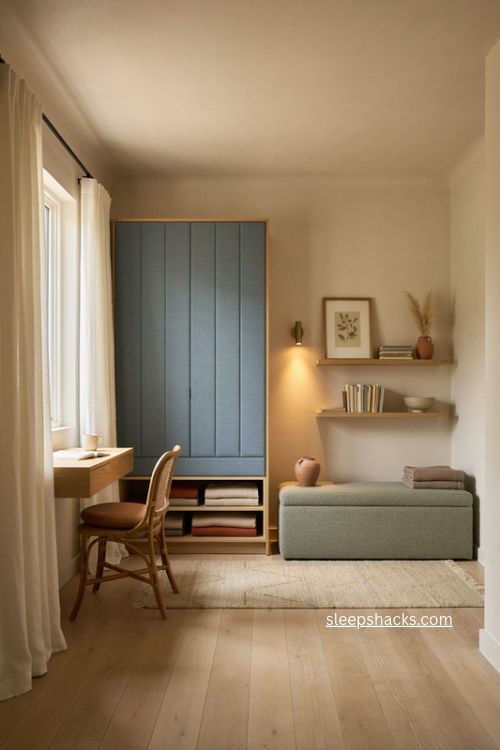
If your primary bedroom is on the tighter side, a Murphy bed can genuinely change how the whole room functions. Fold the bed away during the day, and suddenly you’ve got space for a desk, a bench, or simply more room to move around. Modern versions look nothing like the clunky fold-down beds of decades past — many now come upholstered and colorful enough to serve as a design feature in their own right. It’s a smart option for anyone who wants a primary bedroom that does more than one job.
12. Build a Cozy Corner, Wherever You Can Find One
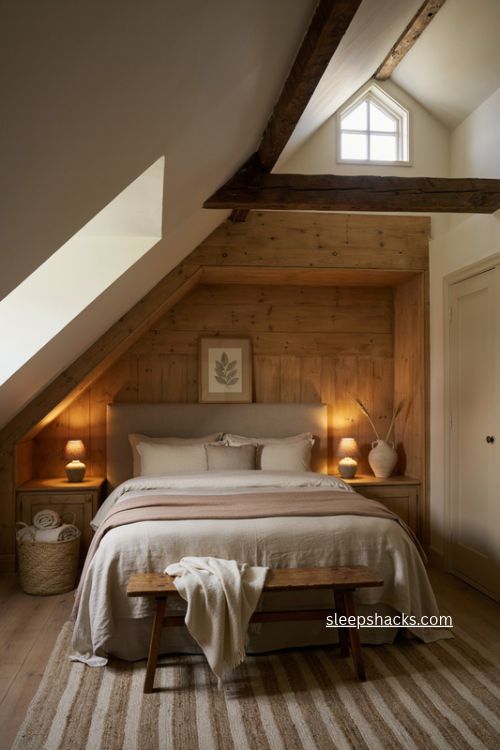
Even in unconventional spaces — a converted attic, a renovated RV, an oddly shaped nook — you can create a primary bedroom that feels genuinely intentional. Wood paneling over an awkward closet door or a custom headboard built to fit an unusual space turns a limitation into a feature instead of a compromise. The goal isn’t to hide the quirks of the room but to build around them, so the finished space still feels warm rather than makeshift. Good design doesn’t require a perfectly proportioned room to begin with.
13. Frame the Bed With a Paint Accent
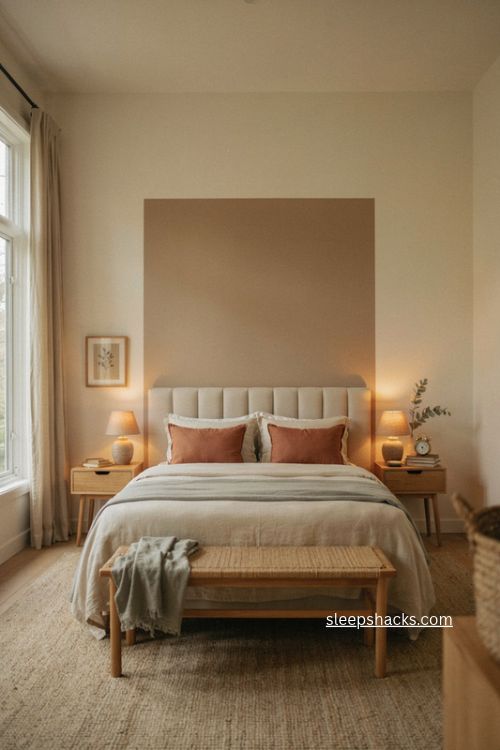
Instead of a headboard wall covered floor to ceiling, try painting just a soft rectangle of color directly behind the bed to frame it. This subtle trick draws attention to the bed as the room’s natural focal point without requiring wallpaper, molding, or any major construction. Coordinate the paint shade with an accent color already present in your bedding for a look that feels pulled together rather than random. It’s one of the simplest primary bedroom updates on this entire list, and it costs next to nothing.
14. Soften the Room With a Custom Mural
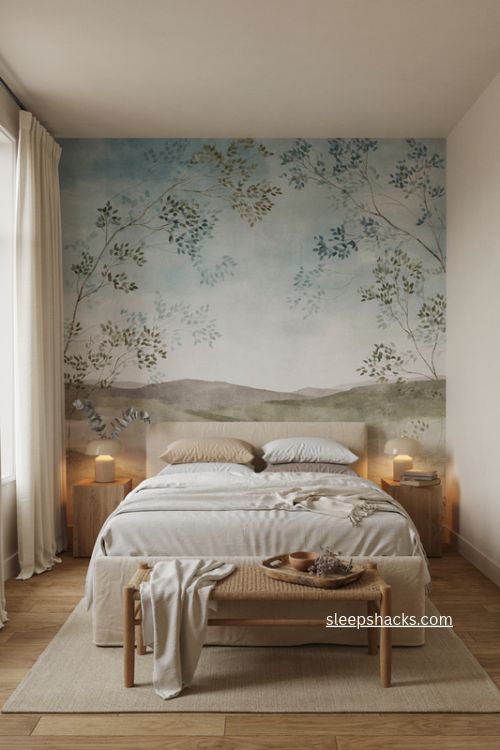
If the rest of your home leans toward richer, more saturated colors, your primary bedroom can serve as a deliberate break from that intensity. A soft, nature-inspired mural in muted tones gives the room a gentler mood while still adding real visual interest. This works particularly well when you want the bedroom to feel like a genuine retreat from a bolder aesthetic used everywhere else in the house. Keep the surrounding bedding and furniture simple so the mural has the space to be the quiet star of the room.
15. Try a Tonal Color Palette
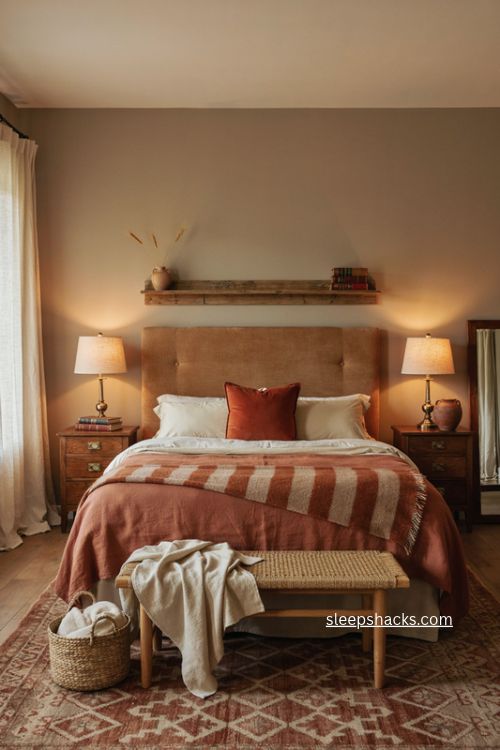
Rather than mixing multiple bold hues, choose several shades that all sit on the same side of the color wheel — warm browns and reds, for example, or cool blues and greens. This tonal approach creates a cozy, cocoon-like feeling without the visual noise of colors competing for attention. It also makes decorating decisions much easier, since almost anything within that tonal family will coordinate automatically. A primary bedroom built this way tends to feel effortlessly pulled together, even if you added the pieces one at a time over months.
Final Thoughts
So what does your primary bedroom actually need to feel like your favorite room in the house? Maybe it’s not a bigger renovation at all, but one of these smaller, more intentional choices — a rug underfoot, a color on the ceiling, a chair in the corner you never used before. What would change if you treated this room with the same care you’d give a space guests actually see? That’s really the question worth sitting with before you touch a single wall.
Frequently Asked Questions
Q: What’s the difference between a primary bedroom and a master bedroom?
They refer to the same room — primary bedroom is simply the more current term, chosen because it describes the room’s significance without implying any hierarchy.
Q: How do you make a primary bedroom feel more luxurious?
Layer in soft textures, add a statement light fixture like a chandelier, and keep your color palette cohesive so every element feels intentional rather than random.
Q: What size rug works best under a primary bedroom bed?
Choose a rug large enough to extend evenly on all sides of the bed frame, so your feet land on it no matter which side you get up from.