

Almost everyone has stood in a tiny bedroom, bed pushed against one wall, and thought there’s simply no way to make this work. Nobody tells you that the smallest rooms are often the ones people end up loving most. They’re snug, easy to heat, quick to clean, and when they’re done well, they feel like a hug instead of a closet.
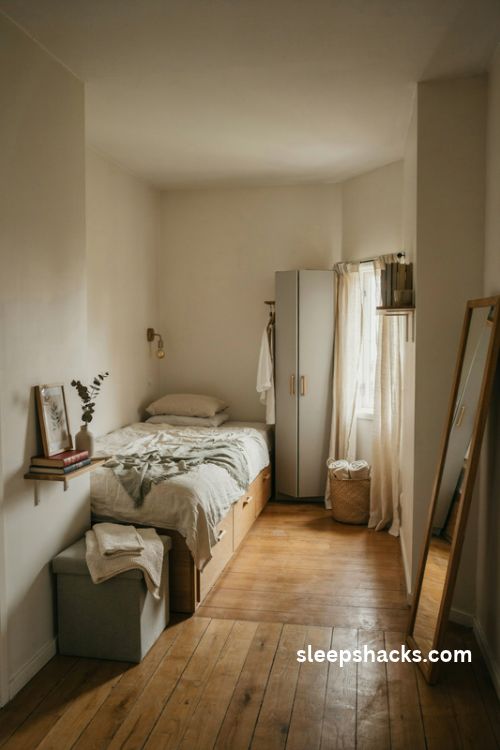
The secret isn’t buying less. It’s choosing smarter, with furniture that does two jobs, colors that bounce light around, and storage that hides in places you’ve never thought to look. Below are 17 ideas for extremely small bedrooms, from lofted beds and mirror tricks to slim lighting and clever shelves, all built for rooms where every inch counts.
1. A Loft Bed with Storage Underneath
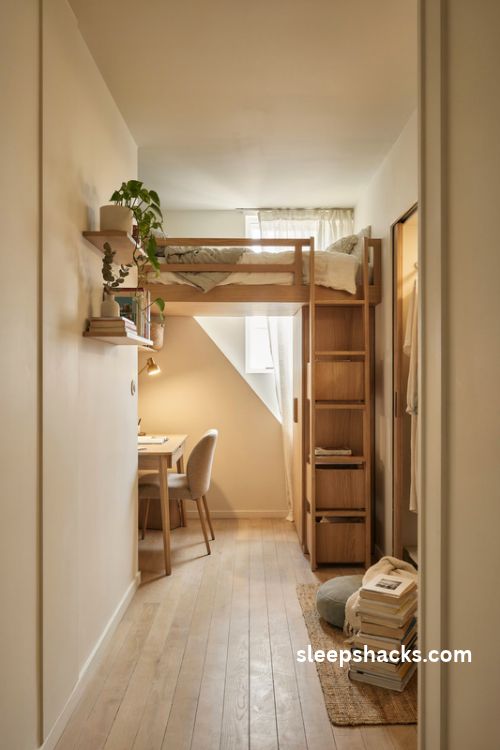
When floor space is almost nonexistent, go up. A loft bed lifts your mattress toward the ceiling and frees the entire area below for a desk, a wardrobe, or a cozy reading spot.
Measure your ceiling height first, since you’ll need at least eight feet to sit up comfortably on the lofted mattress. Choose a sturdy frame with a built-in ladder or stairs, and look for models with a guardrail on every open side. Stairs with drawers built into each step give you extra storage. Keep the area below light in color so it doesn’t feel like a dark cave.
2. A Platform Bed with Deep Drawers
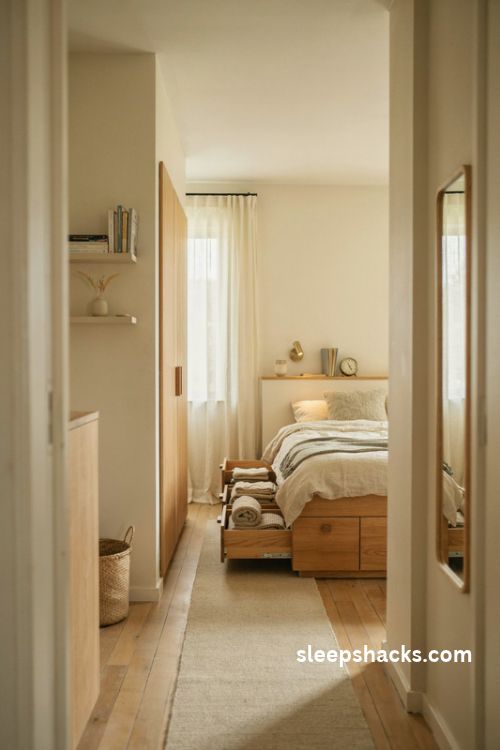
If a loft feels like too much, a platform bed with drawers underneath does a similar job at a lower height. The space beneath the mattress is usually wasted, and drawers turn it into a full dresser.
Look for drawers that glide on proper rails and are deep enough for bulky items like sweaters and bedding. Measure how much clearance you need to pull them fully open, since a drawer you can’t open is useless. A low headboard with a built-in shelf holds your phone and a glass of water, so you can skip the bedside table entirely.
3. Light, Airy Wall Colors
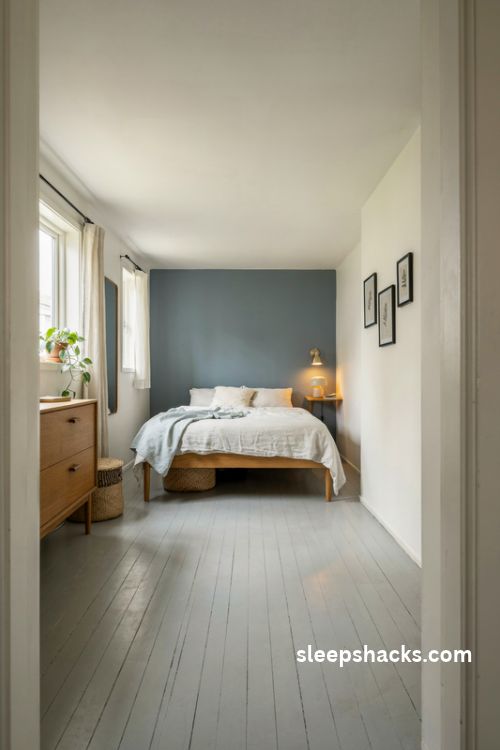
Color changes how big a room feels more than almost any other choice. Soft whites, pale grays, warm creams, and gentle blues reflect light and make the walls seem to step back.
Paint the ceiling the same color as the walls, or a shade lighter, so the eye doesn’t stop at the corners. A satin or eggshell finish bounces a little extra light around without looking shiny. If you love dark colors, try a deep shade on one wall behind the bed only. The rest of the room stays bright, and the dark wall adds cozy depth.
4. A Large Mirror Opposite the Window
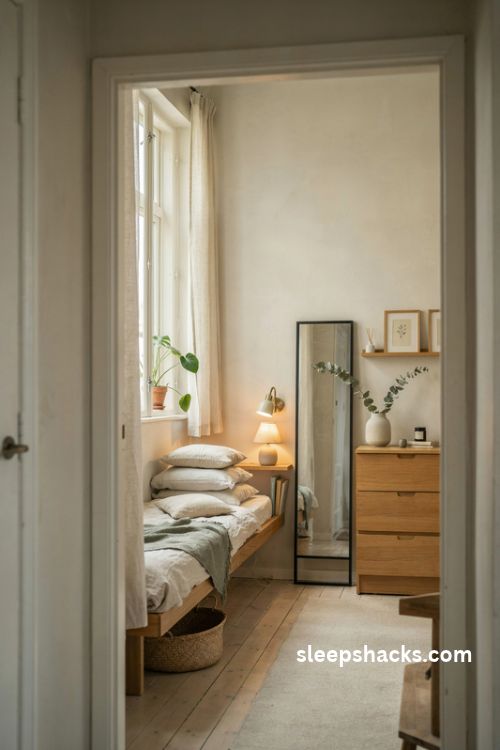
Mirrors are the oldest trick for small spaces, and they still work wonders. A big one placed across from the window doubles the light and makes the room feel twice as wide.
Choose a full-length mirror leaning against the wall, or a large round one hung above the dresser. Make sure it reflects something pleasant, like the window or a tidy shelf, rather than a pile of laundry. A mirrored closet door is another smart option, since it works as both storage and optical illusion. Keep the frame slim so the mirror doesn’t dominate the room.
5. Wall-Mounted Bedside Shelves
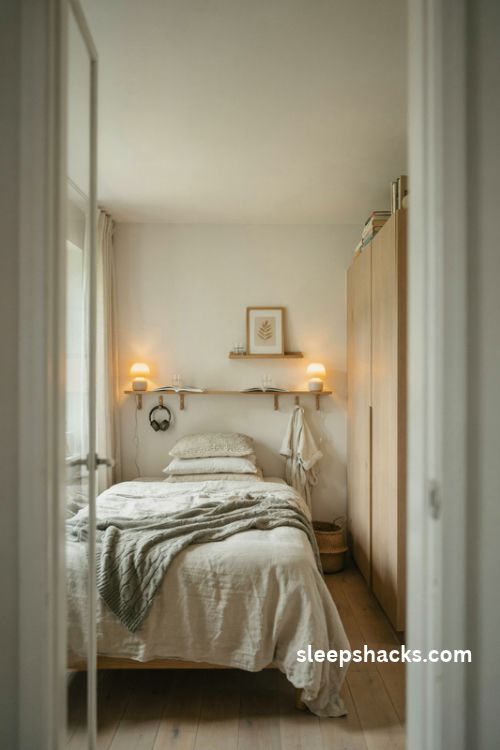
A bedside table can swallow a surprising amount of floor space in a tiny room. A floating shelf mounted at mattress height gives you the same convenience with nothing on the ground.
Install one on each side of the bed, about four to six inches above the mattress top, and about eight inches deep. That’s enough for a lamp, a book, and a glass of water. Mount them into studs or use heavy-duty anchors so they hold the weight. A small hook underneath can hold headphones or a robe.
6. Wall-Mounted Sconces Instead of Lamps
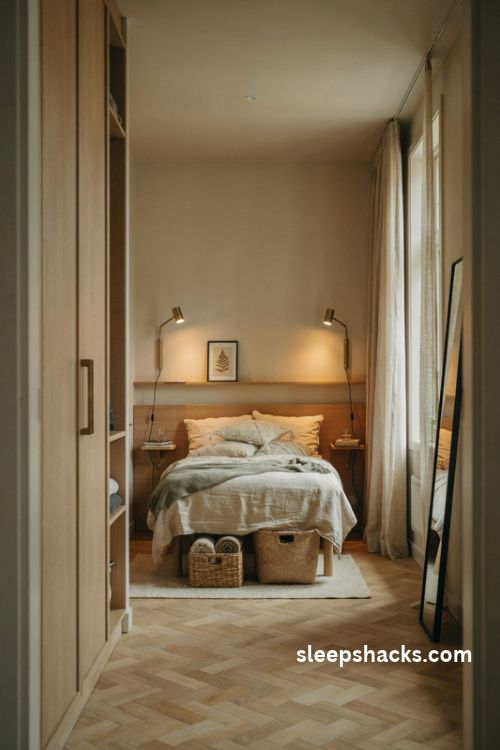
Table lamps take up valuable surface area, and floor lamps take up floor space. Wall-mounted sconces free up both and add a gentle, boutique-hotel glow beside the bed.
Choose plug-in sconces with a cord cover if you don’t want to hire an electrician. A swing-arm style lets you angle the light toward your book without disturbing a sleeping partner. Pick warm white bulbs around 2700 Kelvin for a soft, relaxing mood. A dimmer or a smart bulb adds comfort at night when you don’t want harsh brightness.
7. Floor-to-Ceiling Curtains
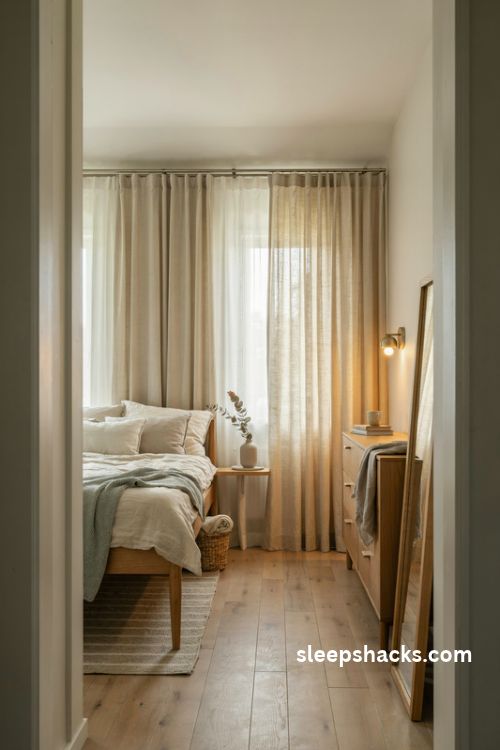
Hanging curtains high and wide tricks the eye into seeing taller windows and higher ceilings. It’s a simple move that makes a small room feel more elegant.
Mount the curtain rod about four inches below the ceiling, or as close as your layout allows, and extend it a few inches past each side of the window. Let the curtains graze the floor. Choose a light fabric in a color close to the walls so it blends in. Sheer layers softly filter light while keeping the room private.
8. Under-Bed Storage Boxes
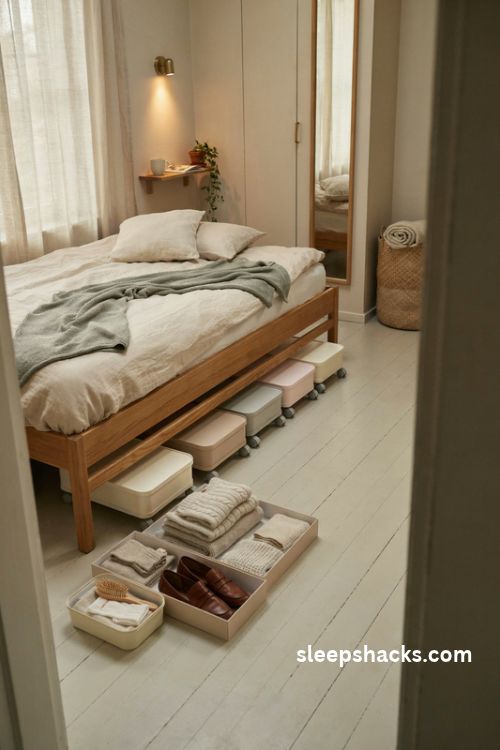
The space under a standard bed is prime real estate, and most of it goes unused. Slim, wheeled storage boxes slide in and out with ease and hide seasonal clothing, shoes, and extra bedding.
Measure the gap between the floor and the bed frame before buying. Choose boxes with lids to keep out dust. If your bed sits low, use bed risers to gain a few extra inches of space. Label each box so you can find things quickly, and keep a lighter, flatter box for items you reach for often.
9. A Slim Wall-Mounted Desk
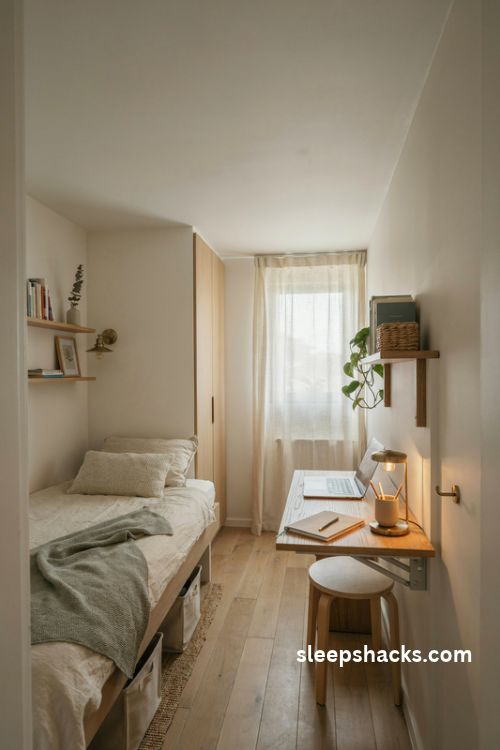
If you need a place to work, a fold-down desk mounted on the wall gives you a surface only when you need it. When it’s folded up, the room is open again.
Look for a desk about 16 to 20 inches deep, which is enough for a laptop and a notebook. Mount it into wall studs, since it needs to hold your weight leaning on it. Add a small shelf above for supplies. Choose a stool that tucks under the desk or hangs on a hook so your floor stays clear.
10. Hooks, Pegs, and Rails
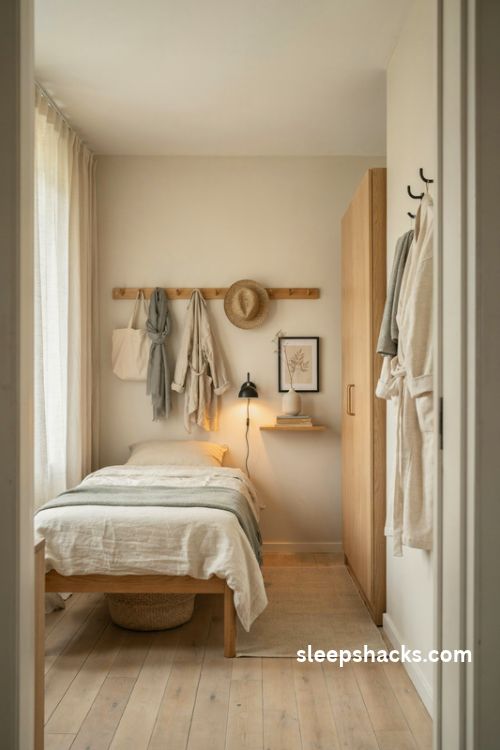
Floor-standing furniture takes space, but walls are almost always free. A row of hooks or a peg rail turns blank wall into storage for bags, scarves, jackets, and hats.
Install a rail about 60 inches from the floor, with pegs spaced six inches apart. Use hooks on the back of the door for robes and towels. Choose a finish that matches the room, such as natural wood or matte black. Keep it tidy by hanging only what you use often so the wall doesn’t look cluttered.
11. A Narrow Dresser or Tallboy
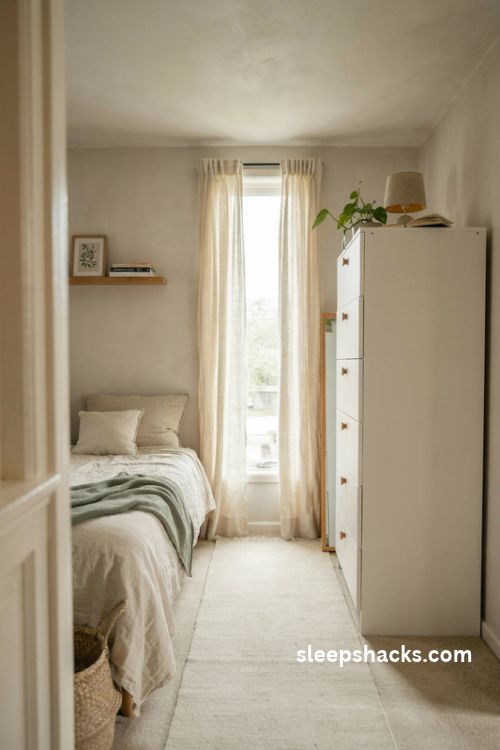
A tall, narrow dresser uses vertical space instead of width, which is the better trade in a small room. Five or six drawers fit into the footprint of a small side table.
Look for a model about 16 to 20 inches wide. Choose a light color or a mirrored front so it doesn’t feel heavy. The top surface can double as a nightstand, holding a lamp and a plant. Anchor it to the wall for safety, since tall furniture can tip over if the drawers are open.
12. Sliding or Pocket Doors
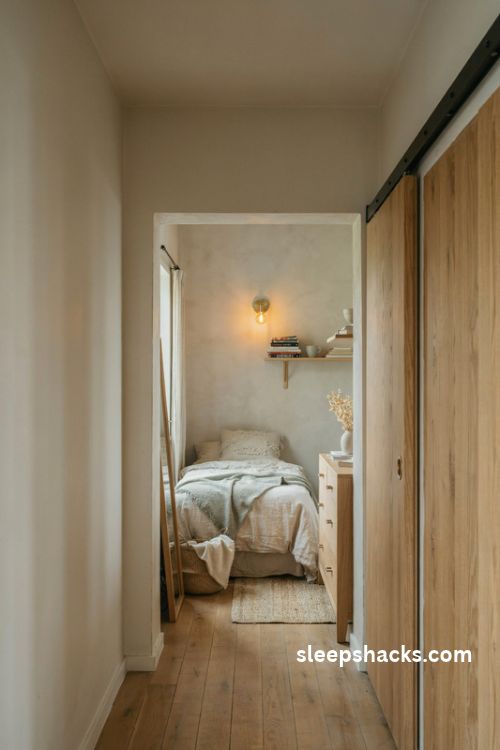
Doors that swing open eat about nine square feet of useful floor space. Swapping them for sliding or pocket doors gives that space back, which is huge in a tiny bedroom.
A sliding barn-style door mounts on a track outside the wall, so it’s easy to install and looks stylish. A pocket door vanishes into the wall for a cleaner look, though it takes more work. If a new door isn’t possible, remove the existing one and hang a curtain across the opening for an instant change. Leave about 12 inches of clear wall beside the opening.
13. A Single Statement Headboard Wall
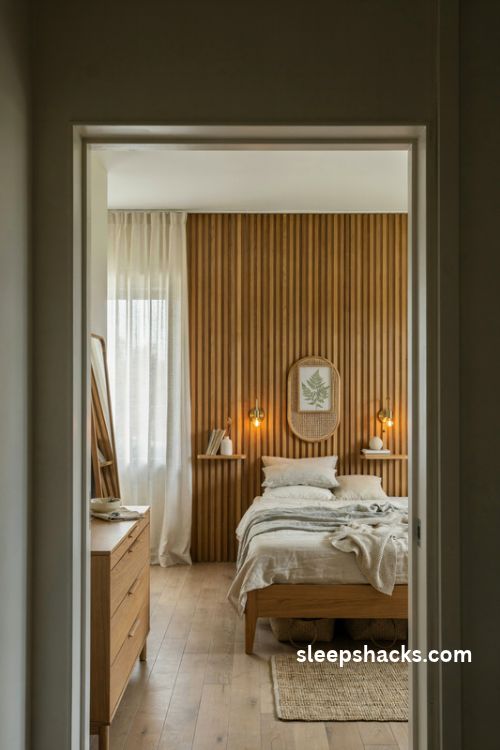
Instead of many tiny decorations, choose one bold feature behind the bed. A single statement wall draws the eye and gives the room a sense of purpose, so it feels designed rather than crowded.
Try a wood slat panel, a bold paint color, a large piece of art, or a simple peel-and-stick wallpaper. Keep the rest of the walls plain so the feature stands out. A wall-mounted headboard sits flat against the wall and doesn’t push your bed away from it. A woven rattan or upholstered headboard adds warmth.
14. Light, Matching Bedding
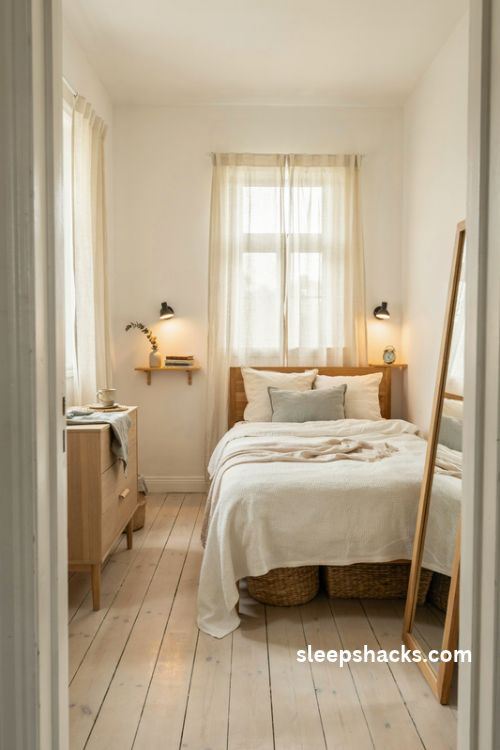
Busy patterns and too many colors can make a small room feel messy. Sticking to a calm palette of two or three shades keeps everything looking intentional and open.
Choose white, cream, or soft gray bedding with textured details like waffle weave or linen for interest. Add one or two accent pillows in a muted color, such as sage or blush. Skip decorative pillows beyond three, since they quickly pile up. Make the bed every morning, since a tidy bed makes the whole room look bigger.
15. Open Shelving Above the Door
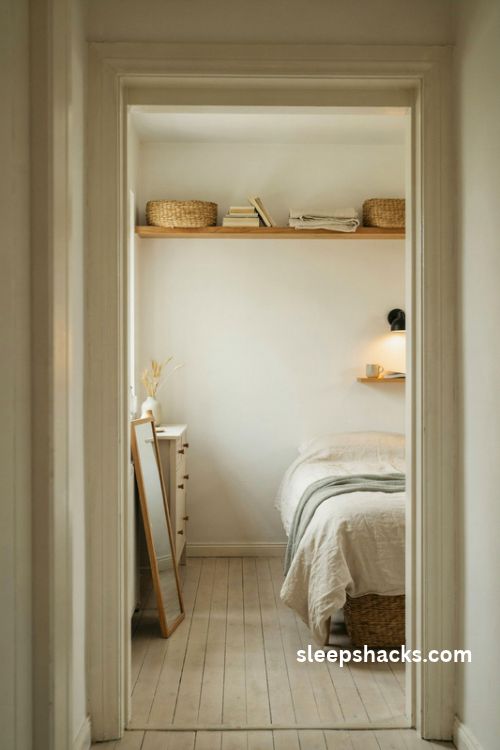
The wall space above the door is almost always empty, and it’s perfect for storage you don’t need every day. A shelf running across the top holds baskets, books, or off-season items.
Install a sturdy shelf about 12 inches deep, at least 8 inches above the door frame. Use matching baskets to hide clutter and keep the look clean. Place lighter items on top, such as extra blankets, so you don’t strain getting them down. This trick adds storage without taking up a single inch of floor.
16. A Rolling Cart as a Nightstand
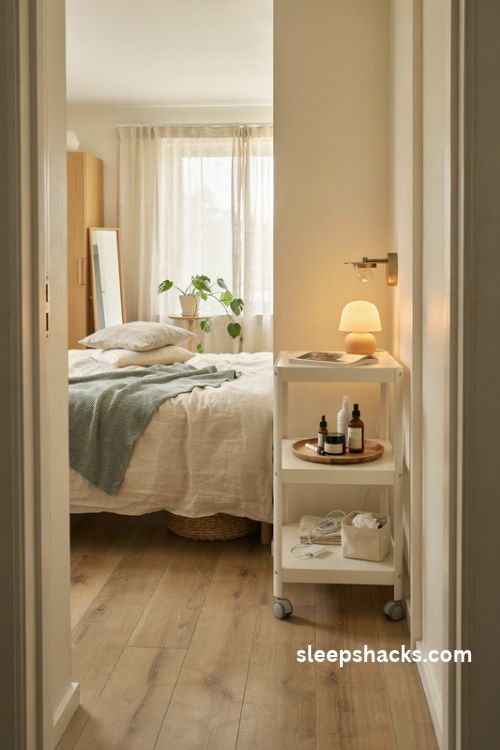
A narrow rolling cart works as a nightstand, a mini closet, or a vanity, and you can move it wherever you need it. It’s flexible, affordable, and surprisingly stylish.
Choose a slim three-tier cart, about 12 inches wide, in white, black, or natural wood. Keep the top for a lamp and a book, the middle for skincare, and the bottom for tissues or a charger. When you need extra floor space for yoga or cleaning, roll it into a corner. Use locking wheels so it stays put at night.
17. Plants and Greenery for Life
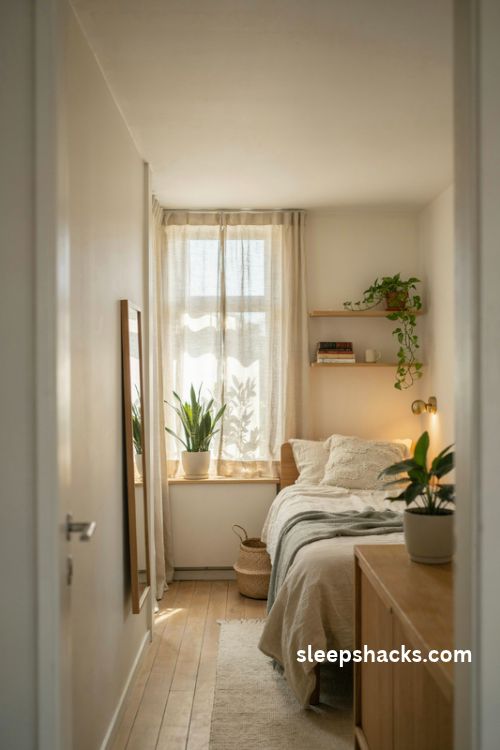
A tiny bedroom needs a little life, and plants add it without needing much room. A trailing plant on a high shelf or a small pot on the windowsill brings freshness and color.
Choose low-light plants like pothos, snake plants, or ZZ plants, which are tough and need little care. Hang a small planter from the ceiling or place a pot on a floating shelf. Keep it to two or three plants so the room feels relaxed, not cluttered. The green softens hard edges and makes the room feel calm.
Final Thoughts
We tend to think of space as something to fill, but small bedrooms teach the opposite lesson. When every item has to earn its place, you start to notice what actually matters: a good pillow, a warm light, a window you can see out of.
Seen that way, a tiny room isn’t a limitation but an edit. It asks you to keep only what you love and let the rest go, and in return it gives you a space that feels calm, honest, and completely yours. Plenty of larger rooms never manage that.
Frequently Asked Questions
How can I make an extremely small bedroom look bigger?
Use light wall colors, a large mirror, and floor-to-ceiling curtains to create the illusion of space. Keep furniture low and the floor as clear as possible.
What is the best bed for a tiny bedroom?
A loft bed or a platform bed with built-in drawers saves the most space because it combines sleeping and storage. Choose based on your ceiling height.
How do I add storage to a very small bedroom?
Use vertical space with wall shelves, hooks, and over-the-door storage, and make use of the area under the bed. Slim, tall furniture takes up less floor.