

You’ve got a closet that’s stuffed to the point of bursting, a chair that’s quietly become the “maybe clean” pile, and a bedroom that never quite feels calm. Sound familiar? Most of us live with a wardrobe that doesn’t match the way we really dress, and it shows every single morning.
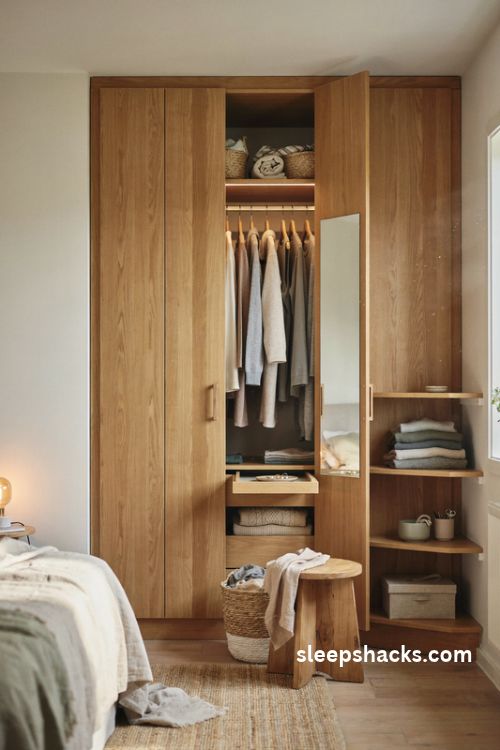
The good news is that you rarely need a bigger room to fix it. You need a smarter layout, better use of height, and a few details that make getting dressed easier. Here are 14 bedroom wardrobe ideas that work for tiny rooms, awkward corners, and spacious master suites alike, so you can find the one that fits your life.
1. Floor-to-Ceiling Built-In Wardrobe
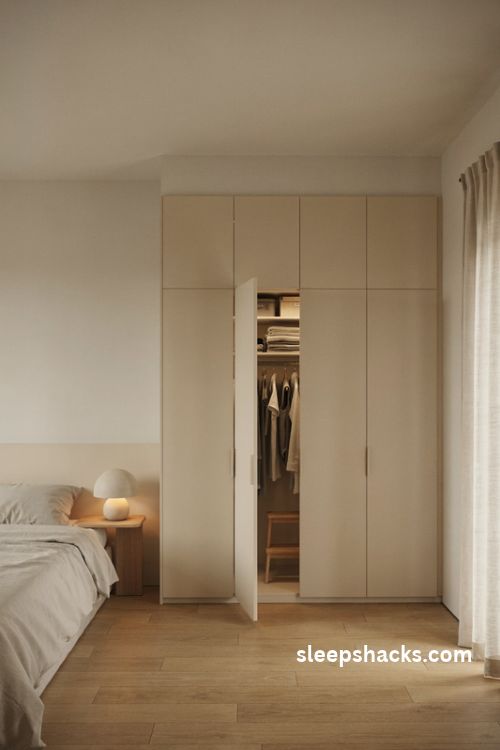
A built-in wardrobe that runs all the way to the ceiling uses every inch of wall and removes the dusty gap above a standard cabinet. Painting it the same color as the walls makes it blend in, so the room feels bigger and calmer. Handleless doors keep the look clean and simple.
Plan the top section for things you use once or twice a year, like luggage, spare bedding, and holiday items. Keep daily clothes between knee and shoulder height, where they’re easy to reach. A small step stool tucked inside the cabinet makes the high shelves far more useful.
2. Sliding Door Wardrobe for Tight Rooms
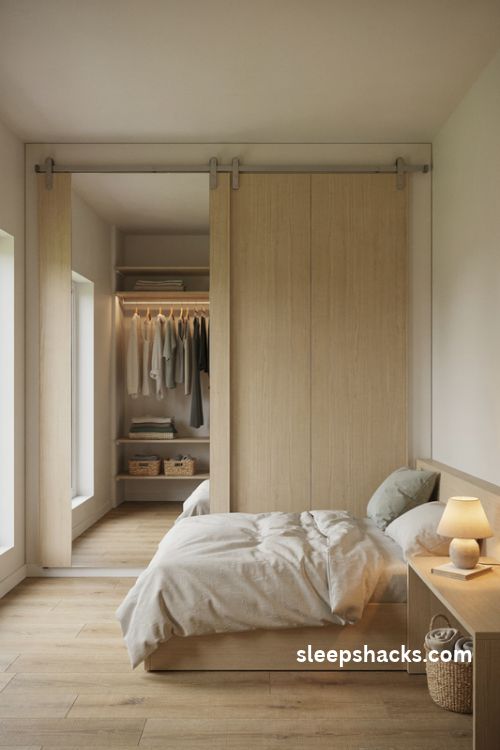
Sliding doors are the quiet hero of small bedrooms because they never swing out into your walking space. Mirrored panels bounce light around and make the room look wider, while frosted glass or soft white panels feel lighter and more modern. Choose a soft-close track so the doors glide without banging.
Measure the clearance carefully before you buy, since sliding systems usually cover only half of the opening at a time. Put the things you reach for daily behind the section you open most. Inside, adjustable shelves let you change the layout as your wardrobe grows or shrinks.
3. Walk-In Closet Carved from a Spare Corner
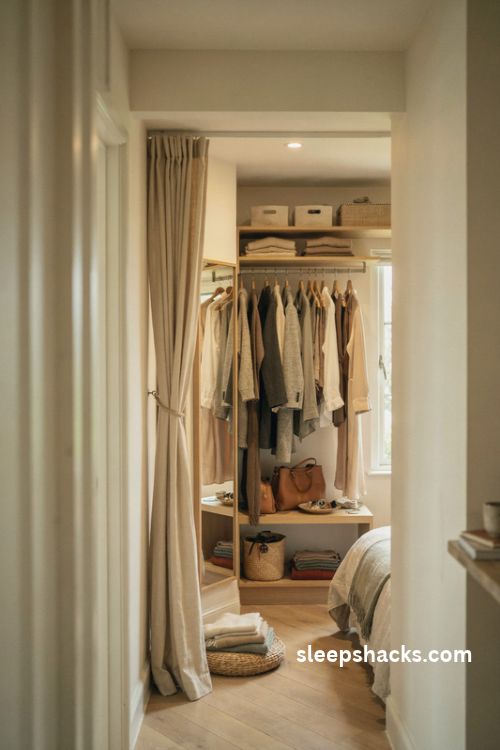
You don’t need a whole spare room to get a walk-in feel. A corner of about four by five feet, closed off with a curtain or a slim door, can hold hanging rails on two sides and shelves on the third. It gives you a little dressing nook you can step into.
Use matching hangers, either slim velvet or plain wood, so the rails look tidy even when they’re full. A single ceiling light with a warm bulb makes it feel like a boutique. Add a small mirror on the back of the door and you’ve got a dressing area for almost no cost.
4. Open Wardrobe with Rails and Shelves
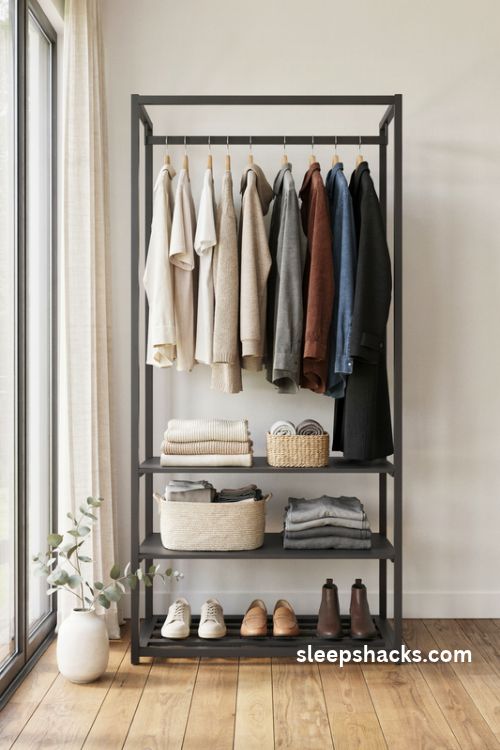
An open wardrobe turns your clothes into part of the room’s look, so it works best when you’re willing to keep things neat. A simple metal or wooden frame with one hanging rail, two shelves, and a shoe rack underneath is easy to build or buy. It feels light because there are no doors to block the view.
Sort clothes by color, from light to dark, and the rail becomes a calm visual feature. Use baskets on the lower shelves to hide the less pretty items like socks and workout gear. Place the unit near a window if you can, since natural light makes the fabrics look richer.
5. Wardrobe Built Around the Bed
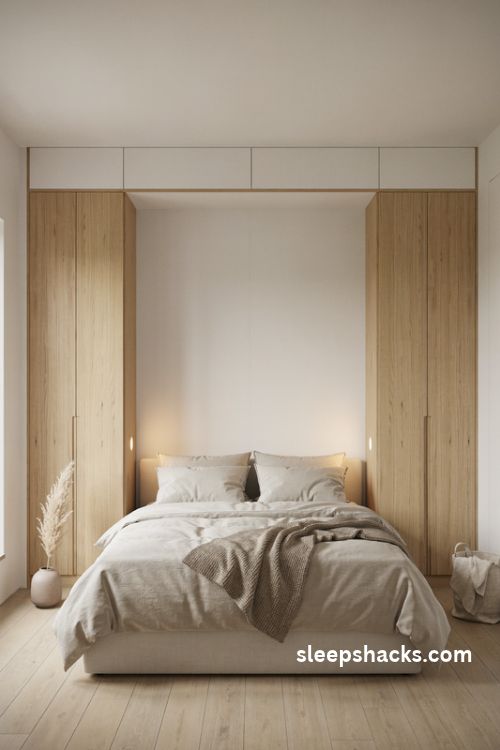
If your bed sits against a wall, building wardrobe units on both sides and a shallow cabinet above the headboard turns the whole wall into one storage piece. It wraps the bed in a cozy alcove and gives you far more space than any freestanding wardrobe would.
Put tall hanging space on the sides and shelf or drawer storage above the bed. Add small reading lights inside the side units so you don’t need bedside lamps that eat up floor space. Keep the overhead cabinet fairly shallow, around 14 inches, so it doesn’t feel heavy over your head.
6. Corner Wardrobe That Uses Dead Space
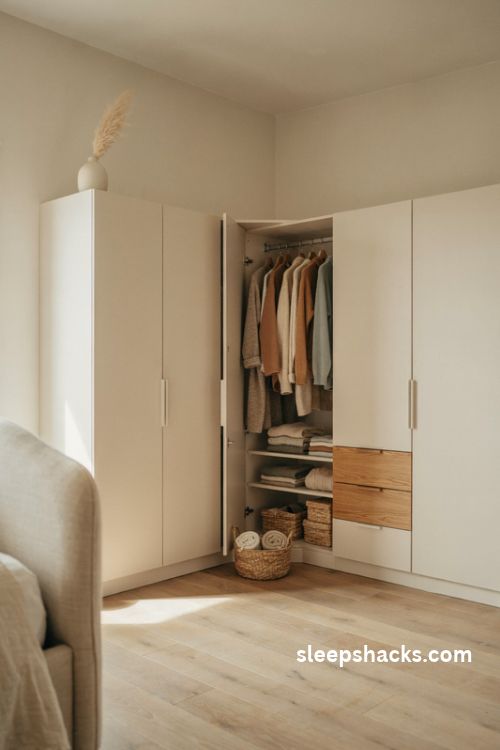
Corners are the most wasted part of most bedrooms, and a well-planned corner wardrobe fixes that. An L-shaped unit gives you two walls of storage, with a deep section tucked into the corner for off-season clothes. The angled front often looks softer than a boxy cabinet, too.
Make sure the corner section has a pull-out rail or a rotating shelf, otherwise the deep area turns into a black hole where things disappear. Choose light, neutral colors so the unit doesn’t visually crowd the room. If the corner is tight, a curved door front can help traffic flow.
7. Wardrobe with a Built-In Dressing Table
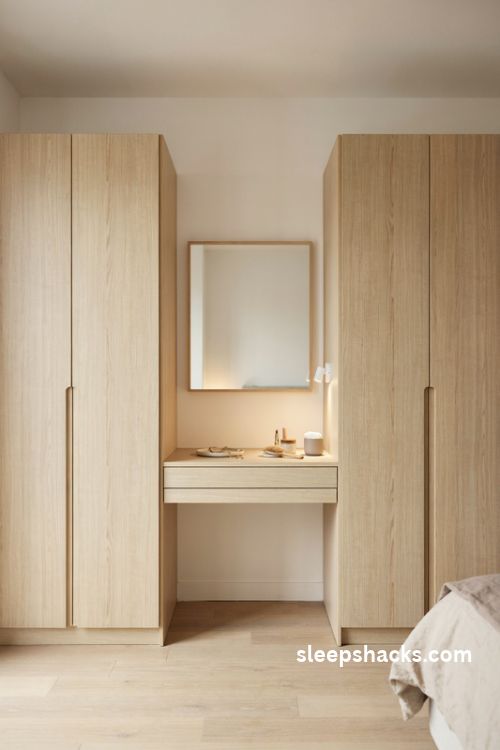
Pairing a wardrobe with a fold-out or fixed dressing table saves you from buying another big piece of furniture. A narrow desk-height surface with a mirror above it, placed between two tall wardrobe sections, becomes a tidy morning station. Everything you need sits within a step.
Add a couple of shallow drawers beneath the table for makeup, jewelry, or accessories, and a small mounted light for the mirror. Pick a surface material that handles spills, such as laminate or sealed wood. When you’re done, a simple tidy-up keeps the whole zone looking more like a feature than clutter.
8. Wardrobe with Glass or Fluted Doors
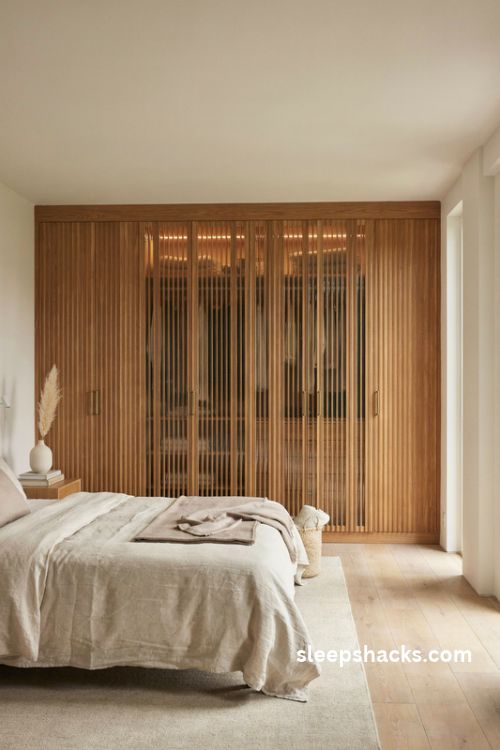
Fluted wood or reeded glass doors add texture and a little drama, and they hide the mess behind them in a softer way than plain panels do. In a bedroom, the ribbed pattern catches light differently through the day, which keeps a large wardrobe from looking like one flat slab.
Choose a warm tone like oak or walnut for a cozy feel, or soft white for a lighter look. If you like the glass look, go for smoked or frosted glass so you can see shapes without seeing clutter. Add slim LED strips inside to create a gentle glow at night.
9. Two-Tone Wardrobe in Bold Color
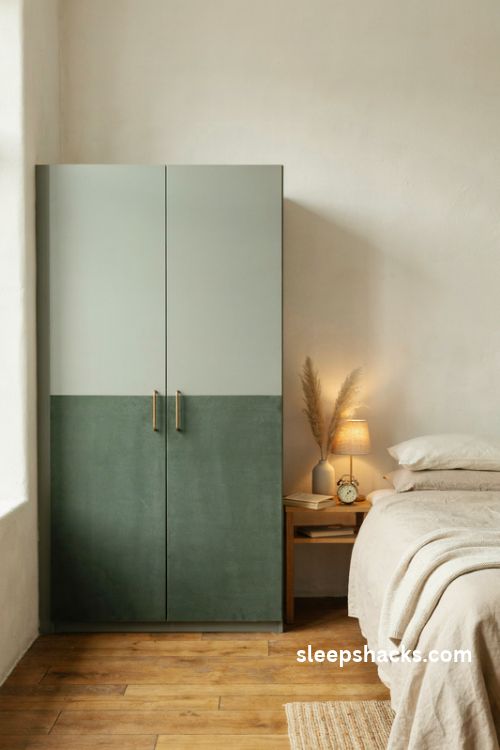
Painting or finishing a wardrobe in a deep color, such as forest green, navy, or dusty terracotta, turns it into a design feature instead of a plain storage box. Contrast it with pale walls and warm brass handles, and the cabinet becomes the star of the room.
Stay with a matte finish since it hides fingerprints and looks richer than gloss. If a full dark wardrobe feels heavy, try two tones, with the upper doors in a lighter shade than the lower ones. Test paint swatches in the room at night, because bedroom lighting can shift colors quite a bit.
10. Wardrobe with Pull-Out Drawers and Baskets
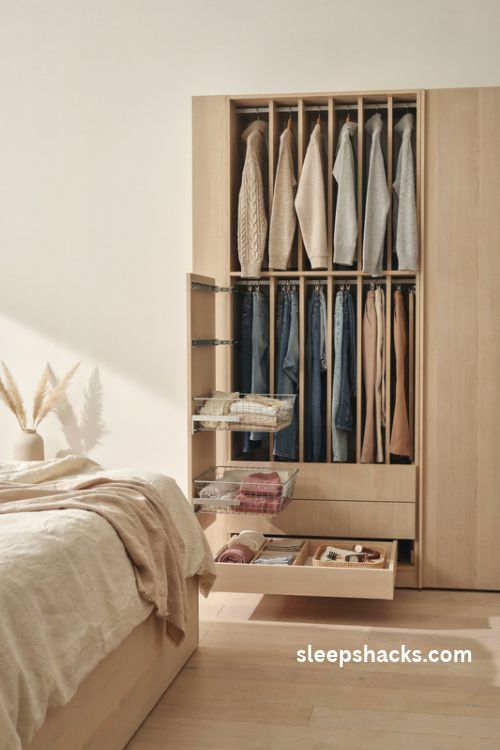
Drawers inside a wardrobe often work better than shelves because you can see everything at once without digging. Deep pull-out drawers suit knitwear and jeans, while shallow ones are best for underwear, scarves, and small accessories. Wire baskets on runners work well too, and they let air circulate.
Use drawer dividers so your folded clothes stay upright and visible, a trick that makes it easy to grab one item without ruining the stack. Label the tops if the wardrobe is shared. Fill drawers about 80 percent so nothing jams, and the pull-out action stays smooth.
11. Freestanding Wardrobe with Vintage Charm
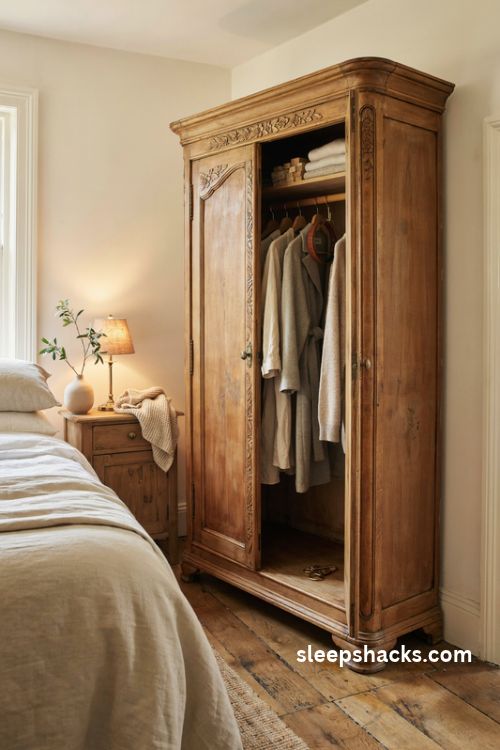
A secondhand wooden armoire brings character that no flat-pack unit can match. Carved details, a slightly worn finish, and old brass keys give the room a collected, storybook feel. It also works well in rooms with no space for built-ins, such as rentals or older houses.
Check the inside before you buy, since many antique wardrobes have no hanging rail. A cheap tension rod or a few adjustable hooks fix that quickly. Add a fresh coat of paint or leave the wood natural, and keep a few cedar blocks inside to keep moths away and the clothes smelling clean.
12. Wardrobe with Hidden Shoe and Bag Storage
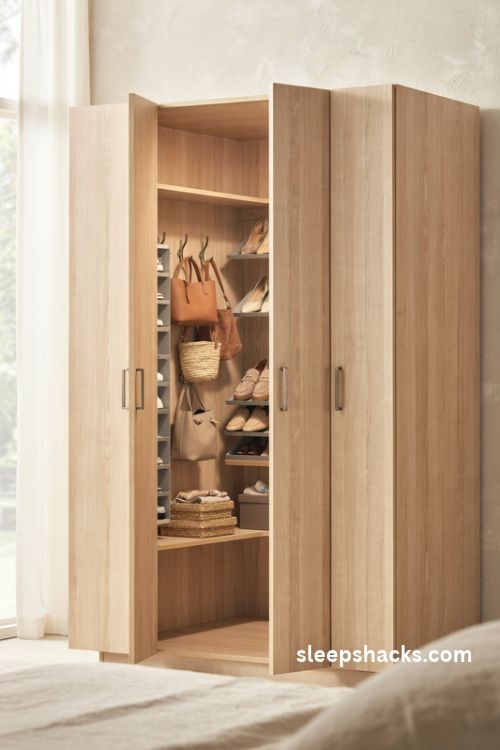
Shoes and bags are the things that make wardrobes feel messy, so give them their own spot. Slim pull-out shoe racks, tilted shelves, and narrow door-mounted organizers keep pairs visible without taking up floor space. Hooks along the side wall of the wardrobe hold handbags neatly.
A shallow cabinet only about six inches deep can hold a surprising number of shoes when mounted on the inside of a door. Keep your most worn pairs at eye level and store the special occasion ones higher up. Silica packets in boxes help keep leather in good shape.
13. Wardrobe Lit with Warm LED Lighting
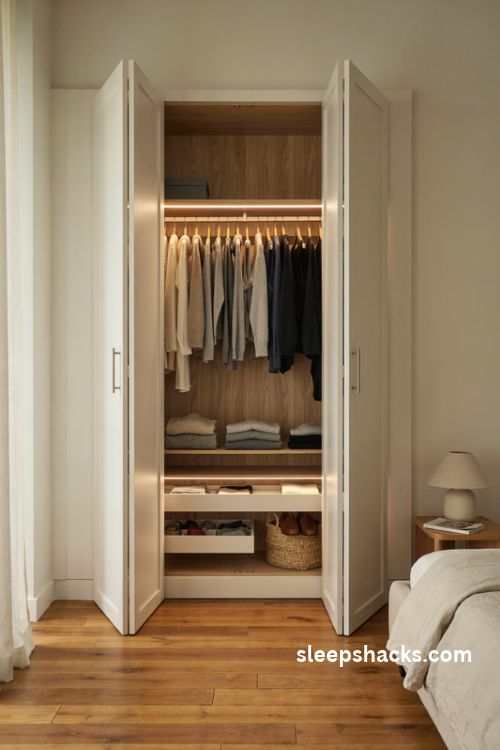
Good lighting makes every wardrobe feel more expensive, and it saves you from guessing which navy sweater is black. Motion-sensor LED strips along the inside edges switch on when you open the door, so there’s no fumbling for a light switch in the early morning.
Pick warm white around 2700K to 3000K, which shows fabrics in a flattering way. Run strips along the underside of shelves and the top of the hanging rail for even coverage. Hardwired lighting is neat, but battery-powered options are fine for renters and need no electrician.
14. Minimalist Capsule Wardrobe Setup
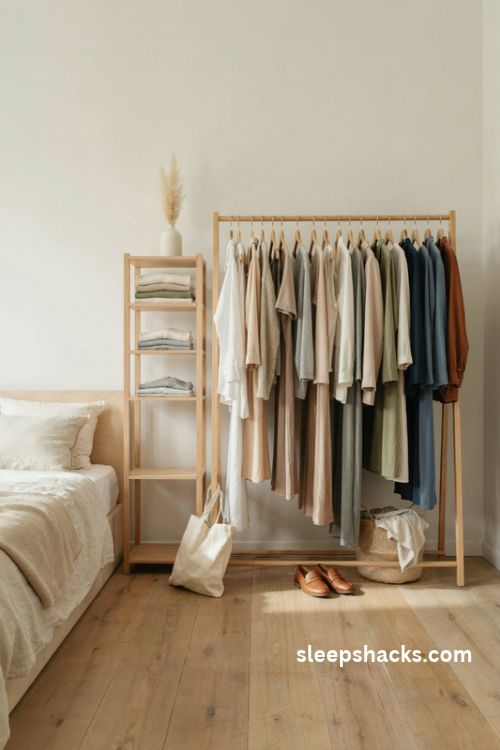
Sometimes the best wardrobe idea is owning less. A capsule setup, with about 30 to 40 well-chosen pieces, lets a small rail and one set of shelves feel spacious. You’ll find getting dressed becomes faster because everything works with everything else.
Start by pulling out anything you haven’t worn in a year and see how you feel about the remaining pile. Keep a single basket for items you’re unsure about and review it in three months. A clear, open wardrobe with wide gaps between hangers looks calm and makes the whole bedroom feel lighter.
Final Thoughts
I’ve seen people spend months planning a perfect wardrobe and never start, and I’ve seen others transform a cramped bedroom in one weekend with a few shelves and a good rail. Truthfully, both ends are fine. What matters is that you end up with a space that feels easy.
So take your time, pick the idea that speaks to how you actually live, and let the rest come later. Your bedroom should feel like the one place where you can breathe, and a wardrobe that works quietly in the background is a lovely part of that. Enjoy building it your way.
Frequently Asked Questions
Q: How deep should a bedroom wardrobe be?
A standard wardrobe is about 24 inches deep, which fits hangers comfortably. For tight rooms, a 16 to 18 inch depth works if you use slim hangers or hang clothes sideways.
Q: What is the best wardrobe for a small bedroom?
A sliding door wardrobe is usually the best choice since it needs no swing space. Going floor to ceiling adds even more storage without using extra floor area.
Q: Should a bedroom wardrobe be the same color as the walls?
It’s a good idea in small rooms because it helps the wardrobe blend in and makes the space feel larger. In bigger rooms, a contrasting color can add personality.