

There’s nothing worse than finally having a backyard you want to enjoy — and then realizing a proper fence could cost thousands of dollars you just don’t have. If you’ve been putting off fencing your yard because of the price tag, this list of easy cheap fence ideas is exactly what you’ve been looking for.
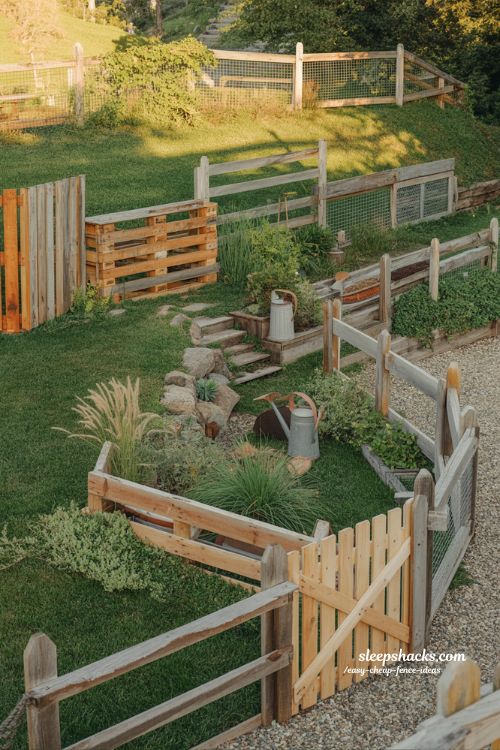
These ideas range from genuinely free (hello, wattle fence) to wallet-friendly DIY builds that look far more expensive than they are.
- Wood privacy fences cost $31.80–$76.50 per linear foot installed, but many DIY options cost a fraction of that.
- Cheap fencing doesn’t mean ugly fencing — materials like bamboo, pallets, and chicken wire can all look polished with the right design approach.
- The best budget fence is the one that fits your yard size, your privacy needs, and how much effort you’re willing to put in.
Why the Right Cheap Fence Makes All the Difference
Fencing decisions feel high-stakes because they’re permanent and expensive to redo. But cheap fence ideas aren’t a consolation prize — some of the most charming yards you’ll see are enclosed by simple, low-cost materials handled with a little creativity. Before you pick a material, ask yourself three things: Do you need real privacy, or just a boundary? How much maintenance are you willing to do? And how long do you need this fence to last?
| Fence Type | Avg. Cost Per Linear Foot | Maintenance Level | Privacy Level |
|---|---|---|---|
| Wood Picket | $23–$66 | Moderate | Low–Medium |
| Bamboo | Low | Low–Moderate | Medium–High |
| Pallet (DIY) | Near Free | Moderate | High |
| Chain Link | Low | Low | Low |
| Vinyl | $34–$87 | Very Low | High |
| Wattle (DIY) | Free | Low | Low–Medium |
| Chicken Wire + Wood Frame | Very Low | Low | Low |
| Corrugated Metal | Low–Moderate | Low | High |
27 Easy Cheap Fence Ideas for Every Yard
1. The Classic White Picket Fence (Timeless for a Reason)
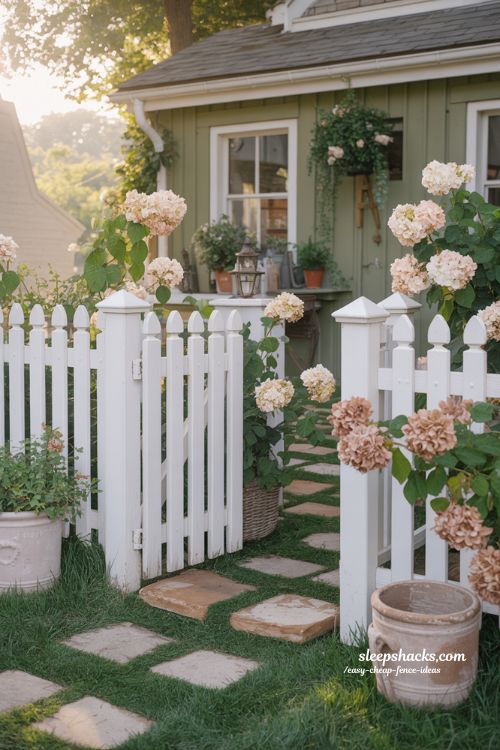
Nothing says “this yard has charm” quite like a white picket fence. It’s one of the most recognizable fence styles in the world, and for good reason — it delivers curb appeal without demanding a huge budget. Eight-foot panels cost around $40, and with a weekend of work, you can line a walkway or frame your front garden beautifully.
The key to making a picket fence look elevated on a budget is the paint. Choose a quality outdoor acrylic latex formula rather than a bargain-bin option — it will last years longer and the white will stay crisp instead of yellowing. Plant some hydrangeas or climbing roses in front and you’ve got a Pinterest-worthy front yard.
- Paint with acrylic latex for long-lasting white that won’t yellow
- Use fence panels to flank a path rather than enclosing the full yard to cut costs
- Choose pre-assembled panels for the easiest weekend install
2. Wood Pallet Fence That Doubles as a Planter
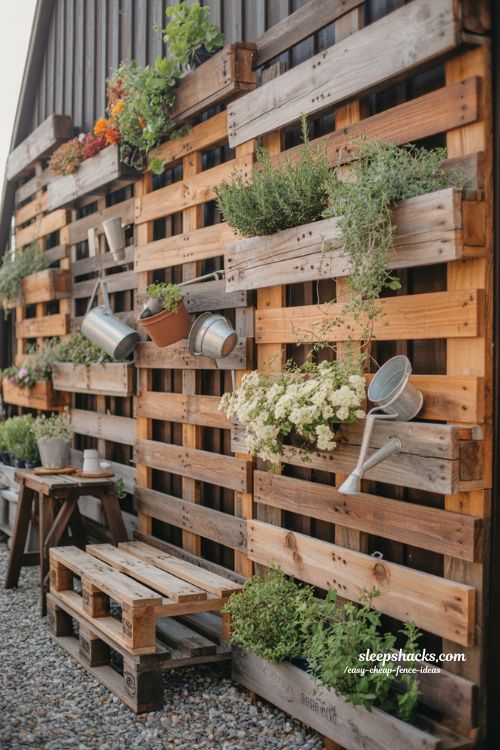
Wooden pallets are one of the most versatile (and basically free) materials in DIY fencing. Sourced from local businesses or online marketplaces, they can be stacked, painted, or stained to create a solid privacy wall that looks rustic and intentional. The rough wood texture actually adds character that expensive fences often lack.
What makes pallet fences really special is the built-in planting potential. Leave some of the slat gaps open and tuck trailing succulents, herbs, or annual flowers inside. Now your fence is also a vertical garden — two backyard projects in one.
- Sand rough edges first to prevent splinters and improve paint adhesion
- Seal with outdoor wood stain to dramatically extend the lifespan
- Look for heat-treated (HT) pallets, not chemically treated ones, for safety
3. Bamboo Fence for a Natural, Tropical Look
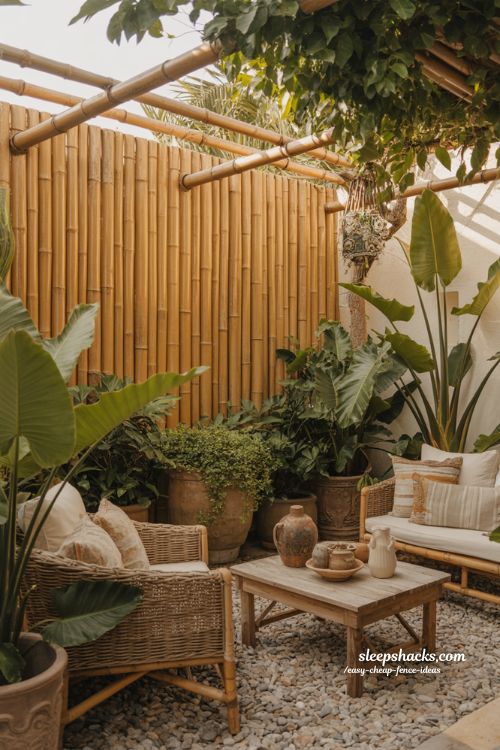
Bamboo is one of the most budget-friendly natural fencing materials available, and it brings a warmth and texture that manufactured fences rarely match. It’s lightweight, easy to install, and grows quickly — so bamboo roll fencing is widely available at garden centers and home improvement stores. It works especially well for enclosing a small garden zone or adding a privacy screen to a patio.
The one thing to know about bamboo fencing is that it needs periodic treatment with a UV-resistant sealant to prevent it from graying and splitting over time. Treated correctly, a bamboo fence can last five or more years and still look great. Pair it with tropical plants like elephant ears or bird of paradise for a cohesive, lush look.
- Apply UV-protective sealant every 1–2 years to preserve color and durability
- Use bamboo rolls over a wood frame to create a neater, more finished appearance
- Choose thicker-diameter bamboo for better longevity and wind resistance
4. Split Rail Fence for a Ranch-Style Boundary
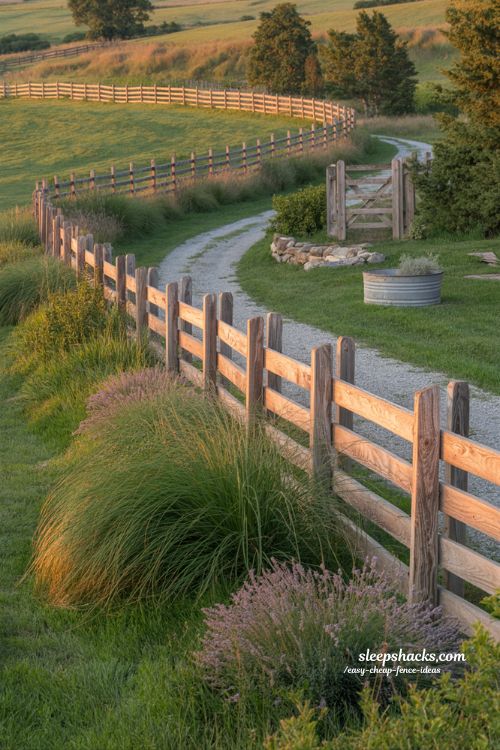
Split rail fencing is one of the smartest cheap fence ideas for covering large stretches of property. Because the design uses minimal material — just a few horizontal rails between widely spaced posts — it costs far less per foot than a full privacy fence. It’s ideal for open yards, sloped land, and properties with long property lines.
It won’t give you privacy, but it gives you definition, and that’s exactly what a lot of yards need. Pair it with dense plantings along the rail line — ornamental grasses, lavender, or native shrubs — and you create a soft, layered boundary that looks completely intentional and beautifully landscaped.
- Great for ranch-style, farmhouse, and country home aesthetics
- Plant drought-tolerant natives along the base for a low-maintenance, full look
- Treated pine or cedar rails resist rot without requiring frequent resealing
5. Horizontal Wood Slat Fence for a Modern Vibe
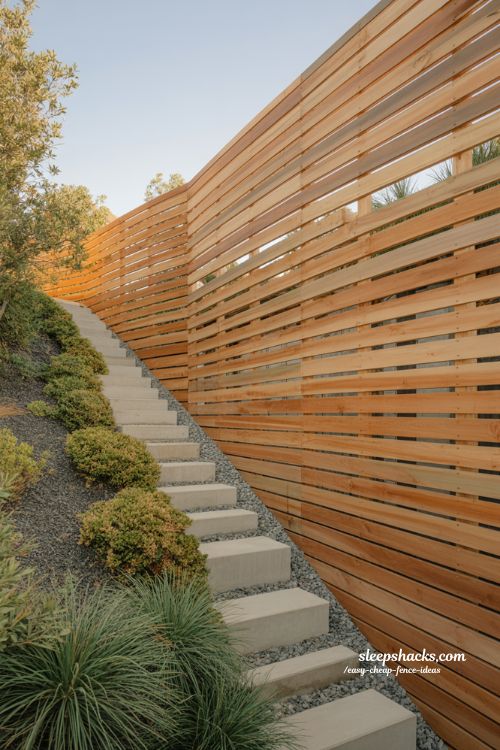
If your yard has a sloped lot, traditional vertical fence pickets are a nightmare — they require constant cutting and adjustment to create a level sightline. Horizontal slats are the fix. Wide horizontal planks not only handle slopes more gracefully, they also use less material than skinny vertical pickets, which saves money on lumber.
The horizontal orientation gives any fence a contemporary, architectural quality that looks high-end without the high-end price tag. Use 1×6 cedar boards spaced with small, even gaps for a clean profile that still lets airflow through. Stain in a warm grey or natural brown to make it look like a premium design feature.
- Use wider boards (1×6 or 1×8) to cover more ground with fewer pieces
- Space boards 1–2 inches apart for an airy look that also reduces wind load
- Cedar is worth the small premium — it resists rot naturally and weathers beautifully
6. Chicken Wire and Wood Frame — Simple, Cheap, and Charming
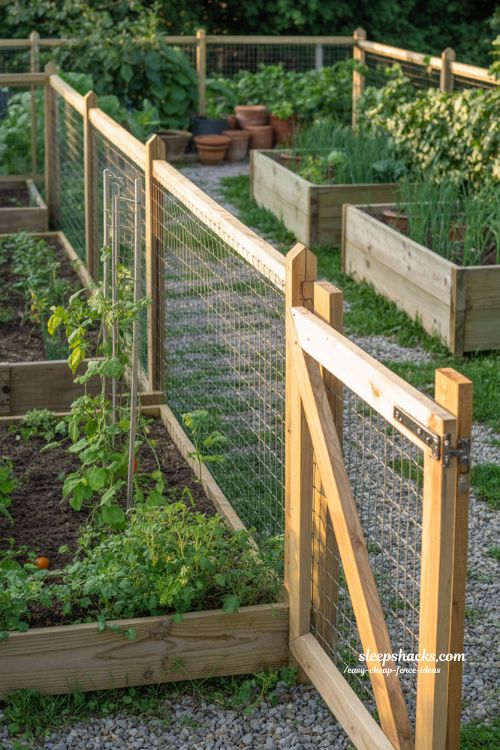
Chicken wire on its own looks utilitarian. But pair it with a well-built wooden frame and it becomes something different — airy, cottage-style, and genuinely charming. This combination covers a lot of ground for very little money, which makes it one of the most popular cheap fence ideas for larger yards.
It’s especially useful for vegetable gardens or yards with kids and pets, where you need containment without blocking light or views. Build simple rectangular frames from 2×4 lumber, staple the chicken wire taut across the face, then connect the frames between posts. Paint the frames white or a soft sage green for maximum charm.
- Use galvanized chicken wire for rust resistance, especially in rainy climates
- Paint the wood frame to elevate the overall look significantly
- Add a simple wood-frame gate in the same style to complete the look
7. Wattle Fence — Free, Ancient, and Surprisingly Beautiful
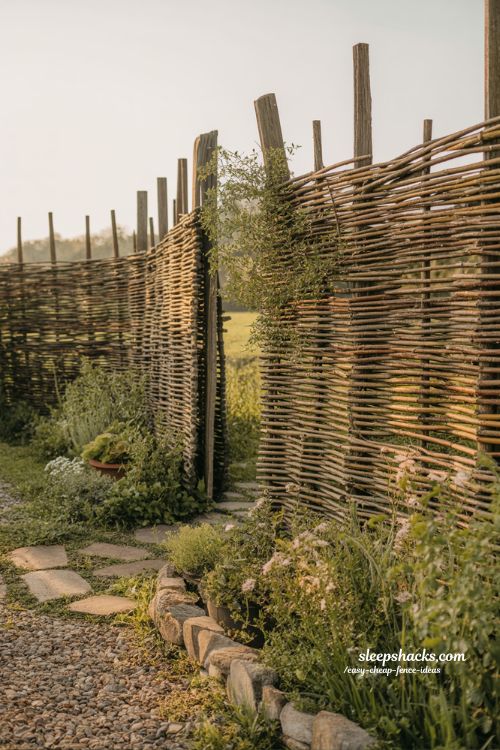
Wattle fencing is one of the oldest fence-building techniques in history, dating back to medieval Europe, and it remains one of the most charming zero-cost options available today. The process involves weaving flexible sticks — willow, hazel, sycamore, or oak work best — between upright posts to create a textured, woven barrier. Fresh sticks are easiest to work with since they’re pliable.
The best part? Your material is already in your yard. Use trimmings from fruit trees, shrub cuttings, or cleared brush from your property. Dried willow can even be soaked to regain flexibility before weaving. The result is a fence that looks like it was designed for a fairy-tale cottage garden and costs absolutely nothing.
- Use fresh or soaked sticks for easier weaving without cracking
- Willow is the most flexible and widely available wattle material
- Weave tightly for more wind resistance and longer structural life
8. Corrugated Metal Fence for Modern Farmhouse Appeal
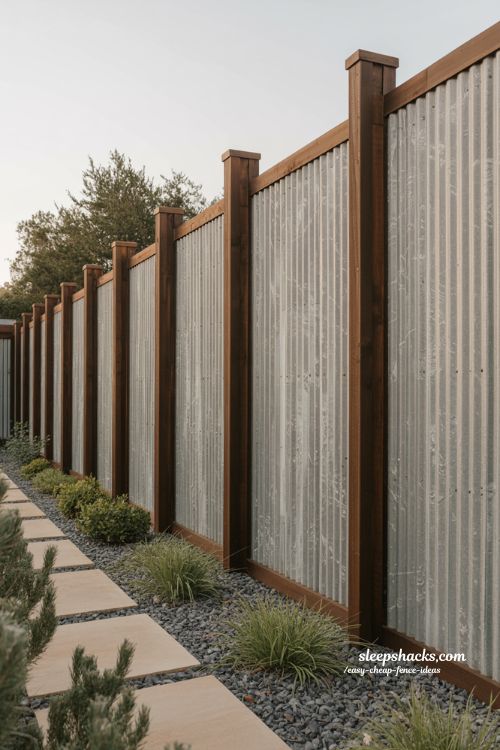
Corrugated metal panels aren’t just for industrial buildings anymore. Paired with wood posts — horizontal, vertical, or a combination of both — corrugated metal makes a bold, modern fence that is genuinely cheap compared to vinyl or cedar privacy fencing. The metal is easy to cut to size and extremely low maintenance.
This look works especially well for modern farmhouse, industrial, and contemporary home styles. The contrast between the raw metal texture and warm wood posts gives the fence a designed quality that feels deliberate. Choose a weathering steel (Corten) finish if you want it to develop a natural rust patina over time for an even more textured look.
- Pre-drill screw holes in the metal to prevent splitting and cracking
- Pair with 4×4 wood or steel posts for the cleanest structural result
- A dark wood stain on posts makes corrugated metal look dramatically more polished
9. Chain Link Fence — Functional, Affordable, and Underrated
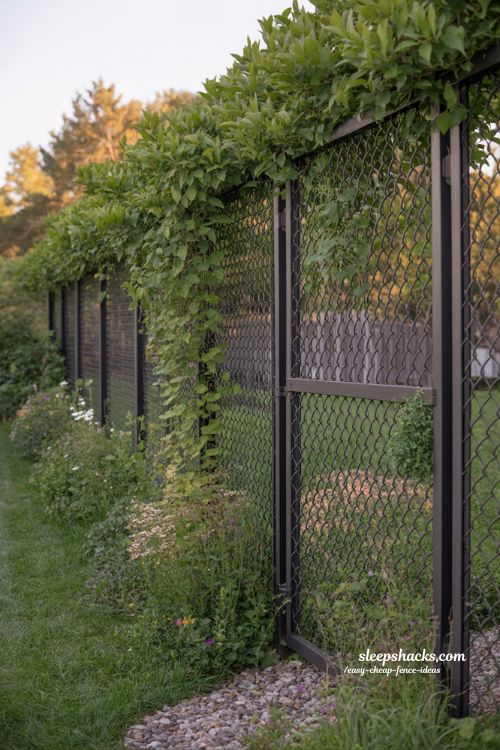
Chain link might not win any design awards on its own, but it is one of the most practical, affordable, and durable fence options available. The trick is choosing a black vinyl-coated chain link rather than galvanized silver — the dark finish recedes visually and reads as far more elegant. Paint the posts a matching dark color for cohesion.
Even better, chain link is one of the best cheap fence ideas for gardens because it becomes invisible once climbing plants take hold. Train wisteria, honeysuckle, clematis, or creeping fig across the fence and within a season or two you’ll have a living green wall that no one would ever suspect is chain link beneath.
- Black vinyl-coated chain link reads as significantly more upscale than silver
- Add privacy slats in a coordinating color for quick, easy seclusion
- Plant fast-growing climbers along the full fence run for a natural cover-up
10. Lattice Panels — Open, Airy, and Ready to Grow
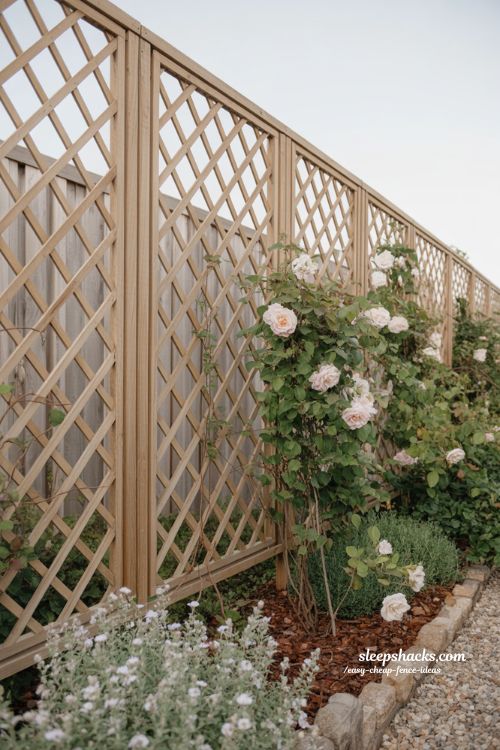
Lattice is one of the cheapest decorative fencing options you can buy, and it does double duty beautifully. As a fence panel, it offers a light, garden-ready look that doesn’t close off your yard. As a trellis, it becomes the anchor for climbing vines, roses, jasmine, or morning glories that will eventually drape it in green and blooms.
You can install lattice panels over an existing fence to add texture and height, or build a simple frame and use lattice as the primary material. Either way, it’s a weekend project that transforms a blank boundary into a garden focal point. The more it grows, the better it looks — and it costs almost nothing to get started.
- Diamond lattice is the classic choice; square lattice reads as more modern
- Install lattice over an existing fence to add height without full replacement
- Plant jasmine, clematis, or climbing roses at the base for the fastest coverage
11. Living Hedge — The Fence That Grows with You
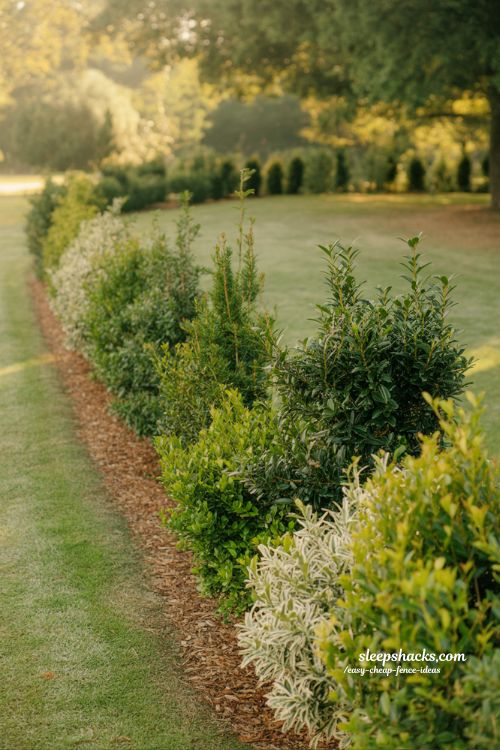
Privet, boxwood, yew, and spotted laurel are all excellent choices for a living hedge fence that provides genuine privacy. They’re affordable as young plants, grow dense over time, and contribute to your yard’s green ecosystem in ways no manufactured fence can. Privet, for example, can reach up to 10 feet high and creates a formal, lush boundary.
The one thing to plan for with hedges is time — you’re working with a growing thing, not an instant structure. Privet needs trimming about four times a year, and denser varieties like yew grow more slowly. But once established, a hedge fence is one of the most beautiful, private, and natural boundaries you can have, and it only looks better with age.
- Plant hedges in early spring or fall when root establishment is easiest
- Space plants according to their mature width — don’t crowd them for faster coverage
- Privet berries are toxic to people and animals — choose spotted laurel for pet-safe yards
12. Vertical Garden Fence — Privacy Meets Plant Lover
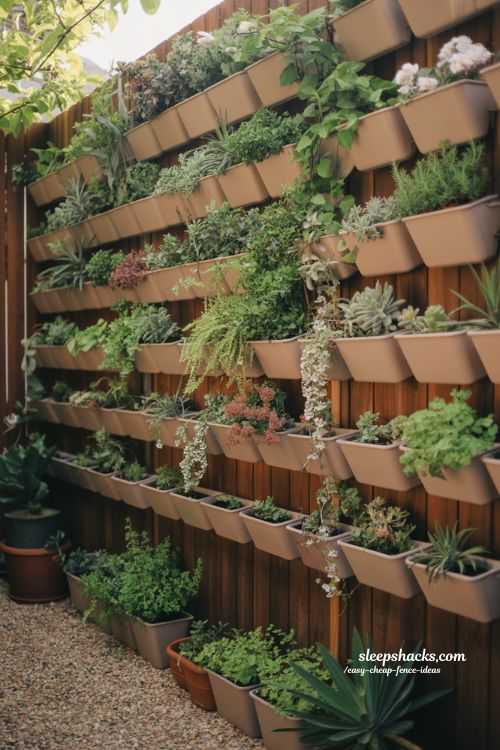
If you already have a fence but it needs help — or you’re building a new one — consider turning the whole surface into a vertical garden. Attach small pockets, planters, or containers along the fence face and fill them with trailing herbs, ferns, succulents, and seasonal flowers. Climbing plants like star jasmine or cardinal climbers will fill in the gaps beautifully.
This is especially powerful for small yards where ground space is limited. A vertical garden fence gives you a lush, green, private space without sacrificing any of your actual yard. The investment is modest — a basic fence plus some planters and seeds — and the result is something that stops people in their tracks.
- Start with drought-tolerant plants while the fence settles structurally
- Use lightweight plastic pockets rather than heavy terracotta pots on the fence face
- Herbs like mint, thyme, and sage are especially practical in a vertical garden setup
13. Enclose Just the Garden Patch — Smart Budget Move
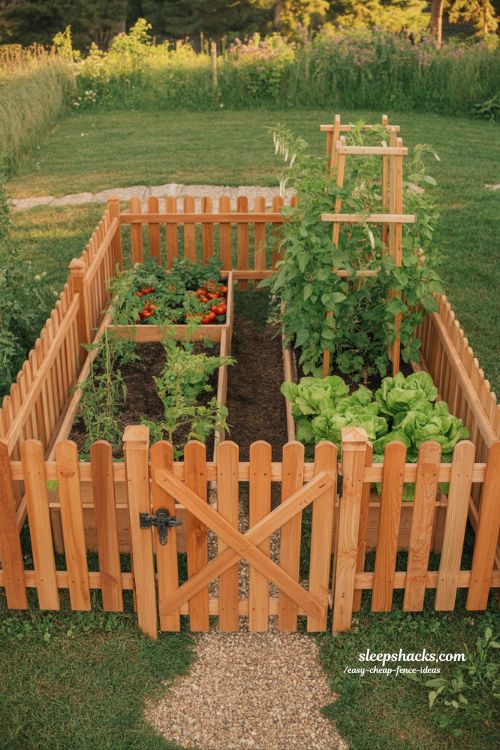
One of the best ways to spend less on fencing is to fence less. Instead of enclosing your entire yard, enclose only the area that needs it most — your vegetable garden, a reading nook, or a patio corner. A small, well-built enclosure costs a fraction of a full yard fence and can look intentional and polished rather than incomplete.
This strategy also lets you use a nicer material for a smaller area. You could splurge on cedar pickets for a 20-foot garden enclosure where the full yard would require a budget option. Think of it as concentrating your budget where it has the biggest visual impact, and letting the rest of the yard breathe naturally.
- Define your enclosed zone with a simple sketch before buying any materials
- A single beautiful gate makes even a basic enclosure feel designed
- Use the enclosed space to keep deer, rabbits, and raccoons out of vegetable beds
14. Upcycled Wood — Doors, Shutters, and Window Frames
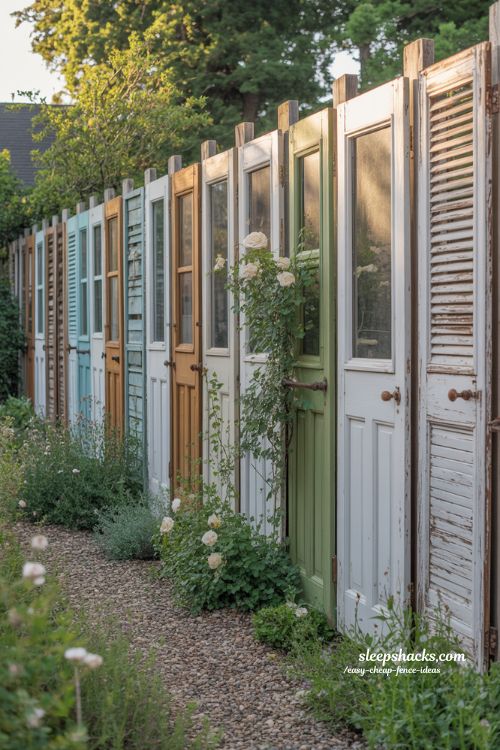
One of the most creative cheap fence ideas involves no new materials at all. Old doors, shutters, and window frames sourced from salvage yards, estate sales, or online marketplaces can be assembled into a truly unique privacy fence. Each piece brings its own character — different heights, colors, textures — and the resulting wall is unlike anything you’d see in a store.
The look works for bohemian, eclectic, cottage, and farmhouse gardens especially well. Stand the doors and frames between simple wood posts, secure them with brackets, and let the mix of old materials tell a story. A coat of coordinating paint brings it all together without erasing the individual character of each piece.
- Seal salvaged wood with outdoor sealant to protect against moisture
- Alternate heights and widths intentionally for a curated, not chaotic, look
- Check salvage yards, Facebook Marketplace, and Habitat for Humanity ReStores for materials
15. Picket Fence With Scalloped Tops — Custom Look, Budget Price
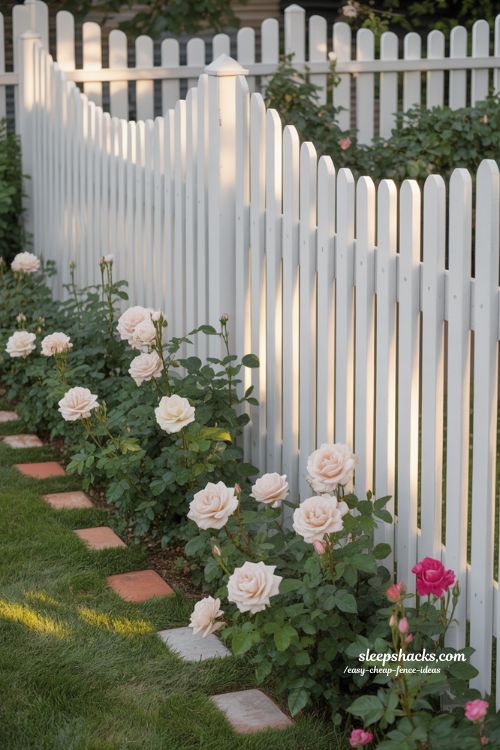
A standard picket fence becomes something genuinely custom when you install the pickets at varying heights to create a scalloped, undulating silhouette. The effect looks like something from a designer garden, but it’s just a matter of cutting pickets to slightly different lengths and following a gentle curve pattern across each panel.
This is one of those cheap fence ideas that takes just a little extra time but delivers results that look far more expensive than they are. Pair the scalloped silhouette with a fresh coat of white paint and some climbing roses at the base, and you have a front yard fence that will stop cars in the street.
- Mark a scallop curve template on cardboard before cutting any pickets
- Use consistent spacing between picket height variations for a polished result
- A scalloped design works best for fences under 4 feet — it gets lost on taller fences
16. Add Solar Lights to Any Budget Fence
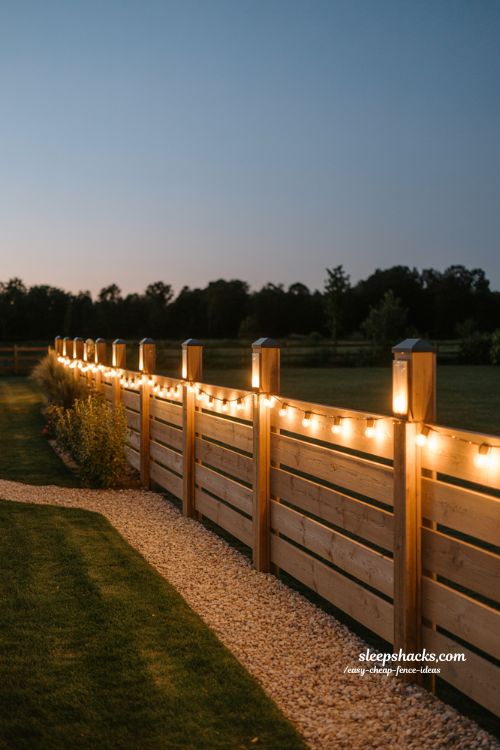
This idea works as an upgrade on any fence already in your yard or any new fence you’re building. Solar-powered post cap lights or bistro string lights fastened along the top of a fence rail transform the entire look after dark and cost almost nothing to run. No electrician, no wiring, no ongoing electricity cost.
Good lighting elevates even the most basic fence material. A corrugated metal fence with warm solar string lights strung along the top reads as a cozy, designed outdoor space. A simple picket fence with post cap lights becomes a charming cottage boundary. The fence itself doesn’t have to be fancy — the light does the work.
- Choose warm-white LED bulbs for the most inviting, natural-looking glow
- Solar post caps are the easiest install — no tools, just twist onto the post
- Bistro lights strung along the fence top work for both fences and pergola toppers
17. Cable Fence — Minimal, Modern, and Longer-Lasting Than It Looks
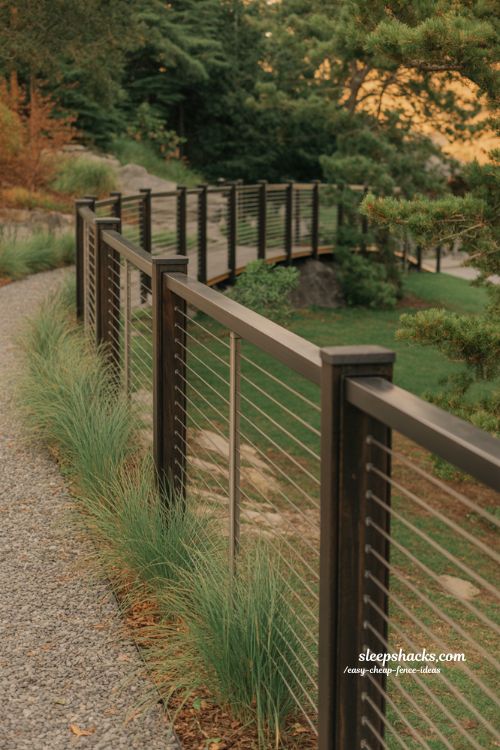
Cable fences use stainless steel cables stretched horizontally between wood or aluminum posts. They’re not the cheapest upfront, but if you already have existing fence posts, a cable kit to retrofit them is very affordable. The result is a sleek, contemporary fence that requires almost zero maintenance and never needs painting or staining.
The big appeal of cable fencing is the view it preserves. Unlike solid panel fences, cables create a boundary without blocking the landscape beyond — ideal for ocean views, mountain backdrops, wooded lots, or any yard where you want the space to feel open and connected to its surroundings.
- Retrofit existing wood fence posts with a cable kit to save significantly on cost
- Stainless steel cables resist rust and require almost no upkeep
- Pair with sleek horizontal wood posts for the most modern design outcome
Quick Comparison: Easy Cheap Fence Ideas at a Glance
| Fence Idea | Best For | Budget Level | DIY Friendly? | Maintenance |
|---|---|---|---|---|
| White Picket | Front yard charm | Low | Yes | Moderate |
| Wood Pallets | Privacy + garden wall | Near Free | Yes | Moderate |
| Bamboo | Natural/tropical look | Low | Yes | Low-Moderate |
| Split Rail | Large properties | Low-Moderate | Yes | Low |
| Horizontal Slats | Modern aesthetic | Moderate | Yes | Low |
| Chicken Wire + Frame | Garden/pet containment | Very Low | Yes | Low |
| Wattle | Cottage garden | Free | Yes | Low |
| Corrugated Metal | Modern farmhouse | Low-Moderate | Yes | Very Low |
| Chain Link | Pet/child safety | Low | Yes | Low |
| Lattice Panels | Trellis + privacy | Very Low | Yes | Low |
| Living Hedge | Natural seclusion | Low (growing time) | Yes | Moderate |
| Vertical Garden Fence | Small yards | Low-Moderate | Yes | Moderate |
| Partial Enclosure | Budget stretching | Variable | Yes | Variable |
| Upcycled Doors/Frames | Bohemian/eclectic | Very Low | Yes | Moderate |
| Scalloped Picket | Custom front yard look | Low | Yes | Moderate |
| Solar Lights + Any Fence | Upgrade any existing fence | Very Low | Yes | Very Low |
| Cable Fence | Modern/minimal yards | Moderate | Moderate | Very Low |
FAQ
What is the cheapest type of fence to build?
Wattle fencing and pallet fences are genuinely the cheapest options since the materials can be sourced for free. Chicken wire with a wood frame is also very affordable, typically costing only a few dollars per linear foot when you build it yourself.
How can I get privacy without spending a lot on fencing?
Bamboo roll fencing, lattice panels with climbing plants, and living hedges are all great low-cost privacy options. For immediate seclusion, bamboo and chain link with privacy slats deliver the fastest results. Hedges take time but ultimately give you the most natural, full privacy screen.
How do I make a cheap fence look more expensive?
Paint is the fastest upgrade — a clean coat of white or a rich dark color makes almost any fence look more polished. Adding lighting, a well-designed gate, or climbing plants along the base can dramatically elevate the overall look without adding much cost.
Can I build a fence without professional help?
Most of the easy cheap fence ideas on this list are genuinely DIY-friendly. Pallet fences, picket fence panels, bamboo rolls, wattle fences, and chicken wire frames all require basic tools and a free weekend rather than specialist skills. Horizontal slat and cable fence builds require a bit more precision but are still very manageable for a confident DIYer.
How do I choose the right fence material for my climate?
Wood is versatile but struggles in consistently humid environments without regular sealing. Vinyl, aluminum, and corrugated metal hold up well in wet or harsh climates. Bamboo needs UV protection in sunny areas. Chain link is weather-resistant across most climates. Your local conditions should be a key factor before committing to any material.
Do I need planning permission for a cheap DIY fence?
This varies by location. In many areas, fences under a certain height (often 6 feet in the US) can be built without a permit, but rules differ by municipality, HOA, and zoning district. Always check local regulations before starting any fencing project — especially if the fence borders a road or shared property line.
What is the easiest fence to install for a beginner?
Bamboo roll fencing is arguably the easiest — you unroll it and attach it to existing posts or a simple frame. Pre-assembled wood picket panels are a close second. Wattle fencing requires no tools at all, just collected sticks and patience. All three are genuinely achievable for anyone with a free weekend and basic outdoor skills.