

There’s a specific kind of frustration that hits every spring when you walk through your yard, take a long look at your flower beds, and think: “this still doesn’t look the way I imagined.”
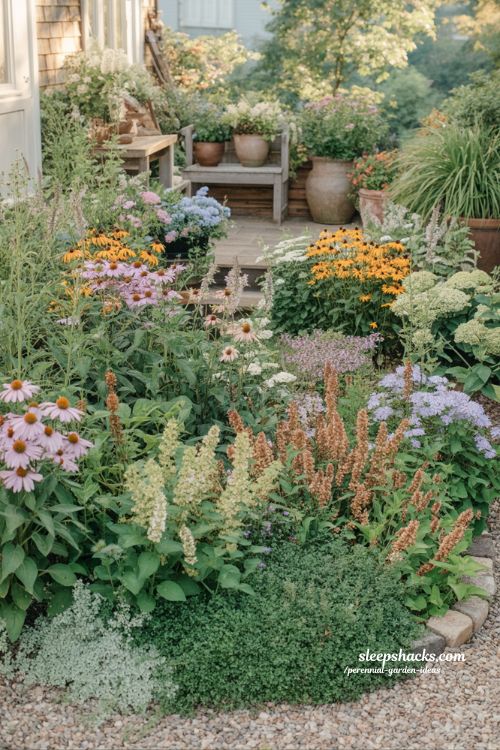
You bought all the plants. You dug the holes. You watered everything. And yet somehow, the garden feels scattered, a little random, maybe even a little sad. If that sounds familiar, you’re not alone — and the good news is, it’s almost always fixable. Great perennial garden ideas are less about buying the right plants and more about understanding how to use them together. Once you get the principles down, everything clicks.
- Perennials return year after year, growing larger over time, making them a genuinely smart long-term investment for any yard.
- The most common design mistake is planting too many single specimens — groups and drifts create far more visual impact.
- You can have blooms from early spring through hard frost by choosing perennials with staggered bloom times.
Why Perennial Garden Design Matters More Than Plant Selection
Most gardeners spend the majority of their budget and energy on plant selection — which variety, which color, which brand. But honest gardeners will tell you that design matters more. A stunning garden with six well-placed plants beats a chaotic garden with sixty different specimens every single time. Perennials bloom for only two to four weeks on average, which means the structure, texture, and layout of your bed does most of the visual work for the rest of the season. That’s why thoughtful perennial garden ideas always start with a plan, not a shopping cart.
The table below gives you a quick reference for how to think about your garden in terms of seasonal rhythm — what’s blooming when, and what fills the gaps.
| Season | Go-To Perennials | Design Role |
|---|---|---|
| Early Spring | Allium, Crocus, Bleeding Heart | Color before anything else emerges |
| Late Spring | Salvia, Catmint, Peony | Anchor the bed with big impact blooms |
| Summer | Coneflower, Black-Eyed Susan, Daylily | Long-lasting color through hot months |
| Fall | Aster, Sedum, Anemone | Extend the season when others go quiet |
| Winter | Ornamental Grass, Evergreen Shrubs | Structure and texture in bare months |
17 Brilliant Perennial Garden Ideas That Actually Work
1. Stop the Onesie Habit and Plant in Drifts
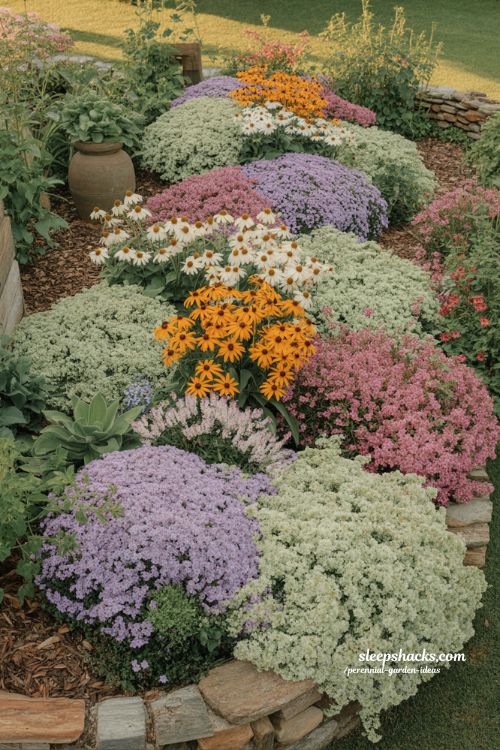
The single biggest mistake most home gardeners make is buying one of everything they love. It feels satisfying at the nursery, but it creates a messy, cluttered look at home. Professionally designed gardens use drifts and blocks — groups of three, five, or seven of the same plant planted close together. This repetition creates rhythm and visual weight. When you buy a new perennial you love, commit to buying at least three of them. Your garden will look more intentional almost immediately and the difference is dramatic.
- Start with odd-numbered groupings: 3, 5, or 7 plants per drift
- Space plants slightly closer than the tag suggests for a lush, full look
- Repeat the same drift in two or three spots along the bed to create movement
2. Choose a Restricted Plant Palette and Stick to It
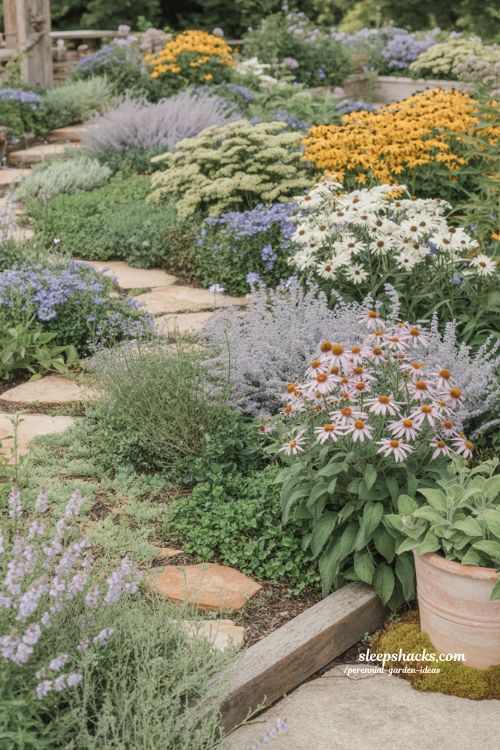
One of the smartest perennial garden ideas sounds almost boring at first: use fewer types of plants, not more. Pick four to six perennials that perform consistently well in your conditions, and build your entire garden around them. When you go to the nursery, only buy varieties of plants you already have. Russian Sage, Coneflower, Black-Eyed Susan, Catmint — find your stars, then expand by variety rather than by adding entirely new species every season. Restraint produces elegance.
- Identify two or three “anchor” plants that provide structure and bloom for six-plus weeks
- Allow yourself one new plant per season — and buy three of it
- Use foliage color and texture to add variety within a tight palette
3. Layer Heights from Front to Back
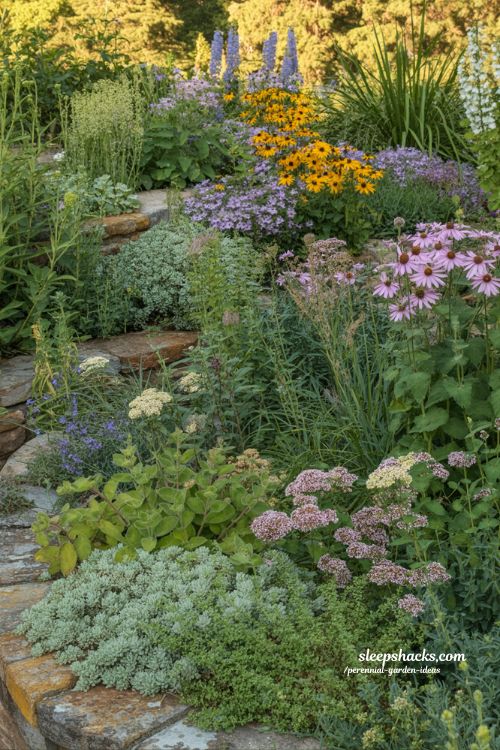
Tall plants in the back, medium in the middle, short at the front. This classic principle exists because it genuinely works — every plant gets light, and the viewer sees the full bed at once. Aim for at least three distinct height tiers. Delphiniums and ornamental grasses can anchor the back. Salvias and coneflowers work beautifully in the middle. Catmint, sedum, or dianthus spill over the front edge. A few exceptions apply: very slender tall plants like alliums can go toward the front because their airy stems don’t block anything.
- Use tall ornamental grasses at the back for winter texture that lasts into spring
- Avoid planting anything over 24 inches at the very front edge of a bed
- Account for mature size, not pot size — plants spread significantly by year three
4. Time Your Blooms for Non-Stop Color
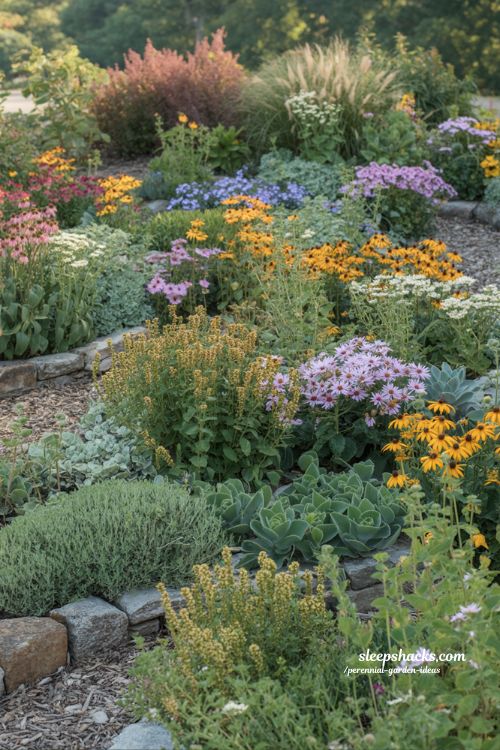
Here’s the thing about perennials: they’re not in bloom most of the time. A typical perennial blooms for two to four weeks, then goes back to being a foliage plant for the rest of the season. The secret to a garden that always looks full and colorful is intentional sequencing. Walk through your garden mentally from March to November and identify the gaps. Then fill those gaps with perennials timed to bloom right when the previous wave finishes. Spring bulbs, summer coneflowers, fall asters — overlap them on purpose.
- Sketch a simple bloom calendar: one column per month, one row per plant
- Aim for at least two overlapping bloom windows at all times throughout the season
- Use annuals as gap-fillers in your first year while perennials get established
5. Design with Foliage, Not Just Flowers
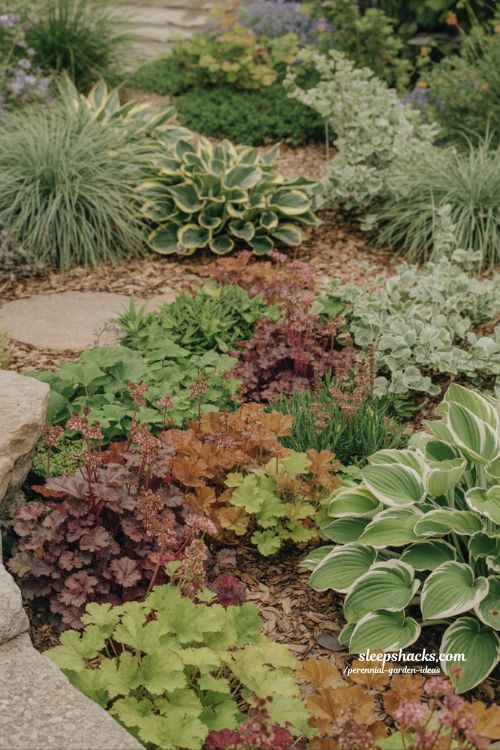
Flowers are the headline act, but foliage plays six months to flowers’ two weeks. A perennial garden that only looks good in bloom is a garden that looks bare most of the time. Heuchera (coral bells) comes in stunning shades from lime green to deep burgundy. Hostas offer bold texture in dozens of variegated patterns. Artemisia brings silvery softness that makes every neighboring color pop. When you’re planning your bed, ask yourself: does this combination look good when nothing is flowering? It should.
- Use at least one silver or chartreuse foliage plant to brighten shadowy spots
- Heucheras are one of the most reliable foliage perennials for both sun and shade
- Ornamental grasses add movement and texture from midsummer straight through winter
6. Edit Ruthlessly — Then Edit Again
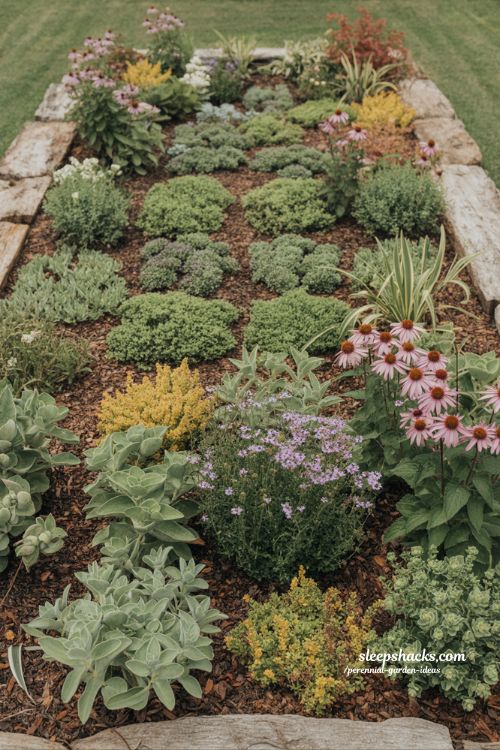
Every beautiful garden you’ve ever admired involved someone being very unsentimental about what wasn’t working. If a plant blooms in a color you don’t love, dig it up. If something rarely blooms, reliably flops, or just never excites you, remove it. Give it to a neighbor, put it on the curb, compost it — just get it out of the bed. The plants that remain after an honest edit are your garden’s true stars, and they’ll perform much better once they’re not competing for space with underachievers.
- Pull out any plant you’ve been “tolerating” for more than two seasons
- Ruthless editing is how professional gardens maintain their visual clarity
- Don’t replant the same species in the same spot — root patterns and soil memory matter
7. Divide Plants Instead of Always Buying New
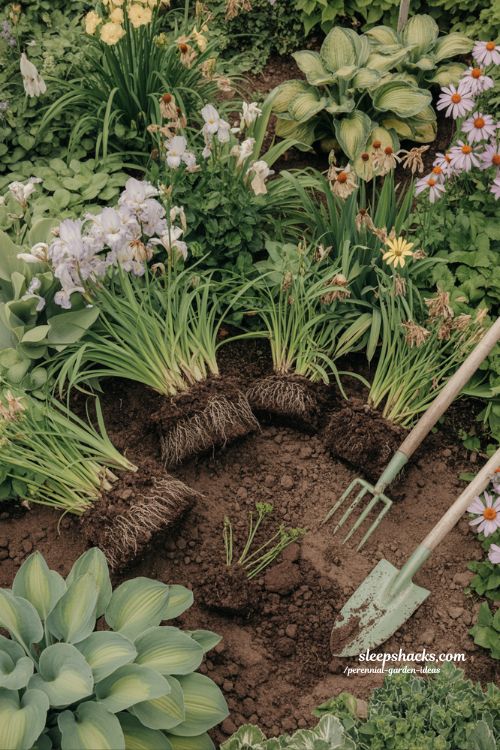
Most perennials grow into larger clumps each year and actually perform better when divided every few seasons. Instead of driving to the nursery every spring, shop your own garden first. Irises, daylilies, hostas, and coneflowers all divide easily. Dig up the clump in early spring or fall, split it into two or three sections with a sharp spade, and replant the divisions. This is how you turn one plant into five without spending a dollar — and it’s one of the most satisfying perennial garden ideas for budget-conscious gardeners.
- Divide spring bloomers after they flower; divide fall bloomers in early spring
- Always replant divisions quickly — roots exposed to air dry out fast
- Water divisions heavily for the first two weeks to help them re-establish
8. Use Contrasting Colors Strategically
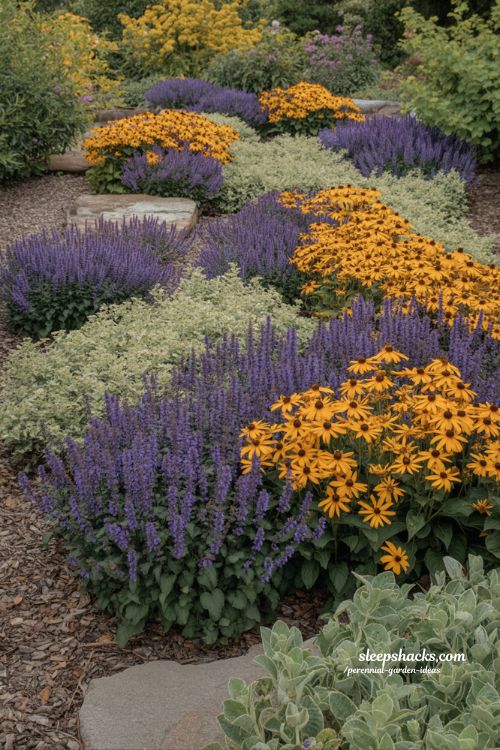
Color theory applies to gardens exactly the way it applies to interior design. Opposite colors on the wheel — purple and yellow, blue and orange — create vibrant, high-energy combinations that stop people in their tracks. Complementary colors — pinks and purples, creams and blush — create calm, romantic beds that feel cohesive and elegant. Neither approach is wrong. What doesn’t work is mixing a bit of everything without intention. Choose a color story for your bed and stick to it. Even two colors, done boldly, outperform ten colors in a muddle.
- Purple Salvia with yellow Rudbeckia is a classic that never fails
- Stick to a two or three-color palette for borders under 20 feet
- Use white-flowering perennials as a bridge between color combinations that clash
9. Add Late-Season Perennials for Fall Impact
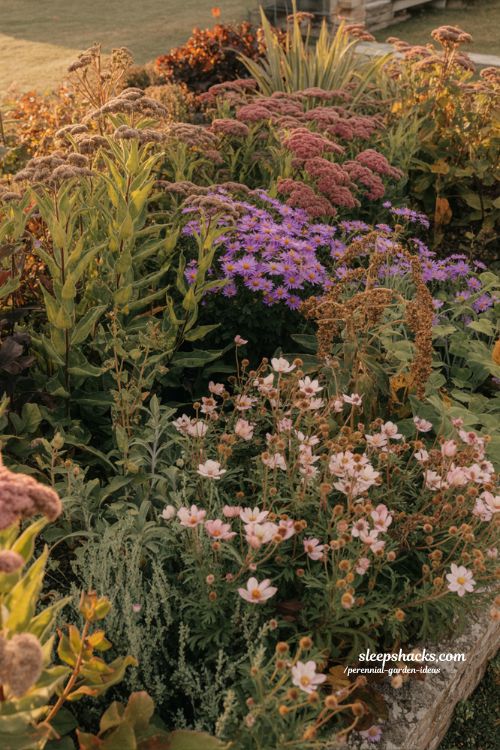
Most gardeners plant heavily for spring and summer then run out of ideas by August. Fall is actually one of the most beautiful seasons in the perennial garden — the light is golden, the temperatures are cooler, and the right plants look spectacular. Anemones flutter like little fairies in shades of pink and white. Asters come in deep purples and pinks that glow against autumn foliage. Tall sedums shift from green to burgundy. Plant at least two or three dedicated fall perennials and your garden will reward you long after the summer crowd has faded.
- ‘Monch’ aster is one of the best fall bloomers — reliable, deer resistant, and stunning
- Hardy mums can survive frost and extend color into November in many zones
- Leave sedum heads standing through winter — they add structure and feed birds
10. Plan for Winter Structure Too
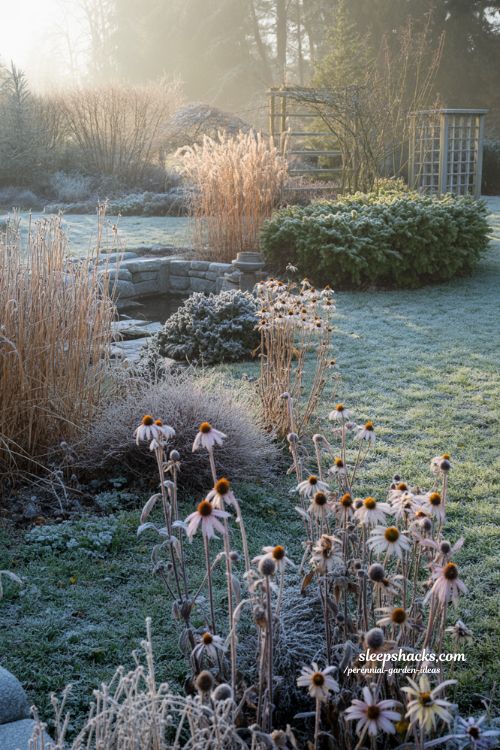
The best perennial gardens look interesting in December, not just July. Ornamental grasses left standing through winter catch the light and hold snow beautifully. Tall coneflower and black-eyed Susan seedheads feed birds and create sculptural silhouettes against bare soil. Evergreen shrubs anchored at the back of the border keep the bed from disappearing entirely. Adding a birdbath, a simple trellis, or a piece of garden sculpture ensures your bed has visual weight even when everything is dormant. Don’t let winter be an afterthought.
- Leave ornamental grasses uncut until early spring — they’re at their best covered in frost
- Add one evergreen shrub per every ten feet of border for year-round backbone
- Birdhouses and feeders placed in the bed give winter interest and attract wildlife
11. Try Color Blocking for Maximum Drama
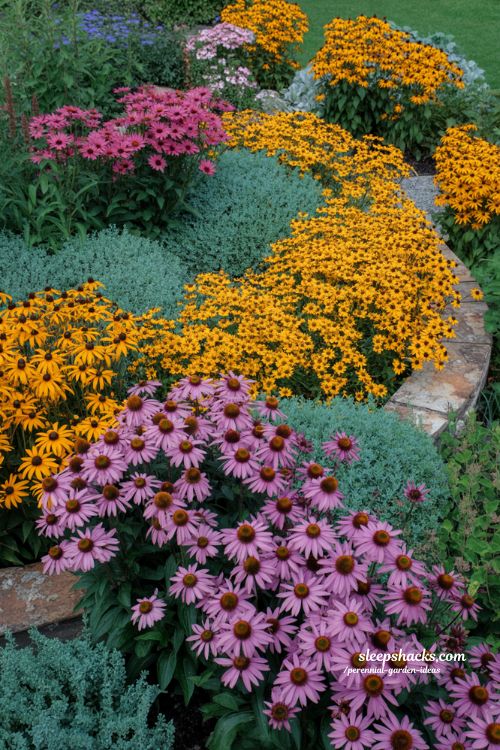
Color blocking — planting large masses of one color together — is a technique borrowed from professional landscape design that any home gardener can use. Instead of sprinkling one pink plant here and one pink plant there, group all your pinks together in one generous sweep. One big swath of purple coneflower makes a statement. Ten purple coneflowers scattered across a bed get lost. Long-blooming perennials like echinacea, catmint, and black-eyed Susan are perfect for this approach because they hold their color long enough to justify the space.
- Use color blocks at the corners or back of a border for maximum visual anchoring
- Even a three-foot-wide color block reads dramatically from a distance
- Soften hard color block edges by allowing plants to slightly overlap and intermingle
12. Include Groundcovers to Suppress Weeds and Add Texture
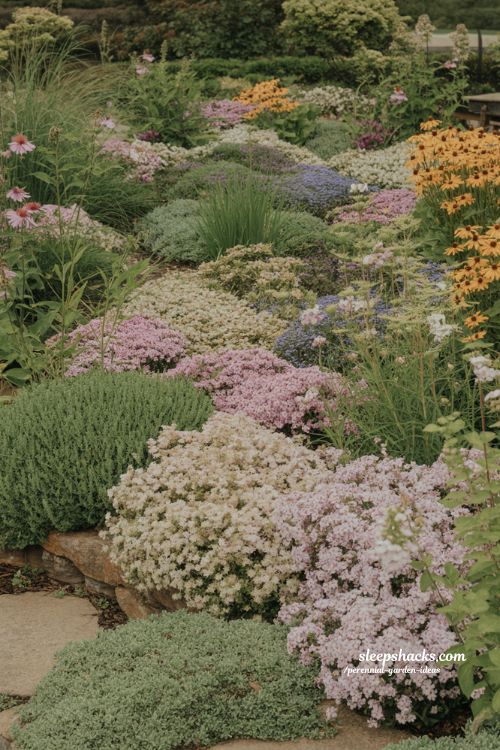
Low-growing groundcover perennials do double duty: they fill the spaces between taller plants and crowd out weeds before they get started. Creeping phlox blooms in a carpet of pink and white in spring. Sedum spreads slowly and reliably in sunny spots. Sweet woodruff fills shady corners with delicate white flowers and lush green foliage. Choose groundcovers that match your existing conditions rather than fighting them, and plant them close together in their first season so they knit together quickly. Fewer weeds mean more time actually enjoying your garden.
- Space groundcovers closer than the tag suggests for faster coverage in year one
- Avoid aggressive spreaders like vinca near other perennials — they can crowd roots
- Use groundcovers under large trees where other perennials struggle to compete
13. Support Pollinators with the Right Plant Mix
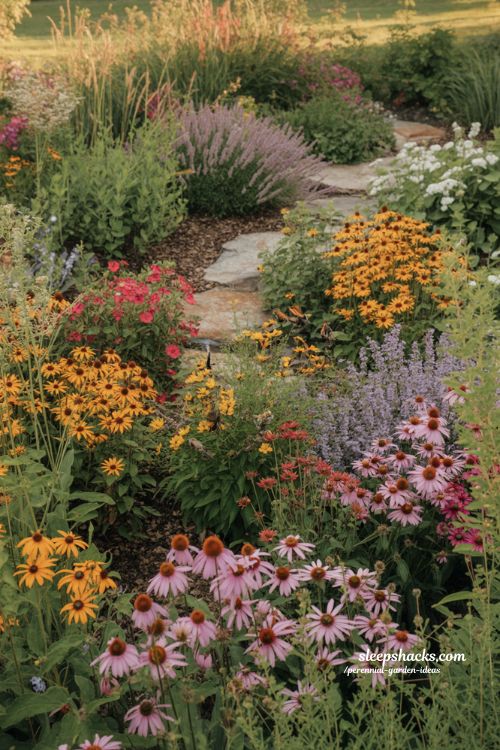
A perennial garden that supports bees, butterflies, and hoverflies is doing two things at once: it’s beautiful and it’s ecologically meaningful. Native perennials are almost always the best choice for local pollinators because they’ve evolved together over thousands of years. Coneflowers, black-eyed Susans, bee balm, lavender, and salvias are consistent pollinator magnets. Beyond flowers, pollinators need shelter — leave some hollow stems standing through winter, and let leaf litter accumulate in a corner. Your garden becomes a whole little ecosystem, not just a flower display.
- Choose at least five native perennials as the core of your pollinator planting
- Avoid double-flowered cultivars — they often have reduced nectar and pollen
- Let a few plants go to seed at season’s end to provide late-season food for birds
14. Create a Shade Perennial Garden That Actually Blooms
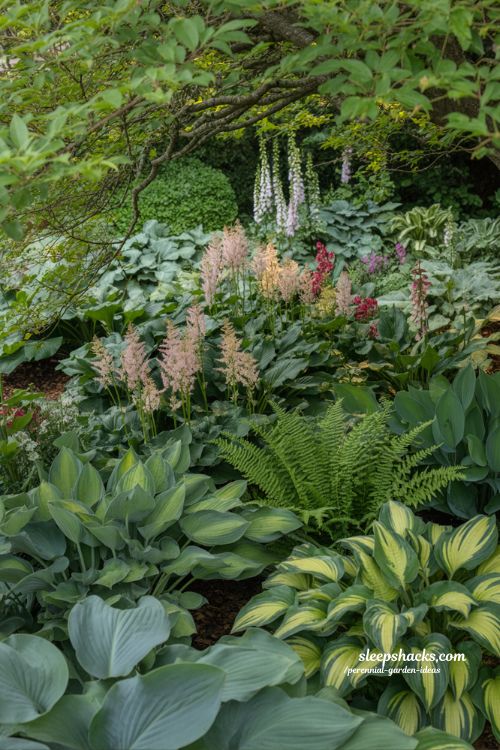
Shade doesn’t have to mean boring. Some of the most striking perennial garden ideas happen in partial or full shade — it just requires knowing the right plants. Astilbe produces feathery plumes in pinks, whites, and reds from early to midsummer. Hostas are endlessly variable in size, color, and texture. Heucheras bring warm tones — peach, burgundy, golden yellow — to spots that might otherwise go dark and flat. Foxgloves rise tall and elegant in dappled light. With the right selection, a shaded border can be as lush and colorful as anything growing in full sun.
- Combine bold hosta leaves with the delicate texture of astilbe and ferns for contrast
- Foxgloves are technically biennial but reseed reliably, acting like a perennial in most gardens
- Shade perennials generally need less water once established — an underrated bonus
15. Use Containers to Add Flexibility
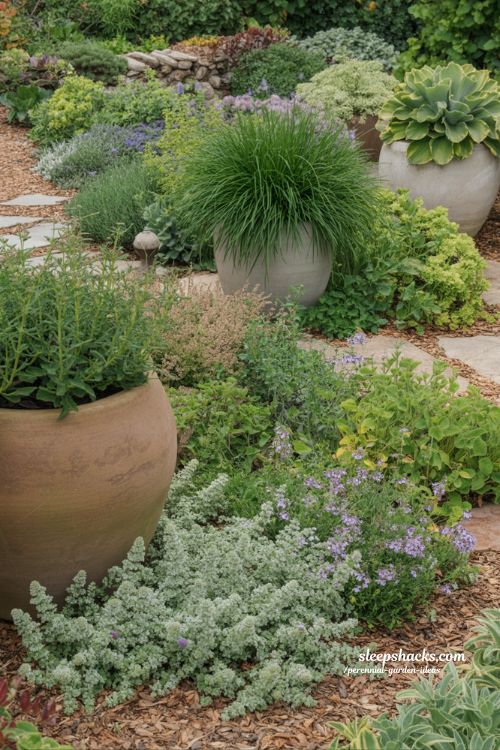
Containers aren’t just for patios. A well-placed large pot or two within a perennial border adds instant height, marks transitions between planting zones, and gives you a spot to rotate in seasonal color. Plant a tall ornamental grass or a dramatic hosta in a substantial clay or concrete pot and anchor it at the back of the border. When one season ends, swap in a seasonal annual or a small flowering shrub for the next. The flexibility of containers means you can edit your design without disturbing the ground-planted perennials at all.
- Use containers at the corners of a border to frame the bed and add vertical interest
- Match pot material to your garden’s overall style — clay for cottage gardens, concrete for modern
- Overwinter tender plants in containers by moving them to an unheated garage or shed
16. Deadhead Consistently for a Longer Show
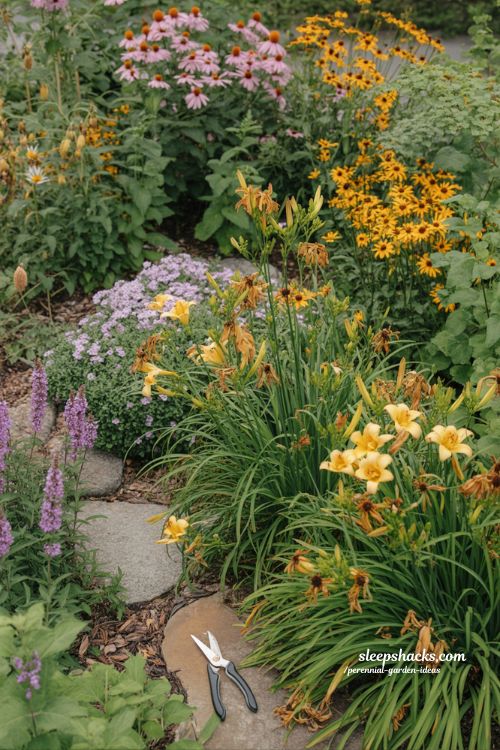
Deadheading — removing spent flowers before they set seed — is one of the highest-return maintenance tasks in the perennial garden. For many plants, removing faded blooms signals the plant to keep producing new ones. Daylilies benefit enormously from daily deadheading during peak bloom. Salvias, catmint, and coreopsis will often rebloom fully if cut back hard after their first flush. Not all perennials need deadheading — coneflowers and black-eyed Susans look beautiful in seed and feed birds — but for the ones that do respond, it genuinely extends your bloom season by weeks.
- Carry a small pair of snips when you walk through the garden each morning
- Cut back catmint to about half its height after its first big bloom for a second flush
- Leave coneflower and rudbeckia heads standing — birds love the seeds all winter
17. Observe, Photograph, and Adjust Every Season
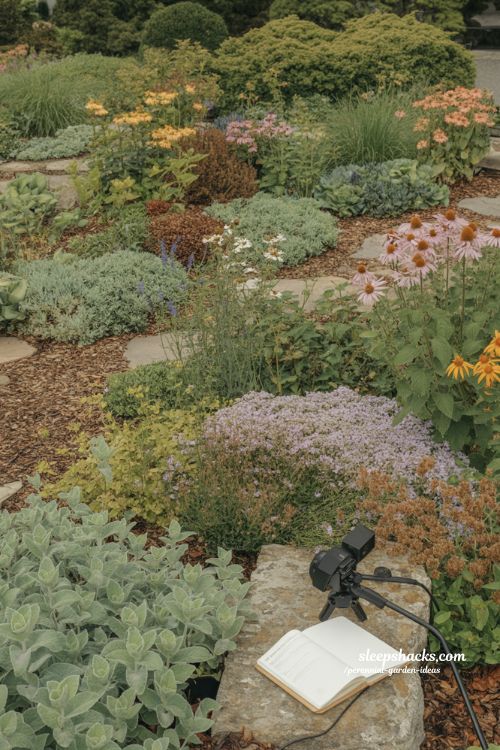
The best perennial gardeners are part designer, part scientist. They take notes. They photograph their borders monthly to track what’s happening, when gaps appear, and which combinations work. At the end of each season, they walk through and make a list of changes for next year: move that aster because it gets too much shade, divide that hosta because it’s outgrown its space, replace that salvia that never performed. Improvement is incremental and intentional, not accidental. Your garden will genuinely get better every year if you stay curious and stay willing to adjust.
- Take monthly photos from the same spot so you can compare across seasons
- Keep a simple garden journal — even handwritten notes on what you planted and when
- Review your photos in late fall when planning next spring’s changes while it’s all fresh
Quick Comparison: Perennial Garden Ideas at a Glance
| Idea | Best For | Effort Level | Bloom Season |
|---|---|---|---|
| Planting in Drifts | All gardens | Low | Any |
| Restricted Palette | Beginner gardeners | Low | Any |
| Layering Heights | Formal borders | Medium | Any |
| Bloom Timing | Color continuity | Medium | Spring–Fall |
| Foliage Design | Year-round interest | Low | All seasons |
| Dividing Plants | Budget gardeners | Medium | Spring/Fall |
| Color Blocking | High-impact design | Low | Summer |
| Late-Season Planting | Fall lovers | Low | Fall |
| Pollinator Support | Eco-conscious gardens | Low | Spring–Fall |
| Container Flexibility | Renters and adapters | Medium | Any |
FAQ
How many perennials do I need to fill a garden bed?
It depends on the size of the bed and the mature size of your plants, but a good starting rule is to plan for plants that will eventually grow to fill about two-thirds of the available space. Perennials spread and grow over time, so planting them a little more loosely than feels right in year one is smart. Fill the gaps in years one and two with annuals while the perennials establish and spread naturally.
What are the easiest perennials for beginners?
Coneflowers, black-eyed Susans, daylilies, hostas, and catmint are consistently the most forgiving and lowest-maintenance perennials for new gardeners. They tolerate variable soil conditions, don’t need frequent dividing, and bloom reliably without a lot of fussing. Start with these, get to know how they grow in your conditions, and then add more variety once you feel confident.
When is the best time to plant perennials?
Spring and fall are both excellent planting times. Spring gives plants a full growing season to establish before winter. Fall planting — about six weeks before your first frost — allows roots to settle in during cooler temperatures, and the plants often establish faster because they’re not dealing with summer heat stress. Avoid planting in midsummer heat unless you can water very consistently.
How do I keep my perennial garden looking good all season?
The key is choosing plants with staggered bloom times, keeping up with deadheading on responsive plants, and not neglecting foliage. A bed that has interesting leaf shapes and colors will look rich and full even when nothing is in flower. Add one or two late-blooming perennials like asters or anemones to carry color through September and October, and leave some seedheads standing for winter texture.
Do perennial garden ideas work for small yards?
Absolutely. Some of the most beautiful perennial gardens I’ve seen were in tiny urban lots. In small spaces, the design principles matter even more — a restricted color palette, thoughtful height layering, and plants chosen specifically for their mature size all become critical. Stick to compact varieties, use containers to add vertical interest without taking up ground space, and don’t try to cram in too many different species.