

Working from a corner desk, a converted closet, or a sliver of the guest room is honestly the norm now, not the exception — and it comes with a very specific decorating problem.
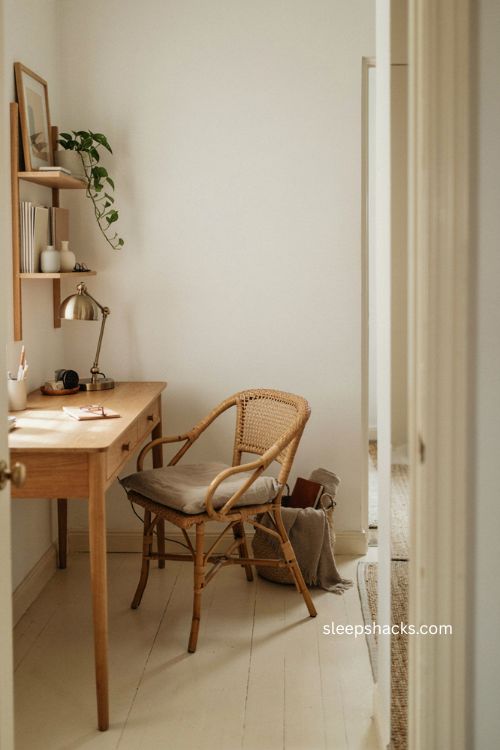
Too small to feel like a real room, but too visible from the rest of the house to just ignore. Small office decor has to do double duty: it needs to keep you focused and organized while still looking like an intentional part of your home instead of an afterthought crammed into leftover space. The trick isn’t finding bigger furniture, it’s making smarter choices with what little square footage you’ve got. Here are fifteen ways to make a small office feel purposeful, personal, and genuinely easy to work in.
1. Mount a Wall Desk to Free Up the Floor
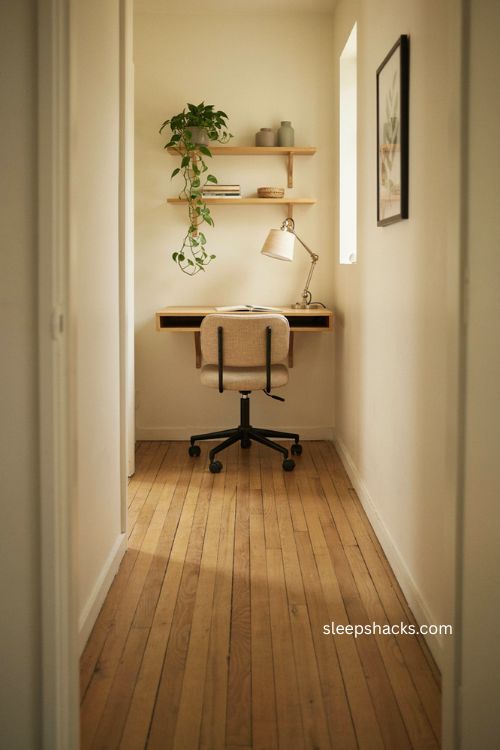
When there’s no room for a traditional desk with legs and drawers, a wall-mounted desk solves the problem instantly. It attaches directly to the wall, leaving the floor beneath completely open for a rolling chair or extra storage bins. Pair it with floating shelves above for books and supplies instead of a bulky hutch, and the whole setup reads as intentional rather than makeshift. Choose a desk with a drop-leaf or fold-flat design if you need the space to disappear entirely when you’re not working, which matters most in a studio or shared room.
2. Build a Library Wall Behind the Desk
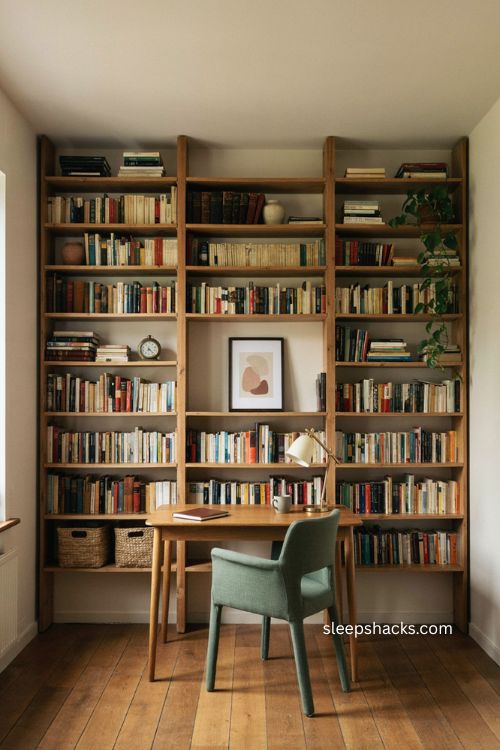
A row of matching bookshelves lined up behind your desk mimics the look of expensive built-ins without the renovation cost or the commitment. Fill it with books turned spine-out for color, plus a few small objects and framed photos so it doesn’t read as one long wall of text. Keeping the shelf styling loose and uneven — never perfectly symmetrical — makes the wall feel collected over time instead of staged all at once. This trick works especially well behind a desk positioned for video calls, since it becomes a built-in backdrop with zero extra effort.
3. Add a Rotating Gallery Wall
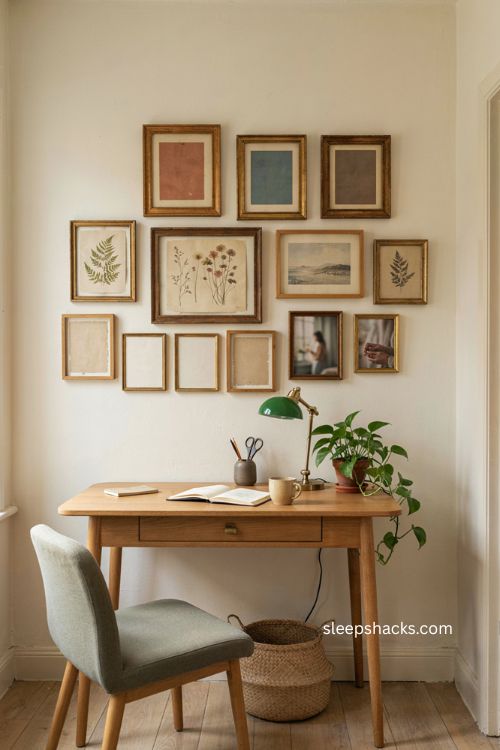
A cluster of frames behind or beside your desk gives a small office instant personality without eating into your workspace. Mix in personal photos, small art prints, and even a favorite postcard or two, keeping the frames a similar color so the mismatched sizes still feel cohesive. Because it’s just decor and not furniture, a gallery wall is one of the few upgrades that costs almost nothing but changes how the entire room feels. Swap out a piece or two every few months to keep the wall feeling current instead of static.
4. Use a Folding Screen to Hide Clutter
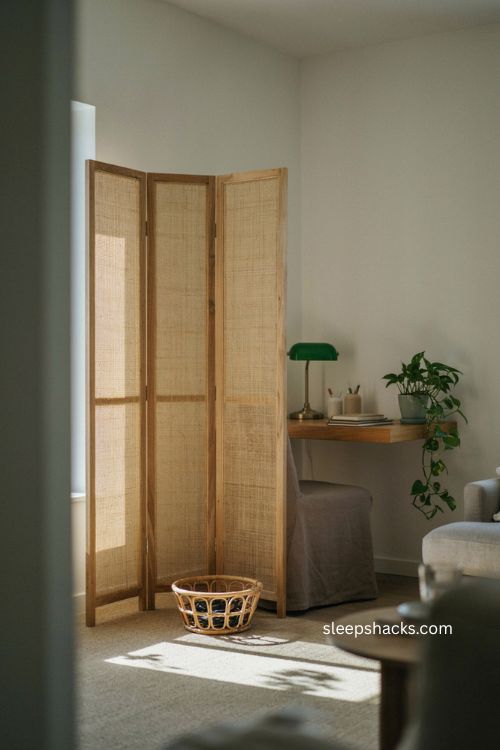
When your office shares a room with something else — a guest bed, a dining table, a corner of the living room — a folding screen lets you visually close it off in seconds. Slide it in front of your desk before a video call to hide papers and cords, or angle it to define the workspace as its own zone within a bigger room. A slatted wood or rattan screen adds texture without feeling heavy, and it folds flat against the wall when you don’t need it. It’s one of the few decor pieces that’s genuinely functional and decorative at the same time.
5. Hang a Plant Shelf Above the Desk
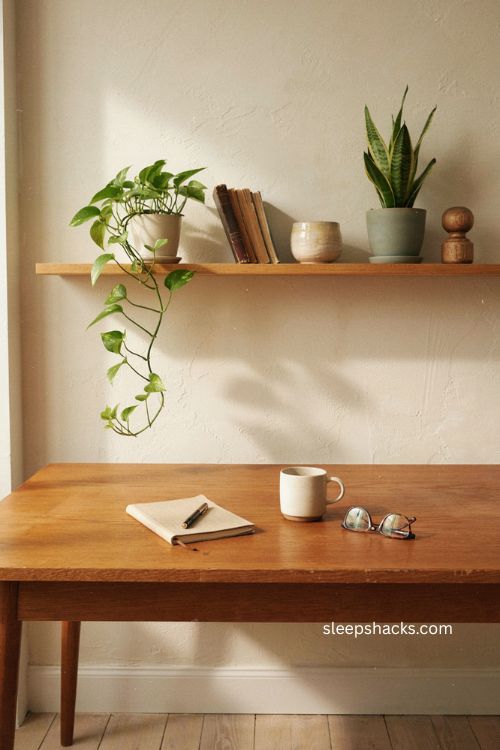
Floor space is limited in most small offices, so let a mounted shelf carry your greenery instead. A single floating shelf above eye level holds two or three small potted plants without crowding your actual work surface, and it softens what can otherwise be a very hard-edged, all-desk room. Trailing varieties like pothos look especially good spilling over the edge of a high shelf. If your office doesn’t get much natural light, swap in a low-light plant like a snake plant or ZZ plant so the greenery actually survives past the first month.
6. Choose Curtains That Filter, Not Just Decorate
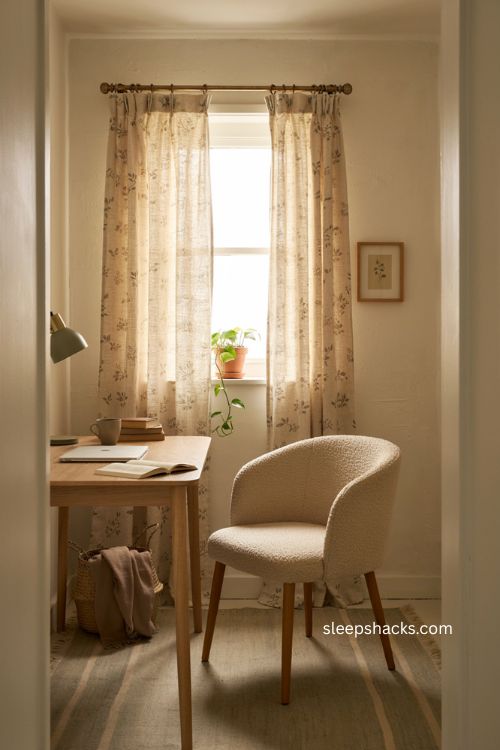
A small office often means a small window, and what you put on it matters more than in a bigger room since it’s one of the few visible surfaces. Patterned curtains in a color that ties into your desk or rug add personality while still doing the practical job of filtering glare off your screen. Go with a lightweight linen-blend fabric so the room doesn’t feel darker or smaller when the curtains are closed. Hanging the rod a few inches above the actual window frame makes the ceiling feel taller, which matters even more in a tight space.
7. Store Supplies in Matching Bins and Baskets
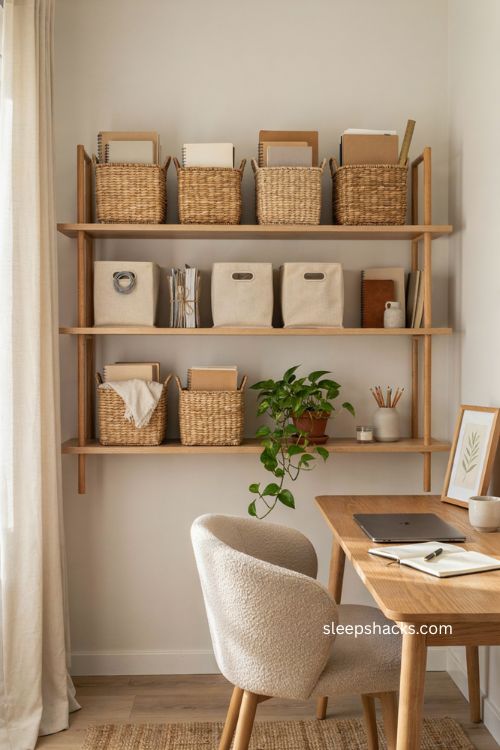
Visual clutter is the fastest way to make a small office feel chaotic, even if the room itself is tidy underneath. Swap random boxes and loose piles for a set of matching woven baskets or fabric bins on open shelving, so everything looks pulled together even when it’s just holding cables and old files. Label each one so you’re not digging through all of them to find a single notepad. A neutral material like natural rattan or canvas blends into almost any decor style, which matters if your office also has to double as a guest room or reading nook.
8. Swap the Overhead Light for a Pendant
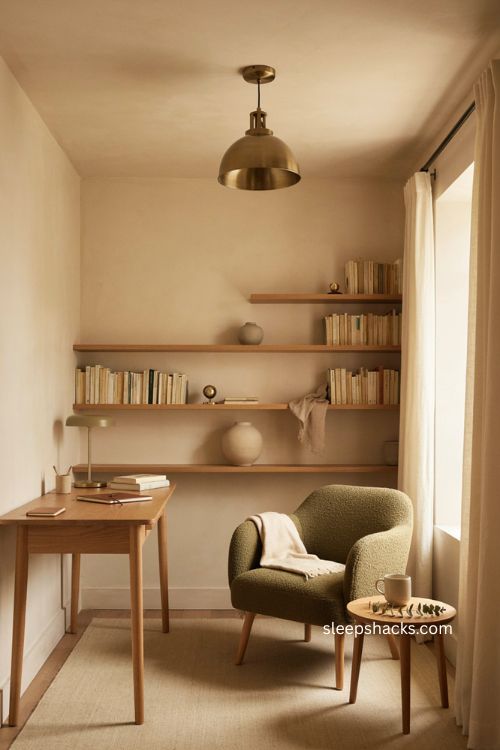
Standard ceiling fixtures tend to disappear into the background, but a single statement pendant light does real work in a small office by drawing the eye upward. Hanging it slightly off-center, above a bookshelf or reading chair rather than dead-center over the desk, adds visual interest without competing with your task lighting. A warm metallic finish like brass or aged brass tends to read as more elevated than a plain white fixture. Since floor space for lamps is often limited in a tiny office, moving light to the ceiling frees up your desk and side table for actual work supplies.
9. Add a Floor Mirror to Expand the Room
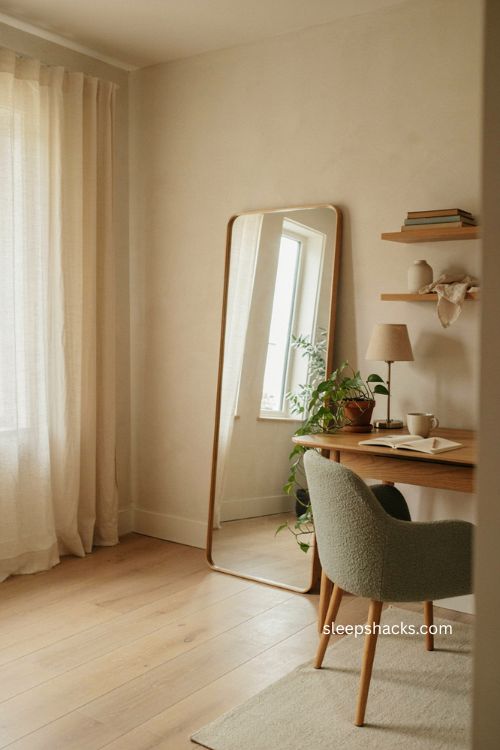
A tall, leaning floor mirror is one of the simplest tricks for making a cramped office feel bigger than it is. Position it across from the window or doorway so it reflects natural light and the view beyond the room, rather than facing a blank wall where it does nothing visually. A frameless or thin-metal-frame style keeps the look modern and avoids adding visual bulk to a room that’s already tight. Beyond the space-expanding trick, it’s also genuinely useful for a quick outfit check before you step onto a video call.
10. Choose a Secretary or Fold-Away Desk
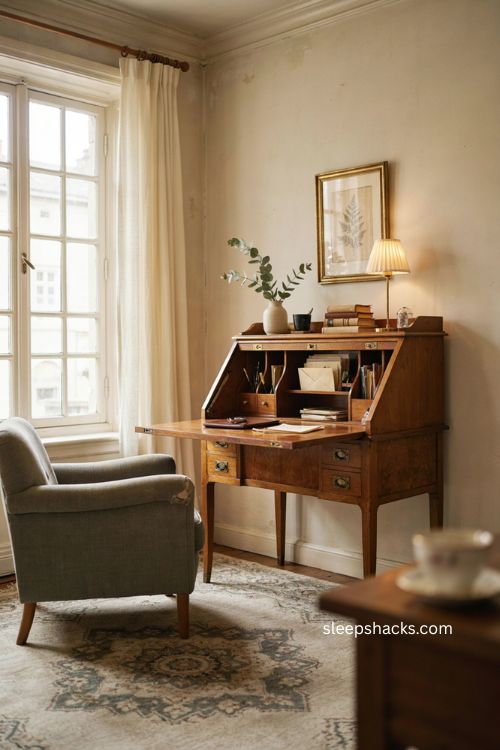
A vintage-style secretary desk with a drop-down front is one of the most efficient small-office pieces there is, since it closes completely when you’re done for the day. It works especially well in a shared space like a living room or bedroom, where you don’t want a work surface visible around the clock. The enclosed cubbies inside keep pens, mail, and paperwork out of sight the moment you fold the front back up. Look for one with a bit of age or patina rather than a brand-new piece — the character helps it read as furniture first and workspace second.
11. Convert an Unused Closet Into a Mini Office
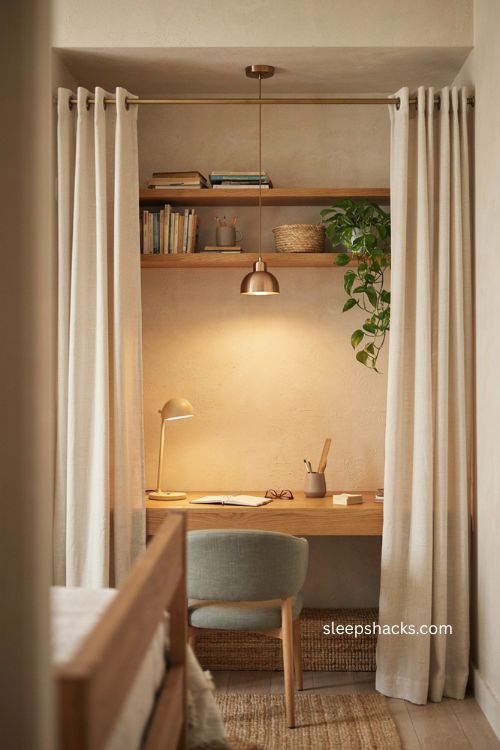
A closet that’s currently storing nothing but off-season coats might be your best untapped square footage. Pull the doors off entirely or swap them for a curtain, add a slim desk shelf at counter height, and mount a light fixture inside since closets rarely have great overhead lighting. Floating shelves above the desk area hold books and supplies without needing extra floor footprint outside the closet frame. When the workday’s over, a curtain or a set of doors closes the whole setup away, which is especially useful if the closet sits in a bedroom or living room.
12. Commit to One Bold Wall
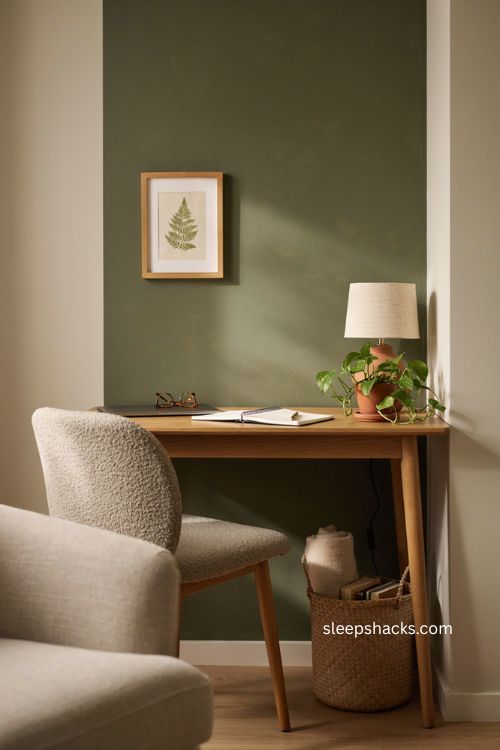
A small office is the easiest room in the house to go bold in, since a little color or pattern covers a lot of visual ground fast. Paint just the wall behind your desk in a saturated color, or hang a bold peel-and-stick wallpaper there instead of committing to the whole room. Keep the other walls neutral so the accent wall reads as a deliberate choice rather than an overwhelming one. This single move also doubles as a built-in, ready-made backdrop for video calls without any extra styling required.
13. Add a Pegboard or Peg Rail for Storage
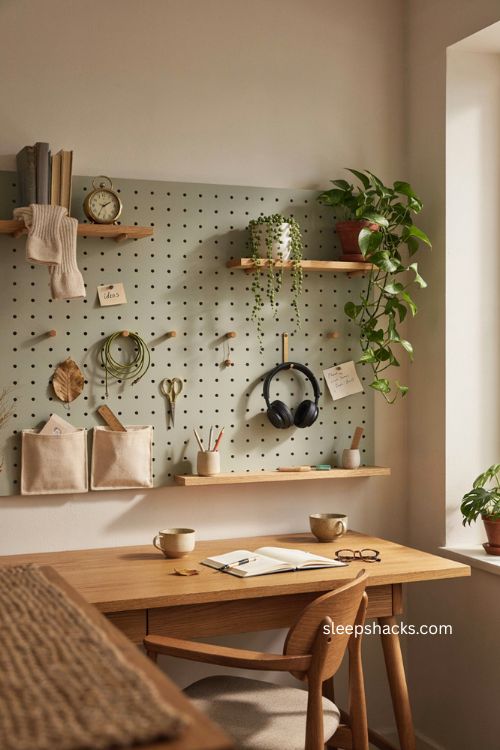
A pegboard mounted above or beside your desk turns wasted wall space into flexible, rearrangeable storage for everything from scissors to cords to small plants in hanging pots. Unlike fixed shelving, the pegs can be moved around as your needs change, which is especially handy in a small room where storage needs shift often. Paint the board a color that matches your walls so it blends in, or choose a contrasting shade if you want it to double as a design feature. It keeps your actual desktop clear, which makes a small surface feel much bigger than it is.
14. Bring in One Statement Chair
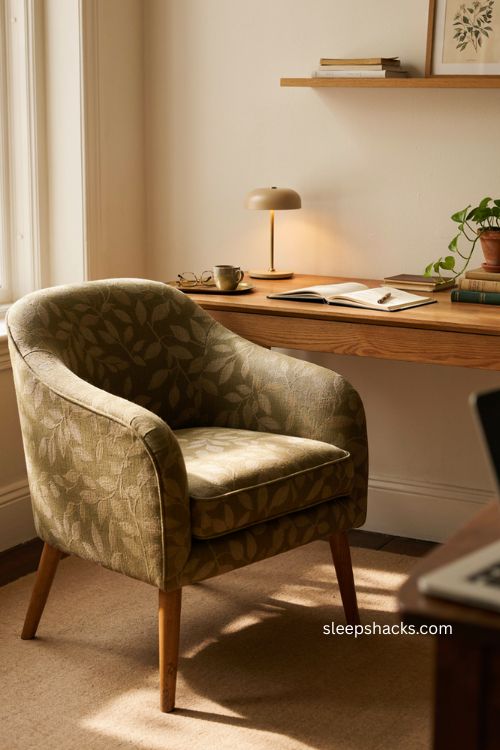
Instead of a generic desk chair, let a single well-chosen piece add character to the whole room. A curvy vintage armchair, a chair upholstered in a bold pattern, or even an antique dining chair repurposed as a desk chair gives a small office a personality that off-the-shelf office furniture rarely has. Since it’s the one piece of furniture people will notice first when they walk in, it’s worth spending a little more here than anywhere else in the room. Just make sure it’s still comfortable enough for real work, not only for how it photographs.
15. Layer Your Lighting Instead of Relying on One Fixture
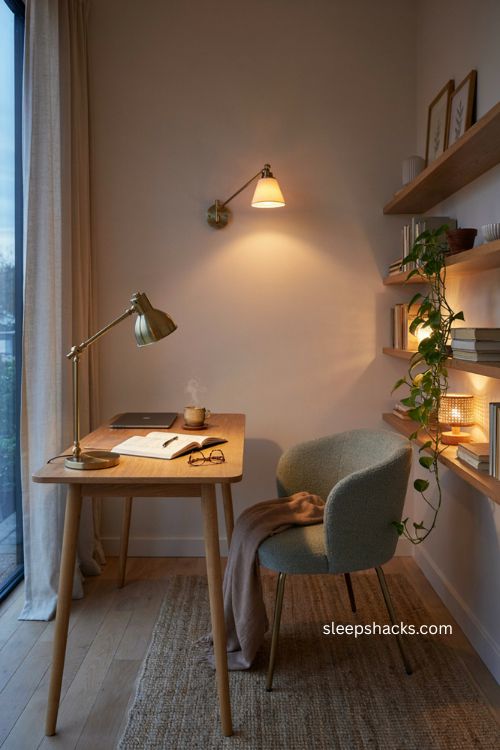
A single overhead light leaves most small offices either too dim to work in or too harshly lit to feel comfortable, so layering matters more here than in bigger rooms. Combine a task lamp on the desk, a wall sconce or pendant for ambient light, and a small accent lamp on a shelf or side table for warmth in the evening. Warm-toned bulbs across all three sources keep the room feeling cohesive instead of mismatched. This layered approach also means you can dim the room down for a video call background without losing the actual desk light you need to see your keyboard.
Final Thoughts
A small office doesn’t need to apologize for its size — with the right choices, it can end up being the most personal, most-used room in the house. Pick a few ideas from this list that solve your actual daily frustrations, whether that’s clutter, bad lighting, or a desk that dominates a shared room, and build out from there. You don’t need a renovation or a big budget to make this space feel like yours; you just need a handful of intentional choices layered on top of each other. Here’s to a workspace that actually makes you want to sit down and get started.
Frequently Asked Questions
Q: How do you decorate a small home office on a budget?
Focus on low-cost, high-impact changes like a gallery wall, a bold accent wall, or matching storage bins rather than new furniture. Secondhand and vintage pieces, like a thrifted chair or desk, add character for a fraction of the cost of buying new.
Q: What is the best desk for a small office?
A wall-mounted, fold-down, or secretary-style desk works best since it keeps the floor open and can close away when you’re not using it. Look for one with built-in storage so you’re not adding extra furniture just to hold supplies.
Q: How do you make a small office feel bigger?
A leaning floor mirror, lighter wall colors, and lighting mounted on the ceiling or wall instead of the floor all help a tight room feel more open. Keeping the desk surface itself clear also makes a small space read as larger than it is.