

Most people assume a windowless office is doomed to feel like a basement no matter what you do to it, but that’s actually not true.
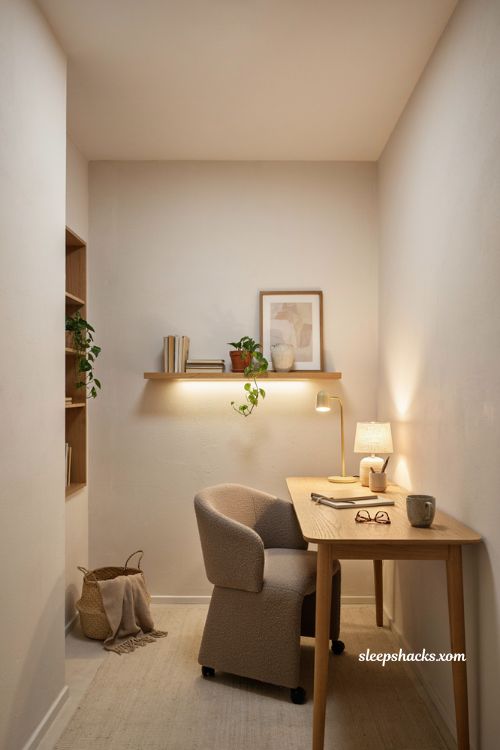
The real problem with windowless spaces usually has nothing to do with the missing window itself — it’s the single overhead light, the dark walls, and the total absence of texture that make a room feel like a cave. Once you start layering light instead of relying on one source, and choosing colors and materials that actually reflect what light you do have, a windowless office can feel just as open and energizing as one with a view. These fifteen ideas focus on the details that make the biggest difference, without requiring you to knock down a single wall.
1. Layer Your Lighting Instead of Relying on One Fixture
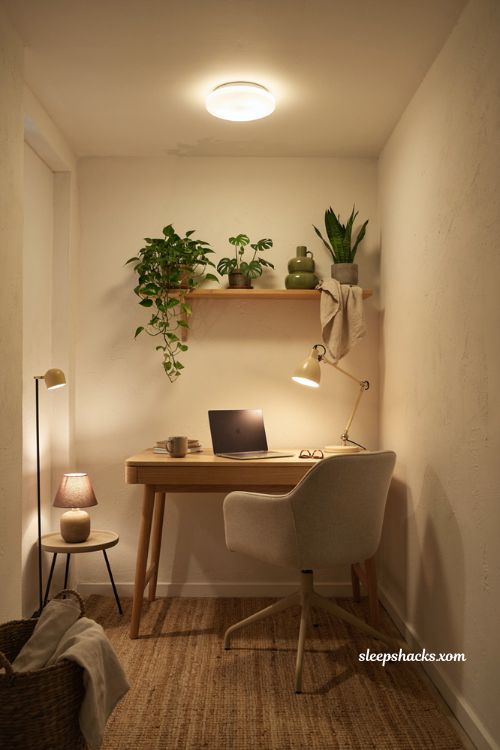
A single overhead light is the fastest way to make any windowless office feel flat and institutional, since it creates harsh shadows with nothing to soften them. Combine ambient lighting from the ceiling with a task lamp at your desk and a smaller accent light in a corner, so the room gets brightness from several directions instead of one glaring source overhead. Position lamps at different heights around the room rather than clustering them together, which helps eliminate dark pockets in the corners. This layered approach is closer to how daylight actually behaves — coming from multiple angles throughout the day — and it’s the single biggest factor in how open the space ends up feeling.
2. Switch to Full-Spectrum Bulbs
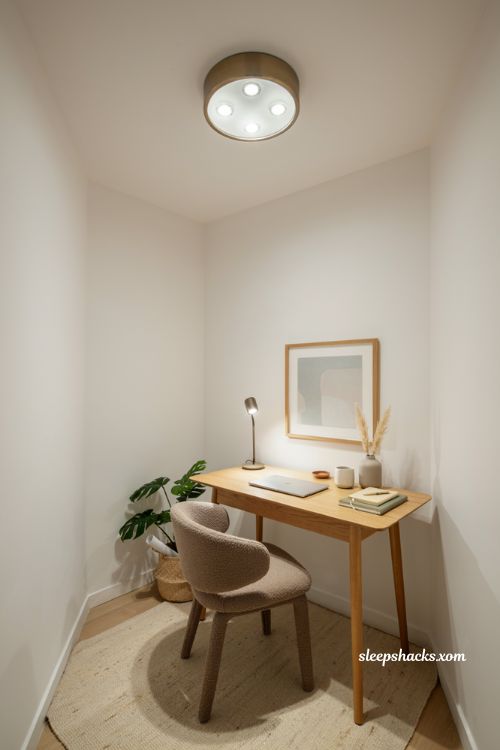
Regular bulbs emit a narrow slice of the light spectrum, which is part of why standard office lighting can leave you feeling drained by mid-afternoon. Full-spectrum bulbs mimic the broader range of wavelengths found in natural daylight, which helps regulate your body’s internal clock even when you can’t see the sky. Swap them into your main overhead fixture first, since that’s doing the most work in the room, then move to task lighting if the difference feels worth it. Colors also read more accurately under full-spectrum light, so anything you’re designing, photographing, or color-matching in a windowless office benefits from the switch as well.
3. Hang a Large Mirror to Multiply Light
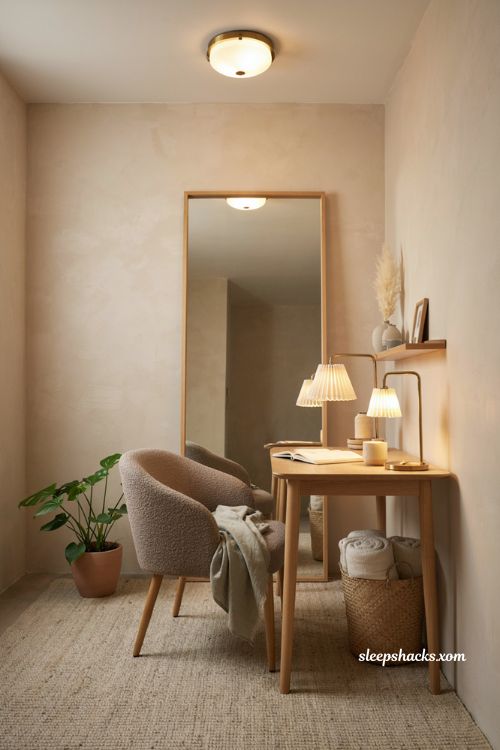
A mirror doesn’t create new light, but it bounces around whatever light you already have, which makes a real difference in a room with no natural source to begin with. Hang one large mirror directly across from your main light fixture or lamp rather than scattering several small ones, since one well-placed piece does more work than a handful of decorative ones. The reflection also adds a sense of depth, tricking the eye into reading the room as larger than it actually is. Just resist covering every wall in mirrors, since too many reflective surfaces can start to feel disorienting instead of open.
4. Paint Walls in Light, Reflective Colors
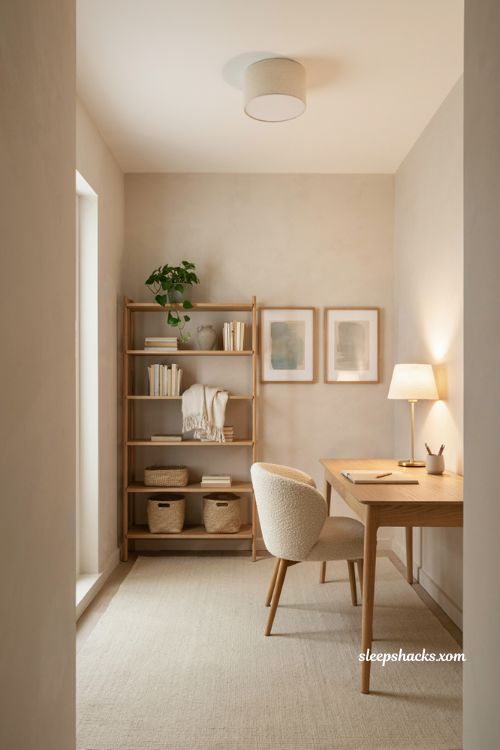
Dark walls absorb light like a sponge, which is the opposite of what a windowless office needs. Soft whites, pale greiges, and warm creams reflect whatever artificial light is in the room back into the space, making it feel noticeably brighter without adding a single new fixture. If a stark white feels too clinical, warm undertones in beige or a soft sage still reflect plenty of light while adding a bit more coziness. Extend the same logic to your ceiling — painting it a shade lighter than the walls draws the eye upward and keeps the whole room from feeling boxed in.
5. Build a Faux Window Feature
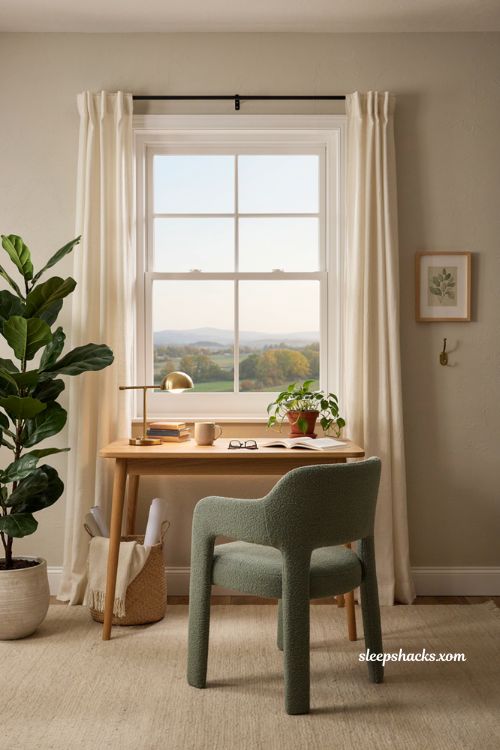
There’s something surprisingly effective about a fake window, even once you know it isn’t real. A large landscape photo mounted inside an actual window frame, paired with sheer curtains draped to the side, goes a long way toward tricking your brain into registering an opening where there isn’t one. More elaborate versions use LED light panels behind the frame to mimic the way daylight shifts throughout the day, with smart controls to adjust brightness as needed. Position it at a natural eye-level spot, like above a desk or across from where you sit most, so it actually gets seen during the workday instead of becoming background noise.
6. Add Plants That Thrive in Low Light
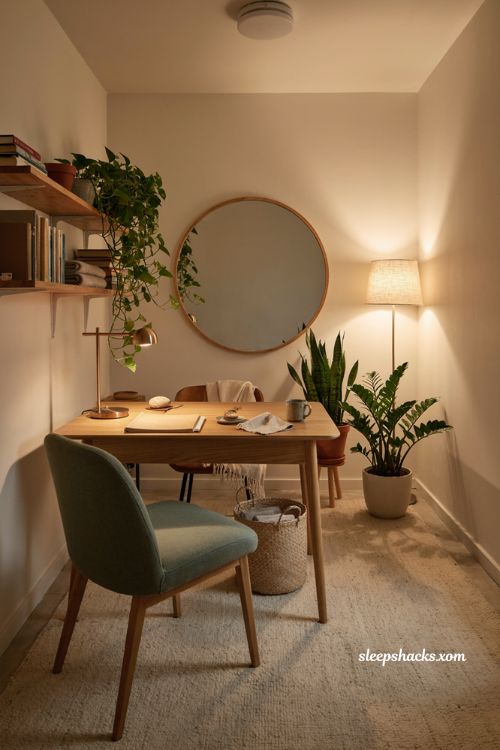
Greenery does more for a windowless office than most people expect, partly because it improves air quality and partly because it just makes a static room feel alive. Snake plants, pothos, and ZZ plants are nearly impossible to kill and hold up fine under artificial light with no direct sun at all. Place a mirror behind a plant if you have one nearby, since it reflects extra light back onto the leaves and gives the plant a small boost. Wipe the leaves down every so often too — dust buildup blocks what little light they’re getting and dulls the whole effect.
7. Choose Glass or Acrylic Furniture
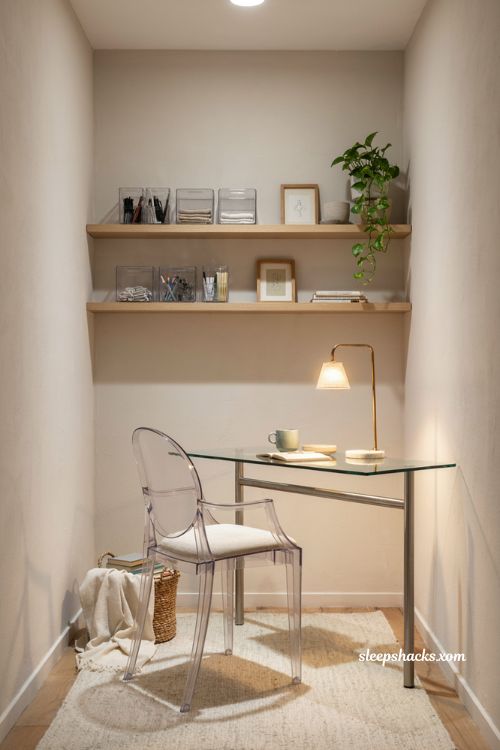
Solid, opaque furniture creates visual walls inside an already enclosed room, which is exactly what a windowless office doesn’t need more of. A glass desktop or acrylic chair lets light and sightlines pass straight through instead of stopping at another solid surface, giving the room an airier, more open feel even though the square footage hasn’t changed. Pair a glass desk with a metal frame if you want it to still feel substantial rather than flimsy. Clear storage bins carry the same idea over to your supplies, keeping things organized without adding more visual bulk to a small space.
8. Install LED Strip Lighting
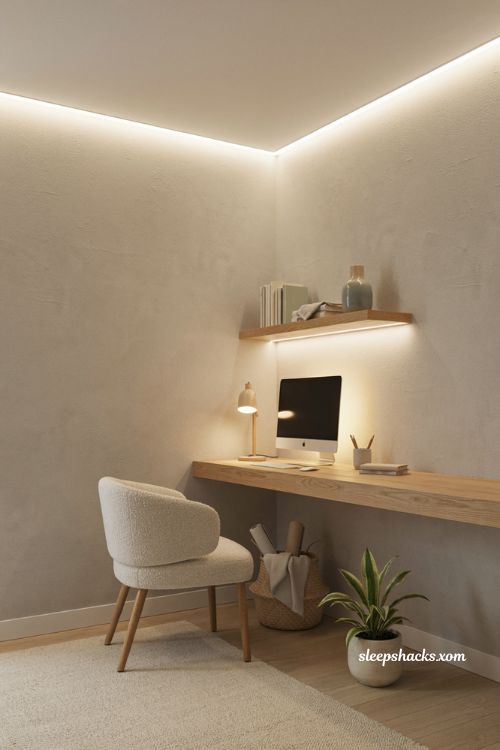
LED strips are an easy, low-commitment way to add light exactly where a room needs it most. Run a strip under a shelf to brighten a dark corner, behind a monitor to cut down on eye strain, or along the ceiling edge for a soft wash of ambient light across the walls. Most kits come with adhesive backing, so there’s no drilling or rewiring involved, and many let you adjust brightness or color temperature through an app. Warm white tones generally feel more inviting for a workspace than cool blue-toned light, which can start to feel sterile over a full workday.
9. Use Sheer Curtains for Softness
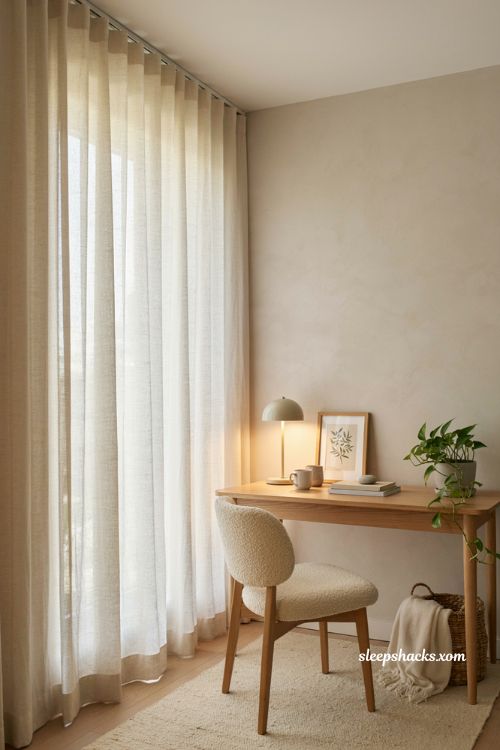
Curtains might seem pointless with no window to cover, but sheer fabric still earns its place in a windowless office. Hang a lightweight panel along one wall to soften hard edges and add a bit of movement to an otherwise static room. Backlighting the curtain with an LED strip behind it creates a soft glow that reads almost like light filtering through an actual window, especially from across the room. White or pale sheers work best here, since they reflect what light is available rather than absorbing it the way a heavier, darker fabric would.
10. Try a Backlit Wall Panel
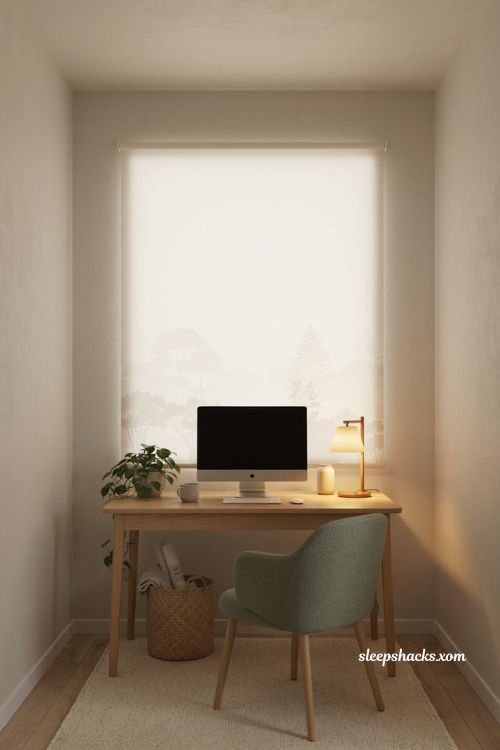
A backlit panel is one of the more dramatic fixes on this list, but it earns the effort. These typically use a translucent surface lit from behind by LED arrays, producing an even, diffused glow that’s genuinely easy on the eyes over a long workday. Choose a panel with a simple nature scene or a plain frosted design, depending on how much visual interest you want it competing with elsewhere in the room. Position it somewhere it’s actually in your line of sight — behind your monitor or along a wall you face — so it’s doing double duty as both art and light source.
11. Go Light with Your Flooring
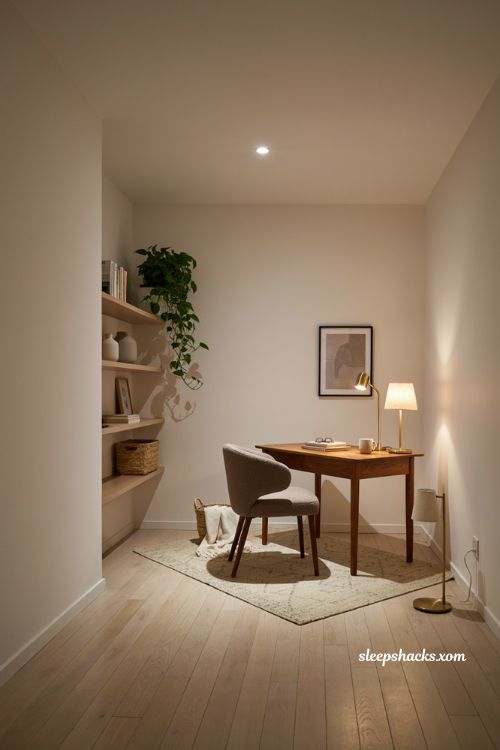
Floors cover more surface area than almost anything else in the room, so their color has an outsized effect on how bright the whole space feels. Pale hardwood, light gray tile, or a cream-toned carpet all reflect light upward rather than absorbing it the way dark flooring does. If replacing the floor isn’t realistic, a large light-colored area rug gets you most of the same benefit without any construction involved. Pair it with slightly darker furniture on top so the room still has some visual contrast instead of reading as one flat, pale block.
12. Add Warm Accent Lighting
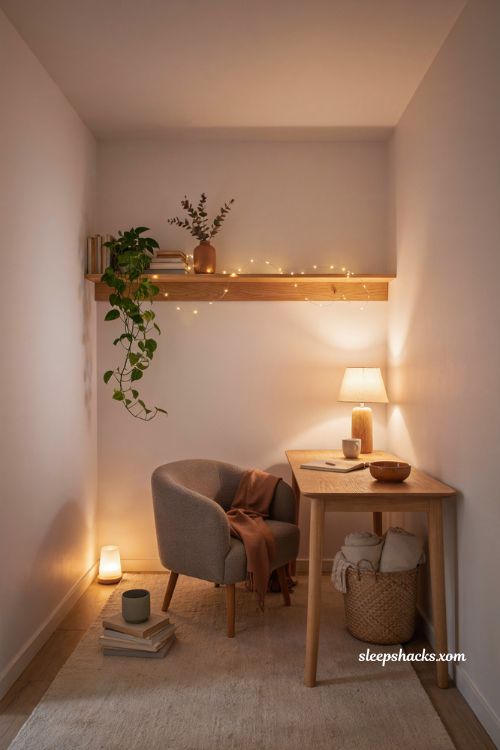
Once the main lighting and color choices are handled, small accent lights are what actually make a windowless office feel personal instead of just functional. A table lamp with a fabric shade casts a soft, warm pool of light that’s completely different in feel from an overhead fixture. String lights along a shelf or the edge of a desk add a bit of warmth and personality without much cost or effort. Even a flameless candle-style LED light in a corner adds a flicker of coziness for late afternoon stretches when the rest of the lighting starts to feel a little flat.
13. Bring in Metallic and Glossy Accents
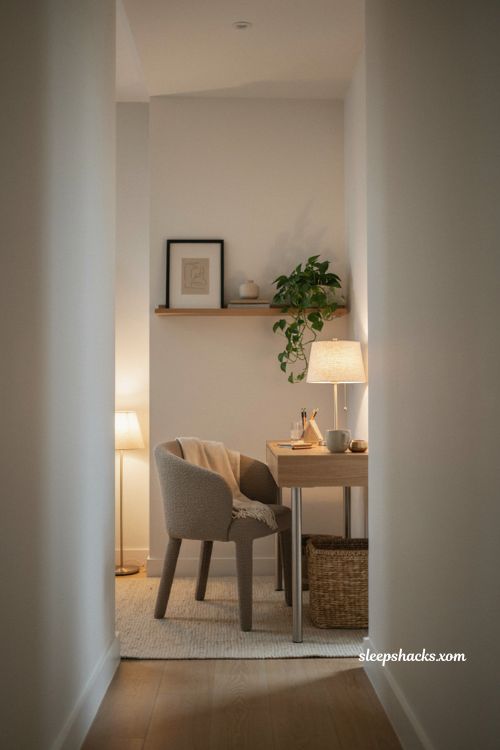
Every surface in a room either reflects light or swallows it, so choosing a few glossy or metallic pieces on purpose makes a real difference. A chrome lamp base, a lacquered shelf, or simple metal desk legs all bounce light around subtly as you move through the space. Glass organizers on a desk do something similar in a smaller way, catching light and adding a bit of sparkle without taking up much room. Avoid overdoing it, though — one or two reflective pieces read as intentional, while a room full of shiny surfaces starts to feel busy instead of bright.
14. Hang Artwork with Open, Bright Scenes
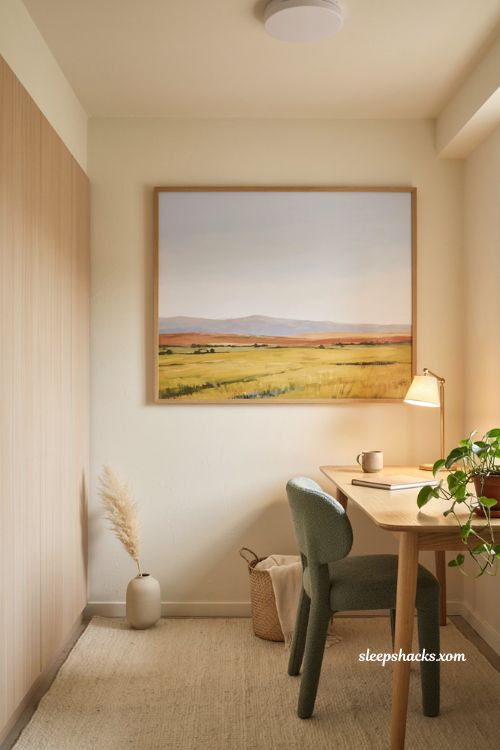
Artwork is one of the easiest ways to trick your eyes into feeling like there’s more space than there actually is. Landscape photography, beach scenes, or anything with an open horizon line gives your eyes somewhere to rest that isn’t a blank wall. Warm yellows and oranges in abstract pieces read as energizing in a way that darker, moodier art doesn’t in a room already lacking natural light. One large statement piece usually works better than several small ones scattered around, since it gives the room a clear focal point instead of visual clutter competing for attention.
15. Keep the Desk Setup Minimal and Uncluttered
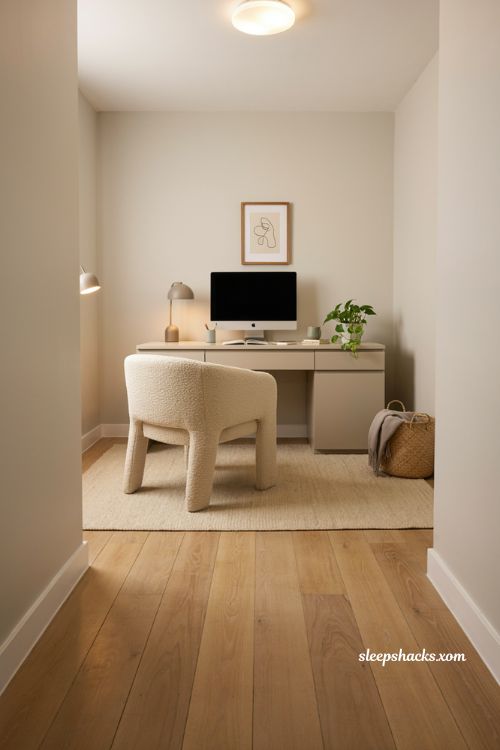
A cluttered desk makes any room feel smaller and darker than it actually is, and that effect is amplified in a space with no window to offset it. Keep only what you use daily within reach, and store everything else out of sight in drawers or closed cabinets rather than open shelving that collects visual noise. A compact desk, rather than an oversized one, also leaves more breathing room around the edges of the space. The goal isn’t a bare, sterile look — it’s removing the extra visual weight so the lighting and color choices you’ve made elsewhere actually get to do their job.
Final Thoughts
None of these ideas require knocking out a wall or waiting on a contractor, which is really the point — a windowless office responds surprisingly well to small, deliberate changes in light and color. Layered lighting, a well-placed mirror, and a few plants can shift how a room feels almost immediately, long before you get to anything more elaborate like a faux window or backlit panel. So the real question is less about whether a windowless space can feel good to work in, and more about which one or two changes you’ll actually try first. Sometimes the smallest swap ends up making the biggest difference.
Frequently Asked Questions
Q: What is the best lighting for a windowless office?
Layered lighting — a mix of ambient, task, and accent light — works better than a single overhead fixture, and full-spectrum bulbs help mimic natural daylight most closely.
Q: Can plants really survive in an office with no windows?
Yes, low-light varieties like snake plants, pothos, and ZZ plants do well under artificial light alone and need very little maintenance.
Q: Do mirrors actually make a windowless room feel brighter?
Yes, a mirror placed across from your main light source reflects existing light back into the room and can noticeably increase how open the space feels.