

Picture a narrow room with a single bed against one wall, a window on the other, and barely enough floor left to open the door. It looks like there’s nothing to work with, but that’s where the best design happens.
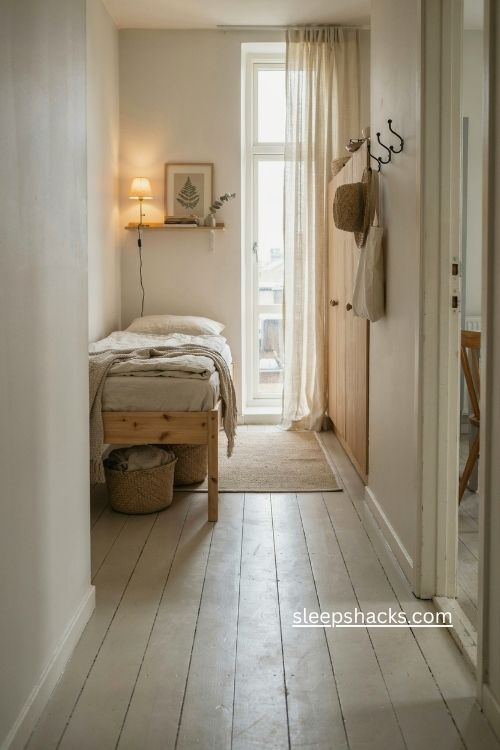
Small rooms force you to make real choices instead of filling every corner. The ideas below show how smart storage, softer colors, and a few well-placed details can make a single bedroom feel bigger, calmer, and far more like you.
1. Choose a Daybed With Built-In Drawers
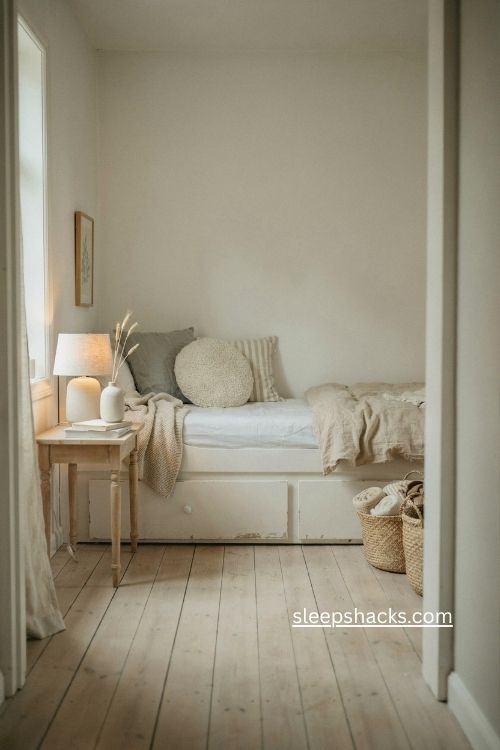
A daybed does a lot of quiet work in a small room. It gives you a sofa-like spot to sit during the day and a proper bed at night, and the frame itself becomes the focal point instead of a bulky headboard.
Look for one with deep drawers underneath, like the white HEMNES day-bed that has three of them, so out-of-season blankets and spare sheets disappear from view. Add a couple of cushions against the back and a small side table, and the whole setup reads as a seating nook that happens to sleep one.
2. Hang Your Lighting From the Ceiling
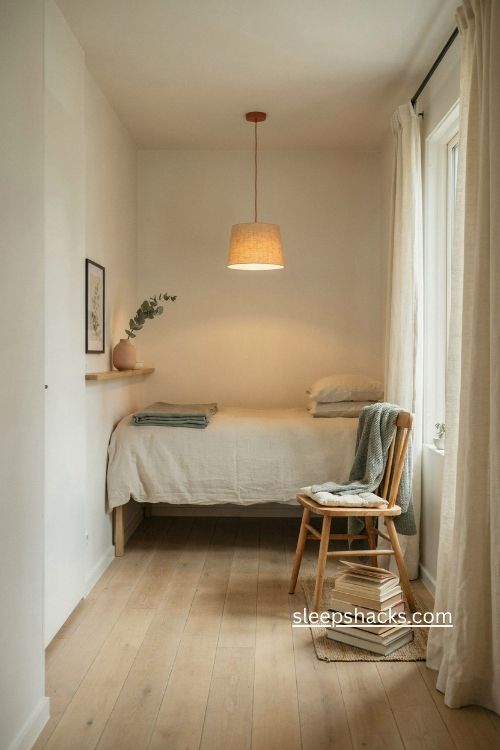
Floor lamps eat up square footage you can’t spare. Hanging a pendant light above the bed or beside it frees that corner for something more useful, like a slim chair or a stack of books.
A pendant with a fabric cord or a colored wire adds personality without taking up any floor. Pick a color that picks up a shade from your pillows or art, and the light starts to feel like part of the palette instead of an afterthought. Hang it low enough to read by, about shoulder height when you’re sitting up.
3. Stack Vintage Tables for a Nightstand
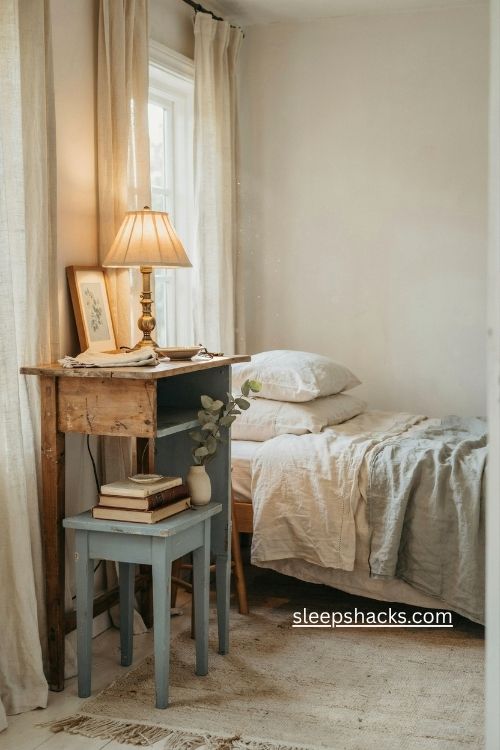
Nightstands don’t have to match, and they don’t have to be expensive. Two small thrifted tables stacked on top of each other give you a taller surface with a little shelf space in the middle, all in a footprint barely wider than a lamp base.
The charm comes from the mismatch. A worn wooden table with a painted one, topped with an old-school lamp, looks collected rather than bought. Wander through a thrift shop with your bedside height in mind, which is usually level with your mattress, and you’ll find a pair within an hour.
4. Let a Small Desk Do Triple Duty
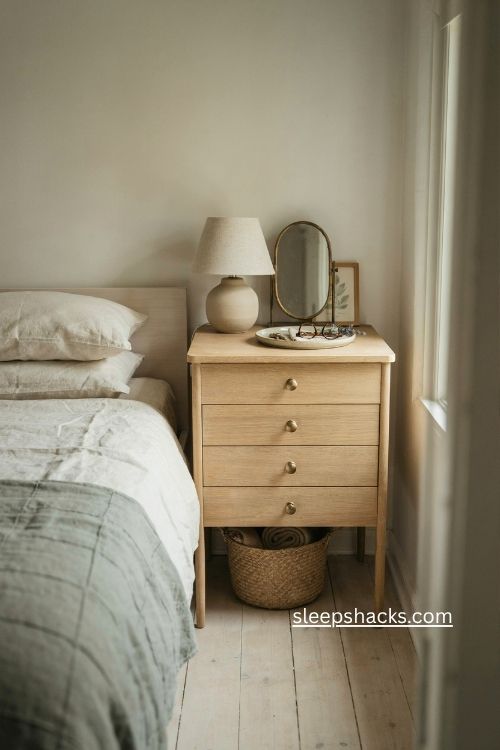
When you only have room for one extra piece of furniture, make it a desk with drawers. Placed beside the bed, it works as a nightstand, a vanity, and a spot for your laptop all at once.
Keep the top clear except for a lamp, a small mirror, and one tray for daily bits like jewelry or hair ties. The drawers hide everything else. A short three-drawer chest works the same way if a desk feels too deep, giving you clothing storage with a flat top for a reading lamp right next to your pillow.
5. Stick to a Soft Neutral Palette
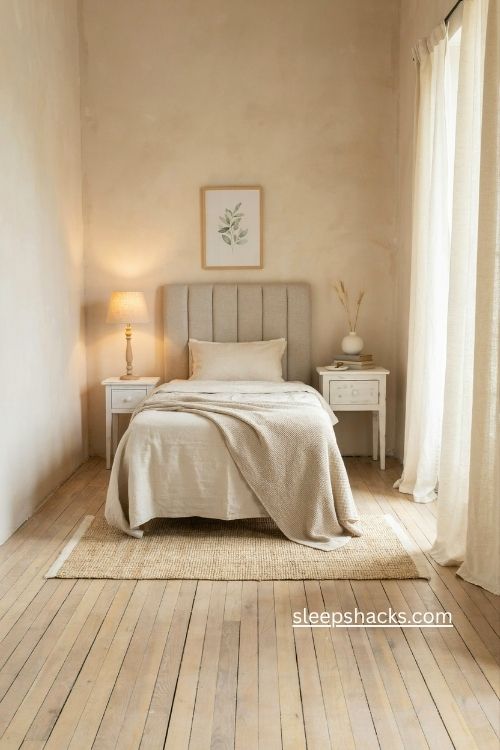
Light, quiet colors make a room feel more open because the eye isn’t stopping at every contrast. Think warm whites, beige walls, and a headboard in something like burlap or oatmeal linen, with white nightstands to keep things airy.
Neutral doesn’t have to mean boring, though. Mix a few textures, like a woven throw, a cotton quilt, and a wooden lamp base, so the room has depth even without much color. It’s also the easiest base to build on later if you decide to swap in a bolder pillow or a framed print.
6. Try One Color in Many Shades
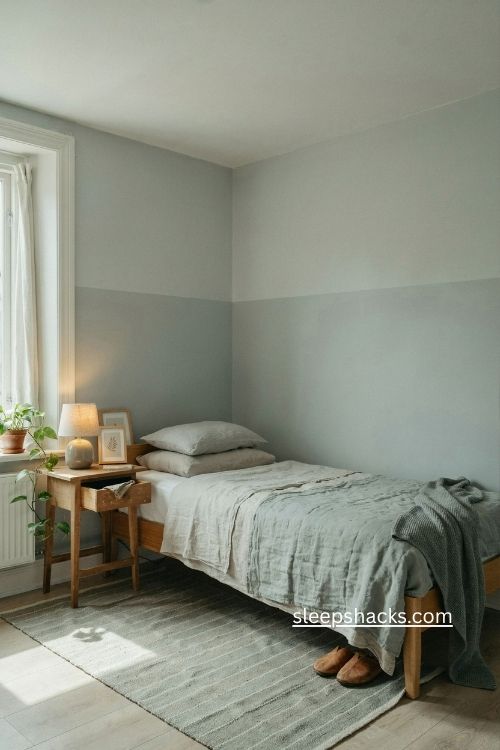
A monochrome room is one of the easiest ways to make a tight space feel intentional. Pick a single color, then use it in lighter and darker versions across the walls, bedding, and rug, so nothing fights for attention.
A soft ombre on the walls, fading from a pale tint near the ceiling to something deeper near the bed, works especially well with bedding in the same family. Terracotta, sage, and dusty blue are all forgiving choices. The shifts in tone give the room a sense of height and calm without a single busy pattern.
7. Go Moody With a Drenched Color
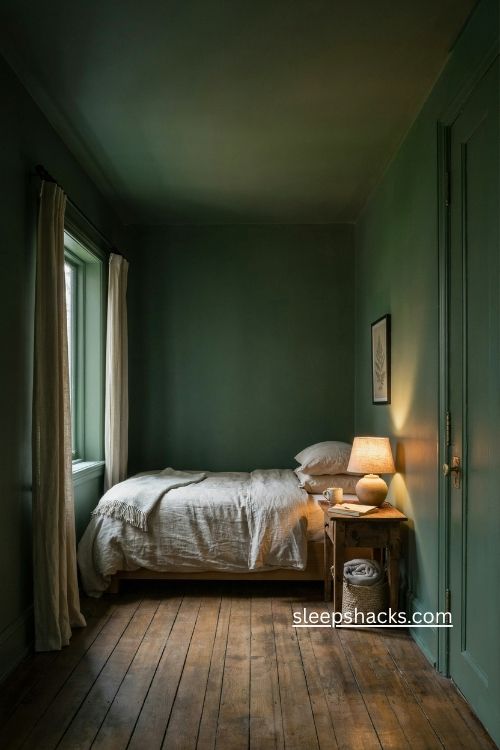
It sounds backwards, but dark colors can make a small bedroom feel bigger. When you paint the walls, baseboards, door, and even the ceiling the same deep shade, the corners blur and the room stops reading as a box.
Navy, forest green, and inky charcoal all work beautifully, especially with a single bed dressed in lighter linens so it pops. Use a matte or eggshell finish to soften the look, and add warm lighting so the room feels like a cocoon at night. It’s a bold weekend project with a big payoff.
8. Layer Your Bedding Like a Hotel
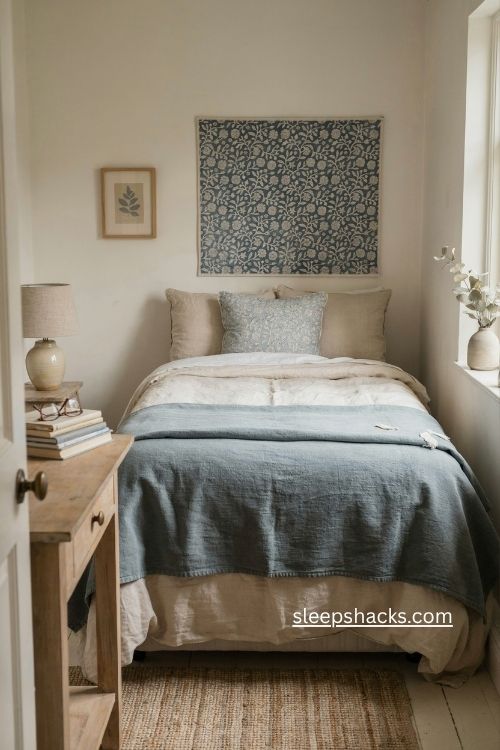
Few things make a single bed feel more inviting than good layers. Start with crisp sheets, add a down comforter, then drape a quilt across the lower third and finish with a throw blanket folded at the foot.
Mix patterns carefully by keeping them in one color family, like a floral pillow against a textured quilt and a plain headboard. A shibori or block-printed headboard can add pattern behind the bed without taking any floor space. Two or three pillows are plenty in a small room, since more starts to crowd the mattress.
9. Put Wallpaper Behind the Bed
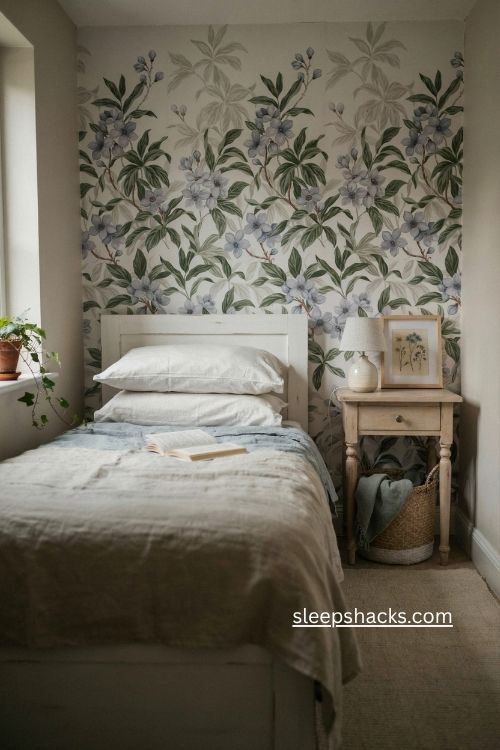
A single wallpapered wall gives your room a focal point, and in a small space that’s often all you need. Choose the wall behind the bed so the pattern frames your pillows and headboard like a piece of art.
A large floral or soft botanical print feels especially cozy, and pairing it with a white headboard and matching white pillows keeps things from feeling heavy. If you rent, peel-and-stick versions give you the same look without the commitment. Smooth the wall first and take your time at the seams for a clean finish.
10. Hang a Big Mirror Across From the Window
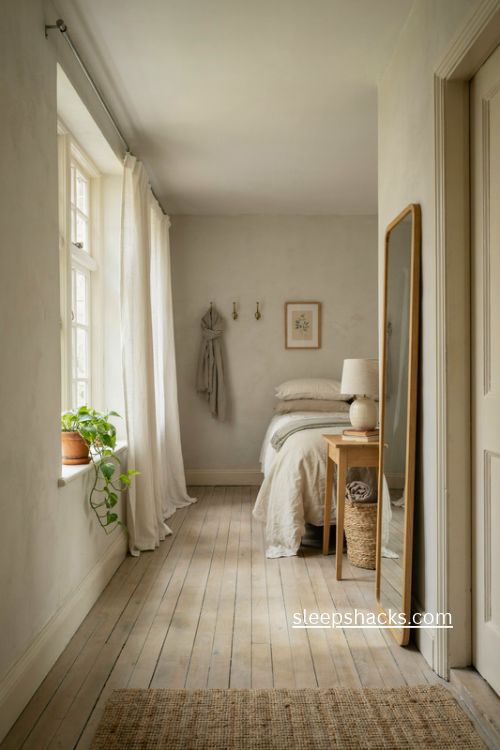
Mirrors are the oldest small-room trick for a reason. A large one placed opposite a window catches daylight and bounces it back across the room, making the whole space feel brighter and wider.
Lean a tall floor mirror against the wall or hang one with a slim frame so it doesn’t take up extra room. Avoid placing it directly facing the bed if you find reflections distracting at night. A mirror beside the door works just as well and doubles as your get-ready check before you head out.
11. Add Storage That Hides in Plain Sight
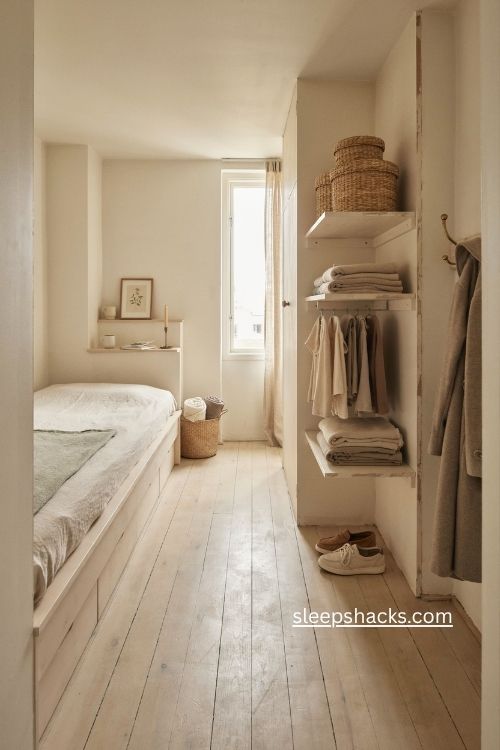
In a small bedroom, sometimes the wardrobe simply won’t fit. A bed with storage underneath can hold a surprising amount of clothing, so you can skip the bulky closet and keep the floor open.
If you have the wall space, a fitted wardrobe or open shelving unit that runs up toward the ceiling uses height instead of floor. Add a few lidded boxes in matching materials to keep small items tidy. Group like with like, shoes together and spare bedding together, and you’ll always know where to look.
12. Bring in a Little Greenery
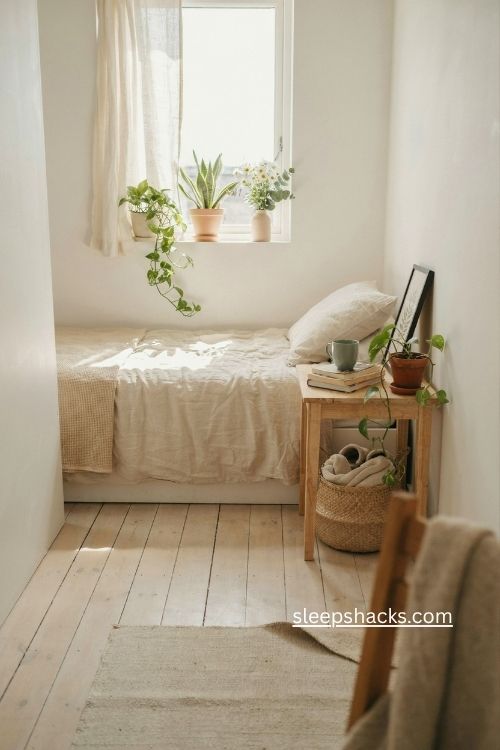
A few plants change the mood of a room almost instantly. They add color, softness, and a hint of life without needing much space, which is exactly what a small bedroom wants.
Choose plants that fit on a windowsill or end table, like a trailing pothos, a snake plant, or a small bouquet of fresh flowers in a bud vase. Low-light varieties do well in bedrooms. Group two or three in different heights on one surface so they feel like a little display rather than clutter.
13. Reach for Natural Materials
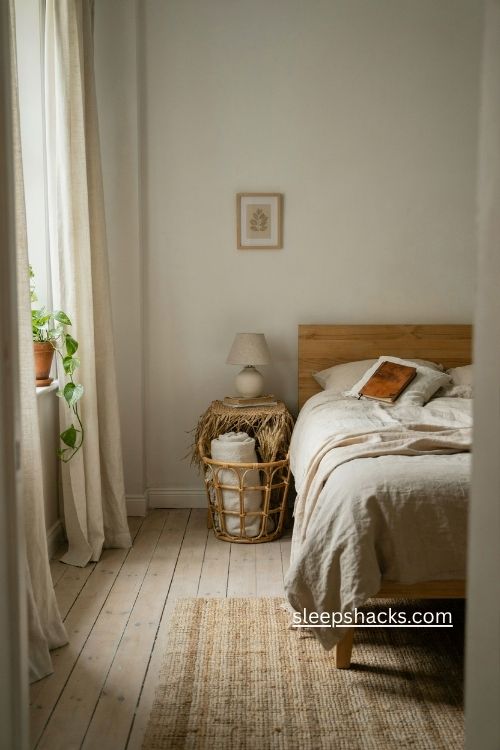
Wood, jute, rattan, and raffia bring warmth that painted furniture just can’t match. Layering them gives a small bedroom a relaxed, grounded feel, like a quiet cabin you can walk into after a long day.
Try a woven jute rug over wood floors, a raffia side table beside the bed, and a wooden headboard in a light finish. Keep the colors neutral so the textures do the talking. If you’re on a budget, start with just the rug and one basket, then add pieces slowly over time.
14. Warm Up the Room With Earth Tones
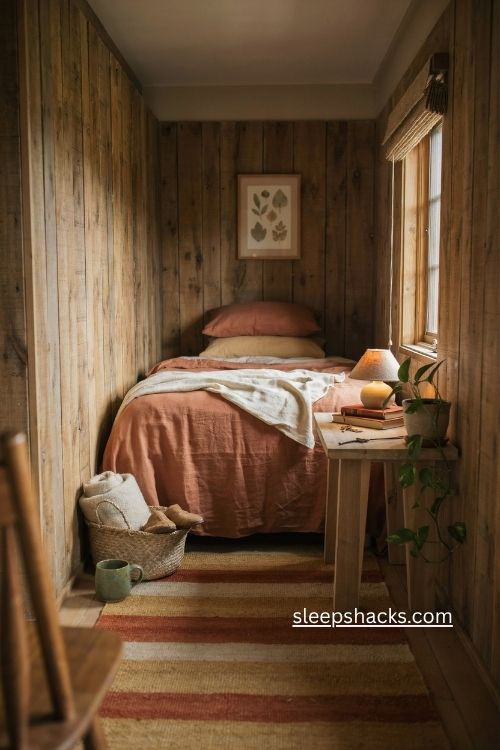
Small rooms can feel snug and sheltered instead of cramped when you lean into warm colors. Terracotta, clay, rust, and soft ochre all create a hug-like atmosphere, especially in a room where you mostly sleep.
Start with the bedding in a terracotta shade, then add woven shades at the window and a tonal rug in a similar tone. The key is keeping everything within the same warm family so the room reads as one calm picture. A touch of wood and a little greenery balance it out nicely.
15. Draw the Eye Upward
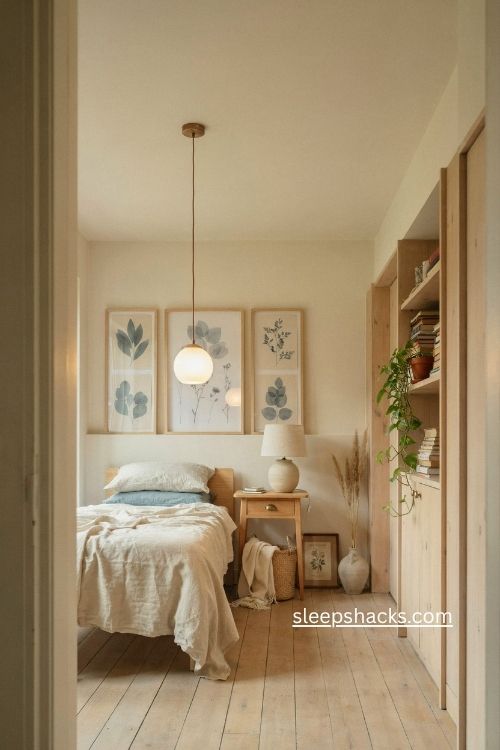
When floor space is limited, use the walls and ceiling. Painting the ceiling a soft color or carrying the wall color overhead pulls the eye up and makes the room feel taller than it is.
If your ceilings are high, hang large art on the wall above the bed or use a tall pair of symmetrical frames to emphasize that height. A statement pendant fixture adds to the effect. Even in a standard room, a single oversized piece looks more intentional than a cluster of small frames.
16. Add a Pop of Color With the Bed Frame
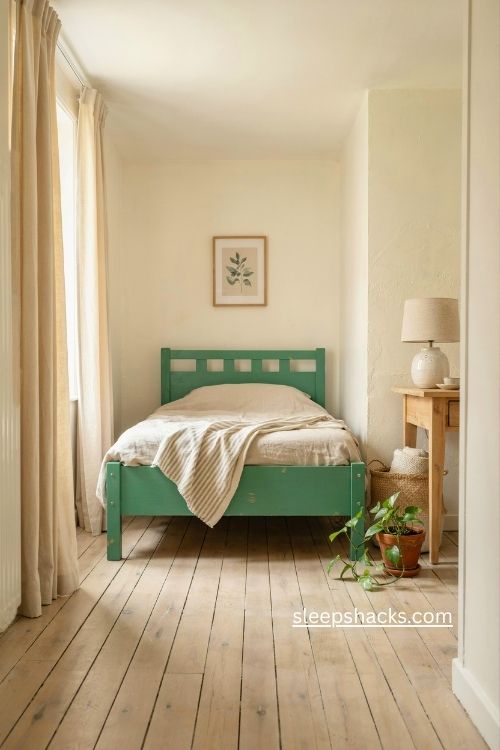
You don’t need a whole colorful room to have fun with design. Sometimes one bold piece is enough, and a painted bed frame is a playful place to put it.
A bright green frame against creamy walls and natural wood finishes feels fresh and cheerful, while a deep blue feels cozy and calm. Keep the rest of the room soft and neutral so the bed stays the star. If you’re not ready to commit, try a colorful headboard or a bright quilt for a similar effect.
Final Thoughts
Pick one idea from this list and try it this week. Maybe it’s hanging a pendant light, swapping a stiff nightstand for a stacked pair of thrifted tables, or finally giving your bed a proper set of layers.
Small changes add up faster than you’d think in a compact room. Start with whatever feels easiest, live with it for a few days, and notice how the space responds. Then pick another. Before long, your single bedroom will feel like it was designed on purpose.
Frequently Asked Questions
Q: How do I make a single bedroom look bigger?
Use light, neutral colors, hang a large mirror across from the window, and keep the floor as clear as you can with under-bed storage. Hanging lights and tall art also draw the eye up, which makes the room feel taller.
Q: What furniture works best in a single bedroom?
Pieces that do more than one job are your best bet, like a daybed with drawers or a small desk that doubles as a nightstand and vanity. Choose slim shapes and avoid bulky items that eat into your walking space.
Q: What colors are best for a small single bedroom?
Soft neutrals and pale tints keep things open and airy, while a single deep shade on every surface can feel cozy and surprisingly spacious. The trick is staying consistent so the room reads as one calm space.