

Side yards are the space everyone forgets about. You’ve got a whole strip of land running down the edge of your house, and most of the time it’s just where the trash cans live, or where weeds take over because nobody’s paying attention.
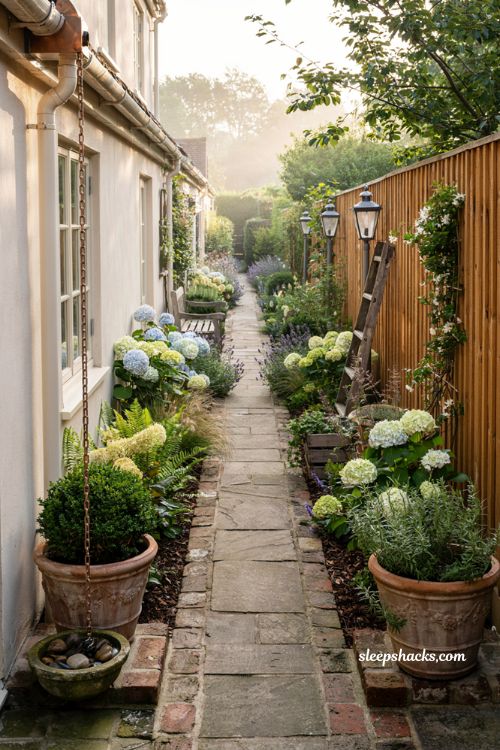
It’s too narrow to feel like a “real” yard, so it gets skipped when the landscaping budget gets planned. But that neglected sliver of land between your house and the fence line is honestly one of the easiest spaces to transform, and it doesn’t take a huge project to do it.
1. Lay Down a Garden Path
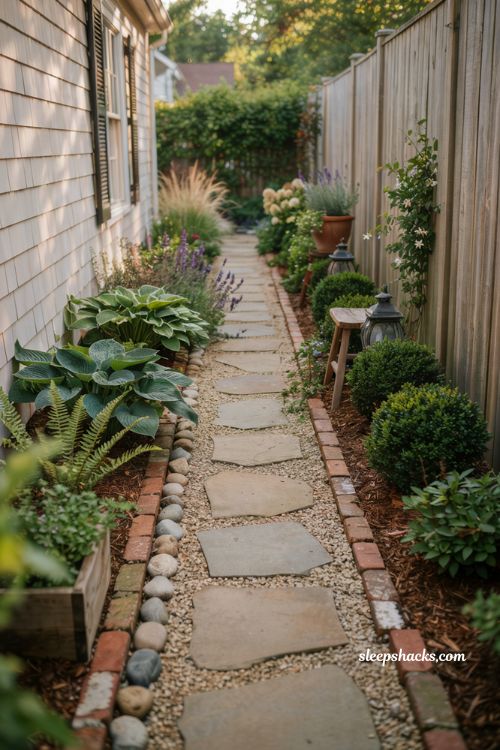
A simple path turns your side yard from a dead zone into something you actually want to walk through. Stepping stones, pea gravel, or concrete pavers all work well here, and none of them need much upkeep once they’re in. If you’ve got a narrow strip, flagstone laid in a loose pattern tends to feel more natural than a rigid straight line. Line the edges with low border plants like hostas or boxwood, and suddenly that walkway feels intentional instead of accidental.
2. Add Low-Voltage Path Lighting
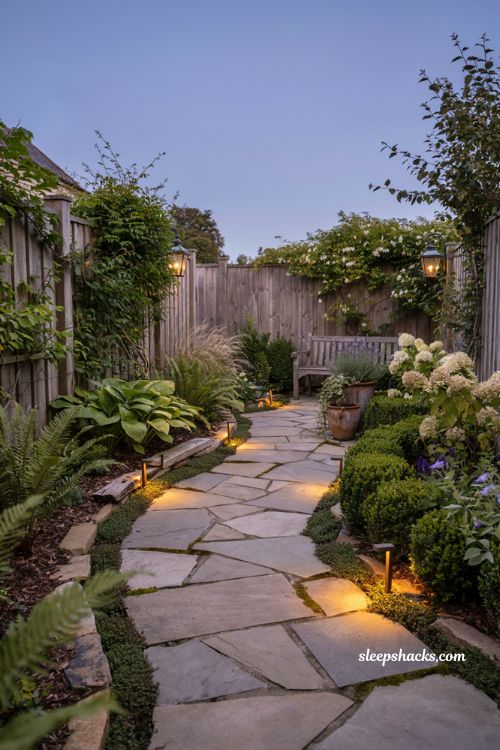
Once it gets dark, a side yard without lighting turns into a hazard you have to feel your way through. Solar-powered stake lights are the easiest fix — no wiring, no electrician, just push them into the ground along the path edges. For something a bit more polished, low-voltage landscape lighting gives a softer glow and lasts for years. Either way, good lighting does double duty: it keeps you safe and makes the whole space feel finished after sunset.
3. Build a Dry Creek Bed
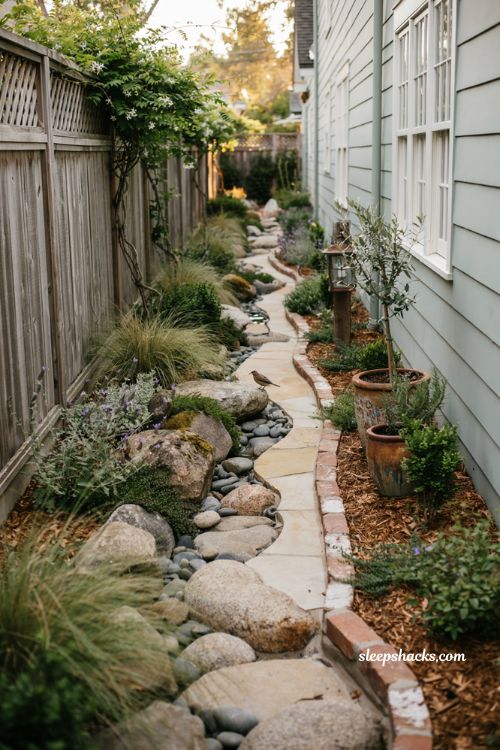
If your side yard slopes or collects runoff after rain, a dry creek bed solves a drainage problem while looking like it was always meant to be there. Larger rocks along the outer edge, smaller river rock down the center, and a few drought-tolerant plants tucked along the sides give it a natural, almost wild look. Just know that gravel beds can get weedy if you skip a proper landscape fabric underneath, so it’s worth doing the prep work right the first time.
4. Install Artificial Turf
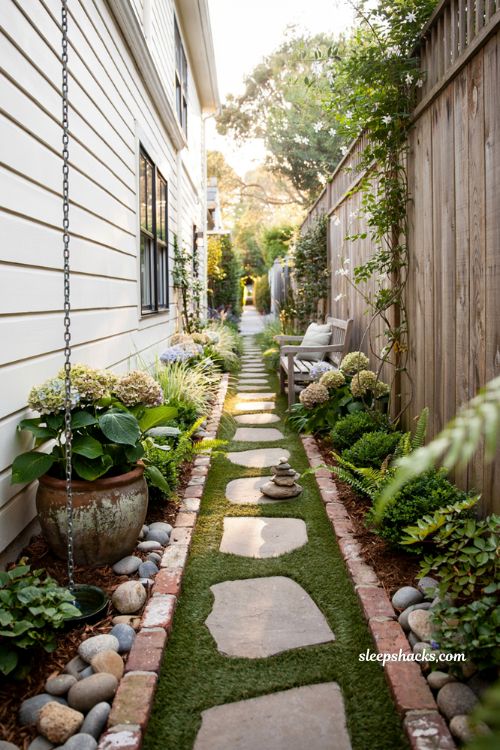
Side yards rarely get much sun, and real grass tends to struggle in that kind of shade and foot traffic. Artificial turf skips that problem entirely — no mowing, no bare patches, no watering bill creeping up every summer. It also holds up well in drought-prone areas where a real lawn just isn’t practical. Pair it with a few river rocks or stepping stones along the edge, and it reads as a deliberate design choice rather than a shortcut.
5. String Up Some Lights
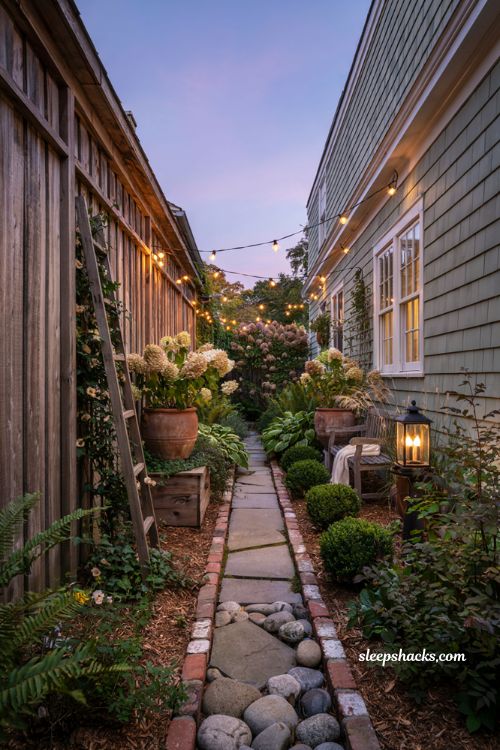
There’s something about string lights that instantly makes a space feel warmer and more lived-in. If your side yard has a tall fence or a wall running along it, you’ve already got the perfect anchor points strung between. It’s a small addition, but it changes how the whole space reads at night — from a pass-through to somewhere you’d actually want to sit for a while.
6. Set Up Raised Garden Beds
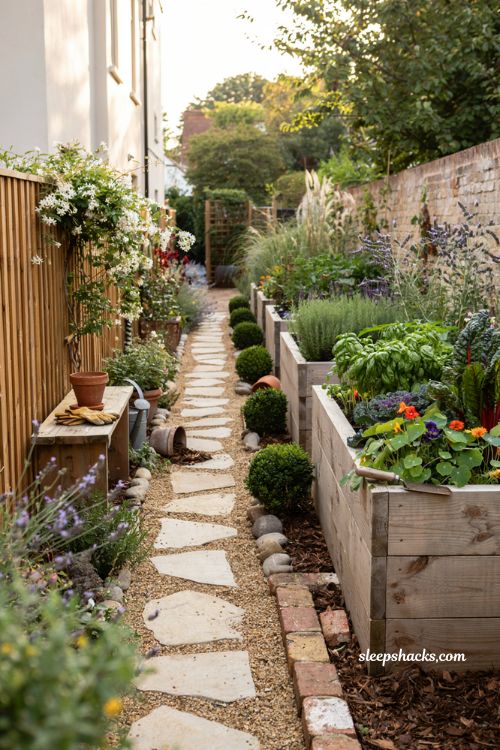
Even a narrow side yard has enough width for a few raised beds, and they solve two problems at once: better drainage and easier access for planting or weeding. Cedar or other rot-resistant wood holds up well against the moisture that side yards tend to collect. Use the space for herbs, vegetables, or just a few flowering plants — whatever you’d actually enjoy stepping outside to tend.
7. Build a Small Deck or Patio
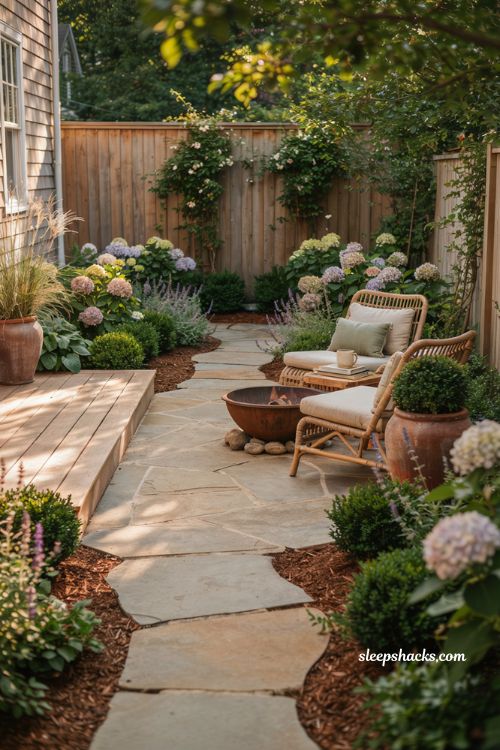
If your backyard’s too small for a proper seating area, the side yard can pick up the slack. A raised deck adds depth and a clear sense of purpose to a space that otherwise just connects the front and back. A small patio works just as well if you’d rather skip the maintenance that comes with wood decking. Either option gives you somewhere for a grill, a couple of chairs, or a small fire pit.
8. Fit in a Plunge Pool
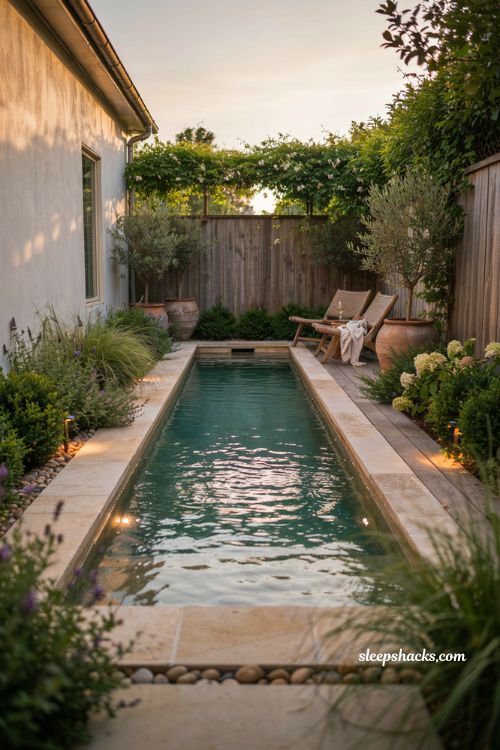
Narrow side yards are actually a decent fit for plunge pools — they’re smaller, cheaper to heat, and take up far less space than a full-size pool. Before you commit, check your local permit rules and fencing requirements, since most areas have specific codes around pool placement near property lines. Done right, it turns an ignored strip of land into one of the most-used parts of your whole property.
9. Create an Outdoor Sculpture Garden
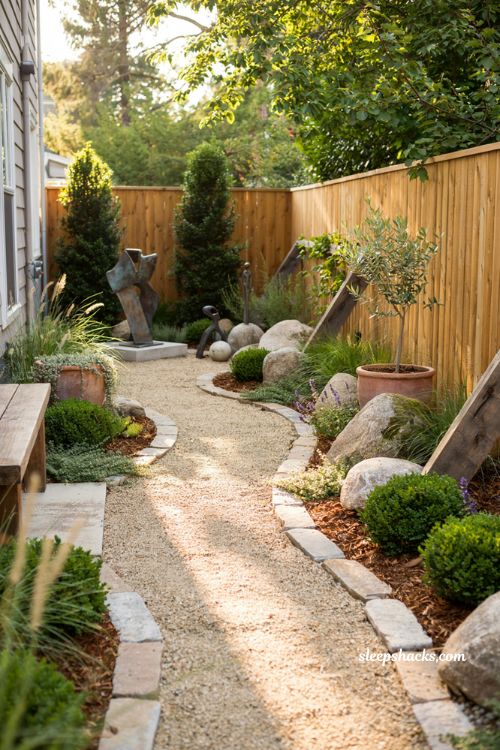
Not every side yard needs plants to feel finished. Garden statues, boulders, or a few well-placed art pieces can carry the whole design on their own, especially if you’re not looking to maintain a lot of greenery. Surround them with mulch or pea gravel to keep things low-maintenance, and cluster a few pieces together rather than spacing them too evenly — it reads more natural that way.
10. Add an Arbor or Pergola
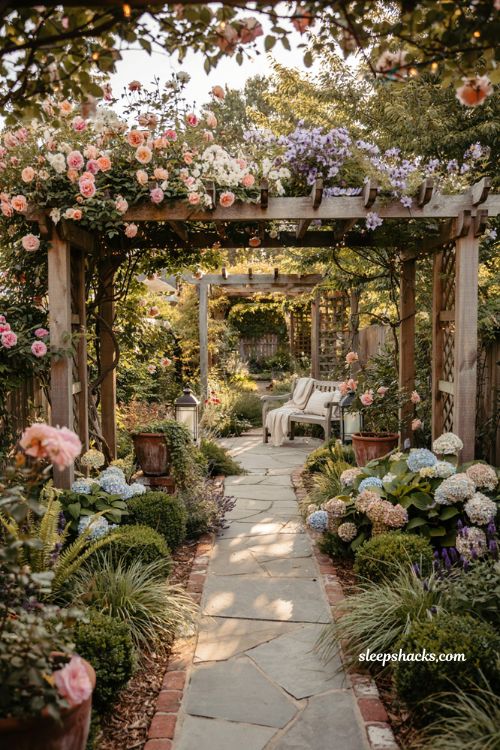
A side yard arbor does a lot of visual work for something so simple. String lights across it, add a bench underneath, or let a climbing vine slowly take it over — any of those turns a plain walkway into a small destination. It also frames the transition from front yard to backyard, which makes the whole property feel more connected instead of like two separate spaces stitched together.
11. Hide the AC Unit with Plants
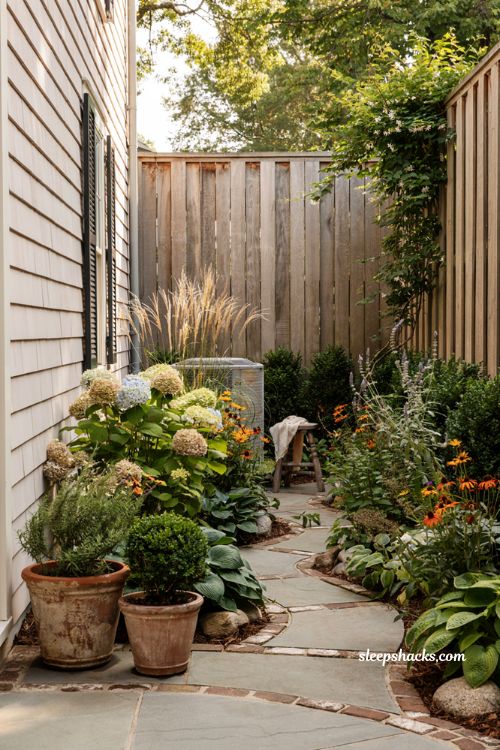
Every side yard seems to have one unavoidable feature: the air conditioner condenser. Rather than leaving it exposed, surround it with medium-height shrubs or ornamental grasses that block the view without crowding the unit itself. Just leave clearance on all sides so airflow isn’t restricted, since a blocked condenser can actually hurt its efficiency. It’s a small fix that quietly upgrades the whole look of the space.
12. Set Up a Kids’ Play Space
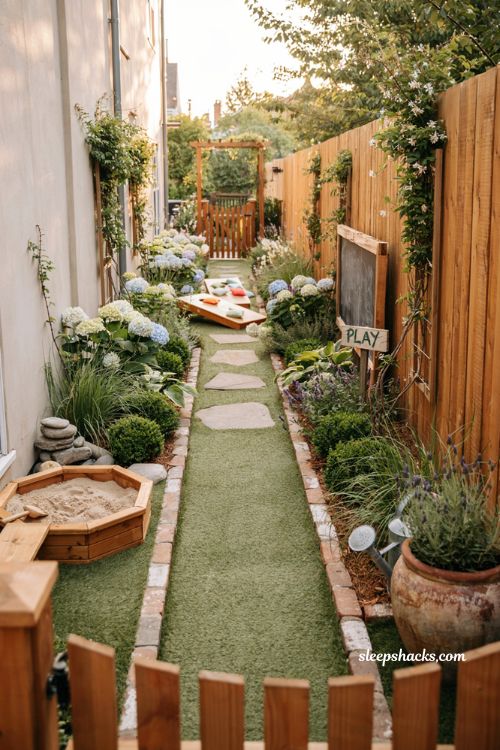
A narrow side yard can double as a dedicated activity zone for younger kids without taking over the main backyard. A sandbox, a chalkboard wall, or a mini cornhole set all fit comfortably in a tight footprint. If safety’s a concern, a gate at either end keeps the space contained. It also frees up the rest of your yard for whatever else you’d rather use it for.
13. Build a Vertical Garden
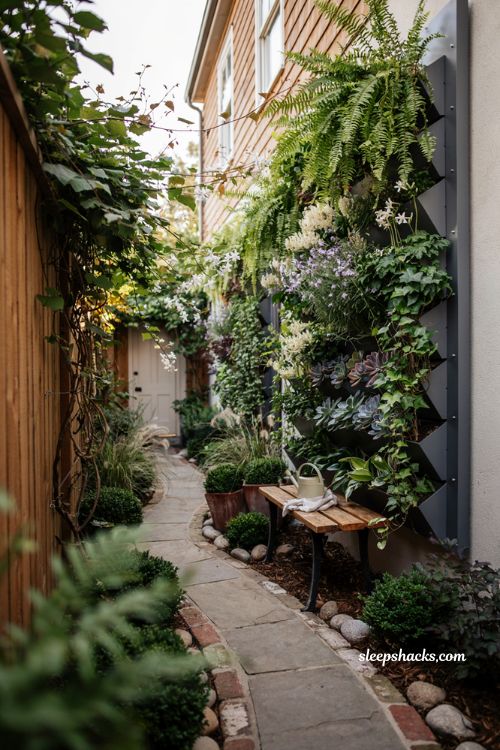
When there’s no ground space left to work with, going vertical solves the problem. A green wall built from wood, metal, or modular planting blocks lets you grow just as much without sacrificing any walkway width. It also does a nice job of blocking the view into a neighbor’s yard if privacy’s part of what you’re after. Check your local rules first, though, since some areas require a permit for standalone wall structures.
14. Start a Container Garden
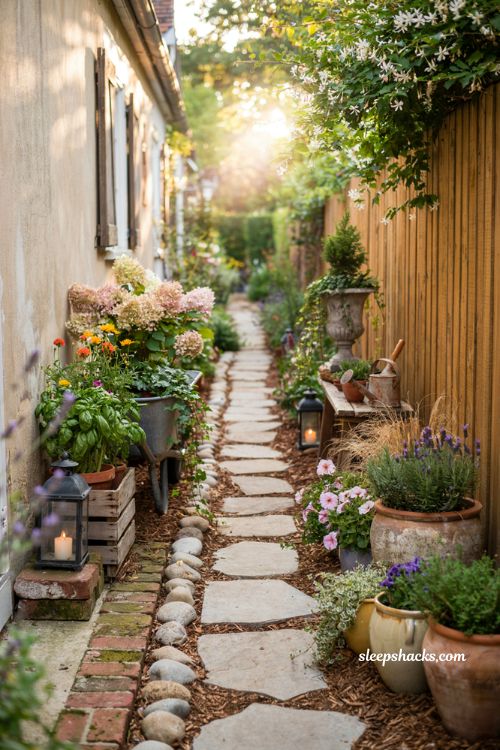
Containers are the easiest way to bring some life into a side yard without committing to permanent beds. Mix tall and short plants for a layered look, and don’t feel limited to traditional pots — old wheelbarrows, crates, or galvanized buckets all work just as well. The real advantage is flexibility: you can swap plants out with the seasons instead of being locked into one static look year-round.
15. Add a Custom Gate or Fence
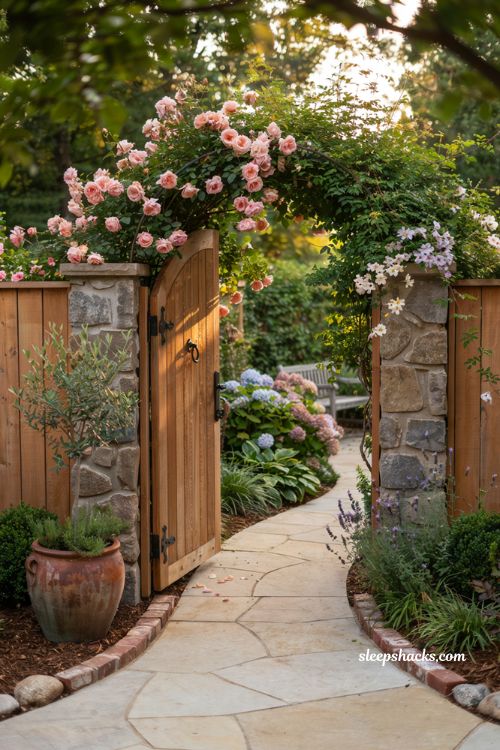
The entrance to your side yard says a lot before anyone even steps inside it. A wood gate that matches your home’s architecture, or a metal fence that opens up a tight space visually, both do more for curb appeal than people expect. If privacy and security matter more than style, a solid wall with a single arched door adds both without feeling closed off.
Final Thoughts
At the end of the day, a side yard isn’t really “leftover space” — it’s just space nobody’s gotten around to using yet. The ideas that work best usually aren’t complicated: a path, some lighting, a few plants that don’t need much attention. What changes everything is deciding this strip of land actually matters, instead of treating it like the gap between the parts of your property you care about.
Frequently Asked Questions
Q: What’s the best low-maintenance material for a side yard path? Pea gravel paired with stepping stones is one of the easiest combinations to maintain, since it drains well and doesn’t need regular upkeep.
Q: Will artificial grass work in a shady side yard? Yes — artificial turf is actually one of the better options for side yards, since it doesn’t depend on sunlight the way real grass does and holds up well with proper maintenance.
Q: Do I need a permit for a plunge pool in my side yard? In most areas, yes — check your local regulations for pool permits, placement rules, and required fencing before installing one.