

The front yard sets the tone for everything. It’s the first thing people see, and the last thing most homeowners actually deal with. Budgets feel tight, weekends feel short, and the whole thing just gets pushed to someday.
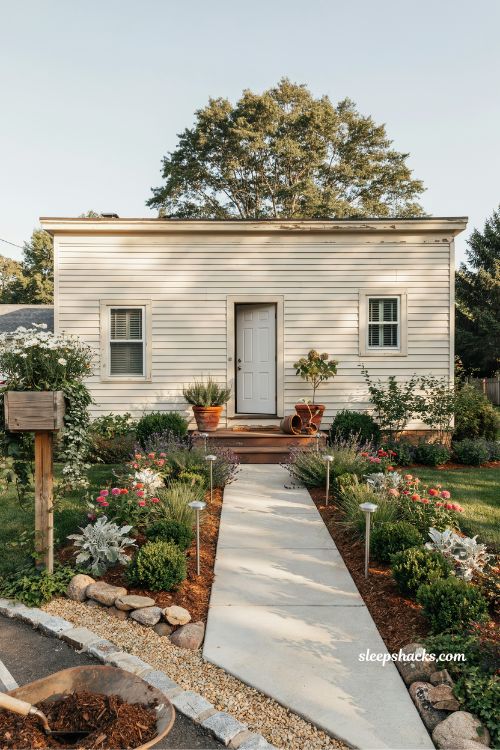
But here’s what’s actually true: the changes that make the biggest visual difference are almost never the expensive ones. Most of them cost under $50, take a weekend, and make your home look like someone genuinely cares about it. These 15 ideas are all doable, all affordable, and all worth your time.
1. Fresh Mulch in Garden Beds for an Instant Refresh
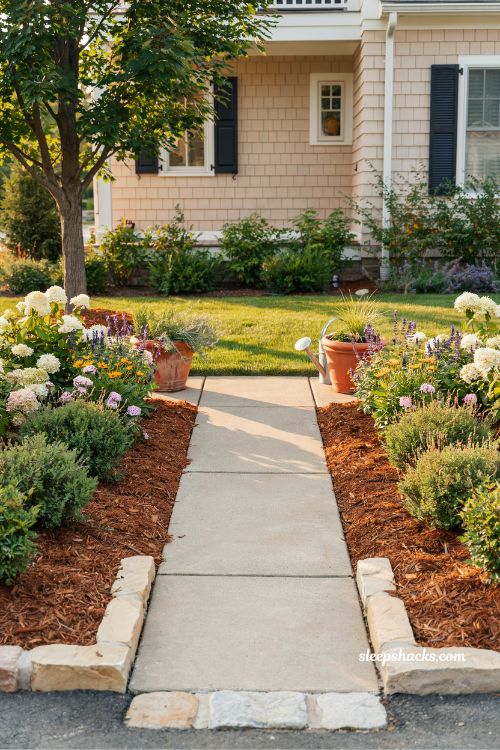
A couple of inches of wood chip or bark mulch in your garden beds might be the highest-impact, lowest-cost thing you can do for a front yard. It suppresses weeds, locks in moisture, and gives the whole space that clean, intentional look that makes neighbors stop and notice. Buy bulk mulch from a local landscaping supplier — it’s a fraction of the price of bagged mulch from the garden center and covers a surprising amount of ground.
2. Clean Lawn Edges Along Every Walkway and Driveway
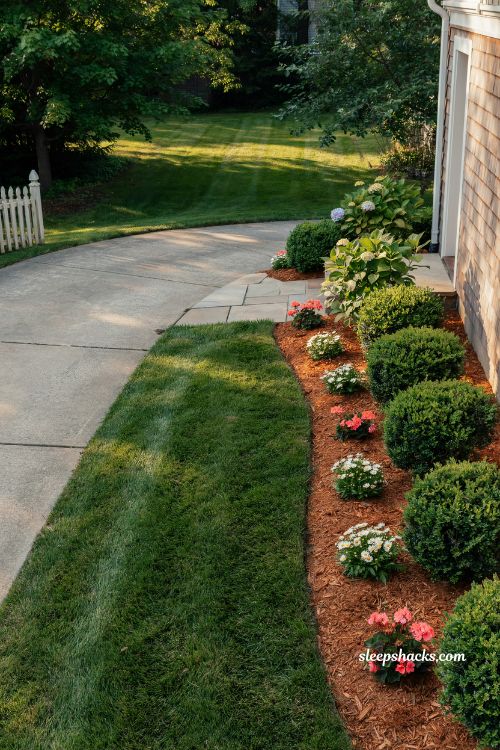
There’s a reason professional landscapes always look so polished — it’s the edges. A sharp, clean line between your lawn and your driveway or garden beds signals care and intention in a way that’s hard to fake. You don’t need a fancy tool to do this. A flat spade or half-moon edger does the job well, and once you’ve done it the first time, maintaining it takes just a few minutes every few weeks.
3. Raised Flower Beds Without Wooden Frames
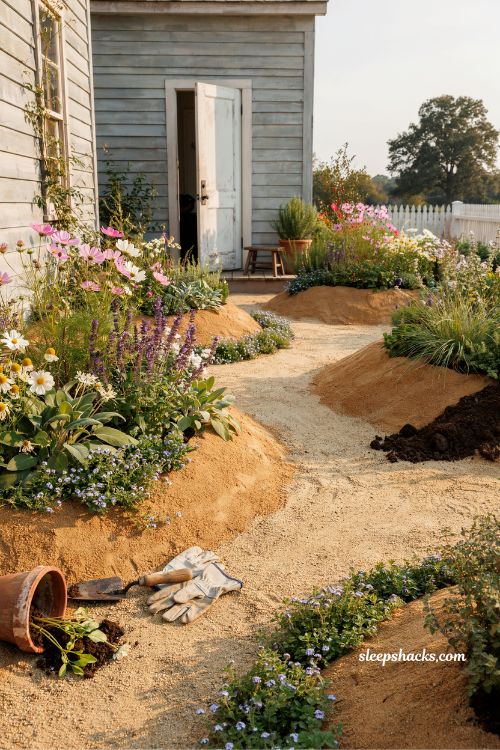
Most people assume raised beds mean expensive timber structures — but they don’t have to. Find a sunny spot, remove the sod, loosen the soil underneath with a spade, and dig narrow pathways around your bed, piling that topsoil onto the center. It’s more physical work, sure, but what you end up with is a clean, healthy garden bed that looks deliberate and costs almost nothing to create.
4. Native Plants That Basically Take Care of Themselves
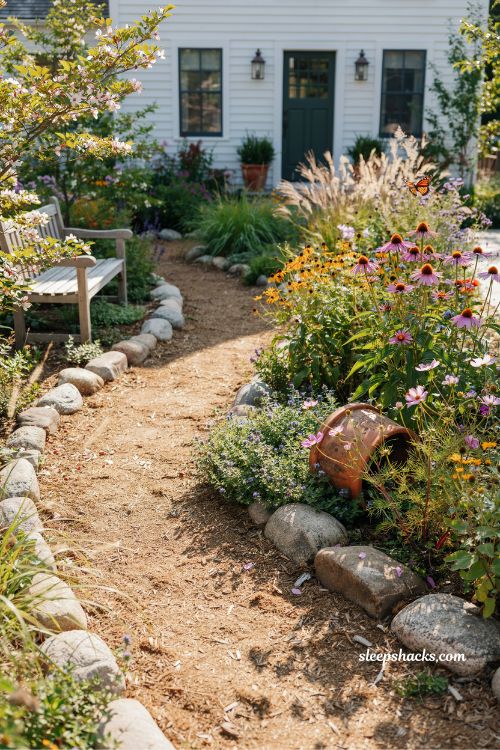
Native plants have spent thousands of years learning to survive in your exact climate. They don’t need constant watering, don’t demand extra fertilizer, and tend to be naturally tough against local pests. Creeping thyme, black-eyed Susan, coneflower, and native sedge all work beautifully in front yards and attract pollinators on top of it. Buy young plants or seeds, or ask at a community plant swap — many people give divisions away for free.
5. Stepping Stones Set Into the Lawn as a Cheap Pathway
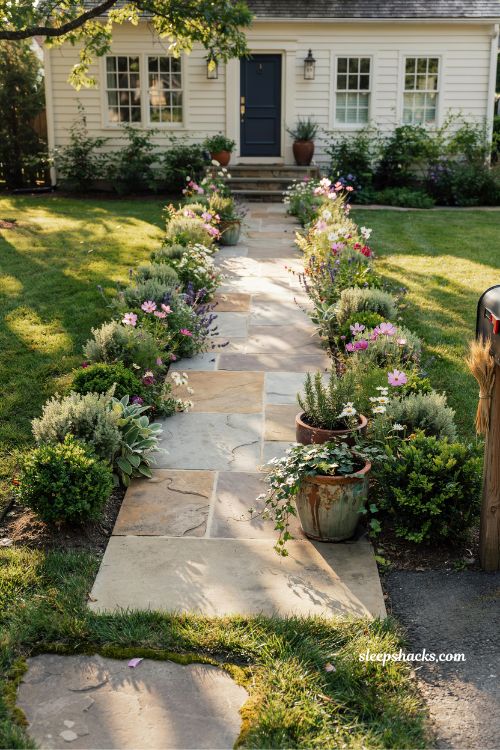
A clear path from your driveway or the street to the front door gives the yard structure and guides people naturally through the space. Stepping stones set flush into the lawn are one of the most affordable ways to do this — reclaimed concrete pavers, flat natural stone, or even thick timber rounds all look great and can often be sourced secondhand for next to nothing. Space them at a natural walking pace and they’ll feel intentional rather than thrown together.
6. A Bold Front Door Color That Changes Everything
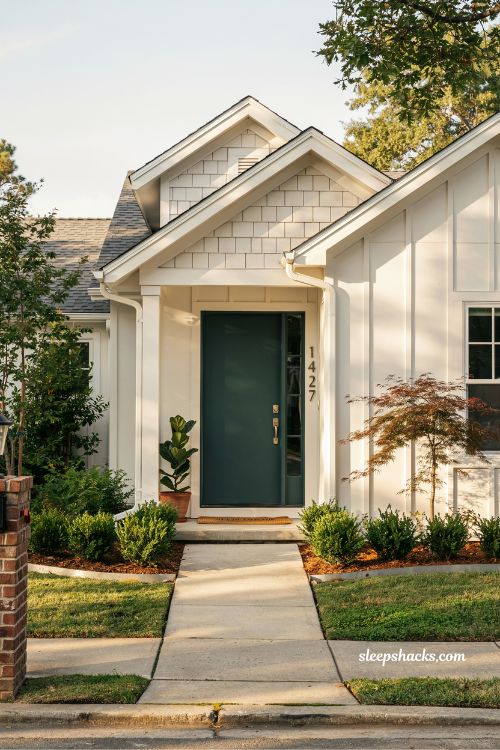
This one sits right on the edge of landscaping, but it works so well alongside yard improvements that it deserves a spot. A freshly painted front door in a strong color — navy, deep red, forest green, a warm terracotta — shifts the entire feel of the house from the street. A can of exterior paint costs around $35, takes an afternoon, and has an outsized effect on how the whole property reads from the curb.
7. Perennial Flowers Grown From Seed for Almost Nothing
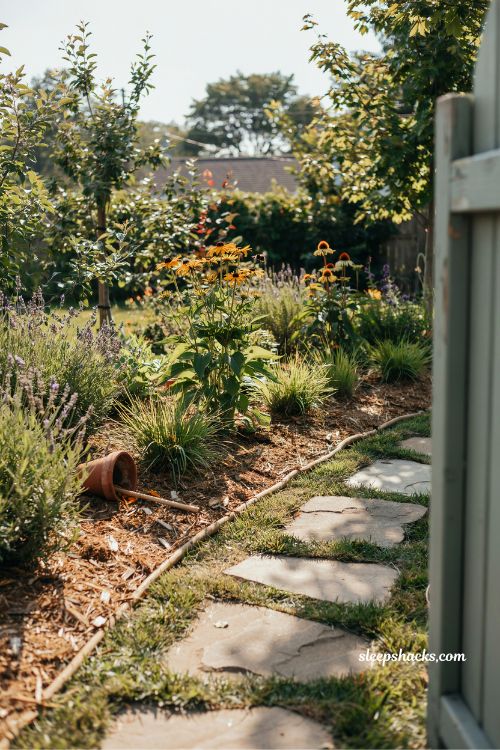
Annuals look great but cost money every single year. Perennials like lavender, coneflower, and black-eyed Susan come back season after season from a single planting, and starting them from seed cuts the initial cost dramatically compared to buying established plants from a nursery. Sow them in autumn or early spring, keep them watered while they establish, and within a season or two you’ll have real flowering plants that fill your beds and spread on their own.
8. Solar Stake Lights Along the Front Path
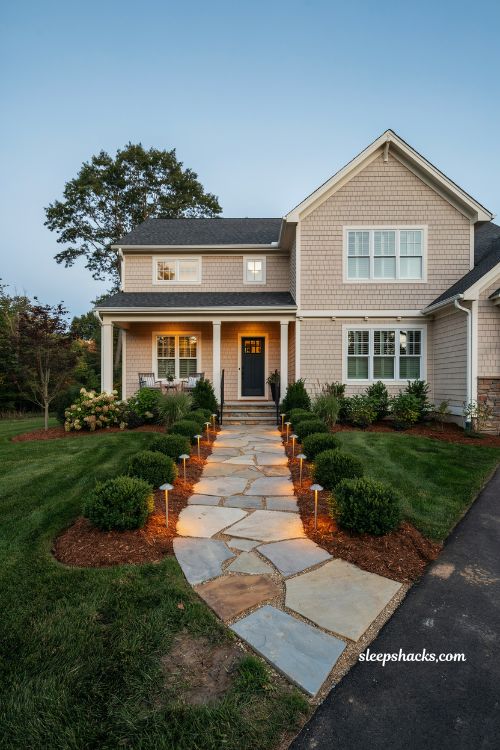
Good curb appeal doesn’t stop when the sun goes down. A row of solar stake lights along your front path or driveway edge adds definition and warmth after dark, and costs nothing to run. Basic solar stake lights are inexpensive and widely available. You don’t need many — even six or eight placed evenly along a short path is enough to make the entrance feel finished and welcoming at night.
9. Gravel or Pea Shingle in Spots Where Grass Won’t Grow
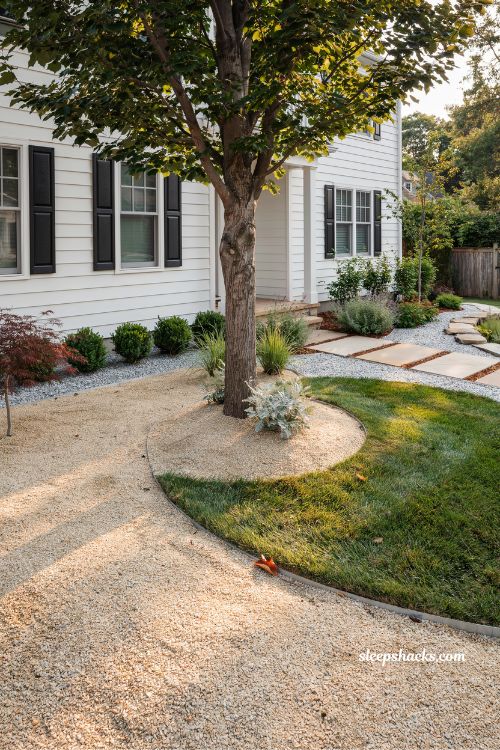
Every yard has a problem patch — the strip under the eaves, the area under a dense tree, the drought-prone corner that always looks terrible by August. Instead of fighting it, cover it. A layer of gravel or pea shingle over a weed membrane turns those awkward spots into low-maintenance features that look intentional. It’s especially effective along pathways or in narrow beds where mowing is more hassle than it’s worth anyway.
10. Window Boxes Filled With Seasonal Color
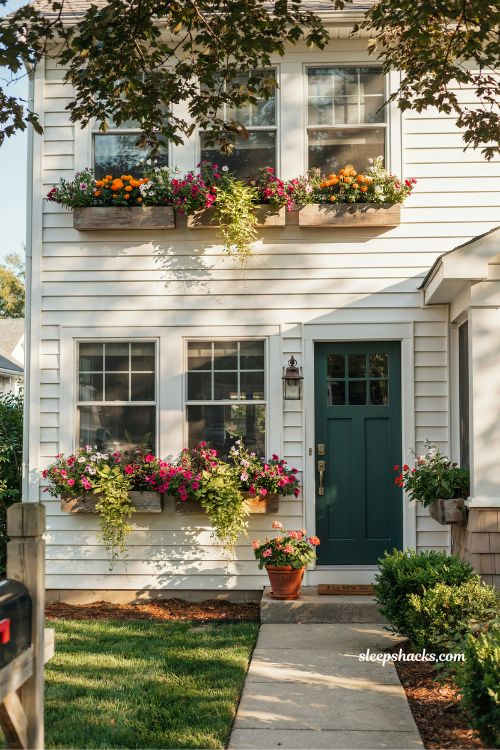
If your front yard is small or lacks planting space, window boxes are one of the smartest things you can add. They bring color and life to the front of the house without requiring any ground work. Fill them with trailing petunias, sweet potato vine, or seasonal annuals and swap the plants out as they fade. Simple wooden planter boxes are easy to build from basic timber, or you can find ready-made ones for very little at most garden centers.
11. A DIY Trellis With Climbing Vines for Vertical Interest
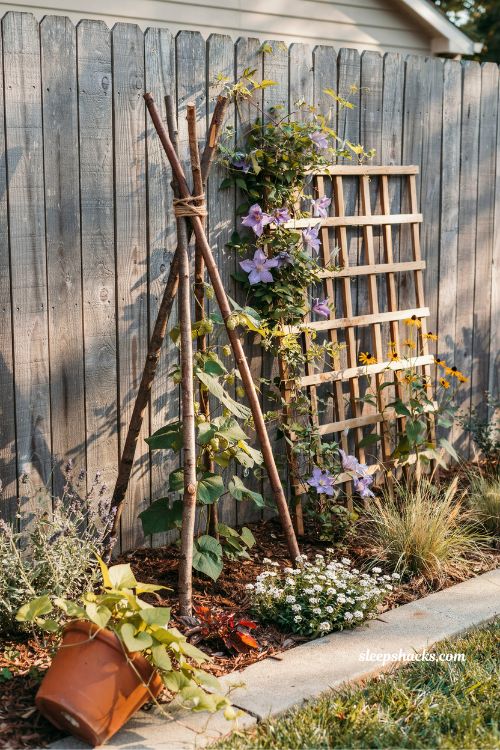
A blank wall or fence doesn’t have to stay blank. Five or six hardwood branches tied together with twine makes a simple conical trellis you can put together in under an hour, or a flat wooden trellis can be bought for less than $20. Train climbing plants like clematis, ornamental hops, or black-eyed Susan vine up the structure, and within a season you have a living feature that adds real height and texture to an otherwise flat yard.
12. Dividing and Replanting What You Already Have
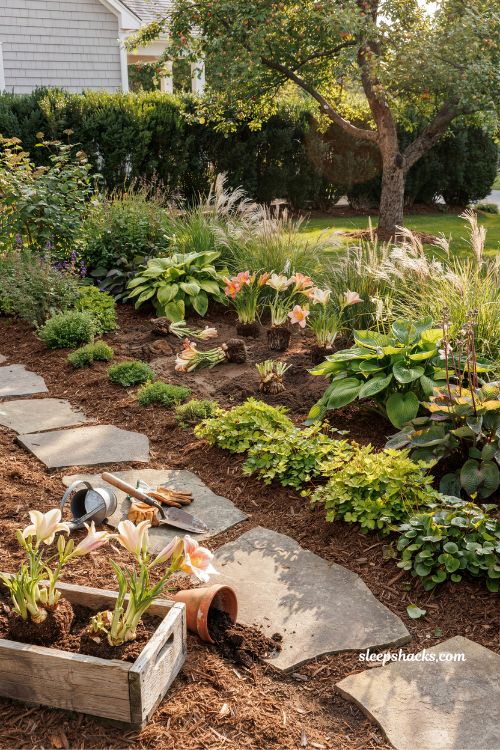
Before you buy a single new plant, take a proper look at what’s already in your yard. Many perennials — hostas, ornamental grasses, daylilies, creeping groundcovers — actually benefit from being divided every few years. Split them in spring or autumn and replant the divisions wherever the yard looks thin or bare. It fills gaps, refreshes the existing planting, and costs you absolutely nothing. Most people are sitting on more garden material than they realize.
13. A Small Rock Garden in a Sunny Corner
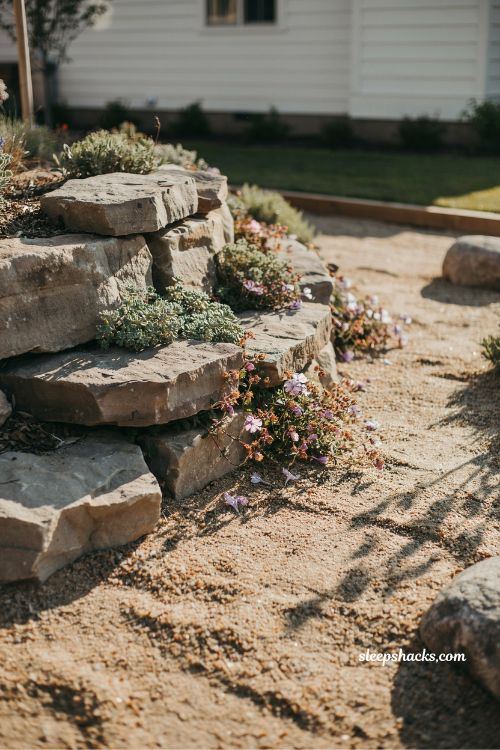
A rocky slope or a dry sunny corner that’s always been bare and patchy is actually perfect for a rock garden. Use stones you already have on the property or source them locally, and plant between them with drought-tolerant ground-huggers like sedums, creeping phlox, or alpine plants. Once established, a rock garden needs almost no ongoing care — no regular watering, no mowing, no replacing. It’s the kind of low-effort feature that actually looks better as it fills in over time.
14. A Young Hedge Along the Front Boundary
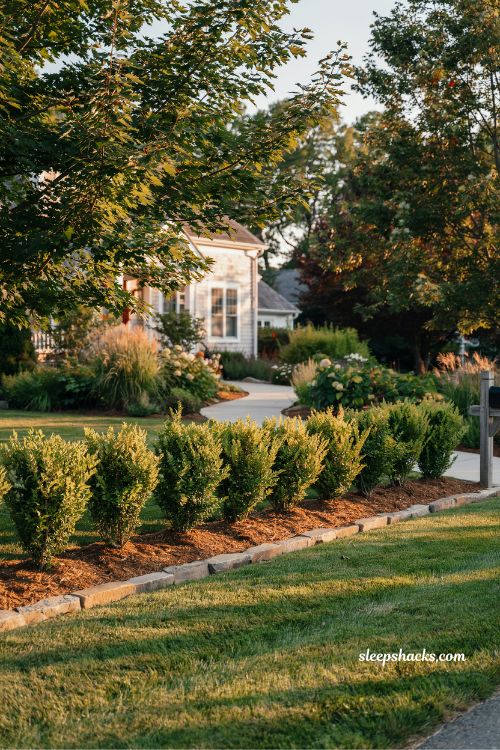
A hedge costs less than a fence over time, requires no hardware or installation costs beyond the plants themselves, and looks far more alive. Boxwood, privet, or native shrubs are all affordable as young plants, and with regular watering in the first season, they establish quickly. Even a low, informal hedge along the front boundary adds definition, softens the edge of the yard, and gives the whole property a more settled, considered look.
15. Mowing Stripes Into the Lawn for a Professional Look
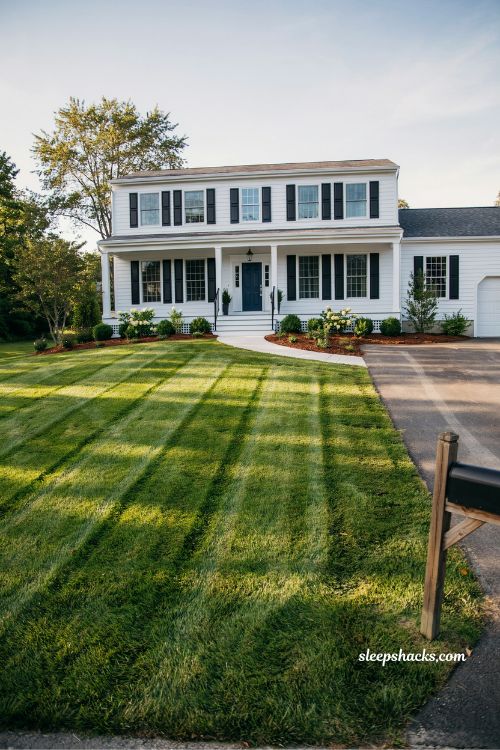
This one costs nothing at all. Mowing your lawn in alternating directions creates light and dark stripes across the turf — it’s just the way light reflects off grass that’s been bent in different directions. The effect looks polished and intentional from the street, the kind of thing you’d usually pay a landscaping company to do. Any mower can pull it off with consistent directional passes. It’s one of those changes that takes no extra time and makes an immediate difference.
Frequently Asked Questions
Q: What is the cheapest front yard landscaping idea?
Keeping the lawn neatly mowed and edging along walkways and garden beds costs nothing beyond basic tools and has one of the biggest impacts on curb appeal. Mulching garden beds with bulk wood chip from a local supplier is the next cheapest step up.
Q: What are the best low-maintenance plants for a front yard on a budget?
Native perennials like coneflower, black-eyed Susan, creeping thyme, and ornamental grasses are all solid choices. They come back year after year, need minimal watering once established, and can often be started from seed for very little cost.
Q: How do I make a small front yard look better without spending much?
Focus on one or two well-defined areas rather than trying to improve everything at once. Clean edges, fresh mulch, and a single focal point — a flowering planter, a stepping stone path, or a window box — will do more for a small yard than spreading effort thinly across the whole space.