

Fairy gardens have always fascinated me. There’s something magical about shrinking down the world to a tiny scale, where mossy hills meet whimsical cottages, and a miniature bridge can make you feel like you’ve stepped into another universe. I remember my first attempt—it was a simple broken pot with a few succulents and a tiny gnome.
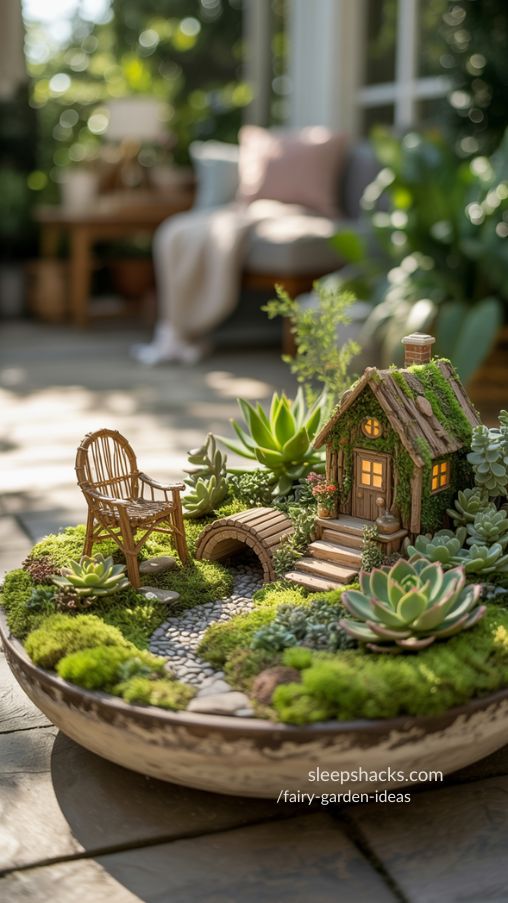
Yet, even that modest start brought so much joy and sparked my imagination. Fairy gardens are not just about plants; they’re storytelling in miniature, a way to bring enchantment into everyday life. Whether you’re decorating a patio, a windowsill, or a backyard, the possibilities are endless, and the creativity you can pour into it is truly rewarding. Every little detail—from a pebble pathway to a tiny twig chair—adds personality and character, making it feel alive.
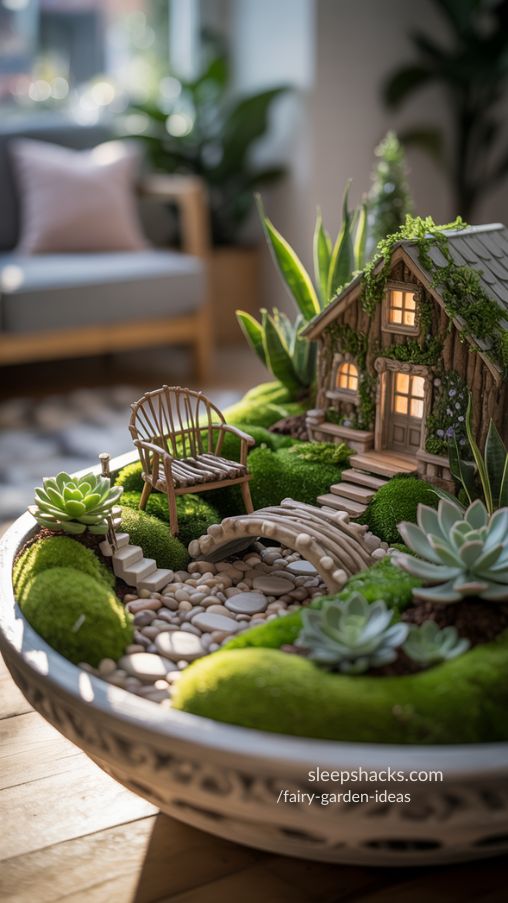
Key Points:
- Fairy gardens blend creativity and relaxation effortlessly.
- They can fit any space, large or small.
- Miniature accessories transform ordinary plants into magical scenes.
What is a Fairy Garden?
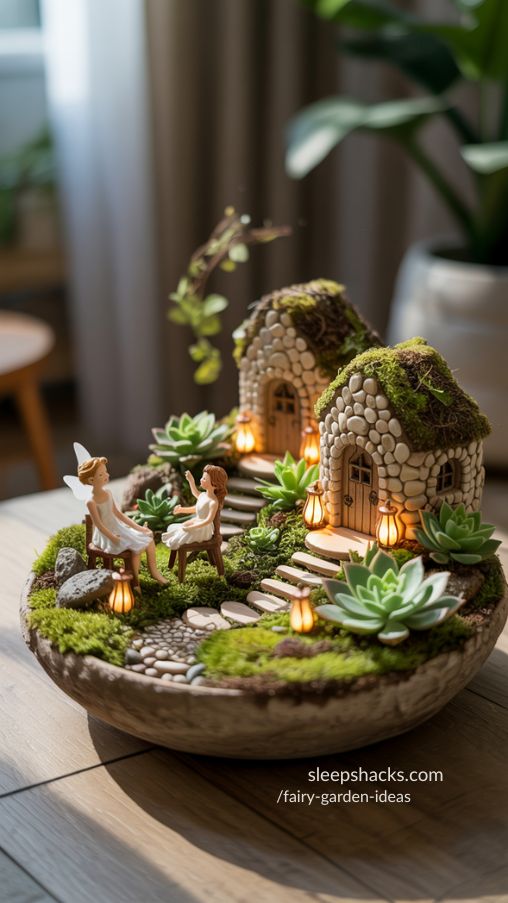
A fairy garden is essentially a miniature world designed to evoke enchantment. Think tiny cottages, minuscule bridges, mossy pathways, and whimsical figurines that create a scene that could easily belong in a storybook. Growing up, I always loved imagining fairies hiding in the garden, and fairy gardens give that imagination a tangible form.
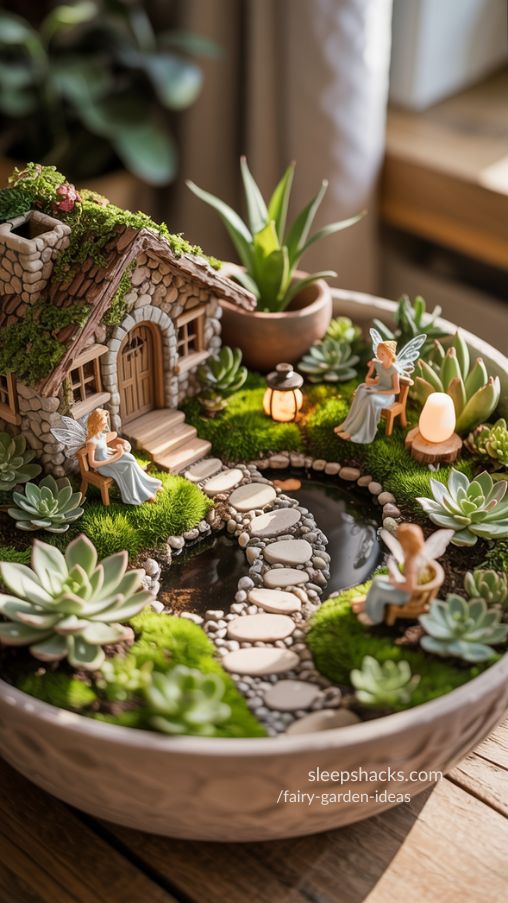
They’re not only decorative—they also nurture creativity and mindfulness. You can make them indoors in small containers, like a teacup or a jar, or outdoors, nestled under a tree or along a flower bed. The beauty lies in how versatile they are, blending natural elements with human imagination. For me, placing a tiny fairy on a chair near a succulent evokes a sense of wonder that even adults can’t resist.
Types of Fairy Gardens
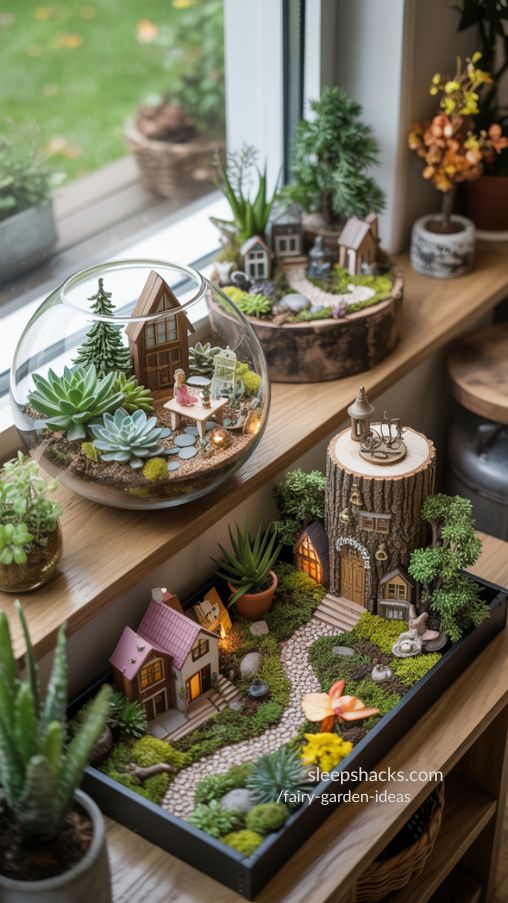
Fairy gardens come in many forms. I’ve tried both indoor and outdoor versions, and each has its charm. Indoor gardens are perfect for apartments or places with limited outdoor space. They often use succulents, moss, or small terrarium plants, and you can get creative with containers like jars or shallow trays.
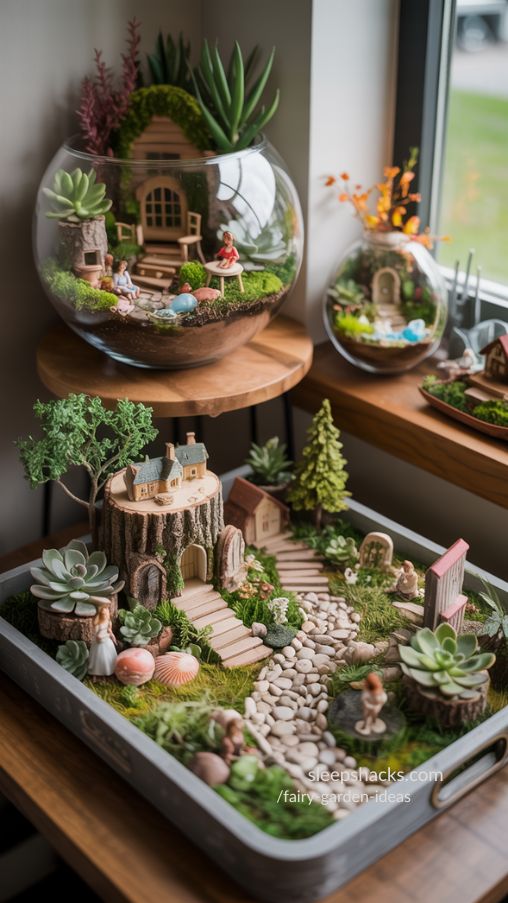
Outdoors, the sky’s the limit—you can have a tree stump village, a mini garden bed, or even a stacked terracotta bowl setup. Seasonal variations add an extra layer of excitement: spring gardens with herb themes, beach-themed gardens in summer, or spooky Halloween dioramas in October. I’ve always enjoyed mixing themes and observing how the story unfolds differently with each setup.
Choosing the Perfect Container
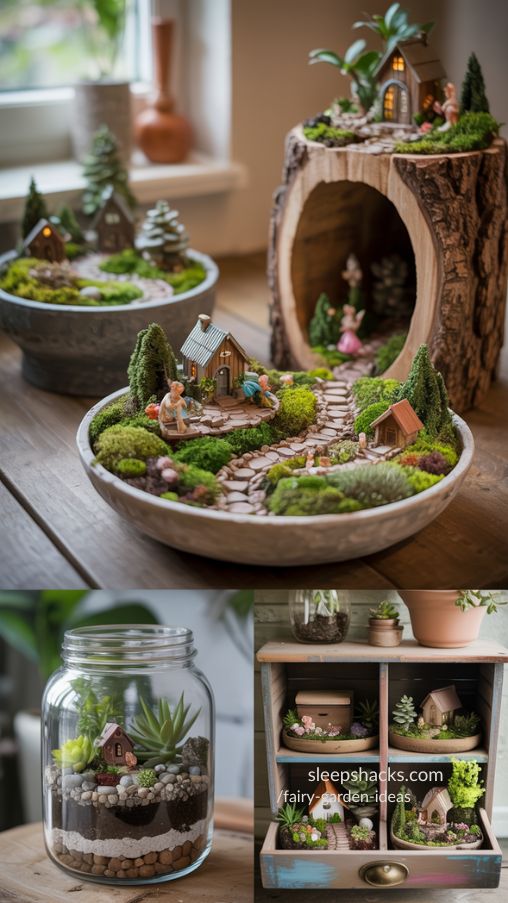
One thing I learned early is that the container can make or break your fairy garden. Wide, shallow planters work best for creating layered scenes, but I’ve had success with anything from an old teacup to a repurposed wooden drawer. Deep containers can be filled partially with plastic bottles or gravel to save soil while still allowing plants to thrive. At flea markets and thrift stores, I’ve found unique containers like vintage bowls or even a hollowed-out log, each giving a different vibe.
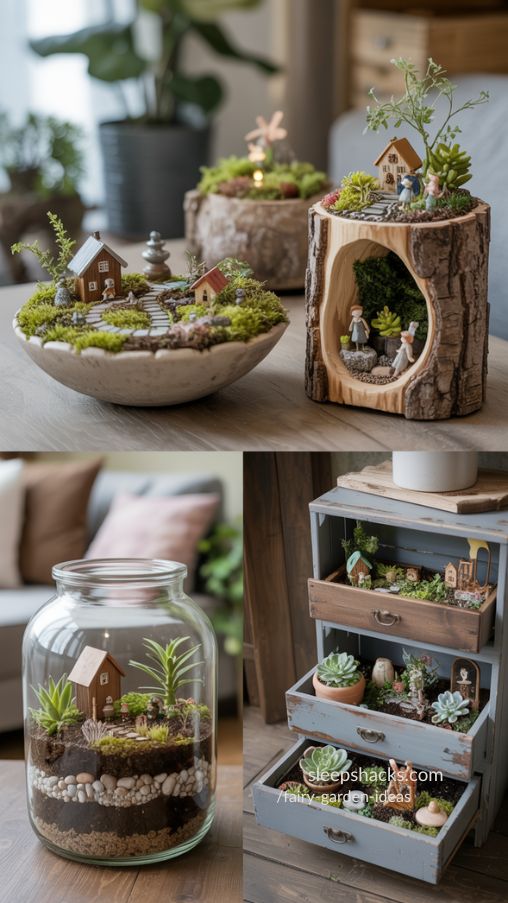
Table 1: Fairy Garden Container Options
| Container Type | Ideal Use | Pros | Cons |
| Shallow Ceramic Bowl | Indoor or Patio | Lightweight, easy to decorate | Limited soil depth |
| Hollowed Log | Outdoor garden | Natural look, blends with surroundings | Can dry out quickly |
| Glass Jar | Indoor terrarium | Transparent, easy to see layers | Fragile, small space |
| Wooden Drawer | Mini outdoor garden | Rustic charm, multiple compartments | Needs weatherproofing |
Using a container creatively is one of the most fun parts of building a fairy garden. Even a broken pot can transform into a whimsical hideaway with just a bit of imagination.
Selecting Plants for Your Fairy Garden
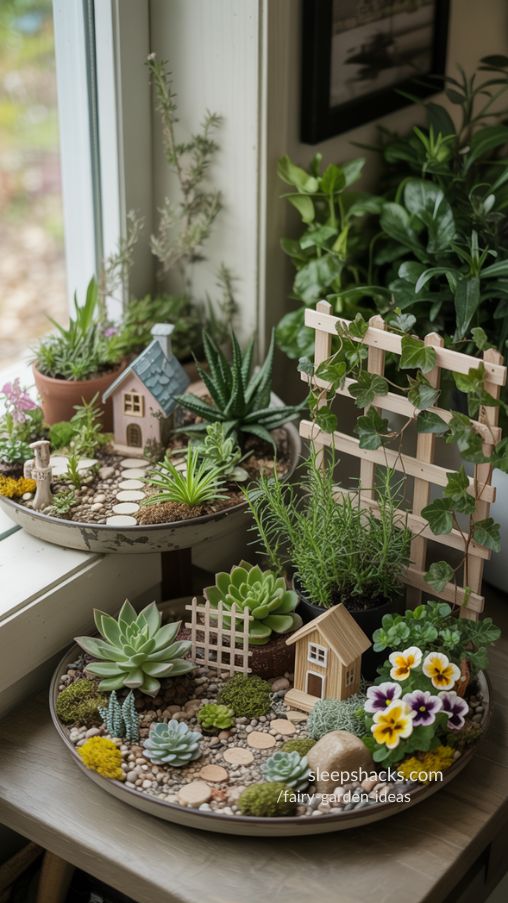
Plants are the lifeblood of any fairy garden. Choosing the right plant is essential for keeping your miniature world thriving. For indoor gardens, I love using succulents, mini ferns, and air plants. They need less sunlight and stay small, which makes them perfect for confined spaces. Outdoor fairy gardens can host herbs like rosemary, thyme, and miniature ivy, or colorful flowers like petunias and pansies. I’ve also experimented with no-fuss gardens using faux plants, pebbles, and shells—perfect if you want beauty without daily maintenance.
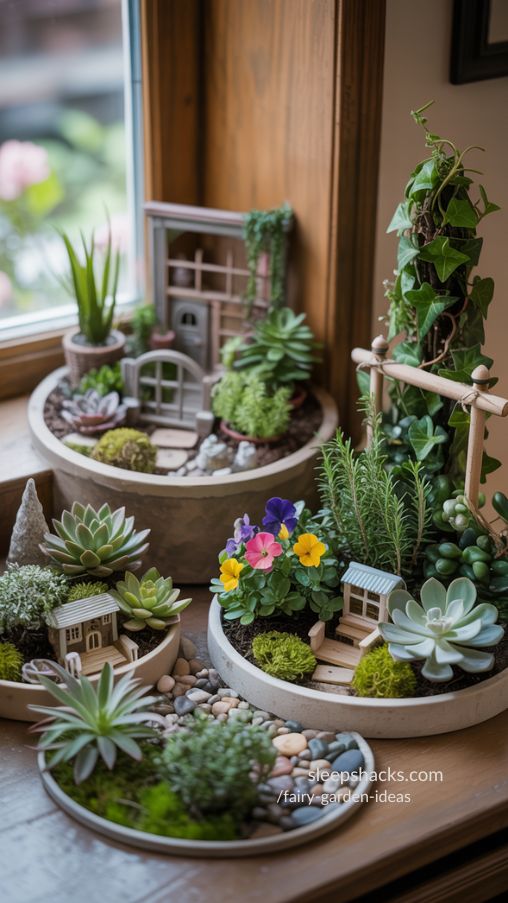
Table 2: Plant Options for Fairy Gardens
| Garden Type | Plant Options | Maintenance Level | Notes |
| Indoor Small | Succulents, Air Plants, Mini Ferns | Low | Filtered sunlight recommended |
| Outdoor Medium | Miniature Daisies, Boxwood, Herbs | Medium | Full sun to partial shade |
| Outdoor Large | Petunias, Marigolds, Outdoor Grasses | High | Best in garden beds with good drainage |
| No-Fuss | Faux Plants, Moss Rocks, Pebbles | None | Great for beginners or busy schedules |
For me, watching how plants grow and intertwine with miniatures is magical. A tiny climbing ivy on a miniature trellis can instantly make the scene feel alive, like fairies could actually live there.
Must-Have Fairy Garden Accessories
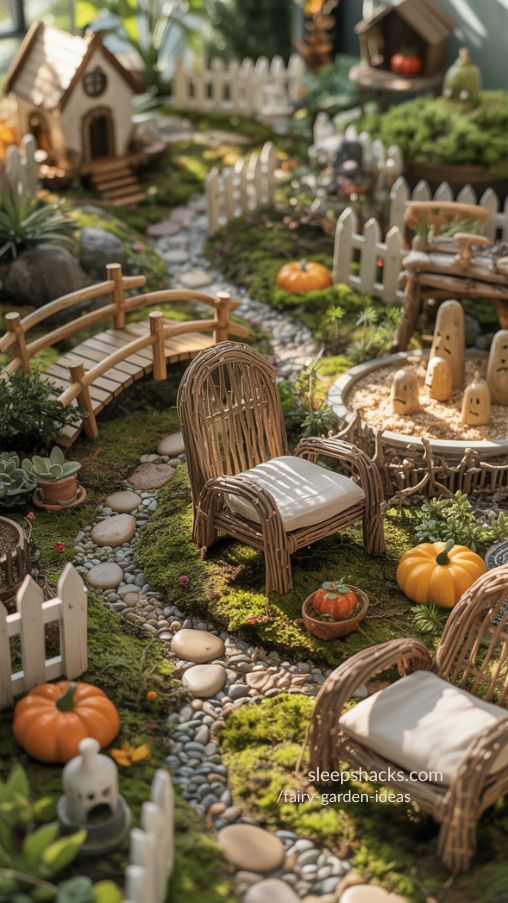
Accessories bring the story to life. Miniature cottages, bridges, chairs, tables, and fences are staples, but I love adding seasonal or themed touches—tiny pumpkins in fall, little sandcastles for beach scenes, or spooky gravestones for Halloween. You can buy them or make them yourself, which I often do using clay, twigs, and leftover craft materials. Accessories are where your personality and imagination shine. I once made a twig chair for a fairy garden and felt like I was crafting furniture for a tiny world. Little details—like a pebble pathway or a miniature mailbox—can make a scene feel authentically magical.
Seasonal Fairy Garden Ideas
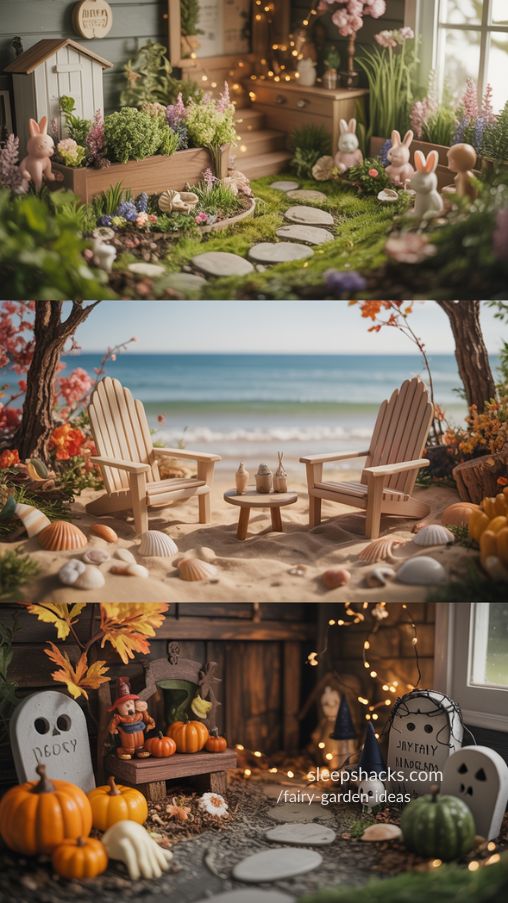
I enjoy switching up my fairy gardens with the seasons—it keeps the magic alive. Spring gardens often feature herbs and bright flowers with little bunnies or Easter accents. In summer, I love creating beach-inspired scenes with sand, shells, and tiny Adirondack chairs.
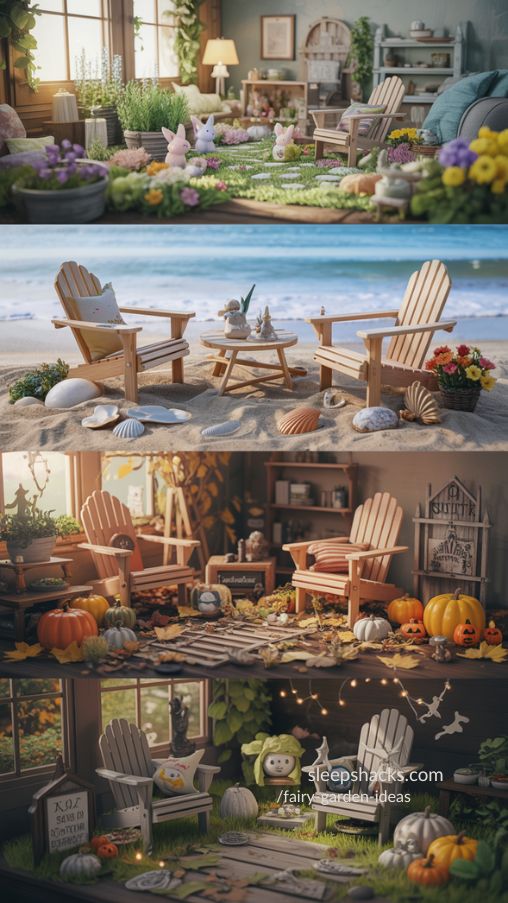
Autumn allows for rustic decor like miniature pumpkins, fallen leaves, and tiny scarecrows. And yes, Halloween is perfect for spooky miniature graveyards, witches, and tiny flickering fairy lights. Changing the theme not only refreshes your space but also sparks your creativity in crafting new storylines.
Budget-Friendly Fairy Garden Tips
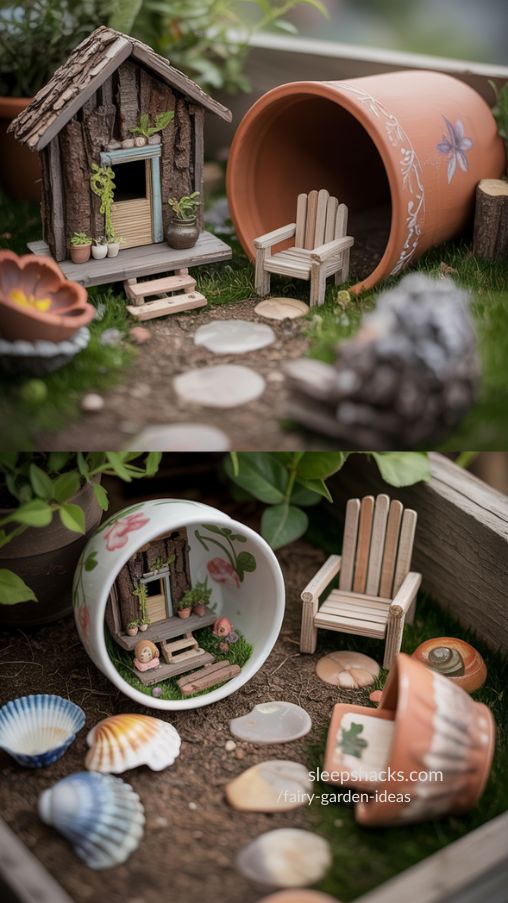
You don’t need to spend a fortune to make a magical fairy garden. Many of my most cherished gardens started with thrifted containers and DIY miniatures. Broken pots, old teacups, and scraps of wood can become charming cottages or garden furniture. Pebbles from the park, shells from the beach, and sticks from your backyard can all be reused creatively. Even Dollar Tree finds or flea market treasures can be transformed with paint and imagination. It’s proof that a fairy garden isn’t about money—it’s about creativity and love for tiny details.
DIY Fairy Garden Projects
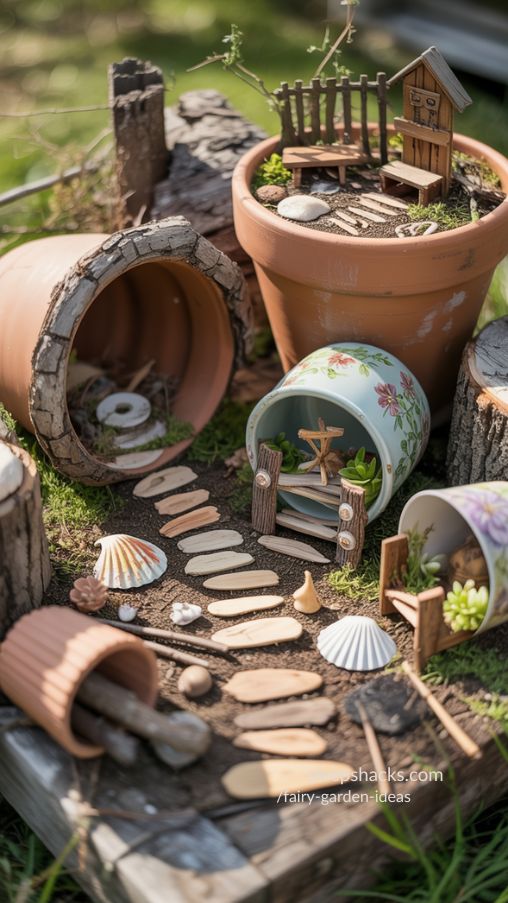
I love hands-on DIY projects—they make the garden personal. Some of my favorite DIY projects include:
- Making tiny baskets from bottle caps for fruits and vegetables.
- Crafting garden benches from twigs and popsicle sticks.
- Painting old glass jars to make lanterns for night-time magic.
These small crafts take ordinary items and make them extraordinary. One year, I created a Rusty Wheel Fairy Garden using an antique wheel, succulents, and mini fairies. It became a conversation starter for everyone who visited!
Indoor Fairy Garden Ideas
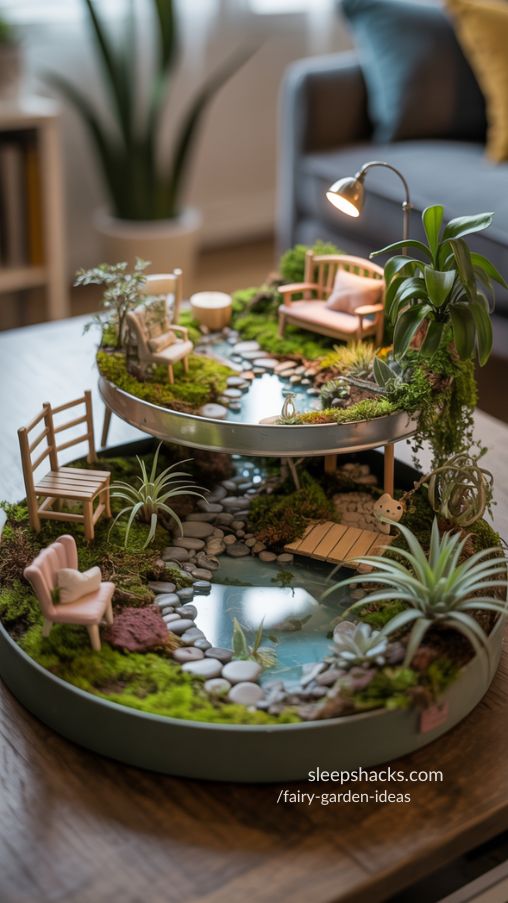
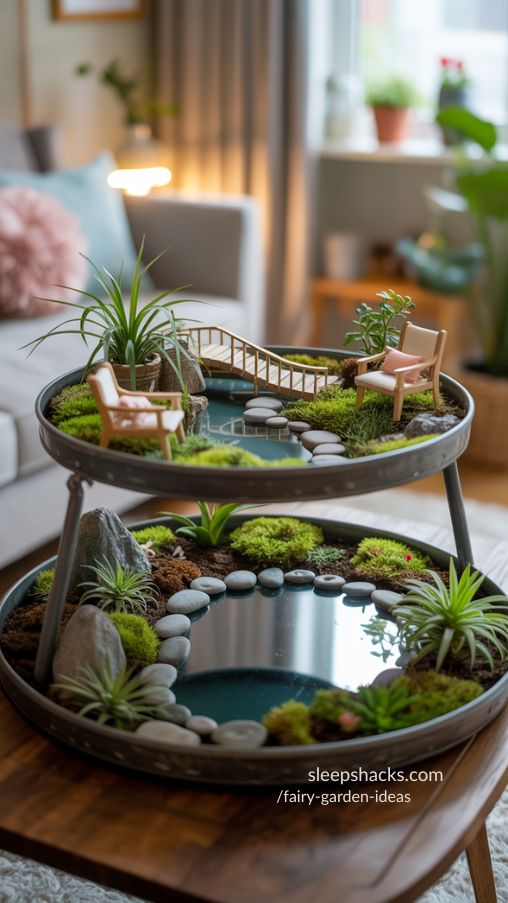
Indoor fairy gardens are great if you live in an apartment or want something cozy. I often use two-tier serving trays to create multi-level miniature worlds. Glass stones can serve as rivers, small mirrors as ponds, and miniature bridges can span them. Air plants add a tropical vibe, while tiny chairs or benches bring a homely feel. The key is layering elements so your eye is drawn across the scene—just like stepping into a tiny storybook.
Outdoor Fairy Garden Ideas
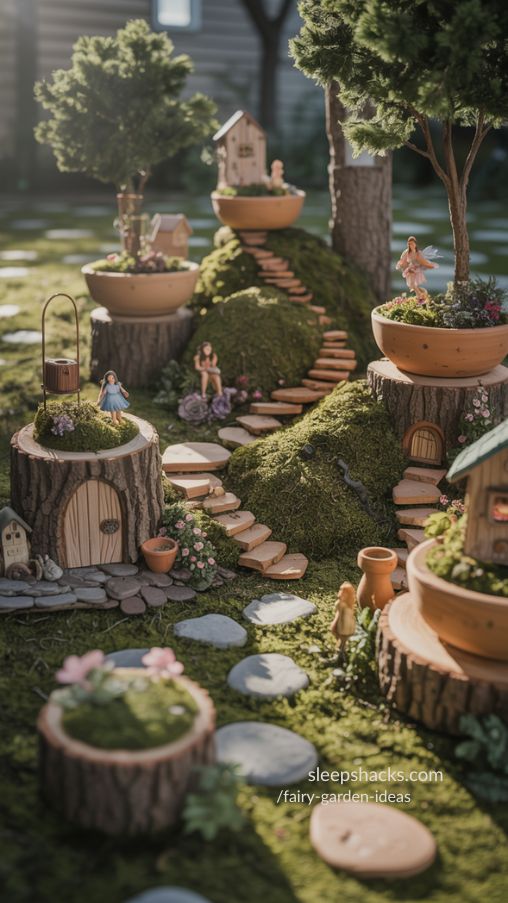
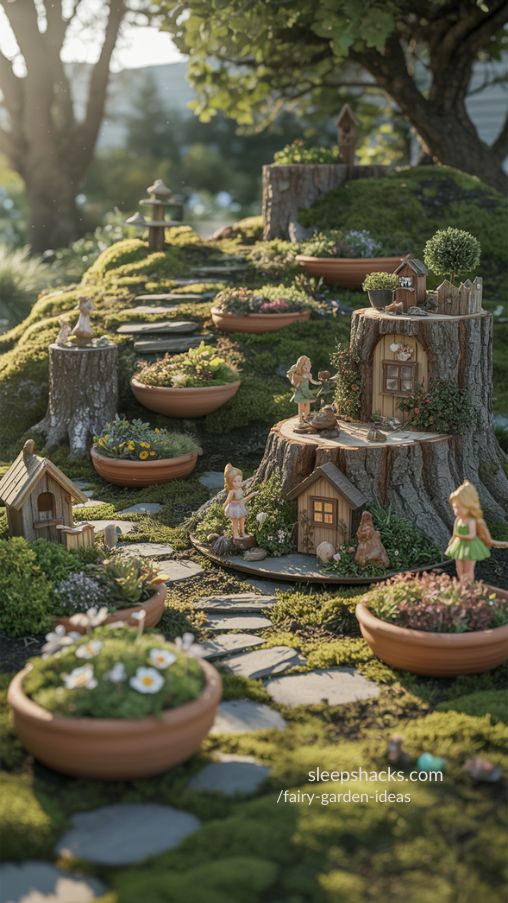
Outdoor gardens allow for bigger, more detailed setups. A tree stump village or stacked terracotta bowl garden adds height and interest. I’ve used mossy slopes, stone pathways, and flowering plants to create fairy neighborhoods that feel alive. Even simple ideas like arranging stones in a winding path or placing a small bird feeder as a fairy house can bring charm. Outdoor spaces give you the freedom to let imagination soar.
Kid-Friendly Fairy Gardens
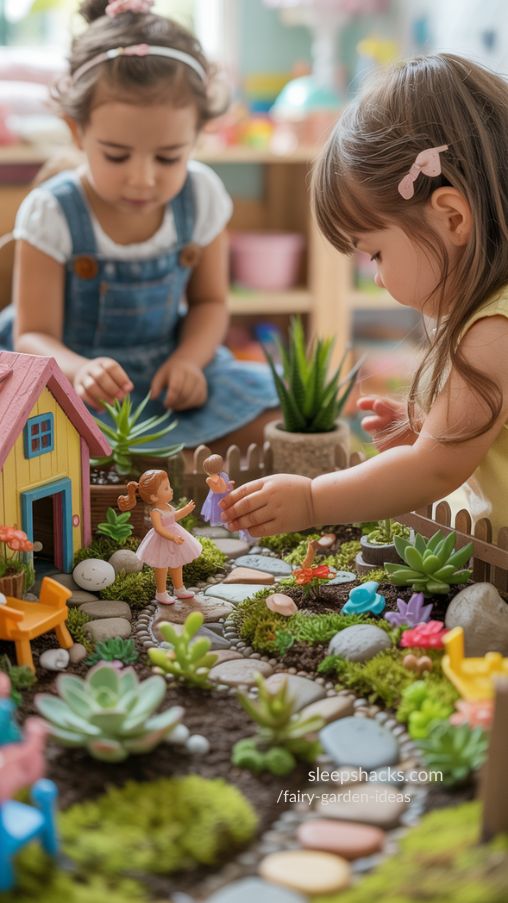
Making a fairy garden with kids is pure joy. Simple activities like planting succulents, arranging pebbles, or painting mini furniture are safe and fun. They also encourage storytelling, fine motor skills, and creative thinking. I still remember sitting with my niece and nephew, letting them pick mini fairies and choose plants—they were so proud of their creations, and I felt like a kid again too.
Maintenance Tips for a Healthy Fairy Garden
Maintaining your fairy garden is easier than it looks. Indoor plants need occasional watering and indirect sunlight, while outdoor gardens require monitoring for pests and trimming. Moss and succulents are generally low maintenance. Regularly dusting miniatures keeps the garden charming. I’ve learned that treating the garden as a living space, not just a decoration, ensures it thrives for months or even years.
Unique Fairy Garden Themes
- Rusty Wheel Garden: Old wheels, succulents, and mini figurines.
- Wine Cellar Garden: Mini barrels, shelves, and ivy.
- Beach Fairy Garden: Sand, shells, Adirondack chairs.
- Tooth Fairy Garden: DIY tiny house, mailbox, wishing well.
- Paris-Inspired Scene: Mini easel, painting, Eiffel Tower.
- Mermaid Garden: Air plants, resin shells, tropical vibes.
- Tuscan Fairy Garden: Ceramic houses, cobblestone path, fountain.
These themes allow you to mix plants, props, and imagination into a storytelling masterpiece.
Tips for Long-Lasting Fairy Gardens
- Choose resilient plants for your climate.
- Use proper drainage in containers.
- Rotate miniatures for seasonal themes.
- Incorporate faux elements for no-fuss beauty.
- Pay attention to scale to keep your fairy world believable.
By combining these tips, your fairy garden will remain vibrant, charming, and magical for years.
FAQs About Fairy Garden Ideas
What is a fairy garden?
A fairy garden is a miniature, themed garden with tiny plants, accessories, and figurines to create an enchanting scene.
Can fairy gardens be indoors?
Yes! Indoor gardens use small containers, succulents, air plants, or terrarium plants and work great on windowsills or tabletops.
What plants are best for fairy gardens?
Succulents, miniature ferns, ivy, herbs like rosemary and thyme, and small flowering plants are ideal depending on the garden type.
How much space do I need for a fairy garden?
Any space works, from a teacup to a backyard plot. Container size and plant choice depend on available space.
Can I use fake plants?
Absolutely! Faux plants, moss, and pebbles offer low-maintenance alternatives while maintaining the magical aesthetic.
What are some popular fairy garden themes?
Rusty wheel gardens, beach scenes, Tuscan villages, Parisian miniatures, and holiday-themed gardens are popular.
Do kids enjoy fairy gardens?
Yes, they love creating stories, arranging miniatures, and planting tiny plants. It’s educational and fun.