

If you’ve been scrolling pool photos for months and keep coming back to the same clean, sharp lines — that crisp 90-degree corner, that mirror-flat surface — you already know a modern rectangle pool is what you want. There’s something about this shape that just feels right. It’s timeless without being boring, and it works in almost every backyard, from a snug urban lot to a sprawling country property. Whether you’re after a quiet lap pool for morning swims or a full resort-style entertaining space, modern rectangle pool design delivers.
- Rectangle pools fit nearly every yard shape and are among the most popular inground pool styles for 2026.
- Standard sizes range from 12×24 all the way to custom lengths like 14×52, so there’s a fit for almost every space.
- Features like vinyl-covered steps, tanning ledges, automatic covers, and smart automation can take a simple rectangle from “nice” to genuinely spectacular.
Why Modern Rectangle Pool Design Is So Popular Right Now
It’s not hard to see why homeowners keep choosing this shape. The 90-degree corners and straight edges of a modern rectangle pool create a geometry that feels intentional — like the pool was designed by an architect, not just dropped into the backyard. That clean look pairs beautifully with modern landscaping trends: polished concrete decks, dark coping, ornamental grasses, and minimal clutter.
Beyond looks, rectangles are also deeply practical. Standard pool covers fit them. Robotic cleaners navigate them efficiently. And the shape maximizes swim length, which matters whether you’re doing laps for fitness or just want enough room for a proper swim. Here’s a quick comparison of common sizes to help you think about what fits your space:
| Pool Size | Best For | Shallow End Depth | Notes |
|---|---|---|---|
| 12×24 | Compact backyards | 42″ standard | Great with corner steps and bench |
| 16×32 | Average family yards | 42″–48″ | Most popular mid-size option |
| 18×36 | Larger yards, entertaining | 48″–54″ resort depth | Room for tanning ledge |
| 20×40 | Spacious properties | 54″–60″ resort depth | Full lap + lounge potential |
| Custom (e.g. 14×52) | Long narrow yards | Custom | Designed around the space |
17 Modern Rectangle Pool Design Ideas Worth Saving
1. The Classic Square-Corner Rectangle With Vinyl-Covered Steps
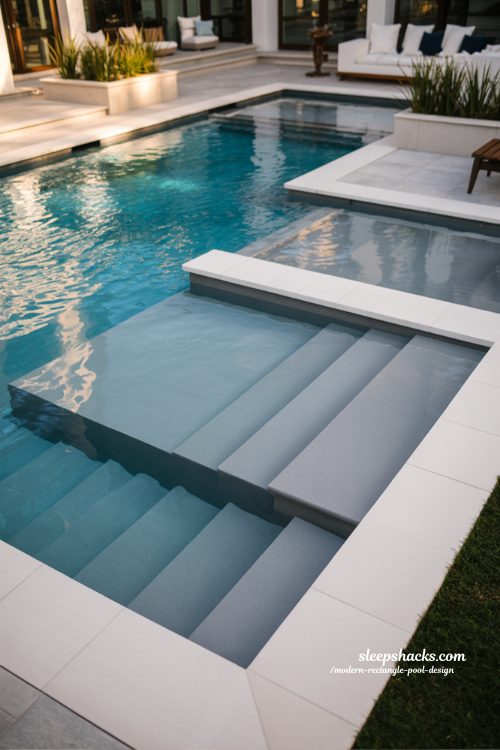
The defining feature of a true modern rectangle pool is the 90-degree corner — no curves, no soft edges. When you pair that with vinyl-covered steps (where the liner wraps right over the step so there’s no plastic edge visible), the result is a seamless, polished look that holds up beautifully over years of use. It’s the kind of detail that separates a pool that looks good in photos from one that looks even better in person.
Full-width steps across the shallow end are especially popular because they create a grand, welcoming entry point that doubles as seating. Kids love playing on them. Adults love sitting in the shallow water on warm evenings with a drink in hand.
- Choose three-tier full-width steps for maximum seating and a resort-hotel feel.
- Ask your builder about the “step and sunledge combo” if you want a shallow lounging zone without a full tanning ledge.
- Square corner steps with a side bench work well in wider pools where you want to maximize swim lane length.
2. Resort-Depth Shallow End for a More Luxurious Swim
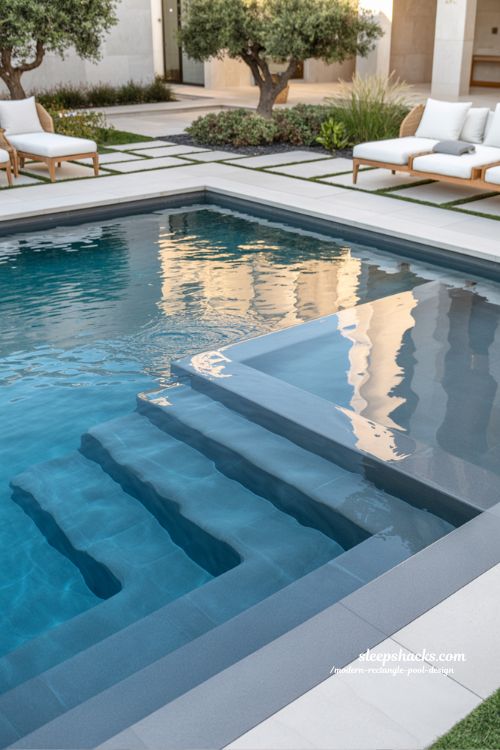
Most standard pools in colder climates use 42-inch wall panels, giving you about 3 feet of water in the shallow end — great for small kids, less ideal if you’re 5’10” and want to actually stand comfortably. The resort-depth option upgrades those wall panels to 48, 54, or 60 inches, giving you a shallow end that feels more like the pools you’ve swum in at all-inclusive resorts.
This upgrade is particularly popular with swimmers who do laps, since a deeper shallow end eliminates the awkward toe-drag when you push off for a turn. It also just feels more luxurious — you can walk around and socialize in the pool without hunching.
- 48″ panels are a great starting point — noticeably deeper without adding much cost.
- 54″ panels work best for families where adults are the primary users.
- Custom vinyl-over-step entries are designed to match the upgraded wall heights perfectly.
3. Tanning Ledge (Baja Shelf) Integrated Into the Design
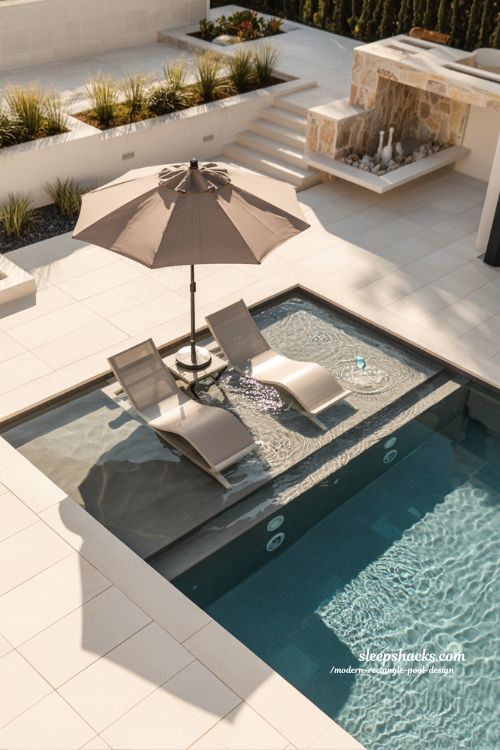
A tanning ledge — sometimes called a Baja shelf or sun ledge — is one of the most requested features in modern rectangle pool design right now, and for good reason. It’s a shallow platform (usually 9–12 inches deep) built into one end of the pool where you can set a chaise lounger and lay half-submerged in the water. It’s brilliant for hot summer days when you want to cool off without actually swimming.
For a 16×34 pool, for example, an 8×6-foot sunledge is enough room for two in-pool loungers side by side. Larger pools can go bigger — up to 10×14 feet — which opens up space for four loungers or a small group gathering.
- Add an umbrella sleeve to the ledge so you can plant a sun umbrella directly in the water.
- Pair with in-pool chaise loungers designed specifically for shallow ledge depth.
- Bubbler jets in the ledge add a playful water feature element kids absolutely love.
4. Full-Length Side Bench for Year-Round Socializing
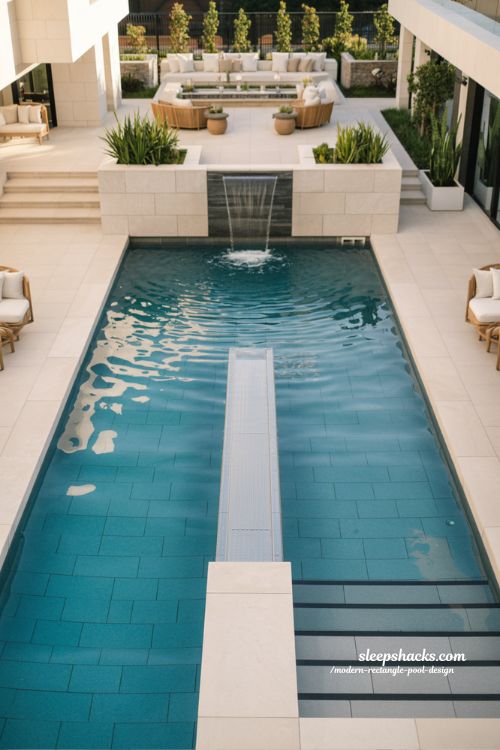
An interior bench running along one or both sides of a rectangle pool is one of those features that sounds simple until you actually use it. It gives you a place to sit in chest-deep water, chat with people on the deck, rest during a swim, or just hang out in the pool without treading water. In larger pools — say 18×36 or bigger — dual benches running down each side of the shallow end can seat a whole group comfortably.
This feature pairs especially well with water features like sheer descent waterfalls positioned above the bench line, so the water sheets down right behind where people are sitting.
- Keep bench depth at around 18–24 inches below the water surface for comfortable seated use.
- Benches also work well along the deep end wall for those who want to sit while still in deeper water.
- Combining a corner step with a side bench creates two distinct seating zones in one design.
5. Automatic Retractable Pool Cover for Safety and Low Maintenance
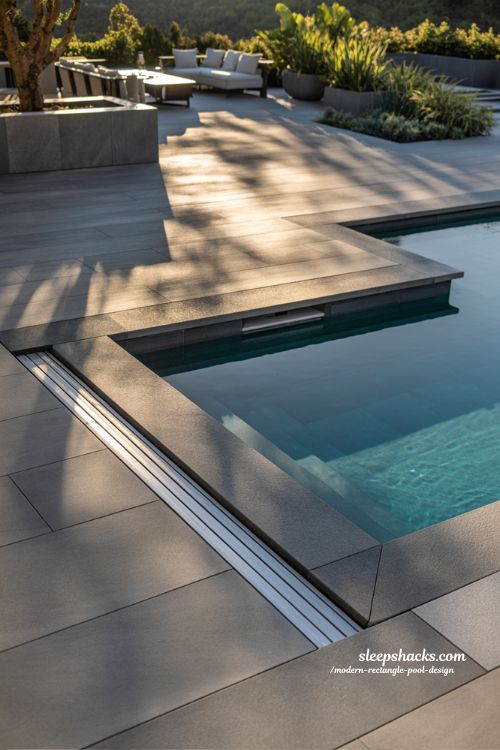
An automatic pool cover does three important things at once: it keeps children and pets safe when the pool isn’t in use, it dramatically reduces heat loss (so your heater runs less), and it keeps debris out so cleaning is minimal. For families with young kids or anyone who wants a lower-maintenance pool experience, it’s one of the best upgrades you can make.
The best installations hide the cover vault under custom concrete bricks that blend right into the deck — so when the cover is open, you’d never know the mechanism was there. Walk-on lid designs take it a step further, letting you use the deck right up to the pool edge.
- Coverstar and similar brands offer motorized covers that open and close with a key switch.
- Pair with a stamped concrete deck that integrates the vault housing for a seamless look.
- Automatic covers can reduce water evaporation by up to 95%, keeping chemical costs lower too.
6. Smart Automation — Control Everything From Your Phone
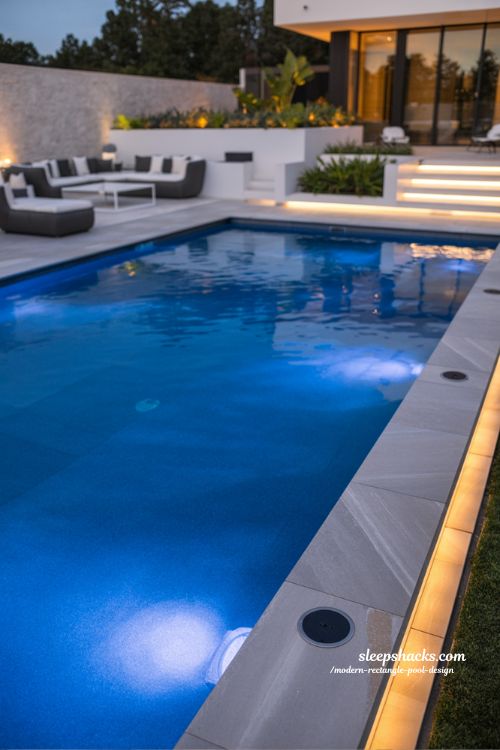
If you haven’t looked at pool automation recently, it’s come a long way. Systems like Hayward OmniLogic let you adjust water temperature, control LED lighting colors, run water features, and schedule filtration — all from a smartphone app, anywhere in the world. You can turn on the heater while you’re still at work so the pool is perfect when you get home.
Voice control integration with Alexa or Google Home is available on some systems, and newer setups include AI-assisted water quality monitoring that alerts you before a chemistry issue becomes visible. It’s the kind of technology that makes pool ownership genuinely easy rather than a constant maintenance chore.
- Set temperature schedules to run the heater only during off-peak energy hours.
- Smart filtration systems like SwimClear can run year-round on low energy, keeping the water clear with minimal effort.
- App notifications alert you if there’s unusual activity (unexpected filtration triggers, etc.).
7. LED ColorLogic Lighting for Nighttime Drama
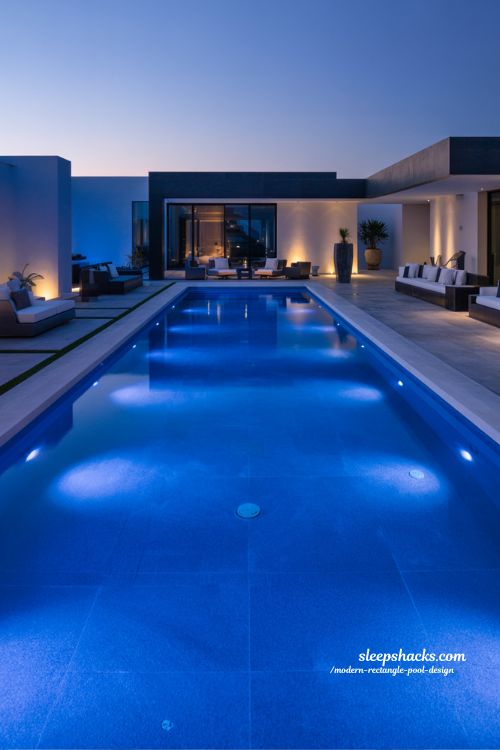
A modern rectangle pool at night with the right lighting is something else entirely. LED ColorLogic lights can cycle through the entire color spectrum, hold a steady color, or sync with music. Two large lights — one covering the shallow end and one the deep end — are usually enough for a 16×36 pool. Larger pools or pools with multiple water features benefit from more.
The clean geometry of a rectangle pool makes the light patterns especially striking. A deep blue glow reflecting off straight-edged coping at night feels genuinely architectural.
- Position lights to illuminate both the shallow and deep ends for even coverage.
- Warm white LED is the most popular color for everyday use; color modes come out for parties.
- Lights mounted in the wall just above the floor level cast a beautiful glow across the bottom.
8. Dark-Bottom Liner for a Lagoon-Like Effect
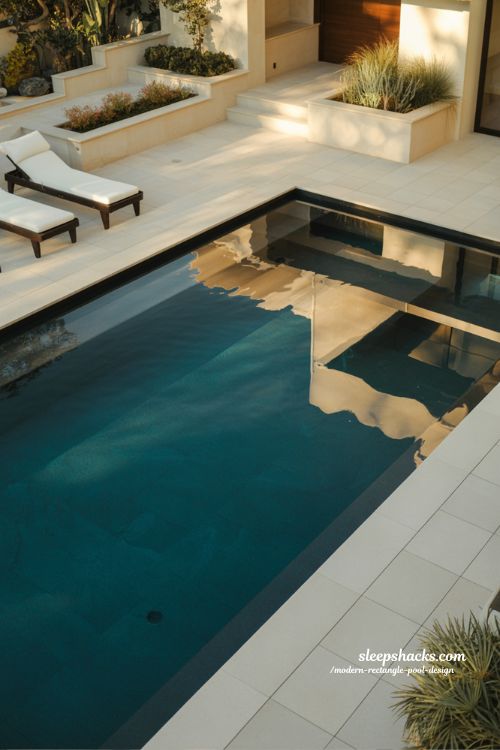
Dark liners — deep navy, charcoal, or “Ocean Midnight” — have become a signature of modern rectangle pools. They give the water a rich, almost tropical look that photographs beautifully and makes the pool feel more like a natural body of water than a backyard tank. They also absorb more solar heat, which can take the edge off your heating bills.
The tradeoff is that visibility into the water is slightly reduced compared to lighter liners, which is worth discussing with your builder from a safety standpoint. That said, dark liners are completely standard in modern pool design and work fine in properly lit, well-maintained pools.
- “Ocean Midnight” is one of the most-requested dark liner colors for modern rectangle pools.
- Pair a dark liner with light-colored coping — white or cream concrete — for maximum contrast.
- Dark liners show calcium deposits more visibly, so consistent water chemistry matters more.
9. Deck Jets and Water Features for Movement and Sound
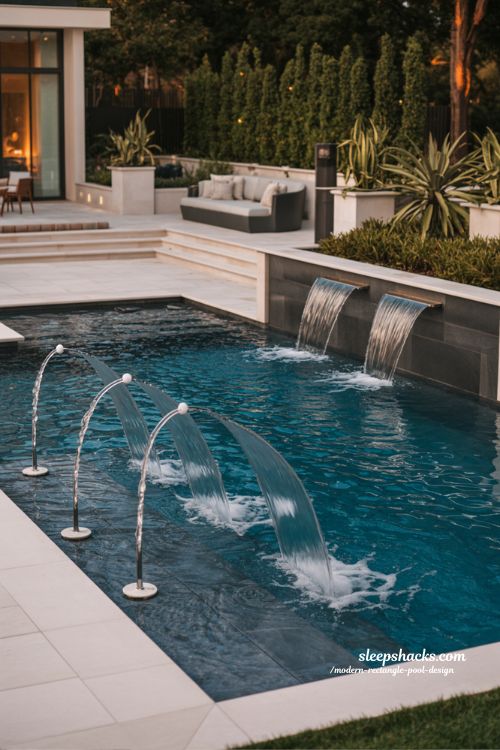
Still water is beautiful. Moving water is alive. Adding deck jets — small nozzles installed in the pool deck that arch streams of water into the pool — brings sound, movement, and playfulness to a rectangle pool without adding complexity. Four to six jets placed symmetrically around the shallow end creates an elegant, fountain-like effect that looks amazing in photos and sounds wonderful on a warm evening.
For something more dramatic, sheer descent waterfalls mounted along the pool wall can create a full curtain of water that sheets down into the pool. LED-lit versions glow at night and can be switched on or off through the automation app.
- Space deck jets symmetrically for a polished, intentional look.
- LED sheer descents in groups of three are a popular choice for larger modern rectangle pools.
- Use a timer to run jets during evening hours for ambiance without running them all day.
10. Stamped Concrete Decking That Elevates the Whole Space
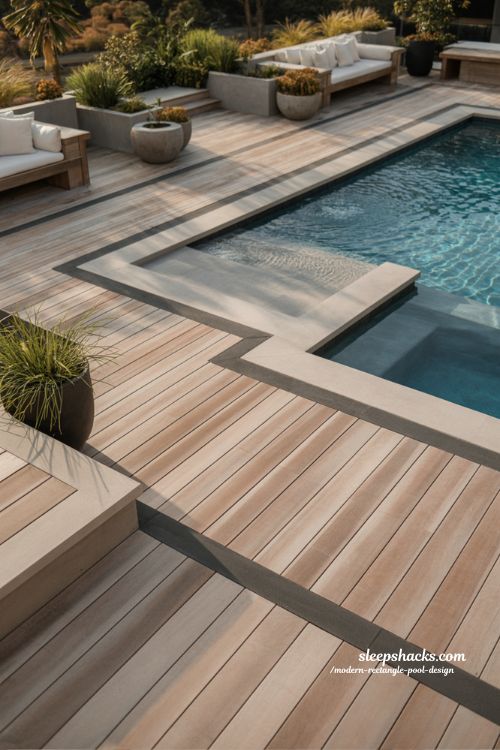
The pool is only part of the picture. The deck surrounding it sets the entire mood. Stamped concrete is one of the most popular deck choices for modern rectangle pools because it can mimic the look of wood, slate, travertine, or stone at a fraction of the cost — and it holds up beautifully through freeze-thaw cycles that would destroy real timber or natural stone.
Cedar plank patterns with a dark contrasting border are a perennial favorite. Desert sand tones with a cantilevered concrete edge give a more minimal, modern feel. The key is choosing a stamp and color that complements the liner color, not competes with it.
- A cantilevered concrete edge (no visible coping lip) gives a cleaner, more modern look than traditional coping.
- A contrasting border frames the pool and creates a deliberate, designed appearance.
- Choose lighter concrete colors in hot climates — darker stamps absorb heat and can be uncomfortable underfoot.
11. Small Rectangle Pool for Compact Backyards
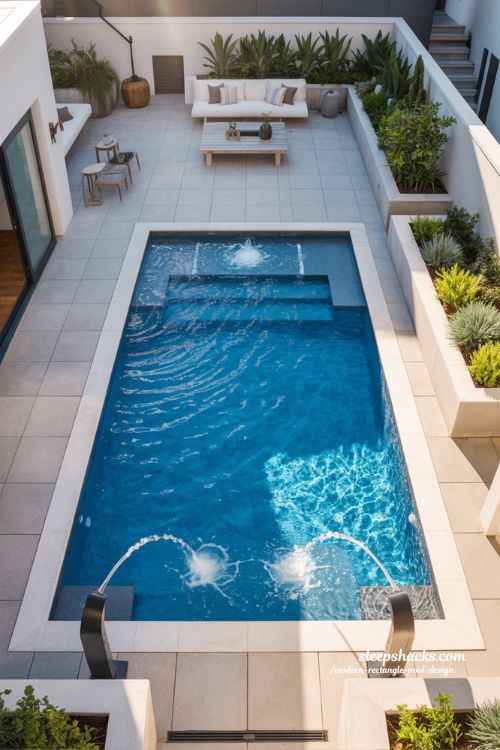
A 12×24 rectangle pool is genuinely impressive in a small yard. It’s big enough to swim in, has room for steps and a bench, and leaves meaningful deck space around the edges. The key is in the layout — an 8×4 side step instead of full-width stairs at the shallow end saves precious length, and a corner bench in the deep end replaces the need for a separate seating area entirely.
Small rectangle pools also tend to be faster to heat (less water volume) and less expensive to maintain. For urban backyards or properties with setback restrictions, they’re sometimes the only inground option that fits — and they’re still a real pool, not a compromise.
- Get a variance from your local municipality if setbacks are tight — 3-foot setbacks are possible in many areas.
- A ClearDeck sunken solar blanket roller hides the cover mechanism without sacrificing deck space.
- Four deck jets add significant visual punch to a smaller pool without taking up any swimming space.
12. Rectangle Lap Pool Design for Fitness-First Homeowners
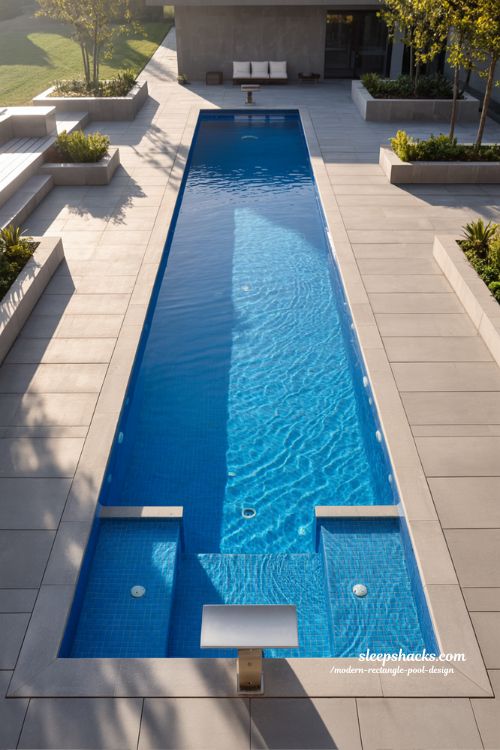
If swimming laps is the primary purpose, design around that goal from the start. A long, narrow rectangle — think 14×52 or 16×40 — gives you enough distance to actually get a workout without constant turns. Paired with a resort-depth shallow end so there’s no toe-drag when you push off, this becomes a genuinely functional fitness tool at home.
Swimcounter jets or resistance systems can be added at one end for current-swimming, which lets you get a lap workout in a shorter pool. But nothing replaces raw length if serious swimming is the goal.
- Dual 15-foot benches along each side of the shallow end are a popular addition — they don’t interrupt swim lanes and give guests a place to sit.
- 48-inch wall panels are the minimum recommended for comfortable lap swimming.
- A hidden solar blanket roller keeps the deck clean without sacrificing the pool cover.
13. Rectangle Pool With Integrated Spa or Hot Tub
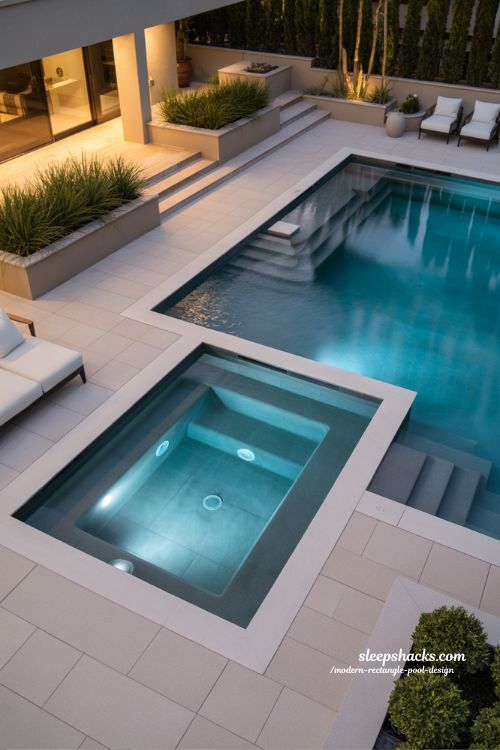
Combining a rectangle pool with an attached spa is one of the most popular upgrades for families who want both swimming and soaking in the same footprint. Spillover spas — where the hot tub water cascades down into the pool — add a beautiful waterfall feature and the visual connection between the two elements looks cohesive and planned.
A detached spa placed adjacent to the pool works well if you want to use both simultaneously (heated spa water doesn’t warm the pool when they’re separate). Either option adds significant value to the backyard and extends the usable season well into fall.
- Flush-edge spas that sit at deck level are more modern-looking than raised spa designs.
- LED lighting in both the pool and spa creates a coordinated night aesthetic.
- A shared pump and heater system is cost-effective but limits simultaneous independent temperature control.
14. Fiberglass Rectangle Pool for Lower Long-Term Maintenance
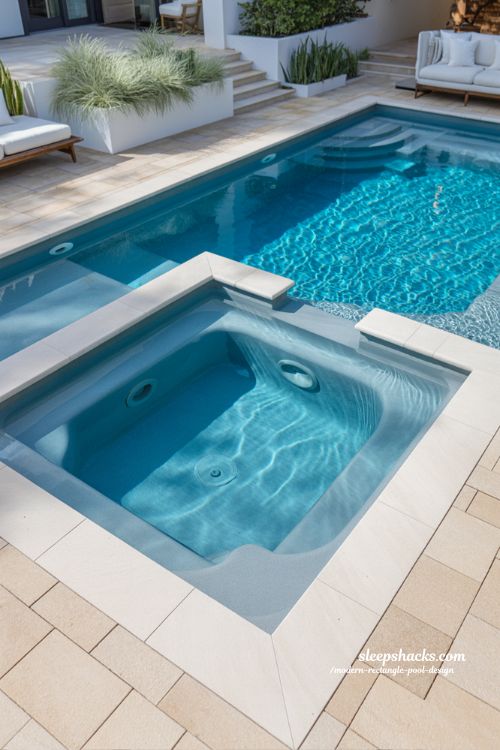
Fiberglass is gaining serious ground in the modern rectangle pool market. The non-porous surface resists algae growth, meaning you’ll spend less on chemicals and less time brushing. The smooth finish is gentler on feet and hands than plaster or rough concrete. And fiberglass pools are generally faster to install than gunite builds.
The main limitation is that fiberglass pools come in set mold sizes, so customization is more limited than vinyl or gunite builds. But if the size fits your yard, it’s a genuinely lower-hassle option over the long run.
- Fiberglass surfaces are compatible with saltwater systems without the corrosion concerns of concrete.
- White and light blue fiberglass finishes produce a classic tropical-water look.
- Ask your builder about the specific mold sizes available — not every custom dimension is possible.
15. Rectangle Pool With Geometric Landscaping
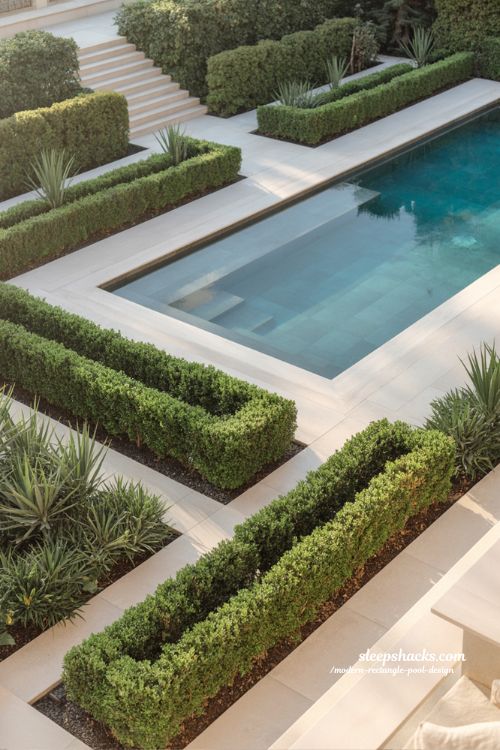
The straight lines of a rectangle pool are a natural partner for geometric landscaping — squared hedges, symmetrical planters, defined garden beds with clean edges. This approach makes the whole backyard feel intentional and cohesive, like the outdoor space was designed as a single composition rather than assembled piece by piece.
Ornamental grasses, boxwood hedges, and dark-mulched beds work beautifully alongside a modern rectangle pool. Tall screening plants along the fence line add privacy without blocking light.
- Repeat the pool’s rectangular geometry in the shape of garden beds and planting zones.
- Use odd numbers of plants in groupings — three or five feels more natural than four or six.
- Uplighting trees and feature plants at night connects the landscaping visually to the lit pool.
16. Rectangle Pool With Outdoor Kitchen and Covered Living Area
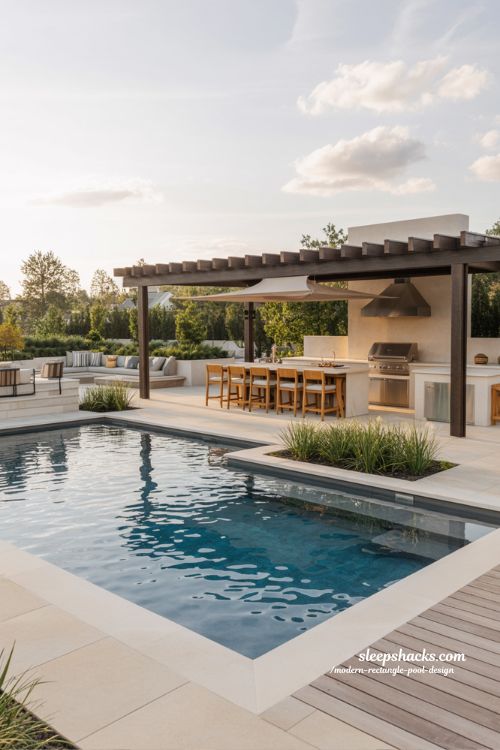
A pool without somewhere to gather around it is only half the picture. An outdoor kitchen — even a modest one with a built-in grill, countertop, and mini fridge — transforms a pool area into an actual entertaining destination. Pair it with a pergola or shade structure over part of the deck and you’ve got a backyard that genuinely competes with any restaurant patio.
The key to making this work is thinking about the layout early in the design process. The pool, kitchen, and covered area should flow together rather than feel like separate zones dropped into the yard at different times.
- Position the outdoor kitchen on the same side as the pool steps for easy flow from water to food.
- A retractable shade system over part of the deck keeps the pool itself sunny while giving guests a cool spot.
- Matching decking material between the pool surround and the kitchen area ties the whole space together visually.
17. Winter Safety Cover for Year-Round Peace of Mind
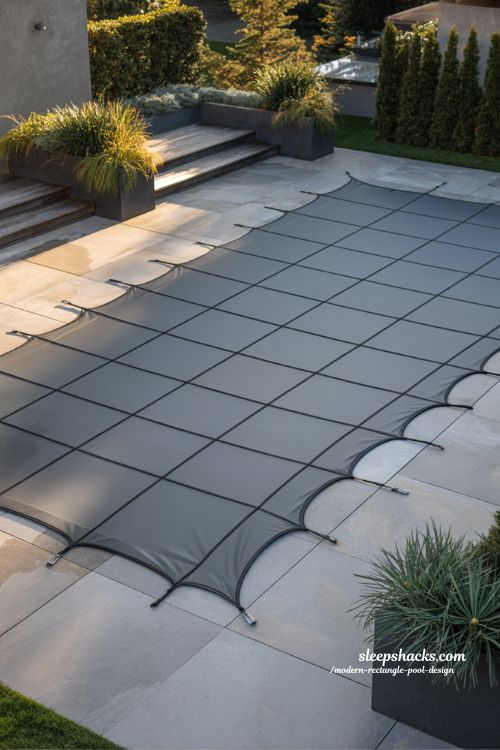
For anyone in a colder climate — where the pool closes for five or six months — a proper winter safety cover is worth every dollar. Trampoline-style mesh covers anchor into the deck around the pool perimeter and create a taut, load-bearing surface that keeps children and animals from falling in during the off-season. They’re far safer than traditional loose covers that can allow submersion even when technically “covered.”
A well-fitted winter cover also keeps the pool dramatically cleaner over winter, reducing opening costs in spring and protecting the liner from debris damage.
- Mesh covers allow rainwater through while keeping leaves out — no pump-off required in spring.
- Solid covers keep more heat in but require a submersible pump to remove standing water.
- Anchor point placement should be discussed with your builder during the design phase.
Quick Comparison: Which Modern Rectangle Pool Feature Is Right for You?
| Feature | Best For | Budget Signal | Complexity |
|---|---|---|---|
| Vinyl-covered steps | All pools | Low add-on cost | Simple |
| Resort-depth shallow end | Lap swimmers, adults | Mid-range | Moderate |
| Tanning ledge | Families, loungers | Mid-range | Moderate |
| Automatic pool cover | Safety-focused, low maintenance | High | High |
| Smart automation | Tech lovers, convenience | Mid-to-high | Moderate |
| Dark liner | Modern aesthetics | Low add-on cost | Simple |
| Integrated spa | Year-round use | High | High |
| Deck jets / waterfalls | Entertaining, ambiance | Low-to-mid | Low |
| Geometric landscaping | Design cohesion | Varies | Low |
FAQ
What Is the Most Popular Modern Rectangle Pool Size?
Sizes like 16×32 and 18×36 are consistently among the top choices for average family backyards — they offer enough swim length to be genuinely useful while fitting comfortably in most standard lots with required setbacks. Smaller 12×24 pools work well for compact urban yards, while custom lengths up to 14×52 suit long, narrow properties.
What Makes a Rectangle Pool “Modern” vs. Traditional?
The defining characteristic is the square 90-degree corner rather than a rounded edge. True modern rectangle pools also typically feature vinyl-covered steps (where the liner wraps over the step with no visible plastic), clean geometric coping, and minimal decorative detail. The aesthetic is architectural rather than decorative.
How Deep Should the Shallow End of a Modern Rectangle Pool Be?
Standard construction uses 42-inch wall panels, giving about 3 feet of water in the shallow end — which is ideal for young children learning to swim. Resort-depth upgrades to 48, 54, or 60 inches give 4–5 feet of depth, which is more comfortable for adults and lap swimmers. Your builder can customize the wall panel height in most vinyl liner pools.
Can I Add a Tanning Ledge to Any Rectangle Pool Size?
Yes, tanning ledges can be incorporated into most modern rectangle pool designs. Smaller pools (12×24) can include a partial ledge or combo step-and-ledge, while larger pools (16×34 and up) can accommodate a full 8×6-foot or even 10×14-foot ledge. The ledge is designed within the pool’s footprint rather than adding to its overall size.
What Is the Best Way to Heat a Modern Rectangle Pool?
Natural gas heaters heat water the fastest — useful for pools that aren’t used daily. Heat pumps are more energy-efficient for pools used regularly throughout the season, since they extract heat from the air rather than burning fuel. Many homeowners combine a solar blanket (to retain heat overnight) with one of these active heating systems for the best balance of cost and performance.
How Long Does a Modern Rectangle Pool Last?
A well-built vinyl liner rectangle pool typically has a liner life of 10–15 years before replacement is needed. The steel wall structure and equipment can last 25–30 years with proper care. Fiberglass models have similarly long structural lifespans with minimal surface maintenance. Regular chemistry balance is the single biggest factor in long-term pool health.
Is a Modern Rectangle Pool Design Good for Small Backyards?
Absolutely. Because of the predictable geometry, rectangle pools can be sized and positioned very precisely within a yard, making them easier to fit into tight spaces than freeform or irregular shapes. A 12×24 modern rectangle pool with smart step placement and a compact equipment pad can work in backyards where other pool shapes simply won’t fit.