

I’ve spent countless weekends tinkering with little herb gardens, and honestly, there’s something so comforting about seeing tiny green shoots thrive under your care. Whether you’ve got a sprawling backyard or just a sunny kitchen windowsill, creating your own herb garden can transform the way you cook, decorate, and even relax at home.
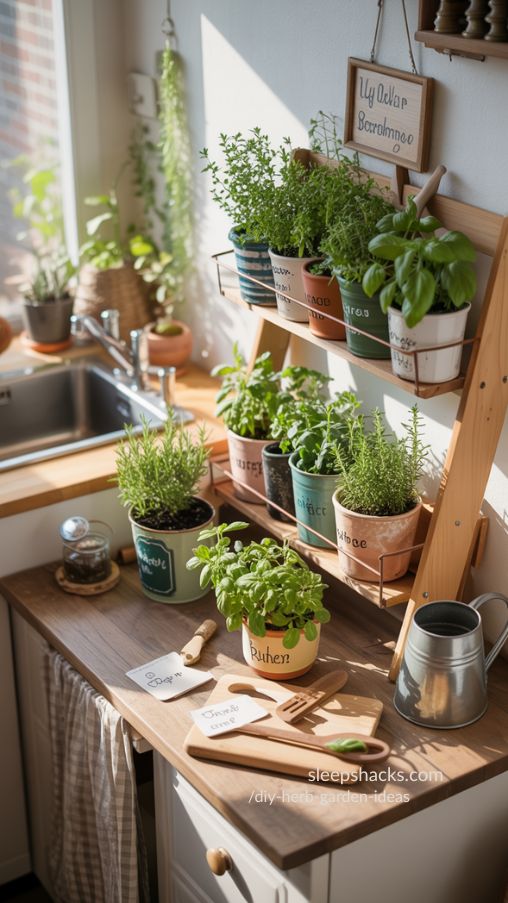
There’s a rhythm to planting, watering, and watching herbs grow that makes everything feel slower and sweeter. I’ve tried a few setups myself, and over time I’ve learned which ideas not only look beautiful but actually make life in the kitchen easier and more joyful.
- Herbs thrive with sunlight and good drainage.
- Vertical setups save space in small areas.
- Reusing containers adds personality and charm.
1. Vertical Pallet Herb Wall
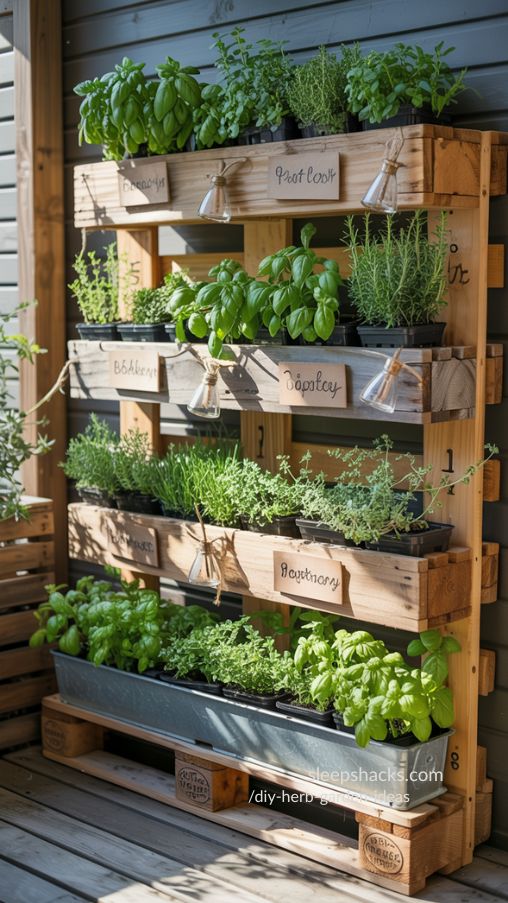
If you’ve ever passed a wooden pallet at a yard sale and thought it was just scrap, think again. Turning one into a vertical herb garden is surprisingly easy and has such a satisfying “wow” factor. I love how it brings a rustic touch to a patio while giving me easy access to fresh basil and thyme. Filling each tier with soil and herbs feels like layering little pockets of life.
The beauty of this approach is that it’s almost like having a living art piece. You can paint it, add tiny labels, or even weave some twine lights around it for a soft evening glow. It’s perfect if you want something functional but with a warm, inviting aesthetic.
- Keep heavier soil and pots at the bottom for stability.
- Use a drip tray or waterproof liner to protect your wall.
- Rotate herbs seasonally for continuous growth.
2. Mason Jar Windowsill Herb Garden
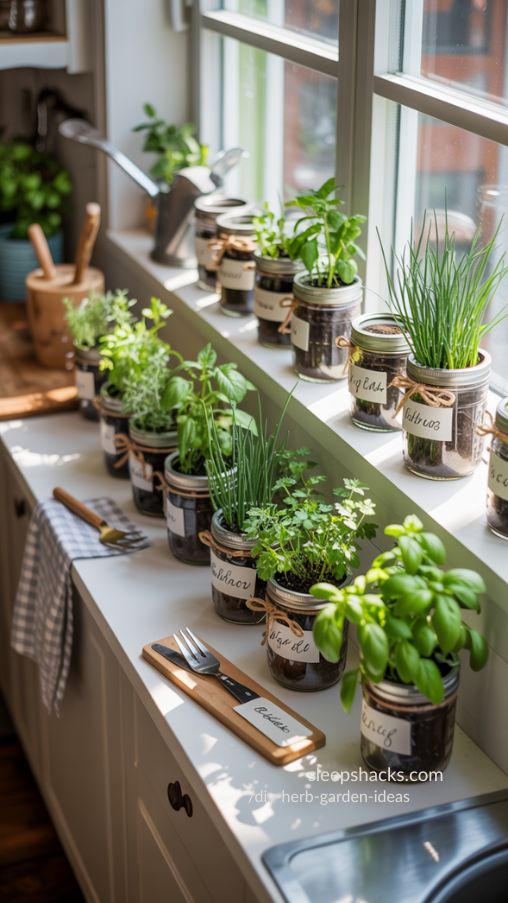
I’ll admit, I used to underestimate mason jars for growing herbs. Now, they’re my go-to solution for a sunny windowsill. Simply fill each jar with soil, plant your favorite herbs, and line them up where morning sun streams in. The simple glass jars let you see roots and soil moisture, which makes it easy to know when to water.
The charm comes from the small details. I like tying little twine bows around the jars and adding handwritten labels—it feels cozy and personal. Even in a tiny kitchen, these jars make it possible to have fresh herbs at arm’s reach for every meal.
- Choose herbs that grow well in pots, like chives or parsley.
- Drill drainage holes or layer pebbles at the bottom.
- Wipe leaves occasionally to keep plants healthy.
3. Hanging Gutter Herb Planter
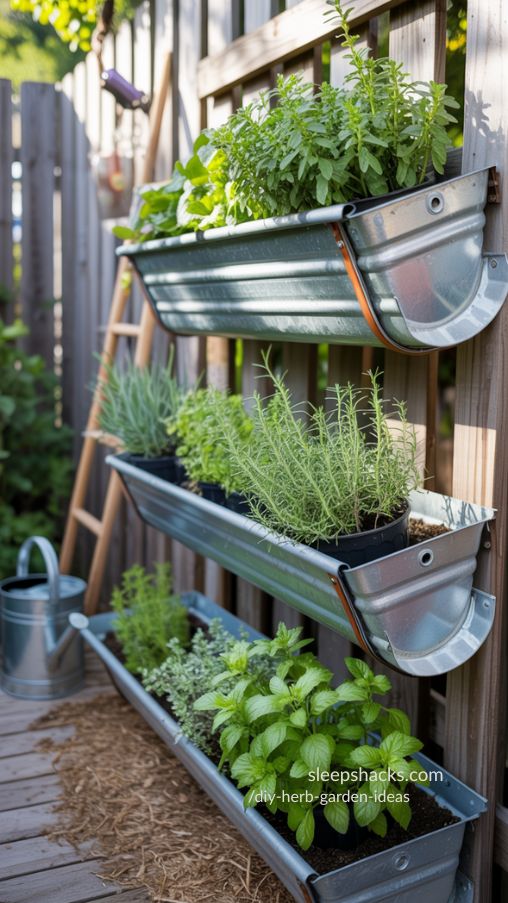
Old gutters can feel like trash until you imagine them as long, sleek containers for your favorite herbs. Hanging a gutter along a fence or wall turns vertical space into a tiny, productive garden. I tried this with mint, rosemary, and oregano, and it felt like having a miniature herb farm right in my backyard.
What I love is the layering effect—you can plant cascading herbs in the top gutter and sturdier ones below. It’s practical, but it also adds a playful visual rhythm to the yard. You’ll be surprised how a simple repurposed item can suddenly feel like a designer feature.
- Secure gutters properly with brackets to avoid tipping.
- Space plants evenly for proper airflow.
- Add lightweight mulch to retain moisture.
4. Spiral Stone Herb Garden
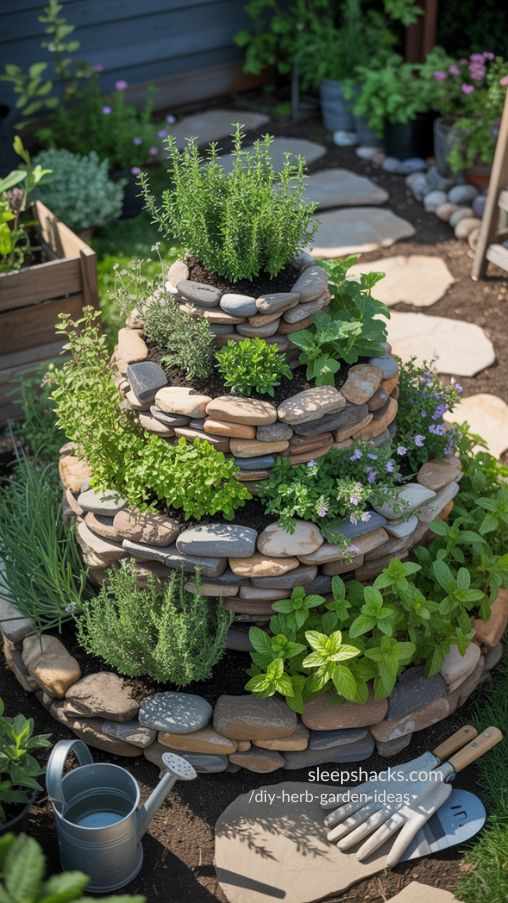
There’s something magical about a spiral herb garden. I built one with stacked stones in my backyard, and it’s a joy to walk around, smelling different herbs at every turn. The design naturally creates microclimates—sun-loving plants at the top, moisture-loving herbs at the bottom—which helps everything thrive together.
It’s also sculptural, making the garden a focal point. I like planting contrasting textures and colors so each spiral layer pops. Friends often comment that it feels like stepping into a tiny herb labyrinth. It’s creative, functional, and a quiet joy every time I tend to it.
- Place in a sunny spot with some afternoon shade.
- Water carefully to avoid soil washing down.
- Mix herbs with different growth rates to balance the spiral.
5. Tiered Wooden Herb Planters
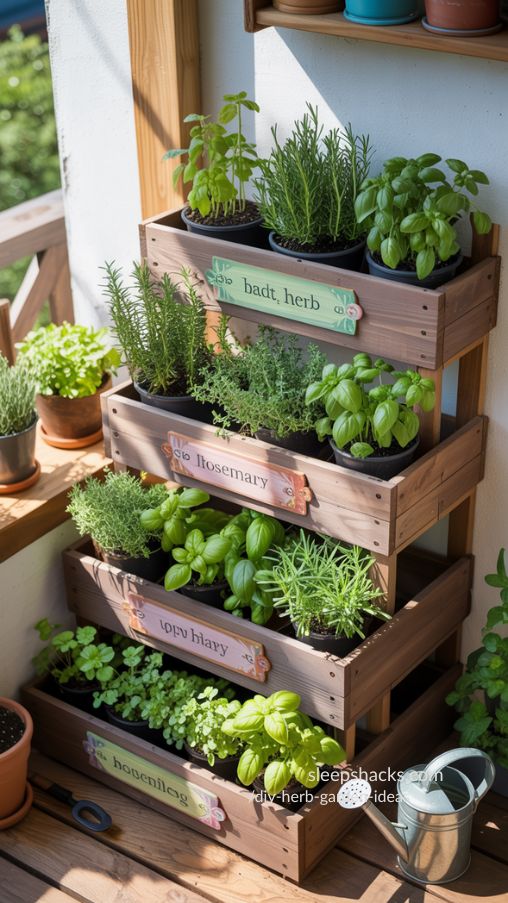
Tiered planters are a small-space gardener’s dream. I made one from scrap wood, and suddenly I had room for 10 different herbs without crowding anything. Each level is like a little stage, showcasing textures and scents. It’s simple but visually dynamic, perfect if you enjoy a layered look in your garden.
I find myself reaching for herbs more often now because they’re all in one compact space. A few colorful labels or painted accents can turn it into a cheerful statement piece for a balcony or kitchen corner.
- Use rot-resistant wood for longevity.
- Layer with lightweight potting soil for easier watering.
- Adjust levels to ensure all herbs get enough light.
6. Indoor Hanging Herb Garden
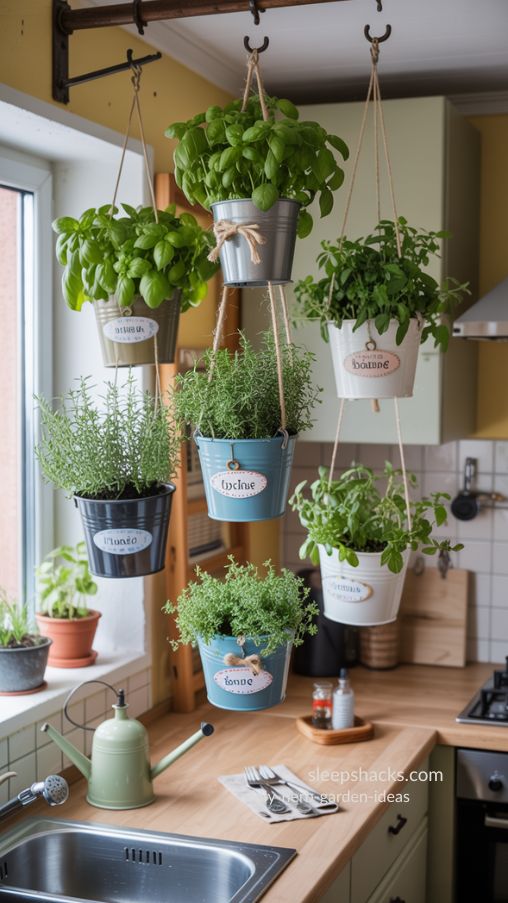
Hanging herb gardens are magic for small apartments. I strung small pots from hooks in my kitchen, and suddenly it felt like I had a vertical forest of basil and thyme overhead. It saves countertop space and keeps herbs within arm’s reach while cooking.
It also creates movement and dimension in a room. I often hang tiny decorative charms or painted labels to personalize each pot. There’s a whimsical, almost floating quality that makes tending the herbs a playful daily ritual.
- Choose trailing or compact herbs to prevent overcrowding.
- Use lightweight containers for safety.
- Mist leaves occasionally to maintain freshness.
7. Window Sill Recycled Can Herb Garden
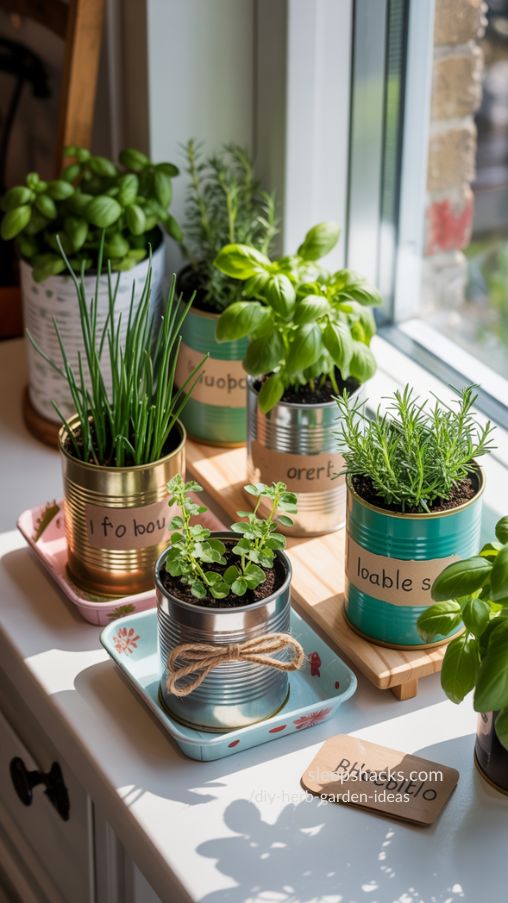
I can’t get enough of upcycling old cans for herb gardens. Tin cans make adorable mini-planters for chives, basil, and parsley, especially on a kitchen windowsill. They’re eco-friendly, cheap, and add a fun, mismatched charm that feels lived-in.
I usually paint the cans or add little labels for clarity, which instantly makes the space feel curated. It’s an effortless way to grow herbs in a tiny space, and it always sparks conversation when guests notice the playful setup.
- Use pots with drainage or layer small stones at the bottom.
- Rotate regularly for even sunlight.
- Combine with small decorative trays to catch water.
8. Ladder Herb Garden
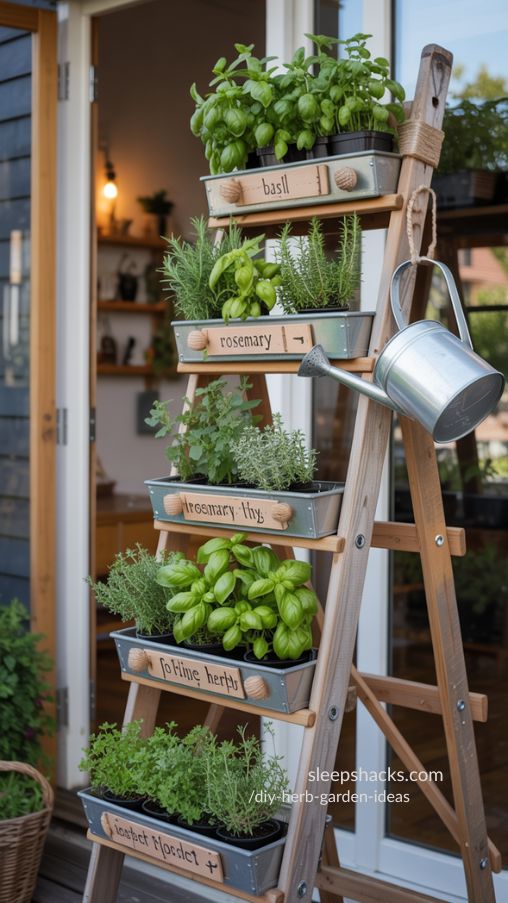
Repurposing a ladder as a multi-tiered herb garden is one of my favorite tricks. Leaning an old wooden ladder against a wall creates instant vertical space, with each rung holding a different herb. It’s a blend of rustic charm and practicality.
I like how it adds height to a garden without taking up footprint. Hanging a small watering can or twine around the rungs gives it character. It’s playful, functional, and always a conversation starter when friends come over.
- Stabilize the ladder securely to prevent tipping.
- Line shelves or rungs with trays to catch water.
- Alternate herbs by size to balance visual weight.
9. DIY Wall-Mounted Herb Planters
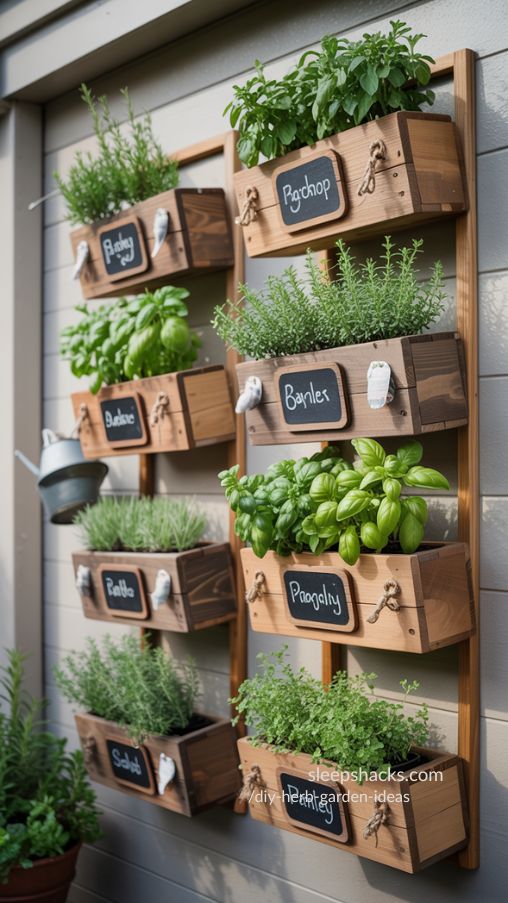
Wall-mounted planters are a favorite for kitchens and patios. I used small wooden boxes attached to a wall, and now herbs like oregano and basil are right where I need them. It saves floor space while creating a living wall of greenery.
The beauty is in the details. Adding small labels or chalkboard signs makes it feel like an art installation. It’s one of those setups where style meets function seamlessly, and I honestly reach for herbs more often because they’re always in sight.
- Secure mounts to studs for stability.
- Choose shallow-rooted herbs for small boxes.
- Group herbs with similar watering needs together.
10. Coffee Table Herb Garden
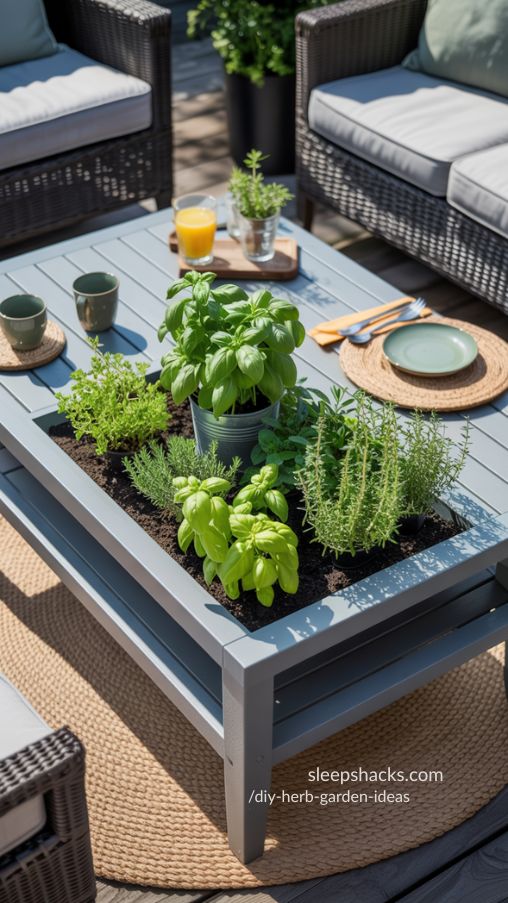
I once built a coffee table with a built-in herb planter, and it completely changed my patio dining experience. I could pick fresh basil while sitting down for brunch, without ever leaving my seat. It adds a tactile, sensory element to meals.
The table becomes a functional centerpiece and a conversation starter. Mixing textures and plant heights gives it a dynamic look. It’s a perfect example of how even furniture can be functional, beautiful, and full of life.
- Use waterproof liners to protect the table.
- Position herbs with sunlight in mind.
- Keep the planter shallow to prevent tipping.
11. DIY Crate Herb Planters
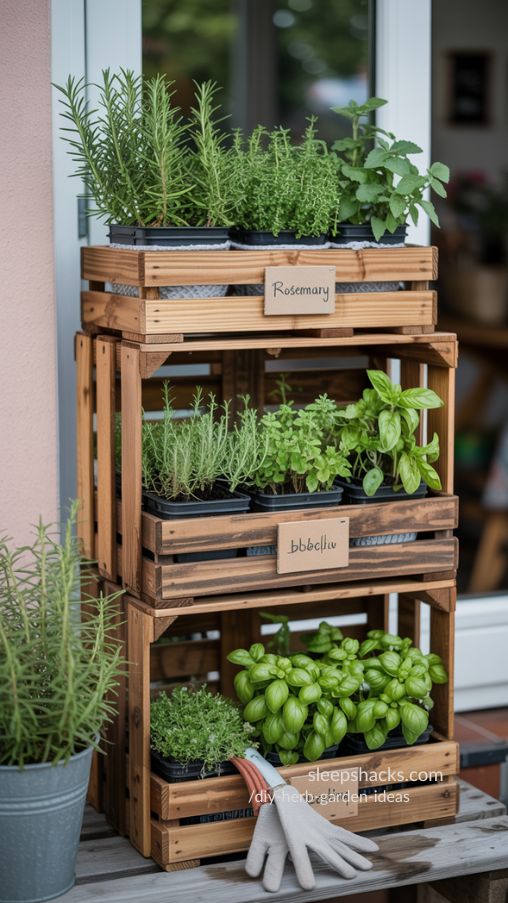
Old crates are simple, portable, and perfect for herbs. I stacked a few and planted everything from rosemary to mint. It’s easy to move the crates around depending on sunlight or weather, which makes it incredibly flexible.
Painting or staining crates instantly elevates them. They feel rustic, warm, and approachable, giving the garden a cozy, lived-in charm. It’s one of those ideas that looks intentional but is super forgiving if things grow unevenly.
- Line crates with fabric to prevent soil loss.
- Space plants to avoid overcrowding.
- Group crates by watering frequency.
12. Recycled Plastic Bottle Herb Garden
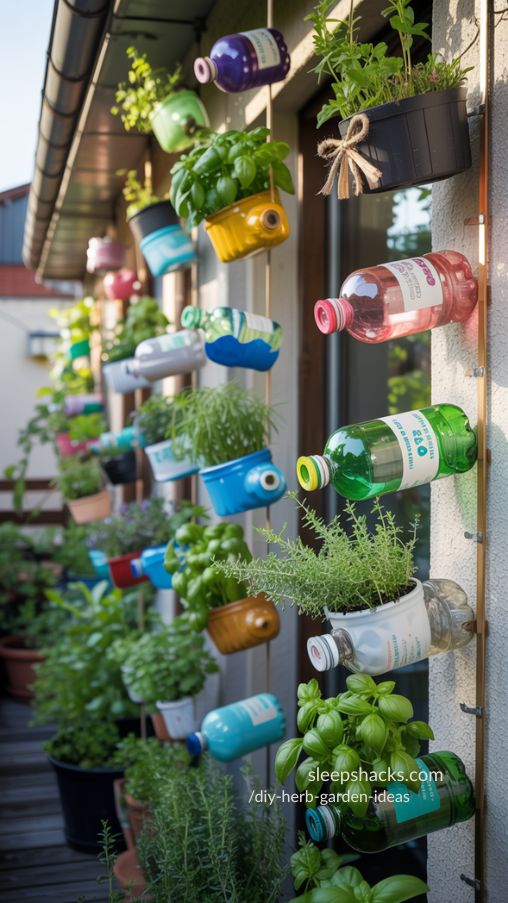
Plastic bottles don’t have to be trash. I cut, painted, and turned them into vertical planters for small herbs. Hanging them along a balcony rail creates a cascading wall of green that’s surprisingly beautiful.
It’s a fun craft project that doubles as gardening. Kids love helping with this one, and it teaches sustainable practices while growing food. A few decorative labels and creative placement make it visually appealing and functional.
- Ensure drainage holes are punched properly.
- Hang at varying heights for visual interest.
- Mix trailing and upright herbs for dimension.
13. Vertical Pallet Herb Garden for Small Spaces
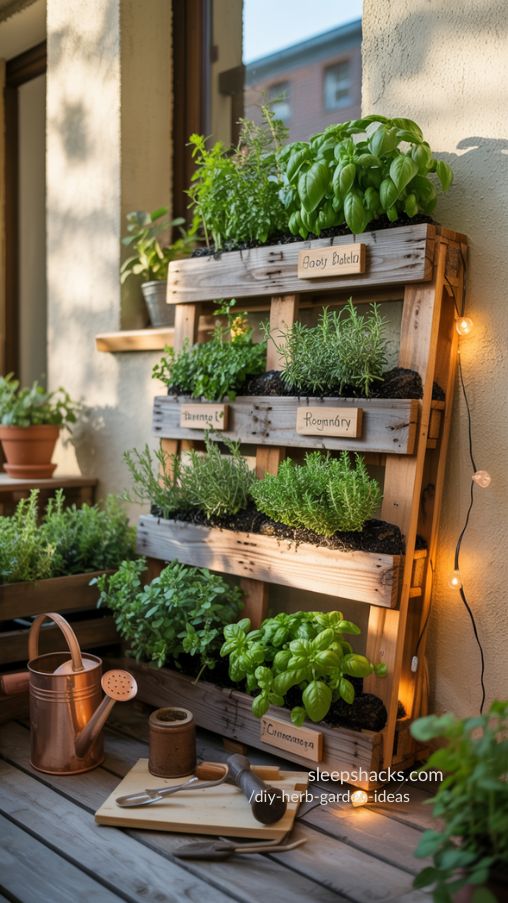
This is a slightly different take on pallet gardens. I lean a pallet vertically against a balcony wall, filling pockets with a mix of herbs. It’s efficient, practical, and surprisingly stylish.
The arrangement lets herbs cascade naturally, adding softness to the rustic wood. I often pair it with small string lights to highlight it in the evening. It’s one of those setups that makes small spaces feel lush and intentional.
- Rotate herbs periodically for even growth.
- Water carefully to prevent runoff.
- Add mulch to retain moisture.
Best String Lights for Bedroom: Illuminate Your Space with Style
14. Hanging Kitchen Herb Garden
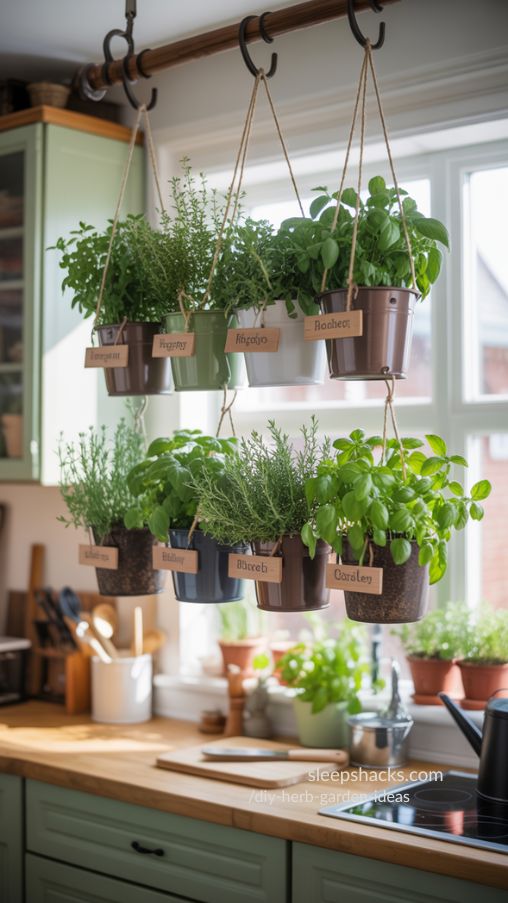
Suspending herbs over a kitchen prep station is one of those subtle life upgrades. I love reaching up and snipping fresh oregano or thyme while cooking. It’s practical and adds greenery without taking counter space.
The suspended design makes herbs feel like a living mobile. I’ve added lightweight pots and little wooden tags to keep it organized. This method works especially well in small kitchens where every inch counts.
- Use sturdy hooks rated for weight.
- Opt for herbs that tolerate indoor conditions.
- Mist occasionally to maintain humidity.
15. Old Wagon Wheel Herb Garden
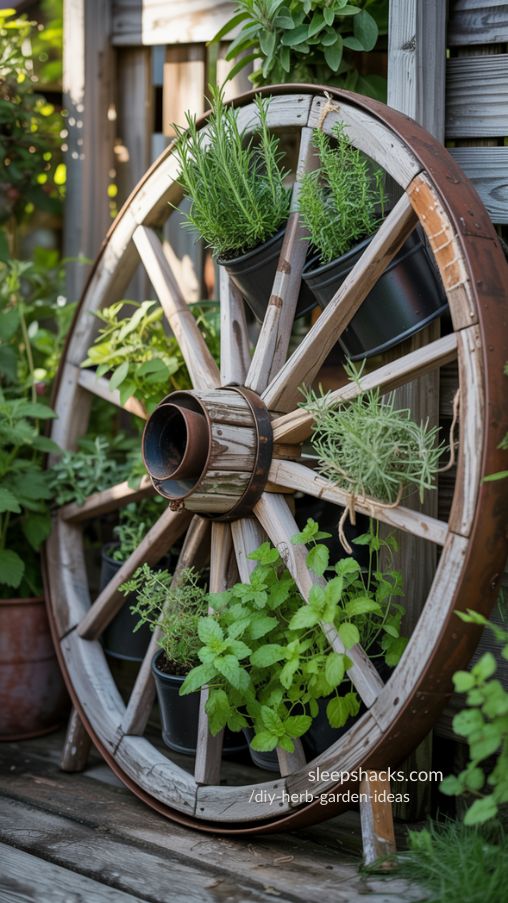
Repurposing a wagon wheel is a fun, unexpected way to display herbs. I used one in my backyard, filling spaces with thyme, sage, and rosemary. It immediately added a rustic focal point.
The circular design is playful, and it encourages mixing trailing herbs with upright ones. A bit of paint or weathering adds character. It’s a creative idea that looks far more intentional than it actually is.
- Anchor the wheel securely to prevent tipping.
- Mix fast- and slow-growing herbs for balance.
- Rotate seasonally for variety.
16. DIY Wall Planter Box
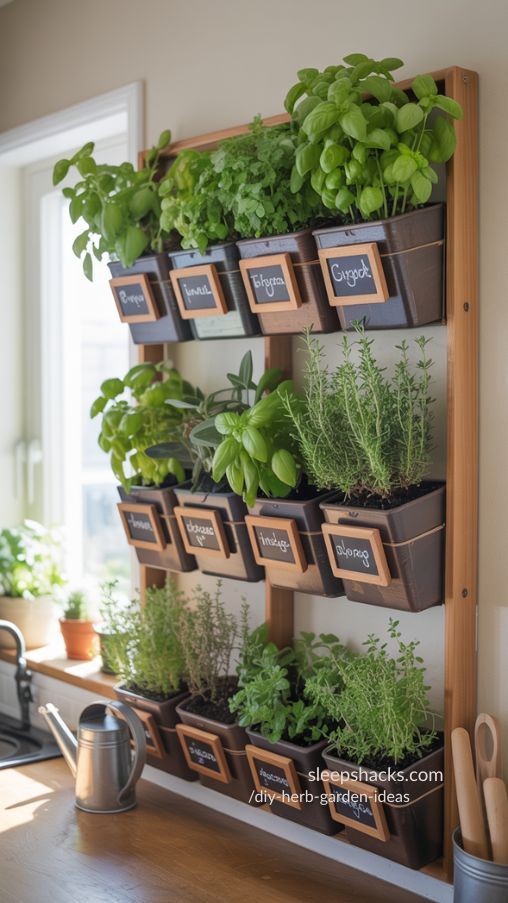
Wall planter boxes can turn a bland wall into a mini herb sanctuary. I built one in my kitchen, and it’s amazing how often I reach for fresh herbs now. Each compartment holds a different variety, making organization effortless.
The setup keeps herbs close, tidy, and attractive. A simple wooden frame with small dividers adds charm. Adding small chalkboard labels instantly makes it look curated and intentional.
- Choose herbs with similar watering needs.
- Install near sunlight for best results.
- Use a liner to avoid leaks.
17. Recycled Can Herb Tower
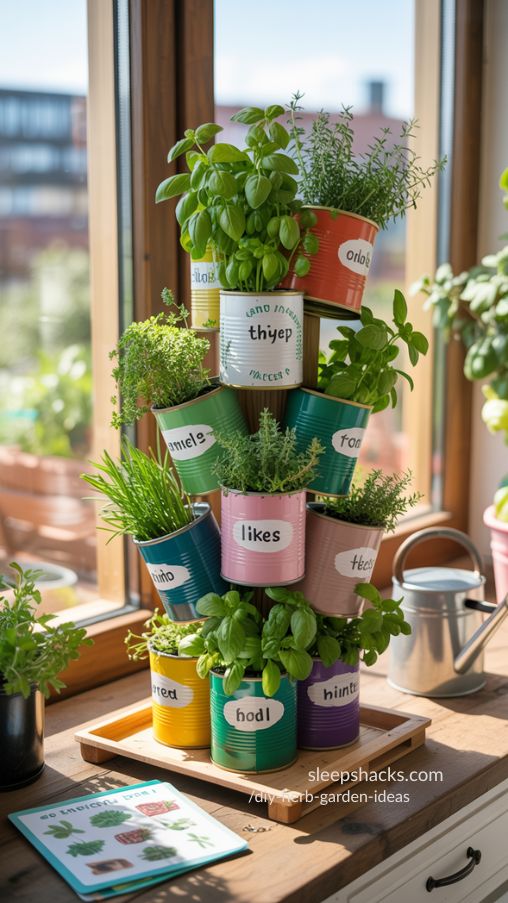
Stacking recycled cans into a vertical herb tower is surprisingly effective. I secured them together and planted small herbs in each layer. It’s playful, creative, and perfect for balconies or small patios.
The tower keeps herbs accessible and creates a fun visual impact. Adding labels or painting the cans gives a personal touch. It’s budget-friendly, eco-conscious, and brings a bit of whimsy to daily cooking routines.
- Stack securely to prevent tipping.
- Water carefully to avoid overflow.
- Mix herb sizes for visual interest.
Table 1: Best Herbs for Small Indoor Spaces
| Herb | Light Needed | Watering Frequency | Ideal Container Size |
| Basil | 6-8 hours | Moderate | 6-8 inch pot |
| Parsley | 4-6 hours | Moderate | 5-6 inch pot |
| Thyme | 6 hours | Low | 4-5 inch pot |
| Chives | 4-6 hours | Moderate | 5-6 inch pot |
| Mint | 4-6 hours | High | 6-8 inch pot |
This table helps you pick herbs suited for tight indoor spaces. I like keeping it by my window for quick reference, especially when I’m juggling multiple small planters in a compact kitchen.
Table 2: Materials for Creative DIY Herb Gardens
| DIY Idea | Materials Needed | Notes |
| Vertical Pallet Wall | Wooden pallet, soil, pots, labels | Ensure wall stability |
| Mason Jar Windowsill | Mason jars, potting soil, herbs | Add drainage pebbles |
| Ladder Herb Garden | Old ladder, small pots, soil | Stabilize ladder |
| Plastic Bottle Vertical Garden | Plastic bottles, hooks, soil, paint | Punch drainage holes |
| Coffee Table Herb Garden | Table, planter box, soil, herbs | Waterproof liner recommended |
This table summarizes the materials for easy shopping or DIY prep. It’s handy when planning multiple setups and keeps everything organized.
Frequently Asked Questions
What herbs grow best indoors?
Basil, parsley, chives, thyme, and mint are excellent for indoor spaces with moderate sunlight.
Do I need special soil for herbs?
Regular potting soil works fine, but well-draining soil with organic compost keeps herbs healthy.
Can I grow herbs in small containers?
Absolutely. Small pots, jars, or recycled containers work as long as they have drainage and enough sunlight.
How often should I water indoor herbs?
Check soil moisture; most indoor herbs prefer moderate watering once the top inch of soil is dry.
Can vertical setups really save space?
Yes. Vertical gardens, ladder racks, and wall-mounted planters make the most of limited areas while keeping herbs accessible and organized.