

There’s a moment, usually in July, when you’re standing in your backyard sweating and thinking — I really should have done this already. If a pool has been on your mind for a while, fiberglass might be the smartest move you haven’t made yet.

It’s faster to install than concrete, lower maintenance long-term, and the designs have come a long way. Whether you have a sloped lot, a tiny yard, or a sprawling suburban backyard, there’s a fiberglass pool idea here that’ll fit your space — and your life.
- Fiberglass pools install faster and cost less to maintain than gunite or concrete pools in most regions.
- Modern fiberglass models include built-in spas, tanning ledges, auto cover compatibility, and swim lanes.
- Saltwater systems pair especially well with fiberglass shells — and many experienced pool owners say it’s non-negotiable.
Why Fiberglass Pools Have Gotten So Good
A decade ago, fiberglass pools had a reputation for limited shapes and sizes. That’s genuinely changed. Manufacturers like Latham now offer over 80 distinct models — rectangles, freeform designs, plunge pools, and full spa-combo shells. You can get a 14-foot plunge pool for a compact courtyard or a 40-foot lap-style pool with a built-in tanning ledge. The engineering has caught up with the aspiration.
There are real trade-offs worth knowing. Fiberglass comes in fixed mold sizes, so you can’t go fully custom the way you can with gunite. And in regions where gunite is more common (like Florida), you might find more specialist contractors. But for most US homeowners in zones 5–7, fiberglass offers the best combination of cost, speed, and low-maintenance living.
| Pool Type | Install Time | Average Cost | Maintenance Level | Custom Shape |
|---|---|---|---|---|
| Fiberglass | 1–3 weeks | $50k–$150k+ | Low | Limited to molds |
| Gunite/Concrete | 3–6 months | $80k–$300k+ | High | Fully custom |
| Vinyl Liner | 2–4 weeks | $35k–$80k | Medium | Some flexibility |
17 Fiberglass Pool Ideas Worth Saving
1. The Classic Rectangle With a Tanning Ledge
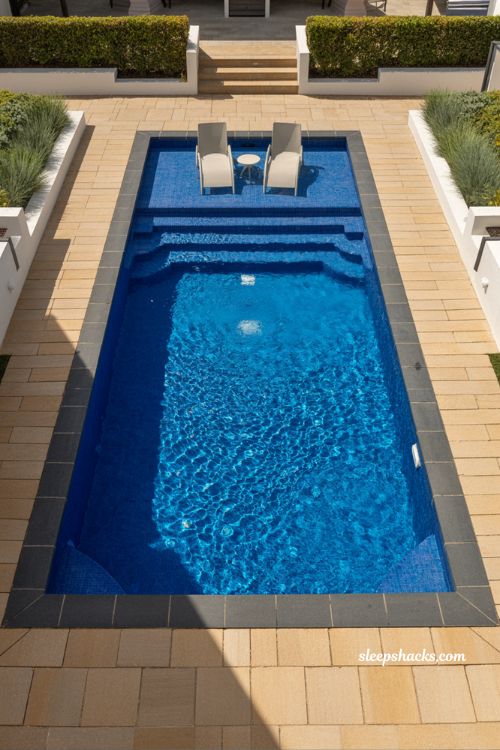
The rectangle pool never goes out of style — and when you add a tanning ledge, it becomes a whole experience. A tanning ledge (also called a baja shelf or sun shelf) sits in just 6–12 inches of water, perfect for lounge chairs, toddlers splashing around, or just cooling off without actually swimming. Latham’s Classic Collection and Corinthian Collection both come with this feature built in, so you’re not adding it as an afterthought.
The visual payoff is real. A clean rectangle with a defined shelf creates that resort-style look that photographs beautifully and feels even better in person. Pair it with pavers and simple landscaping, and you’ve got a backyard that looks like it belongs in a magazine.
- Choose a darker shell color — charcoal, cobalt, or deep blue — to make the water look richer and more luxurious.
- Frame the tanning ledge with two matching umbrella anchors so you actually use it on hot days.
- Keep the surrounding deck simple — tanning ledges are the feature, not the deck.
2. A Built-In Spa Combo for Year-Round Use

If you live somewhere with real winters (zones 5–7), a pool-spa combo changes the math entirely. You’re not just buying a summer pool — you’re buying a year-round backyard retreat. Models like the Astoria Collection and Bermuda Collection from Latham feature a built-in spa integrated directly into the fiberglass shell. No separate pour, no separate system — the spa and pool come as one connected unit.
Heating a separate spa is much faster and cheaper than heating a full pool, so you can have hot water ready in under an hour. In cooler months, the pool sits covered and clean while the spa keeps the backyard in rotation.
- Make sure your contractor configures the plumbing for separate spa and pool temperature control.
- Look for models that are auto cover ready — covers dramatically reduce heating costs for both the pool and spa.
- A variable speed pump is essential here; running two bodies of water on a single-speed pump gets expensive fast.
3. The Plunge Pool for Small Backyards

Not every yard has room for a full pool — and honestly, not every lifestyle needs one. A plunge pool gives you the cold-dip therapy, the entertaining focal point, and the backyard wow factor in a fraction of the footprint. Latham’s Plunge Pool Collection and Enchantment Collection are designed specifically for this, with compact depths and widths that work in tight spaces.
These are especially popular in urban backyards, narrow lots, and properties where a standard pool would eat up all your outdoor living space. A plunge pool with a small patio surround and some strategic landscaping can look just as impressive as a much larger installation.
- Depths of 4.5–5 feet work well for plunge pools — deep enough to feel immersive, shallow enough to be safe for casual use.
- Saltwater systems pair especially well with plunge pools since the smaller volume is easier to maintain.
- Lighting transforms a plunge pool at night — underwater LEDs in a small space feel dramatic and sophisticated.
4. Freeform Pool With a Natural Lagoon Feel
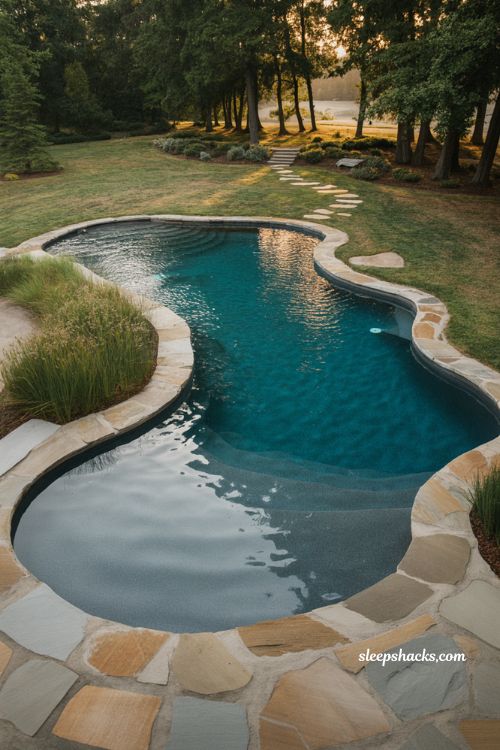
If a straight rectangle feels too formal for your backyard vision, a freeform fiberglass pool is the answer. Freeform shapes have gentle organic curves that mimic natural ponds or lagoons — they blend into landscaping instead of competing with it. Models like Bay Isle and Vista Isle from Latham are designed with this aesthetic in mind.
This style works especially well on larger lots with mature trees, slopes, or irregular yard shapes. The pool follows the space rather than demanding the space conform to it. It’s the right choice if you want your backyard to feel like a natural escape rather than an engineered installation.
- Surround freeform pools with native plantings and natural stone for a cohesive, organic look.
- Dark shell colors work beautifully here — they reinforce the “natural water” visual.
- Avoid too much formal concrete decking around a freeform pool; it fights the aesthetic.
5. Auto Cover Pool for Easy Maintenance and Safety
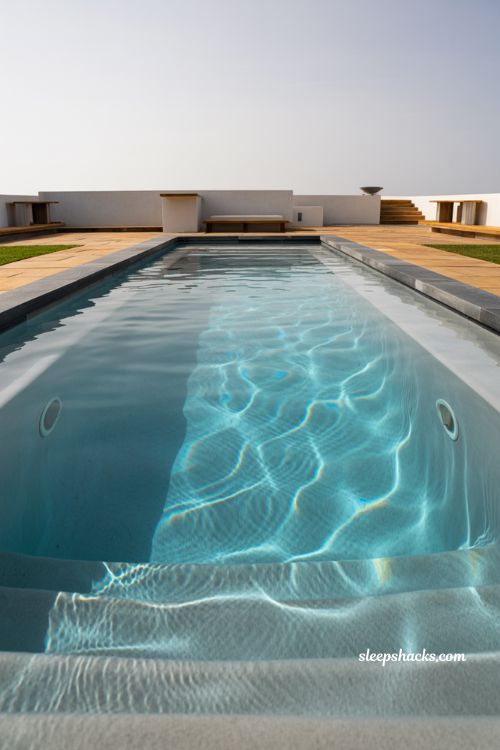
An auto cover is one of those features that seems optional until you have it — and then you’ll never want a pool without one. A motorized auto cover keeps debris out, significantly reduces chemical consumption, retains heat overnight, and dramatically increases safety if you have kids or pets. Many Latham models — including the Barcelona, Classic Collection, and Olympia Collection — are specifically designed to be auto cover compatible.
The investment pays off faster than most people expect. Covered pools stay cleaner, require less chemical treatment, and heat more efficiently. Real-world pool owners consistently report that the auto cover reduced their weekly maintenance time substantially.
- Budget roughly $18,000–$23,000 for a quality Cover Star auto cover on a standard-length pool — it’s worth pricing this in upfront rather than as an add-on.
- Make sure your pool shape qualifies for auto cover installation before selecting your model.
- Get a saltwater system with your auto cover — the two together make for remarkably low-effort ownership.
6. Saltwater Fiberglass Pool With Low-Maintenance Chemistry
If you’ve ever dealt with the red eyes, rough skin, and strong chemical smell of a traditional chlorine pool, saltwater feels like a revelation. Saltwater pools still use chlorine — the system generates it from salt automatically — but at much gentler concentrations. The water feels softer, smells cleaner, and is easier on skin and swimwear.
Experienced pool owners are emphatic about this: do salt. And size your salt chlorine generator for at least twice your pool’s volume. The ratings manufacturers use are aggressive — a generator rated for 25,000 gallons will struggle with a 25,000-gallon pool in a hot summer. Oversizing the unit keeps your water balanced without constant intervention.
- Have your builder or a pool professional confirm the generator sizing before installation — this is where a lot of first-time owners get under-served.
- Keep a test kit (like the Taylor K-2006) on hand; test strips are notoriously inaccurate for salt pools.
- Pair with a variable speed pump to manage running costs — salt systems run best with consistent, low-speed circulation.
7. Rectangle Pool With Swim Lane for Exercise

Some people want a pool for relaxing. Others want it for actual swimming. If you’re in the second group, a swim lane configuration changes everything. Latham’s Cape Cod Collection and Synergy Collection are specifically designed with swim lanes — longer, narrower proportions that support real lap swimming without needing an Olympic-length installation.
A swim lane pool is also surprisingly versatile. One end can still have seating or a ledge for non-swimmers while one end stays clear for laps. You get a functional fitness tool that doesn’t sacrifice the backyard’s visual appeal.
- Pair a swim lane pool with a swim jet system if full laps aren’t practical — you can swim in place against a current.
- Darker, cleaner shell colors work best in swim lane pools — they emphasize the length and depth.
- Position the pool parallel to your longest fence line to maximize the visual length.
8. Pool With Upgraded Coping for a Polished Finish
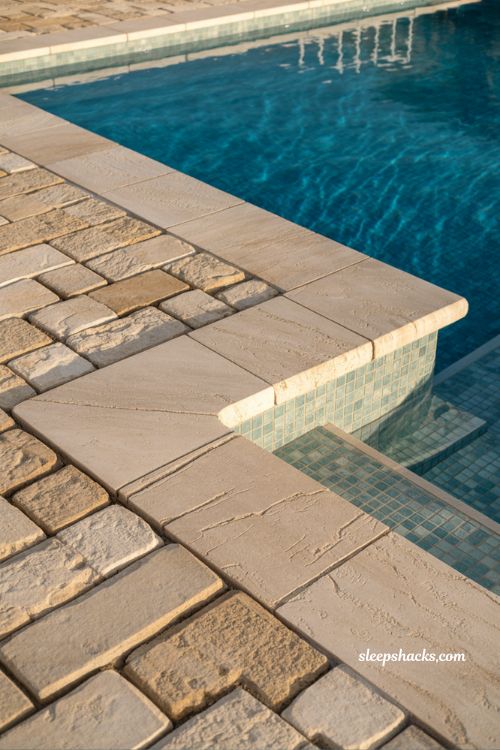
The coping — the material that edges the pool and forms the transition to the deck — is one of those details that most people don’t think about until they’re standing at the edge of their friend’s pool with scraped-up feet. Bullnose concrete coping is standard and functional, but it’s rough. Upgraded coping in Belgard pavers, natural stone, or travertine transforms the look and feel of the whole installation.
Belgard’s Laguna Coping is a popular choice that comes in at roughly $10,000 for a standard pool perimeter — a meaningful upgrade but one that delivers daily comfort and a finished aesthetic that makes the whole project feel intentional rather than builder-grade.
- Smooth coping materials like travertine are particularly good if you have kids or dogs who run along the pool edge.
- Match your coping material to your decking for a unified, high-end look.
- Ask your contractor about coordinating paver brands — Belgard offers matched coping and decking products that create a seamless finish.
9. Fiberglass Pool on a Sloped Lot With Retaining Wall
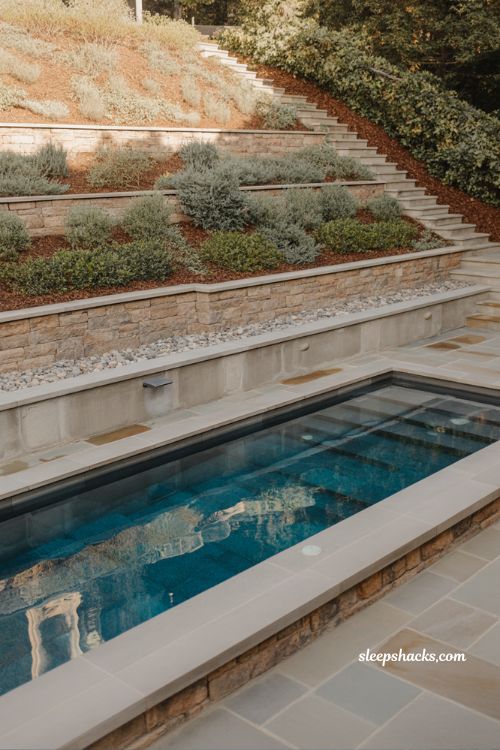
A sloped backyard doesn’t mean no pool — it just means a more considered installation. Plenty of homeowners build beautiful fiberglass pools on significant grades, usually incorporating a retaining wall that serves both structural and aesthetic purposes. If your retaining wall faces the woods or a fence line, it doesn’t need to be decorative. But if it’s facing a patio or seating area, simple stone block or poured concrete with a cap can look intentional and clean.
Get at least three contractor quotes if your lot is sloped. Some will require a structural engineer for walls above a certain height — one source recommends engineering for anything over 4 feet — and others won’t. The soil type matters here: limestone beds behave differently than heavy clay. Understanding your site before excavation starts prevents surprises mid-build.
- Expect retaining walls to add significant cost to your quote — from a few thousand dollars for modest grades to $20,000+ for significant slopes.
- Ask each contractor specifically how they’ll handle the deep end on a slope — this is where rock can add unplanned costs.
- Don’t skip the retaining wall engineering if your wall block company requires it; it’s usually about proper geogrid placement, not full soils testing.
10. Pool With Wading Area for Families With Young Children
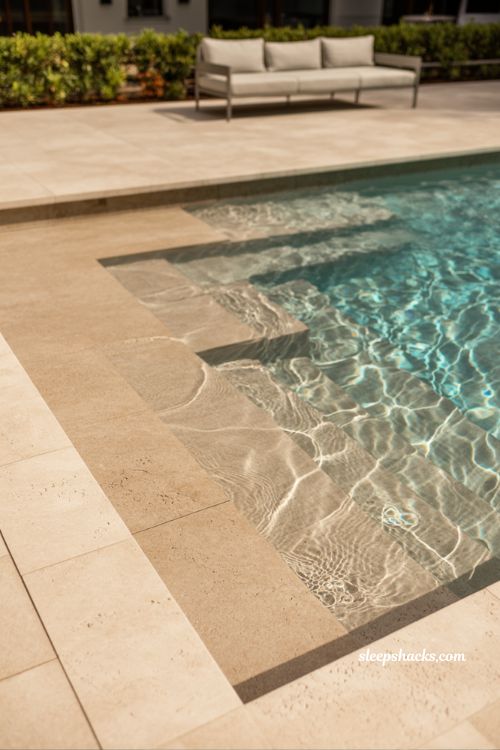
A wading area — also called a zero-entry, beach entry, or gradual slope entry — is one of the most family-friendly features you can add to a pool. It creates a shallow zone (6 inches to 2 feet deep) that feels comfortable and safe for toddlers and young kids, while also giving adults a gentle entry that avoids the shock of stairs into cold water. Latham’s Jamaica Collection and Milan Collection feature dedicated wading areas in their designs.
Functionally, a wading area also doubles as a beautiful visual transition. The gradual slope reflects light differently than a vertical wall, which gives the pool a more natural, beach-pool aesthetic that photographs incredibly well on Pinterest.
- Add non-slip texture to your wading area deck transition — wet kids run, and smooth surfaces near shallow water are a hazard.
- Consider the orientation carefully: a wading area facing the house keeps kids visible from inside.
- Some pool owners add color-contrast tile at the start of the wading slope so kids know where the depth changes.
11. Heated Pool With a Heat Pump for Extended Seasons
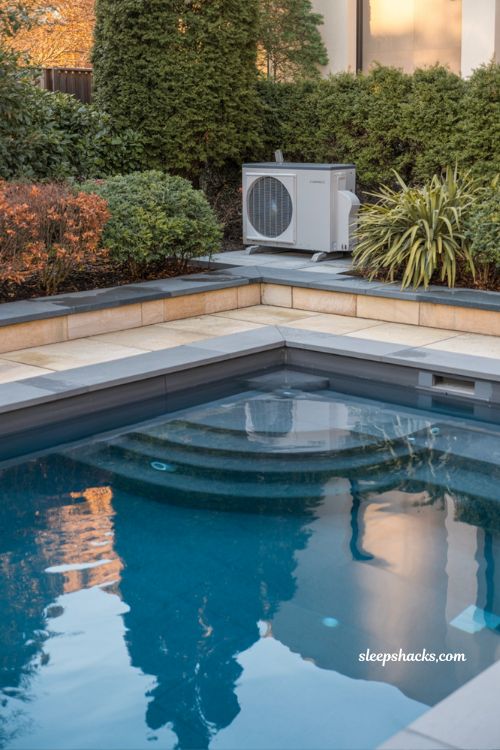
A heater extends your pool season — in colder climates, often by two full months in either direction. Heat pumps are the most efficient option for most homeowners; they work by pulling heat from the air rather than generating it, which means they cost significantly less to run than gas heaters. The trade-off is that heat pumps are slower — they need to be running days in advance to bring a cold pool up to temperature.
If you have natural gas available, a gas heater is worth considering for its faster heat-up time. Propane is an option but can get expensive, especially for a larger pool where you’re heating a significant volume of water. The practical move: decide your heating preference before you plan your equipment pad, since fuel type affects installation.
- Keep your heater running on a schedule during shoulder seasons rather than heating cold water from scratch each weekend.
- Pair any heater with an auto cover — you’ll lose a surprising amount of heat overnight through evaporation without one.
- Size your heat pump appropriately for your pool volume and your climate zone — undersizing is a common mistake.
12. Dark Shell Fiberglass Pool for a Dramatic Look
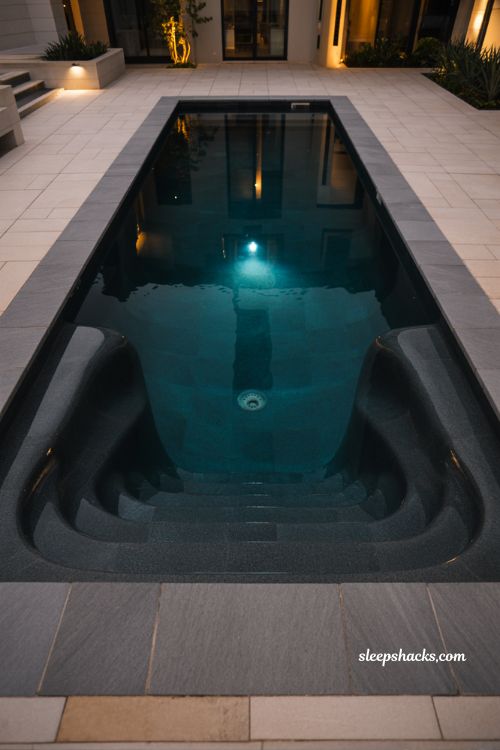
Shell color might be the most underrated design decision in pool planning. Light shells — white, ivory, pale blue — create that classic tropical-resort look. But dark shells — charcoal grey, deep cobalt, onyx — turn the water into something else entirely. The water looks deeper, richer, more dramatic. At night with lighting, a dark-shell pool looks like obsidian.
Darker colors also hide algae growth and minor staining better than light shells, which is a practical benefit. The trade-off is that dark shells can absorb more heat on very hot days, which isn’t always a problem. Manufacturers like Latham offer gel coat color choices like Crystal Coastal Bronze, which achieves that rich, layered look that dark pools are known for.
- Request physical color samples and look at them in natural sunlight — pool photos online often look different from real life.
- Pair dark shells with light-colored coping and decking for maximum contrast and visual drama.
- A single bright LED light in a dark-shell pool at night creates a stunning effect that lighter shells can’t match.
13. Fiberglass Pool With Swim-Up Seating Built In
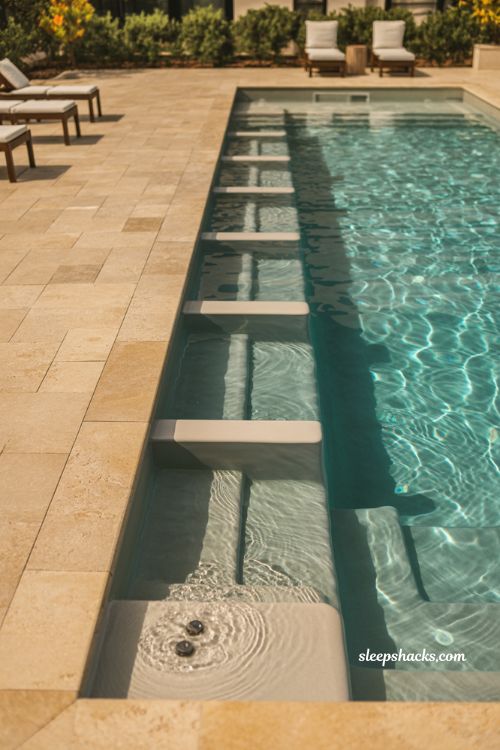
Swim-up seating — also called in-pool benches or ledge seating — might be the single most universally loved pool feature. You’re in the water, staying cool, but sitting comfortably and talking to people. It changes the social dynamic of the pool entirely. The good news: virtually every major Latham fiberglass model includes swim-up seating as a standard feature, from the Apollo 14 to the Fiji to the Coronado.
The depth of the bench matters. Benches set at about 18 inches of water depth feel comfortable for most adults. Some pools have stepped entries that double as seating — these are especially practical since they serve two functions and keep the bench area naturally clean.
- Position benches away from the main swim path so swimmers and sitters aren’t competing for space.
- Add a small waterfall or feature jet near your seating area — moving water creates ambiance and keeps the water in that area circulating.
- If you’re entertaining adults regularly, in-pool seating is more valuable than a tanning ledge.
14. Compact Spool (Spa-Pool Combo) for Tiny Backyards
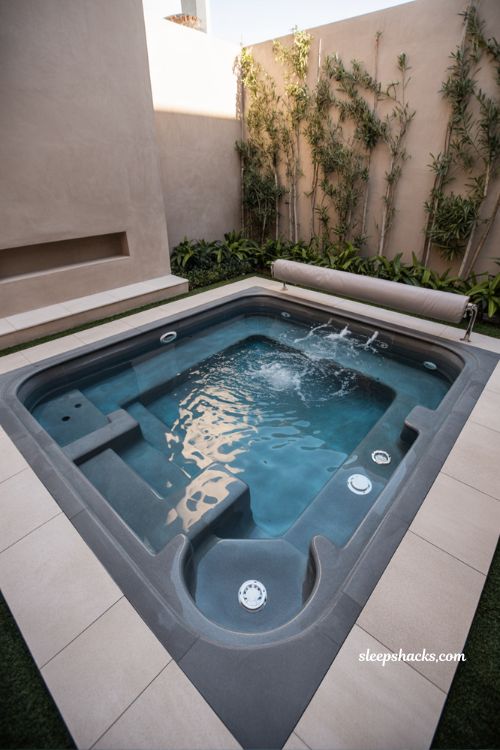
A spool sits in the middle ground between a plunge pool and a spa — bigger than a hot tub, smaller than a full pool. It’s heated, jets included, and deep enough for a real soak or a quick dip. For urban backyards, courtyards, or any space under 500 square feet, a spool is genuinely the smartest option. You get year-round use, a proper water feature, and enough space to actually move around.
Latham’s Milan Collection takes a similar approach — a cocktail pool with swim-up seating and a compact footprint that’s been described as “the best of both worlds.” The key is being realistic about what you want a pool for. If it’s socializing, cooling off, and therapy — not lap swimming — a spool delivers everything you need.
- Spools heat faster and cost less to heat than full pools — factor this into your operating cost estimates.
- Circulation is especially important in smaller water volumes; a quality jet placement and filtration system matters more here.
- Add an auto cover — with a small water volume, evaporation and debris accumulation happen quickly.
15. Fiberglass Pool With Paver Deck and Natural Stone Edging
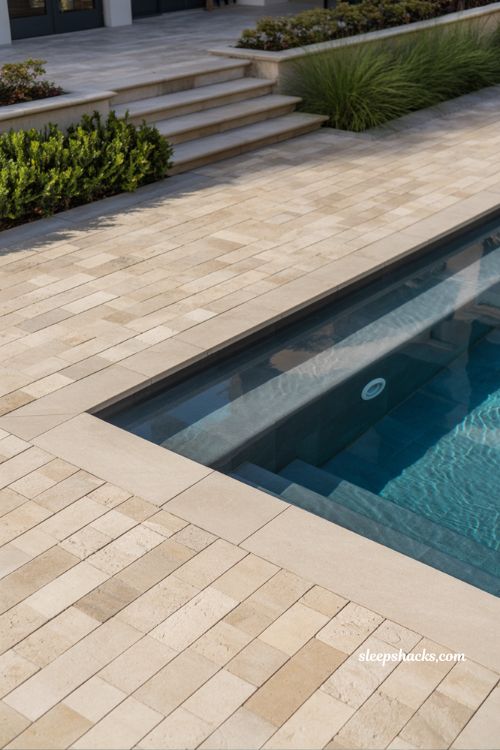
The pool is the centerpiece, but the deck and hardscape around it determine whether the whole backyard feels cohesive or like an installation dropped into a lawn. Paver decks — in travertine, concrete pavers, or natural stone — give a finished look that stamped concrete can’t quite match. They’re also easier to repair if you ever need to access plumbing under the deck, since pavers can be lifted and replaced.
Belgard is one of the most commonly specified brands for pool decking, offering coordinated paver and coping systems so everything matches. Granite steps leading from the house to the pool level are a nice touch that adds visual weight and permanence to the transition zones.
- Seal your paver deck within the first year and every few years after — unsealed pavers stain from sunscreen and algae.
- Light-colored pavers reflect heat and keep the surface cooler underfoot on hot days.
- Consistent grout/joint spacing gives a high-end look; uneven joints make even expensive pavers look rushed.
16. Pool With Deck Jets and Waterfall Features
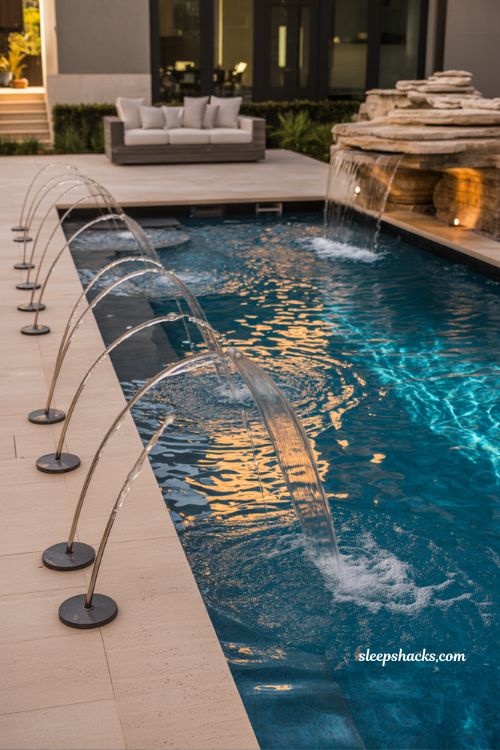
Deck jets — those small arching streams of water that shoot from the deck into the pool — are one of those features that look amazing in photos and showrooms. Some builders recommend skipping them, and the reasons aren’t unreasonable: they add to the quote, they can clog, and they don’t add to the swimming experience. But for aesthetic-focused pool owners, they’re genuinely beautiful, especially at night with lighting playing off the arcs.
Waterfalls are a different story — a small rock or tile waterfall at one end of a freeform pool creates the soundtrack of a resort and keeps water moving in a way that benefits chemistry. If a waterfall speaks to your vision, budget for it intentionally rather than tacking it on at the end.
- Deck jets are purely aesthetic; if your budget is tight, this is a reasonable place to cut.
- Waterfalls near the deep end double as a useful current for mild exercise and play.
- If you add deck jets, position them so they’re clearly visible from your main seating area — otherwise they lose their impact.
17. Robot Cleaner and Smart Equipment for Low-Effort Ownership
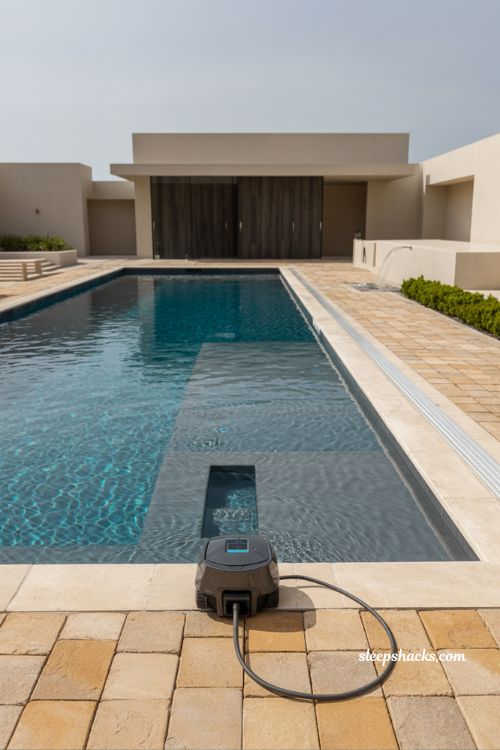
The pool itself is only part of the equation. The equipment and maintenance approach you choose determines how much time and money you spend keeping it beautiful. A robotic pool cleaner — not a suction cleaner tied to your filtration, but a standalone robot — changes pool ownership dramatically. Models like the Dolphin series or the Aquaproducts 614IQ are consistently recommended by experienced pool owners for their reliability and cleaning quality.
Pair your robot with a variable speed pump, a properly sized saltwater system, and an auto cover, and you’ve built a pool that runs largely by itself. That’s the real sell of fiberglass for most people — not just the installation, but the ongoing ease.
- Buy your robotic cleaner from a trusted specialty retailer rather than your pool builder, where markup can be significant.
- A variable speed pump is non-negotiable for cost-effective operation — single-speed pumps cost two to three times more to run annually.
- Budget for smart automation: pool controllers that manage pump speed, lighting, heater scheduling, and chemical dosing pay for themselves in reduced chemical waste and lower energy bills.
Fiberglass Pool Features At a Glance
| Idea | Best For | Budget Signal | Key Feature |
|---|---|---|---|
| Rectangle + Tanning Ledge | Families, entertaining | Mid-range | Dual-function shallow zone |
| Built-In Spa Combo | Year-round use, cold climates | Mid-high | Separate spa heating |
| Plunge Pool | Small yards, wellness focus | Budget-friendly | Compact footprint |
| Freeform Design | Larger lots, natural aesthetic | Mid-range | Organic shape |
| Auto Cover Pool | Low maintenance, safety | Mid + cover cost | Energy savings |
| Saltwater System | All pools | Low add-on cost | Better water feel |
| Swim Lane | Fitness-focused | Mid-range | Exercise function |
| Upgraded Coping | Aesthetics, comfort | $10k+ add-on | High-end finish |
| Sloped Lot Build | Challenging terrain | Variable | Retaining wall |
| Wading Area | Families with toddlers | Mid-range | Safe shallow zone |
| Heated Pool | Cold climates | Mid + running cost | Extended season |
| Dark Shell | Dramatic aesthetics | Same as standard | Visual impact |
| Swim-Up Seating | Social entertaining | Standard (built-in) | In-water comfort |
| Spool | Tiny backyards | Lower than full pool | Year-round soak |
| Paver Deck | Elevated aesthetics | $10k–$30k add-on | Cohesive finish |
| Deck Jets / Waterfall | Visual appeal | Moderate add-on | Ambiance |
| Robot + Smart Equipment | Low-effort ownership | $900–$1,500 robot | Automation |
Frequently Asked Questions About Fiberglass Pool Ideas
How much does a fiberglass pool cost with features like a spa and auto cover?
A fiberglass pool with a built-in spa, auto cover, saltwater system, and basic paver decking typically falls between $150,000 and $200,000+ depending on your region, lot complexity, and retaining wall needs. Quotes in this range were common among homeowners building in the US Midwest and Northeast based on real community discussions. Simpler builds without spa or significant hardscape can come in under $100,000.
Is a fiberglass pool worth it vs. gunite on a sloped lot?
In most cases, yes — especially in regions where gunite contractors are scarce. Gunite is more flexible for unusual lot shapes but can cost two to three times more in markets where it’s not the dominant pool type. Fiberglass shells on sloped lots require proper retaining walls and careful excavation, but this is entirely manageable with an experienced contractor. Get multiple quotes and ask each builder specifically how they handle your lot’s grade.
What fiberglass pool size is best for a small backyard?
Plunge pools and spool designs in the 10–16 foot range work well for tight spaces. Latham offers models like the Plunge Pool Collection and the Milan Collection that are specifically sized for compact backyards. The key is choosing a model that matches your primary use case — a plunge pool for therapy and cooling off, or a spool if you want year-round heated water.
Do I really need a saltwater system?
Experienced pool owners say yes, emphatically. Saltwater pools generate their own chlorine at gentler concentrations, which means softer water, less chemical smell, and lower ongoing maintenance cost. The most important thing is sizing the generator correctly — go for at least twice your pool’s rated volume to ensure adequate output during peak summer demand.
What’s the best coping material for a fiberglass pool?
Pavers and natural stone both outperform bullnose concrete for comfort and aesthetics. Travertine is popular because it stays cool underfoot and has a natural non-slip texture. Belgard offers coordinated coping and decking systems that make it easy to achieve a unified look. Budget around $10,000 for coping on a standard 35-foot pool when using quality paver products.
How long does a fiberglass pool last?
Fiberglass pools are known for longevity — well-maintained shells can last 25 years or more. The gel coat surface may need refinishing at some point, but the structural integrity of a quality fiberglass shell holds up well over time. The advantage over vinyl liner pools is that you’re not replacing a liner every 8–12 years.
Can I add a heater and auto cover to any fiberglass pool model?
Most fiberglass models are compatible with heat pumps and gas heaters — the heating system sits at your equipment pad and connects via standard plumbing. Auto covers require specific pool dimensions and a compatible deck recess, so check that your chosen model is auto cover ready before committing. Latham marks this clearly in their model specifications.