

When I first started paying attention to Mid-Century Modern Decor, it honestly felt like stepping into a different kind of calm. Not flashy, not loud, just quietly confident. I remember sitting in a friend’s living room filled with warm wood tones and those soft, curved furniture lines and thinking—this is what balance feels like. It’s not about perfection; it’s about comfort that still looks intentional, like someone cared enough to make every corner feel lived in but still beautiful.
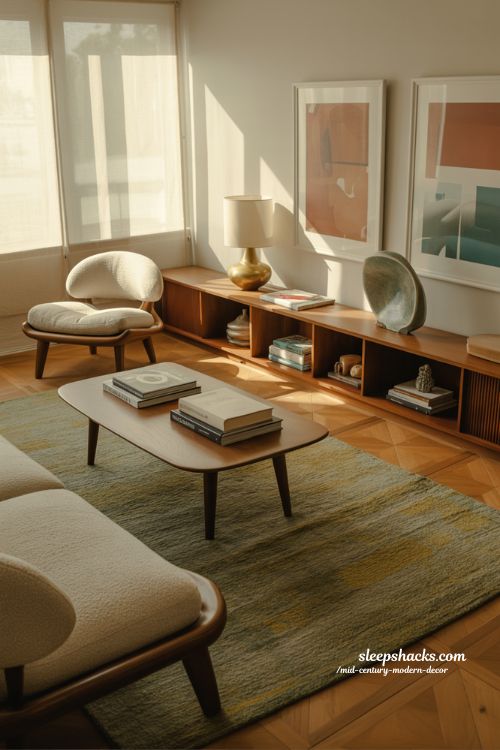
Over time, I realized this style isn’t just about furniture. It’s a mindset. It’s choosing pieces that last, colors that feel grounded, and spaces that don’t overwhelm you when you walk in after a long day. And the more I studied it, the more I noticed how naturally it blends nostalgia with modern life without ever feeling forced.
- Warm wood, soft curves, and clean lines define the core feeling
- Earthy tones mixed with bold retro accents create balance
- Simplicity is not empty space—it’s thoughtful breathing room
1. Timeless Living Room Setup With Warm Wood Balance
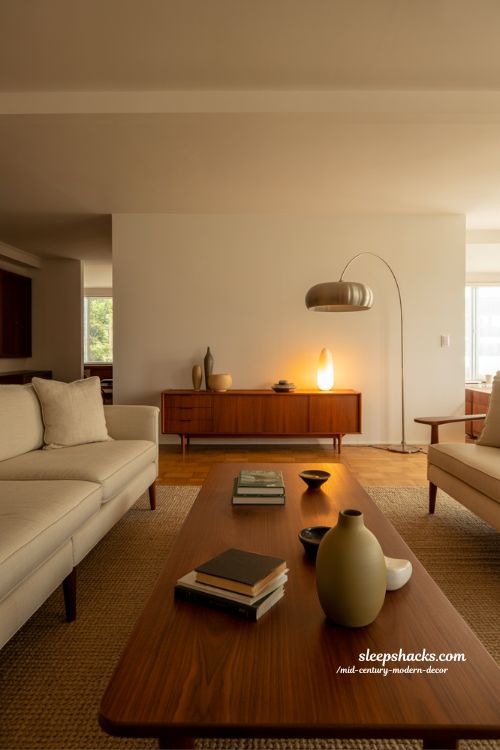
A living room built around Mid-Century Modern Decor always starts with wood that feels alive, not polished within an inch of its life. I’ve seen spaces where walnut coffee tables or teak sideboards instantly change the mood of the entire room. It feels grounded, almost like the room is exhaling. When you pair that with soft lighting and a simple layout, the space stops trying too hard and just becomes welcoming.
What really brings it together is restraint. You don’t need to fill every corner. A sofa with clean lines, a wooden table, and one or two sculptural accents are enough. The charm comes from letting materials speak instead of overloading the room with decoration.
2. Earthy Color Palettes That Feel Calm Yet Bold
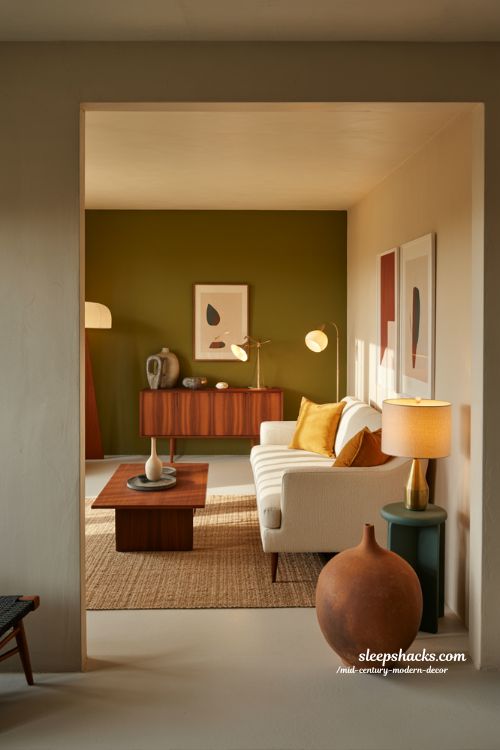
Color in Mid-Century Modern Decor is where the personality quietly shows up. Think olive green, mustard yellow, warm beige, and muted terracotta. These tones don’t scream for attention, but they stay in your memory. I once painted a small accent wall in a soft olive shade, and the whole room suddenly felt more grounded without changing anything else.
The trick is balance. You don’t want every wall loud, but you also don’t want everything neutral. A soft base with one or two bold accents usually does the job beautifully.
Color Balance Guide
| Base Colors | Accent Colors | Mood Created |
| Beige, white, soft gray | Mustard, olive, rust | Warm and nostalgic |
| Warm wood tones | Teal, burnt orange | Balanced retro energy |
| Cream, sand | Deep green, navy | Calm sophistication |
This simple mix keeps things visually interesting without feeling chaotic. It’s less about rules and more about how the colors make you feel when you walk into the room.
3. Statement Furniture With Sculptural Shapes
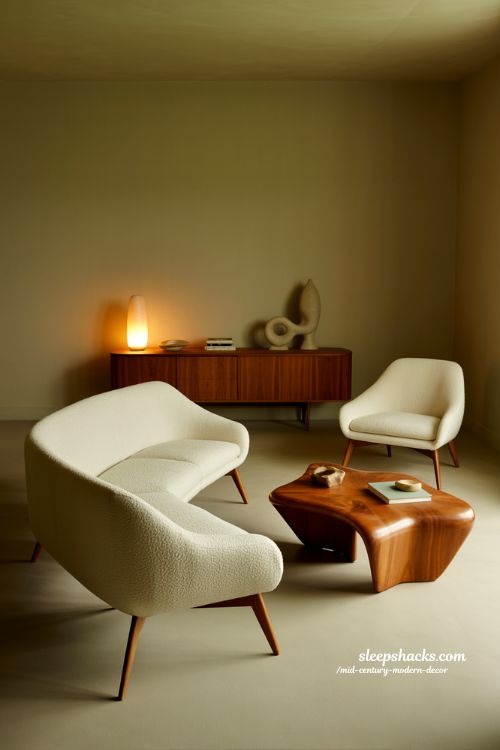
One thing I always notice in strong Mid-Century Modern Decor spaces is furniture that almost looks like art. Sofas with gentle curves, chairs with angled wooden legs, and tables that feel sculpted rather than manufactured. These pieces don’t just fill space—they define it.
The beauty is that you don’t need many of them. One strong chair or table can carry an entire corner. It’s about choosing pieces that feel intentional rather than mass-placed.
4. Lighting That Feels Like Art, Not Just Function
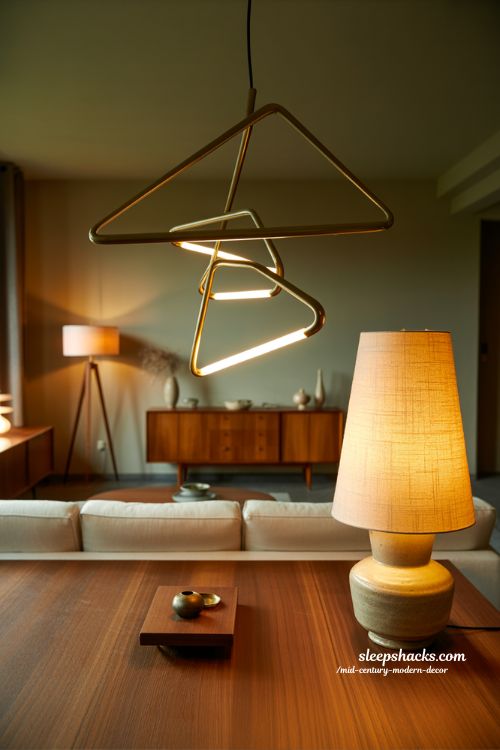
Lighting in Mid-Century Modern Decor is never an afterthought. It often becomes the quiet star of the room. I’ve always loved how a simple pendant light can shift the entire mood in seconds. Brass finishes, geometric shapes, and soft warm bulbs all work together to create atmosphere.
It’s less about brightness and more about feeling. A well-placed lamp can make even a simple room feel designed.
5. Natural Materials That Ground the Space
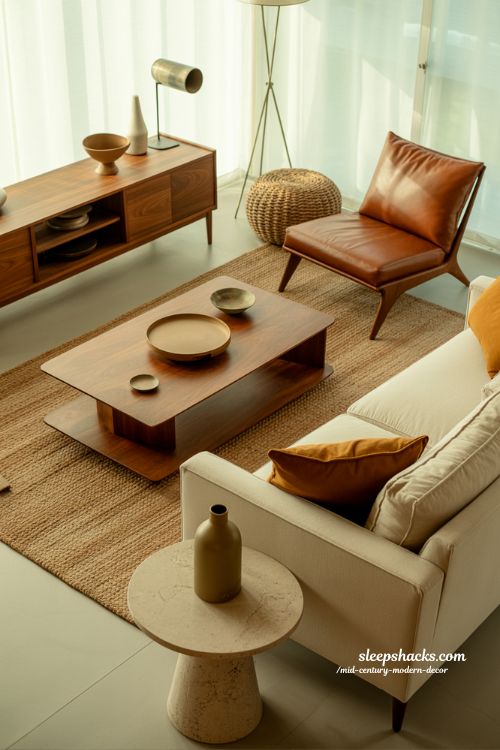
Wood, leather, stone, and glass are the backbone of this style. When I visited a mid-century inspired home once, I noticed how nothing felt artificial. Even the smallest details had texture. That’s the secret—it’s not about luxury, it’s about honesty in materials.
Mixing textures is what keeps the space from feeling flat. Smooth wood next to woven fabric or glass beside metal creates quiet contrast.
6. Geometric Patterns With Soft Execution
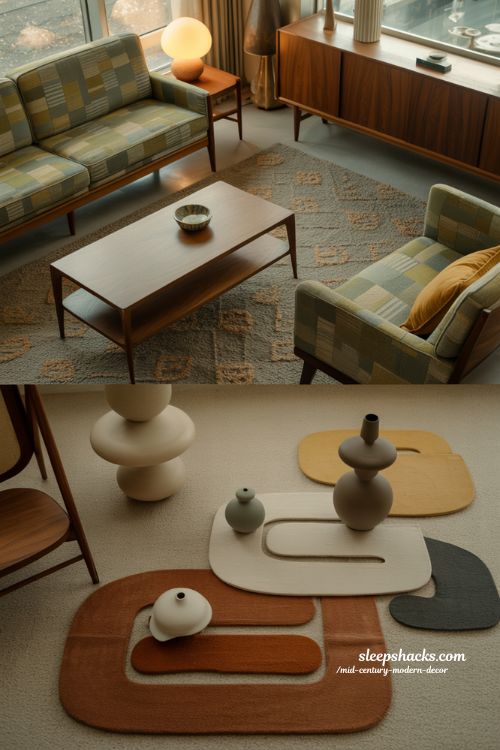
Geometric shapes are everywhere in Mid-Century Modern Decor, but they’re never harsh. Rugs, cushions, and wall art often carry soft patterns that add rhythm without noise. I like to think of them as visual music—present, but not overwhelming.
The key is subtle repetition. A few repeating shapes across the room help everything feel connected without being obvious.
7. Minimal Decor With Purposeful Placement
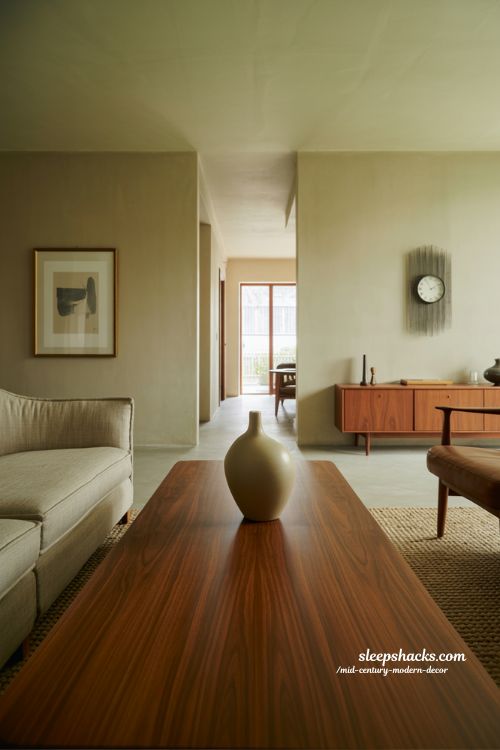
Less really does mean more here, but not in a cold way. It’s more about choosing objects that actually mean something in the space. A ceramic vase, a single art piece, or a vintage clock can carry emotional weight when placed thoughtfully.
The goal isn’t emptiness—it’s clarity. Every item should feel like it belongs there.
8. Indoor Plants That Soften the Structure
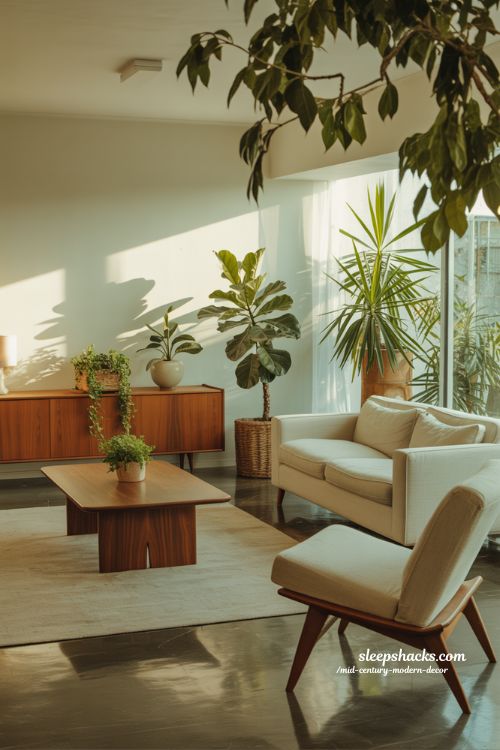
Plants bring life into Mid-Century Modern Decor in a way nothing else can. Large leafy greens like fiddle leaf figs or palms soften all the clean lines and wood edges. I’ve always felt that a room without plants in this style feels incomplete.
They add movement, color, and a kind of quiet energy that furniture alone can’t provide.
9. Open Layouts That Encourage Flow
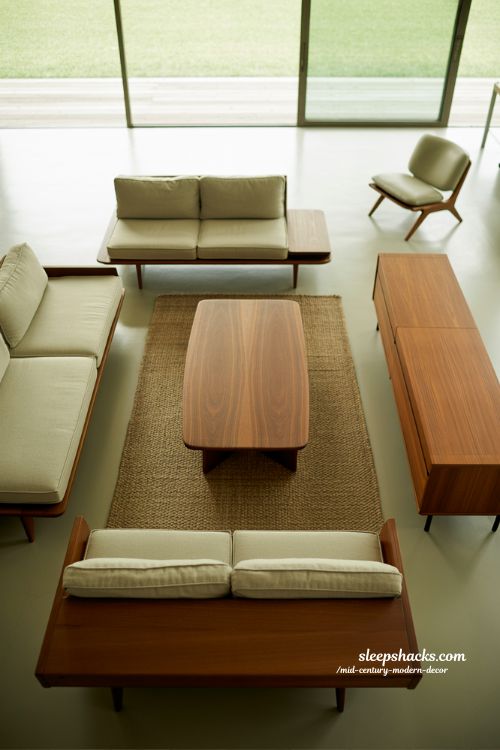
Space planning matters a lot more than people think. Mid-century interiors often feel open, even in smaller homes. Furniture is placed to allow movement, not block it. I’ve noticed that even shifting a sofa slightly can completely change how a room breathes.
It’s about flow, not filling space.
10. Retro-Inspired Accents That Add Character
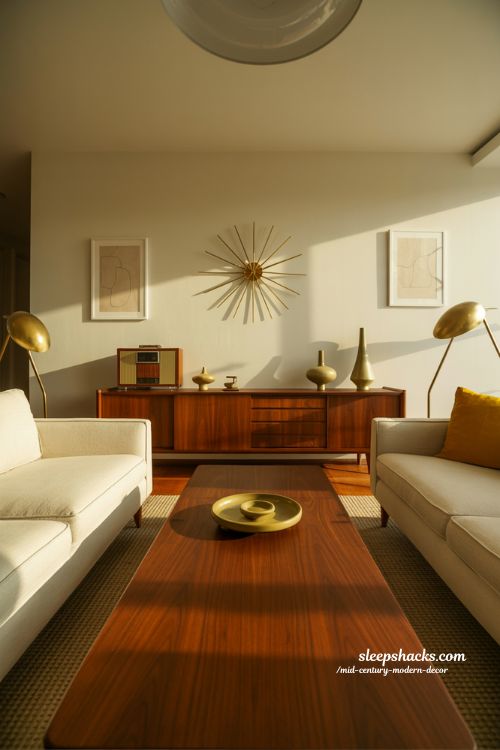
Small details like sunburst clocks, vintage radios, or ceramic decor pieces add personality. These accents bring a gentle nostalgia into the room without making it feel outdated.
The key is restraint—just a few carefully chosen pieces are enough to tell a story.
11. Mix of Modern and Vintage Pieces
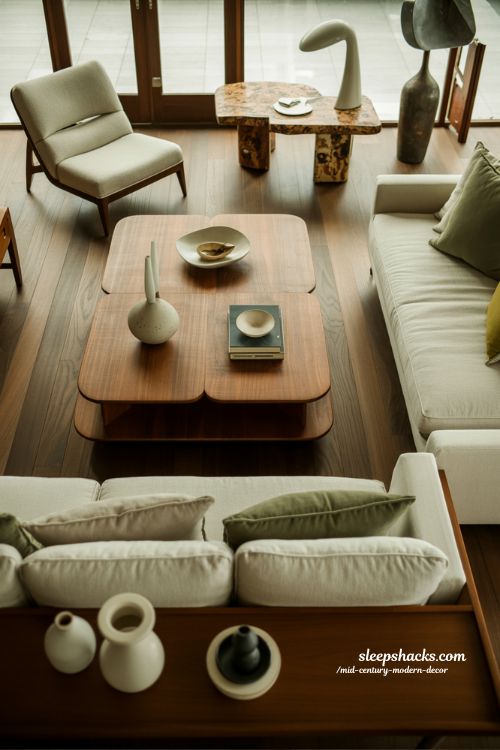
This style really shines when old and new sit together naturally. A vintage wooden table next to a modern sofa creates a quiet conversation between eras. It feels personal, like the room has grown over time instead of being bought all at once.
That mix keeps Mid-Century Modern Decor feeling alive and relevant.
12. Cozy Textures That Invite You In
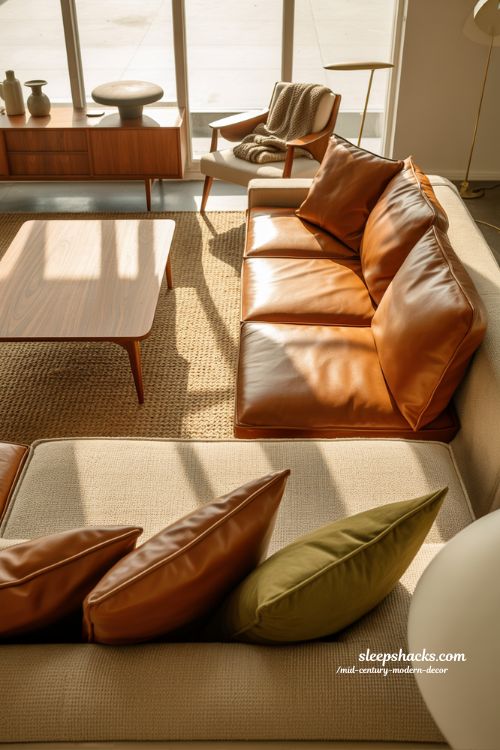
Soft rugs, woven fabrics, and leather cushions add comfort to all the structure. Without them, the style can feel too rigid. I’ve always believed texture is what turns design into a place you actually want to live in.
It’s the difference between looking at a room and wanting to sit in it.
13. Dining Spaces With Simple Elegance
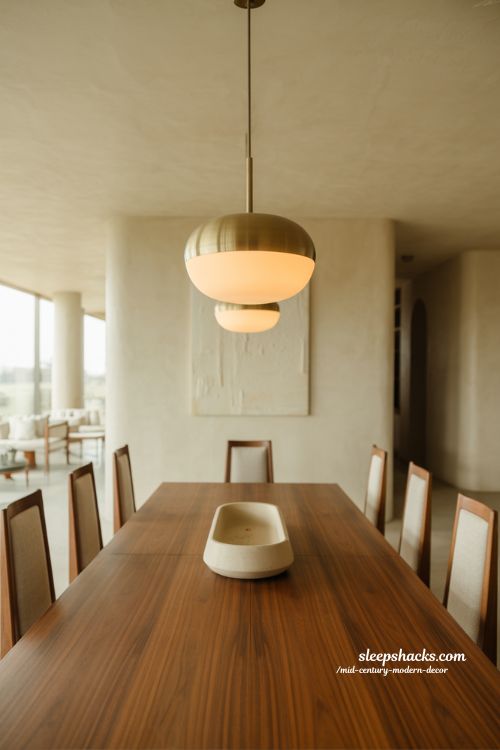
Dining areas in this style are usually understated but incredibly warm. A wooden table, slim chairs, and a single pendant light often do the job. Nothing excessive, just clean design that encourages conversation.
The simplicity makes meals feel more intentional somehow.
Dining Material Guide
| Element | Best Choice | Effect |
| Table | Walnut or oak | Warm foundation |
| Chairs | Slim wood + fabric | Light visual feel |
| Lighting | Pendant or globe | Soft focus |
This balance keeps dining spaces open and inviting without visual clutter.
14. Bedroom Calm With Soft Retro Influence
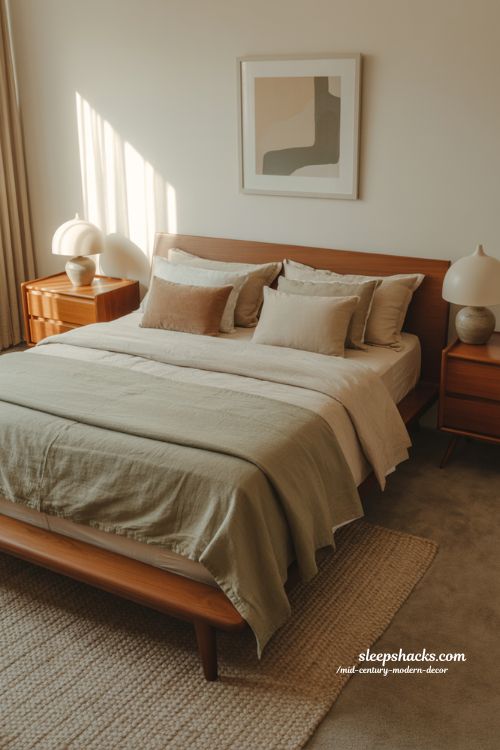
Bedrooms in Mid-Century Modern Decor lean toward calm and softness. Low beds, wooden frames, and muted bedding colors create a peaceful environment. I’ve always felt this is where the style becomes most personal.
It’s not about design statements here—it’s about rest.
15. Home Office With Clean Focus
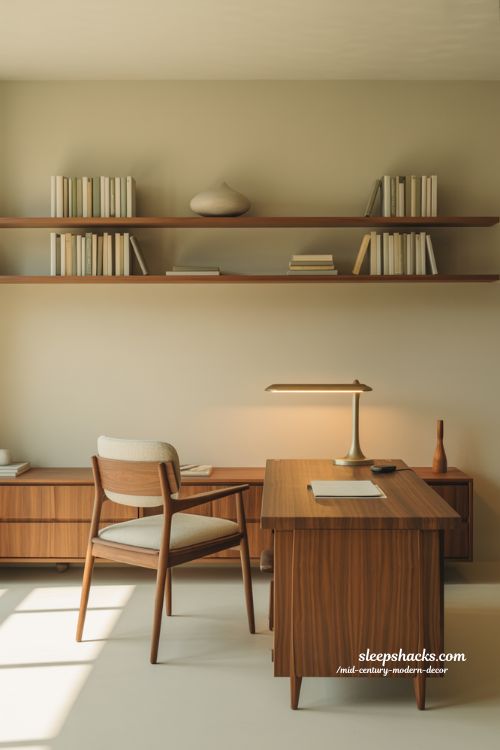
A mid-century inspired workspace avoids distraction. Simple desks, ergonomic chairs, and warm lighting help maintain focus. I’ve noticed productivity improves when the space feels calm and uncluttered.
It’s design supporting thought, not competing with it.
16. Entryway That Sets the Mood
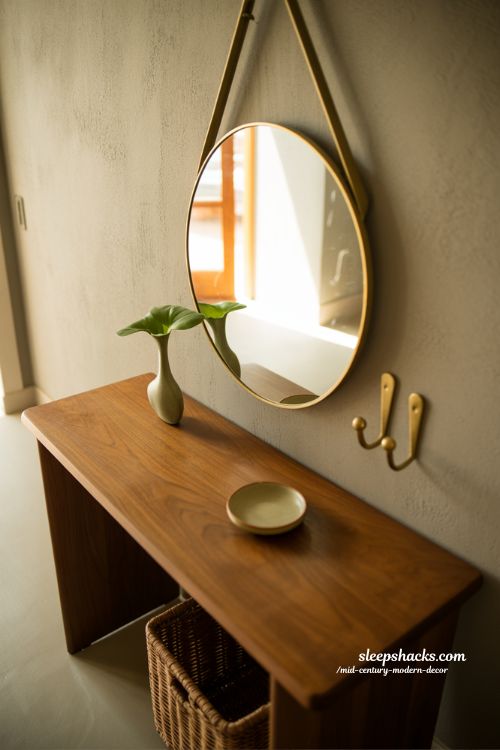
First impressions matter. A simple console table, mirror, and small plant can instantly set the tone. Entryways in this style feel welcoming without being overdesigned.
It quietly tells you what the rest of the home will feel like.
17. Personal Touches That Make It Yours
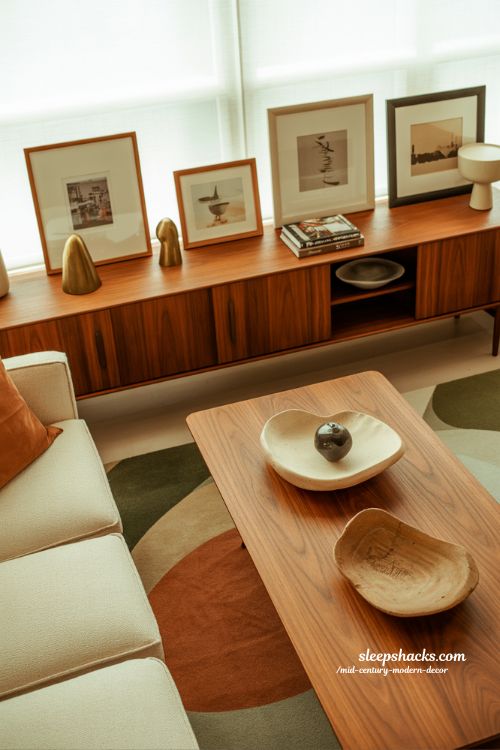
At the end of the day, Mid-Century Modern Decor only works when it feels personal. Family photos, travel pieces, or handmade objects bring warmth into the structure. I’ve seen beautifully designed rooms feel empty until personal items were added.
That’s when a house starts feeling like home.
FAQ
What defines Mid-Century Modern Decor
It focuses on clean lines, natural materials, and functional beauty with a warm retro influence.
Is Mid-Century Modern Decor still popular today
Yes, it remains widely loved because it blends timeless design with modern comfort.
Can this style work in small spaces
Absolutely, its simplicity and open layouts make it ideal for compact homes.
What colors work best in this style
Earth tones like olive, mustard, beige, and muted greens work beautifully.
Do I need original vintage furniture
Not necessarily, modern pieces inspired by the style work just as well.
How do I avoid making it look outdated
Mix vintage elements with modern pieces and keep the layout light and uncluttered.