

I still remember trying to squeeze a TV into a tiny living room and thinking, “Why does this feel harder than it should?” The sofa felt too big, the walls too close, and everything just looked crowded no matter how I moved things around.
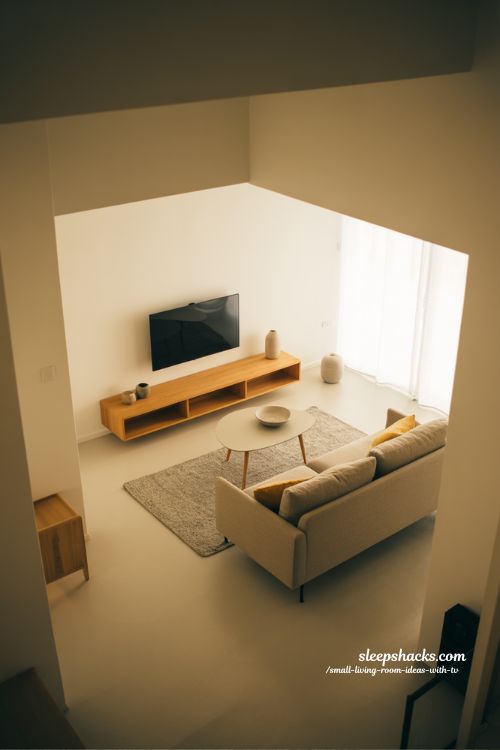
Over time, I realised the problem wasn’t the size of the room—it was how I was using it. Once you understand layout, balance, and a bit of visual breathing space, even a small room can feel open and genuinely comfortable.
What really changed things for me was learning to treat the TV as part of the room, not something that dominates it. The moment I started thinking about flow instead of just furniture placement, everything felt easier and more natural.
- Smart TV placement instantly frees up visual space
- Light colours and simple furniture make rooms feel bigger
- Multi-use furniture reduces clutter without losing comfort
Make Your Small Living Room Feel Twice as Big (Without Moving a Wall) ( 3 Best Products)
A small living room doesn’t have to mean sacrificing your TV setup. The right wall mount, a floating media shelf, and a Roku TV that punches above its weight can completely change how a compact space looks and feels — and all three are on Amazon right now. Here are the three best-sellers that actually deliver.
Mounting Dream MD2380 Full Motion TV Wall Mount
HOOBRO Floating TV Stand with LED Light & Power Outlet
Roku Smart TV 2026 — 40-Inch Select Series (1080p Full HD)
1. Center Stage TV Layout That Grounds the Room
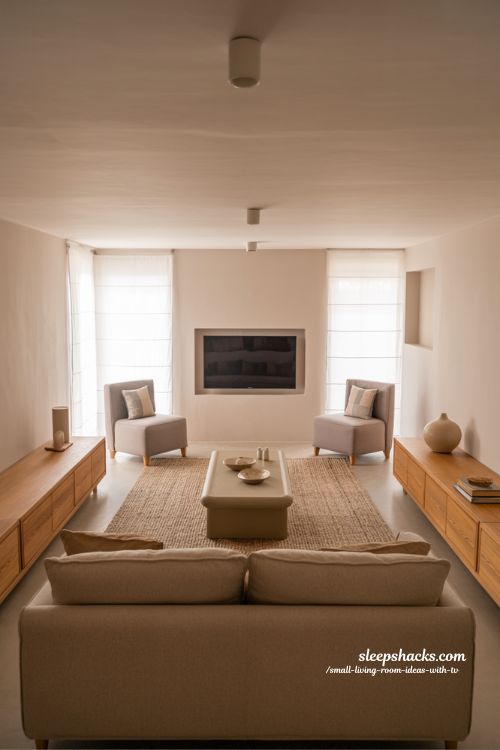
A center-stage TV setup works best when you want a simple and balanced feel in a small living room. Placing the TV on the main wall naturally draws attention, and everything else can be arranged around it in a calm, structured way. It removes confusion in layout and makes the room feel intentional instead of randomly filled.
In smaller homes, this setup helps avoid awkward angles and wasted wall space. The seating naturally faces one direction, which makes the room feel more organised and easy to use every day.
- Creates a clear focal point
- Improves seating direction
- Reduces layout confusion
2. Wall Mounted TV for a Clean Open Feel
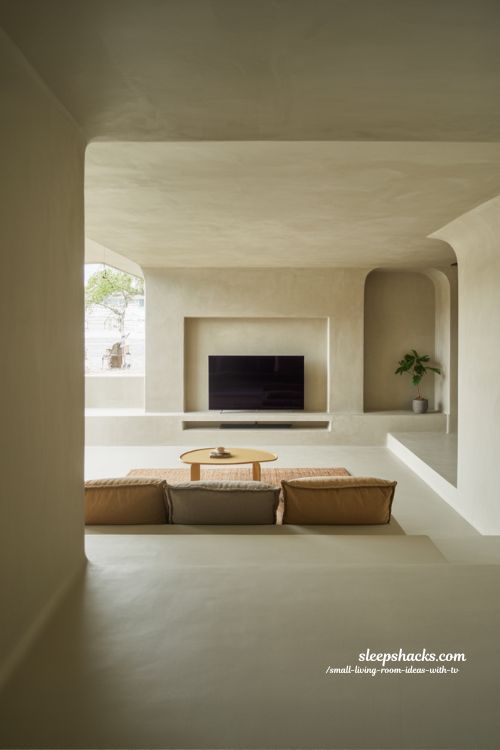
Mounting the TV on the wall is one of the simplest ways to instantly open up a small space. It removes the need for bulky stands and frees up valuable floor area. The room suddenly feels lighter, almost like it can breathe again.
I’ve seen this change even the most cramped rooms into something more modern and relaxed. It also makes cleaning easier, which is a small but underrated benefit.
- Saves floor space completely
- Removes bulky furniture needs
- Creates a cleaner visual line
3. Corner TV Setup for Tight Spaces
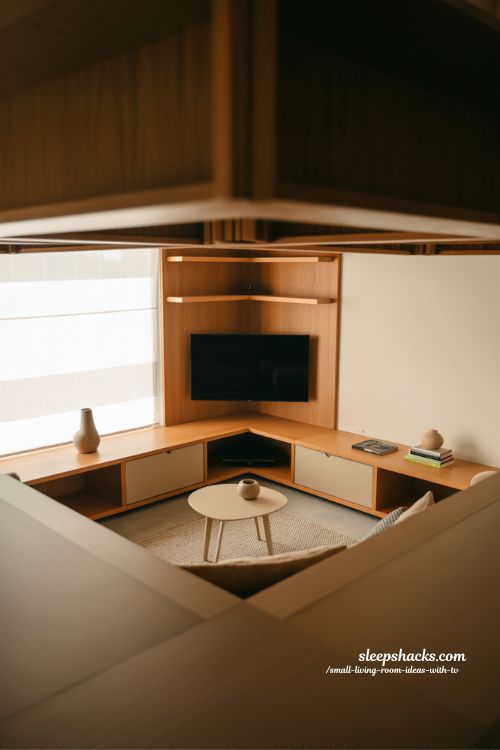
A corner TV setup works surprisingly well when walls are limited or oddly shaped. Instead of forcing the TV into a central position, it fits neatly into unused space. This keeps the main walls open for seating or decor, which helps balance the room.
It’s especially useful in narrow living rooms where every inch matters. The corner becomes a functional zone rather than wasted space.
- Uses unused corner areas
- Frees up main wall space
- Works in narrow layouts
4. Built-In TV Wall for Seamless Design
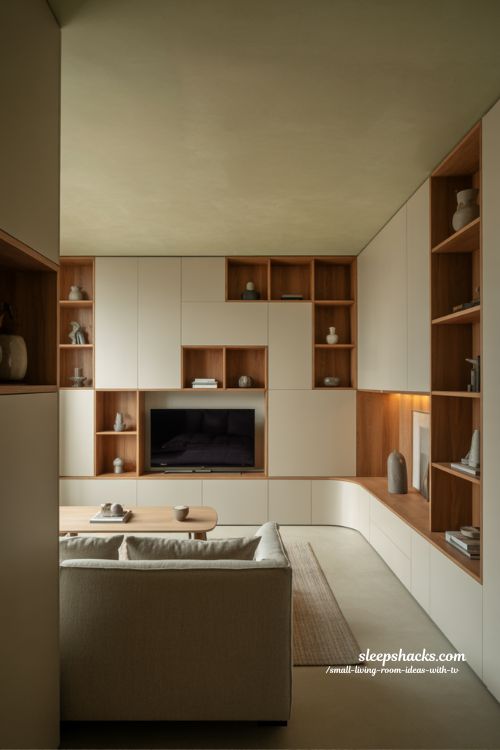
A built-in TV wall brings everything together in one clean structure. Shelves, storage, and the TV all blend into a single design, which makes the room feel calm and organised. Nothing looks out of place, and the space feels more designed than decorated.
It does take planning, but the result is worth it. The TV stops feeling like a separate object and becomes part of the room itself.
- Combines storage and display
- Hides wires and clutter
- Creates a unified look
5. Floating Console Setup for Visual Lightness
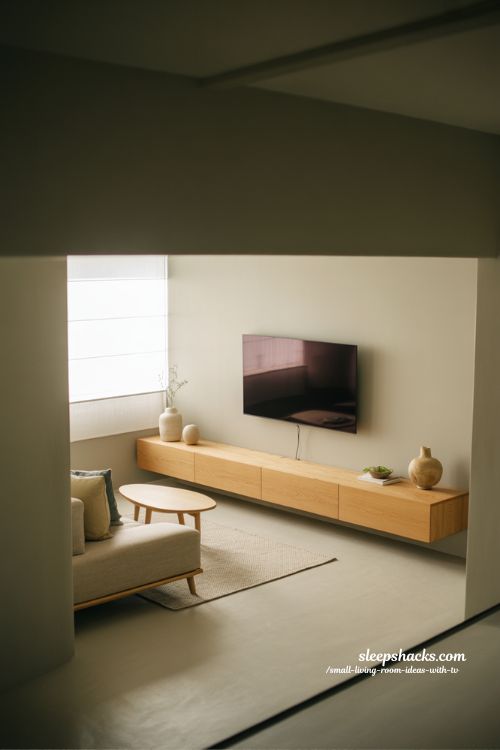
A floating console under the TV helps keep the floor visible, which instantly makes the room feel larger. Instead of heavy furniture touching the ground, everything feels slightly lifted and lighter. It’s a small design change, but the impact is noticeable.
This setup also keeps everyday items organised without making the space feel crowded or heavy.
- Keeps floor visually open
- Reduces heavy furniture feel
- Adds simple storage space
Table 1: TV Layout Styles and Their Impact
Before moving deeper, it helps to compare common TV layouts. Each one changes how the room feels and functions in daily life.
| TV Layout Style | Best Use Case | Main Benefit |
| Wall Mounted | Very small rooms | Maximum space saving |
| Corner Setup | Narrow rooms | Efficient layout |
| Built-In Wall | Modern homes | Clean, unified look |
| Center Stage | Balanced rooms | Strong focal point |
6. Sofa Bed Arrangement for Flexible Living
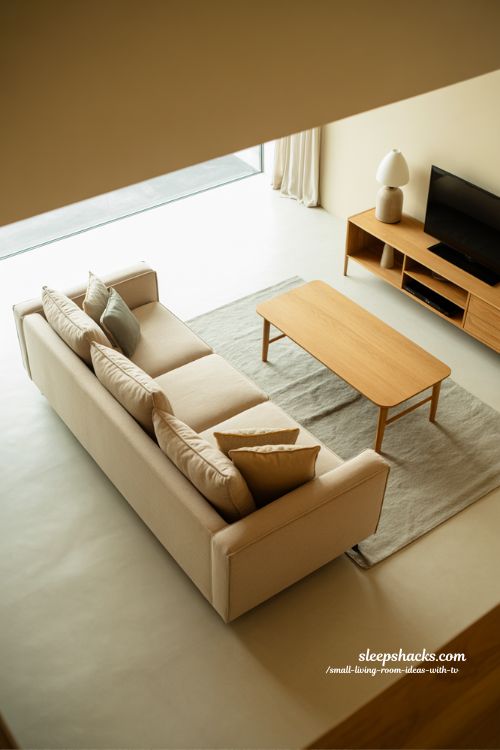
A sofa bed is one of those practical choices that quietly makes life easier. During the day, it works like normal seating, and at night it turns into a sleeping space. This flexibility is perfect when space is limited and every piece of furniture needs to do more than one job.
It also reduces the need for a separate guest bed, which frees up valuable room space.
- Adds sleeping flexibility
- Reduces extra furniture
- Works for guests easily
7. L-Shaped Sofa Layout for Defined Space
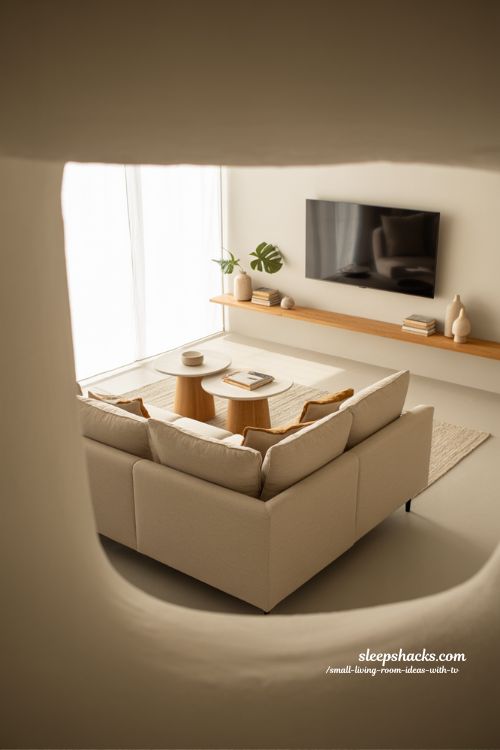
An L-shaped sofa naturally defines the living area without needing walls or dividers. It creates a soft boundary around the TV zone while still keeping the room open. This makes the space feel organised without feeling closed off.
It also uses corners efficiently, which is important in smaller rooms where layout matters a lot.
- Maximises corner space
- Defines living zone clearly
- Improves seating capacity
8. Minimal Seating with Armchairs
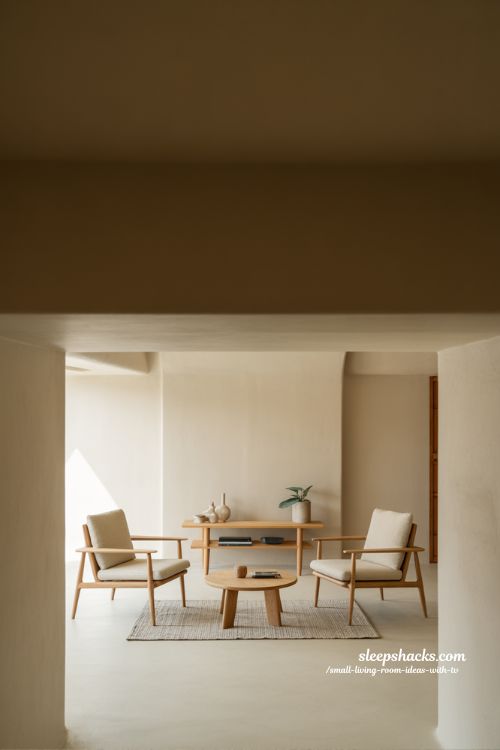
Using armchairs instead of a large sofa can completely change the feel of a small living room. It opens up space and makes movement easier while still providing comfortable seating. The room feels lighter and less crowded.
This setup works well when the TV is not the only focus of the space.
- Creates open movement space
- Reduces visual bulk
- Easy to rearrange anytime
9. Behind Sofa Storage for Hidden Organisation
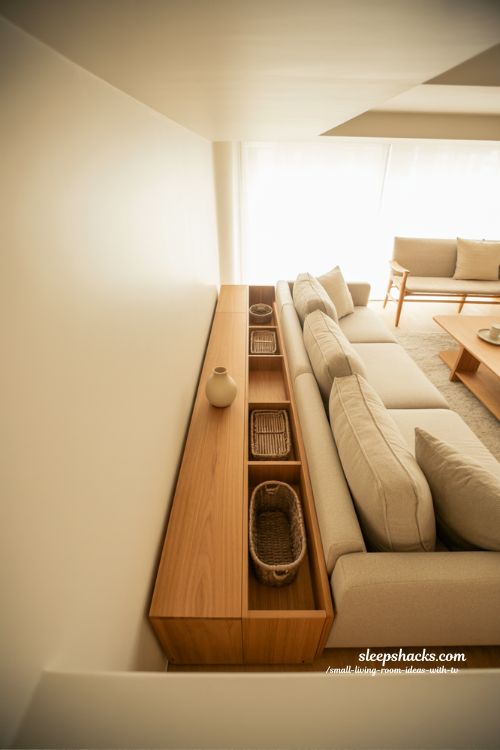
Behind sofa storage is a simple idea that makes a big difference in daily life. It uses unused space to store items that would otherwise clutter the room. Everything stays close but out of sight, which keeps the space feeling calm.
It also helps reduce visible mess, which is important in smaller rooms.
- Hides everyday clutter
- Uses unused space smartly
- Keeps surfaces clean
10. Floating Shelves Around TV for Vertical Balance
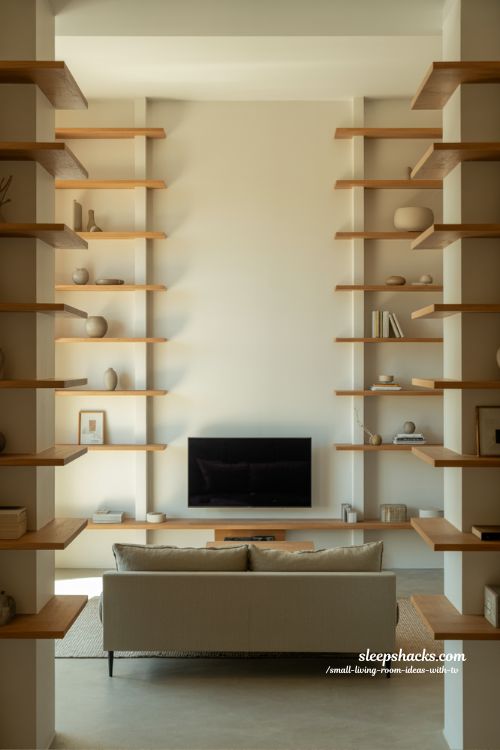
Floating shelves help use wall space instead of floor space, which is perfect for small rooms. Around the TV, they create balance and give structure to the wall without making it feel heavy.
They also allow you to add personality through simple decor without overcrowding the room.
- Uses vertical space well
- Adds light storage
- Keeps floor open
Table 2: Storage Ideas for Small Living Rooms
Storage plays a big role in keeping small spaces comfortable. Here’s a quick comparison of useful options.
| Storage Type | Where It Works Best | Main Advantage |
| Floating Shelves | TV walls | Saves floor space |
| Built-In Cabinets | Living room walls | Hidden storage |
| Sofa Storage | Behind seating | Easy access |
| TV Console Storage | Media area | Organized setup |
11. Mirror Placement to Expand Space
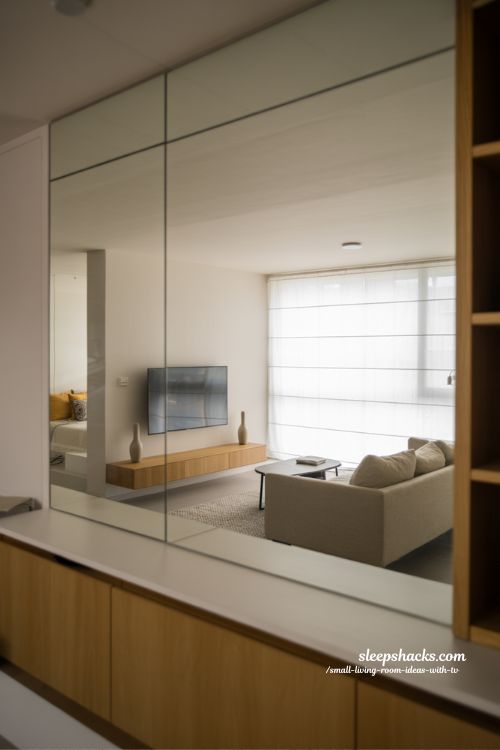
Mirrors are one of the easiest ways to make a small living room feel larger. They reflect light and create the illusion of depth, which softens the presence of large furniture like a TV.
When placed thoughtfully, they make the room feel brighter and more open.
- Reflects natural light
- Creates visual depth
- Expands space illusion
12. Light Colour Palettes for Airy Feel
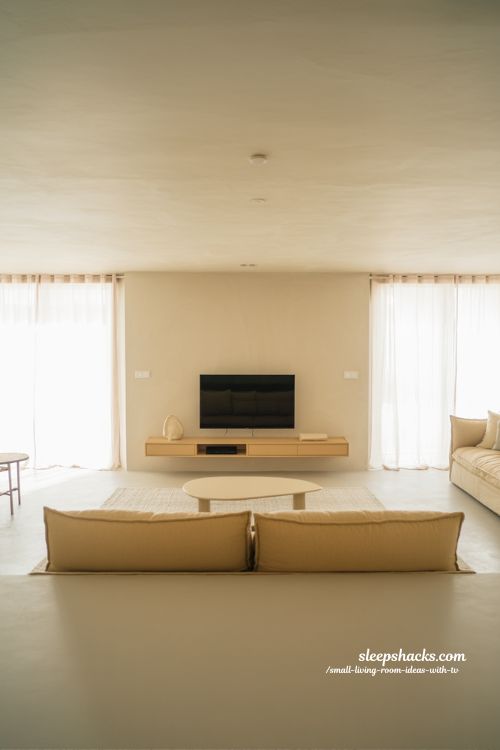
Light colours help small rooms feel more open and less crowded. Soft whites, creams, and light greys work especially well around TV setups because they reduce visual heaviness.
The room feels calmer and more balanced overall.
- Makes room feel larger
- Reduces visual weight
- Improves brightness
13. Hidden TV Storage for Minimal Look
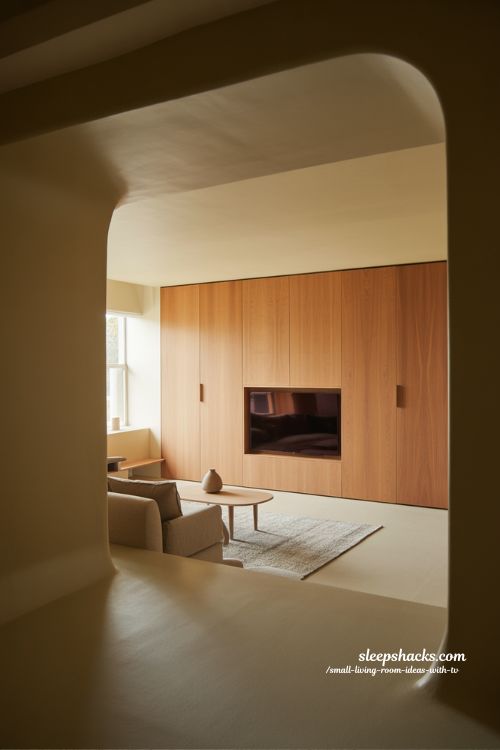
A hidden TV setup keeps the room looking clean when the screen is off. Sliding panels or cabinets can completely cover the TV, making the space feel more like a living area than an entertainment zone.
It adds flexibility to how the room feels throughout the day.
- Keeps design clean
- Hides screen when unused
- Reduces visual focus on TV
14. Glass Furniture for Light Visual Flow
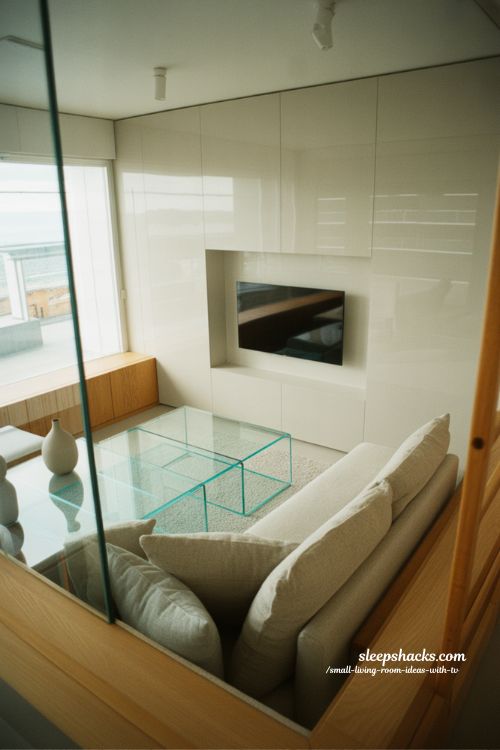
Glass or acrylic furniture blends into the background instead of blocking visual space. A glass coffee table, for example, keeps sightlines open and makes the room feel less crowded.
It’s a subtle change that works very well in small layouts.
- Maintains visual openness
- Reduces heavy look
- Works in modern rooms
15. Gallery Wall Around TV for Balance
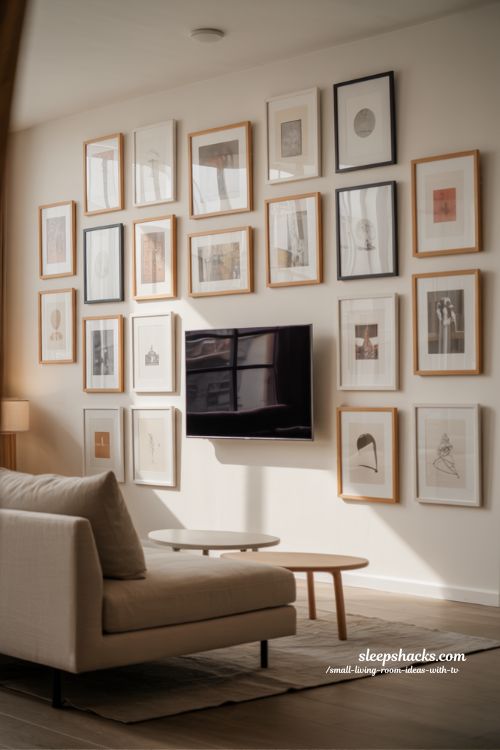
A gallery wall around the TV helps it blend into the room instead of standing alone. Frames and artwork soften the look of the screen and create a more personal feel.
It makes the wall feel intentional and balanced.
- Blends TV into decor
- Adds personality
- Improves visual balance
16. Layered Lighting for Cozy Depth
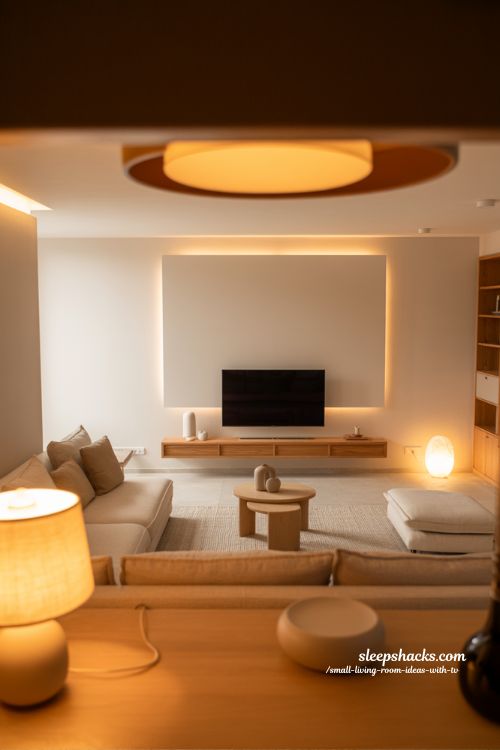
Lighting changes everything in a small living room. Instead of relying on one light source, layering lamps and soft lighting creates warmth and depth.
It also makes the TV area feel more inviting during evenings.
- Adds warmth and comfort
- Reduces harsh shadows
- Improves mood
17. Compact Furniture Scaling for Better Proportion
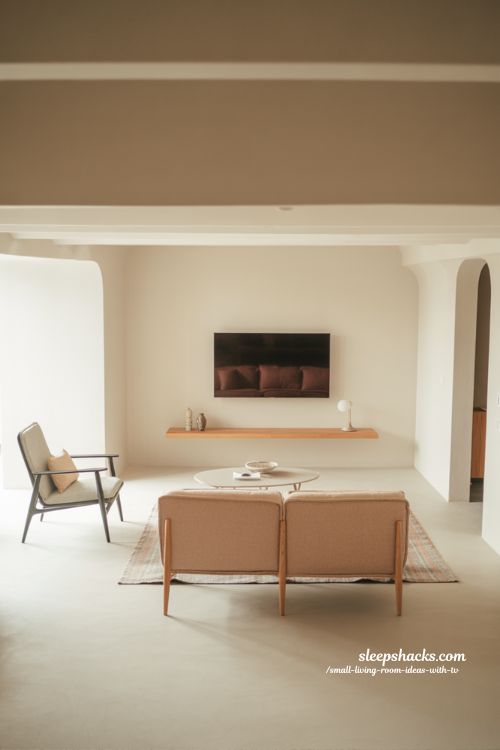
Choosing properly scaled furniture is one of the most important steps in small living rooms. Oversized pieces can overwhelm the space quickly, while smaller furniture keeps everything balanced.
This makes the TV area feel naturally integrated instead of forced.
- Maintains proper balance
- Improves movement flow
- Prevents overcrowding
FAQ
What is the best TV placement for small living rooms
Wall mounting or center placement works best because it saves space and keeps the layout simple.
How do I make a small living room feel bigger with a TV
Use light colours, mirrors, floating furniture, and avoid bulky TV stands.
Is a large TV suitable for small rooms
Yes, if the viewing distance is correct and the TV is wall mounted properly.
What type of sofa works best in small living rooms
Compact sofas, L-shaped sofas, or sofa beds work best for flexibility and space saving.
How can I keep a TV area uncluttered
Use floating shelves, hidden storage, and minimal decor to maintain a clean look.