

The most persuasive thing in your office is not the degree hanging on the wall. It is the feeling a person gets in the first ten seconds after walking through your door, before you have said a single word, and most people never realize how much that feeling shapes their trust.

Clients usually arrive on a hard day, which means your space has to calm them down and convince them you are capable, all at once. These sixteen lawyer office decor ideas do both, without turning your office into a stiff museum or a furniture showroom that feels like nobody actually works there.
1. Warm Walnut Bookshelves

Wood does something steel and laminate never manage: it signals permanence. A wall of walnut or oak shelving behind your desk gives the room depth, and the grain catches light in a way that feels quietly expensive. Clients read it as stability, which is exactly the message you want to send.
The catch is balance. Fill about two-thirds of the shelves with real legal volumes and leave the rest for a plant, a framed photo, or a small sculpture, so the wall looks lived in rather than staged. Keep spines tidy and sorted by color or size for a calm, intentional look.
2. A Reception Desk With Presence

Your reception desk is the first handshake your firm offers. A solid surface in stone, dark wood, or matte laminate with clean edges tells people they are in capable hands, while a small, understated logo on the wall behind it adds identity without shouting.
Resist the urge to go oversized, since a hulking desk eats your waiting area and makes a small room feel cramped. Keep the front panel tidy, tuck cables out of sight, and leave one corner clear for a fresh flower arrangement or a small bowl of mints. Warm under-counter lighting adds a soft glow.
3. Layered Warm Lighting
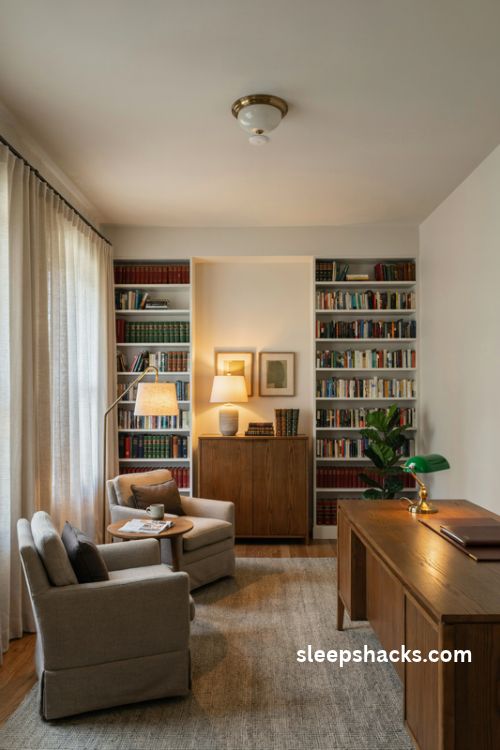
Harsh overhead fluorescents make everyone look tired and tense, which is the opposite of what a nervous client needs. Swap them for layers of warm light: a ceiling fixture on a dimmer, a table lamp on your credenza, and a floor lamp in the seating corner. Together they make the room feel like a study rather than a clinic.
Aim for bulbs around 2700 to 3000 Kelvin, which glow soft and golden. Place lamps so they light the walls and corners, not just the desk. That quiet spread of light makes the ceiling feel higher and your office feel calmer, even on a gray afternoon.
4. Leather Client Seating
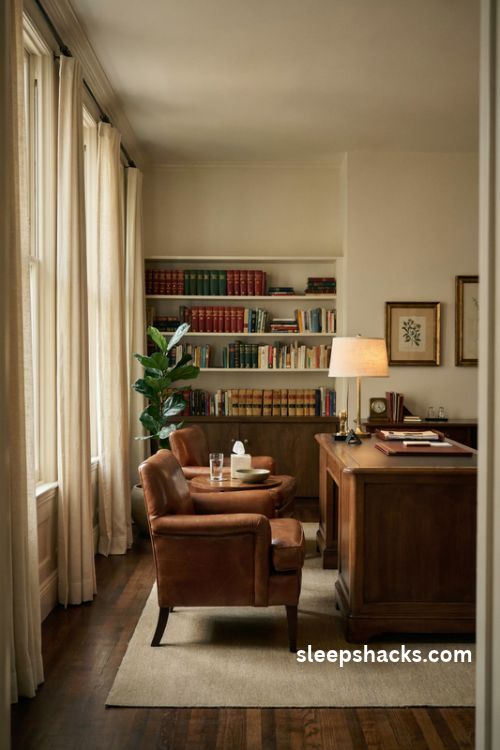
Good seating tells clients you expect them to stay a while and talk honestly. A pair of leather armchairs in cognac, tan, or deep green gives them somewhere comfortable to sit, and the material ages beautifully, picking up character the way an old briefcase does. It feels classic without feeling dated.
Choose chairs with a slightly reclined back and arms at a comfortable height, because people who feel physically at ease open up faster. Angle them toward each other slightly rather than facing your desk head on, which softens the dynamic. A small side table between them holds tissues and a glass of water.
5. Art With a Local Story

Generic landscape prints say nothing about you. Instead, hang art that connects to your city or practice, such as vintage maps, sketches of the local courthouse, or black-and-white photographs of historic streets. These become natural conversation starters and give nervous clients something to look at while they settle in.
Frame everything consistently, using the same wood tone or black metal for every piece, so the wall feels curated. Hang pieces at eye level, around fifty-seven inches to the center, and give each one room to breathe. A single large piece over a credenza is often better than a crowded gallery.
6. Navy and Warm Neutral Palette

Deep navy walls or accents carry authority without the gloom of black. Pair them with warm neutrals like cream, camel, and soft gray, and the room feels both serious and welcoming. It is a palette that photographs well, too, which matters if you use your office for website or social media images.
If painting everything navy feels bold, try one accent wall behind your desk and keep the others a soft greige. Add brass or aged bronze touches for warmth. Matte finishes work better than glossy ones, because they hide small marks and keep light soft rather than reflective.
7. A Tidy Wall of Diplomas and Awards
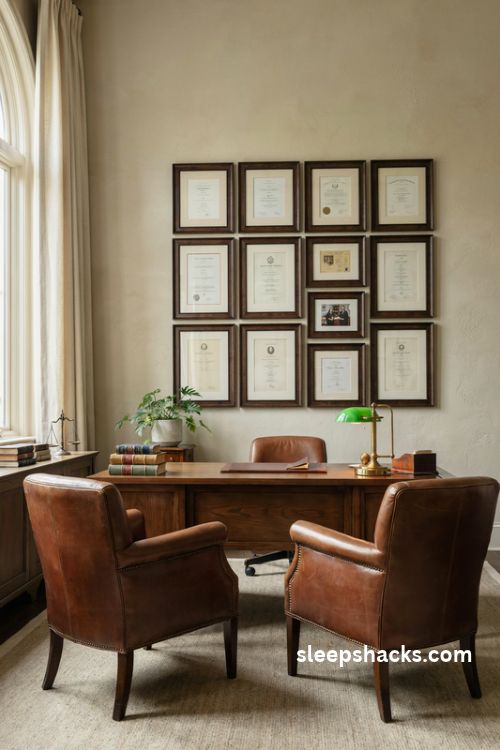
Credentials matter, but a crooked row of certificates can look boastful or messy. Gather diplomas, bar admissions, and awards into one orderly arrangement, framed in matching black or walnut frames with white mattes. The result reads as confident and organized rather than showy.
Place the arrangement on the wall behind your desk or beside the door, where clients see it naturally while seated. Use a paper template to plan the layout before drilling any holes, and keep gaps between frames uniform, about two inches. Mix in one personal item, such as a small framed photo, for a human touch.
8. Plants That Soften the Room

A law office can feel stiff, and a few healthy plants fix that fast. A tall fiddle-leaf fig or rubber plant in a corner brings in life, while a trailing pothos on a shelf softens the straight lines of books and furniture. Greenery signals care, which clients appreciate.
Choose low-maintenance varieties such as snake plants, ZZ plants, or peace lilies, because a wilted plant sends the wrong message. Use matching planters in matte ceramic or woven baskets for a tidy look. If your office gets little daylight, a good-quality faux plant works fine, as long as you dust it regularly.
9. A Round Meeting Table
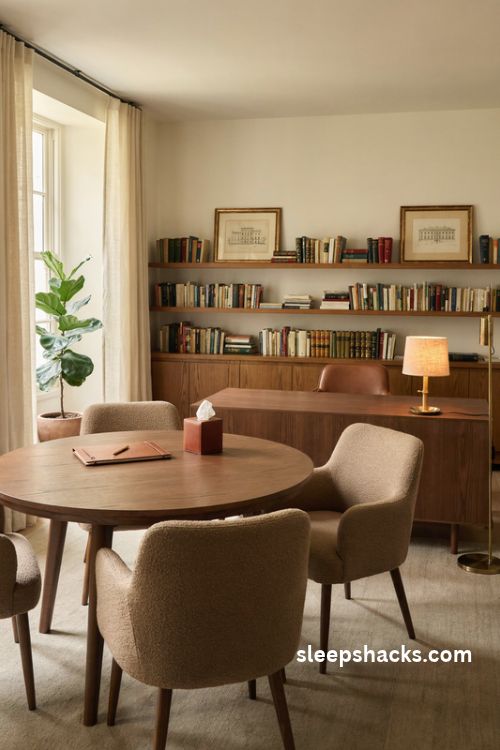
An imposing desk between you and a client can feel like a barrier. A small round table in the corner, with two or three chairs, makes conversations feel more equal and collaborative. It is especially helpful for family law, estate planning, and other sensitive matters.
Choose a table around forty-two inches across so there is room for documents and a notebook without crowding. Wood or a stone top both look elegant. Keep the surface clear except for a notepad, a pen, and a box of tissues, so the table always feels ready and welcoming.
10. A Soft Area Rug

A good rug anchors your furniture and quiets the room, which is a bonus in offices where footsteps and chair scrapes echo. Choose a wool or wool-blend rug in a muted pattern, such as a subtle geometric or a faded Persian-style design, in colors that echo your palette.
Size matters here. Make sure at least the front legs of your client chairs sit on the rug, and leave about a foot of bare floor around the edges. A rug that is too small looks like a postage stamp. Low pile is easier to keep clean, and rolling chairs glide over it more smoothly.
11. Glass Partitions With Frosted Privacy
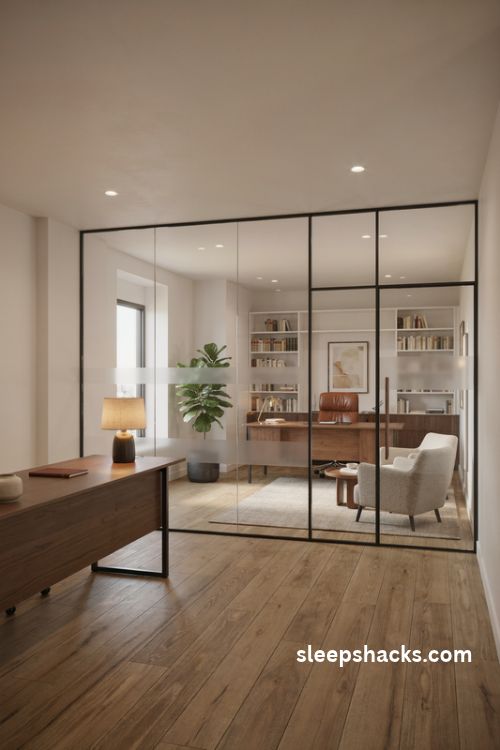
Glass walls make a small office feel bright and open, and they signal transparency, which suits a profession built on trust. They also let daylight travel deeper into the space, so interior rooms stop feeling like boxes. A glass partition between your office and reception can look sleek and modern.
Confidentiality still matters, so use frosted film on the lower half or in a subtle band at eye level. That keeps conversations private while preserving the light. Choose slim black or bronze frames for a polished look, and make sure the glazing is rated for sound reduction to protect sensitive discussions.
12. Vintage Brass Details

Small brass pieces add warmth and a sense of history. A banker-style desk lamp, a brass nameplate, a pen holder, or a pair of bookends can all give your desk a refined, time-tested feel. They look especially handsome against dark wood and navy.
Keep these touches limited so they feel curated, not cluttered. Three or four brass items on the desk and shelves is plenty. Let the metal age naturally rather than polishing it to a mirror shine, because a soft patina feels more authentic. A leather desk pad ties everything together nicely.
13. A Calming Waiting Area
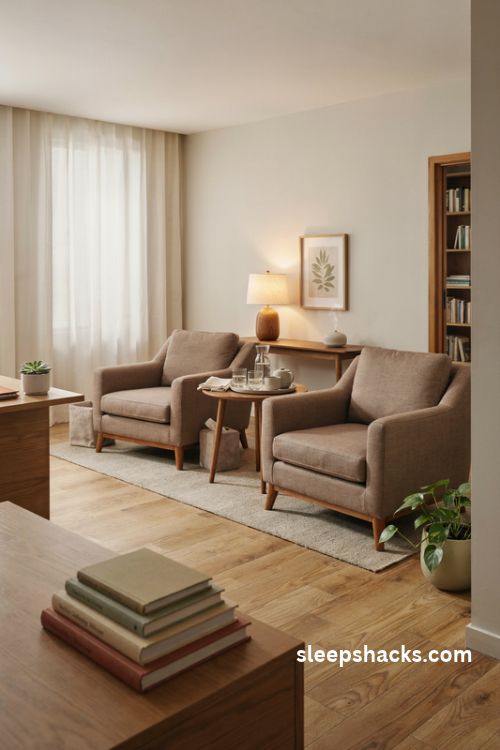
Clients often wait a few minutes, and those minutes set the tone for the entire consultation. Make them comfortable with cushioned seating, a small side table, soft lighting, and a few well-chosen magazines or books on design, travel, or local history. Skip anything stressful or political.
Add a tray with water, tea, or coffee, which signals hospitality. A soft, neutral scent from a diffuser or a candle can help nervous visitors relax, but keep it light because strong fragrances bother some people. Quiet music at a low volume helps cover conversations from the next room.
14. A Subtle Brand Color Accent
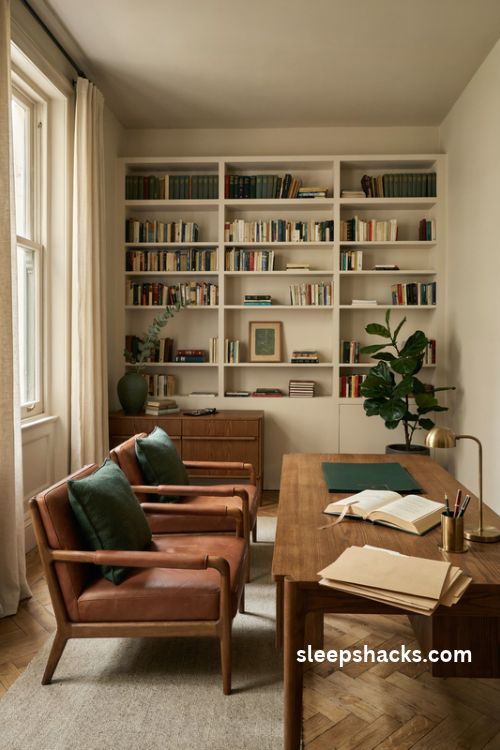
Your office should feel like your firm, and a single brand color used with restraint does exactly that. If your logo is deep green, repeat that tone in a cushion, a vase, or a framed print. If it is burgundy, echo it in a throw or a leather folder. The effect is subtle but cohesive.
Stick to one accent color and use it three or four times in the room, spread across different heights, so your eye moves around the space. Neutral walls and furniture let the color stand out without overwhelming the room. It also makes your firm easier to remember.
15. Hidden Storage and Tidy Surfaces
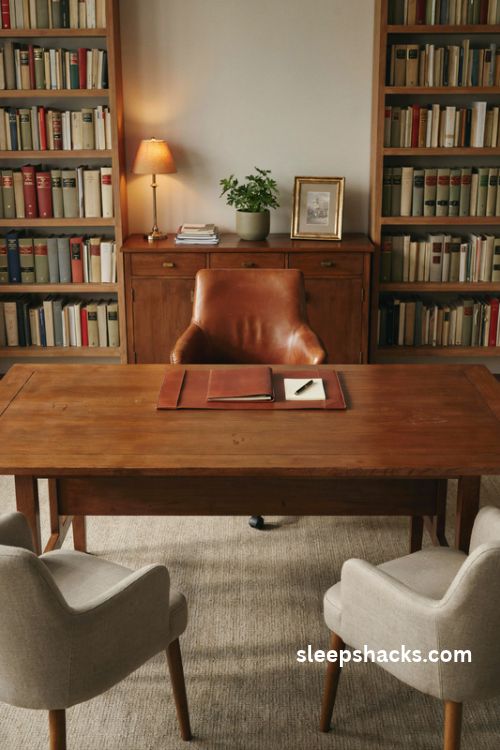
A cluttered desk can make a client wonder whether their file is safe. Good storage fixes that. A closed credenza behind your desk hides files, binders, and supplies, while a slim drawer keeps pens and sticky notes out of sight. The cleaner the surfaces, the more organized you appear.
Choose a credenza with soft-close doors and a top surface that can hold a lamp, a plant, or a small framed photo. Add cable management under the desk so cords do not tangle. Spend five minutes at the end of each day clearing your desk, and your office will always look ready for a new client.
16. Soft Acoustics for Privacy
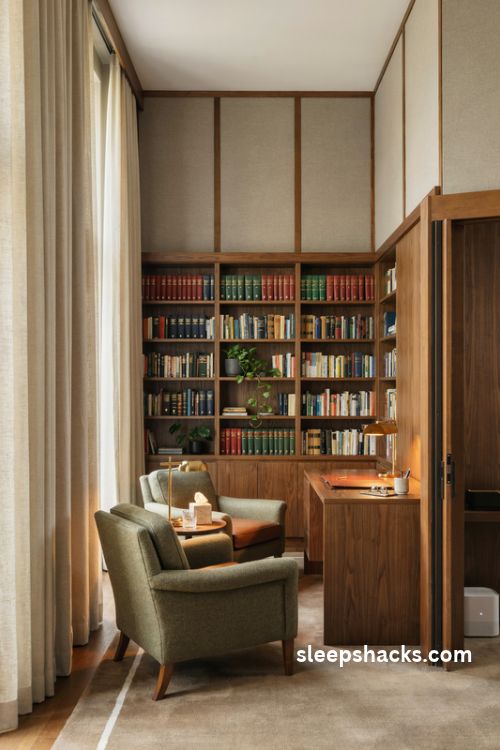
Privacy is part of trust, and a room where voices carry makes clients nervous. Heavy curtains, upholstered chairs, a thick rug, and fabric wall panels all absorb sound and keep conversations private. They also make the room feel warmer and calmer, which helps tense discussions.
If you cannot change the walls, add a bookcase filled with books along the shared wall, since books are surprisingly good at dampening sound. A white noise machine outside the door adds another layer of protection. Use a solid-core door and weatherstripping around the edges to keep voices where they belong.
Final Thoughts
Think about the last time you walked into a room and instantly felt either at ease or on edge, before anyone spoke. What was it about the lighting, the chairs, the quiet, or the way things were arranged that made you feel that way?
Your clients are asking themselves the same question, without realizing it, the moment they step inside. The shelves, the lamp, the rug under their feet, and the spot where they sit all answer it for you. Which small detail in your own office would you want a nervous stranger to notice first?
Frequently Asked Questions
Q: What colors work best for a lawyer’s office?
Navy, deep green, charcoal, and warm neutrals like cream and camel all convey professionalism while still feeling inviting. Pick one main tone and one accent so the room stays calm.
Q: How can I decorate a small law office on a budget?
Focus on lighting, a good rug, and a few meaningful framed pieces, since these make the biggest impact for the least money. Keep surfaces clear so the space feels larger.
Q: Is it okay to display personal items in a lawyer’s office?
Yes, a few carefully chosen items, such as a family photo or a favorite book, make you more approachable. Keep them modest so the room still feels professional.