

Spring has this magical way of creeping into our homes without us even noticing. I still remember the first time I carried a basket of tulips from the garden into my kitchen; the sunlight hit their petals just right, and suddenly, my entire morning felt lighter.
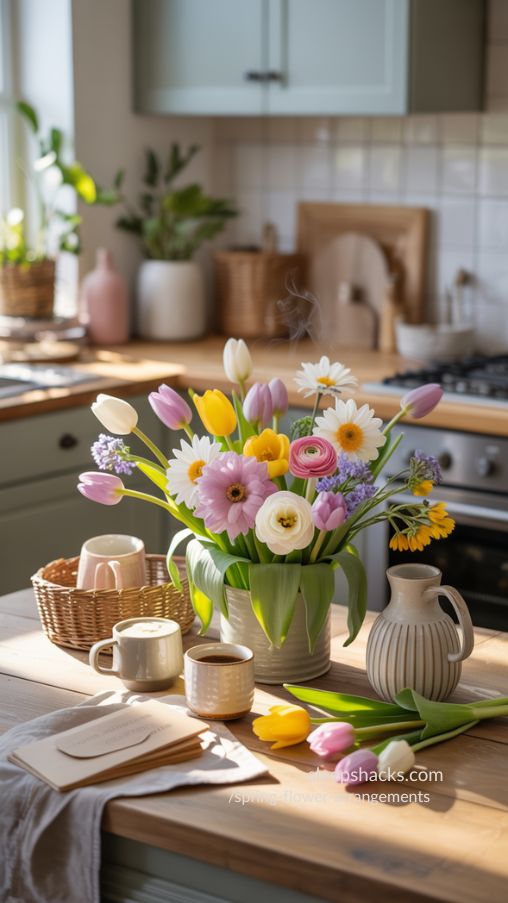
There’s something about spring flower arrangements that doesn’t just decorate a space—it changes the mood, reminds you of hope, and even makes your coffee taste a little sweeter. Over the years, I’ve experimented with dozens of blooms, colors, and vases, and each little arrangement feels like a tiny celebration of life.
- Choose colors that make your heart smile.
- Mix textures for depth and visual interest.
- Keep arrangements approachable—perfection isn’t the goal.
1. Bright Tulip Bouquets for Spring Tables
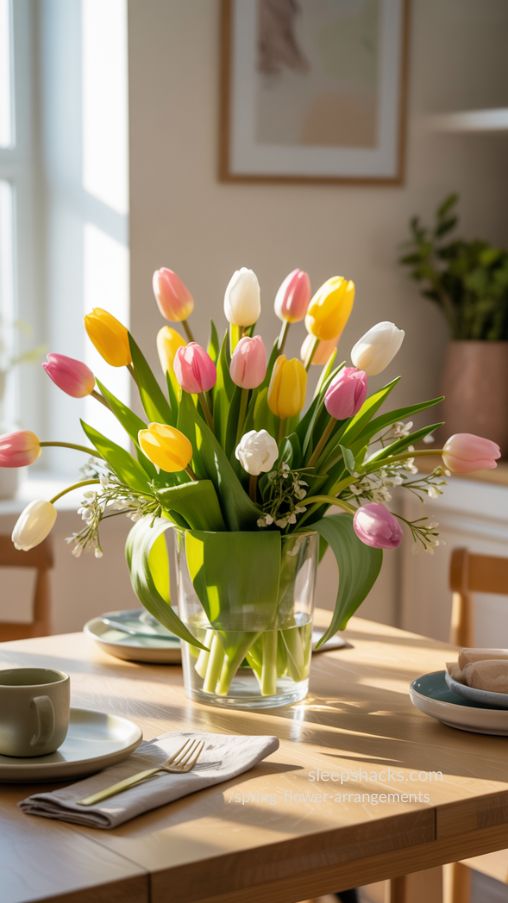
Tulips are my go-to for brightening any space. I love how yellow, pink, and white tulips feel like sunlight captured in a vase. One spring, I arranged them in a simple glass vase for Sunday brunch, and even my cat paused mid-play just to sniff them. Their cheerful color and natural elegance instantly set a happy tone for the room.
Pairing tulips with soft greenery or delicate blooms like paperwhites can elevate the look. This layering adds texture, making even a simple vase appear lush and professional. It’s one of those arrangements that guests often ask about, and it’s incredibly easy to replicate at home.
- Use varying tulip heights for depth.
- Mix complementary pastel shades.
- Replace with fresh tulips every few days.
2. Paperwhite Vases with Moss Accents
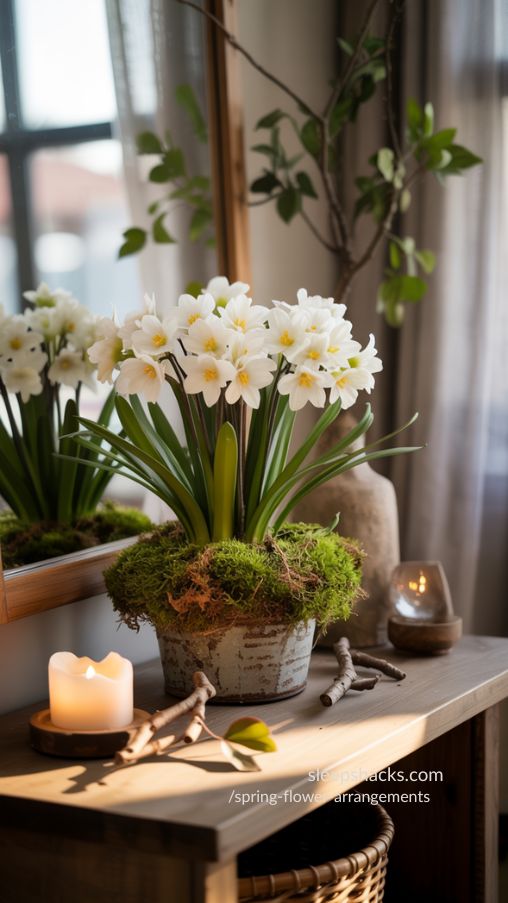
Paperwhites are little bursts of early spring charm. I remember forcing a pot in January and watching the first blooms appear in a rustic vase topped with moss. The scent alone felt like a whisper of warmer days, and the arrangement looked effortlessly natural. Placing them in entryways instantly greets guests with seasonal freshness.
To make it even more interesting, I like to add natural props like small twigs or a candle nearby. Moss brings texture and a hint of woodland magic. This setup is perfect for living rooms or tables, and it’s wonderfully DIY-friendly without feeling staged.
- Keep water levels consistent to prolong blooms.
- Use moss to hide stems and add texture.
- Rotate the vase for even light exposure.
3. Citrus-Hued Poppy Displays
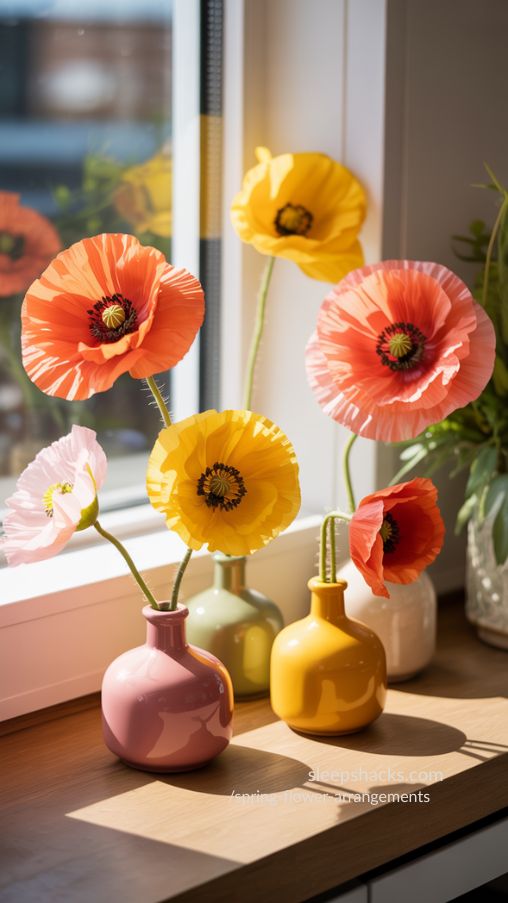
Citrus-hued poppies are like little explosions of sunlight. I love placing them in small, colorful vases near windows where light hits the petals just right. Even one or two stems can completely change the mood of a room, adding energy and cheer.
For a fuller look, combine with a few pastel florals or soft greenery. Their delicate petals can be fragile, but the impact is worth it. These arrangements feel playful yet sophisticated, perfect for any tabletop or shelf that needs a pop of seasonal color.
- Choose bud vases for single stems.
- Mix with soft pastel flowers for balance.
- Replace petals as they fade for freshness.
4. Cherry Blossom & Dogwood Branches
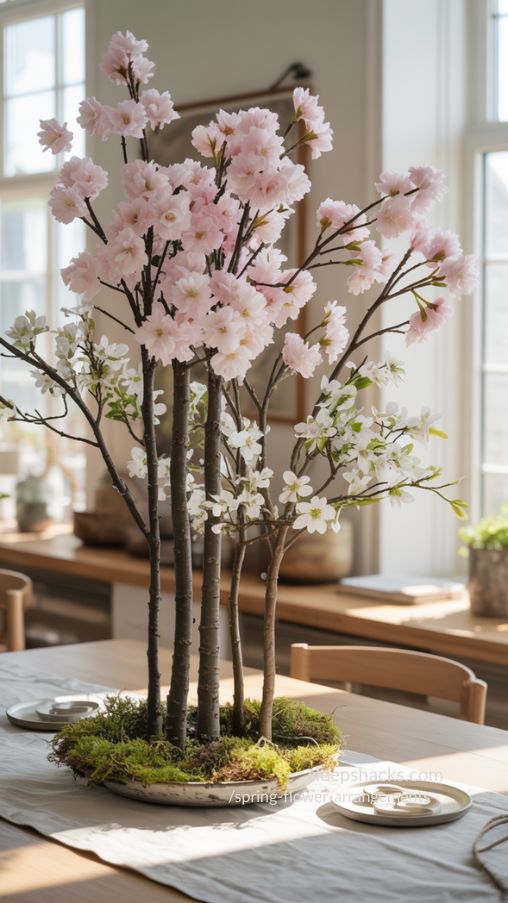
I still smile thinking about the first time I forced cherry blossom branches indoors. They instantly transported me to a spring garden, and the soft pink blossoms made me feel like time had slowed. Dogwood branches add a white contrast that balances the pink, giving a woodland-inspired elegance.
Using chicken wire inside a rustic container helps hold stems in place. Adding moss or lichen disguises the support and creates a natural look. This arrangement works beautifully on large tables, entryways, or even as a standalone decorative corner, offering height and drama without requiring dozens of blooms.
- Use tall, narrow containers for support.
- Cover wire with moss or lichen.
- Rotate branches for balanced blooms.
5. Blue Delphinium & Larkspur Ombre
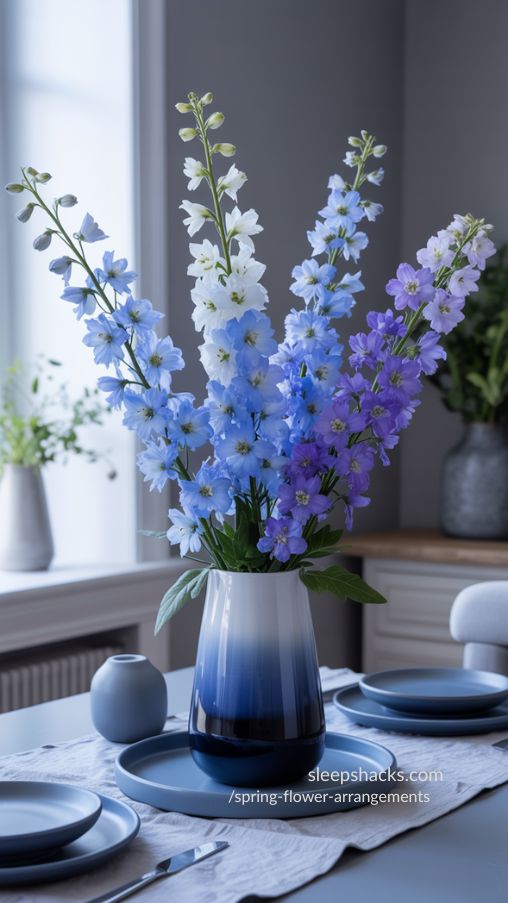
Blue delphiniums and larkspur are dreamy additions to any spring arrangement. One year, I placed them in a blue vase on the dining table, and the ombré effect from light to deep violet made the room feel like a soft spring evening. Their subtle elegance is perfect when you want drama without being over-the-top.
Pairing these flowers with a monochromatic vase or tableware enhances their visual impact. They’re ideal for serene, airy spaces where you want to highlight texture and color without clutter. The ombré arrangement invites the eye to travel upward, creating movement and sophistication.
- Match vase color to flower tones.
- Use few stems for minimalist elegance.
- Group shades for subtle ombré effect.
6. Garden Rose Domes
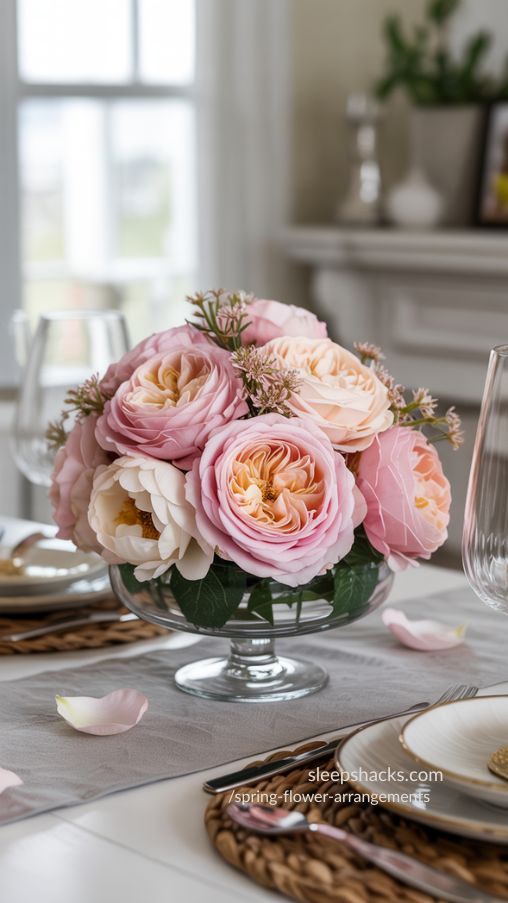
I once created a dome of soft garden roses in a glass compote for a birthday brunch, and guests kept leaning in just to smell them. There’s something about the arching dome shape that feels intimate yet luxurious. Each stem placed carefully creates fullness without looking heavy.
To elevate the look, I mixed peonies and small filler blooms for dimension. This type of arrangement works beautifully for special occasions or a simple spring centerpiece. It’s a timeless style that radiates romance and warmth, making any space feel cozy and celebratory.
- Layer blooms for natural fullness.
- Use smaller filler flowers for depth.
- Keep stems clean to avoid water discoloration.
7. Eggshell Flower Cups
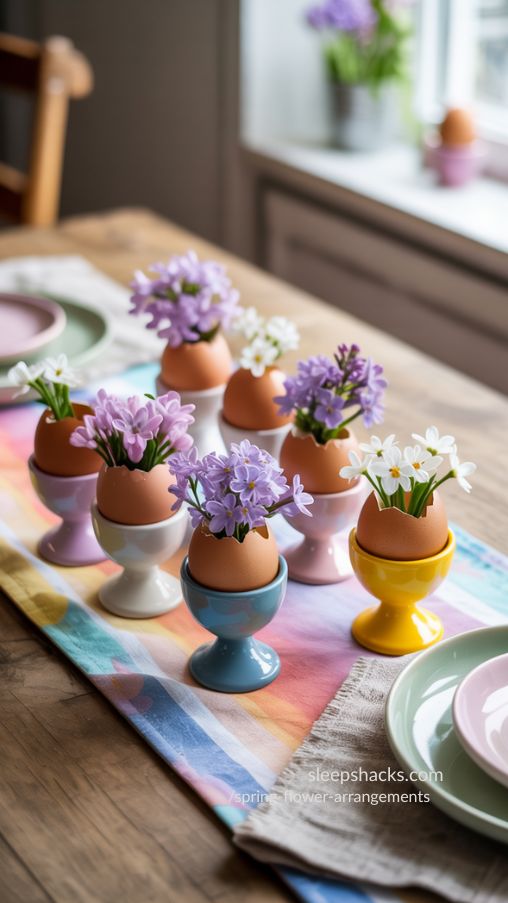
Eggshell cups are my favorite quirky idea for spring décor. I remember crafting a dozen for Easter brunch with tiny lilacs and violas, and they were the highlight of the table. Each shell feels delicate and charming, a tiny miracle of spring.
Fill them with room-temperature water and stabilize in small eggcups. Grouped together, they make a whimsical centerpiece or place setting decoration. The tactile nature of this arrangement inspires creativity and adds a personal touch to seasonal celebrations.
- Use small flowers or cuttings.
- Stabilize shells in eggcups.
- Refresh water daily for longevity.
8. Oversized Urn Arrangements
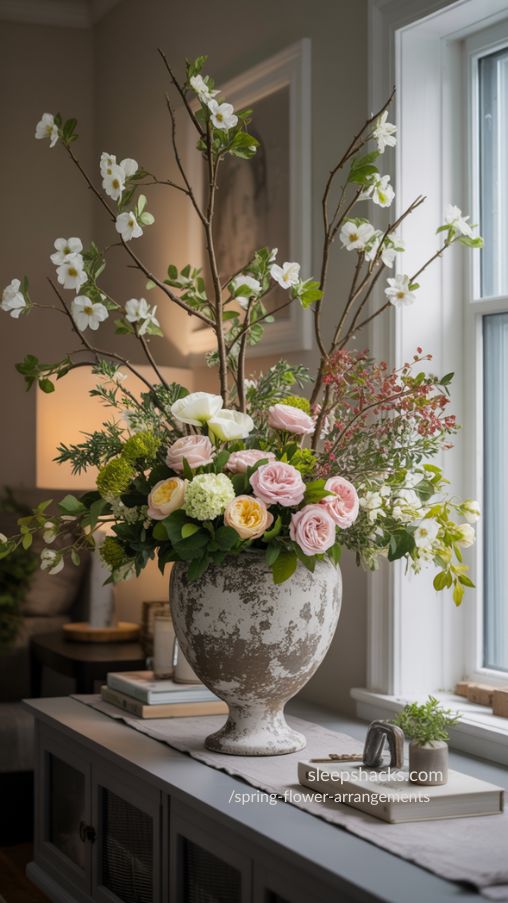
Oversized urns create a bold statement in any home. I once filled one with dogwood, mock orange, viburnum, and garden roses for a living room display. The height and volume make it a centerpiece in its own right, perfect for a dramatic spring vibe.
Layering blooms and greenery adds dimension, and the urn’s scale naturally elevates the arrangement. It’s ideal for entryways or dining tables and creates a professional look with minimal effort. The mix of textures and heights keeps the display visually engaging.
- Use sturdy stems for tall flowers.
- Combine textures for visual interest.
- Ensure water reaches all stems in large urns.
9. Classic Tulip & Viburnum Mix
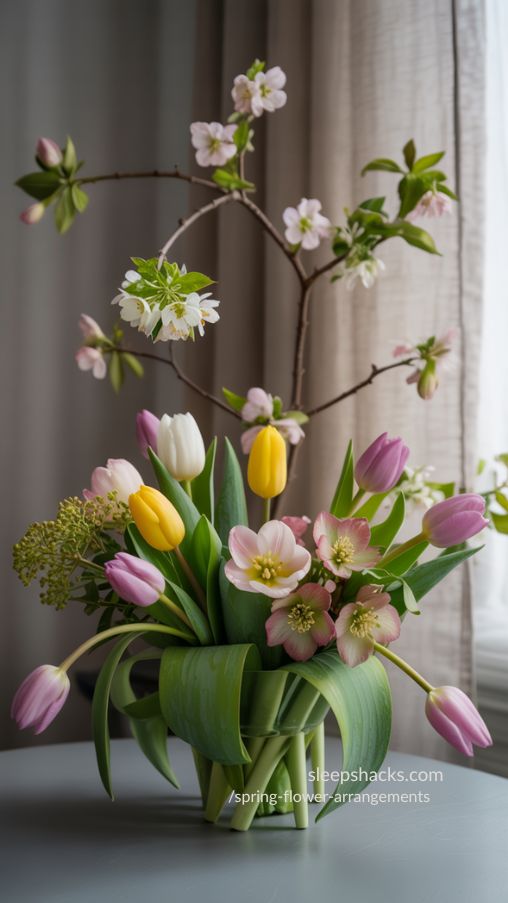
I love mixing tulips with viburnum, apple blossoms, and hellebores for a natural, layered effect. It reminds me of a stroll through early spring gardens, bringing a touch of the outdoors inside. The combination feels lush but approachable.
Varying heights and textures makes this arrangement visually dynamic. This style works well on tables, mantels, or shelves. It’s a simple way to create a professional-looking spring flower display without needing dozens of blooms.
- Alternate bloom heights for depth.
- Combine multiple textures.
- Rotate arrangement for sunlight.
10. Lilac Height & Drama
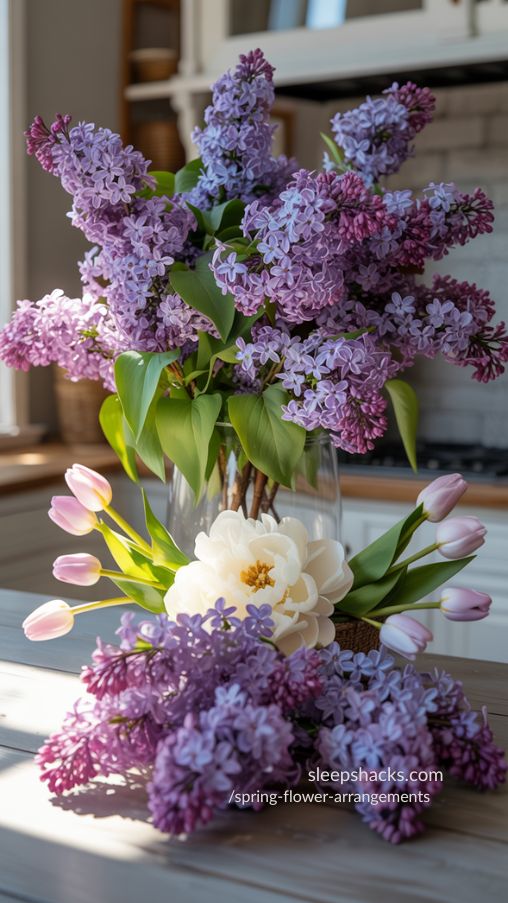
Lilacs instantly make a space feel alive. I once placed a few stems in a large serving bowl, and the fragrance alone transformed my kitchen into a spring sanctuary. Their deep purple blooms and vertical height add a dramatic flair.
Pair with pastel tulips or white peonies for contrast. This creates a layered, textured look that draws the eye. Lilacs are ideal for spring table centerpieces or mantel displays and can be combined with seasonal greens for extra fullness.
- Cut stems diagonally for better water absorption.
- Pair with lighter flowers for contrast.
- Change water every two days to maintain freshness.
11. Tulip & Peony Blends
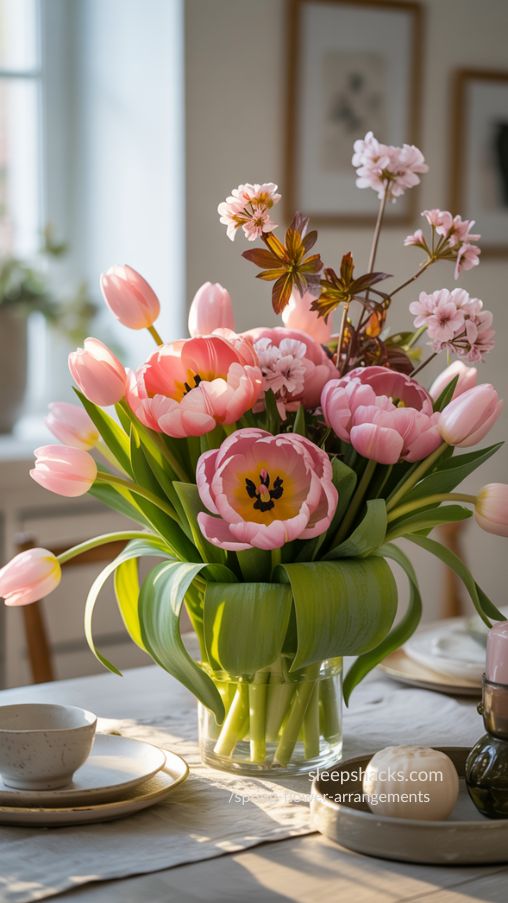
Silky tulips and single-petaled peonies together feel like spring in full bloom. I love mixing them with viburnum and scented geraniums for both fragrance and texture. Each arrangement feels personal, like a small celebration captured in a vase.
Layering these flowers enhances depth and makes even a small table feel luxurious. The soft colors invite warmth, romance, and seasonal cheer. This arrangement works beautifully for casual dining tables or as a centerpiece for a brunch or gathering.
- Mix different flower shapes.
- Add scented foliage for depth.
- Use a wide vase for proper display.
12. Fishbowl Garden Arrangements
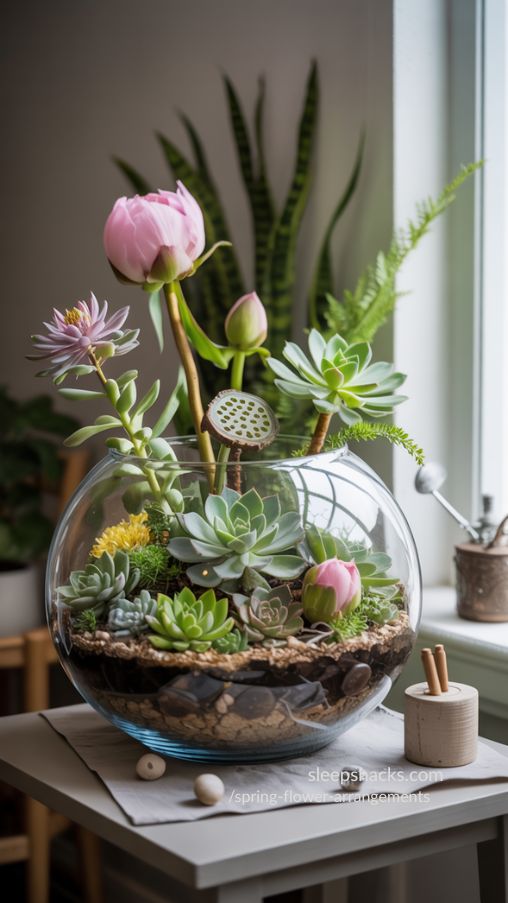
Creating a fishbowl garden arrangement is one of my favorite ways to mix succulents, tree peonies, lotus pods, and asparagus ferns. It feels like a tiny spring ecosystem captured in glass. The textures and elements draw attention and spark conversation.
Layering the plants carefully ensures they all get space and water without overcrowding. These arrangements are perfect for small tabletops, shelves, or even office corners. They offer a playful twist on traditional flower arrangements while keeping spring vibes alive.
- Layer carefully for drainage and space.
- Combine textures and colors.
- Keep in indirect light for longevity.
13. Tree Peony Foundations
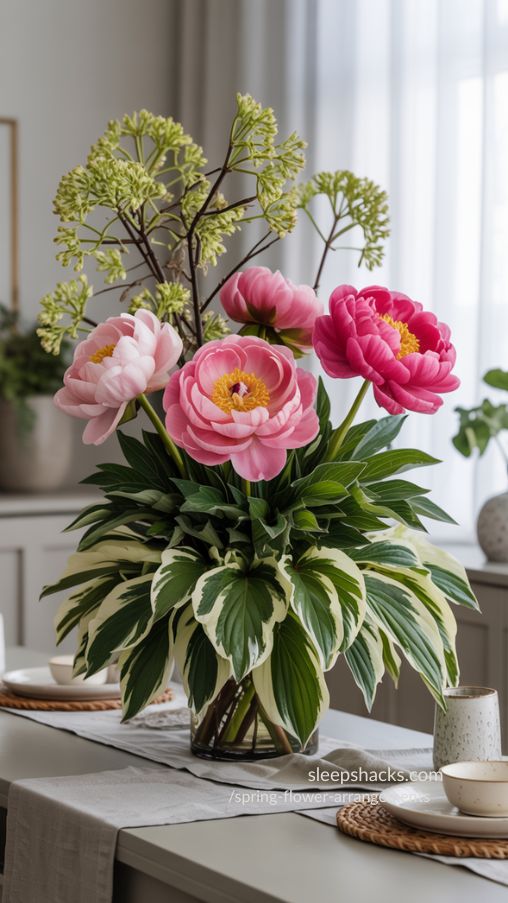
Tree peonies make a statement with bold blooms and large foliage. I like using variegated hosta leaves as a base and layering lady’s mantle on top. This foundation provides both color contrast and structure.
It’s a dramatic, elegant style perfect for spring events or tablescapes. The large, vibrant blooms instantly become the centerpiece, drawing eyes upward and adding sophistication to your home décor.
- Use large leaves for structure.
- Balance bold flowers with smaller fillers.
- Keep stems hydrated for longevity.
14. Mother’s Day Candy-Colored Bouquets
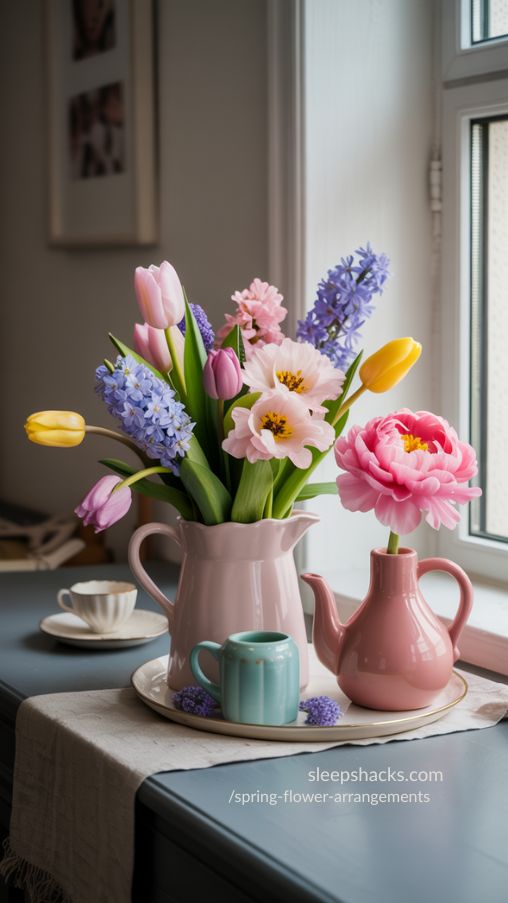
Candy-colored tulips, hyacinths, peonies, and forget-me-nots in teapots or quirky vases always feel like a hug. I love making these for my mom; the mix of textures and pastel shades instantly uplifts the room.
Using unconventional vessels gives the arrangement personality and charm. It encourages creativity and makes each bouquet feel personal. These colorful spring arrangements are ideal for gifting or seasonal decoration, evoking joy and warmth.
- Use pastel shades for a soft effect.
- Experiment with playful vases.
- Mix textures for visual depth.
15. Champagne Flute Mini Bouquets
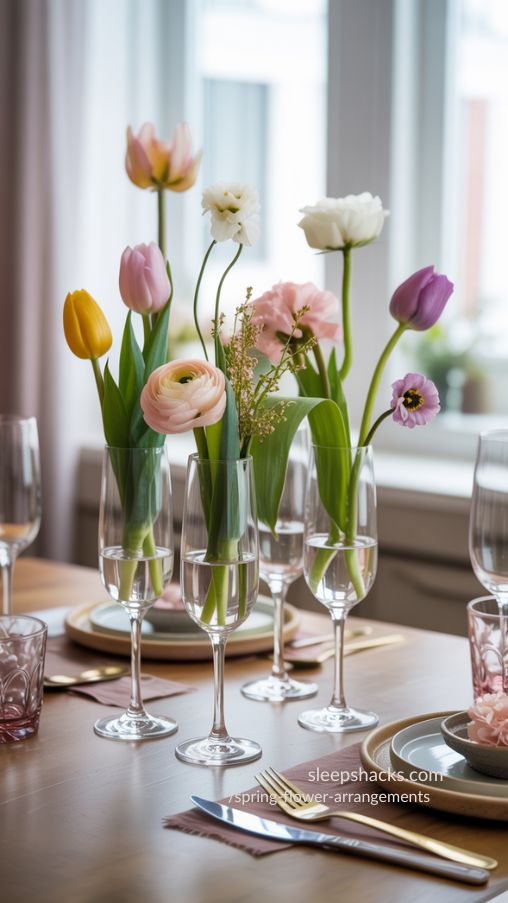
Mini bouquets in Champagne flutes are surprisingly elegant. I arranged tulips, ranunculus, and lisianthus for a small brunch once, and the guests couldn’t stop admiring them. Their verticality makes them unique without taking up too much table space.
Grouping multiple flutes together amplifies the effect. These mini arrangements are perfect for small gatherings or as conversation starters. The clear vessels showcase stems and water, giving the display a light, airy feel.
- Use narrow stems for stability.
- Group flutes for visual impact.
- Choose complementary colors for cohesion.
16. Daffodil Solo Arrangements
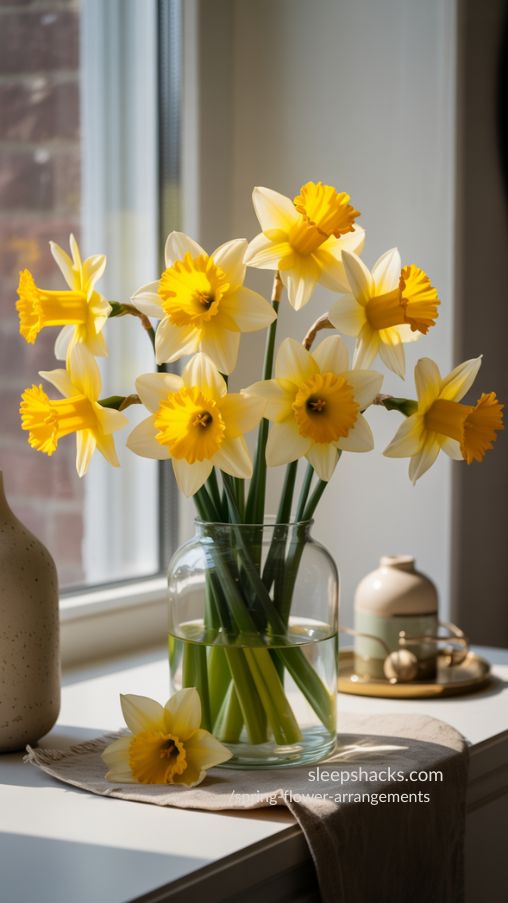
Nothing feels as hopeful as a solo daffodil arrangement. One vase of bright yellow blooms can transform a corner, making it feel cheerful and welcoming. I like placing them by windowsills for maximum sunlight.
Solo arrangements allow each bloom to shine and communicate optimism and new beginnings. They’re simple, low-maintenance, and perfect for any room that needs a touch of spring.
- Place in clear vases for visibility.
- Rotate for even sunlight.
- Change water every other day.
17. Low Centerpiece Mixes
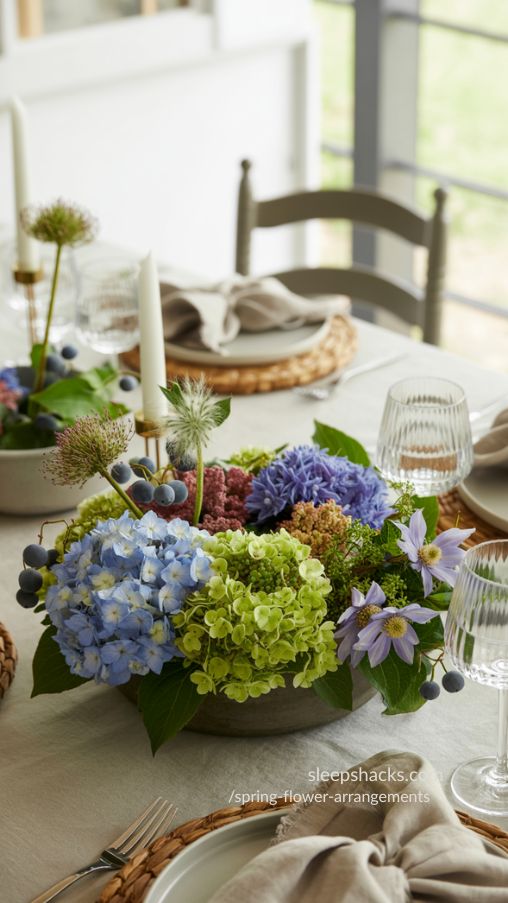
Low centerpieces combine hydrangeas, dusty miller, echinops, clematis, and blueberries for a layered, textural display. I love how these feel inviting without blocking sightlines at the table. They’re perfect for spring brunches or intimate dinners.
The combination of textures makes each arrangement interesting and approachable. Low arrangements are great for conversation-friendly tables, creating depth and visual appeal while staying functional for guests.
- Use wide, shallow containers.
- Combine colors and textures.
- Refresh water regularly.
18. Tulipiere & Early Viburnum
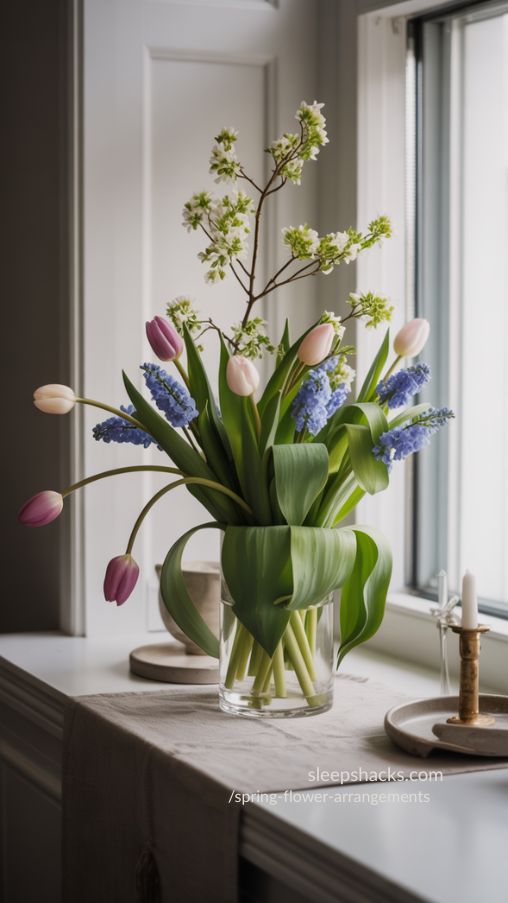
A tulipiere with one tulip per finger is both structured and playful. I arranged one with early viburnum and muscari, and it instantly felt like a miniature spring festival in my living room. The vertical presentation adds elegance and height.
It’s a fun twist on traditional bouquets, offering a creative vessel idea. Small, structured arrangements like this are perfect for windowsills, mantels, or small dining tables, making them feel curated and special.
- Place in a well-lit area.
- Pair with early spring foliage.
- Use single stems for clarity.
19. Bleeding Hearts & Purple Accents
Combining tulips, white bleeding hearts, and bird’s nest ferns creates a romantic, whimsical arrangement. I love the soft purples paired with airy greenery—it feels like spring captured in a vase.
This arrangement draws attention for its layered textures and colors. It’s ideal for intimate spaces or as a centerpiece for seasonal décor, creating a dreamy, playful vibe in any room.
- Combine pastel blooms with greenery.
- Use clear vases to highlight stems.
- Trim stems regularly for freshness.
20. Bulb Clusters in Pots
Clustering hyacinths and daffodils in clay or terra-cotta pots is a simple way to replicate the drama of spring bulbs. One spring, I grouped them by color on my porch, and it felt like a mini garden display.
Repeating colors in clusters gives impact without overcrowding. Pots are versatile and easy to move indoors or outdoors. This approach is approachable for beginners and instantly adds seasonal charm.
- Group bulbs by color for maximum effect.
- Use shallow pots for multiple bulbs.
- Refresh soil water for longevity.
Table 1: Seasonal Flower Pairing Suggestions
| Flower | Pair With | Best For |
| Tulips | Paperwhites, Peonies | Centerpieces & Dining Tables |
| Lilacs | Peonies, Pastel Tulips | Mantels & Entryways |
| Daffodils | Hyacinths, Greenery | Solo Arrangements & Windowsills |
| Poppies | Soft Pastels | Tables & Sideboards |
This table highlights flowers that naturally complement each other in color, texture, and size. Pairing correctly ensures arrangements feel cohesive and visually appealing.
Table 2: Vase & Container Ideas
| Vase Type | Flower Style | Tip |
| Glass Compote | Roses & Peonies | Use floral frog for stability |
| Eggshell Cups | Lilacs & Violas | Perfect for tiny, whimsical displays |
| Champagne Flutes | Tulips & Ranunculus | Group multiple flutes for impact |
| Oversized Urn | Dogwood & Viburnum | Layer textures for dramatic effect |
Choosing the right container enhances the flower arrangement’s style and functionality. Consider size, color, and stability for long-lasting displays.
FAQ
Which flowers are best for spring arrangements?
Tulips, daffodils, lilacs, peonies, and paperwhites are all perfect for spring displays.
How long do spring flowers last in a vase?
Most last 5–10 days with fresh water and trimmed stems; some bulbs like daffodils may need solo arrangements.
Can I use store-bought flowers for professional-looking arrangements?
Yes! Combining store-bought blooms with greenery and layering textures can create stunning displays without a garden.
What’s the easiest spring arrangement for beginners?
Solo daffodils or tulip bouquets in a simple glass vase are easy, low-maintenance, and visually impactful.
How do I keep arrangements fresh longer?
Trim stems, change water every 2–3 days, and keep flowers away from direct heat or drafts.