

There’s something about the sound of water in a garden that makes everything feel calmer. Even a tiny backyard pond — nothing fancy, just a small patch of still or moving water surrounded by plants and stones — can completely change the feel of an outdoor space.
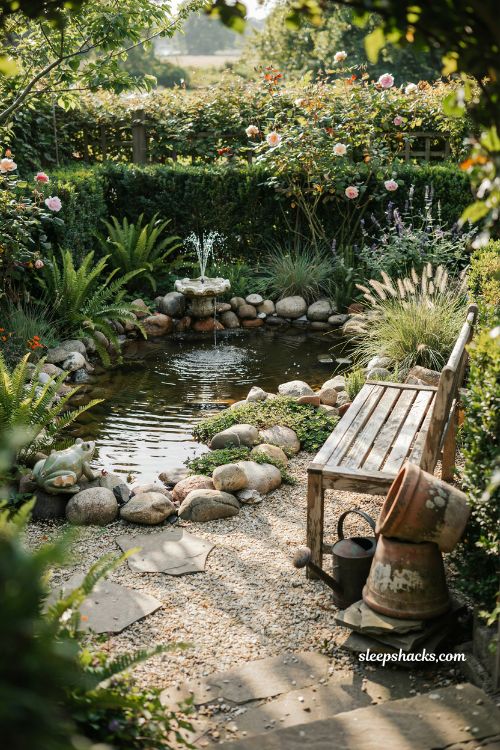
The best part? You don’t need a professional landscaper or a massive budget to make it happen. Whether you’ve got a sprawling backyard or a narrow patio, there’s a DIY small pond idea here that fits your space, your skill level, and what you actually want from your garden. Here are 15 ideas to get you started.
1. Container Pond in a Whiskey Barrel
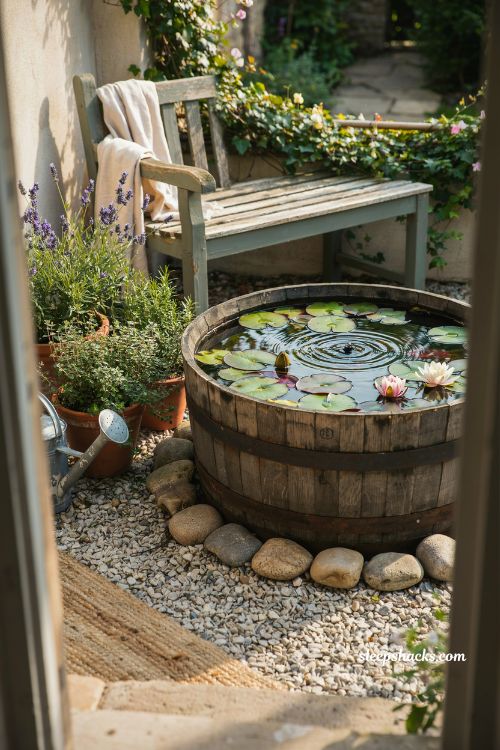
A whiskey barrel is one of the most satisfying ways to create a small pond without digging a single hole. These barrels come in kits with liners already included, which makes setup quick and beginner-friendly. Drop in a small submersible pump, add a water lily or two, and you’ve got a fully functioning patio water feature in an afternoon. They’re compact enough for tight spaces but large enough to actually feel like a pond. Position it near a bench or seating area so you can actually enjoy it up close on warm evenings.
2. Preformed Pond Form Buried in the Ground
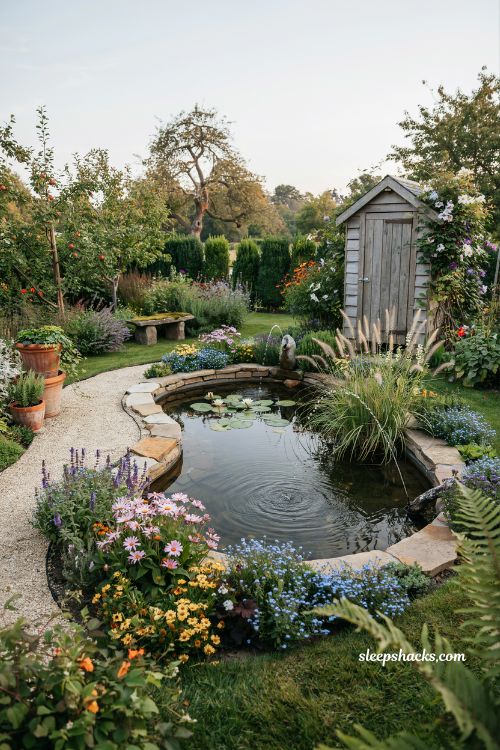
If you want a traditional inground look without the complexity of cutting and fitting a custom liner, a preformed pond form is the way to go. You dig the hole to match the shape, drop the form in, and backfill around it. It’s fast — you can realistically have one installed in a few hours — and the rigid structure holds its shape well over time. Once it’s in, cover the visible plastic edges with flat rocks or flagstone so it looks like it belongs. Add a small pump and a couple of aquatic plants and you’re done.
3. Stock Tank Pond on the Patio
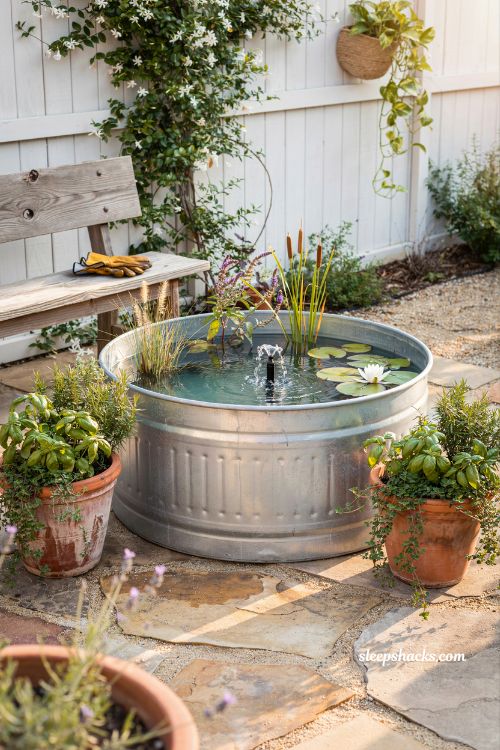
Galvanized metal stock tanks have become a favorite for DIY ponds, and for good reason. They’re durable, they look genuinely beautiful, and they come in enough sizes that you can find one that fits almost any patio or yard. No liner needed if you choose a steel model — they hold water on their own. You can add a solar-powered fountain pump for movement and oxygenation, then plant marginal aquatic plants around the rim. The metal surface develops a lovely natural patina over time, and the whole thing has this clean, modern farmhouse look that photographs really well.
4. Mini Wildlife Pond in a Planter
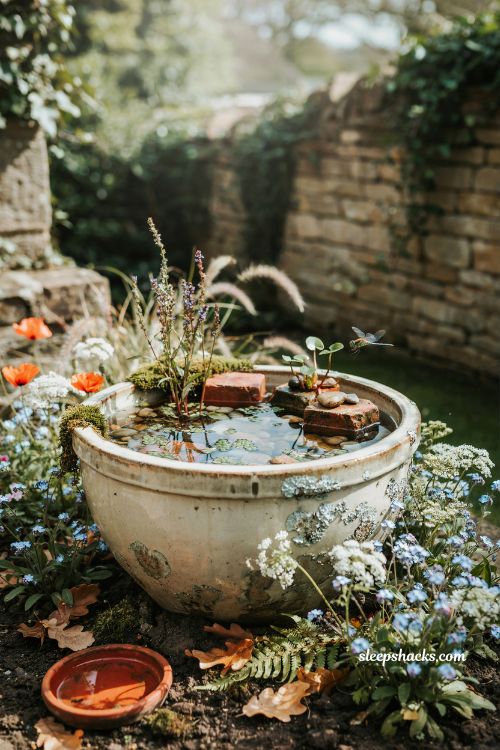
Not everyone wants a big project. A wide, deep planter — at least 18 inches in diameter and several inches deep — is all you need to create a tiny pond that actually attracts wildlife. Add pebbles or bricks inside to create levels so small creatures can climb in and out. Tuck in a couple of native aquatic plants, skip the filter and pump, and let nature handle the rest. Frogs, birds, and dragonflies will find it faster than you’d expect. It’s low maintenance, low cost, and genuinely magical to watch over time.
5. Old Bathtub Converted Into a Garden Pond
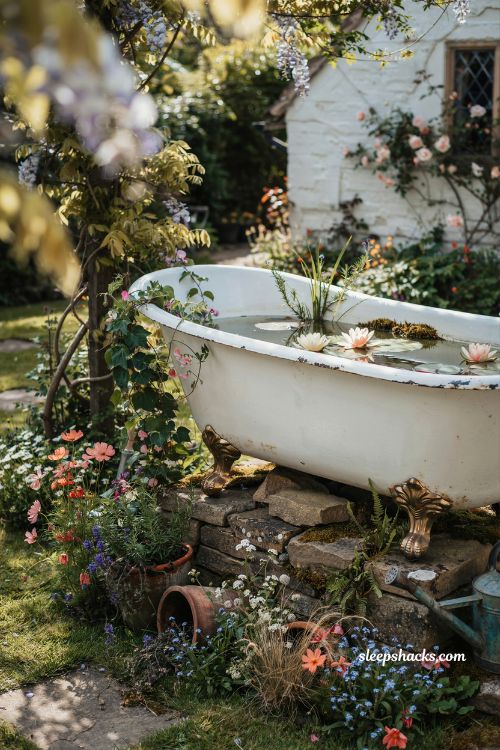
A clawfoot or standard bathtub makes a surprisingly charming above-ground pond. The shape is already right, the depth is good for goldfish, and the plug hole makes drainage easy when you need to clean it. Position it partway into the soil if you want a more integrated look, or leave it above ground and dress it up with climbing plants, mosses, and stacked stone. The freestanding version has this quirky cottage aesthetic that works brilliantly in naturalistic or eclectic gardens. Old bathtubs often show up at salvage yards for almost nothing.
6. Raised Pond in a Timber or Brick Frame
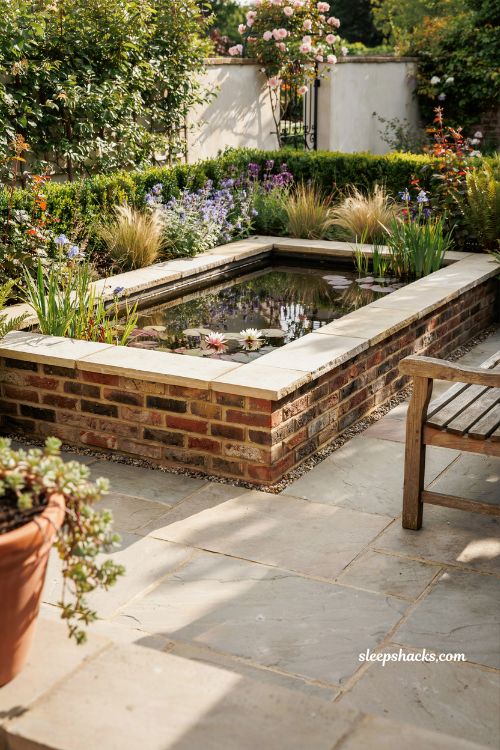
A raised pond gives you a clean, structured look that works especially well in formal garden settings or next to a patio. Build a simple rectangular frame from timber sleepers or brick, line the inside with a flexible pond liner, fill it, and cap the edges with flat coping stones. The raised height means you can actually sit on the edge and dip your hand in — it makes the pond feel more interactive. It’s also a safer option if you have young children, since the solid walls are harder to fall into than an inground pond.
7. Hot Tub Repurposed as an Ornamental Pond
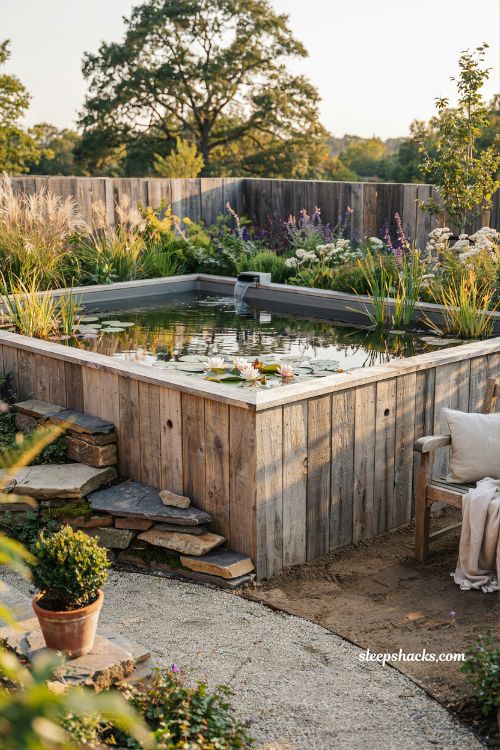
If you have a decommissioned hot tub taking up space, you already have the bones of a beautiful pond. The structure is already waterproof, the depth is ideal for fish, and the shape gives you plenty of room for plants and decorative features. Build a simple timber frame around the exterior to hide the functional panels underneath, add a recirculating pump, and plant water lilies and marginals at the edges. It’s a brilliant way to get a large, well-finished pond without starting from scratch — and the build time is a fraction of what an inground pond would take.
8. Flexible Liner Inground Pond With Waterfall
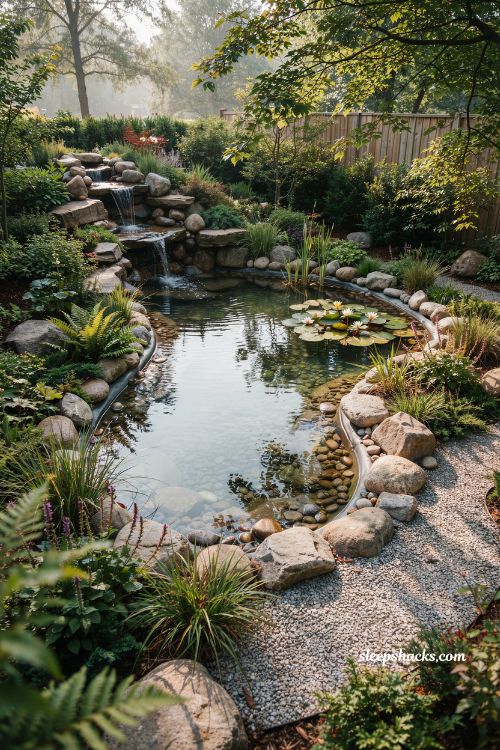
A flexible pond liner gives you complete freedom over the shape and size of your pond. Mark out the outline with a hose on the ground, dig to the depth you want, cushion the hole with sand or old carpet, then lay the liner in and fill slowly so it settles into shape. Add flat rocks around the edge to hide the liner and create a naturalistic border. If your yard has any natural slope, position the pond at the base of it so you can build a simple rock waterfall that feeds into the water. The sound alone is worth the extra effort.
9. Pond Form in a Raised Garden Bed
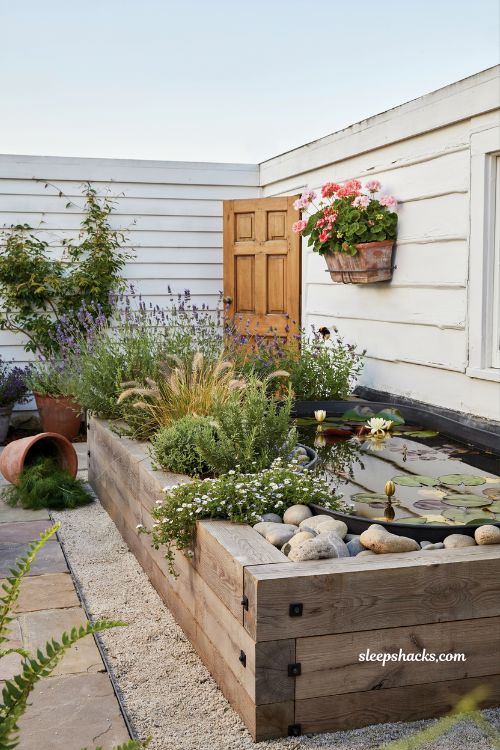
Combining a small pond with a raised garden bed is a clever way to make the most of a compact space. Build a simple 4×8 foot raised bed structure, then drop a preformed pond form inside it. Plant lavender, ornamental grasses, or herbs in the surrounding soil so the pond feels integrated into a larger garden feature rather than sitting alone. This setup is particularly nice near a front door or along a pathway where you want something that makes an impression without taking over the whole yard.
10. Solar-Powered Container Pond With Fountain
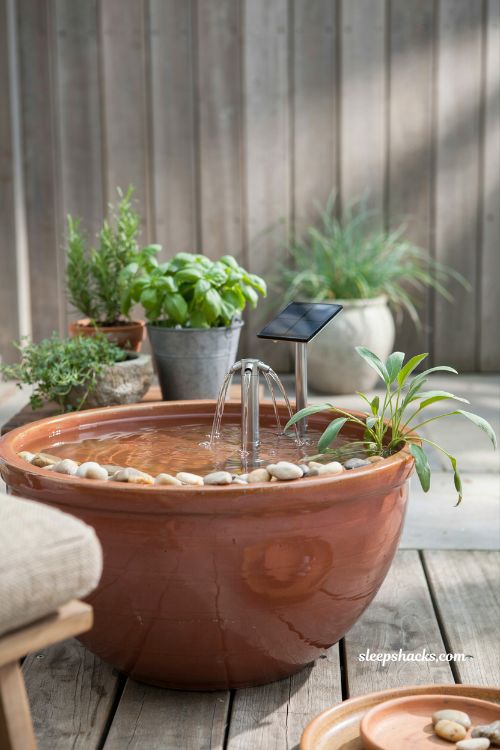
Solar fountain pumps have gotten genuinely good in recent years, which makes a fully self-sufficient patio pond very achievable. Use a wide, deep container — a ceramic pot, a galvanized tub, or even a sealed terracotta planter — and drop a solar fountain head directly in the water. No wiring, no electricity costs, and the moving water keeps mosquitoes from breeding. Position it somewhere that gets good afternoon sun so the solar pump runs reliably. A single aquatic plant tucked in beside the fountain head adds a finished look and helps keep the water balanced.
11. Steppingstone Bridge Over a Small Inground Pond
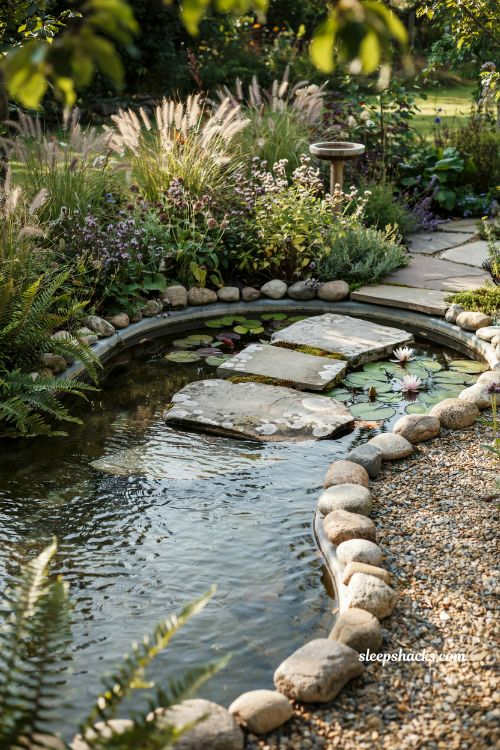
A small pond with a stepping stone path across it sounds like a big project, but it’s more achievable than you’d think on a modest budget. Dig a shallow oval or kidney-shaped pond, fit a flexible liner, and place two or three flat stepping stones across the width with rubber matting underneath to protect the liner. Edge the whole thing with low-growing plants, ferns, or river pebbles. The visual effect is much larger than the actual footprint — it creates a real focal point in the garden and gives even a simple backyard a sense of depth and intention.
12. Miniature Tiered Pond With Two Levels
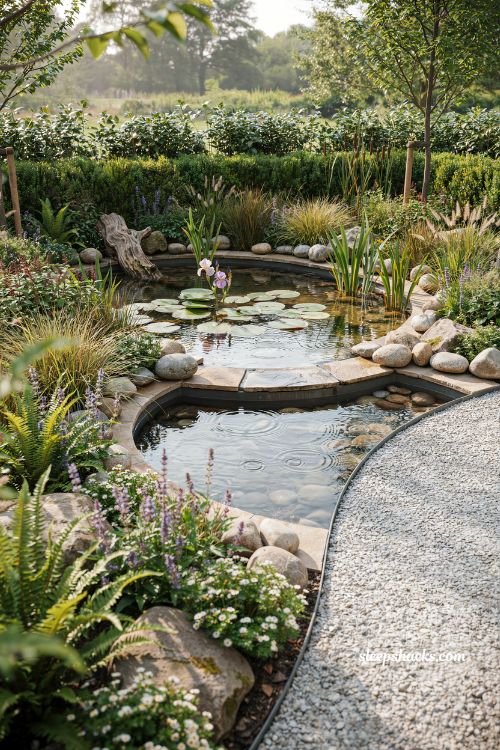
Adding two levels to a small pond — a deeper central area and a shallower shelf around the edge — creates a more natural look and makes the space more functional at the same time. The shallower shelf supports marginal plants like water irises and rushes, while the deeper area gives fish somewhere safe in cold weather. You can achieve this with a single flexible liner shaped over a tiered excavation, or by using two stacked preformed pond forms of different sizes. The layered look photographs beautifully and gives wildlife multiple entry and exit points.
13. Barrel Waterfall Into a Small Inground Pond
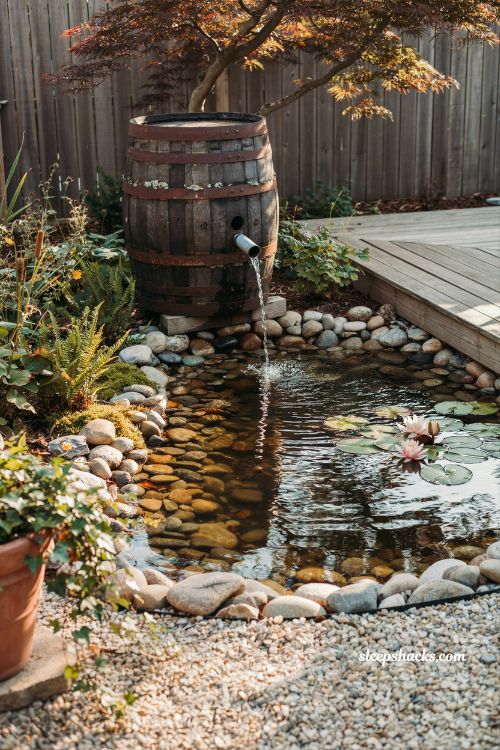
Stack two whiskey barrels or wooden containers at different heights — one elevated, one sitting in or near the ground — and connect them with a small recirculating pump and a piece of pipe. Water flows from the top barrel, spills over the edge, and trickles into the lower pond below. It’s a compact waterfall feature that fits on a patio or in a tight corner of the yard. The sound is genuinely lovely, the setup is straightforward for a weekend project, and the whole thing can be dismantled and moved if you ever reconfigure your outdoor space.
14. Wildlife Pond in an Old Well or Cistern
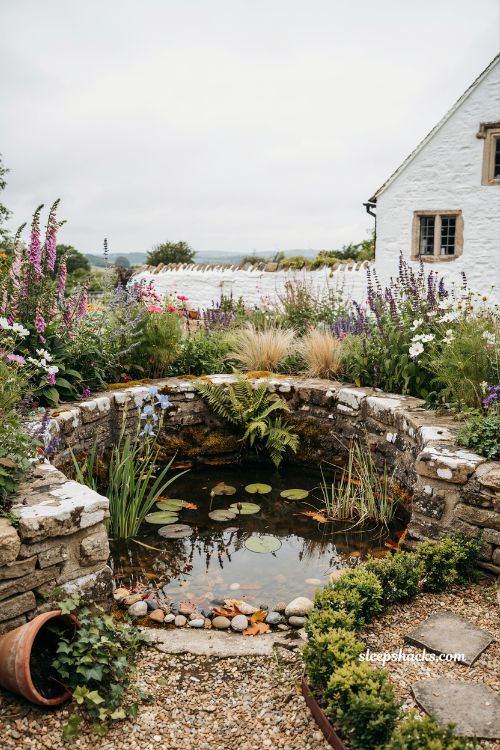
Above-ground ponds built inside old stone wells or vintage water cisterns have a character that’s impossible to manufacture with new materials. The stone walls are naturally waterproof, the depth is usually good for aquatic plants, and the circular shape looks right at home in cottage gardens or heritage properties. If you come across an old cistern at a salvage yard, it’s worth snapping up. Line it with a flexible liner if needed, fill it with rainwater from a water butt, and plant native aquatic species around the interior walls. Wildlife will move in within weeks.
15. DIY Patio Pond With Aquatic Plants and Pebbles
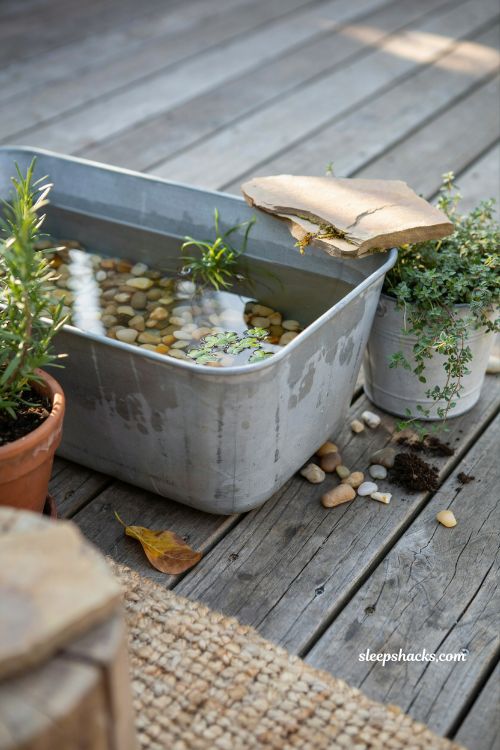
Sometimes the simplest version is the best version. A wide, deep container filled with water, a layer of washed pebbles on the bottom, two or three aquatic plants positioned at different depths, and a flat stone balanced on the edge for birds to perch — that’s really all a patio pond needs to be. No pump, no filter, no complicated setup. Keep it topped up with rainwater, remove fallen leaves in autumn, and let the plants do the work of filtering and oxygenating naturally. It takes about two hours to put together and genuinely attracts wildlife within days.
Final Thoughts
Building a small pond doesn’t have to be a summer-long project with a professional crew and a five-figure budget. Some of the most charming garden ponds started as a free afternoon, a secondhand container, and a few bags of pebbles from the hardware store. What matters is getting started — picking one idea that fits your space and your budget, and giving it a go. The water has a way of doing the rest. Once you see a frog settle in or a bird splash at the edge, you’ll understand why so many gardeners consider their pond the best thing they ever added to the garden.
Frequently Asked Questions
Q: How deep does a DIY small pond need to be? For a decorative pond without fish, 12–18 inches is usually enough. If you want to keep goldfish or koi, aim for at least 2–3 feet deep, especially in colder climates where the water can freeze near the surface in winter.
Q: Do I need a pump for a small DIY pond? Not always — small wildlife ponds with native aquatic plants can stay balanced without a pump. A pump helps with larger ponds or if you want a fountain or waterfall feature, and it also discourages mosquitoes by keeping the water moving.
Q: Can I build a DIY pond over a weekend? Yes, most small container or preformed pond setups can be completed in a single weekend. A flexible liner inground pond with edging stones might take two days, but it’s absolutely manageable as a solo DIY project without professional help.