

Picking a farmhouse exterior is honestly harder than it looks. There are so many directions to go — board and batten or lap siding, metal roof or shingles, black windows or white trim — that it’s easy to end up with a mood board full of ideas that don’t actually work together.
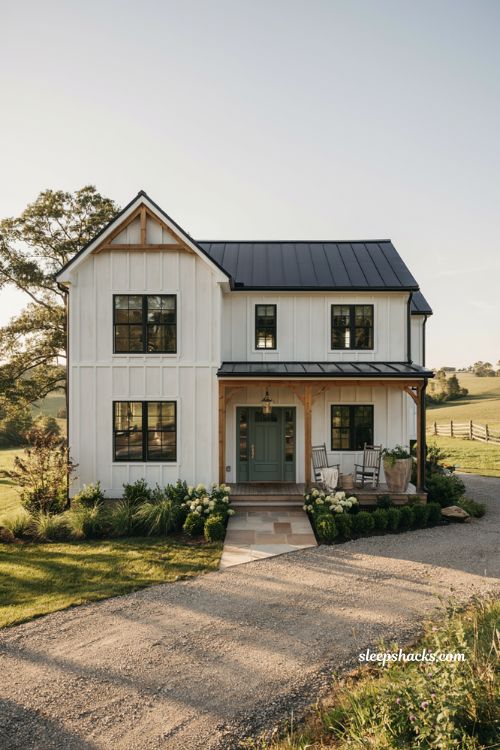
And once you’re staring at swatches and roofing samples, the whole thing can start to feel more overwhelming than exciting. The good news is that farmhouse style has a few core building blocks that show up again and again for good reason. Once you know what they are, putting together an exterior that feels warm, cohesive, and unmistakably farmhouse gets a lot simpler. Here are fifteen ideas to get you there.
1. Anchor The House With A Wraparound Porch
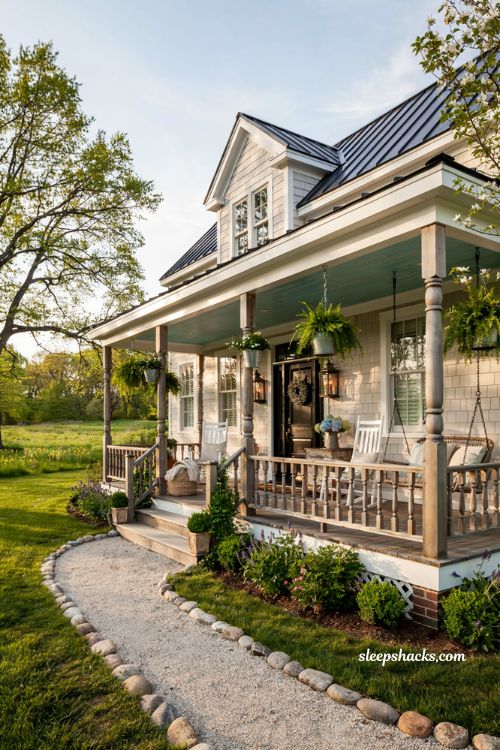
A wraparound porch does more work than almost any other single feature on a farmhouse. It gives you a shaded side for hot afternoons and a sunny corner for cooler mornings, all on the same structure. Picture turned wood posts, a haint-blue painted ceiling, and a porch swing hung near the far end where it catches a breeze. The practical takeaway is flexibility — you get outdoor living space on more than one side of the house instead of a single cramped entry stoop. Even a partial wrap along two sides delivers most of the charm at a fraction of the cost.
2. Balance Black And White
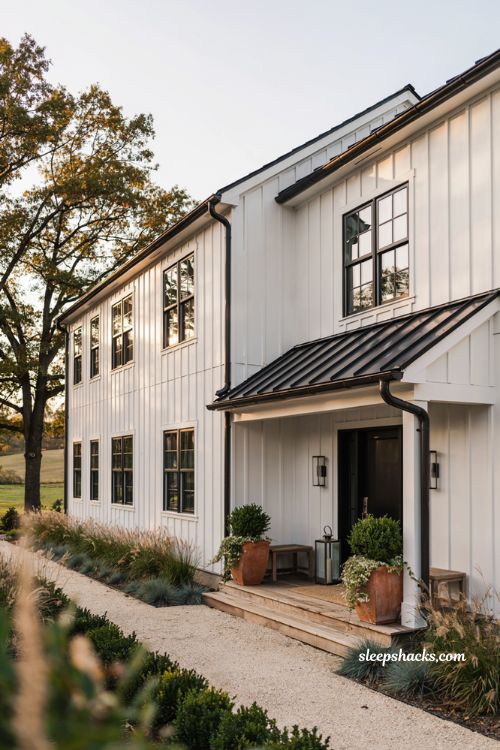
White siding with black trim is the fastest way to land on modern farmhouse without overthinking it. The contrast usually comes through window frames, gutters, and a black front door set against clean board and batten walls. What keeps this from feeling stark is restraint — pick two or three black elements and let the white carry the rest. A dark standing-seam metal roof over the entry adds just enough edge without pushing the whole house toward something colder than a farmhouse should feel.
3. Go Bold With A Metal Roof
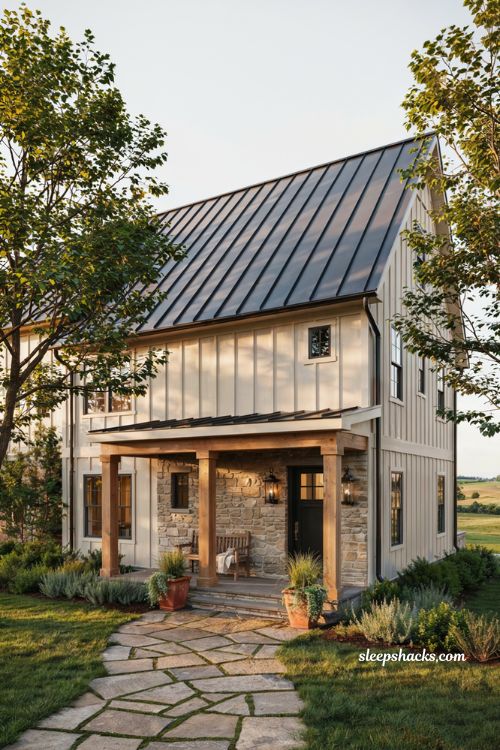
Metal roofing earns its keep well beyond looks, since it sheds snow and rain far better than asphalt shingles over time. Visually, a charcoal or bronze metal roof against pale siding gives a farmhouse a crisp, defined edge, especially over a porch or dormer. The real trick is pairing different materials rather than different colors — metal against wood siding or stone creates texture in a way flat, uniform surfaces never will. It also holds its shape for decades, so the roofline stays sharp instead of curling the way shingles eventually do.
4. Let Board And Batten Lead
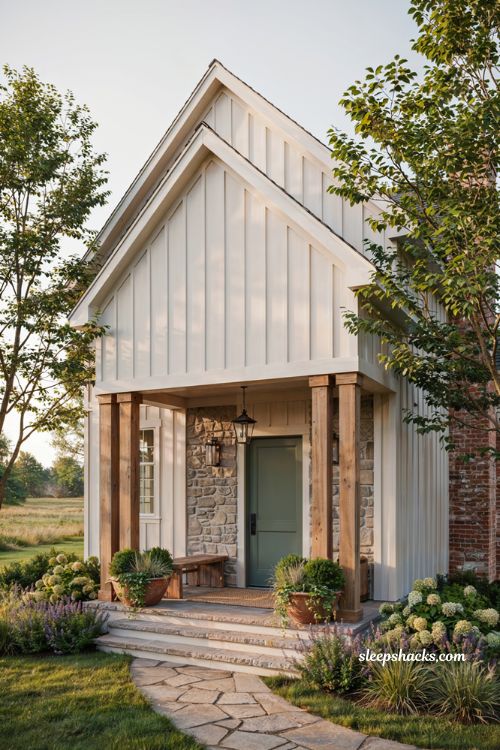
Board and batten siding is one of the quickest ways to signal farmhouse without adding a single extra decorative detail. The vertical planks and thin battens covering each seam create shadow lines that shift subtly as the sun moves. A practical shortcut: apply it to gable ends or the front-facing section rather than the entire house if the budget is tight — it still reads as deliberate, not unfinished. Painted in warm white or muted sage, it sits beautifully next to stone or brick accents nearby.
5. Break Up The Roofline With Dormers
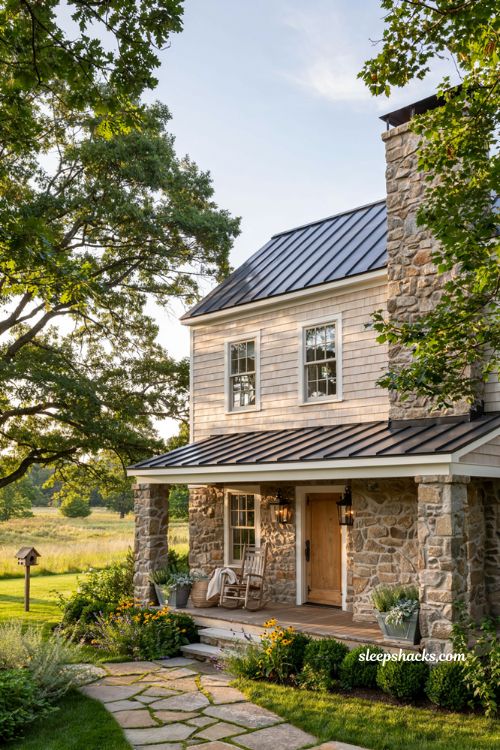
Dormer windows do more than bring light into an upstairs room — they interrupt a long roofline and give the whole house a friendlier, more layered profile. A pair of gabled dormers with small-paned windows adds instant cottage charm, especially trimmed to match the front door. The practical payoff is usable upper-floor space that doesn’t feel squeezed under a sloped ceiling. Even a single centered dormer above the entry can turn a flat facade into something with real depth.
6. Root The House In Stone
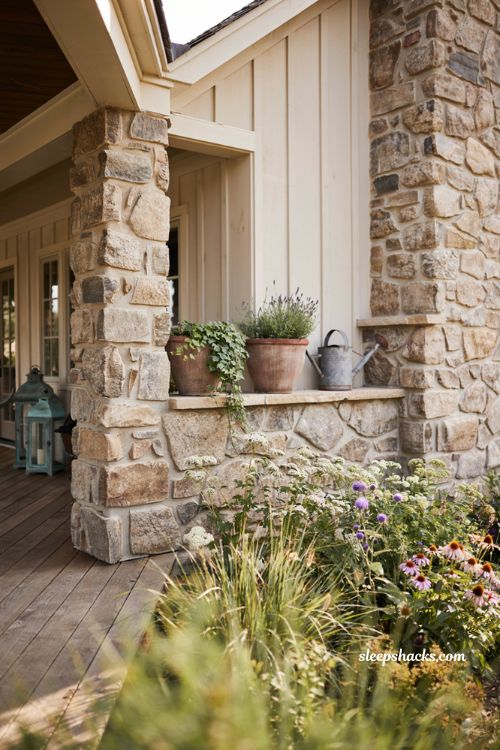
A stone foundation or partial stone wrap along the lower third of the house adds real weight to a farmhouse exterior. Fieldstone in warm gray and tan tones works especially well under lighter siding, as if the house is growing out of the landscape rather than sitting on top of it. Practically, stone at the base also protects siding from splashback and yard debris, so it earns its place beyond looks. Carrying the same stone into a porch column or chimney ties the whole exterior together.
7. Combine Two Siding Materials
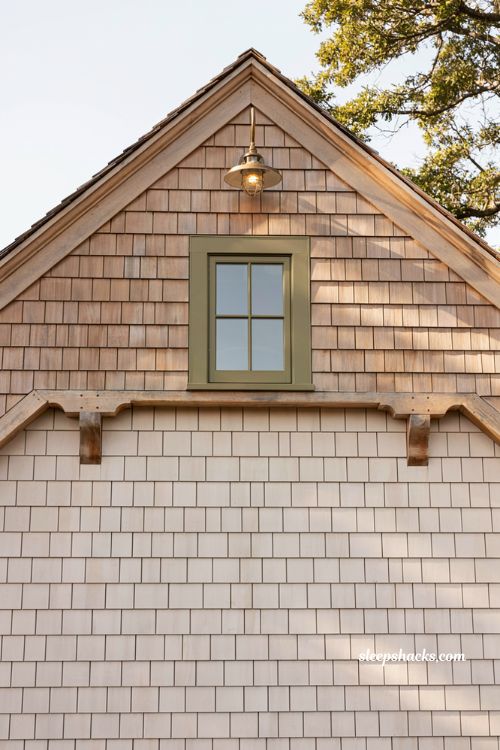
Pairing horizontal lap siding on the main body with shingles on a gable peak gives a farmhouse rhythm instead of one flat, uniform surface. The key is choosing materials in the same color family so the mix reads as intentional rather than mismatched. A cedar shingle gable above white lap siding, for example, adds texture right where the eye lands first. This approach also stretches a budget further, since you can reserve pricier material for one small, high-impact area.
8. Commit To A Strong Gable Roof
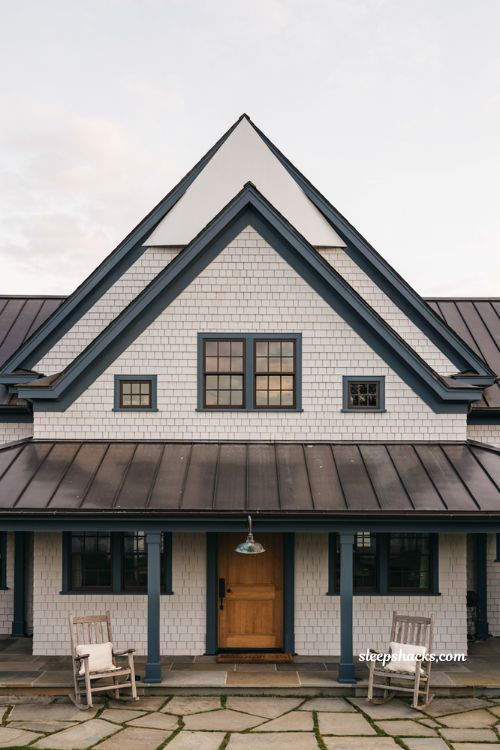
A steep gable roof is about as recognizable as farmhouse style gets, and it works precisely because it’s simple. Picture a center gable rising above a lower-pitched wraparound roofline, creating a natural focal point right over the front door. Practically, steeper pitches shed snow and rain more efficiently, which matters if winters get serious where you live. Painting the gable trim a shade darker than the body siding makes the roofline pop even more against the sky.
9. Build Around A Central Courtyard
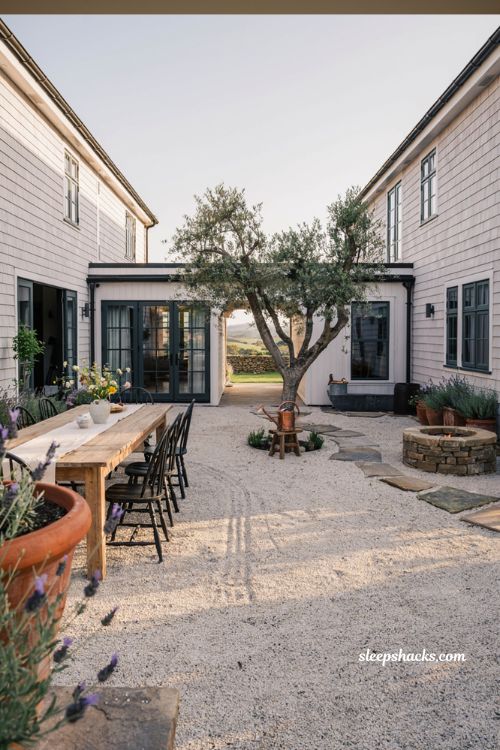
Given enough lot space, splitting a house into two connected structures around a shared courtyard creates something genuinely different from the standard farmhouse layout. Picture gravel or stone underfoot, a mature tree overhead, a long dining table, and maybe a small fire pit off to one side. The practical upside is privacy, since the courtyard becomes an outdoor room shielded from the street entirely. This layout also naturally separates living spaces from bedrooms, which suits multigenerational households or frequent guests well.
10. Bring In Natural Wood Siding
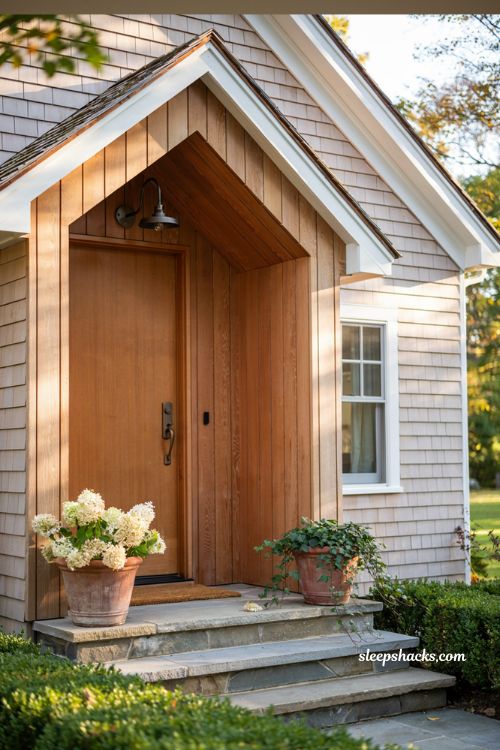
Stained or natural wood siding adds warmth that painted surfaces simply can’t replicate, especially on a one-story cottage-style farmhouse. A honey or weathered gray cedar tone against white trim feels approachable rather than rustic-cabin. The practical catch is upkeep — sealed or stained wood needs reapplication every few years, so plan for that long-term. Used only on the front gable or entry alcove, wood siding becomes a focal texture without committing the whole house to that maintenance schedule.
11. Soften Things With A Shingle Roof
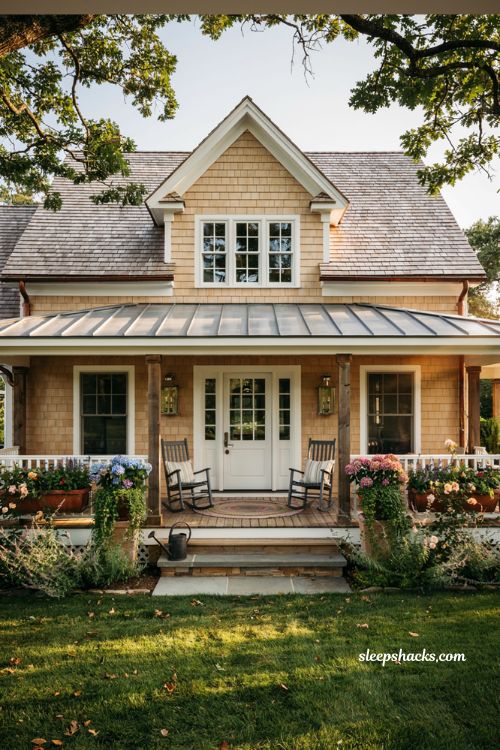
Where metal feels crisp, a shingle roof softens a farmhouse exterior in a way that suits more traditional or cottage-leaning designs. Architectural shingles in driftwood or weathered brown pair especially well with white or beige siding and a wraparound porch. The detail worth noting is texture — thicker architectural shingles cast small shadows that read as more substantial from the street than flat three-tab versions. It’s often the more budget-friendly roofing route if metal isn’t on the table.
12. Frame Every Window In Black
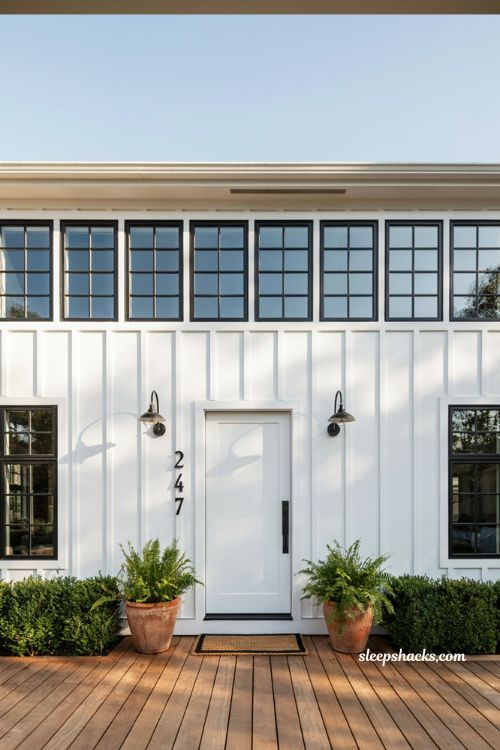
Black window frames against light siding is a small change that reshapes an entire facade at once. The windows suddenly read as intentional, almost like punctuation marks across the front of the house. A practical shortcut: swapping just the frames, without a full window replacement, can achieve most of this look on a tighter budget. Pair the black frames with a matching porch light or house numbers so the detail feels connected rather than random.
13. Add A Covered Front Entry
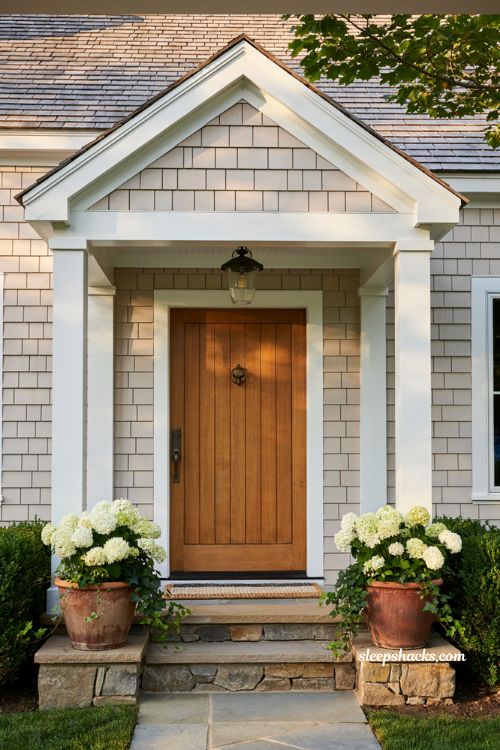
A small covered portico or gabled entry roof gives visitors somewhere dry to stand while they wait at the door, and it adds architectural weight to an otherwise flat front wall. Two simple wood or painted columns supporting a modest gable above the door is usually enough. The practical gain is protection for the door itself, since covered entries keep paint and hardware from weathering as quickly. A pendant light hung from the portico ceiling adds a welcoming glow once evening sets in.
14. Choose A Soft, Country Palette
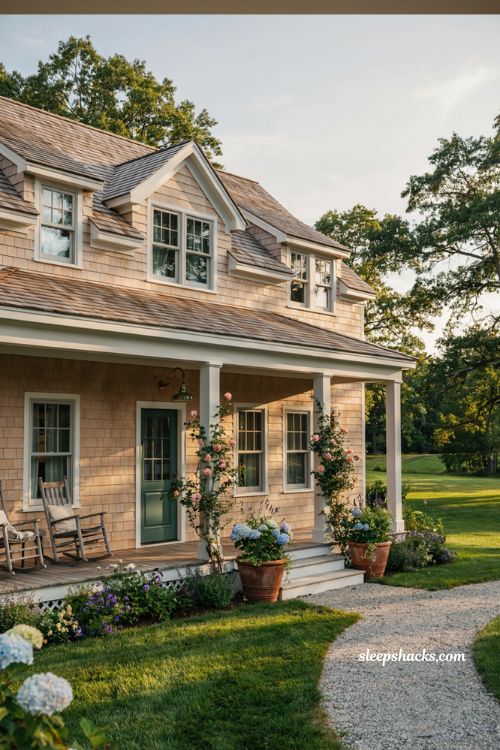
Farmhouse color palettes tend to stay gentle — sage green, warm beige, dove gray, and classic white show up over and over for good reason. These tones sit naturally against grass, trees, and gravel without fighting for attention. A practical starting point: pick the siding color first, then choose a trim shade two tones lighter and a door color with just a slight contrast, like muted forest green against beige. This keeps the whole exterior feeling curated instead of randomly assembled.
15. Lean Into A Two-Story Silhouette
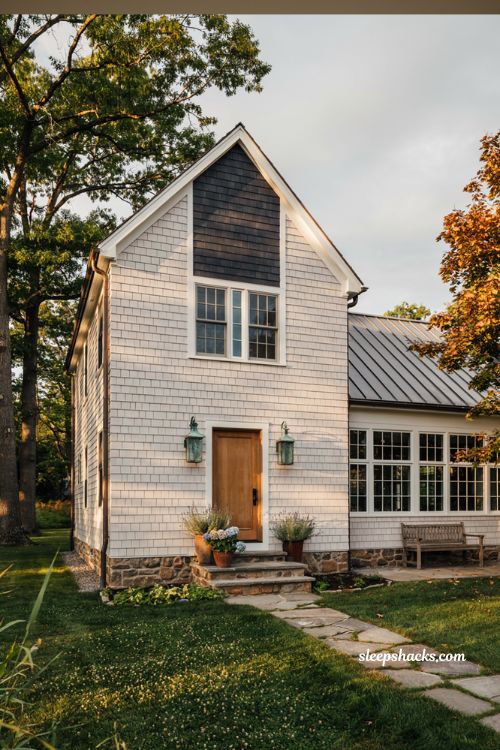
A tall, narrow two-story farmhouse with a steep central gable is one of the most classic silhouettes in the style, echoing the original farmhouses it borrows from. Practically, two stories give you more square footage on a smaller lot footprint, which matters if you’re building somewhere tighter. Adding a lower one-story wing or attached porch off to one side keeps the tall main structure from feeling too imposing from the street. It’s a layout that balances presence with genuine, everyday livability.
Final Thoughts
Whatever you take from this list, let your lot and your budget do most of the deciding. A wraparound porch, board and batten siding, and a metal roof can carry an entire exterior on their own — you really don’t need every single idea here on one house. Farmhouse style is at its best when it feels a little unforced, like the home has nothing to prove to anyone driving past. Save the ideas that keep pulling you back, sit with them a little longer, and let the rest go without a second thought.
Frequently Asked Questions
Q: What makes a house exterior look like a farmhouse?
A steep gable roof, a covered porch, simple siding like board and batten or lap siding, and a soft, muted color palette are the core signatures of the style.
Q: Is board and batten siding expensive to install?
It’s generally comparable to standard lap siding, and using it on just a gable end or entry section instead of the whole house can lower material and labor costs.
Q: What roof color works best on a white farmhouse?
Charcoal, bronze, or matte black roofing tends to look sharpest against white or cream siding, giving the roofline clear definition from the street.