

If your dining table still looks like it did in July, you’re not alone — most people don’t know where to start once the leaves change color and the actual decorating has to happen.
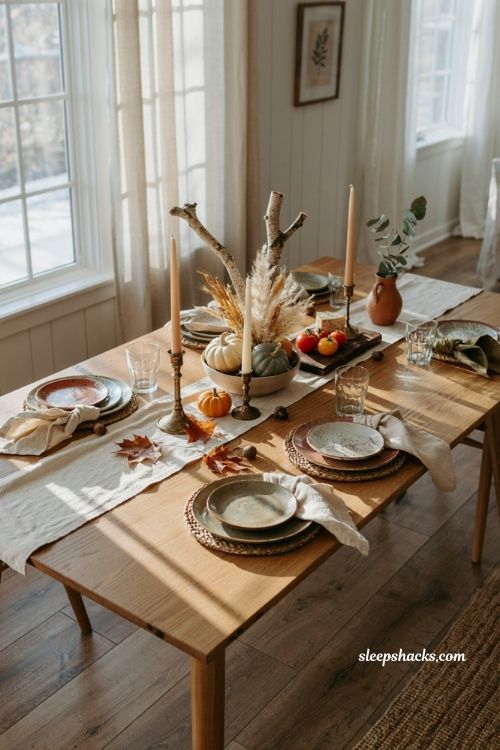
The good news is that fall dining table decor doesn’t require an elaborate haul from the craft store or hours of arranging; a few well-chosen elements, layered thoughtfully, do most of the work. Here are 15 fall dining table decor ideas that range from five-minute fixes to slightly more involved centerpieces, all built around the textures and colors the season already hands you.
1. Pair Pumpkins With Candles for an Easy Win
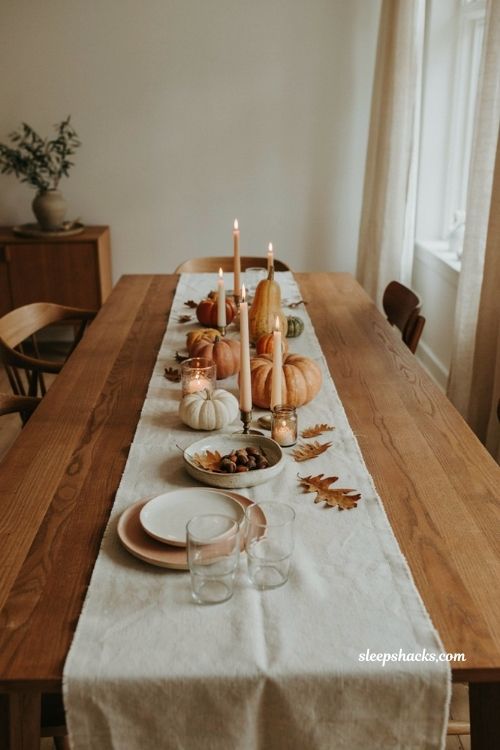
A mix of pillar and votive candles alongside an assortment of white and orange pumpkins running down the length of the table creates a simple, festive look that takes almost no time to assemble. This combination works because it doesn’t require any special arranging skill — just group the pieces in a rough line or cluster and let the natural variation in size and color do the visual work. It’s also endlessly adjustable, since adding or removing pumpkins doesn’t disrupt the overall balance. This is a good starting point for anyone who wants fall decor on the table without committing to anything elaborate.
2. Lean Into a Soft Neutral Palette
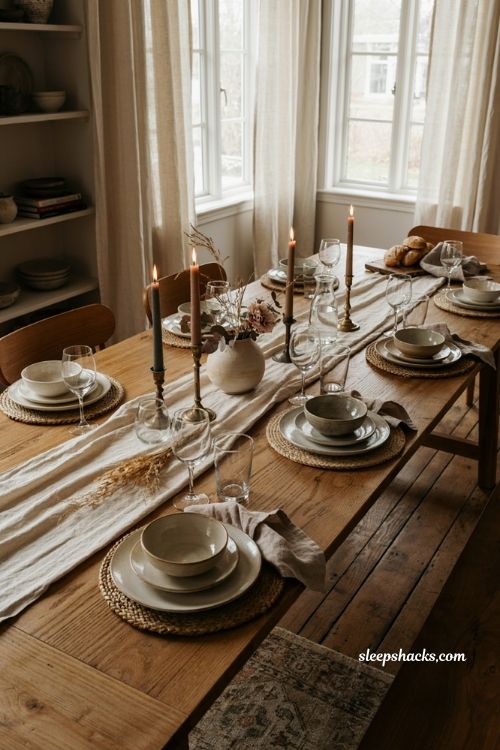
Incorporating neutrals alongside soft wheat and linen tones creates an elegant, formal-feeling table without needing bright, saturated fall colors at all. Rustic glass bottles, moody candles, and unexpected soft florals add depth to this kind of arrangement while keeping the overall look calm rather than busy. This palette also tends to photograph beautifully, since muted tones don’t compete with whatever food or tableware is already on the table. It’s a strong option for anyone hosting a more formal fall dinner rather than a casual family meal.
3. Build a Rustic Dried Floral Arrangement
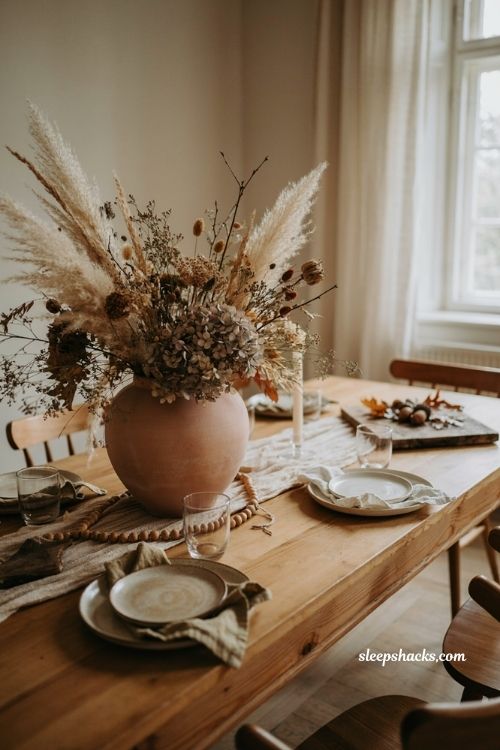
A large, slightly wild arrangement of dried florals down the center of the table creates a sense of abundance that a tighter, more manicured centerpiece doesn’t quite achieve. Mixing in a string of wooden beads and letting the arrangement spill loosely onto the table surface adds to the relaxed, natural feel. Because dried florals don’t wilt, this kind of centerpiece can stay in place for the entire season without needing to be refreshed. It’s an especially good option for anyone who wants a low-maintenance centerpiece that still makes a real visual statement.
4. Mix Real and Faux Greenery
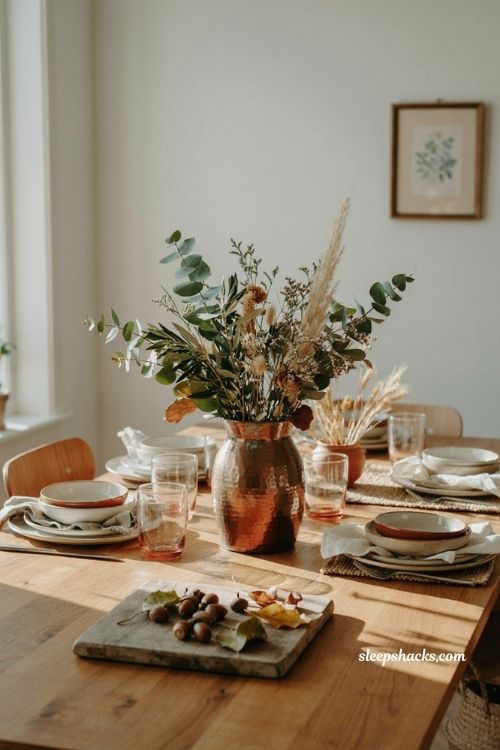
Combining a few real stems with faux greenery stretches a fall floral budget further while still keeping the arrangement looking full and current. A warm-toned vintage vessel, like a copper vase, complements the natural colors of the greenery and adds a bit of shine without overwhelming the display. This approach also means the arrangement won’t fully wilt partway through the season, since the faux elements hold their shape even as the real ones fade. It’s a practical middle ground for anyone who loves fresh florals but doesn’t want to replace them every week.
5. Anchor the Table With a Dough Bowl Centerpiece
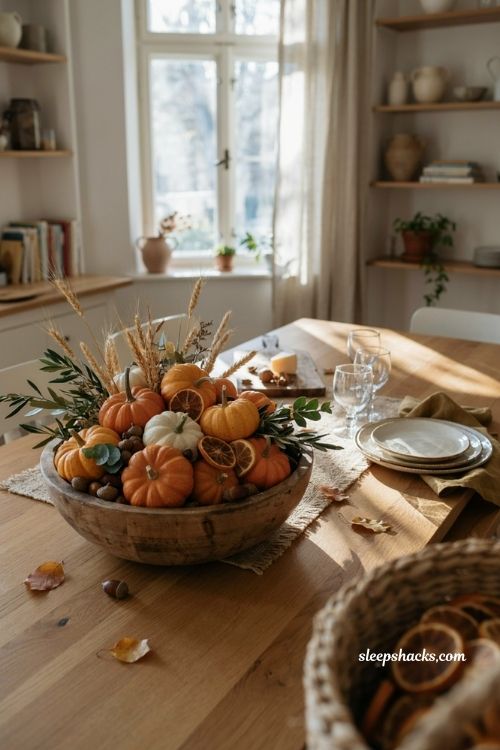
A large wooden dough bowl filled with a mix of pumpkins, dried orange slices, and greenery makes an easy, moveable centerpiece that works for tables used daily as well as those reserved for special occasions. Because the bowl acts as a container, the whole arrangement can be lifted off the table quickly if the space is needed for something else. Layering in acorns or other small natural elements fills gaps without requiring much additional effort. This is one of the more versatile centerpiece styles, since the same bowl can be restyled for Thanksgiving with minimal changes.
6. Add a Tiered Tray to the Table or Sideboard
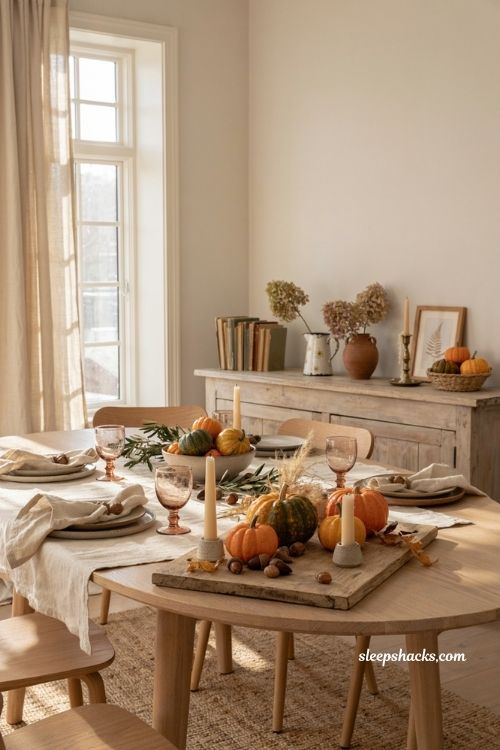
A tiered tray filled with small pumpkins, acorns, and a few candles brings height and dimension to a table or nearby sideboard without taking up much surface space. Carrying through the same colors and elements used in the main centerpiece keeps everything feeling cohesive rather than like two separate displays competing for attention. This is a particularly good solution for smaller tables where a large centerpiece would crowd the actual place settings. Because tiered trays are reusable for other holidays, this is also a piece worth investing in once.
7. Go Moody With Dark Florals and Black Tableware
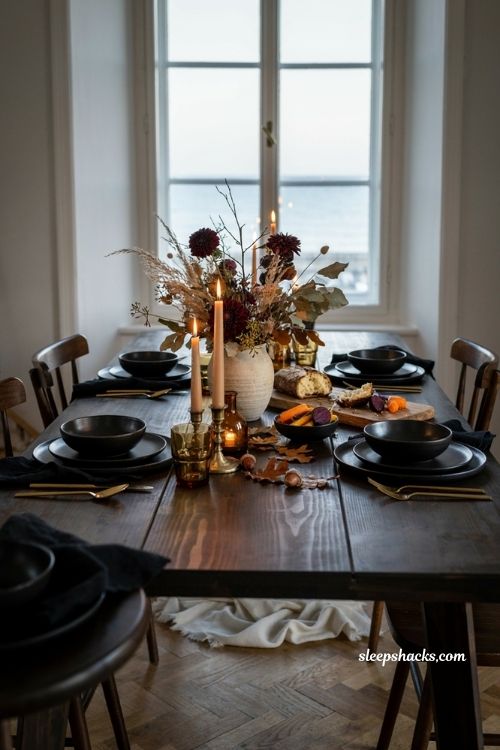
For anyone who wants their fall table to feel a bit more dramatic, dark floral centerpieces paired with black plates, taper candles, and gold-toned flatware create a striking, moody look that works especially well for evening dinners. This combination tends to make brighter seasonal foods pop visually against the darker backdrop. It also transitions easily from a Halloween-adjacent aesthetic into general late-fall styling, since black and gold aren’t tied to one specific holiday. This look works best with simpler food styling, since the table itself is already doing a lot of visual work.
8. Layer in Gold Accents
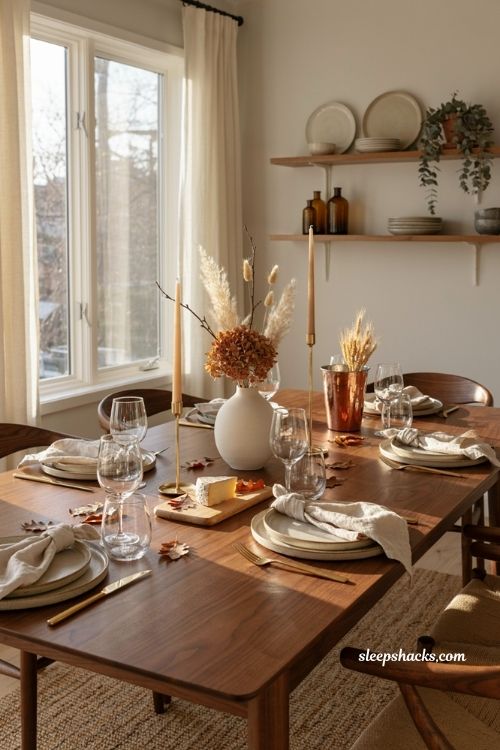
Gold taper candle holders, a vase for seasonal blooms, or even a copper-toned ice bucket instantly warm up a fall table without requiring a full redesign. This is one of the easiest ways to elevate an existing tablescape, since gold accents can simply be added to whatever centerpiece or place settings are already in use. Mixing metallics with more natural elements like wood or dried florals keeps the look from feeling too formal or cold. A few gold pieces go a long way, so it’s worth resisting the urge to add too many at once.
9. Showcase Seasonal Produce as the Centerpiece
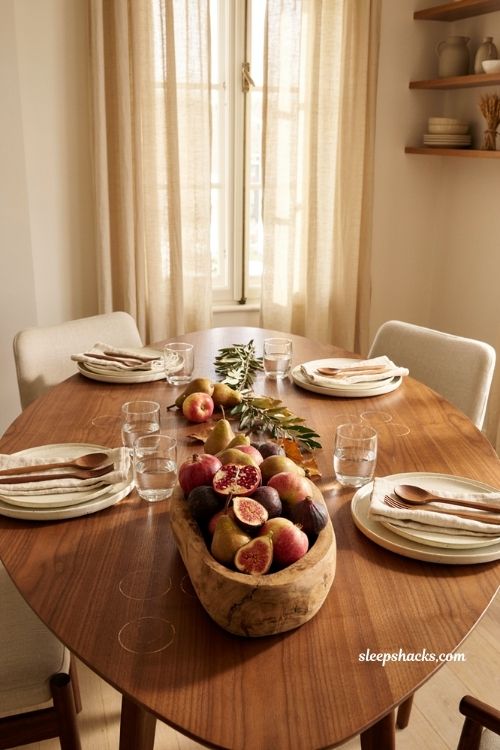
Apples, pears, figs, and pomegranates make an unexpectedly elegant centerpiece on their own, especially paired with a simple wooden bowl or a runner of foliage. This approach keeps the focus on food and conversation rather than an elaborate floral display, which suits casual family dinners particularly well. Because the produce is edible, there’s no waste at the end of the season — it just becomes the next day’s snack. Mixing colors and shapes within the produce itself, rather than sticking to just one fruit, adds visual interest without needing anything else on the table.
10. Cluster Candles at Varying Heights
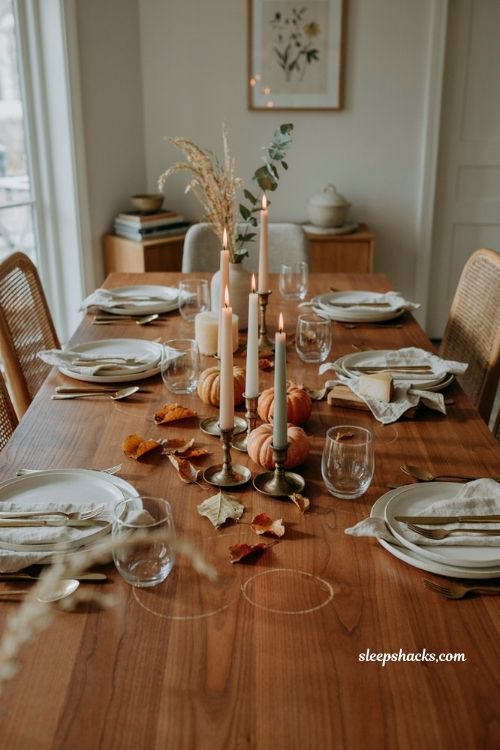
Grouping a mix of taper and pillar candles rather than relying on a single candle type maximizes light while creating more visual interest across the table. Uneven heights within the cluster add dimension, especially once the candles are lit and casting shadows across the table’s other decor. This technique works well as a standalone centerpiece or layered alongside pumpkins, produce, or florals. Flameless candles are worth considering here if the table sees regular daily use, since they eliminate the risk of dripping wax.
11. Decorate With Wheat Stalks
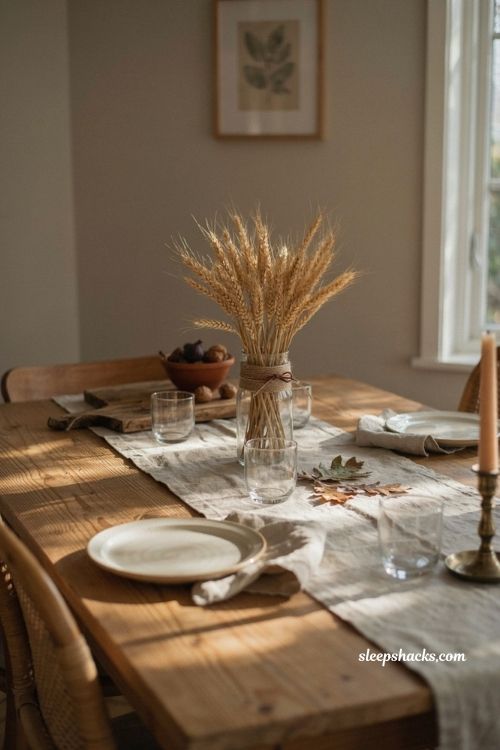
A bundle of dried wheat stalks in a clear glass vase brings an easy, affordable dose of fall texture to a table that might otherwise feel neutral or plain. Wrapping the stalks with embroidery floss or twine adds a small pop of color without requiring a full floral arrangement. This look pairs particularly well with earth-toned table linens and simple, understated place settings. Because wheat stalks are inexpensive and widely available, this is one of the more budget-friendly ideas on this list.
12. Display Amber Glass Bottles or Vessels
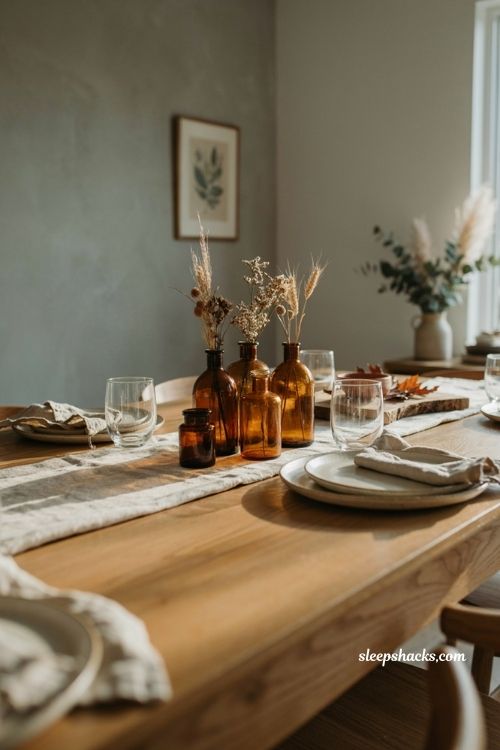
A collection of amber glass bottles, whether filled with dried botanicals or left empty, adds warm color and a bit of vintage character to a fall table without much arranging required. Varying the bottle shapes and heights within the group keeps the display from looking too uniform or store-bought. This is an easy category to build over time by picking up pieces from thrift stores or antique shops, since amber glass tends to be widely available secondhand. Grouped together, even a handful of bottles reads as an intentional collection rather than mismatched clutter.
13. Layer Placemats and a Runner for Texture
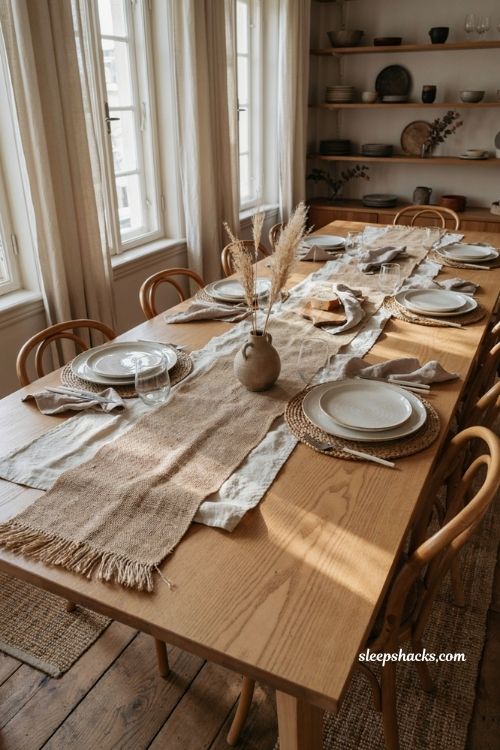
Adding a woven placemat under a tablecloth, or layering a table runner over a base linen, gives a fall table more visual depth than a single flat surface would achieve on its own. This kind of layering also makes the table feel more generous and considered, even without adding any additional centerpiece elements. Natural materials like rattan or jute placemats reinforce the seasonal feel without leaning on typical orange-and-brown fall colors. This is a low-cost, high-impact upgrade that works underneath almost any centerpiece style already in use.
14. Try a Vintage or Mismatched Tablescape
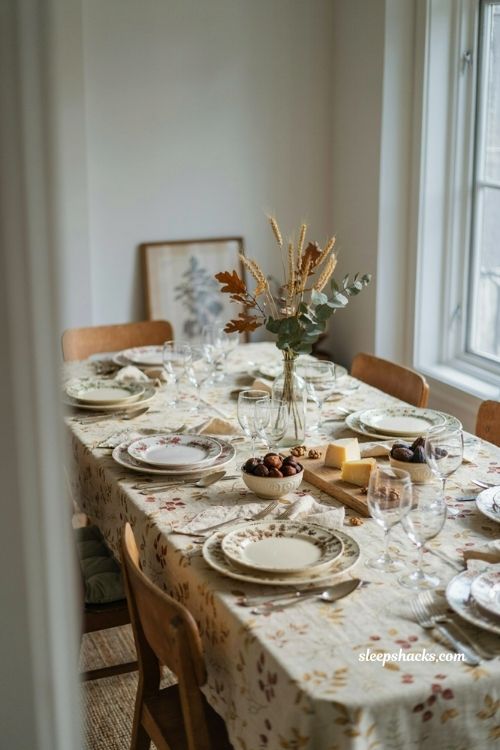
Sourcing a vintage tablecloth with a fall motif, or mixing vintage-style plates with modern glassware, gives a table a collected, personal feel that brand-new matching sets don’t quite achieve. Pairing detailed vintage salad plates over a simpler white dinner plate keeps the overall look from feeling too busy. This approach also tends to be more budget-friendly than buying an entirely new seasonal dinnerware set, since it relies on pieces already on hand or found secondhand. A slightly imperfect, mixed table often ends up looking more charming than a uniform one.
15. Add DIY Place Cards for a Personal Touch
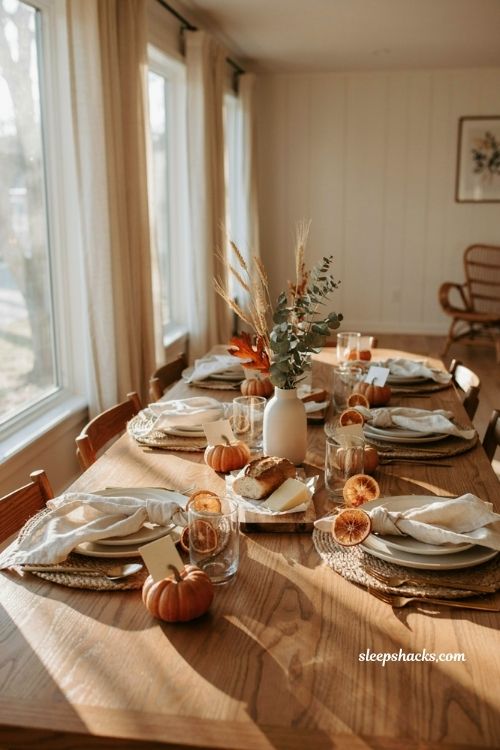
Simple place cards made from dried orange slices, mini craft pumpkins with a slit cut for a name card, or even small pumpkin-shaped vases give each place setting a personal, seasonal touch without much extra cost. These small details tend to get noticed by guests even though they take only a few minutes to put together. Because the base materials — pumpkins, dried fruit — are inexpensive and widely available in fall, this is an easy addition to almost any existing tablescape. It’s a good final layer to add once the main centerpiece and linens are already in place.
Final Thoughts
A fall dining table doesn’t need every idea on this list to feel finished — often just a centerpiece, a bit of layered texture underneath, and a cluster of candles is enough to carry the whole look. Pick whichever combination fits the time you actually have, whether that’s a five-minute pumpkin-and-candle pairing or a more considered dried floral arrangement built to last the whole season. The tables that feel most inviting are usually the ones that look a little lived-in and personal, not the ones copied exactly from a photo.
Frequently Asked Questions
Q: How do you make a simple fall centerpiece quickly?
Group pumpkins, gourds, or seasonal produce with a few candles in a bowl, tray, or straight down the center of the table for an easy, low-effort centerpiece.
Q: What colors work best for fall dining table decor?
Traditional orange, rust, and mustard tones work well, but soft neutrals, moody black and gold, or even non-traditional colors like blush and teal can all read as fall depending on the rest of the room’s style.
Q: How can I decorate a fall table that gets used every day?
Choose a centerpiece built on a movable base, like a bowl, tray, or dough bowl, so the whole arrangement can be lifted off the table quickly when the space is needed for meals or homework.