

Here’s something that might surprise you: the fastest way to fall in love with sewing again isn’t a big project — it’s a table runner.
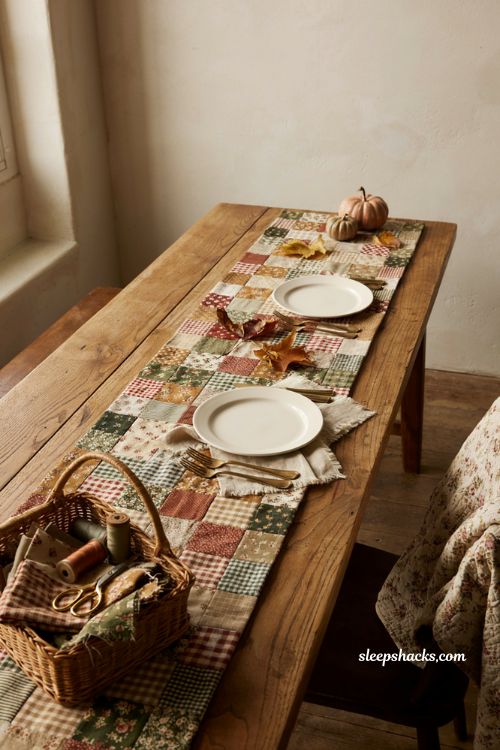
These small patchwork pieces finish in an afternoon or two, use up fabric scraps you’ve been hoarding for years, and somehow still make the whole table feel transformed the moment they’re laid out. Fall table runner patterns are especially good for this because autumn fabrics practically decorate themselves — rust, mustard, deep green, and warm brown all play well together without much effort on your part. Whether you’re prepping for Thanksgiving or just want your kitchen table to feel a little cozier, these fifteen patterns cover every skill level and style.
1. Quilt-As-You-Go for Total Customization
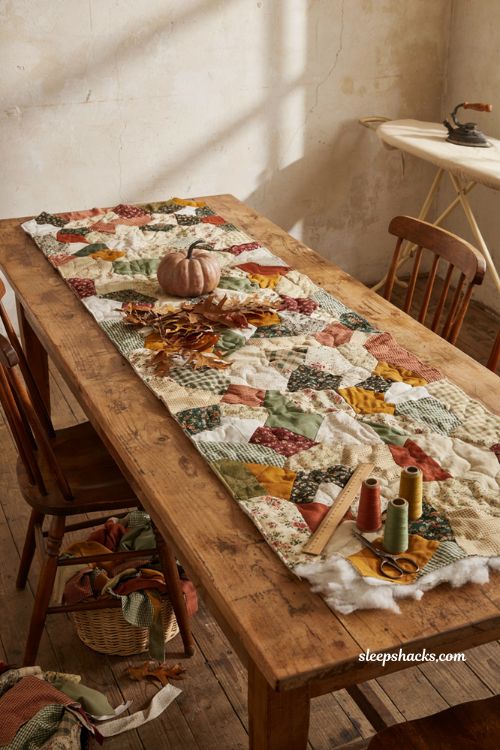
This method lets you build the runner directly onto batting as you sew, which means no separate quilting step at the end and total freedom over size and shape. It’s especially forgiving for scrap fabric, since you’re piecing strips or blocks as you go rather than committing to a rigid pattern layout beforehand. Start with a base layer of batting cut to your desired finished size, then work outward in strips, pressing and trimming as you add each piece. This is a great pattern to reach for if you’ve got a growing scrap bin and want a project that uses it up without much planning.
2. Flying Geese in Rich Autumn Tones
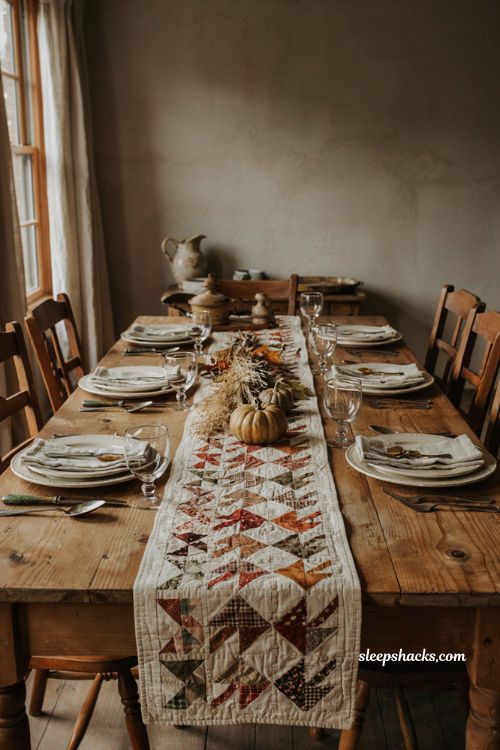
The Flying Geese block has that classic, slightly formal look that works beautifully once you swap in deep rust, olive, and burnt orange fabrics instead of the usual bright colors. Each triangle “goose” points in the same direction down the length of the runner, creating a sense of movement that feels intentional even on a simple table setting. Pick three or four coordinating prints so the repeated triangles don’t blur together into one solid color. This pattern reads as more traditional, so it’s a nice fit if your table setting leans more classic than rustic.
3. A Nine-Patch Table Topper for Beginners
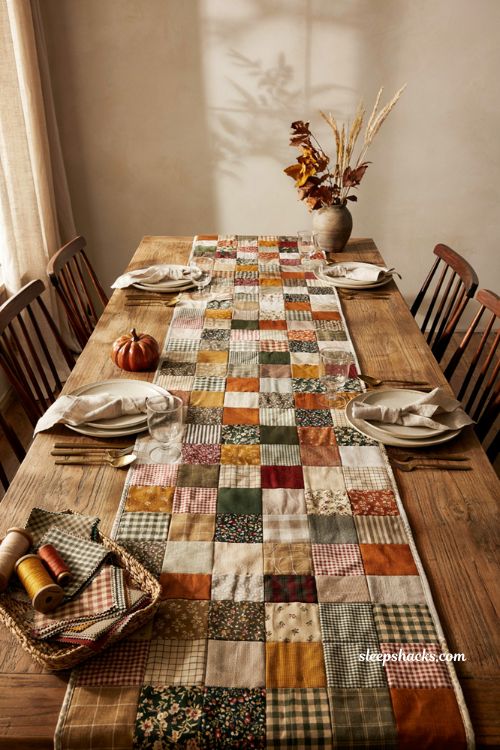
If you’re newer to quilting or just want something low-stress, a nine-patch design is about as forgiving as it gets — nine equal squares arranged in a grid, repeated across the runner’s length. Precut charm packs work perfectly here since the squares are already cut to size, which cuts your prep time down significantly. Mix warm and neutral tones within each nine-patch block so no single block looks flat or one-note. This is the pattern most people finish in a single weekend, making it a solid choice if Thanksgiving is coming up fast.
4. Hourglass Blocks for Subtle Movement
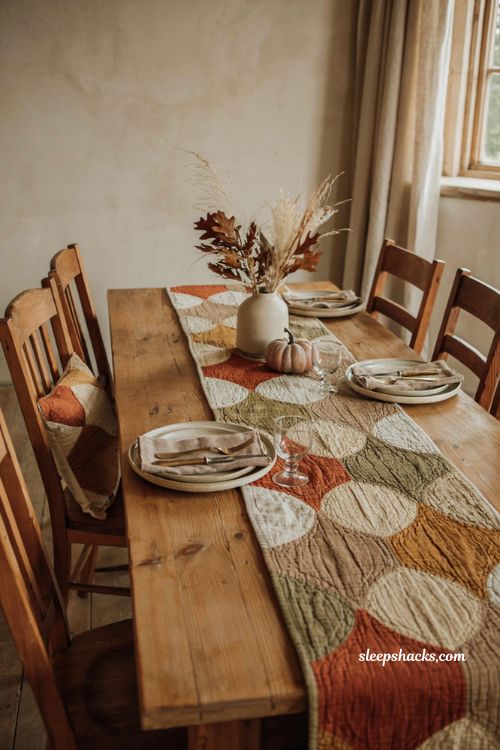
Hourglass blocks — two triangles pieced into a square that reads as an hourglass shape — add a quiet sense of motion down the runner without being as bold as Flying Geese. They pair especially well with a coordinating throw pillow in the same fabric line, since the repeated shapes tie the whole table setting together. Press your seams open rather than to one side on this block, since it keeps the center point sharp and reduces bulk. This pattern looks more sophisticated than its difficulty level suggests, which makes it a good one to have in your back pocket.
5. Scrappy Maple Leaf Blocks
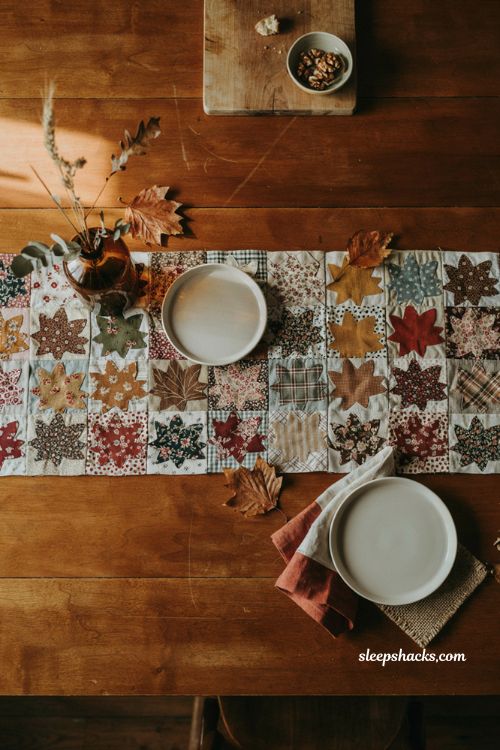
There’s no shape more synonymous with fall than a maple leaf, and a scrappy version — where each leaf is pieced from a slightly different fabric — captures the randomness of real leaves scattered across a lawn. Cut your leaf pieces from a wide variety of prints rather than sticking to a tight color story, since the visual interest here comes from variety. Applique or piece the leaf shapes onto a neutral background strip so they stand out clearly. This pattern is especially satisfying because every leftover fat quarter in your stash suddenly has a purpose.
6. A Chevron Design for a Modern Look
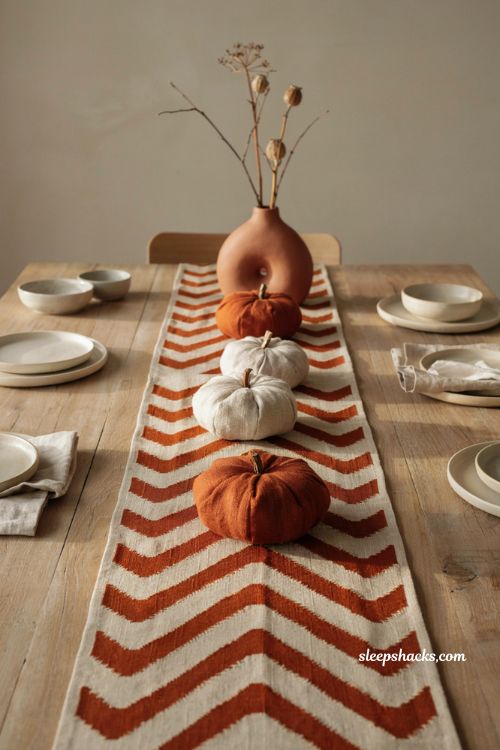
If your table setting leans more contemporary than farmhouse, a chevron or zigzag pattern brings fall colors into a cleaner, more graphic shape. Sewn correctly, the zigzag reads almost like a knit sweater pattern stretched across fabric. Keep your color palette tighter here — two or three tones max — since the geometric repetition already provides plenty of visual interest on its own. Pairing a chevron runner with a set of matching stuffed mini pumpkins, as some patterns include, rounds out the whole tablescape without extra sewing.
7. Fall Leaves Cut-Out Design
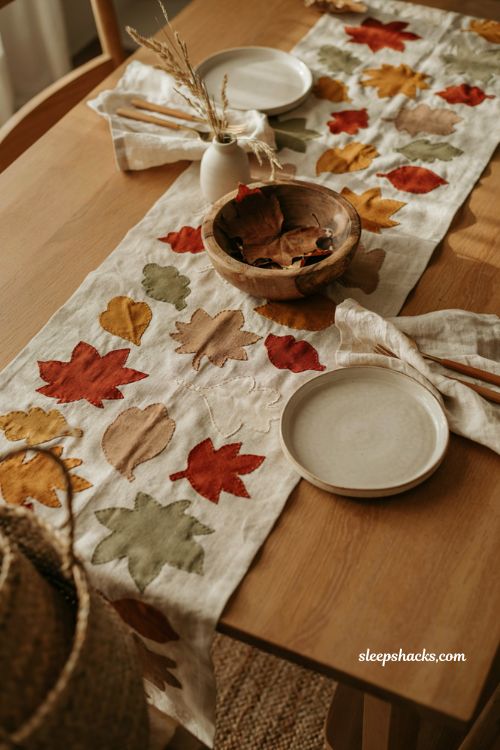
Rather than piecing leaves from fabric blocks, this style layers individual fabric leaf cutouts directly onto a solid or lightly patterned background, almost like they drifted there naturally. It’s a faster project than piecing individual leaf blocks since you’re working with fewer, larger shapes. Vary the leaf sizes and rotate them at different angles so the layout doesn’t look too uniform or gridded. A light fusible web behind each leaf before stitching keeps the edges from fraying and makes the whole applique process much easier to manage.
8. Freestanding Lace Embroidery Leaves
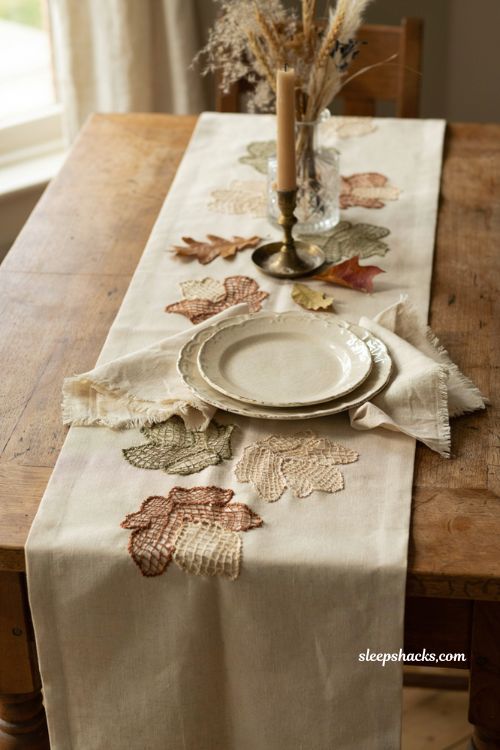
For a more elevated, almost heirloom-quality finish, freestanding lace leaves stitched on an embroidery machine create a delicate, lattice-like leaf shape that stands apart from typical fabric patchwork. These work well layered onto a simpler pieced or solid runner as an accent rather than covering the entire piece. Because the technique requires an embroidery machine and stabilizer, it’s a bigger investment of both time and equipment than the other patterns here. The payoff is a runner that looks noticeably more special the moment it’s set down on the table.
9. Gingham and Pumpkin Applique
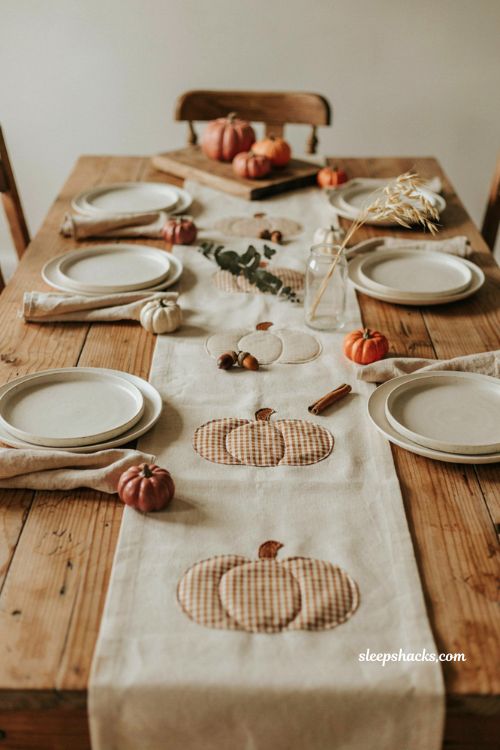
Classic pumpkin shapes get a playful update when paired with gingham fabric instead of a solid orange print — the small checked pattern keeps things from feeling too literal or costume-like. This combination works especially well on a farmhouse-style table, since gingham already reads as a slightly rustic, homey print. Applique a row of two or three pumpkins along the runner’s length rather than covering the whole surface, letting the background fabric show through as negative space. It’s a lighthearted pattern that still fits comfortably next to more traditional Thanksgiving decor.
10. Candy Corn Mini Quilt Style
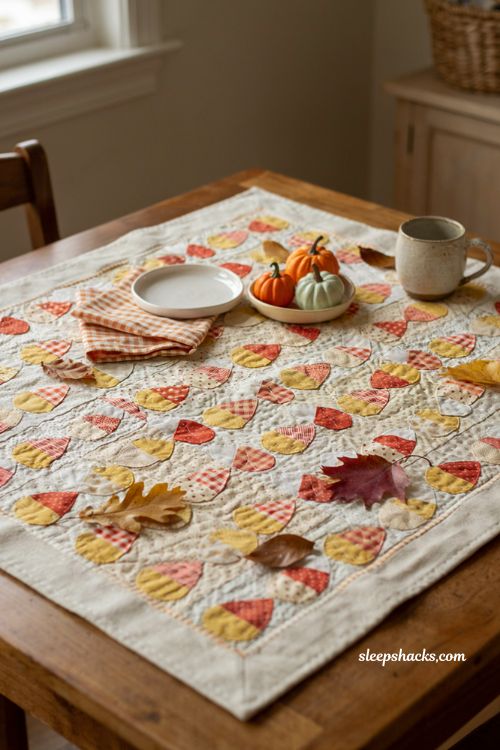
For a project that leans a little more playful and Halloween-adjacent while still working through Thanksgiving, a candy corn motif pieced in yellow, orange, and white triangles adds a fun pop of color to an otherwise muted fall table. This pattern tends to come together quickly since candy corn shapes are simple triangles rather than complex curved pieces. It works particularly well as a smaller table topper rather than a full-length runner, especially if you want something whimsical for a kids’ table. Save your brightest prints for this one — it’s meant to feel a little bit fun.
11. Felt Leaf Overlap Design
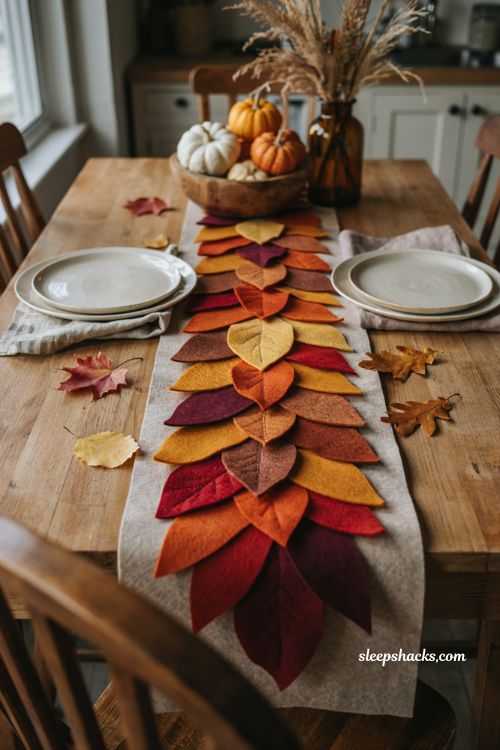
Skip quilting cotton altogether and work with felt instead for a no-fray, beginner-friendly project that comes together with minimal sewing. Overlapping felt leaves in a gradient of fall colors — deep red through gold — creates texture and dimension without any batting or binding required. Because felt doesn’t fray, you can cut clean leaf edges without worrying about a serger or zigzag stitch. This is the pattern to reach for if you want something reusable and durable that can handle being folded up and stored between seasons without any fuss.
12. Log Cabin Blocks in Warm Neutrals
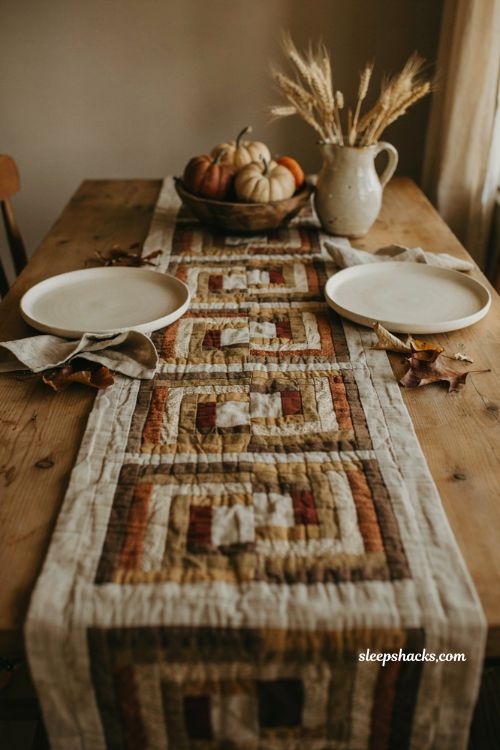
The traditional log cabin block, built from strips arranged around a central square, takes on a cozy, layered look when stitched in warm browns, rust, and cream. Keep one strip color consistent throughout — often the darkest shade — so it acts as a visual anchor tying every block together. This pattern is endlessly customizable in size, since you can add or remove strip rounds depending on how large you want the finished runner to be. It also happens to be one of the most forgiving patterns for using up narrow fabric strips left over from other projects.
13. Plaid Patchwork for a Farmhouse Feel
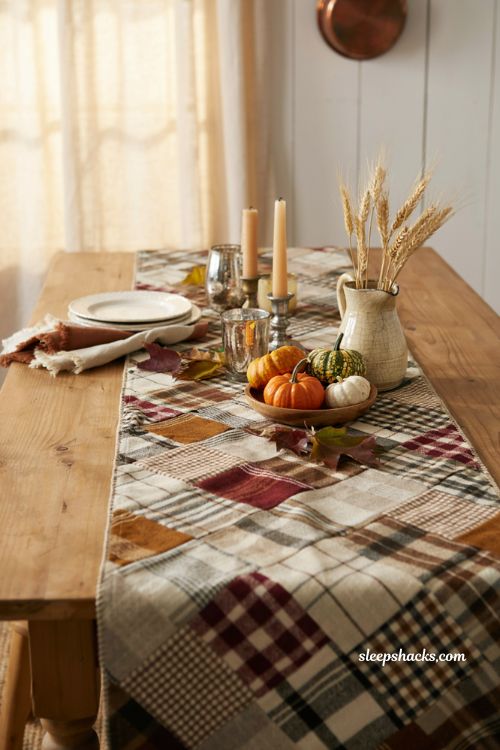
A pieced plaid design, using strips and squares of coordinating plaid flannels or cottons, brings an unmistakably cozy, farmhouse feel to a fall table. Mix a few different plaid scales — one large check, one smaller gingham-style plaid — so the pattern has depth rather than reading as one flat texture. This style pairs especially well with a stack of stoneware plates and a few mercury glass candle holders for a complete tablescape. Because plaid hides small piecing imperfections well, it’s a forgiving choice if precise points aren’t your strong suit yet.
14. Two-Fabric Simple Runner
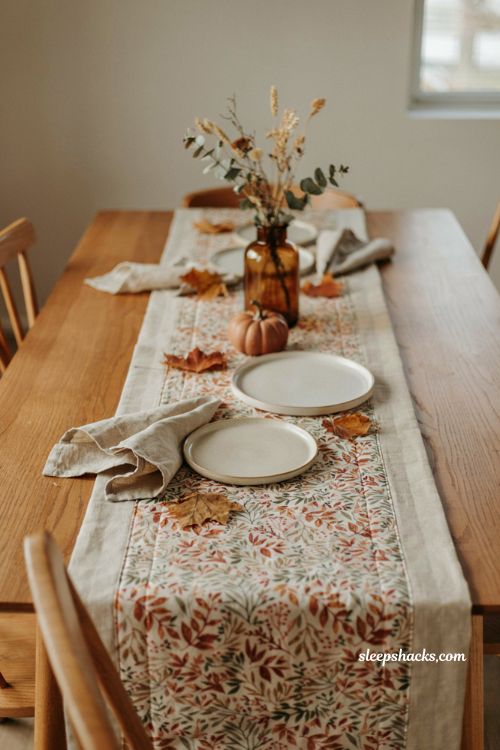
When time is tight, a runner made from just two coordinating fabrics — one bold print and one coordinating solid or stripe — comes together in an afternoon and still looks intentional. Let the bold print take up roughly two-thirds of the runner’s surface so it reads as the star, with the second fabric framing it as a border. This is the pattern worth keeping in mind for last-minute hostess gifts, since it requires minimal cutting and almost no matching of seams. A simple straight-line quilting pattern finishes it off without adding much extra time.
15. Hand-Quilted Texture Runner
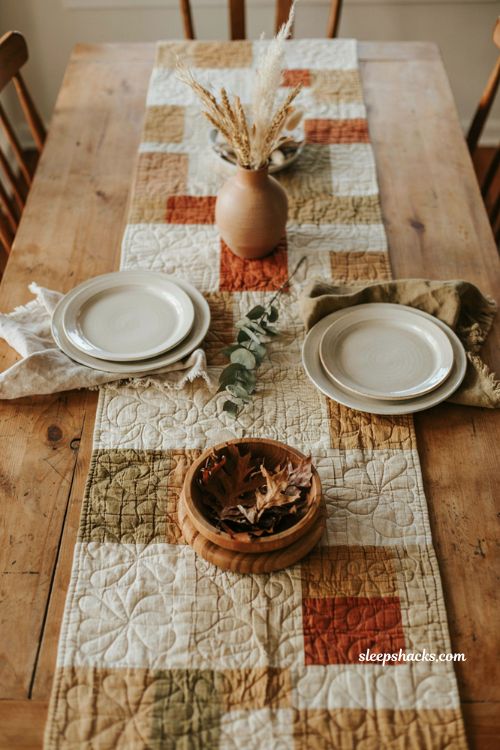
For a runner that feels a little more special and slow-made, hand quilting — even simple straight lines or a gentle wave pattern — adds a visible, tactile texture that machine quilting can’t quite replicate. This pattern works best with a simpler pieced top, since the hand quilting itself becomes the main design feature rather than competing with a busy patchwork layout. It takes longer than the other patterns on this list, so it’s best started well before the holiday rush rather than the week of. The slight imperfection of hand stitches is part of the charm here, not something to smooth away.
Final Thoughts
What’s the fabric combination sitting in your stash right now, just waiting for a project like this? That’s usually the best place to start — not with a pattern that requires new yardage, but with the prints you’ve already been drawn to and saved for something special. Fall table runner patterns are forgiving, fast, and endlessly repeatable, which makes them one of the best ways to build sewing confidence while still ending up with something genuinely useful. Pick whichever pattern matches the time you actually have this week, not the one that looks most impressive.
Frequently Asked Questions
Q: What size should a fall table runner be?
Most table runners measure between 12 and 16 inches wide and extend 12 to 18 inches beyond each end of the table, though this varies based on your table’s dimensions.
Q: What fabric works best for a fall table runner?
Quilting cotton and lightweight linen are the most common choices since they’re durable enough for everyday use while still being easy to piece and quilt.
Q: How much fabric do I need for a table runner?
Most patterns require about 1 to 1.5 yards total across your fabrics, though scrap-based or quilt-as-you-go patterns can use much less depending on your table size.