

Winter can feel like a long, quiet stretch, can’t it? The garden outside seems to hibernate, and even the air indoors carries a certain chill that makes everything feel muted. That’s why Winter Floral Arrangements have a special magic for me. They bring color, warmth, and life into spaces that might otherwise feel dreary for months.

I remember one particularly snowy January when I lined up small white roses and sprigs of evergreen along my kitchen windowsill. The sunlight caught the frost on the glass and made the flowers glow—it was like having tiny bursts of hope right in my home. Winter arrangements aren’t just decoration; they’re a small act of care for your environment and your mood. When chosen thoughtfully, they create an intimate, cozy atmosphere that says, “There’s beauty even in cold months.”
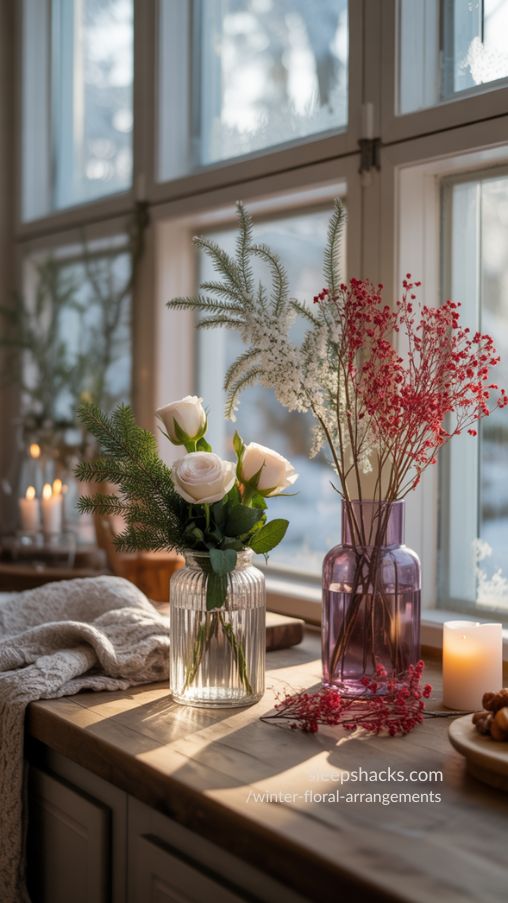
Quick Winter Floral Arrangement Tips:
- Pair seasonal blooms with greenery for texture.
- Use bold reds or crisp whites to brighten indoor spaces.
- Mix dried and fresh flowers for longer-lasting arrangements.
Benefits of Winter Floral Arrangements
There’s something almost therapeutic about arranging flowers in the winter. Unlike spring or summer, when flowers are abundant and the garden practically takes care of itself, winter requires intention. I’ve noticed that a carefully curated winter bouquet can uplift a room instantly. It’s like breathing life into a quiet, almost sleepy space. Flowers can reduce stress and give your mind a short, vivid escape from the cold monotony outside.

Winter arrangements also have a practical benefit—they can set the tone for holidays or gatherings. I remember hosting a small New Year’s brunch last year, and my table centerpiece made entirely from red ranunculus, white tulips, and a few sprigs of pine immediately caught everyone’s attention. People started commenting, asking if I had purchased it from a florist, and I felt a small thrill sharing that I had crafted it myself. That’s the charm of winter floral arrangements—they’re not just beautiful; they create conversations and memories.
Best Winter Flowers for Arrangements
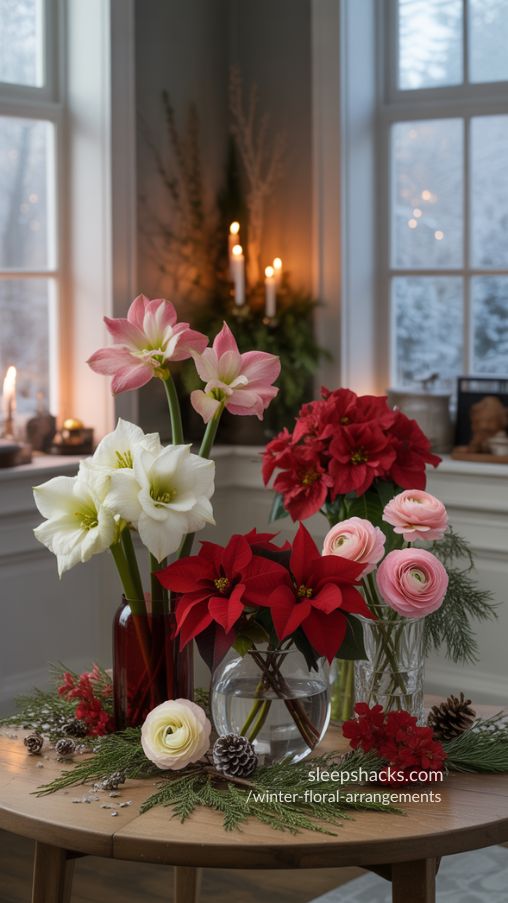
I always start my arrangements by choosing flowers that truly thrive in winter. Some of my favorites include amaryllis, poinsettias, ranunculus, garden roses, camellias, lilies, and carnations. These flowers not only survive the cold months but seem to flourish in the indoor light. One winter, I paired deep red amaryllis with snowy white ranunculus—it created a contrast so striking that it felt like the arrangement had its own personality.
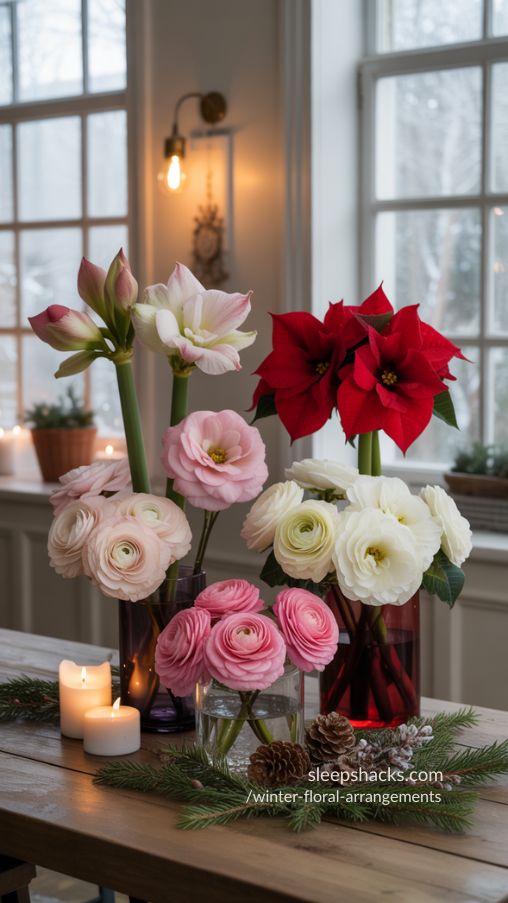
Table 1: Winter Flower Guide
| Flower Type | Color Options | Best Use in Arrangement | Care Tips |
| Amaryllis | Red, White, Pink | Centerpiece or tall vase | Keep in bright indirect light; water moderately |
| Poinsettias | Red, White, Pink | Holiday décor | Avoid cold drafts; water when soil is dry |
| Ranunculus | White, Yellow, Pink | Bud vases or clusters | Trim stems at angle; change water regularly |
| Camellias | Pink, Red, White | Medium to large arrangements | Keep cool; avoid direct sunlight |
| Garden Roses | Red, White, Blush | Romantic or formal settings | Remove leaves below water line; use floral food |
These flowers are versatile, and pairing them with evergreen sprigs or pinecones makes them feel grounded and seasonal. I’ve noticed that layering colors and textures adds depth, making even a small table arrangement look luxurious.
Choosing Seasonal Greenery and Accents
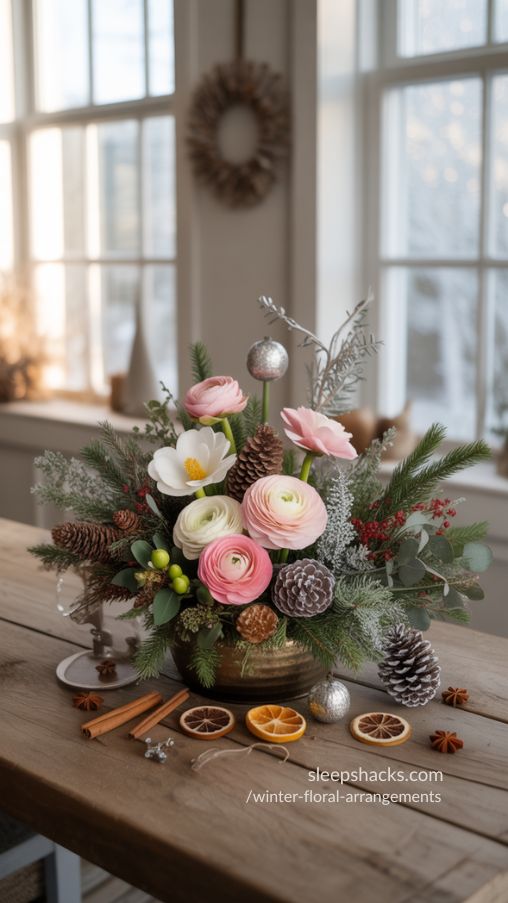
If you’ve ever crafted a winter floral arrangement, you know that greenery isn’t just filler—it’s the backbone. I love mixing evergreen sprigs, pinecones, eucalyptus, and Christmas ferns into my bouquets. One winter, I added a few cinnamon sticks and silver brunia berries to my usual greens, and suddenly the arrangement had both texture and subtle fragrance.

Dried flowers are another personal favorite. I often use billy buttons or scabiosa pods to add height. These tiny touches create contrast with fresh blooms, giving a winter arrangement more personality. Even small details, like a touch of citrus slices or metallic ornaments tucked among the flowers, can make an arrangement feel luxurious without being overdone.
Color Palettes for Winter Floral Arrangements
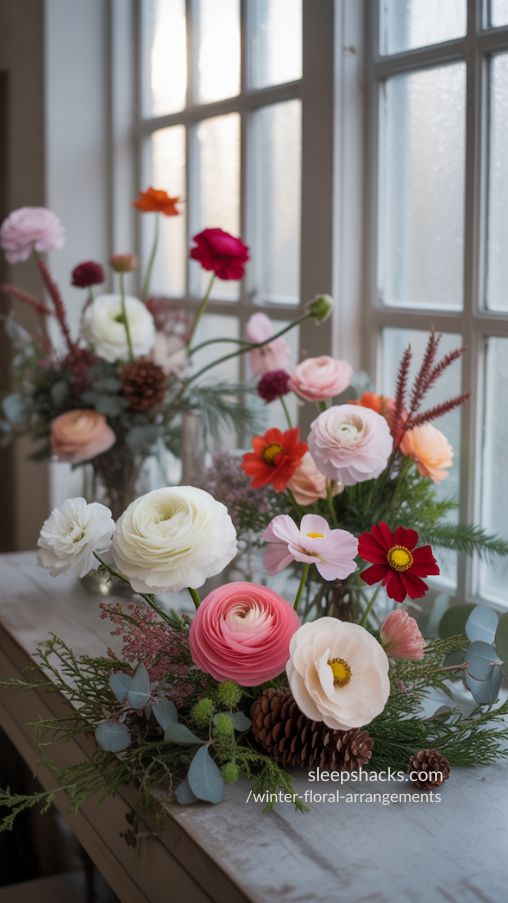
Color can make or break a winter bouquet. Personally, I’m drawn to crisp whites, soft neutrals, and bold reds. Whites feel fresh and peaceful, while reds, pinks, and corals energize the room. Pastel shades also work beautifully for Valentine’s Day or romantic touches.

Layering different colors in one arrangement is my go-to technique. For example, combining peach roses with lavender cosmos and periwinkle blue lace flowers creates a harmonious blend that feels playful yet elegant. Think of it like a painting—you’re balancing tones, textures, and shapes to create something that catches the eye from every angle.
Winter Floral Arrangement Styles
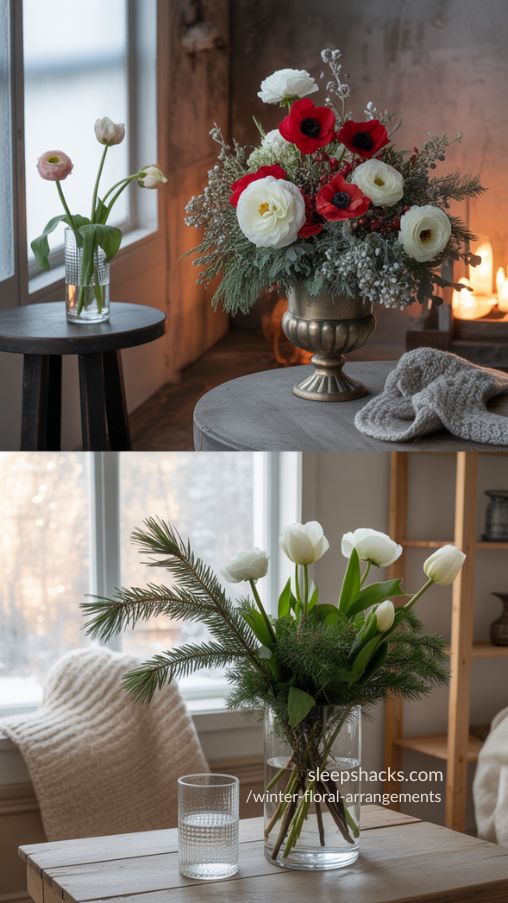
There’s no single way to arrange flowers in winter; I like to experiment with different styles depending on mood and space.
Minimalist Bud Vases
I often place a single bloom, like a ranunculus or tulip, in a small bud vase. It’s simple, elegant, and perfect for side tables or bookshelves.
Large Centerpieces
For dinners or gatherings, I use tall urns or glass vases filled with layered blooms and greenery. A previous holiday dinner had a centerpiece of red anemones, white roses, and silver brunia berries that everyone commented on—it felt dramatic but welcoming.
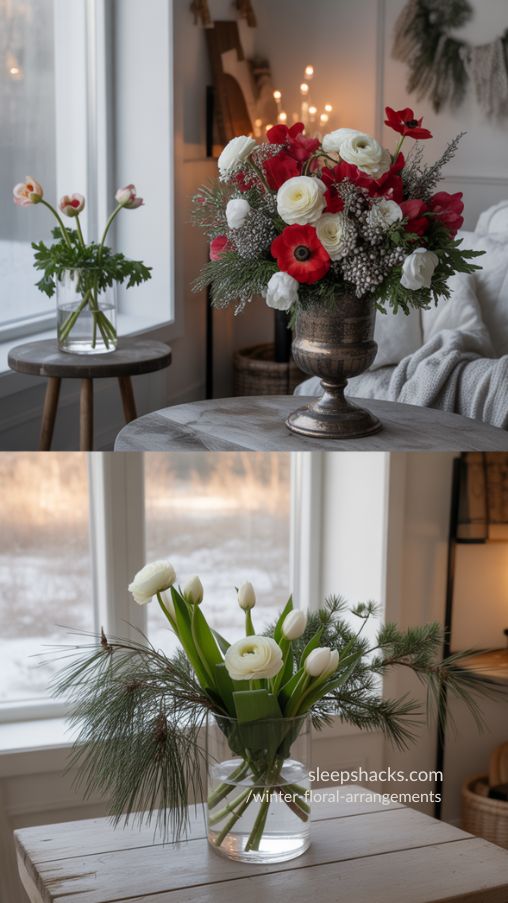
Foraged/Wild Style
Sometimes I gather loose clippings, like black pine or Fraser fir, and mix them with white roses or tulips. This creates an untamed, natural beauty that makes the arrangement feel alive rather than staged.
DIY Winter Floral Arrangements
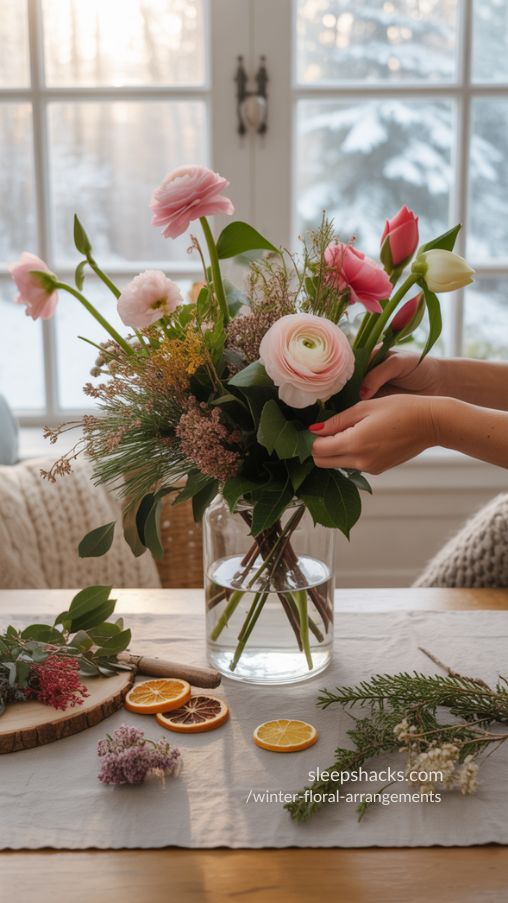
I’ll admit, DIY arrangements are my favorite because they’re both creative and therapeutic. Here’s how I approach them:
- Start with a clean vase and fill it with warm water and floral food.
- Trim flower stems at an angle for better water absorption.
- Layer blooms with greenery first, then add focal flowers.
- Mix in dried flowers or citrus for longevity.
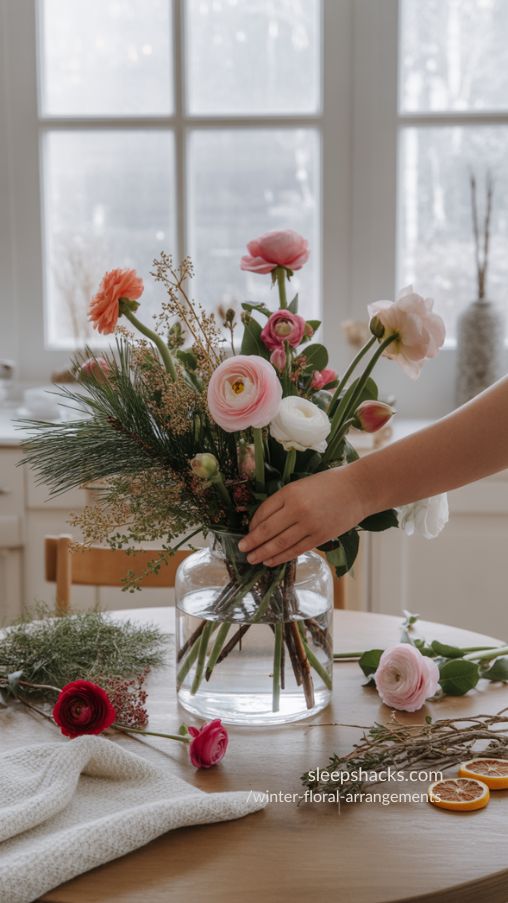
Budget-friendly DIY is totally possible. One year, I bought two grocery store bouquets and added backyard pine sprigs and dried pods. The result looked like a professional arrangement, and it cost less than half the price. Honestly, creating these arrangements feels like painting with nature—you learn by experimenting, and every bouquet tells a different story.
Designer-Inspired Winter Arrangements
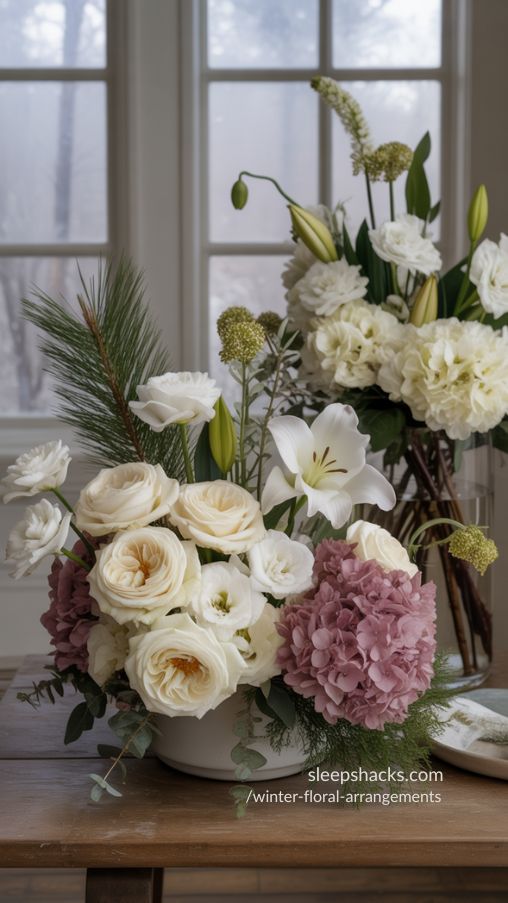
I often draw inspiration from designers like Mark Thompson, Buffy Hargett Miller, and Alex Papachristidis. Their arrangements teach lessons about scale, color layering, and pairing unexpected textures. For instance, Thompson’s Winter’s Walk Floral Arrangement layers white garden roses, lilies, and Iceland poppies with dusty pink hydrangeas—a perfect balance of elegance and natural charm.
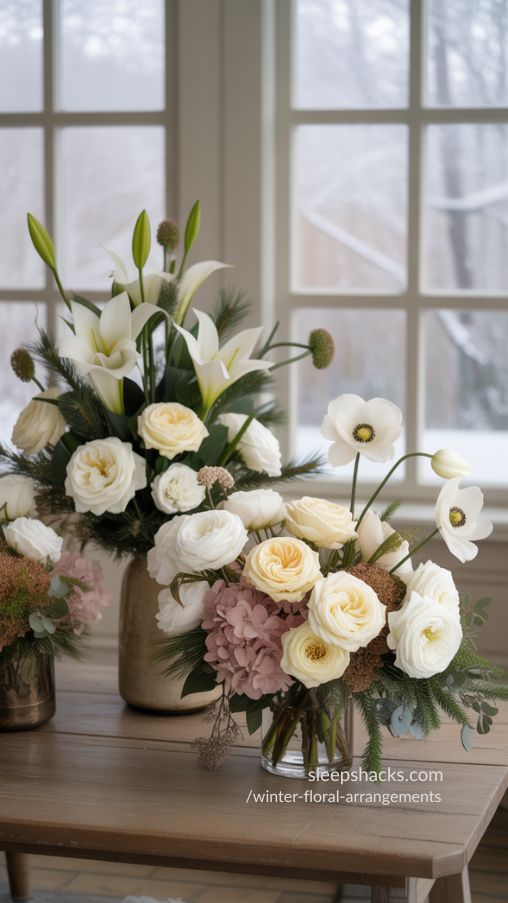
Seeing their work reminds me that arrangements don’t need to be perfect; sometimes the magic comes from imperfection—slightly uneven stems, asymmetry, or a touch of wild greenery.
Holiday-Themed Winter Floral Arrangements
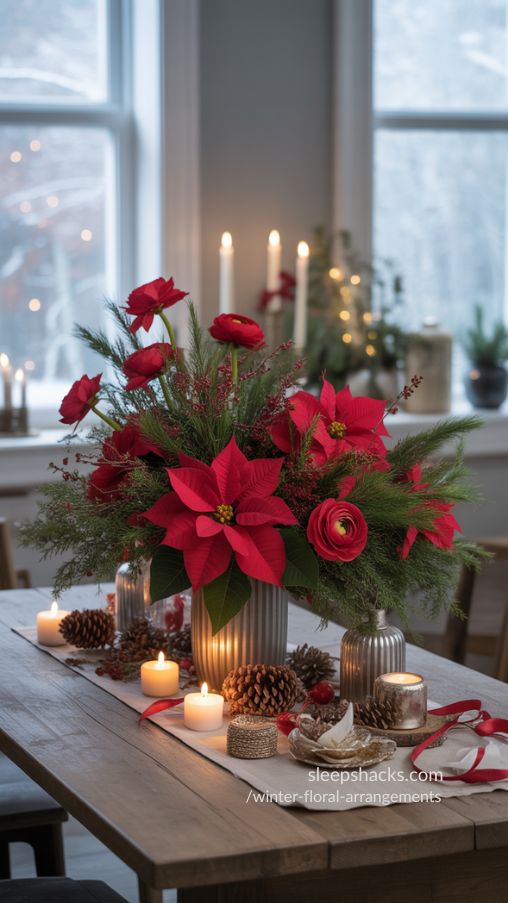
Holidays are the ultimate time to get creative. I love arranging Christmas reds, deep greens, and metallic accents to bring a festive feel. Poinsettias and evergreens make a natural pairing, while ornaments, ribbons, and pinecones add personality.
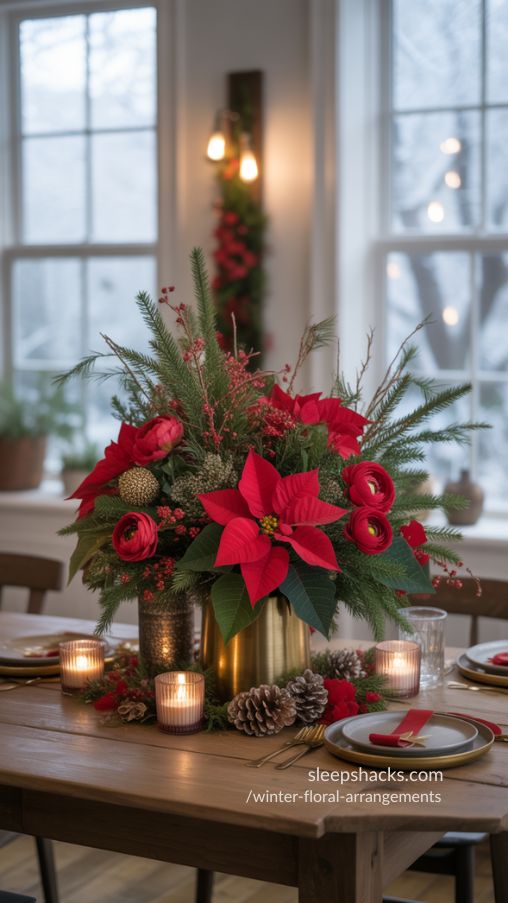
I’ve hosted New Year’s gatherings where the table centerpiece included red ranunculus, pine sprigs, and floating candles—guests were enchanted. The flowers weren’t just decoration; they were part of the experience, sparking joy and conversation.
Using Potted Plants for Winter Arrangements
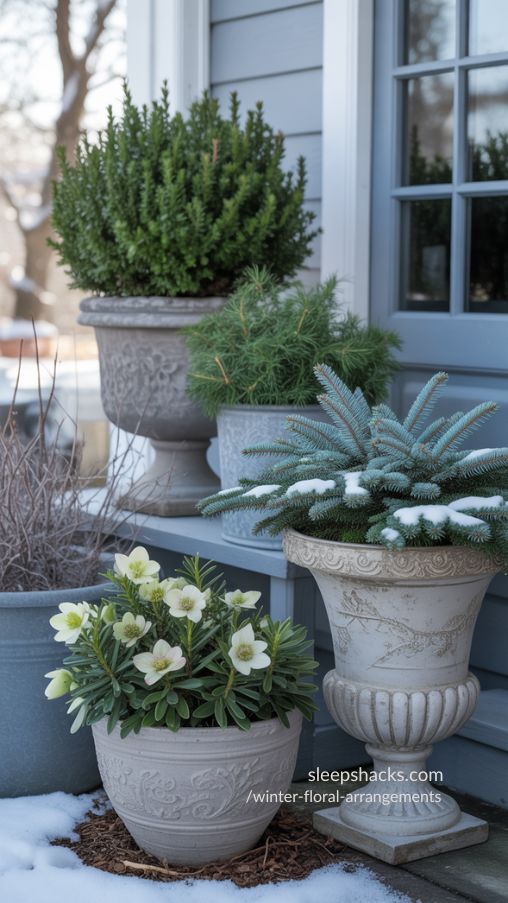
Potted plants are another way to enhance winter décor. Some of my favorites include boxwood, Japanese yew, blue spruce, Helleborus, and Sedum. I like to place them in heirloom pots or antique urns, creating arrangements that feel alive even outdoors.
Winter care for potted plants is key. I usually insulate the pots and place them in sheltered areas to protect roots from freeze-thaw cycles. If I’m ambitious, I’ll even sink pots slightly into the ground for extra protection. The result? Lush, hardy greenery that persists even during harsh winters.
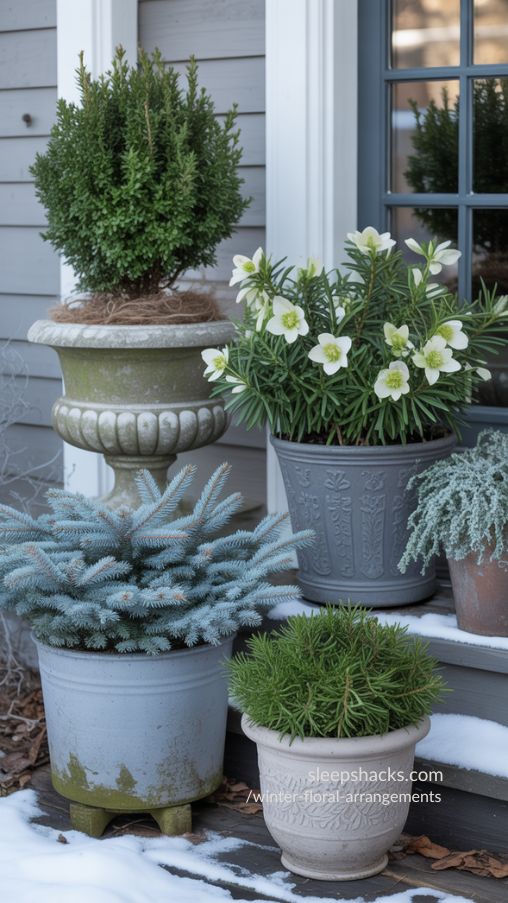
Table 2: Potted Plant Winter Survival Tips
| Plant | Placement | Care Tips | Survival Notes |
| Boxwood | Porch or partially shaded area | Water sparingly; mulch soil | Hardy in cold zones 3–5 |
| Japanese Yew | Near walls or entryways | Avoid direct frost; use insulation | Evergreen, slow-growing |
| Blue Spruce | Outdoor pots, sheltered | Minimal watering; mulch | Tolerates heavy snow |
| Helleborus | Shaded areas | Keep soil moist; cut damaged leaves | Blooms late winter to spring |
| Sedum | Sunny spots | Well-drained soil | Resilient to freeze-thaw cycles |
Table and Home Display Ideas
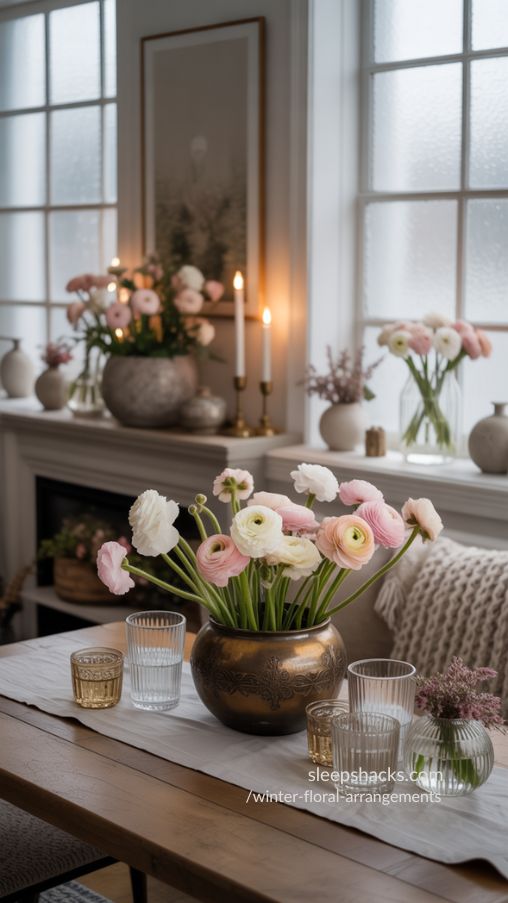
Small arrangements scattered around the house can have a big impact. I often place bud vases on side tables, mantelpieces, and shelves, while keeping one large centerpiece for the dining table. Using heirloom vessels or vintage pots adds character.
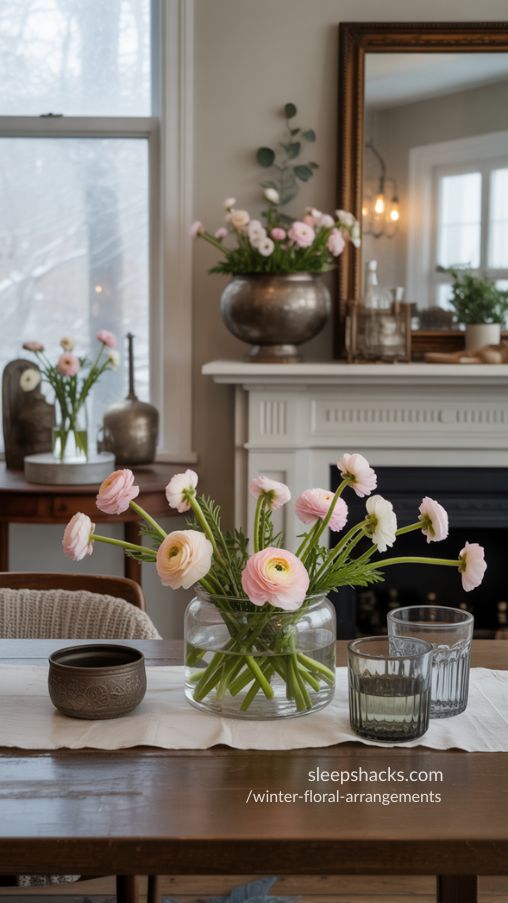
Floating flowers in bowls or feather-filled tumblers are also fun alternatives to traditional vases. One winter, I filled small glass tumblers with water and floating ranunculus—guests loved the casual yet thoughtful look. Even simple touches like grouping small arrangements together can elevate an entire room.
Tips for Long-Lasting Winter Floral Arrangements
Keeping arrangements fresh in winter requires attention. Here’s what I’ve learned over years of trial and error:
- Choose hardy flowers that tolerate indoor temperatures.
- Trim stems and change water regularly.
- Avoid placing arrangements near heaters or drafty windows.
- Use floral food and rotate flowers to maintain freshness.
- Combine fresh and dried elements for extended visual appeal.
Outdoor Winter Floral Arrangements
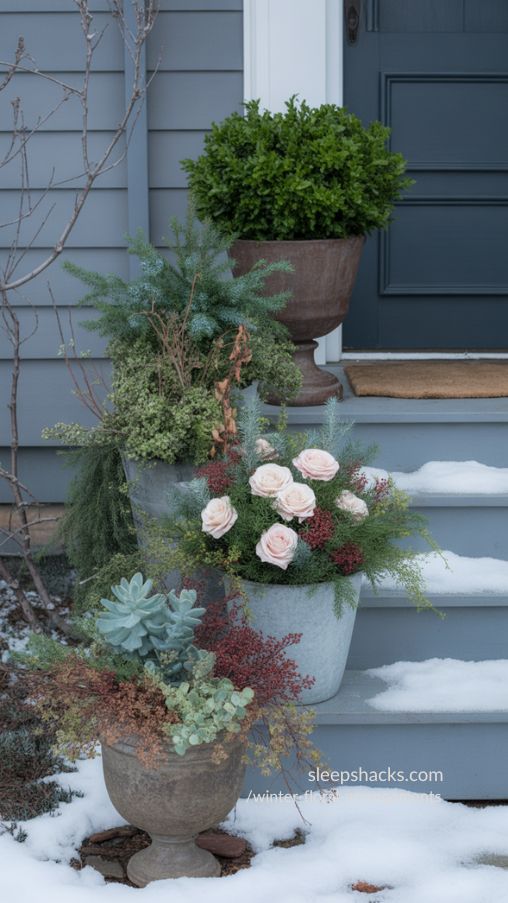
Outdoor arrangements can be just as magical as indoor ones. Hardy flowers and plants like boxwood, heuchera, and sedum withstand snow and frost. Adding evergreen branches, winter berries, and textured twigs enhances the seasonal effect.
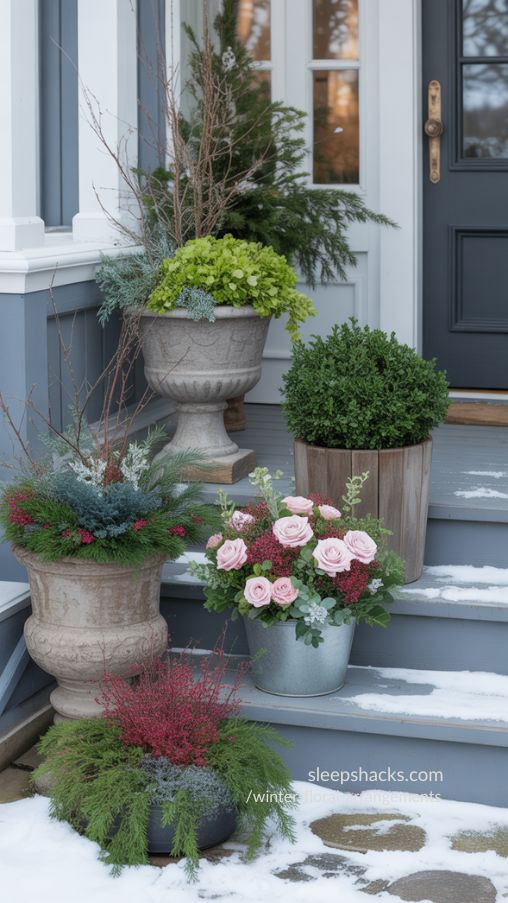
I remember arranging potted boxwoods and winter roses along my front steps last January. The contrast of the vibrant greens against snow made the entrance feel alive, welcoming, and full of life. With proper care, outdoor winter floral arrangements can thrive and set the tone for your entire garden or porch.
Creative and Unique Winter Arrangement Ideas
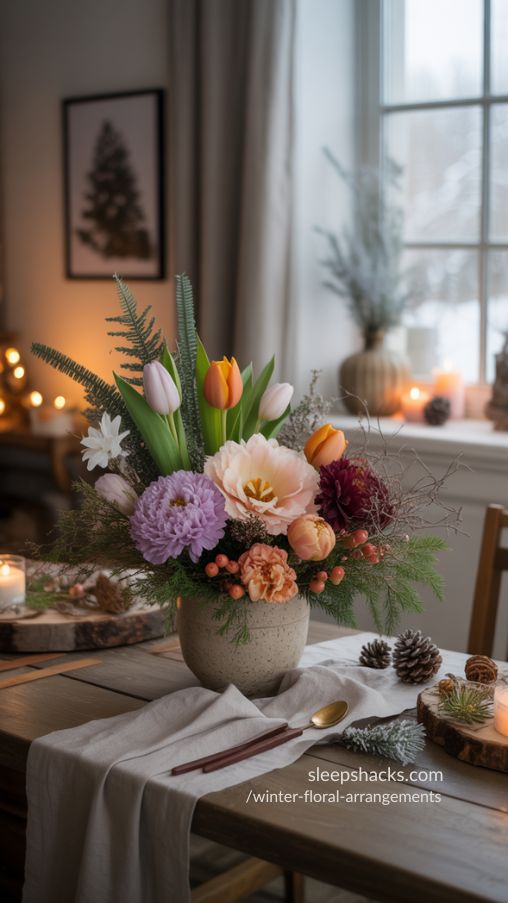
Sometimes, the most memorable arrangements are those that break traditional rules. I’ve mixed clementine tulips with Christmas ferns, or added unexpected metallic touches to neutral blooms. Using nontraditional colors like lilac, peach, or deep burgundy brings a fresh twist to winter décor.
Another idea I love is interactive DIY kits—friends and family can assemble their own arrangements for gatherings. It’s creative, social, and gives everyone a sense of ownership over the décor. Flowers become not just decoration, but a shared experience.
FAQs
What flowers are best for winter floral arrangements?
Amaryllis, poinsettias, ranunculus, garden roses, camellias, lilies, and carnations thrive in winter and work beautifully in bouquets.
How long do winter floral arrangements last?
With proper care—angled stem cuts, fresh water, and floral food—most arrangements last 7–10 days; adding dried elements can extend visual appeal.
Can potted plants survive winter outdoors?
Yes, hardy plants like boxwood, blue spruce, Japanese yew, sedum, and Helleborus survive if protected from repeated freeze-thaw cycles.
How do I make winter arrangements last longer indoors?
Keep arrangements away from drafts and heaters, change water every 2–3 days, and combine fresh blooms with dried or artificial elements.
Which colors work best for winter floral arrangements?
Crisp whites, soft neutrals, bold reds, pinks, and pastels create striking and seasonal combinations.
Can I create DIY winter floral arrangements on a budget?
Absolutely! Mix grocery store flowers with greenery, pinecones, or dried accents from your backyard for cost-effective and stunning arrangements.
What style suits winter floral arrangements the most?
It depends—minimalist bud vases, large centerpieces, foraged/wild styles, and designer-inspired layered bouquets all work, depending on space and mood.