

There’s something about a home office that gets treated like an afterthought — a leftover corner, a spare desk pushed against a blank wall, nothing that actually feels like part of the house. But the truth is, a workspace deserves the same care as any room you love spending time in.
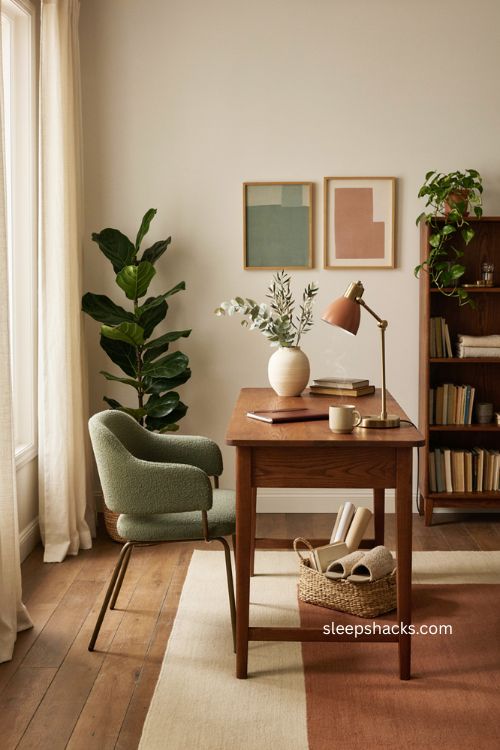
A beautiful home office doesn’t need square footage or a big budget. It needs intention — the right desk, the right light, a few pieces that feel like you. Once you start treating it as a real room instead of a placeholder, the whole experience of working from home shifts. Here are fifteen ways to make that happen, whether you’ve got a whole study to design or just a nook to claim.
1. Start With the Desk, Then Build Around It
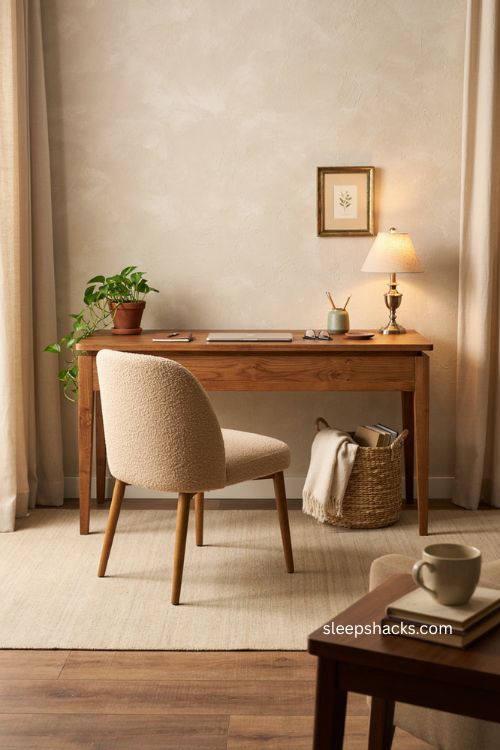
The desk is the anchor of the whole room, so it makes sense to choose it first and let everything else respond to it. A warm wood desk with clean, simple lines works almost anywhere, while a lacquered or glass-topped piece leans more polished and modern. Once you’ve picked the material and shape, think about scale — a desk that’s too small will feel cramped under a laptop and a lamp, while one that’s slightly oversized gives you room to spread out. Pick a chair that actually matches the desk’s height and style, not just whatever was sitting in the garage.
2. Let a Window Do the Heavy Lifting
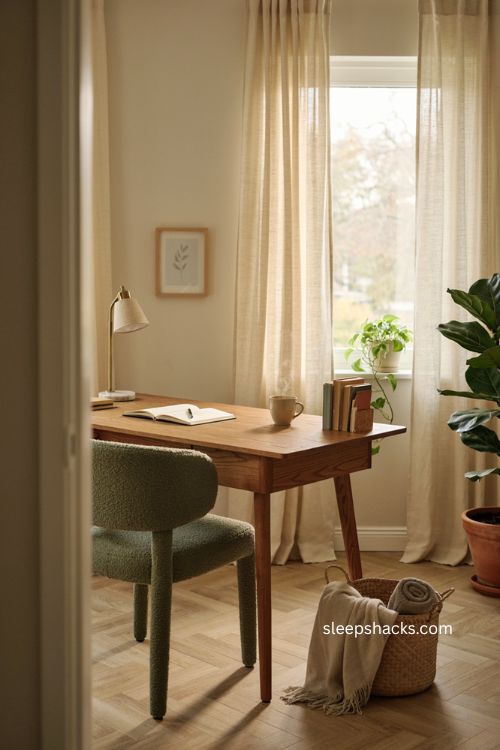
Natural light changes everything about how a workspace feels, so if you have any choice in the layout, put your desk where it faces or sits beside a window. You’ll get better light for video calls, less eye strain by afternoon, and something nicer to look at than a blank wall when you need to think. If your view isn’t exactly scenic, a sheer curtain softens the light without blocking it completely. Even a small window can make a huge difference in how alive the room feels by midday.
3. Cover One Wall in Something Bold
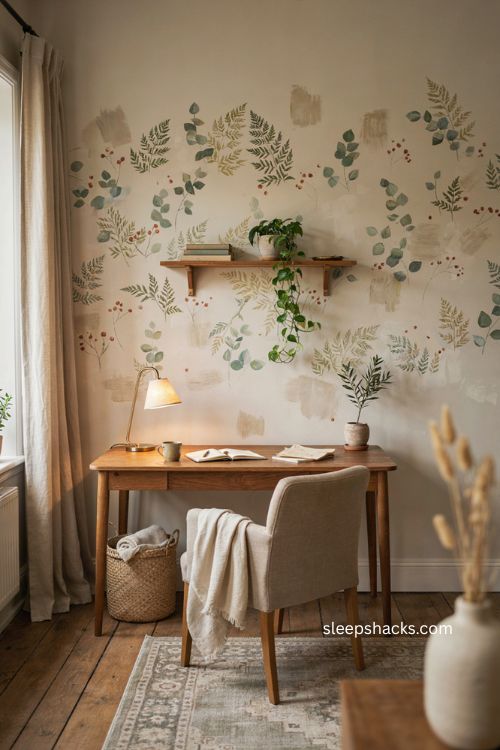
A single statement wall — wallpaper, a mural, even a bold paint color — turns a plain office into a room with personality fast. Pick a pattern that feels calming rather than chaotic if you’ll be staring at it for hours, like a soft botanical print or a subtle geometric. Keep the rest of the room simple so that one wall gets to do the talking. This is also the easiest fix for a home office that feels sterile, since it adds warmth without touching the furniture at all.
4. Try Color Drenching for a Cocoon Effect
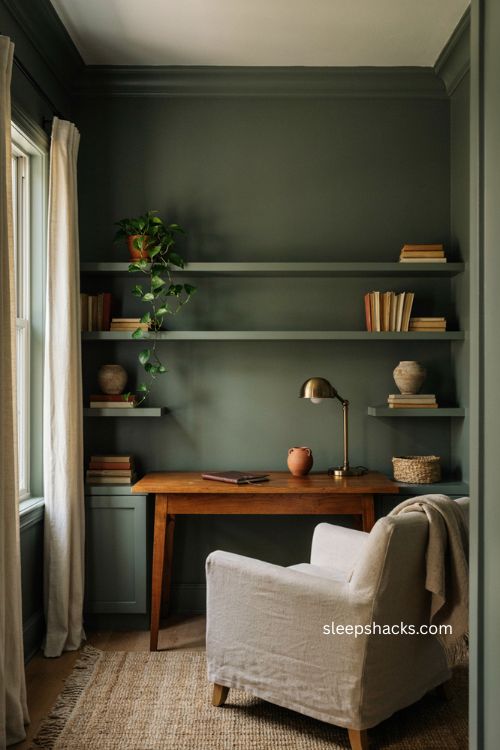
Painting the walls, trim, and built-ins all in the same shade — often called color drenching — makes a small office feel intentional instead of cramped. Deep green, warm terracotta, or a moody navy all work beautifully this way, especially in a room with limited natural light. The trick is using a paint finish with a bit of sheen on the trim so the color still reads with some texture and depth. It’s a simple way to make a boxy little room feel like a considered, grown-up space.
5. Bring in a Piece With Some History
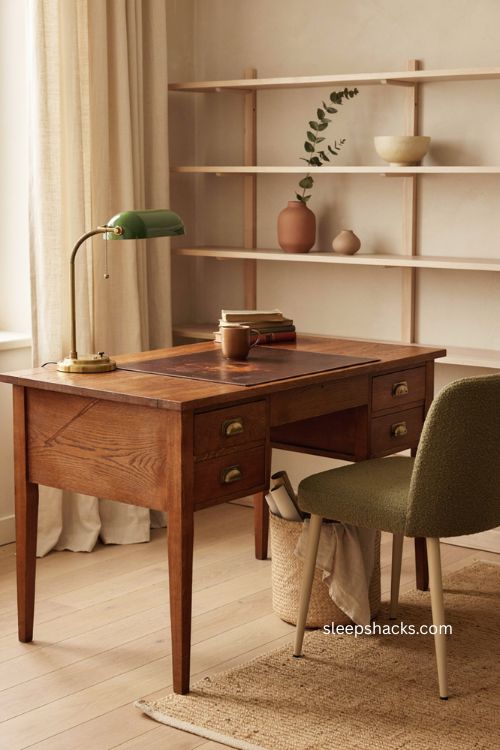
A vintage desk, an antique chair, or even just an old brass lamp gives a home office a sense of soul that brand-new furniture rarely has on its own. You don’t need a full set of matching antiques — one well-chosen secondhand piece is often enough to anchor the whole room. Look for something with real wear and character, like a scratched leather top or a slightly uneven drawer pull. Mixing that one older piece with newer furniture keeps the room feeling collected rather than staged.
6. Build a Wall of Shelves Behind the Desk
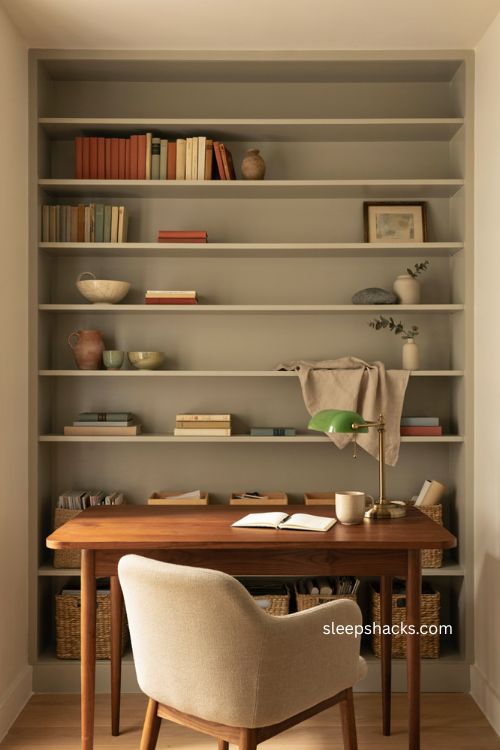
Floor-to-ceiling shelving does double duty — it swallows up files, books, and supplies while also giving you a genuinely good-looking backdrop for video calls. Mix in a few decorative objects between the practical stuff so the shelves don’t read as pure storage. Group books by color or size on a couple of shelves to keep the whole wall from feeling busy. If your office is small, painting the shelving the same color as the wall behind it helps it disappear into the room instead of dominating it.
7. Layer Your Lighting Instead of Relying on One Lamp
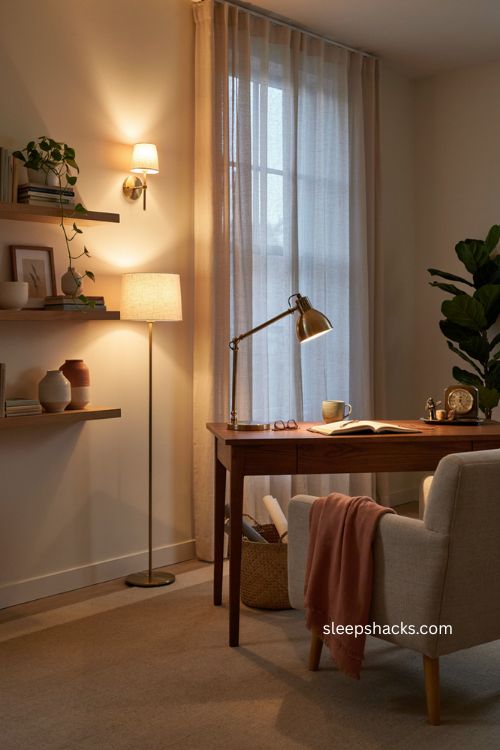
A single overhead light makes most rooms feel flat and a little clinical, and a home office is no exception. Add a task lamp right on the desk for actual work light, then bring in one more ambient source, like a floor lamp in the corner or a wall sconce nearby. A lamp with a warm-toned shade, like linen or bone china, softens the whole atmosphere in a way a bare bulb never will. This layered approach also just makes the room nicer to sit in once the sun goes down.
8. Put Down a Rug That Can Handle a Rolling Chair
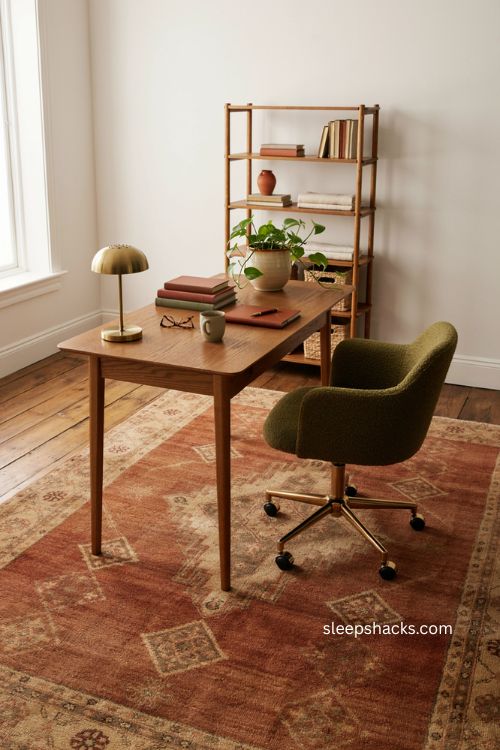
An area rug grounds the whole setup and keeps a home office from feeling like a leftover patch of the house. Go for a low pile or flatweave so a rolling desk chair doesn’t catch or wear it down too quickly. A bold pattern or saturated color here is a great way to add personality without repainting anything. Just make sure the rug is large enough that the desk and chair both sit on it, rather than floating awkwardly on the edge.
9. Design It to Do More Than One Job
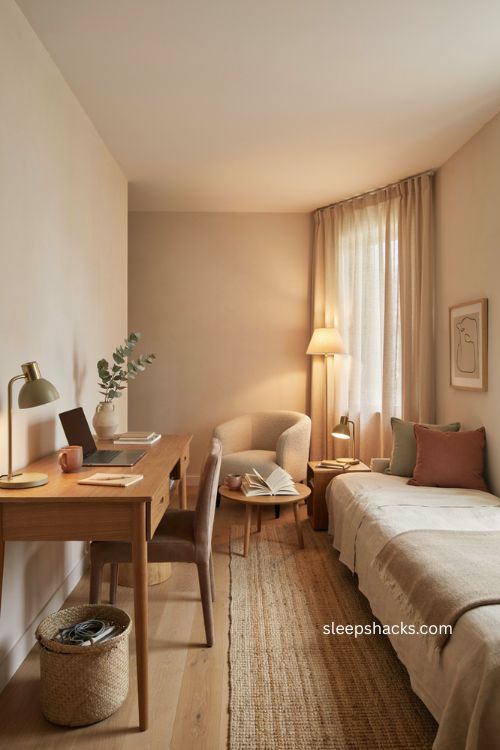
Not everyone has a spare room to dedicate purely to work, and that’s fine — a desk can share space with a guest room, a reading corner, or even part of a living room. A daybed or a foldout sofa lets the same room host overnight guests without the desk ever having to move. Keep cords tucked and papers contained with a drawer or a lidded basket so the space can be cleared in minutes. Designing for double duty from the start saves you from a cluttered, half-finished-feeling room later.
10. Hang Art That Actually Means Something to You
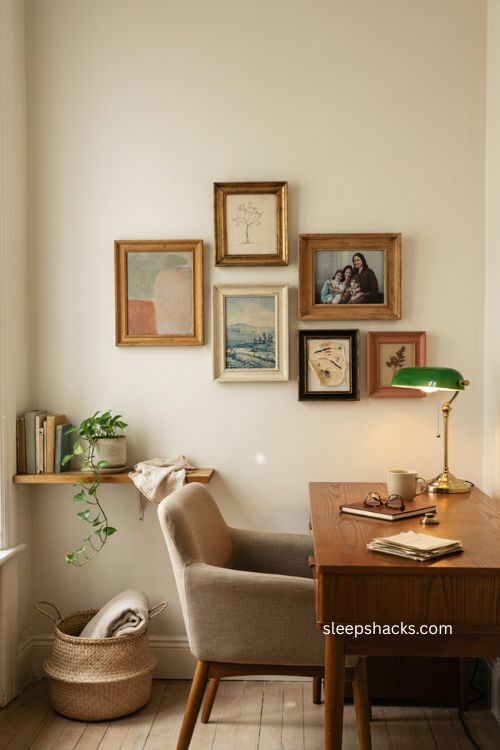
The wall around your desk is where your eyes land most often during the day, so fill it with art or photos you genuinely like rather than generic prints. A small gallery of mismatched frames feels far more personal than one large, perfectly centered piece. Mix in something handmade or sentimental, like a child’s drawing or a travel photo, alongside more polished artwork. Over time this becomes the wall that makes video calls feel a little less corporate and a little more like you.
11. Choose a Calming Color Palette for the Walls
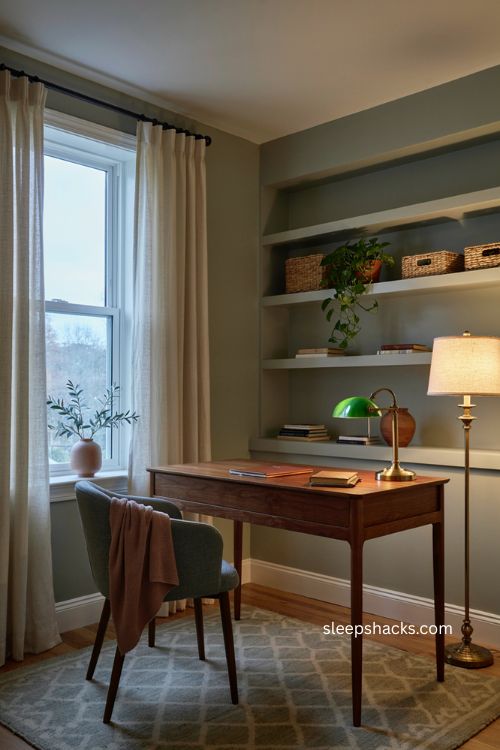
Certain colors just work better in a space where you need to focus for hours at a time. Soft sage green, muted gray-blue, and warm off-white all tend to read as calm rather than stimulating, which matters more in an office than almost any other room. Darker shades like forest green or navy can feel surprisingly cozy in a smaller office, especially with good lamp lighting at night. Whatever you choose, test the color at different times of day before committing, since office lighting can shift a shade more than you’d expect.
12. Hang a Light Fixture With Some Personality
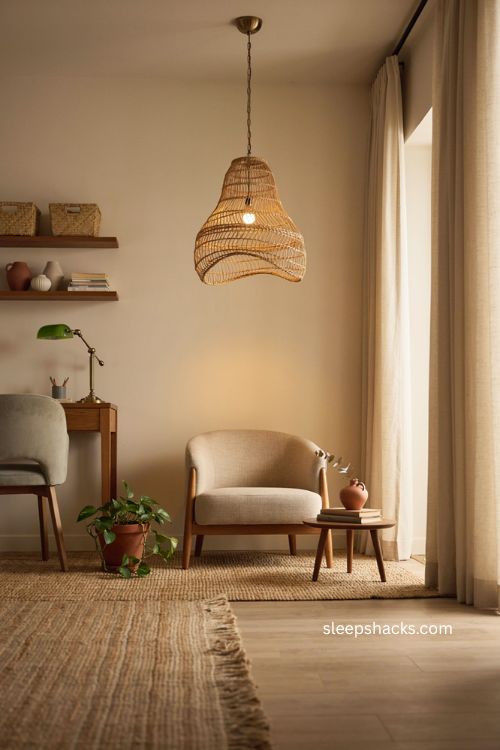
Swapping a builder-grade flush mount for a pendant, chandelier, or sculptural fixture instantly elevates the whole room without touching the furniture. A brass or woven fixture adds warmth, while a sculptural glass piece leans more modern and airy. Hang it slightly off-center over a reading chair or side table if it can’t sit directly above the desk. It’s a small change, but a good light fixture is often the detail that makes people ask where the rest of the room’s decor came from.
13. Keep Something Green Within Reach
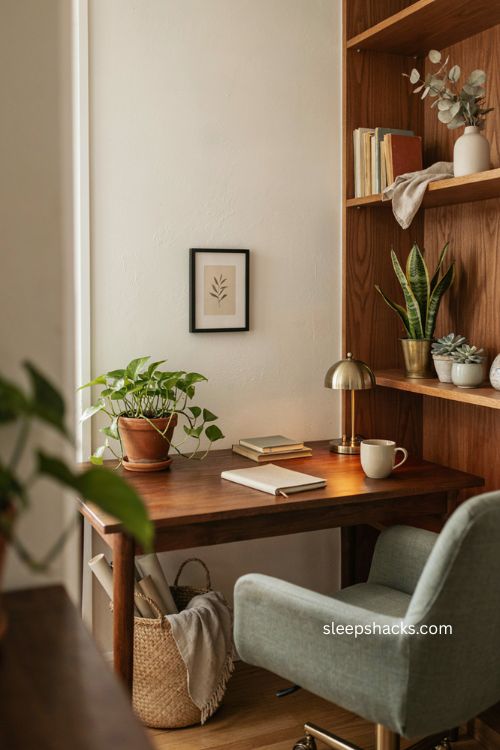
A plant or two on the desk or a nearby shelf does more for a home office than almost any other single object. Low-maintenance options like a pothos, snake plant, or small succulent survive inconsistent watering and still add life to the room. Position at least one plant where you can see it from your desk chair, since that little flash of green during a long stretch of screen time genuinely helps. A cluster of plants at different heights on a shelf reads more intentional than one lonely pot on the corner of the desk.
14. Add a Chair That Isn’t for Working
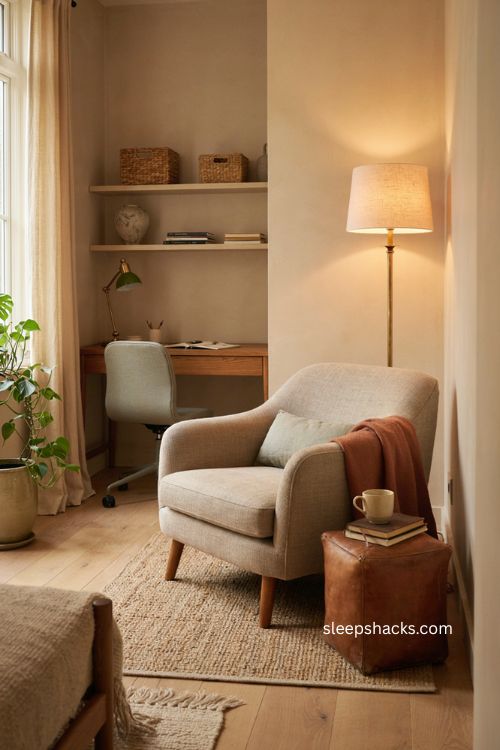
A single comfortable armchair or a small bench near the desk gives the room somewhere to sit that isn’t the desk chair, which changes the whole feel of the space. It’s useful for reading, taking a call away from the screen, or just giving a guest somewhere to sit if they wander in. Choose upholstery in a fabric that can take some wear, like a performance velvet or textured linen. This one addition is often what turns a functional workstation into a room you actually want to spend time in.
15. Let the Office Hide in Plain Sight
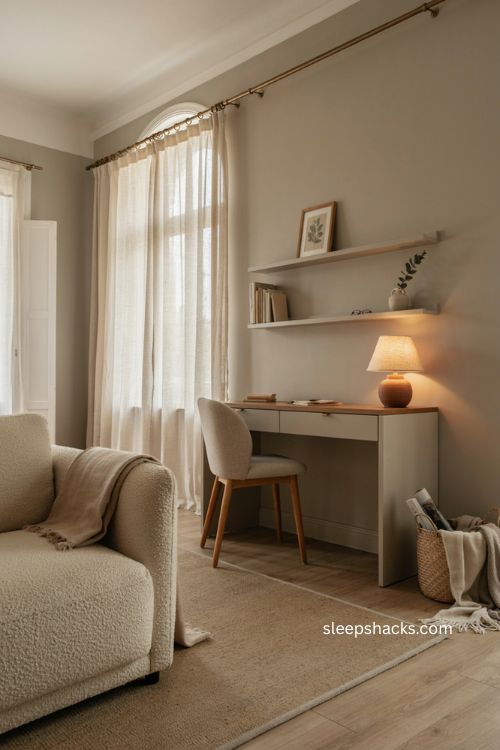
If you don’t want a home office announcing itself the moment you walk into a room, camouflage is a genuinely clever option. A desk painted the same color as the wall behind it, or tucked into a closet with doors that close, lets the space disappear when you’re done for the day. A slim console-style desk against a hallway wall barely reads as an office at all. This approach works especially well in a studio or one-bedroom layout where every piece of furniture has to earn its place.
Final Thoughts
If there’s one thing to take from all of this, it’s that a beautiful home office rarely comes from one big splurge — it comes from a handful of small, deliberate choices stacked on top of each other. Pick the one or two ideas here that feel most doable right now, whether that’s swapping the light fixture or finally hanging art you actually love, and start there. The rest can happen slowly, piece by piece, as you figure out what the room actually needs. Give it a weekend, and see how different it feels to sit down and work in a space you helped shape.
Frequently Asked Questions
Q: What makes a home office look expensive without a big budget?
Layered lighting, one antique or vintage piece, and a cohesive color palette do more for the look of a room than pricey furniture. Consistency across the walls, trim, and accessories reads as intentional even when the individual pieces are affordable.
Q: What’s the best color for a home office?
Soft greens, muted blues, and warm neutrals tend to support focus while still feeling inviting, though deeper shades like navy or forest green can work well in smaller rooms with good lighting. The right choice ultimately depends on the room’s natural light and your own personal style.
Q: How do you make a small home office feel beautiful instead of cramped?
Color drenching the walls and built-ins in one shade, using a slim desk, and keeping shelving the same tone as the wall all help a small room feel considered rather than crowded. Mirrors and a well-placed lamp can also make the space feel larger than it is.