

There’s a strange thing that happens with home office walls — they’re the ones we stare at the most and decorate the least. Living rooms get the gallery walls, bedrooms get the headboard art, and somehow the office ends up with whatever was already hanging there, or nothing at all.
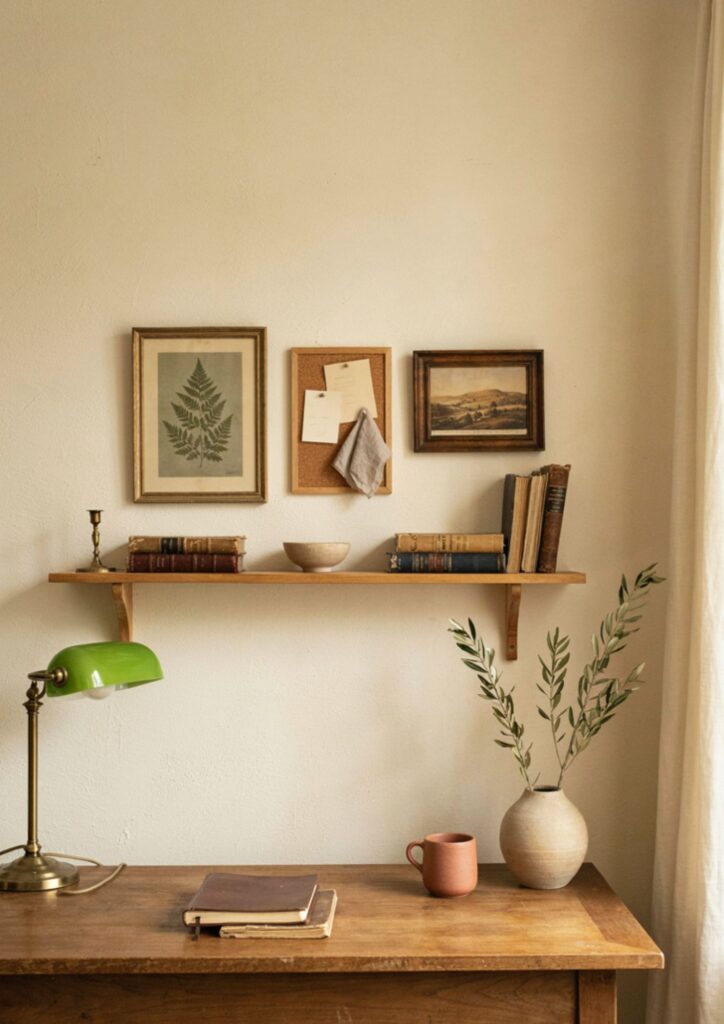
It makes sense in a way, since the office often feels purely functional, but that blank wall in front of you all day is actually one of the easiest places in the house to make a real difference. A few thoughtful additions turn a forgettable backdrop into something that genuinely makes the room better to work in. Here are fifteen ways to get there.
1. Build a Simple Gallery Wall Behind the Desk
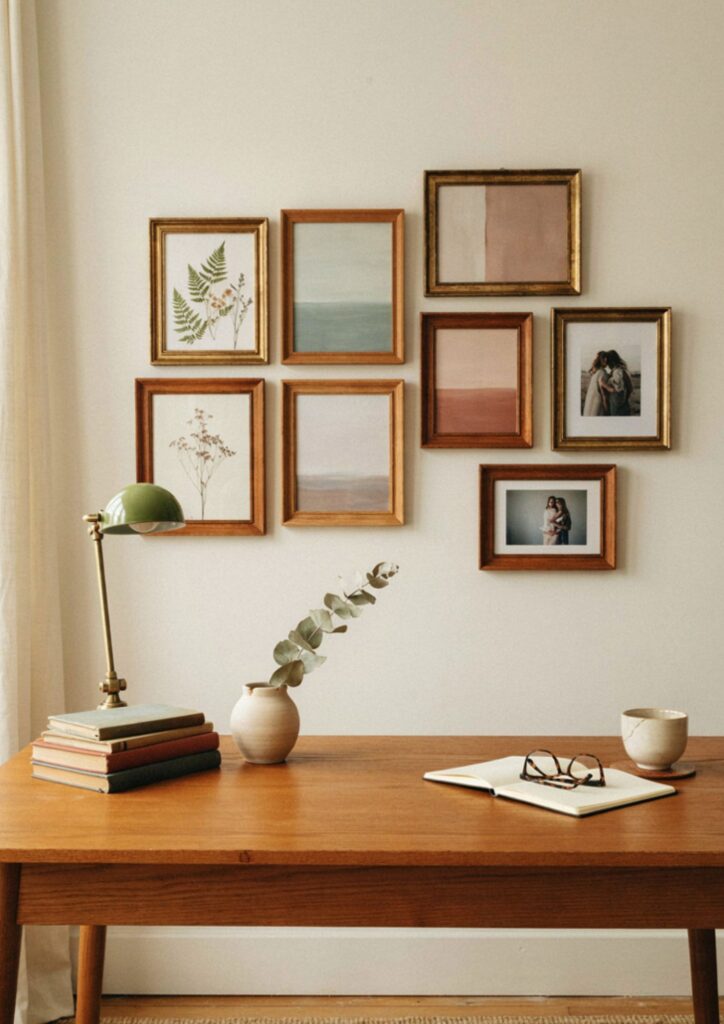
A small cluster of framed prints or photos above your desk creates an instant focal point, whether it’s a tidy grid or a looser, more organic arrangement. Keep the spacing consistent — around five centimeters between pieces — so the whole thing reads as intentional rather than accidental. Lay everything out on the floor first before committing to nails, since gallery walls are much easier to adjust before they’re on the wall. A mix of personal photos and purchased art tends to feel more collected than an entire wall of one or the other.
2. Anchor the Room With One Oversized Piece
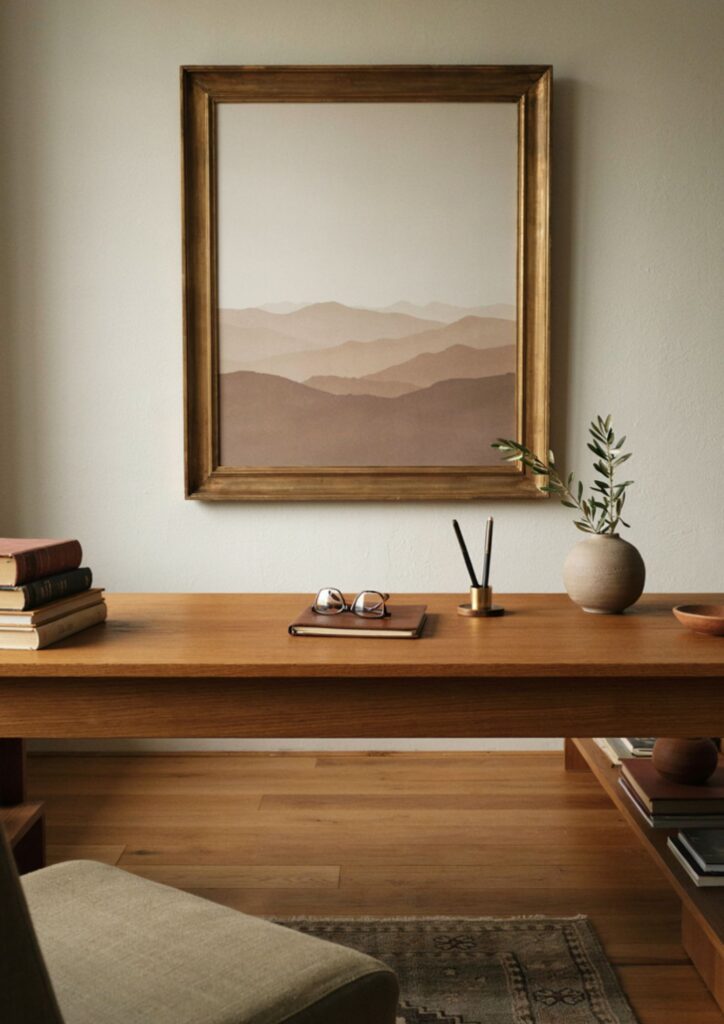
Instead of several small prints, a single large canvas or framed photograph centered on the wall makes a bold, confident statement with far less effort. This approach has been gaining ground as people move away from cluttered walls toward fewer, bigger choices. Position it so the center sits around eye level when you’re seated at the desk, not standing, since that’s the vantage point you’ll actually experience most often. One striking piece often does more for a room than five smaller ones scattered around it.
3. Add Floating Shelves for Layered Display
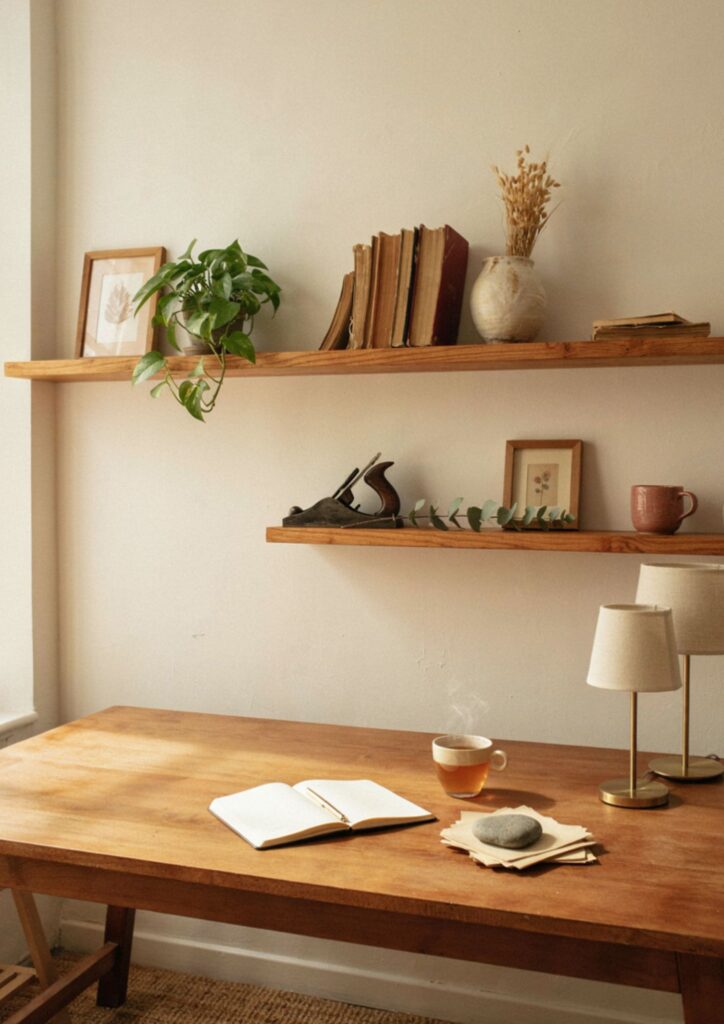
A row of floating shelves above or beside your desk gives you a spot to mix small art, plants, and a few favorite objects instead of relying on flat wall art alone. The layered look — a small framed print, a trailing plant, a stack of books, one decorative object — feels lived-in and personal in a way a single print can’t quite match. Leave a little breathing room between groupings rather than filling every inch, since a shelf that’s too packed starts to feel cluttered. Repeat the same loose formula across each shelf so the whole display feels cohesive.
4. Bring in a Trailing Plant or Two
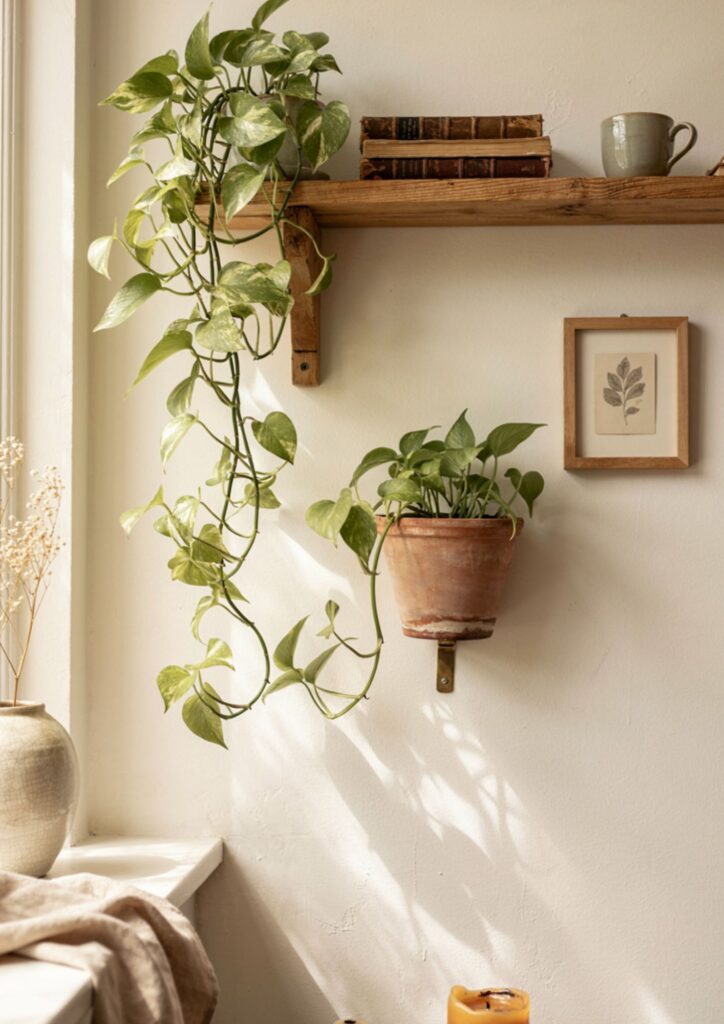
A pothos or trailing philodendron on a shelf or in a wall-mounted planter adds real life to an office wall in a way that printed greenery never quite manages. These plants tolerate inconsistent watering and lower light better than most, which matters if your attention is usually somewhere else. Let the vines cascade down naturally rather than trimming them tight, since that trailing movement is what makes the wall feel alive instead of static. Position at least one plant where you can actually see it from your desk chair.
5. Paint a Feature Wall in a Deep, Calming Color
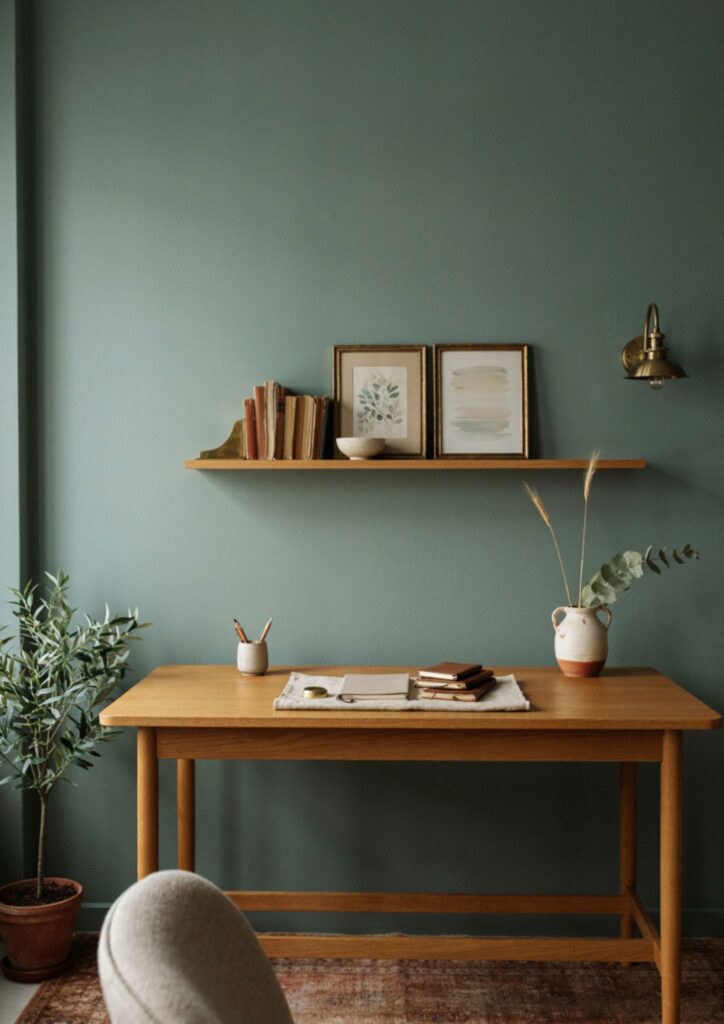
A single wall behind your desk in sage green, deep navy, or warm terracotta gives the whole room more personality than four matching white walls ever could. Darker, richer tones tend to read as more grounded and focused, especially when paired with warm wood furniture or brass hardware. If a full wall of color feels like too much, a painted arch shape behind the desk creates a similar effect on a smaller scale. Either approach gives your video calls a much more considered backdrop than plain white.
6. Hang a Corkboard or Pinboard Within Reach
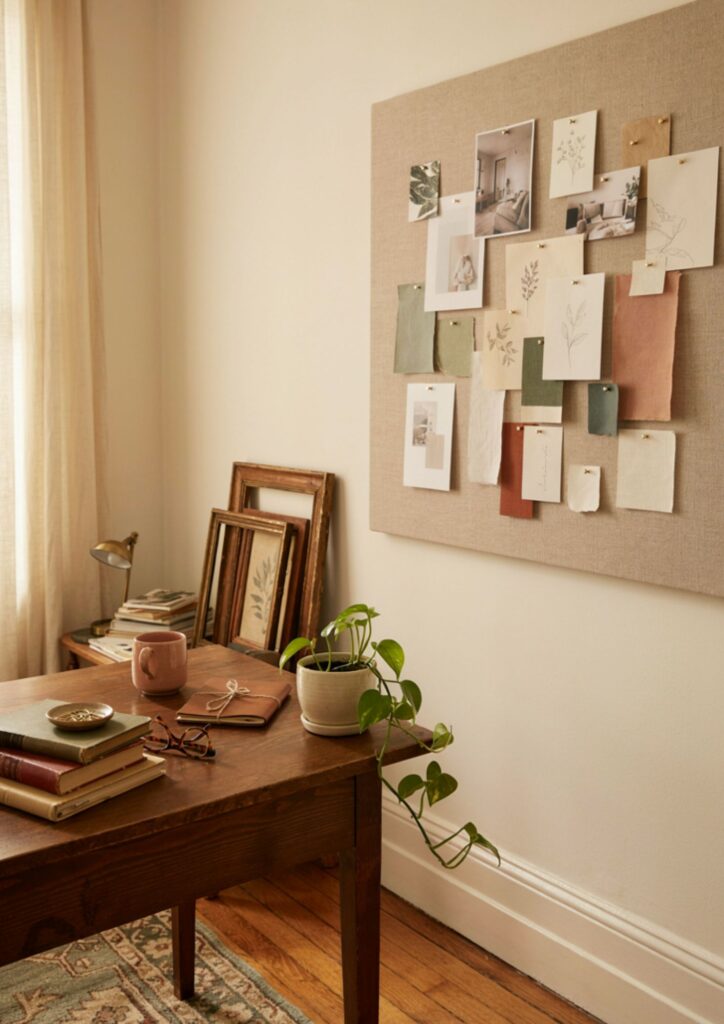
A cork or fabric-wrapped pinboard beside your desk gives you a genuinely useful spot for notes, photos, and inspiration that’s also part of the room’s decor. Covering plain cork in linen or a fabric that matches your color scheme makes it look far more finished than the bare board alone. Position it close enough to reach without standing up, since a pinboard you can’t easily use tends to stay empty. It’s one of the few wall additions that gets better and more personal the longer you use it.
7. Install a Statement Clock
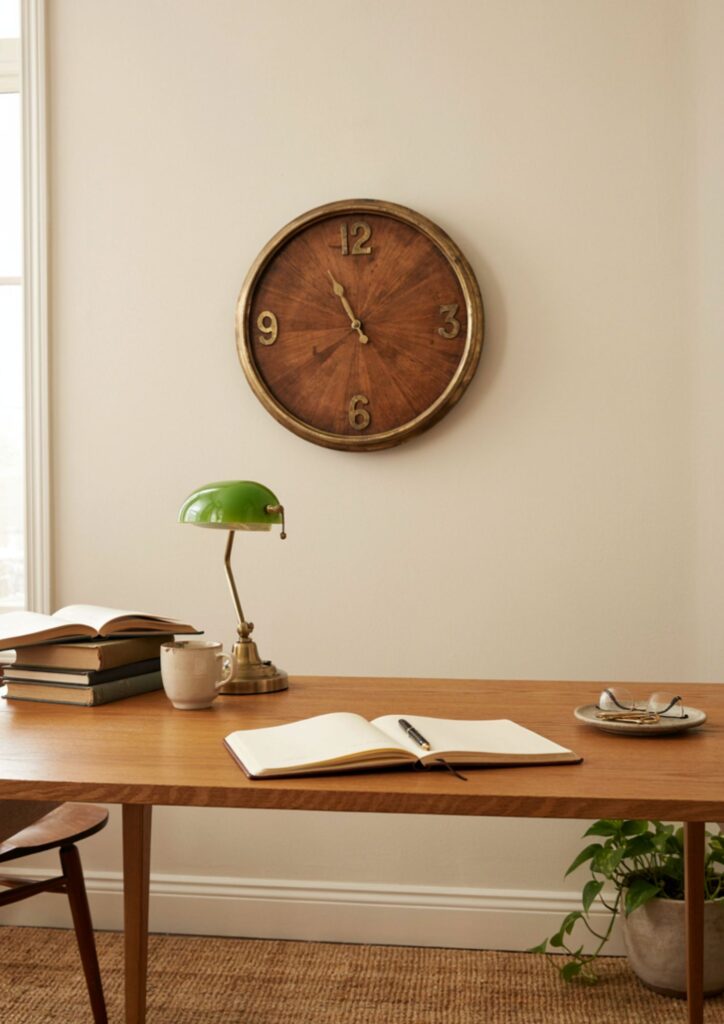
A genuinely good clock — an oversized industrial design, a minimal wooden face, or something with real vintage character — earns its place on the wall every single minute of the day. Position it somewhere you can glance at it from your desk without craning your neck, since that’s the whole point of having one. A clock in the 50-centimeter range or larger tends to read as intentional decor rather than an afterthought grabbed from a hardware store. It’s a rare piece that’s both fully functional and genuinely decorative.
8. Use Wallpaper to Zone a Corner
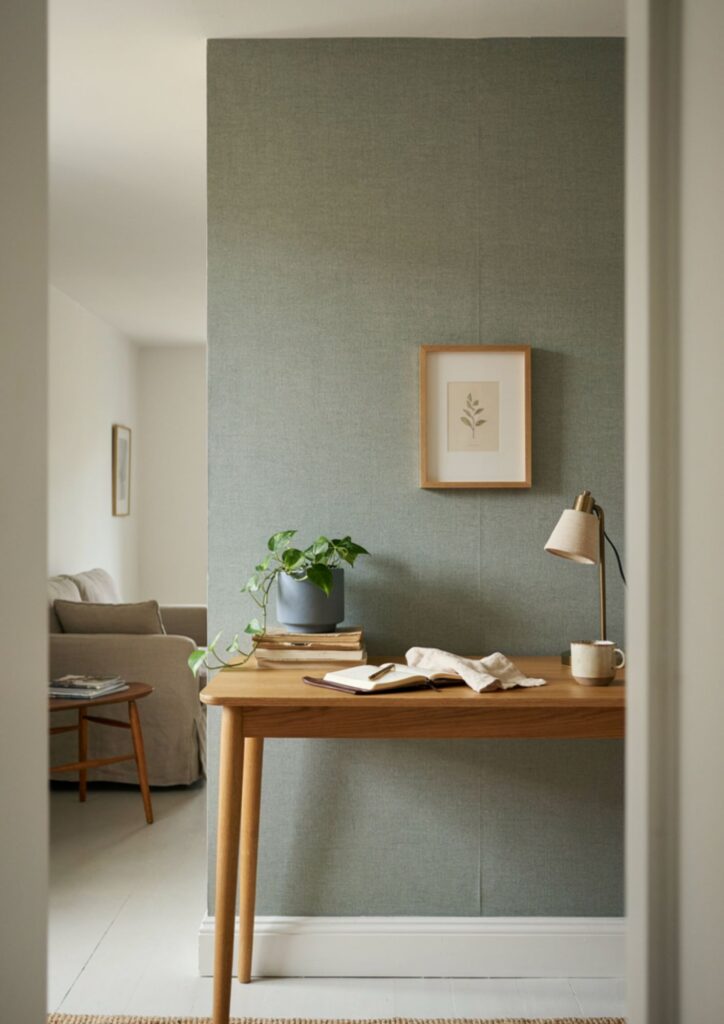
If your office shares space with a bedroom or living room, a single wallpapered section behind the desk visually separates the work zone from the rest of the room. A textured, grasscloth-style paper adds depth without much pattern, while a bolder print makes more of a statement in a room that can handle it. This trick works especially well in an open-plan layout where you don’t have a full wall to dedicate to the office. Choose calming tones — soft blues or muted greens — if you’ll be staring at it for hours at a stretch.
9. Layer In Warm, Targeted Lighting
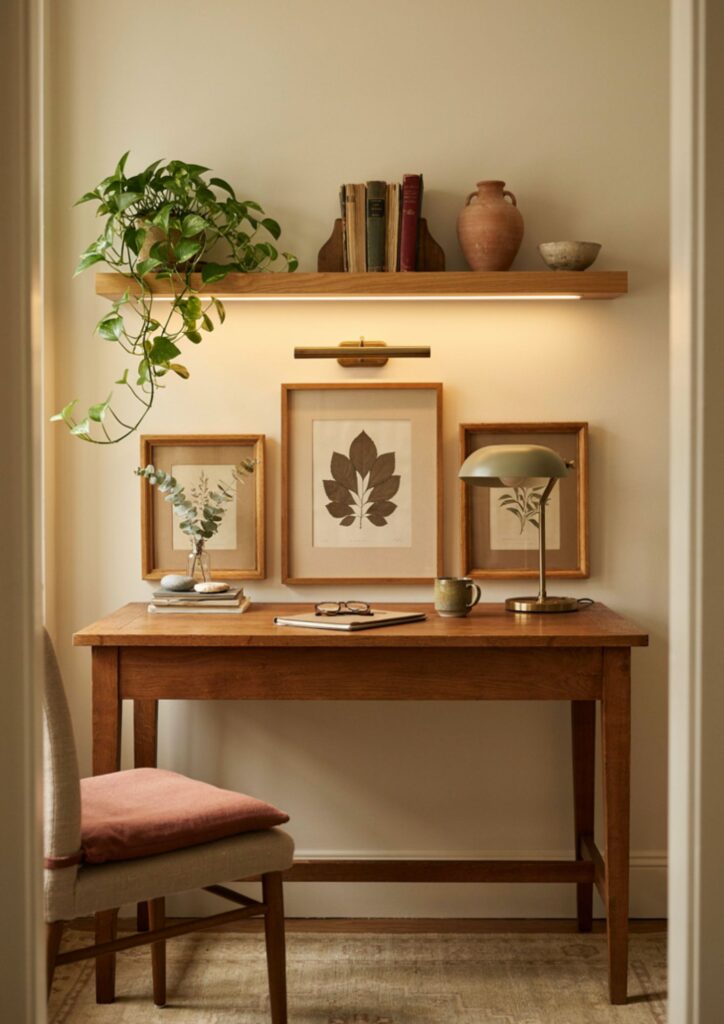
A picture light mounted above a key piece of art, or a warm-toned LED strip tucked behind a floating shelf, makes your wall decor look intentional rather than just present. This kind of lighting also does real work on video calls, since a well-lit wall behind you reads as far more polished than one lit only by an overhead fixture. Stick to warm white bulbs rather than cool or blue-toned ones, which tend to flatten a room and wash out any color on the wall. Even a small clip-on picture light makes a noticeable difference for very little cost.
10. Frame Black-and-White Photography
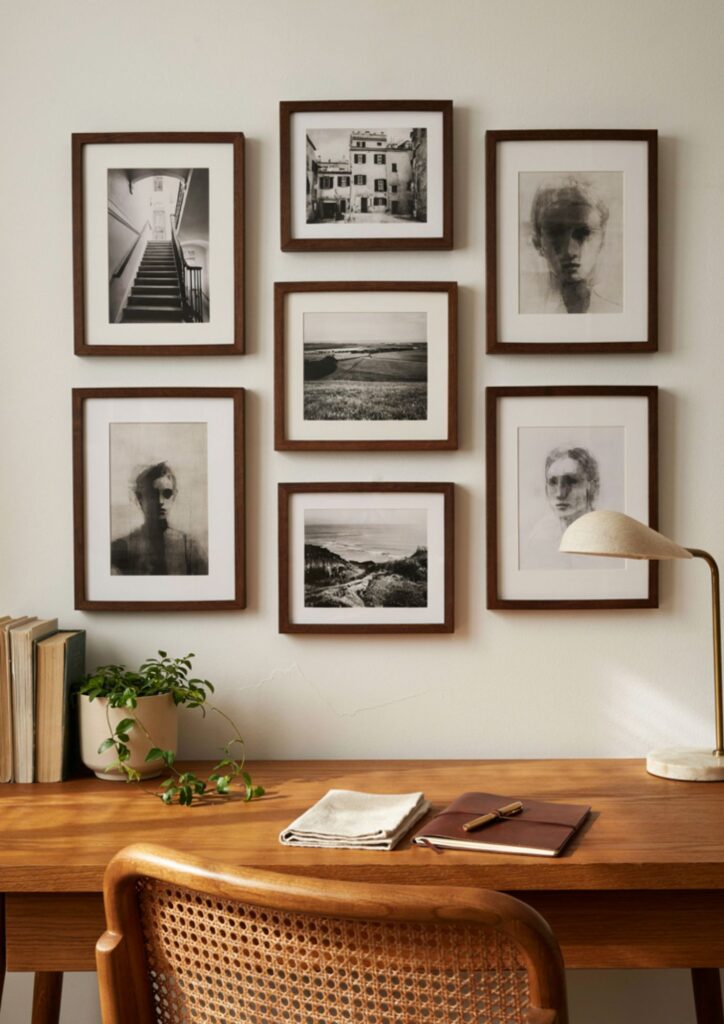
Converting a mixed set of photos to black and white is one of the simplest ways to make them look like a cohesive collection instead of a random assortment. Architecture, portraits, and landscapes all read as more elegant and gallery-like once the color is stripped away. Keep the frames matching across the whole grouping — same finish, same style — so the wall feels curated rather than thrown together. This is also a great option for a shared or client-facing office, since monochrome photography tends to feel more universally polished.
11. Add a Mirror to Bounce Light Around
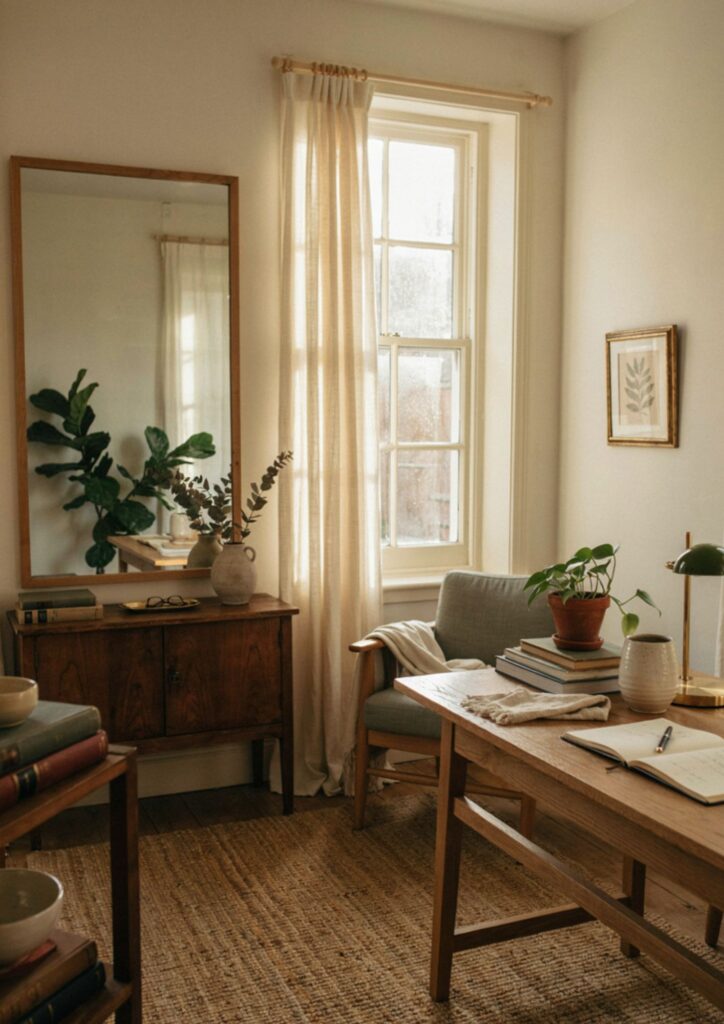
A single mirror, or a small cluster of differently shaped ones, does double duty on an office wall — it adds a decorative moment and genuinely opens up the room by reflecting whatever natural light is available. This works especially well in a small or windowless office, where every bit of extra brightness matters. Position it across from a window if you have one, so it actively bounces daylight back into the space rather than just hanging there. A frameless or lightly framed mirror tends to feel more modern than an ornate one, though either works depending on your style.
12. Try a Removable Wallpaper Mural
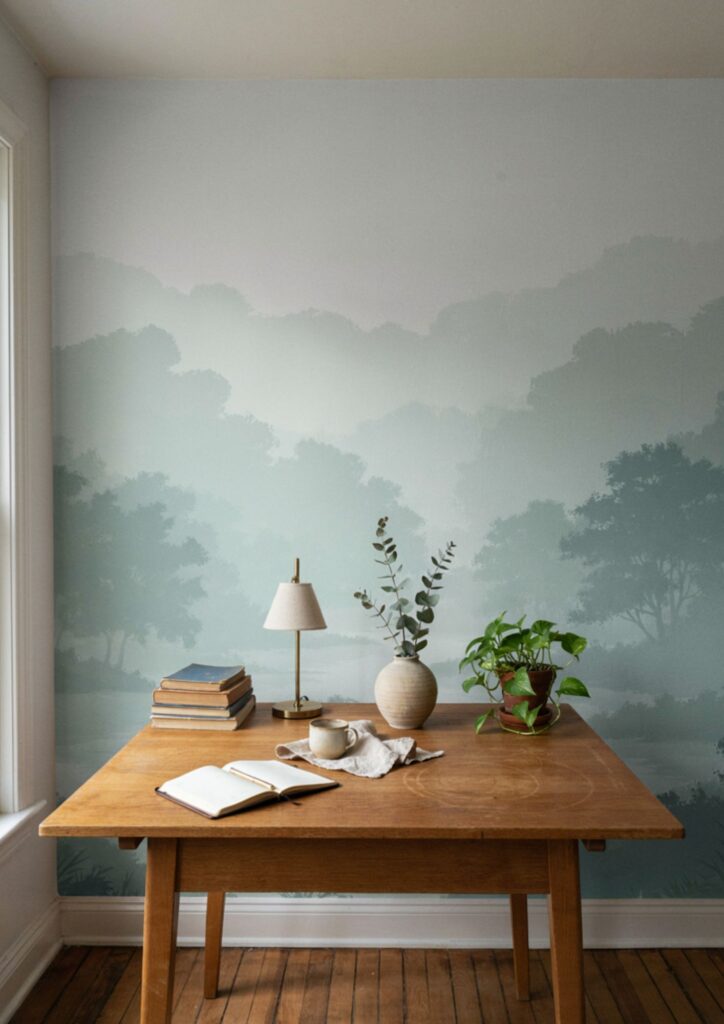
A photo mural or peel-and-stick wallpaper covering one full wall is the most dramatic option on this list, transforming the entire room in a single afternoon. A forest scene, a soft abstract landscape, or a subtle botanical print all work well without becoming distracting once you’re deep in a task. Because it’s removable, this is a great option for renters who want serious visual impact without any long-term commitment. Choose a design with enough visual quiet that it fades into the background once you actually start working.
13. Display a Small, Curated Collection
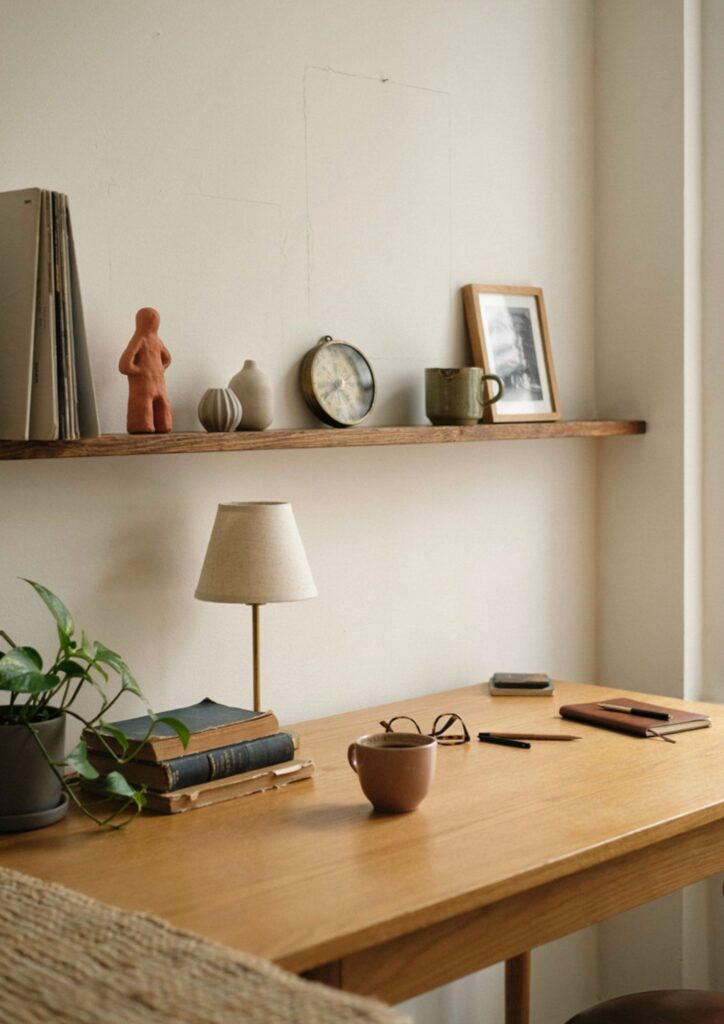
A tight grouping of objects with real meaning to you — vinyl records, small sculptures, a few travel souvenirs — gives an office wall genuine personality without requiring any interior design background. Mount a small ledge or shelf specifically for the display so it doesn’t compete for space with your actual desk surface. Keep the collection edited to a handful of pieces rather than everything you own, since restraint is what makes a display read as curated instead of cluttered. This is often the detail that makes a wall feel like it belongs to the person sitting in front of it.
14. Add Texture With a Woven Hanging or Tapestry
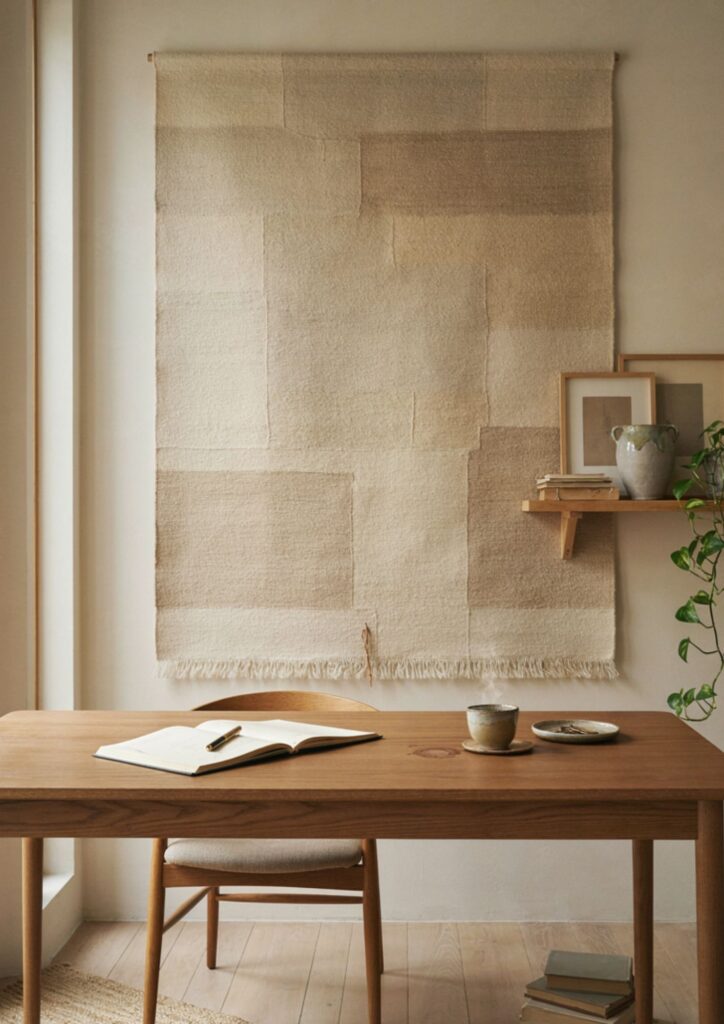
A woven wall hanging in neutral, natural tones softens a room that might otherwise feel a little flat or cold, especially if the rest of the office leans modern and minimal. A larger tapestry does the same job on a bigger scale and has the added benefit of absorbing some sound in a room prone to echo. These pieces pair especially well with a smaller cluster of framed prints nearby, adding texture without introducing more color into an already busy palette. It’s an easy way to add warmth to a wall dominated by hard surfaces like glass or metal shelving.
15. Rotate Your Art Seasonally
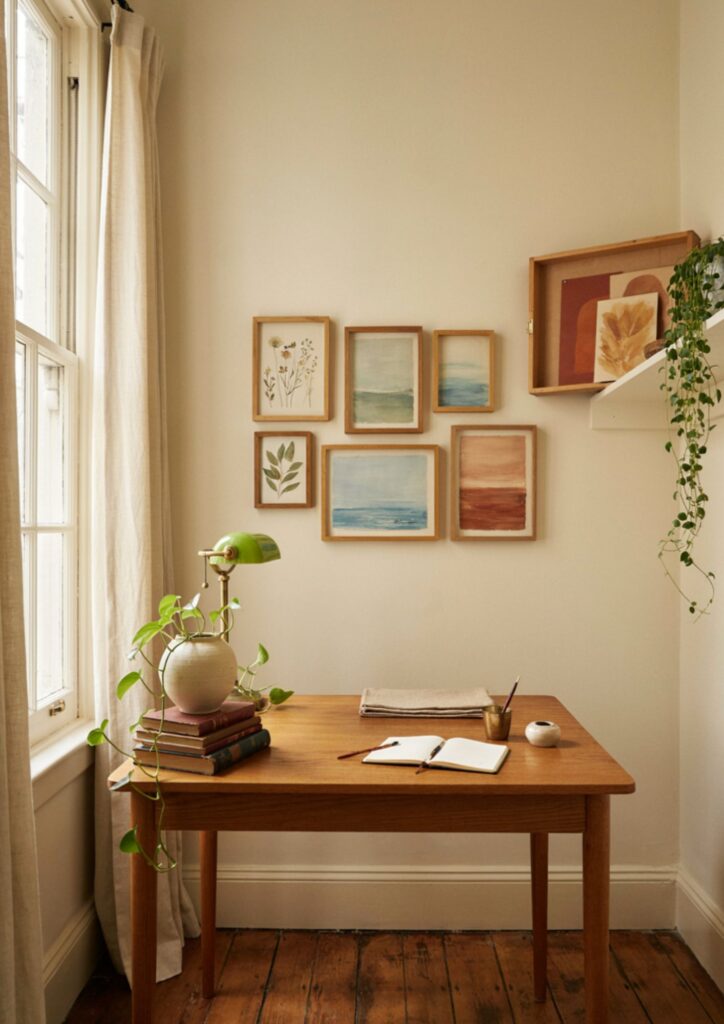
Rather than treating wall decor as a one-time decision, build a small rotating collection and swap a few pieces in and out every few months. Lighter, nature-heavy prints suit spring and summer, while deeper, warmer tones feel more fitting once the evenings start drawing in. Storing off-season pieces flat in a box or on top of a shelf keeps the swap quick and low-effort when the time comes. This approach keeps the wall feeling current without ever requiring a full redo.
Final Thoughts
None of this has to happen all at once, and it shouldn’t. Pick one wall — probably the one behind your desk, since that’s the one everyone else sees on your video calls — and start there before worrying about the rest of the room. A blank wall isn’t a problem to solve immediately; it’s just an invitation to add things slowly, as you find pieces that actually mean something to you. Give it time, and the office wall that used to feel like an afterthought becomes the part of the room you’re genuinely glad to look at.
Frequently Asked Questions
Q: Does office wall decor actually make a difference to how a room feels?
Yes — a decorated wall gives an otherwise functional room real personality and makes it feel more finished, especially on video calls where a bare wall reads as cold or unconsidered. Even a few well-placed pieces change the whole mood of the space.
Q: What size wall art works best behind a desk?
For a standard desk, a single print around 60x80cm or a trio of smaller matching prints spanning roughly two-thirds the width of the desk both work well. The goal is enough presence to fill the space without overwhelming it.
Q: How do I decorate office walls without damaging them as a renter?
Command strips, peel-and-stick wallpaper, and picture rail hooks all let you add real wall decor with no lasting damage. A floating picture ledge is another good option, since it lets you lean and swap art without putting a single extra hole in the wall.