

Picture your cubicle right now — the beige panel walls, the fluorescent hum overhead, maybe a stray sticky note curling at the edges. It’s not exactly a place that makes you want to linger, and yet it’s where you’ll spend a huge chunk of your waking hours this year.
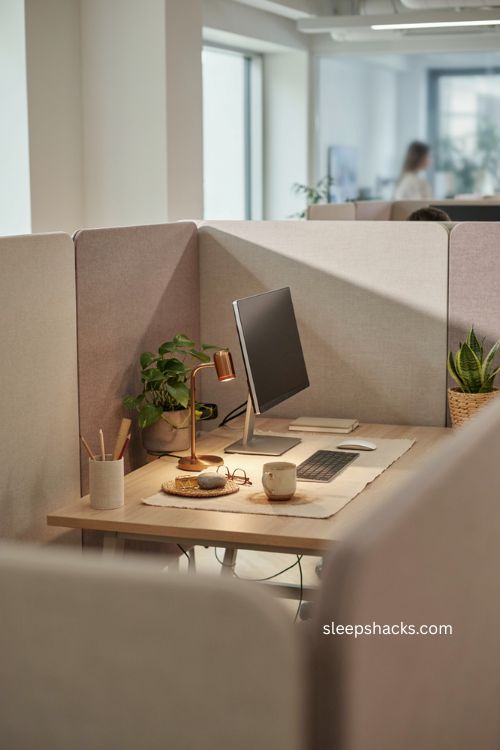
Cozy cubicle ideas exist precisely because that gap between functional and comfortable doesn’t have to stay open. A few plants, some soft lighting, a couple of personal touches, and the same four walls start to feel less like a holding cell and more like a space that’s actually yours. None of this requires permission from facilities or a big budget. Here are fifteen ways to close that gap, one small change at a time.
1. Add Low-Maintenance Plants
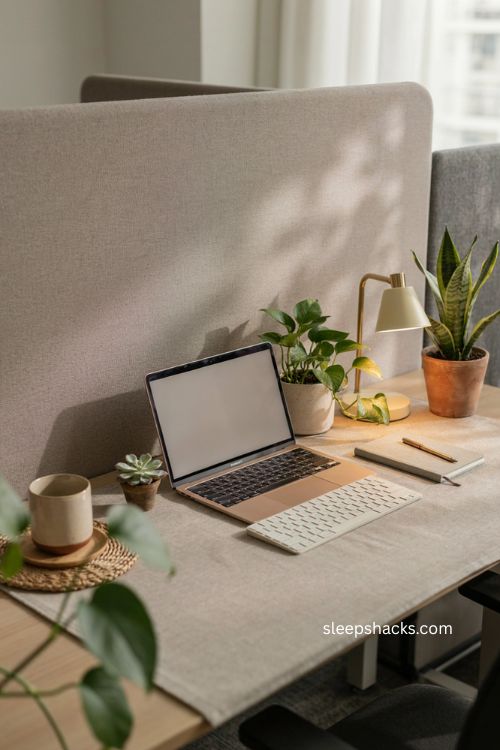
A plant or two does more for a cubicle’s atmosphere than almost anything else on this list, and it takes up barely any desk space to do it. Pothos, snake plants, and succulents all tolerate the inconsistent light and forgetful watering schedules that come with a busy work life, so you don’t need a green thumb to keep them alive. Beyond the visual lift, having something living nearby has a genuine calming effect during stressful stretches of the day. Start with just one small plant if you’re not sure how committed you are, and let your collection grow from there once you see how much difference it makes.
2. Swap in Warm, Soft Lighting
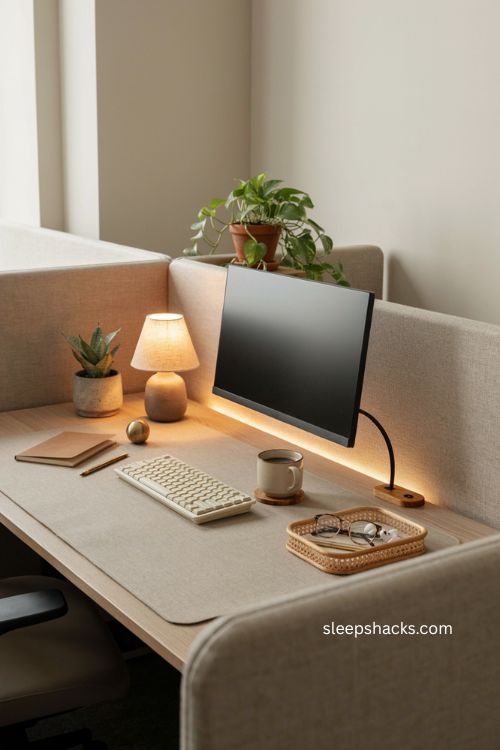
Overhead fluorescent lighting is doing your cubicle no favors, casting everything in the same flat, slightly clinical glow no matter the time of day. A small desk lamp with a warm yellow or orange-toned bulb changes that instantly, signaling to your brain that this is a comfortable space rather than a sterile one. Smart LED bulbs take it a step further, letting you adjust brightness and color depending on how you’re feeling or what time it is. Turn off the overhead light when you can and let your own lamp carry the space instead — the difference by the end of a long afternoon is noticeable.
3. Invest in a Comfortable Chair
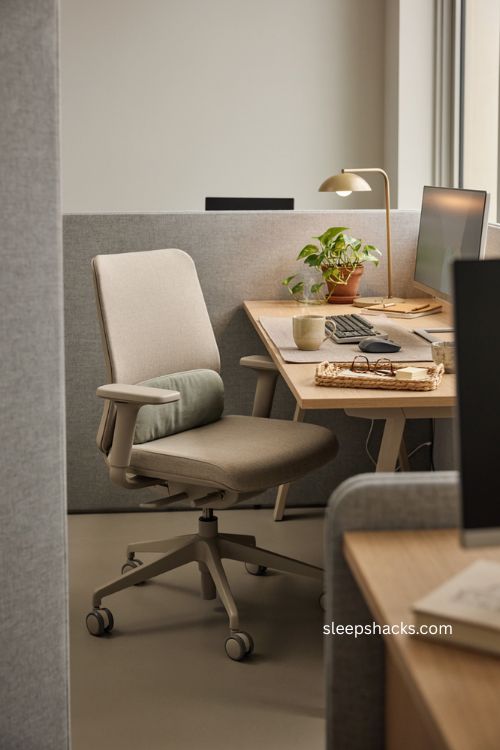
No amount of decor fixes the discomfort of a bad chair, so if you’re only going to spend real money on one thing, make it this. An ergonomic chair with adjustable lumbar support and height settings does more for how you feel by 5pm than any amount of styling ever will. If a full chair upgrade isn’t in the budget right now, a supportive cushion or a small lumbar pillow gets you part of the way there for a fraction of the cost. Comfort here isn’t a luxury — it’s the foundation everything else on this list is built on top of.
4. Layer in Soft Textiles and a Rug
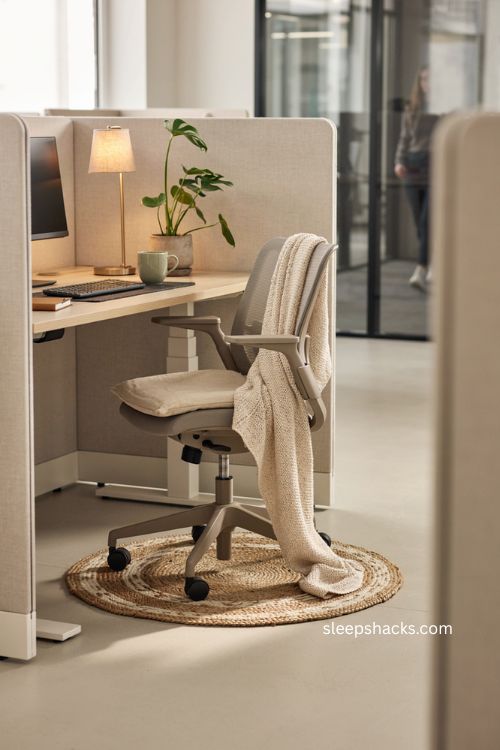
Soft textiles do a lot of quiet work in making a hard, formal space feel more like somewhere you’d actually want to sit. A cushion on your chair, a small throw draped over the back, or a rug underfoot all add warmth without requiring any real commitment or expense. If your cubicle floor is bare and cold-feeling, even a small round rug under your feet changes how the whole space registers. Mixing a couple of different textures — a knit throw with a smoother cushion, say — adds visual depth that a single flat fabric choice never quite achieves on its own.
5. Display Personal Photos and Mementos
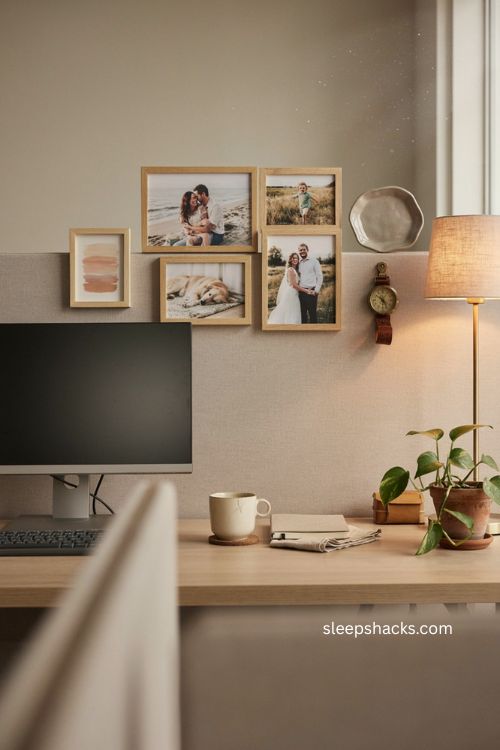
A few personal items scattered around your desk turn a generic workspace into something that actually feels like yours. A photo of family or friends, a souvenir from a favorite trip, or a small piece of art from someone you love all give your eyes somewhere pleasant to land during a stressful stretch of work. These items do more than just decorate — research on workplace psychology suggests that personal objects nearby genuinely increase feelings of control and focus. Dedicate one small section of your cubicle wall or shelf to these pieces rather than scattering them everywhere, so they read as an intentional display.
6. Add Woven Storage Baskets
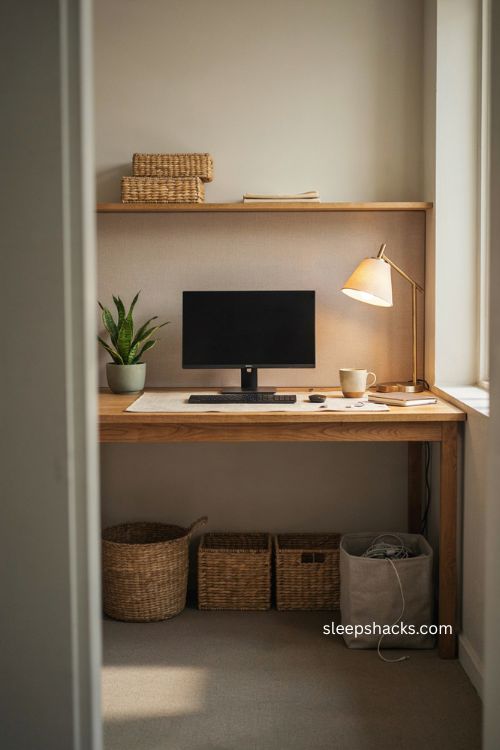
Clutter undoes coziness fast, no matter how many soft textures or warm lights you’ve added, so a bit of organized storage matters more than it might seem. Small wicker or fabric baskets tuck loose supplies, cables, and paperwork out of sight while adding a bit of natural texture at the same time. Choose baskets in a neutral tone — earthy browns or soft grays work well — so they blend into your overall look rather than standing out as purely functional bins. Label or sort them by category if you’re using more than one, so tidying up stays quick rather than becoming its own small chore.
7. Bring in a Calming Scent
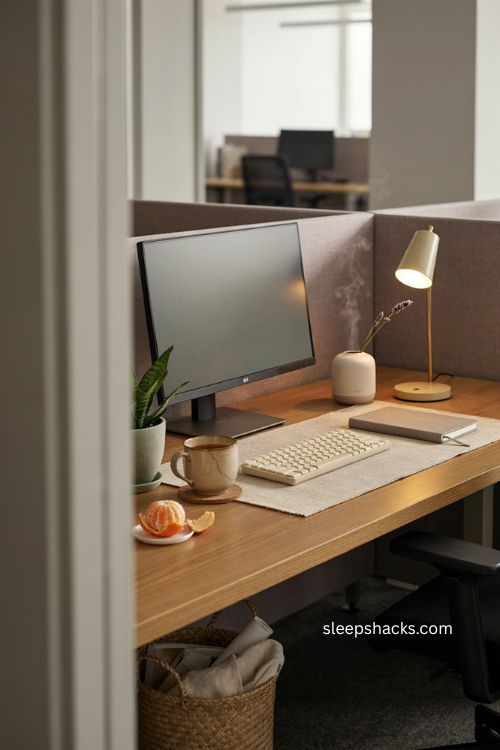
Scent is one of the more overlooked tools for making a cubicle feel cozier, even though it works faster on your mood than almost anything visual. A small diffuser with a mild lavender or citrus oil can shift the whole feel of your space within minutes, without the fire risk of an actual candle in a shared office. Keep it subtle rather than overpowering, since strong scents in a small shared space can bother nearby coworkers just as easily as they can help you. Citrus tends to feel energizing during a slow afternoon, while lavender works better if you’re trying to wind down before a big task.
8. Create a Small Gallery or Pinboard Wall
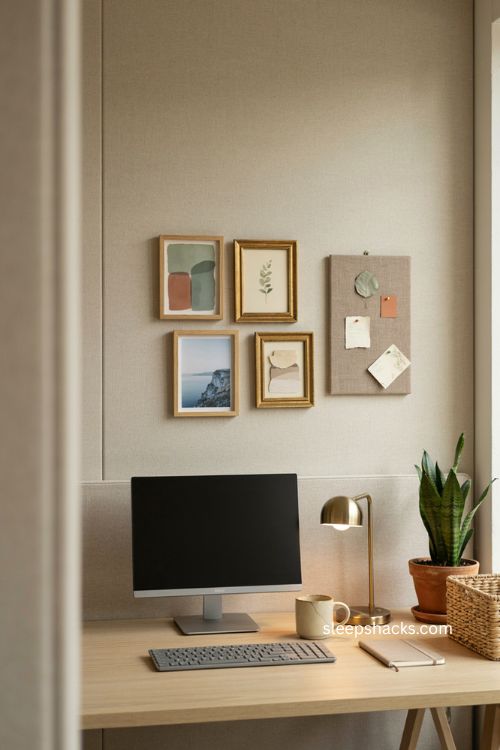
Cubicle walls are usually blank and gray by default, which makes them the easiest canvas in the whole space to actually personalize. A small pinboard or a cluster of a few framed prints gives you somewhere to display quotes, photos, or small pieces of art that reflect your own taste. Printable art downloaded and printed at home keeps this option nearly free, so you’re not stuck with whatever generic prints happen to be on sale. Keep the collection to a consistent color palette or frame style so it reads as curated rather than like a random assortment of things pinned up over time.
9. Use Smart Lighting for Mood Control
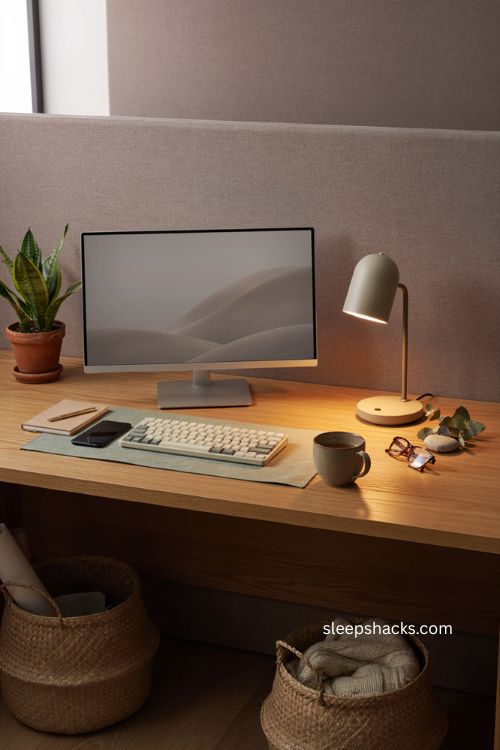
Smart bulbs let you do something a standard desk lamp can’t — actually change your lighting throughout the day to match your energy and the task in front of you. A brighter, cooler tone in the morning helps with alertness, while something warmer and dimmer in the afternoon takes the edge off a long stretch of screen time. Most models pair with a simple phone app, so adjustments take seconds rather than requiring you to physically swap a bulb. It’s a small upfront cost that pays off daily in how much more livable the space feels compared to one fixed overhead light.
10. Carve Out a Quiet Corner
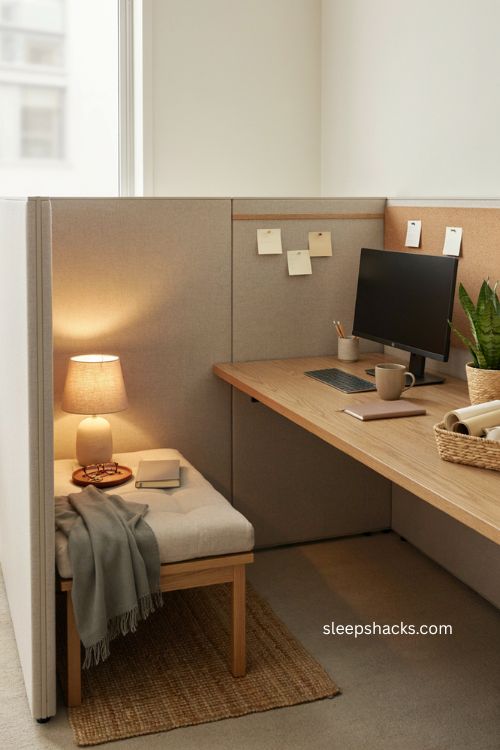
Even in a tiny cubicle, a small designated spot for a mental reset can make a real difference over a long workday. A single soft cushion, a small lamp, and maybe a short book or magazine within reach is genuinely enough — this doesn’t need to be an elaborate setup. Use it for a few minutes between meetings or after a particularly stressful call, somewhere your mind can actually disengage instead of just staring at the same screen a little longer. The goal isn’t escaping work entirely, just giving yourself somewhere to reset before diving back in.
11. Play Soft Ambient Sounds
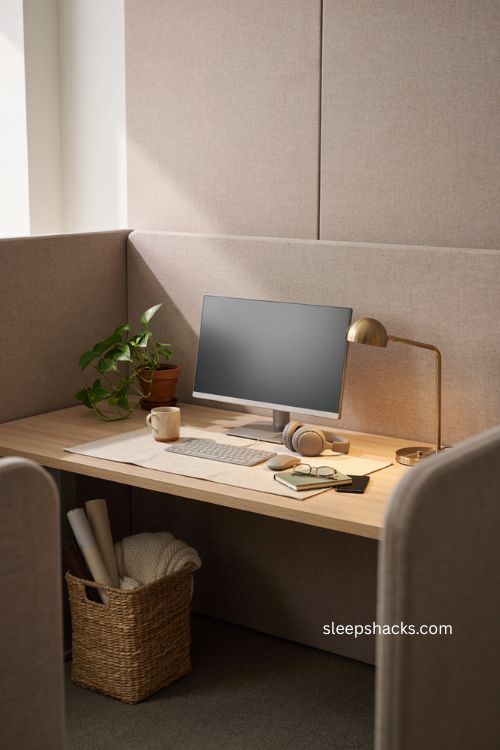
Background sound can shape your mood almost as much as lighting does, and gentle ambient audio is an easy, low-cost way to soften a sterile-feeling cubicle. Nature sounds like rain or a quiet stream activate a calming response for a lot of people, while soft instrumental music helps some people concentrate better than silence does. Keep the volume low and use headphones if you’re in a shared space, so your own comfort doesn’t come at the expense of a coworker’s concentration. Even thirty minutes of this during a stressful stretch of the day can noticeably shift how tense the rest of your afternoon feels.
12. Choose Multipurpose Desk Organizers
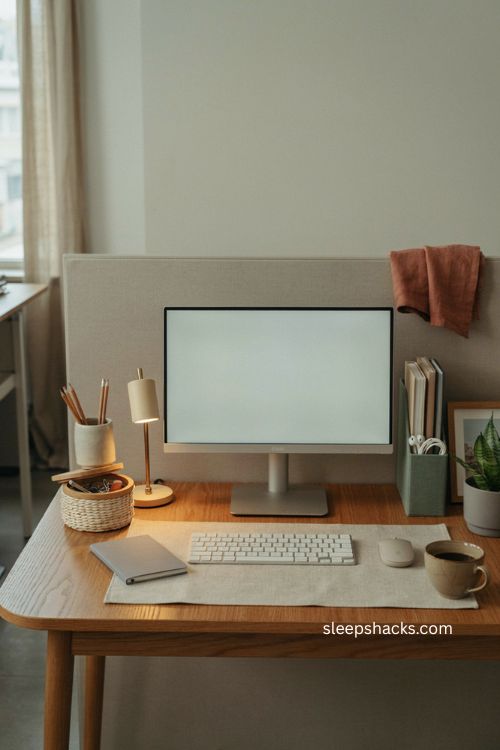
An organizer that only organizes is a missed opportunity in a small space where every item is doing double duty already. A decorative box that holds pens but also looks good sitting out, or a mug that works as both a pencil holder and an actual coffee cup, keeps your desk functional without it looking purely utilitarian. Vertical organizers free up horizontal desk space for the things that actually make the cubicle feel cozy, like a small plant or a framed photo. The less your organizing system fights your decorating, the more coherent the whole space ends up feeling by the end of it.
13. Repurpose Items You Already Own
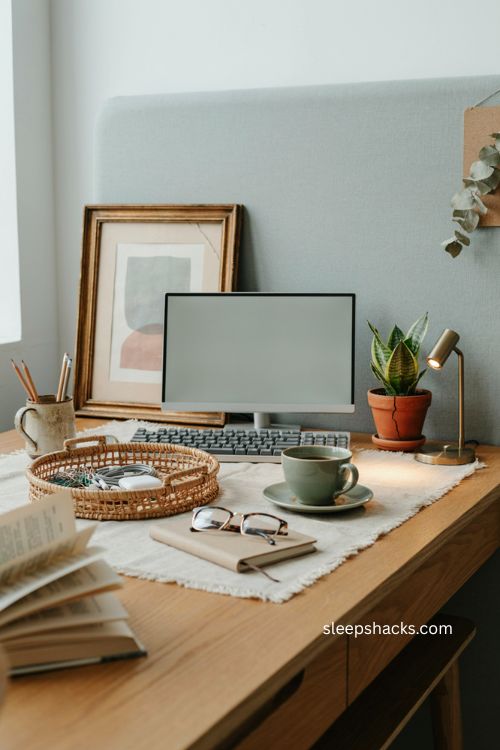
Cozy cubicle ideas don’t have to mean spending money on new decor, since some of the best pieces are probably sitting unused somewhere in your home already. An old mug becomes a pencil holder, a picture frame you’re not using anymore can hold a motivational quote instead of a photo, and a decorative tray from a dresser can corral loose office supplies in style. Walking through your own house with your cubicle in mind before you go shopping anywhere else often turns up more usable pieces than expected. It’s also the fastest way to add personality without waiting on a delivery.
14. Print Affordable Wall Art
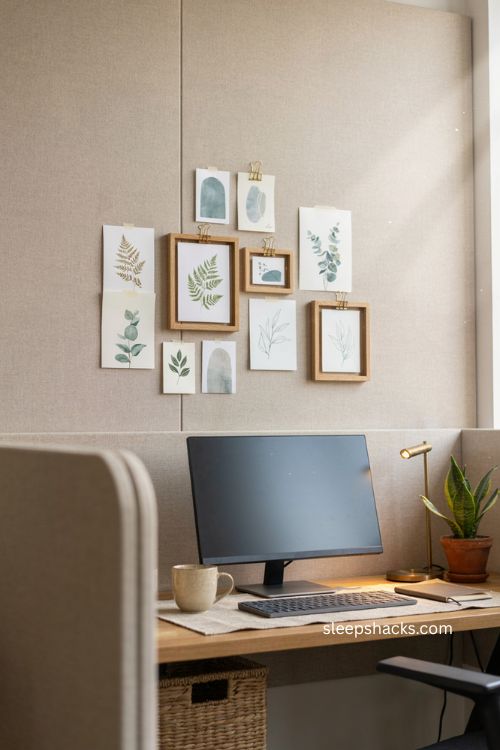
Wall art can transform a blank cubicle partition without costing anything close to what a framed original might, thanks to the sheer amount of free and low-cost printable art available online. Botanical illustrations, abstract designs, or simple inspirational quotes all print well on standard paper and look intentional once they’re in a frame or clipped to a board. Stick to one visual theme or color story across the pieces you choose, rather than mixing wildly different styles, so the wall reads as put-together. A local print shop can upgrade the paper quality for a small fee if you want something that lasts a bit longer.
15. Mix Patterns and Textures
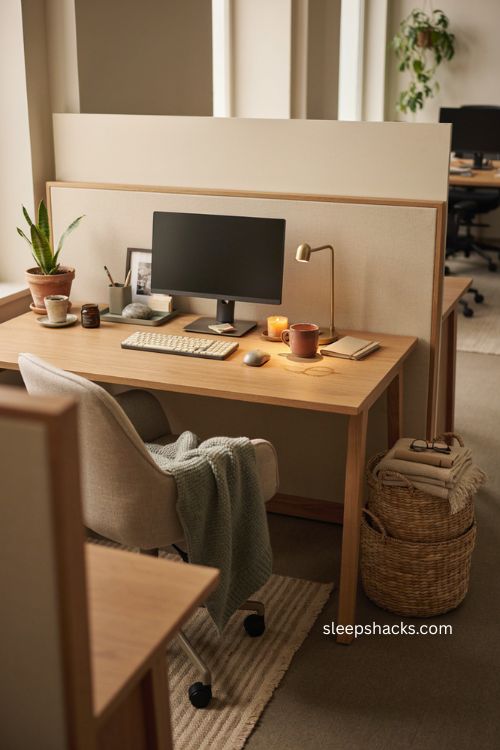
A cubicle decorated in a single flat texture, even a nice one, tends to read as a little one-note after the first week. Mixing a patterned throw pillow with a smoother woven basket, or a textured rug against simple metal desk organizers, adds the kind of visual depth that makes a small space feel considered rather than thrown together. This doesn’t require matching everything perfectly — a bit of contrast between materials is actually what makes the mix feel interesting instead of flat. Add one new texture at a time rather than overhauling everything at once, and adjust as you see what actually works in the space.
Final Thoughts
However much of your cubicle you decide to change, the goal is really just this: a space that feels a little more like yours by the time you sit down each morning. You don’t need to do all fifteen of these at once, and honestly, most people never do — pick the one or two that speak to you most and start there. A single plant, a warmer lamp, or one framed photo can shift the whole feeling of the space more than you’d expect. Here’s to a cubicle that feels less like a holding pattern and more like somewhere you’re actually glad to spend your day.
Frequently Asked Questions
Q: What’s the easiest way to make a cubicle feel cozy on a tight budget?
A small plant, a warm-toned desk lamp, and a few personal photos are some of the cheapest changes that make the biggest visible difference.
Q: Do plants really survive in a cubicle with limited light?
Yes, hardy varieties like pothos, snake plants, and succulents tolerate low light and irregular watering better than most other houseplants.
Q: How can I add coziness to a cubicle without breaking office rules?
Stick to small, removable items like desk lamps, cushions, plants, and framed photos, which rarely require any special approval and can be taken with you if you move desks.