

Long before tinsel and plastic stars, people brought evergreen branches indoors in the dead of winter. The green was a promise that life would return, and the light was a small rebellion against the longest night of the year. A Yule tree carries that old feeling, and it still works beautifully today.
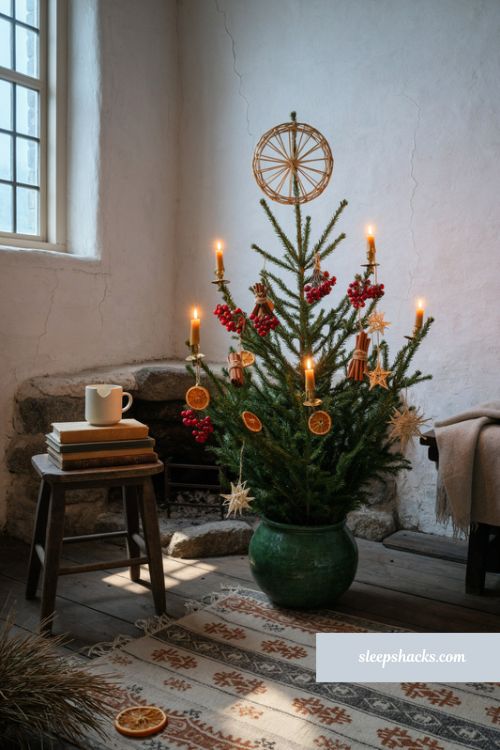
Here are 15 Yule Christmas tree ideas, covering natural ornaments, toppers, pagan-inspired touches, moody aesthetic styles, and cozy small-space versions. Each idea includes a note on cost, effort, or safety, so you can build a tree that feels meaningful and warm, whether you celebrate the solstice, Christmas, or simply love the season.
1. Classic Yule Christmas Tree Ideas
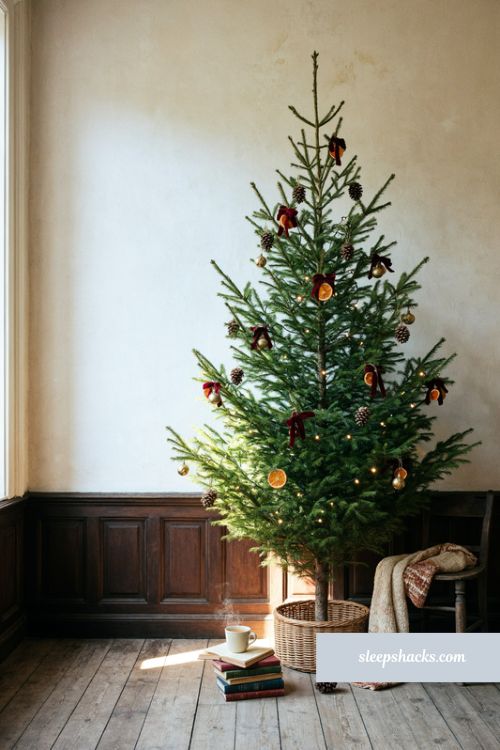
Picture a full green fir with warm white lights glowing deep inside, a scatter of pinecones, dried orange slices, and a few small gold ornaments catching the glow. Nothing is shiny for its own sake. The tree looks like a piece of the forest brought in from the cold, and it feels calm the moment you walk in.
Keep the palette to green, gold, red, and natural brown, and leave some bare branch showing. A real tree suits this style best, since the scent is part of the experience, though a good faux tree works fine. Thirty to forty ornaments are plenty for a six-foot tree. It takes about an hour and costs very little.
2. Pagan Yule Christmas Tree
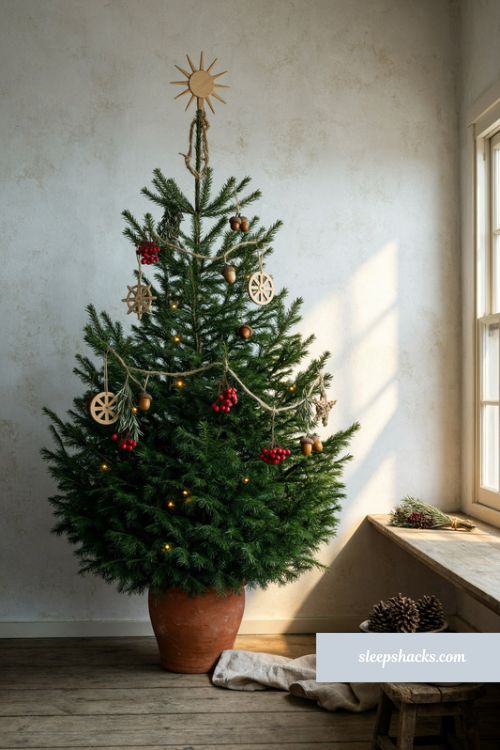
Imagine a tree dressed in symbols of the turning year: small wooden suns, evergreen sprigs, acorns, and red berries, hung with natural twine. Yule marks the winter solstice, so the decor leans toward light, evergreens, and the return of the sun. Everything has a quiet meaning rather than a loud shine.
Choose symbols that mean something to you, instead of copying a list. Handmade pieces feel more personal, and many cost almost nothing. If you’re decorating for a mixed household, keep the look simple and let each person add one ornament of their own. Always check local guidance before burning anything, and keep real flames away from the tree.
3. Yule Christmas Tree Decorations From Nature
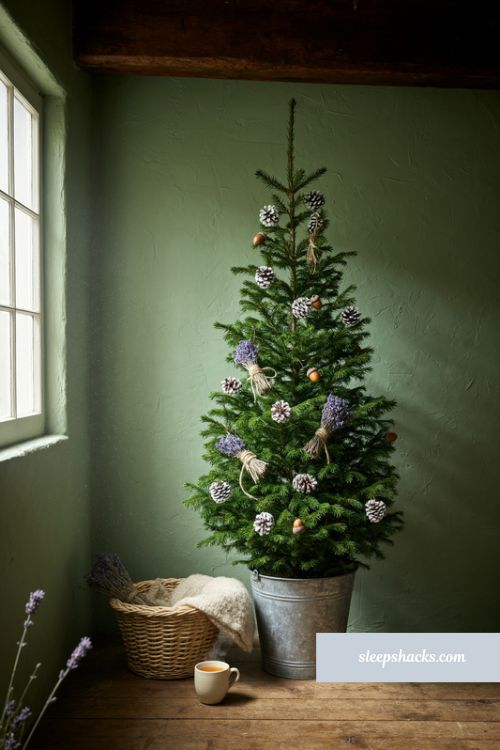
Picture pinecones brushed with a little white paint at the tips, acorn caps tied with thin ribbon, and bundles of dried lavender hanging from the branches. Everything looks gathered rather than bought. Natural pieces hide easily among needles, so the tree feels like it grew its own decorations.
Collect pinecones, acorns, and twigs on a walk, then bake the pinecones on low heat for about thirty minutes to remove insects and open the scales. Nature costs nothing, though craft stores sell cleaned versions. Check for allergies before bringing in anything dusty. Wire or twine holds heavy pieces best, since cones are heavier than they look.
4. Dried Orange Slice and Cinnamon Ornaments
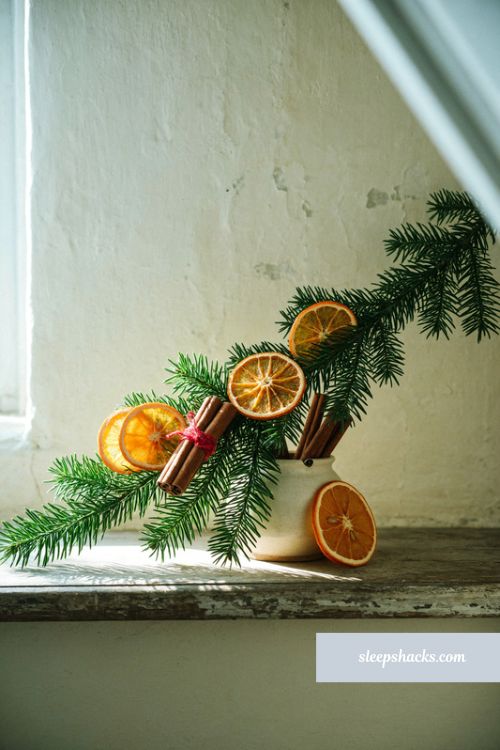
Imagine thin orange slices glowing amber against the green, with cinnamon stick bundles tied in red twine hanging beside them. Lit from behind by warm lights, the oranges look like tiny stained glass windows. The scent drifts across the room, especially near a warm radiator.
Slice oranges about a quarter inch thick and pat them dry. Bake on low heat for two to three hours, flipping once, until leathery. A bag of oranges and a jar of cinnamon sticks cost only a few dollars. Store them in a dry box with tissue, or they may mold. Keep this one away from pets who might nibble.
5. Sun and Wheel Ornaments

Picture a small round sun cut from thin wood, painted gold with straight rays, hanging near the top of the tree. Nearby, a tiny wreath of twigs wrapped in twine represents the turning wheel of the year. These shapes echo the solstice, the moment the sun begins to return.
Wood slices and craft discs cost a few dollars for a pack and take paint well. Use gold paint or leave the grain bare for a rustic feel. Rays can be thin lines of paint, so no tricky cutting is needed. Place the brightest sun pieces near the lights, so they catch the glow. Seal painted ones with clear spray.
6. Yule Christmas Tree Topper
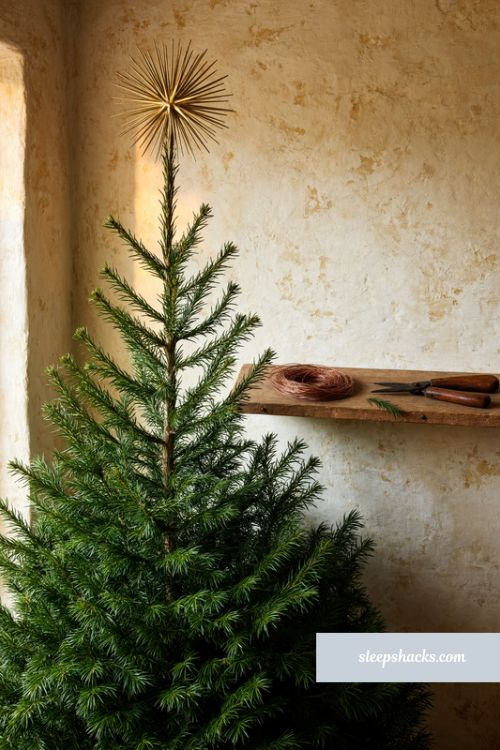
Imagine a simple gold sunburst at the top, its rays spreading outward like a halo, or a single long evergreen sprig tied into a loose bow. A topper at the Yule tree often leans toward the sun, the star, or a crown of greenery instead of a glittery angel.
Match the topper to your tree’s weight, since heavy pieces can lean on thin tips. A wire sunburst weighs very little and costs only a few dollars. Greenery crowns last two or three weeks if refreshed. Secure the topper with floral wire or a twist tie. A piece about eight to ten inches wide looks balanced on a six-foot tree.
7. Holly, Ivy, and Mistletoe Accents
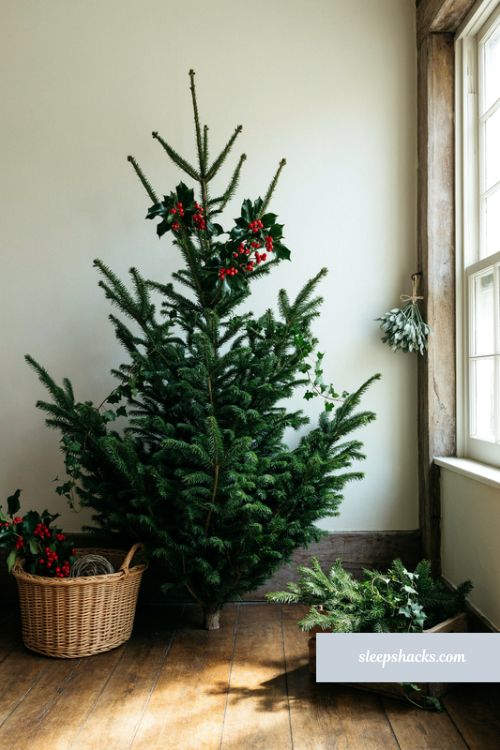
Picture sprigs of holly with bright red berries tucked into the upper branches, ivy trailing down in loose curls, and a small bundle of mistletoe hanging near a doorway rather than on the tree. The deep green and red pop against pale lights, and the shapes add variety to the needles.
Real holly berries and mistletoe are toxic to pets and children if eaten, so many people choose faux versions for safety. Faux stems cost a few dollars each and last for years. If you use real greenery, keep it high and out of reach, and wash hands afterward. Wire stems firmly so they don’t slip when you adjust the tree.
8. Red, Gold, and Green Yule Palette
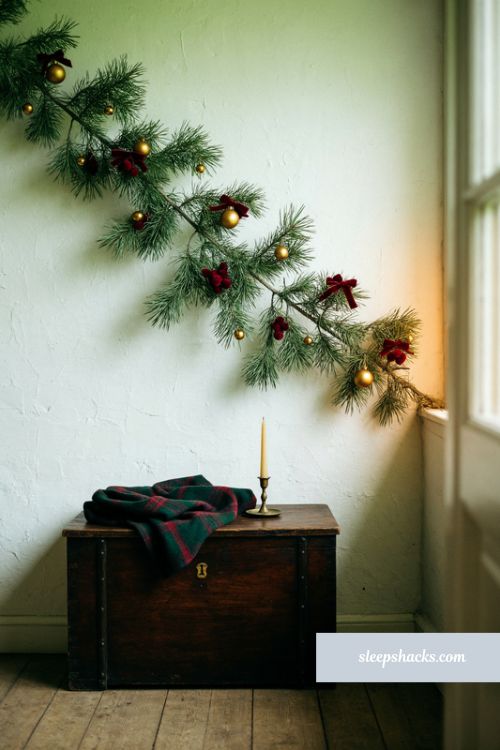
Imagine a tree dressed in only three colors: deep forest green from the branches, burnished gold from beads and baubles, and rich cranberry red from velvet ribbon and berries. The restraint makes the tree feel warm and old-fashioned, like something from a storybook winter.
Pick one shade of each, like antique gold rather than bright yellow, and stay with it. Matte finishes look softer than glossy ones. Buying ornaments in matching sets keeps colors consistent, since red varies a lot between brands. Check packs in daylight if you can. This palette suits traditional homes, and it also pairs well with dark wood furniture.
9. Yule Aesthetic Christmas Tree
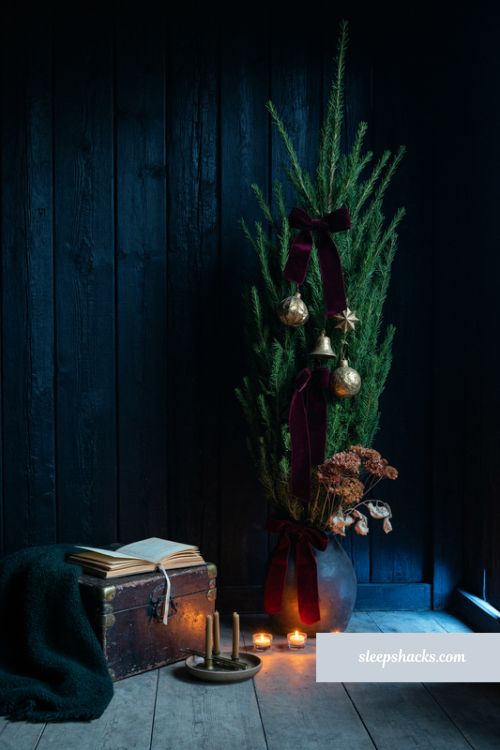
Picture a dark green or black tree with deep burgundy velvet bows, aged gold ornaments, dried flowers, and a scatter of tiny candles in glass. The mood is moody and candlelit, like a cozy cabin on the longest night. Shadows matter here as much as the shine.
Choose warm, low-glow lights, and keep the room’s other lighting dim. Velvet ribbon costs a few dollars per roll and makes a dozen bows. Dried flowers last for months if kept away from damp. Keep the style consistent by sticking to a limited color palette. This look suits anyone who prefers atmosphere over sparkle, and it photographs beautifully at dusk.
10. Candle and Warm Lighting for a Yule Tree

Imagine a tree lit only by tiny warm white bulbs, with a few glass jars of flameless candles clustered on the table nearby. The light looks soft and flickering, like firelight on a cold evening. It echoes the old Yule tradition of lighting up the dark.
Never put real candles on or near a tree, since dry needles catch fire fast. Flameless LED candles with timers are safer, and they cost only a few dollars. Choose warm white strands, since cool white looks icy against natural decor. Wrap lights from the inside out, so the glow comes from deep in the branches rather than the tips.
11. Wooden and Handmade Yule Ornaments
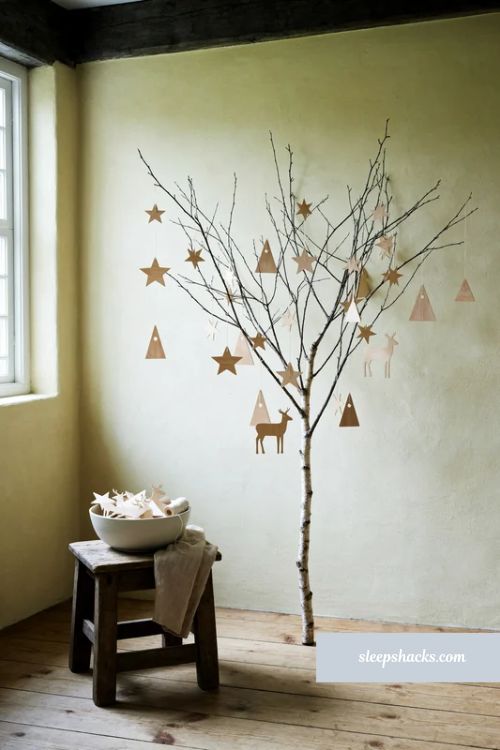
Picture small birch cutouts of stars, trees, and deer, each left plain or touched with a single painted dot, hung with linen thread. The pale wood has a warm, honeyed look that suits the quiet mood of a solstice tree. The simple outlines are what make them charming.
Unfinished wooden shapes come in packs, so the cost per piece is low. Paint them or leave the grain bare, and they last for years if stored dry. Choose thick outlines, because thin antlers snap easily. They’re sturdy enough for homes with kids and pets. Making a few each year builds a collection with real meaning over time.
12. Yule Ball Inspired Winter Tree
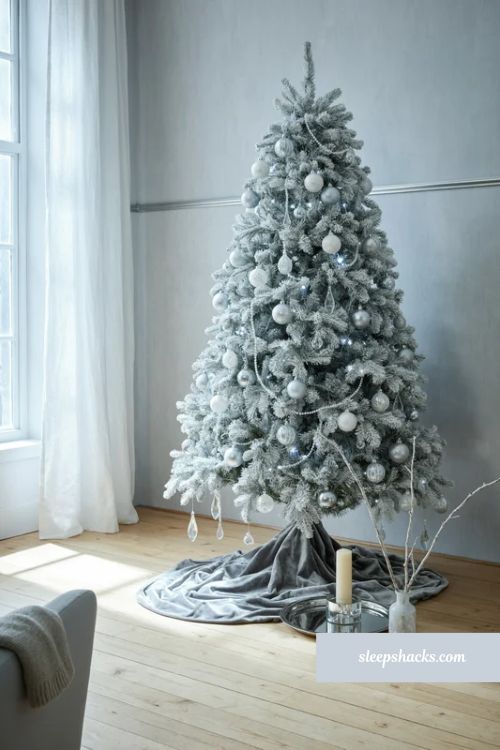
Imagine a tree in icy silver and pale blue, hung with frosted glass baubles, crystal drops, and thin strands of white beads, with cool white lights shimmering like frost on a window. The look feels like a grand winter dance, elegant and a little dreamy.
Cool white lights suit this palette, unlike most natural Yule trees. Choose a flocked or white tree to push the frosty effect further. Clear acrylic crystals cost less than glass and are safer around kids and pets. Keep ornaments to two or three shades, since too many colors break the spell. This works best in rooms with silver or gray accents.
13. Yule Log Tree Base
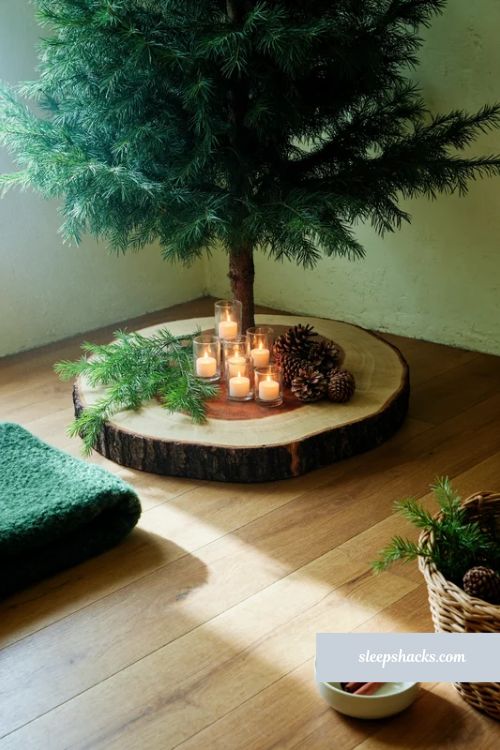
Picture a round slice of wood, about a foot across, set under the tree and holding a few candles in glass, a small pile of pinecones, and a handful of evergreen sprigs. It nods to the Yule log, a tradition of bringing a log indoors at midwinter, without the fire.
Wood slices cost a few dollars at craft stores or nothing from a fallen branch. Keep real flames away from the tree, and use flameless candles instead. Place the slice on a tray if your floor needs protecting. This idea also works on a table or mantel, so it doubles as seasonal decor that fits many rooms.
14. Natural Garlands for a Yule Tree
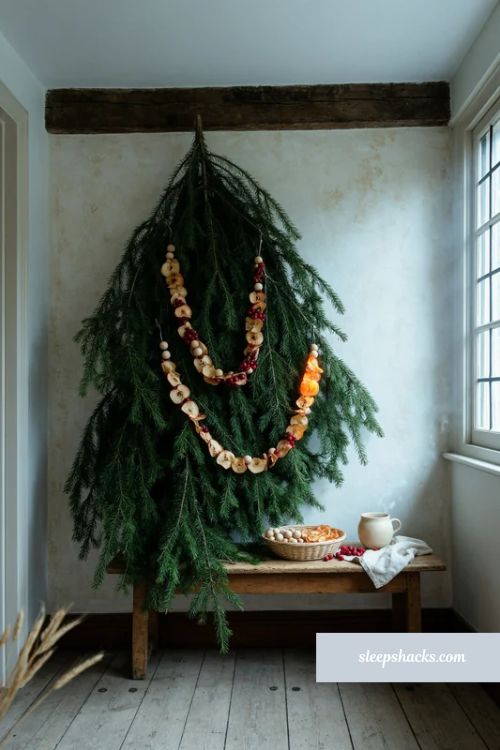
Imagine a long garland of dried apple slices, cranberries, and wooden beads draped loosely around the tree in soft curves. The colors of deep red, pale cream, and warm brown look rustic and friendly. Every strand feels handmade, because it is.
Dry apple slices in a low oven for a few hours, then thread them with a large needle. Cranberries last a few weeks, and beads can be reused each year. Edible garlands can attract pets and pests, so keep them away from dogs and mice. Drape garlands loosely instead of tightly, so they follow the branches. Cost stays under ten dollars for a long strand.
15. A Tabletop Yule Tree for Small Spaces
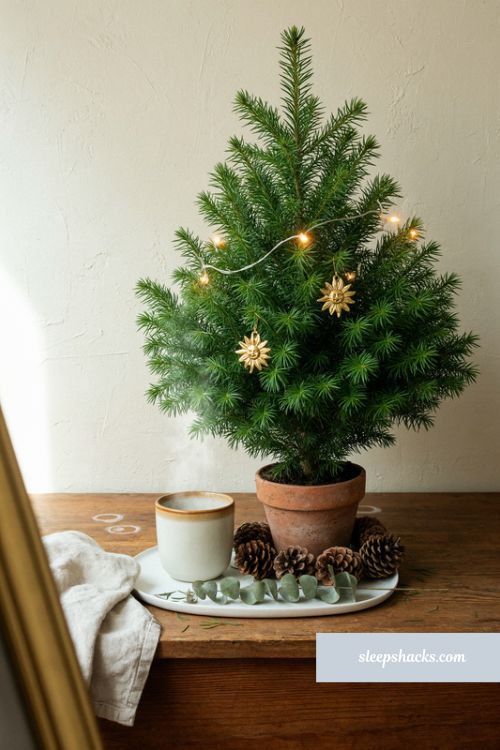
Picture a two-foot fir on a console table, planted in a small clay pot, with a tiny string of lights, three small gold suns, and a ring of pinecones around the base. It looks like a miniature version of a grand tree, and it fits any small space. A white tray underneath catches fallen needles.
Tabletop trees cost a fraction of full-size ones, and they’re ideal for apartments, dorms, and offices. Choose mini ornaments under one and a half inches, or the tree looks crowded. Keep a real mini tree watered and away from heaters. These also make lovely gifts, and a living one can be planted outdoors afterward.
Final Thoughts
Strip away the tinsel and the shopping, and a Yule tree is a simple idea. On the darkest night of the year, people brought something green into the house and lit it up. That instinct hasn’t changed in a thousand years, and it still makes a room feel safer and warmer.
So whether your tree has a handful of pinecones or fifty ornaments, notice what it’s doing. It’s keeping a small light on when the dark is longest. That’s what a tree is for, and it doesn’t need to look like anyone else’s to do it well.
Frequently Asked Questions
Q: What is a Yule tree?
It’s a tree decorated for the winter solstice, often with natural items like pinecones, evergreens, and suns. Many people use the same tree for both Yule and Christmas.
Q: What colors are traditional for a Yule tree?
Green, red, and gold are most common, with natural browns and whites. Choose shades that feel warm and earthy rather than bright and shiny.
Q: Are holly and mistletoe safe to use on a tree?
Real holly berries and mistletoe are toxic to pets and children if eaten, so faux versions are a safer choice. If you use real ones, keep them well out of reach.