

Neutral holiday decor is honestly hard to pull off well — go too plain and it feels unfinished, go too busy and you lose that calm, elegant vibe you were going for in the first place.
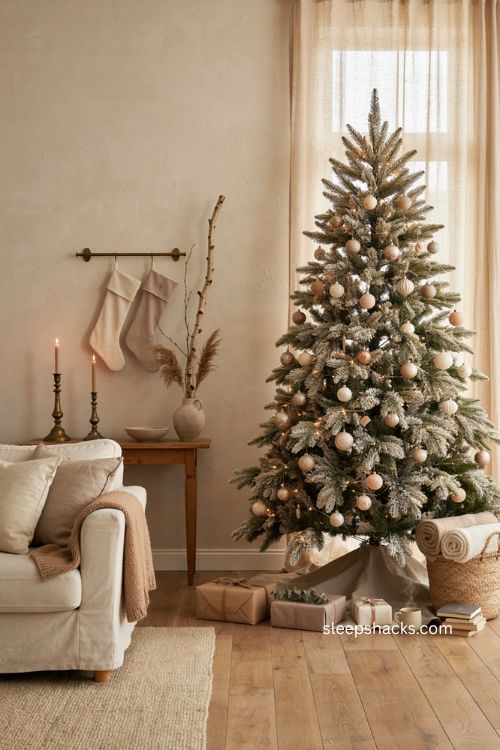
A beige Christmas tree sits in this tricky middle ground, which is exactly why it’s become such a popular choice for people who want their holiday decor to feel sophisticated instead of loud. The soft, sandy tone works as a blank canvas that can lean rustic, glam, or minimalist depending on what you pair with it, and it fits right into homes that already lean neutral year-round. Whether you’re starting with a beige flocked tree or adding warm-toned ornaments to a traditional green one, these beige christmas tree ideas will help you find a look that feels intentional from every angle.
1. Layer Different Shades of Beige and Cream
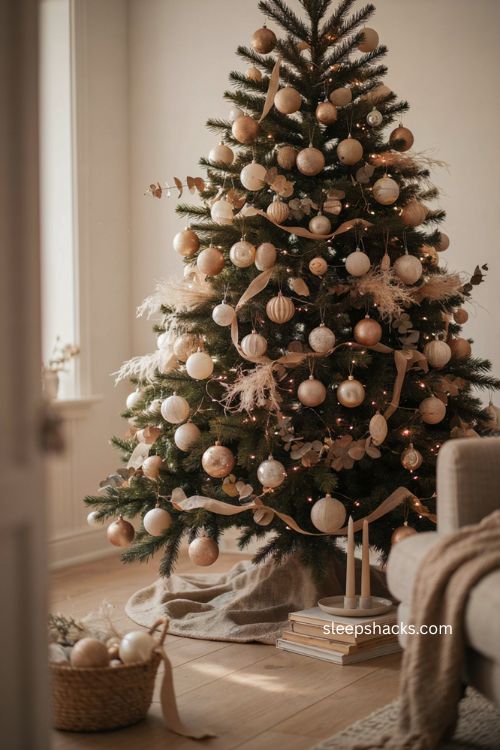
The easiest way to make a beige tree feel rich instead of flat is to mix multiple shades within the same color family. Combine warm tan ornaments with lighter cream and ivory pieces so the eye has some variation to travel across, rather than one single flat tone repeated everywhere. Add a few matte finishes next to glossy ones for texture, since shine alone can make a monochrome tree look a bit one-dimensional. This layered approach is what gives so many neutral trees that expensive, designer-showroom feel.
2. Add Warm Gold Accents
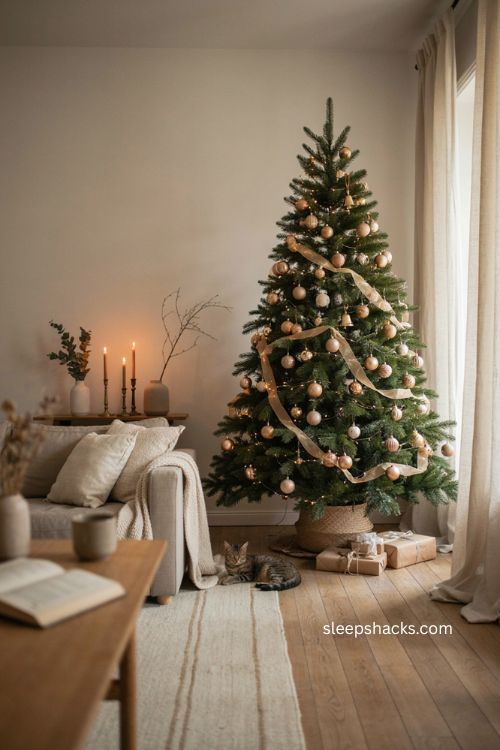
Gold and beige were basically made for each other — the warmth of gold keeps a beige tree from feeling washed out or cold. Scatter gold ornaments in a few different finishes, like brushed gold, antique gold, and a bit of shine, so they don’t all read as the exact same shade. A gold ribbon woven loosely through the branches ties the whole thing together without overwhelming the softer beige tones underneath. This combination works beautifully whether your home leans traditional or more modern.
3. Bring In Natural Wood and Rattan Ornaments
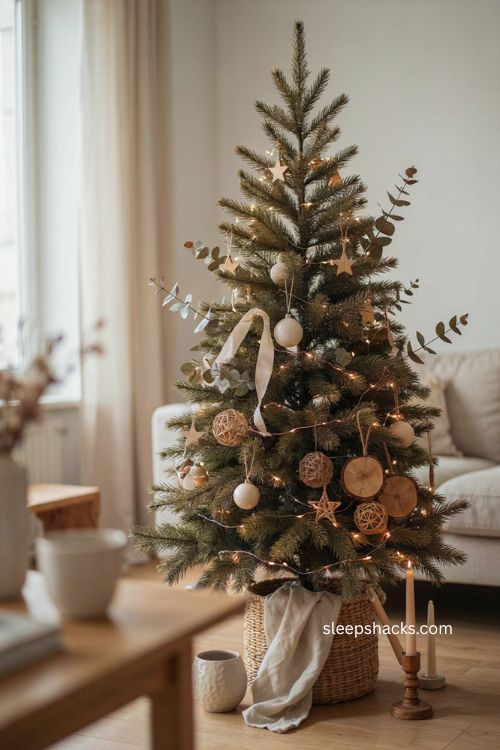
Wood slice ornaments, rattan balls, and woven star shapes give a beige tree an organic, earthy quality that pairs perfectly with the soft neutral palette. These pieces add real texture without adding color, which keeps the tree feeling calm and cohesive rather than busy. Try clustering a few wood ornaments together in one section instead of spreading them evenly, since grouping similar textures tends to look more intentional than scattering them randomly across the tree.
4. Try a Beige and White Combination
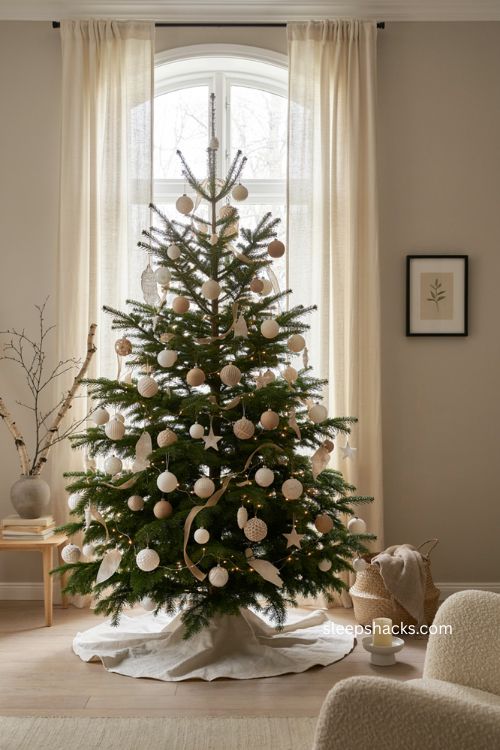
Pairing beige with crisp white keeps the whole look airy and light, almost like a winter morning. Use white ornaments as your base layer, then add beige and tan pieces on top for warmth and depth. A white or cream tree skirt at the bottom completes the effect and makes the tree feel finished rather than like the color scheme just stopped partway down. This combination is especially popular in Scandinavian-style or coastal homes.
5. Mix In Soft Pink for a Romantic Touch
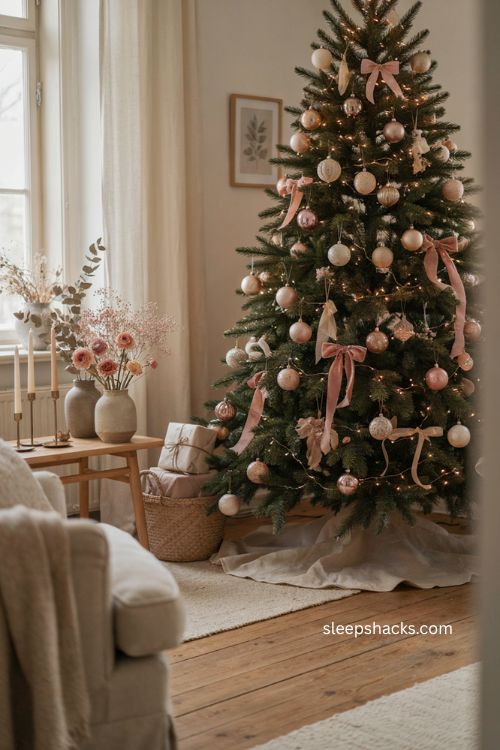
A little dusty pink mixed into a beige palette adds warmth and softness without pulling the tree away from its neutral roots. Choose muted, dusty pink tones rather than bright bubblegum shades so the color still feels grown-up and cohesive with the beige base. Hang the pink ornaments in small clusters rather than evenly throughout, which creates a more curated, romantic feel instead of a scattered one.
6. Use a Beige Flocked Base
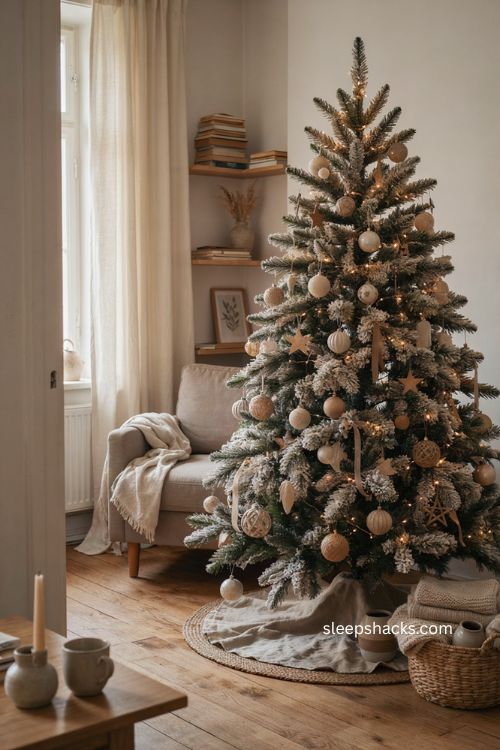
Starting with a beige-flocked tree instead of the traditional white-flocked style gives you a warmer foundation right out of the box. The soft tan tint on the branches means almost any ornament color reads a little cozier against it compared to stark white flocking. This is a great option if you love the flocked tree look but find pure white too cold or wintry for your overall color scheme.
7. Add Faux Fur or Sherpa Textures
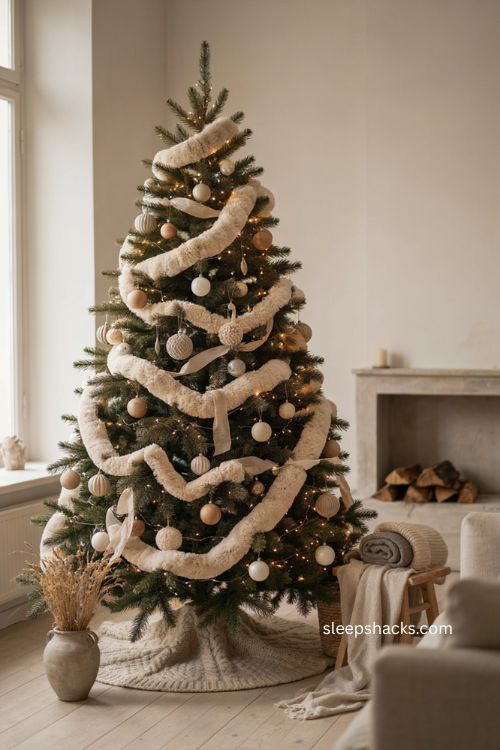
Wrapping a beige tree in faux fur ribbon or sherpa-style garland instantly makes it feel warmer and more tactile. The soft texture plays beautifully against the smooth or matte finish of most beige ornaments, adding a cozy, almost cabin-like quality to the tree. You can wrap it as the main statement piece or layer it with a thinner ribbon for a bit more visual interest without losing that soft, huggable feel.
8. Incorporate Dried Botanicals
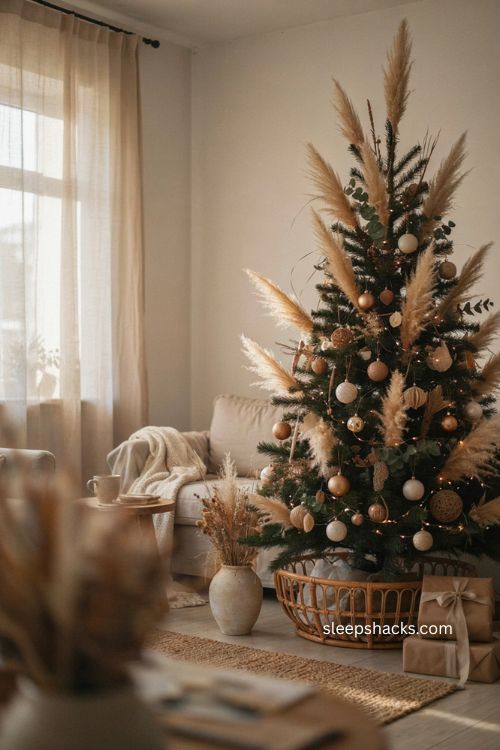
Dried pampas grass, wheat stems, and eucalyptus sprigs tucked into the branches give a beige tree a soft, boho quality that feels fresh and a little unexpected. These natural elements pick up on the warm undertones of beige beautifully, and they add movement and softness that ornaments alone can’t achieve. Tuck them in at varying heights and depths so they look like they’re growing naturally from the tree rather than placed on top of it.
9. Go Monochrome With Just Beige Tones
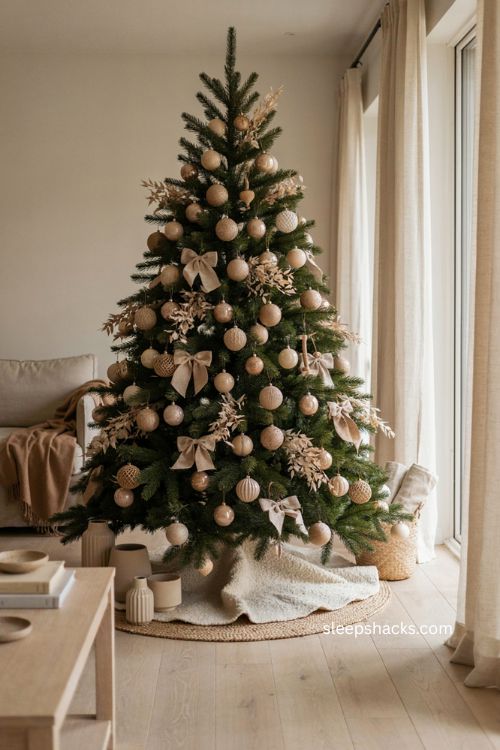
If you really want a designer-level look, skip other colors entirely and stick to every possible shade and texture of beige. Matte, glossy, fabric, glass, and woven ornaments all in the same tonal family create a surprisingly rich, layered look without ever introducing a second color. This approach takes a bit more intention while shopping or collecting ornaments, but the payoff is a tree that looks like it belongs in a design magazine.
10. Add Burgundy for Contrast
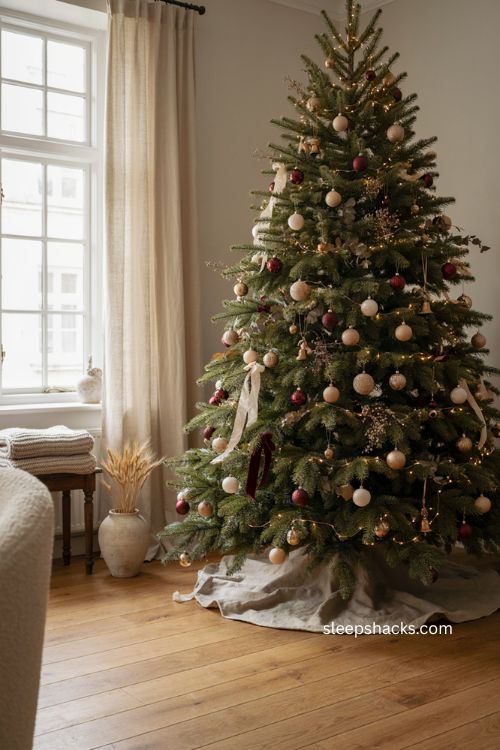
A few deep burgundy ornaments mixed into a beige palette create a warm, rich contrast that still feels sophisticated rather than clashing. Keep the burgundy pieces as accents rather than the main color, scattering them sparingly so they punctuate the neutral tones instead of competing with them. This combination works especially well for homes that want a slightly more traditional, jewel-toned holiday feel without giving up the neutral base.
11. Try a Beige and Black Combination
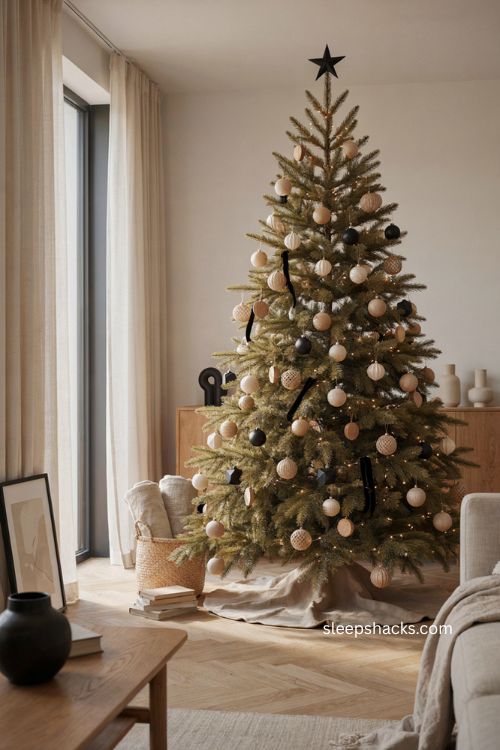
Black accents against a beige tree create a bold, modern contrast that feels unexpectedly chic. A few black ornaments, a black ribbon, or even a black star topper can sharpen up an otherwise soft, neutral tree without overwhelming it. Keep the black elements minimal and spaced out so they read as intentional accents rather than pulling focus away from the beige base entirely.
12. Use Oversized Ornaments for Impact
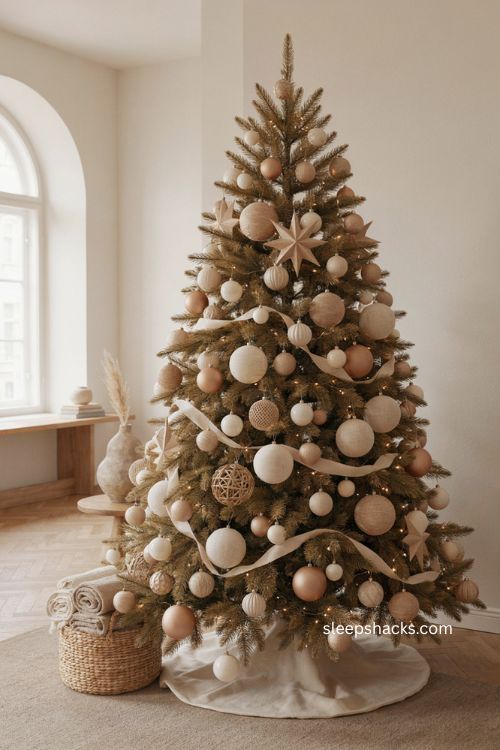
Large-scale ornaments in beige and cream tones make a real statement, especially on a fuller tree. Hang a few oversized pieces toward the inner branches where they have room to be seen fully, then fill in smaller ornaments around them for balance. This technique works particularly well if you want a tree that photographs beautifully, since bigger ornaments read clearly even from a distance.
13. Add a Woven Basket-Style Tree Collar
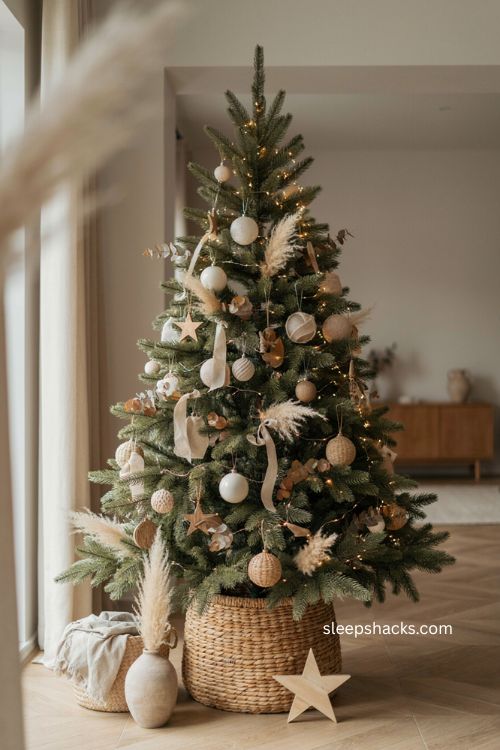
A woven rattan or seagrass tree collar picks up on the natural, earthy quality of a beige color palette perfectly. It’s a great alternative to a traditional fabric tree skirt, especially for homes with a more organic or coastal design style. The texture of the weave also adds visual interest at the base of the tree, which is an area that often gets overlooked in the overall design.
14. Layer Multiple Ribbon Textures
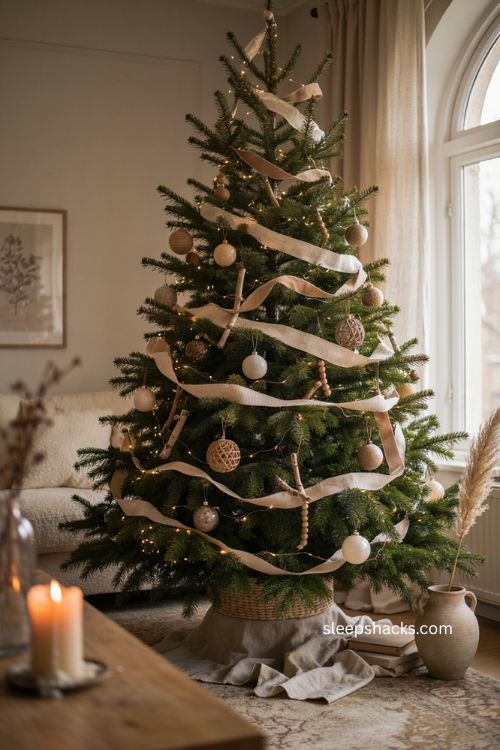
Instead of choosing just one ribbon style, try layering a few different textures in complementary beige and cream tones — think a linen-look ribbon alongside a subtle metallic one. Wrap each separately in a loose spiral so they weave in and out of the branches rather than sitting flat against each other. This adds depth and dimension that a single ribbon simply can’t achieve on its own.
15. Finish With Warm White Lights
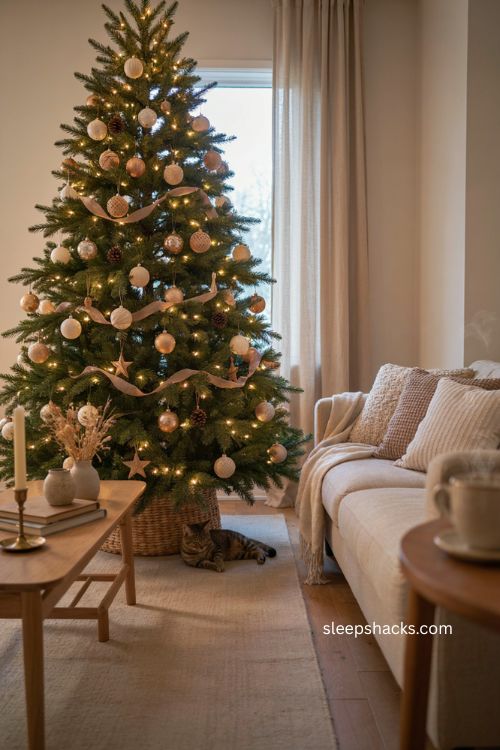
Warm white lights, rather than cool white or multicolor, make the biggest difference in how cozy a beige tree ultimately feels. The warmer light temperature enhances the golden undertones in beige and cream ornaments, giving the whole tree a soft glow rather than a stark, clinical look. It’s a small detail, but it’s often the difference between a tree that looks staged and one that actually feels warm and lived-in.
Final Thoughts
A beige Christmas tree proves that neutral doesn’t have to mean boring — there’s so much room to play with texture, warmth, and small pops of contrast within that soft color family. The trick is really in the layering: different shades of beige, a mix of finishes, and one or two accent colors are usually all it takes to keep the tree from feeling flat. Take your time building it up slowly, adding pieces you genuinely love rather than rushing to fill every branch at once, and the tree will end up feeling far more personal than perfect.
Frequently Asked Questions
Q: What colors go best with a beige Christmas tree?
Gold, white, dusty pink, and burgundy all pair beautifully with beige, since they either enhance its warmth or add just enough contrast without overwhelming the neutral base.
Q: Is a beige Christmas tree hard to decorate?
Not at all — the key is layering different shades and textures within the beige family so the tree doesn’t look flat, then adding one or two accent colors for interest.
Q: Should I use warm or cool lights on a beige tree?
Warm white lights work best, since they bring out the golden undertones in beige and cream ornaments and give the tree a cozy glow instead of a cold, stark look.