

There’s a certain kind of kitchen that stops you in the doorway every October — amber light bouncing off orange glass, a black cat cookie jar watching from the counter, and a hand-painted pumpkin tin holding the good sugar.
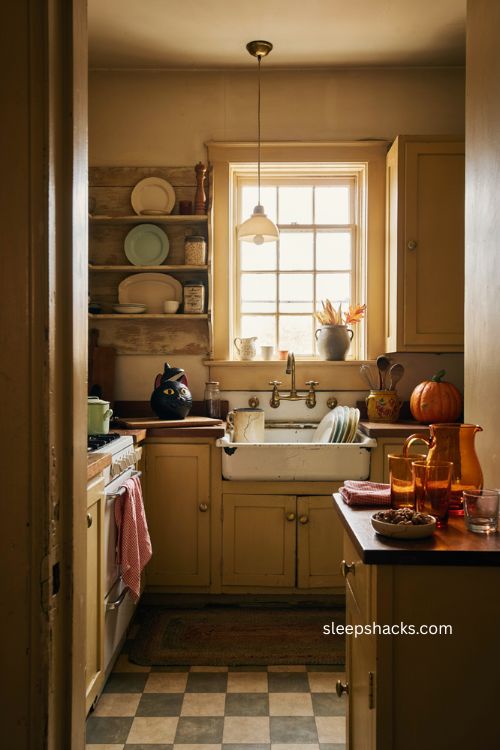
That’s the pull of a vintage Halloween kitchen. It doesn’t rely on plastic skeletons or store-bought fog machines. It leans on the stuff that already feels a little haunted: chipped enamelware, faded gingham, and glassware that’s seen fifty Octobers before this one. This style rewards patience and a good eye for thrift stores, but the payoff is a kitchen that feels collected, not decorated. Here are fifteen ways to bring that same nostalgic, slightly spooky charm into your own space.
1. Black and Orange Gingham Textiles
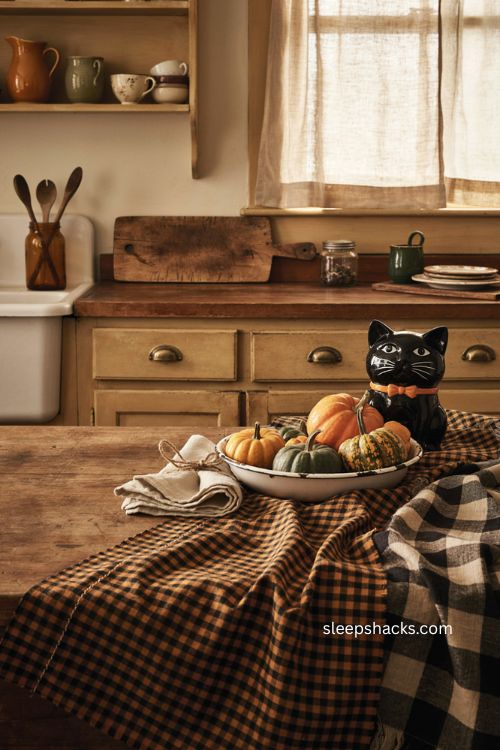
Swap your everyday dish towels for black and orange gingham through October, and the whole kitchen shifts mood instantly. A gingham runner under a bowl of gourds, or a stack of folded napkins tied with raffia, does more work than most people expect from fabric alone. Look for cotton with a slightly faded, sun-worn look rather than anything crisp and new — that softness reads as vintage instead of costume-y. If you find a set with a small tear or a coffee stain at a flea market, don’t pass it up; a little wear sells the era better than a pristine reproduction ever could. Layer two patterns, like a small gingham check against a larger buffalo plaid, for texture without clutter.
2. Retro Tin Canisters
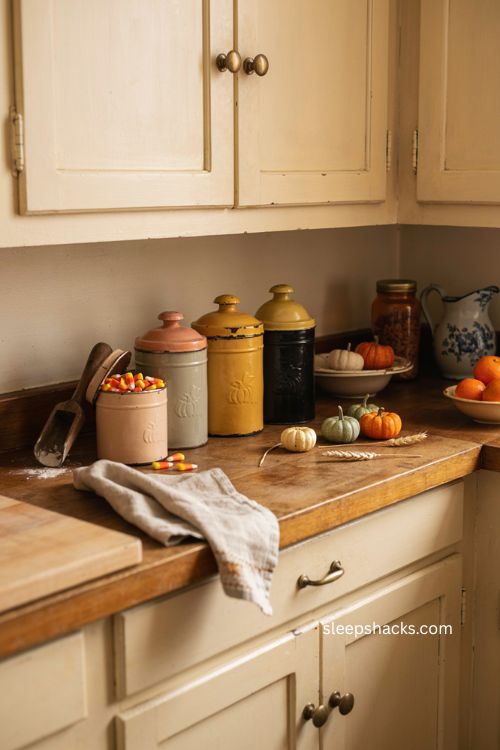
A row of old tin canisters labeled Flour, Sugar, Coffee, and Tea gives a kitchen instant midcentury bones, and swapping in ones with a faint pumpkin or witch motif for fall makes the whole counter feel seasonal without shouting about it. Hunt for tins with their original lids and a bit of surface rust along the seams — that patina is nearly impossible to fake with anything new. Group them by height instead of in a perfectly straight line; real vintage collections never line up evenly, and that slight imperfection is what makes a shelf look lived-in rather than staged. Fill one with candy corn instead of sugar for a small, surprising detail your guests will notice.
3. Vintage Milk Glass Pumpkin Jars
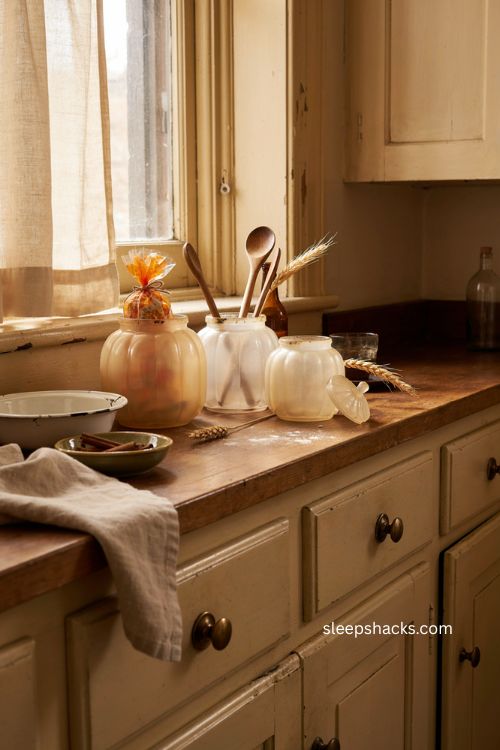
Milk glass has this soft, almost glowing quality under kitchen light, and a pumpkin-shaped jar in that finish looks like it belongs on a farmhouse windowsill in 1965. Use one to hold candy, matchbooks, or even just wooden spoons — the shape does the decorating for you. Check the base for a maker’s mark before buying, since that’s usually the fastest way to tell a genuine mid-century piece from a modern knockoff. Cluster two or three jars of slightly different sizes together rather than displaying just one; the grouping reads as a real collection someone built over years. A single stem of dried wheat tucked beside them finishes the look without adding clutter.
4. Witch-Shaped Barware
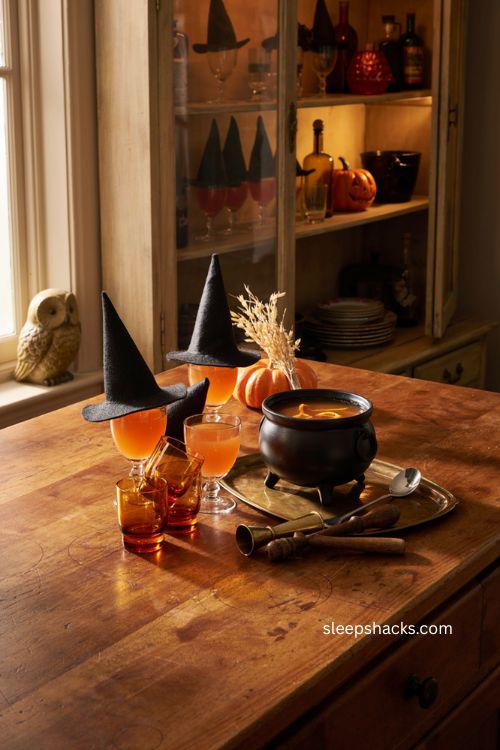
A set of witch-hat cocktail glasses or a punch bowl shaped like a cauldron turns a simple drink station into the most talked-about corner of the party. Vintage barware from the sixties and seventies often has this playful, almost cartoonish charm that newer Halloween glassware just doesn’t replicate. Look specifically at estate sales rather than costume shops, since that era produced genuine sets meant for actual entertaining, not one-night novelty. Serve something simple, like spiced cider or a orange-hued punch, so the drink color complements the glass instead of competing with it. Store the pieces in a glass-front cabinet the rest of the year so they stay part of the everyday view.
5. A Faded 1960s Tablecloth
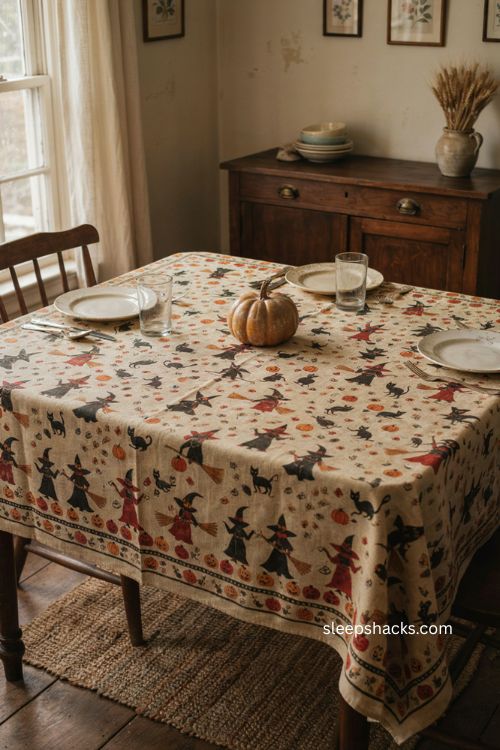
Nothing sets a vintage Halloween table faster than a printed tablecloth with little illustrated witches, black cats, or jack-o’-lanterns marching across the border. The best ones have already softened from decades of washing, giving the fabric a gentle drape that new cotton just can’t match. Search auction sites and vintage textile shops using the decade rather than the word “Halloween,” since sellers often catalog these by era first. Iron it lightly rather than pressing out every wrinkle completely — a few soft creases keep it from looking like a costume prop. Pair it with plain white or cream dishware so the busy pattern stays the star of the table.
6. Black Cat Cookie Jars
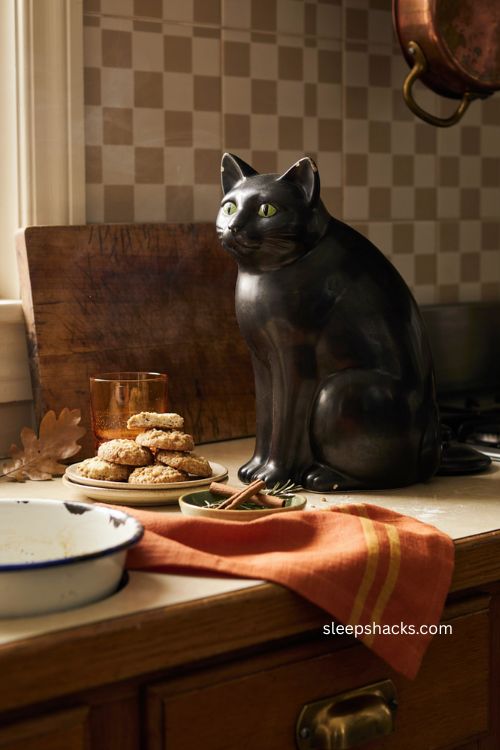
A ceramic black cat cookie jar sitting on the counter is one of those pieces that instantly signals “vintage Halloween” without needing a single other decoration nearby. The classic arched-back design, often in glossy black glaze with painted green eyes, was hugely popular from the fifties through the seventies, and originals still turn up fairly often at estate sales. Check underneath for a manufacturer stamp, and inspect the ears and tail tip closely, since those thin spots are the first to chip on originals. Actually use it for cookies rather than treating it as untouchable decor — that everyday use is part of what makes vintage kitchens feel warm instead of like a museum display.
7. Orange Enamelware Pots
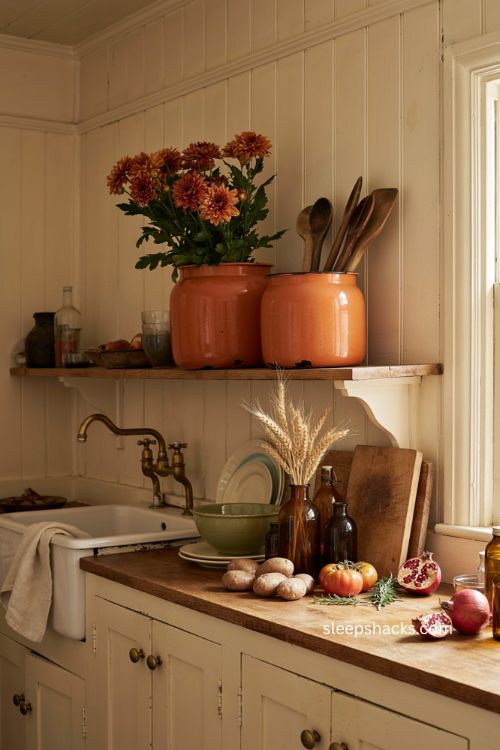
Enamelware in a warm pumpkin orange brings genuine color into a kitchen without a single Halloween motif in sight, which makes it one of the more versatile pieces on this list. A small enamel pot holding wooden spoons, or a larger one used as a planter for a fall mum, adds seasonal warmth that can stay out well past October if you want it to. Look for pieces with visible chip marks along the rim — that’s typically a sign of genuine age rather than a reproduction, which tend to have suspiciously flawless edges. Group two pots in slightly different shades of orange together on open shelving for a collected-over-time look. Avoid anything too glossy; the vintage finish is usually a bit matte.
8. Vintage Halloween Postcards on Open Shelves
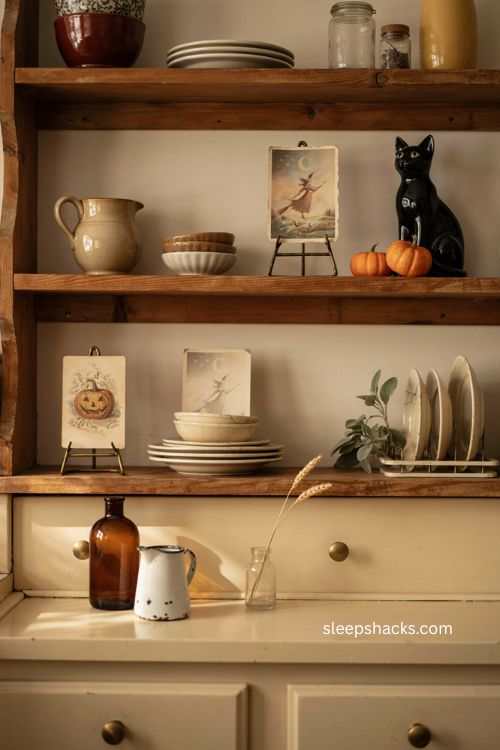
Leaning a handful of antique Halloween postcards against your dishes or a small plate rail brings in genuine period artwork without taking up any counter space. These postcards, often dating back to the early 1900s, feature illustrated witches, moons, and jack-o’-lanterns in a softer, more whimsical style than modern Halloween art. Buy reproductions if originals feel too pricey or fragile to leave out in a working kitchen, since the look reads the same from a few feet away. Rotate two or three at a time rather than displaying a whole stack, so each one actually gets noticed. A small brass easel or clip frame keeps them upright without needing nails in the wall.
9. Painted Jack-o’-Lantern Dishware
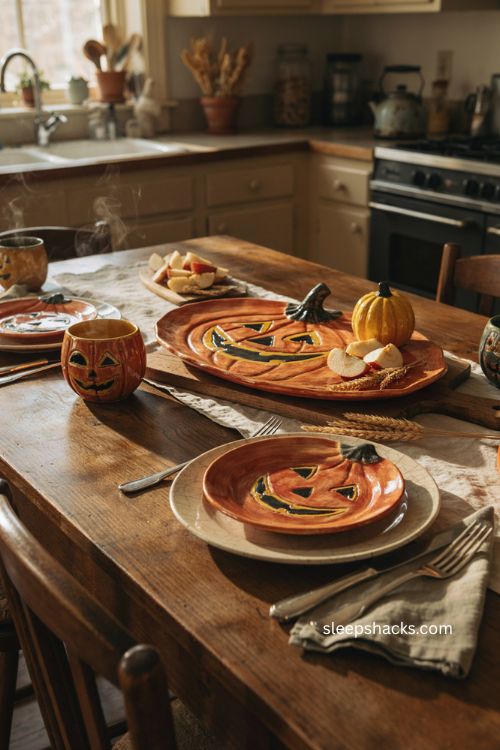
A set of hand-painted pumpkin plates or bowls, especially ones with a slightly uneven glaze, gives a kitchen table personality that mass-produced Halloween dishware can’t touch. These pieces were often made by small potteries or as limited holiday runs, so patterns vary even within a matching set — that inconsistency is part of the charm. Use them for actual meals through October rather than saving them for one big dinner; a kitchen that uses its vintage pieces daily feels far more authentic than one that just displays them. Mix a jack-o’-lantern platter with plain stoneware plates so the pattern gets a moment to stand out. Hand wash these pieces to protect the original glaze.
10. Skeleton Key Hooks by the Stove
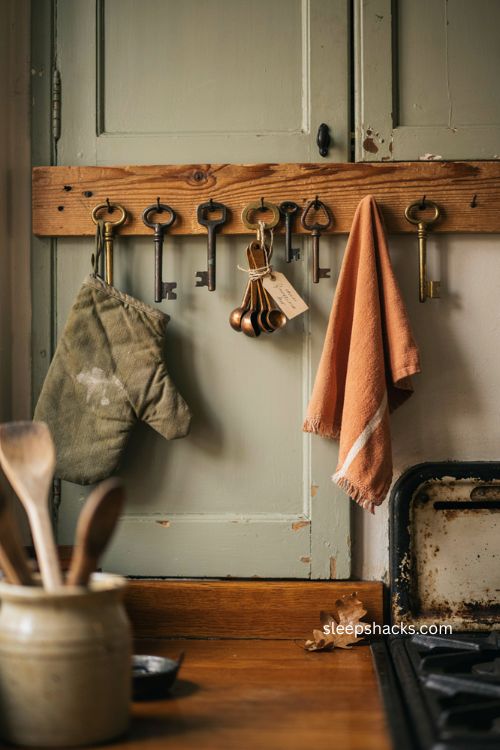
A small row of antique skeleton keys mounted near the stove or pantry door does double duty as both decor and a genuinely useful place to hang oven mitts or measuring spoons. The dark, aged metal and slightly irregular shapes give off an old-house charm that fits the vintage Halloween mood all year, but they read a little spookier once fall hits. Look for keys with varying sizes and finishes rather than a matched set — that variety is what makes them look collected over time instead of bought in one trip. Mount them on a strip of reclaimed wood for an extra layer of texture. A small tag with a handwritten label adds a nice finishing touch.
11. A Retro Apron Hung on Display
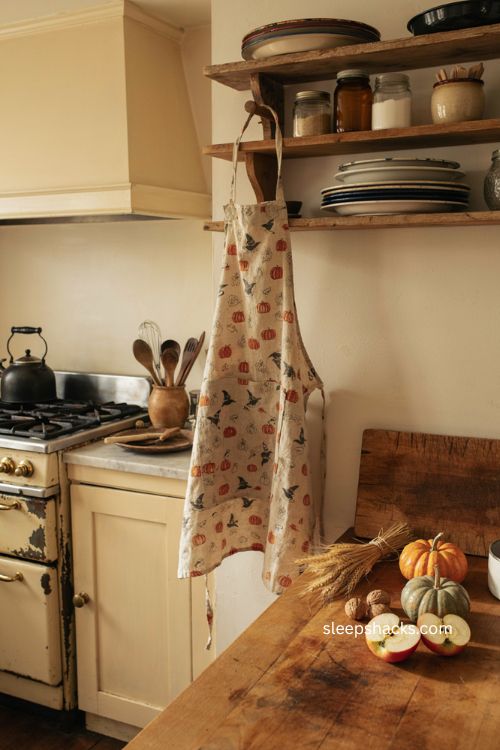
An apron from the fifties or sixties, especially one with a printed pumpkin or witch pattern, looks just as good hanging on a hook as it does actually being worn while you bake. The cotton or cotton-blend fabric from that era tends to have a slightly heavier weight and a faded print that instantly reads as authentic rather than costume-store orange. Hang it on a simple wooden peg near the stove where it becomes part of the everyday view, not something tucked in a drawer. If the ties have frayed, a light patch or reinforced stitch keeps it functional without erasing its character. Wearing it while you actually cook is what keeps the whole vintage-kitchen feeling honest.
12. A Small Cast Iron Cauldron Centerpiece
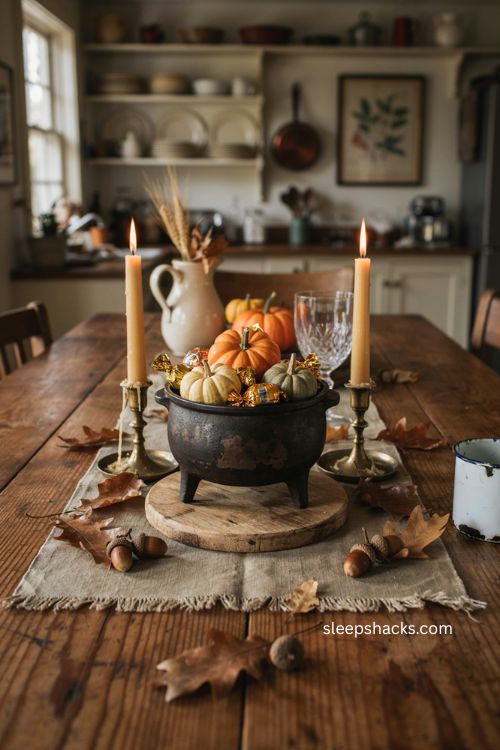
A miniature cast iron cauldron, the kind originally sold as a candy dish decades ago, makes a genuinely striking centerpiece when filled with mini pumpkins or wrapped caramels. The rough, slightly pitted texture of real cast iron catches candlelight in a way smooth plastic versions never manage. Season it lightly with oil if the surface looks dry, both to protect the metal and to deepen that dark, weathered color. Set it on a wooden trivet rather than directly on a tablecloth, since the iron can mark fabric over time. Surround it with a scatter of dried leaves or acorns for a centerpiece that looks gathered rather than purchased.
13. Spice Tins with Old Halloween Labels
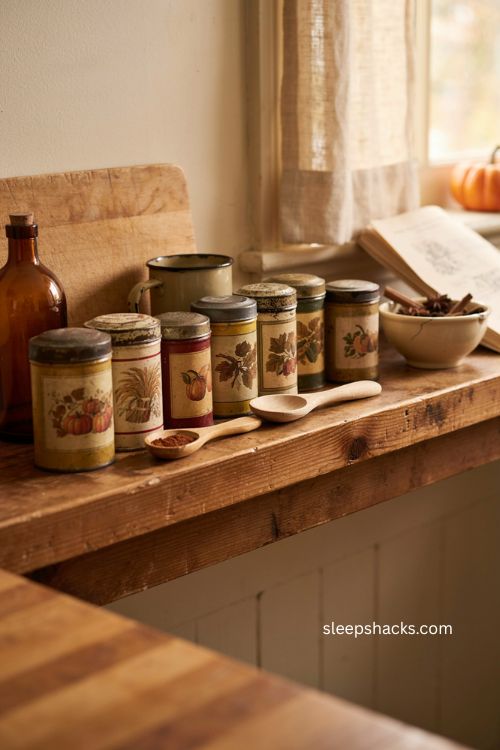
Original spice tins from decades past, especially ones that happened to feature autumn or Halloween-adjacent artwork on the label, turn an everyday spice rack into a small curated collection. The illustrated typography and slightly yellowed paper labels have a warmth that reprinted versions rarely capture, since real aging can’t be manufactured. Look through vintage kitchenware bins at flea markets rather than searching for “Halloween” specifically, since these gems often get filed under general spice or grocery tins instead. Keep the original tin but swap in fresh spices, refreshing what’s inside every few months so the display stays functional. Line them up on a narrow shelf where the labels face out and stay visible.
14. Candy Corn in a Cut Glass Bowl
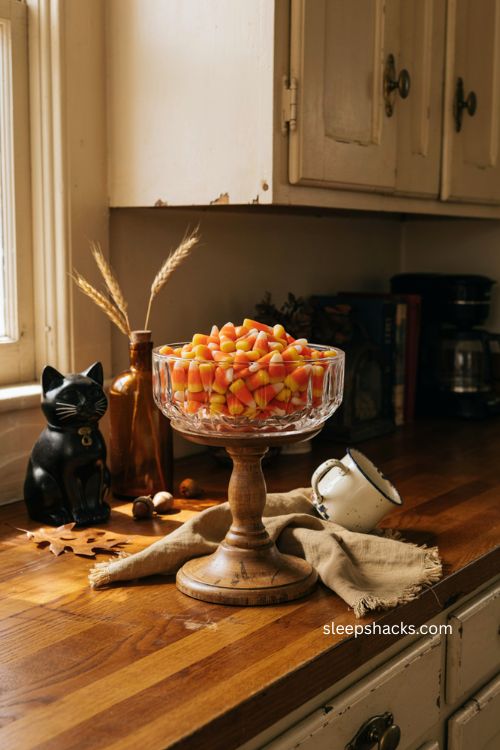
A heavy cut glass bowl, the kind that once held nuts or mixed candy at a formal dinner, feels almost ceremonial when it’s filled with plain orange, yellow, and white candy corn. The faceted glass catches light in a way that plain plastic bowls simply don’t, giving even a small handful of candy a bit of sparkle. Look for bowls with a slightly cloudy or etched finish, since that softness usually points to genuine age rather than a modern cut. Set it on a small pedestal or cake stand to give it a little height on the counter. Keep the bowl out through the whole season rather than just for trick-or-treaters — it works just as well as everyday candy storage.
15. A Vintage Halloween Cookbook Propped Open
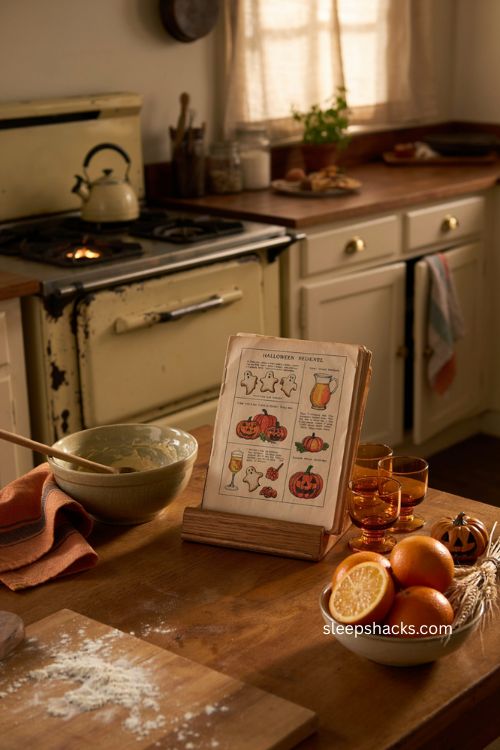
An old cookbook or recipe pamphlet with a Halloween party theme, propped open on a stand near the stove, adds both visual charm and a genuinely fun read while you’re waiting on something to bake. These booklets, often produced by food brands in the mid-1900s for party planning, are full of illustrated recipes for things like deviled eggs shaped like ghosts or orange-tinted punch. Search used bookshops and paper ephemera dealers rather than general antique stores, since these fall under the same category as old magazines. Prop it open to a page with strong illustration rather than dense text, so it reads well from across the room. Actually trying one of the old recipes is a small, memorable way to bring the whole kitchen theme full circle.
Final Thoughts
You don’t need to overhaul your whole kitchen to get this look — start with one piece that genuinely catches your eye, whether that’s a gingham towel or a chipped enamel pot, and build from there. The best vintage Halloween kitchens weren’t assembled in a single shopping trip; they came together slowly, through flea markets, hand-me-downs, and the occasional lucky estate sale find. Pick your favorite idea from this list and go hunting for it this weekend. Once you bring home that first piece, you’ll probably notice how much easier it is to spot the next one.
Frequently Asked Questions
Q: What colors define a vintage Halloween kitchen?
Warm pumpkin orange, matte black, cream, and soft mustard yellow are the core palette, often paired with aged brass or copper accents.
Q: Where can I find vintage Halloween kitchen decor?
Estate sales, flea markets, and antique malls tend to have the best luck, along with online vintage shops that specialize in mid-century kitchenware.
Q: How do I make new items look vintage in a kitchen?
Choose pieces with a matte or slightly imperfect finish, mix them with a few genuinely old items, and avoid anything that looks glossy or perfectly uniform.