

You don’t need a sprawling lawn to have the prettiest house on the block. Small front yards are actually one of the best design challenges out there — less grass to mow, less water to use, and just enough space to get really creative. These small front yard landscaping ideas prove that thoughtful design always beats square footage.
- A small yard is easier and cheaper to maintain than a large one without sacrificing style.
- Hardscaping features like walkways, retaining walls, and arbors can make a small yard feel bigger.
- Layering plants at different heights adds depth, color, and year-round interest.
Why Small Front Yards Deserve Big Design Attention
One or two thoughtful choices can completely change how your home reads from the street. Small yards actually reward intentional design more than large ones — every plant, path, and planter is visible and matters. Whether you’re working with a flat lot, a steep slope, or a corner property, the ideas below give you a clear starting point.
17 Small Front Yard Landscaping Ideas Worth Saving
1. Layer Your Plantings for Depth and Color

A single row of shrubs won’t cut it in a small yard — layering is what creates that lush, full look. Try two rows of evergreens at the back, a mid-height flowering shrub layer in the center, and low colorful annuals at the front edge. This triple-layer approach adds dimension without requiring extra square footage, and the effect reads beautifully from the street.
2. Add Window Boxes for Instant Color

Window boxes are one of the fastest, most affordable ways to add color when your ground-level planting space is tight. Match the box color to your front door or window trim for a polished, intentional look. For extra cohesion, try matching the mulch color to your porch or stair materials — a small detail that makes the whole yard look pulled together.
3. Build a Curved Walkway to the Front Door

Straight paths are efficient but rarely beautiful. A gently curving walkway gives the eye something to follow and makes even a short front yard feel like a journey. Line the path with low flowering plants or ornamental grasses that spill softly over the edges. Choosing a warm stone-colored paver instead of gray concrete keeps the whole entry feeling natural and inviting.
4. Use Symmetry If Your Home’s Facade Is Symmetrical

When your house has a centered door and matching windows on each side, mirrored landscaping feels satisfying and intentional. Frame the entry with matching evergreens or Japanese maples, add a uniform hedge along the front edge, and flank the door with identical planters. Symmetry signals order and care — and it’s one of the easiest design decisions you can make for curb appeal.
5. Create Front Yard Living Space With a Fence

A white picket fence with copper post caps and climbing vines turns a plain front yard into an outdoor room. Add a small seating area near the door and fill the beds with low-maintenance ornamental grasses. The fence doesn’t need to be tall — even a knee-high border creates a sense of enclosure that makes the space feel intentional, private, and welcoming at the same time.
6. Use a Retaining Wall to Tame a Sloped Yard
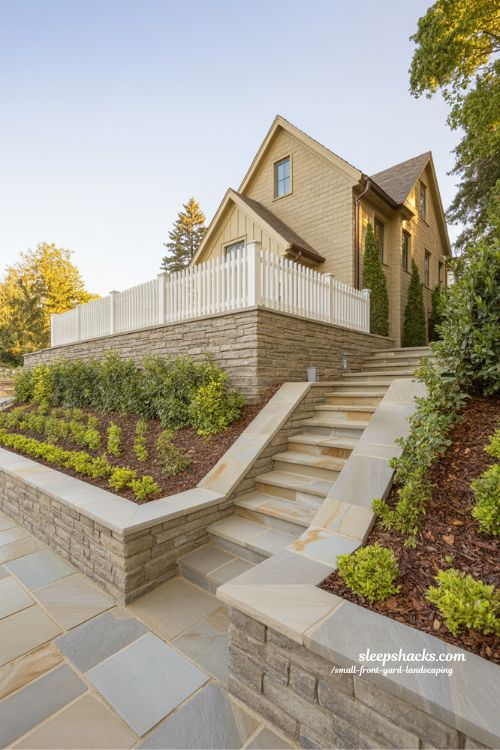
A sloped front yard is a challenge, but a well-built retaining wall turns that incline into a feature. Use the same stone as your home’s foundation so the wall looks like it belongs rather than something added as an afterthought. Top the wall with a low picket section for privacy, and flank staircase entries with matching planters to give the whole design symmetry and structure.
7. Plant Groundcovers Instead of Grass
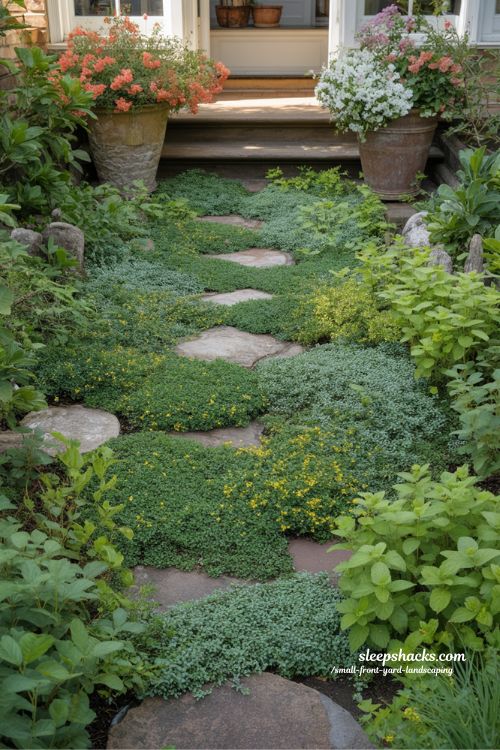
If you’re ready to retire the mower for good, groundcovers are the answer. Ivy, pachysandra, wild ginger, Asian star jasmine, and creeping thyme all create a lush green carpet without the weekly upkeep. They’re often drought-tolerant, spread naturally to fill gaps, and look beautiful softening hardscape edges. Dress up your porch containers with colorful blooms to add the color that groundcovers alone can’t provide.
8. Go Drought-Tolerant With Native Plants and Gravel
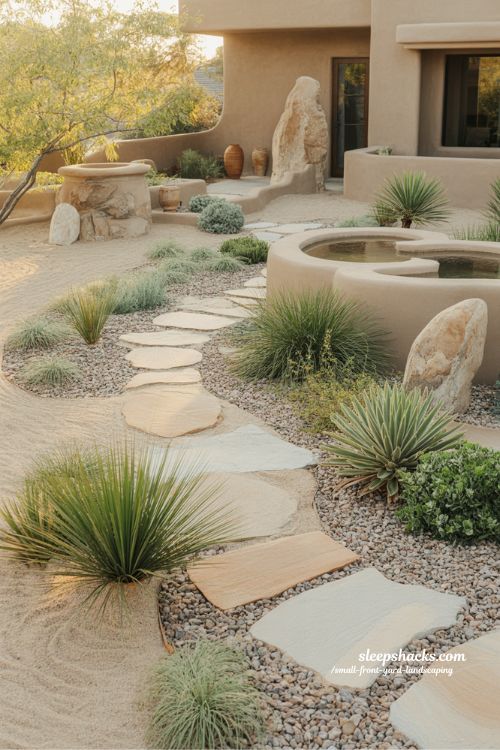
Replacing a water-hungry lawn with native plants, ornamental grasses, and gravel mulch is one of the smartest moves you can make for a low-maintenance front yard. Choose a curvilinear flagstone or gravel walkway to add softness to the desert-style palette. Twin water features or simple boulders anchor the design and give the eye something to land on among the textural plantings.
9. Install an Arbor at the End of the Walkway
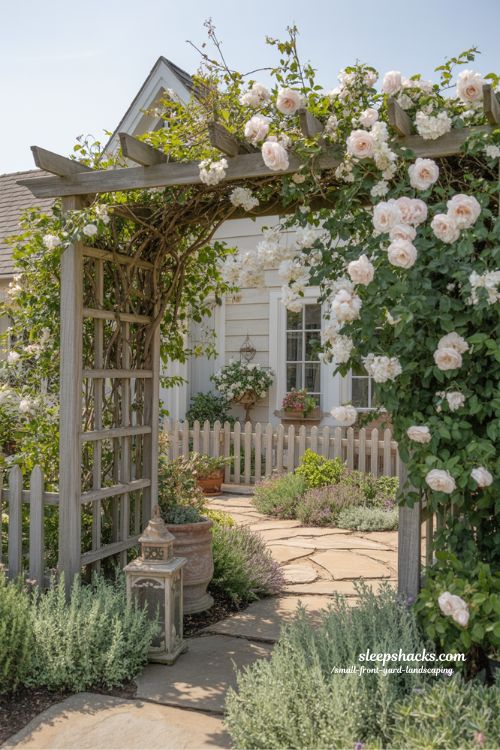
An arbor at the entrance of your front yard path creates the feeling of a garden room before guests even reach the door. Pair it with a picket fence and climbing roses or jasmine for a romantic, cottage-style entry. The vertical height of the arbor draws the eye upward, which is a proven trick for making small yards feel more spacious and layered than they actually are.
10. Add Large Boulders for Year-Round Structure
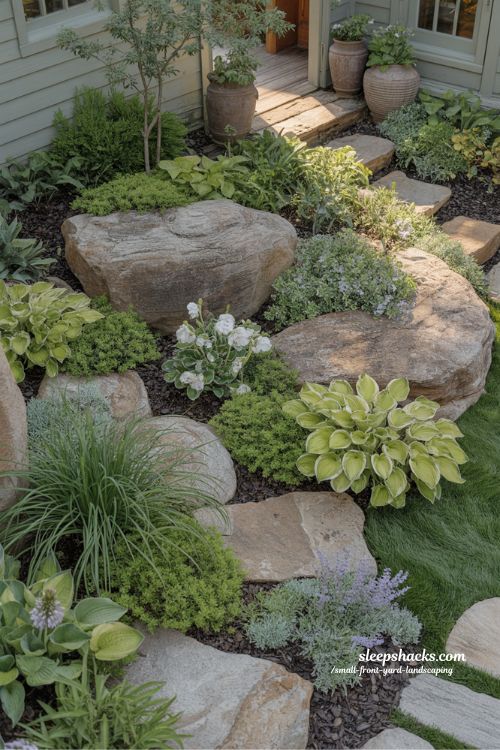
Natural boulders placed in planting beds add structure, dimension, and visual weight without any ongoing maintenance. They look especially stunning when hostas or low-growing perennials spill over and around them. Boulders also do practical work — they help prevent erosion, conceal awkward foundation lines, and give the garden a grounded, timeless quality that annuals and shrubs alone can’t deliver.
11. Try a Switchback Staircase on a Steep Slope
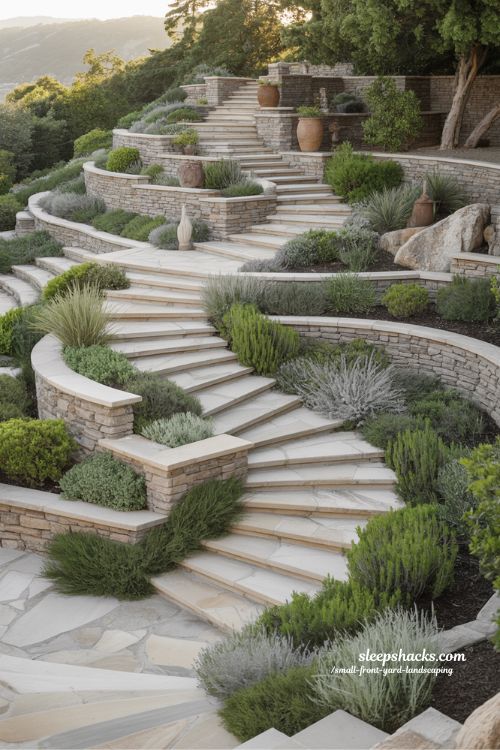
A straight staircase up a steep front yard can feel abrupt and utilitarian. Switchback stairs that change direction with landings between them feel more like a garden walk — and they allow you to see the yard from multiple vantage points, which makes a small space feel much larger. Use natural stone and soften each landing with ornamental grasses or low Mediterranean plantings in gray-green tones.
12. Embrace the Corner Lot With Lawn on Two Sides
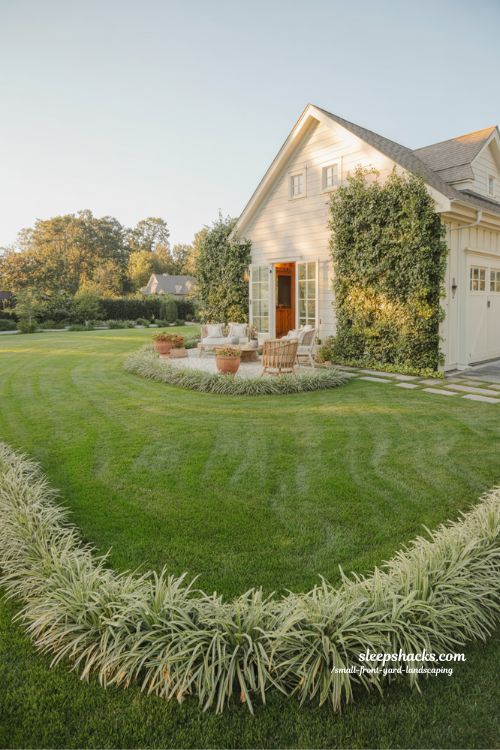
Corner properties can feel awkward to landscape, but they actually offer more frontage than standard lots. Create a lush lawn on both street-facing sides so there’s open green space for kids and adults alike. Fill the walls of the house and garage with tall shrubs, add a border of ornamental grass along the yard’s curve, and include a small front patio near the door for seating and social connection.
13. Go Vertical With Climbing Vines and Espalier
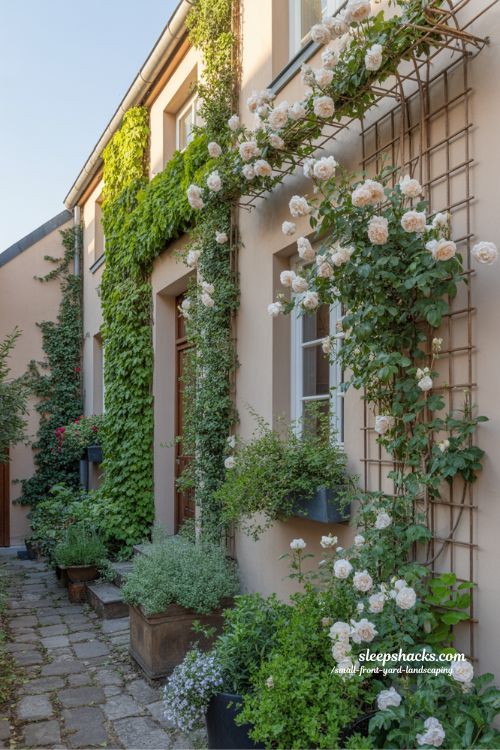
When ground space is genuinely limited, take your landscaping up the walls. Climbing roses, jasmine, and ivy trained along a trellis or wire system turn flat exterior walls into living green features. For a more formal look, espalier a fruit tree flat against the facade — it’s a centuries-old technique that looks both architectural and organic. Combine with window boxes below for a layered, lush entry that works even on the narrowest lots.
14. Add a Focal Point Tree Surrounded by a Circular Path
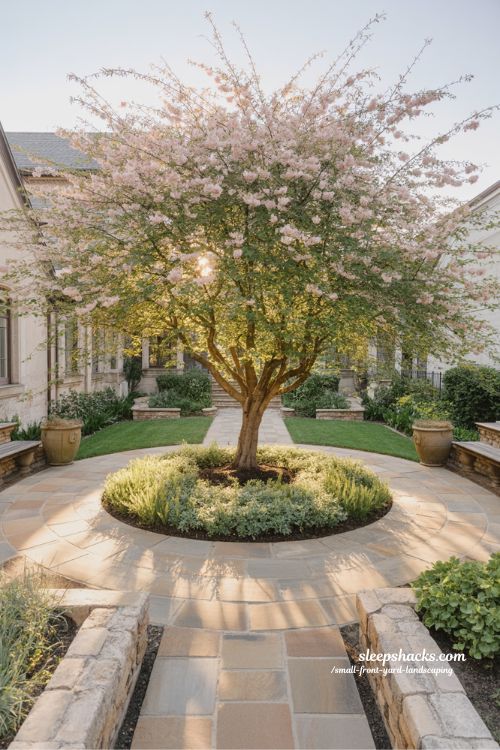
Every front yard needs one thing that tells the eye where to look first. A specimen tree — whether it’s an umbrella-shaped shade tree or an ornamental cherry — surrounded by a circular paver path is one of the most elegant focal points you can create. The circular shape softens the geometry of the house and driveway, and the tree provides seasonal interest, shade, and a sense of scale.
15. Use Matching Raised Planter Boxes Along the Front
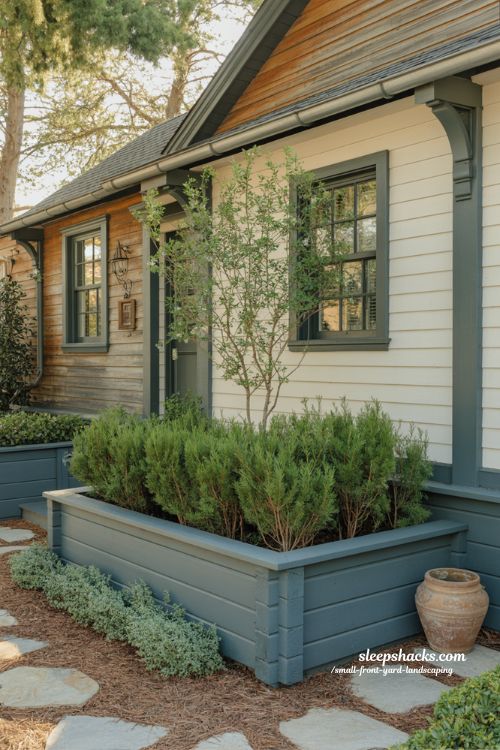
Raised planter boxes built to match your front door color and porch posts bring a custom, architectural quality to a simple ranch or bungalow facade. Fill them with evergreens of varying heights and a flowering tree between the windows for layered vertical interest. Raised beds also solve practical problems — they create a clear boundary between your home and the street without needing a fence or retaining wall.
16. Mix Materials for a Textured, Layered Look
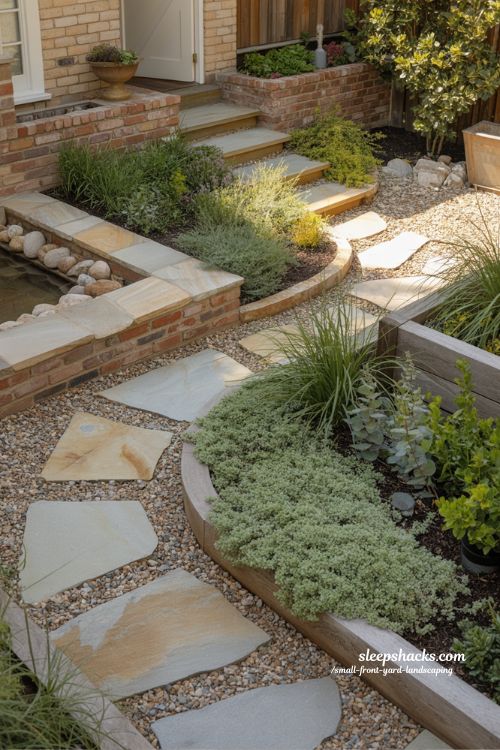
Combining different natural elements at different levels makes a small yard feel rich and spacious. Think flagstone paths next to river rock borders, brick retaining walls meeting timber planting beds, or gravel mulch alongside lush groundcovers. When the eye has multiple textures and materials to explore, the yard feels bigger because there’s so much to take in. Use materials that complement your home’s exterior finish for a cohesive result.
17. Light the Entry to Extend Curb Appeal Into the Evening
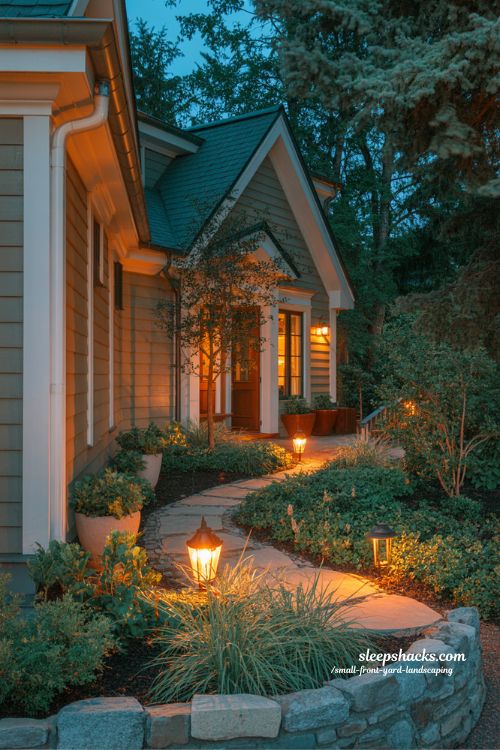
A beautifully landscaped front yard shouldn’t disappear at sunset. Well-placed path lighting, uplights on specimen trees, and fixtures flanking the front door extend your curb appeal into the evening hours. Choose fixture finishes that match your door hardware, and pick a warm bulb tone for a welcoming glow. Soft teal or bronze fixtures paired with ornamental grasses that echo the fixture color create a finished, intentional look.
Small Front Yard Landscaping Ideas at a Glance
| Idea | Best For | Maintenance Level | Budget Range |
|---|---|---|---|
| Layered Plantings | Most home styles | Medium | Low–Mid |
| Window Boxes | Small or no yard space | Low | Low |
| Curved Walkway | Flat or gently sloped lots | Low | Mid |
| Symmetrical Design | Symmetrical facades | Low | Mid |
| Fence + Living Space | Privacy seekers | Low | Mid |
| Retaining Wall | Sloped yards | Low | Mid–High |
| Groundcovers | No-mow households | Very Low | Low |
| Drought-Tolerant/Native | Dry climates | Very Low | Mid |
| Arbor Entry | Cottage/romantic styles | Low | Mid |
| Large Boulders | Low-maintenance yards | None | Low–Mid |
| Switchback Stairs | Steep slopes | Low | High |
| Corner Lot Lawn | Corner properties | Medium | Mid |
| Vertical/Climbing Vines | Narrow lots | Low | Low |
| Focal Point Tree | Any yard | Low | Mid–High |
| Raised Planter Boxes | Ranch/bungalow styles | Low | Mid |
| Mixed Materials | Design-forward homes | Low | Mid–High |
| Entry Lighting | All yard types | None | Low–Mid |
FAQ
What are the best plants for small front yard landscaping ideas?
Evergreen shrubs, ornamental grasses, boxwood hedges, Japanese maples, and low-growing perennials like hostas and coneflowers all perform well in small front yards. Choose plants that fit your climate zone and won’t outgrow the space — a plant that looks perfect at purchase can overwhelm a small yard within two or three seasons if it’s the wrong size for the spot.
How do I make a small front yard look bigger?
Curved walkways, switchback stairs, layered plantings at different heights, and vertical elements like arbors and climbing vines all create a sense of depth and space. Strategic lighting also helps — a well-lit yard at night looks larger and more dimensional than one in darkness. Avoiding a single flat plane of lawn is the single biggest visual upgrade you can make.
What is the lowest-maintenance small front yard landscaping?
Drought-tolerant native plants set in gravel mulch, groundcovers like Asian star jasmine or pachysandra, and large boulders require the least ongoing effort. Replacing even a portion of your lawn with these elements dramatically reduces watering, mowing, and fertilizing. Add window boxes or potted plants near the door for color without the commitment of in-ground flower beds.
How much does small front yard landscaping cost?
Simple DIY upgrades like window boxes, groundcovers, and mulching can cost under a few hundred dollars. Mid-range projects like curved walkways, raised planter boxes, or ornamental tree planting typically run in the low thousands. Professional landscaping with retaining walls, custom hardscaping, or full yard redesign can range from several thousand to tens of thousands depending on your region and the scope of work.
Do I need a professional for small front yard landscaping?
Not necessarily. Many of the ideas here — window boxes, groundcovers, layered plantings, and simple path edging — are genuinely DIY-friendly for a weekend afternoon. Retaining walls, switchback stairs, drainage solutions, and electrical lighting are where a professional’s expertise pays off in both safety and long-term durability. Start with the simpler upgrades and see how far your own hands can take you.
What is the best small front yard landscaping style for a cottage home?
Cottage homes look beautiful with layered, slightly overflowing plantings — roses, hydrangeas, coneflowers, and ornamental grasses in informal drifts. An arbor at the entry, a curved brick path, and window boxes overflowing with blooms complete the look. The goal is controlled abundance: lush without being messy, colorful without being chaotic.
How do I landscape a small front yard on a slope?
Terraced retaining walls, switchback staircases, and groundcovers are your three main tools on a sloped front yard. Retaining walls create flat planting beds that are easier to maintain than an open incline. Switchback stairs add elegance and multiple vantage points. Groundcovers handle the spots between — they spread naturally, hold the soil, and require almost no maintenance once established.