

The Scandinavian way of decorating a tree has less to do with what you add and more with what you leave out. A real Scandi tree has gaps, bare branch, and a quiet confidence that louder trees can’t quite fake. It’s less “look at me” and more “come sit down.” Think wood, straw, wool, and paper in soft colors, with warm light doing most of the talking.
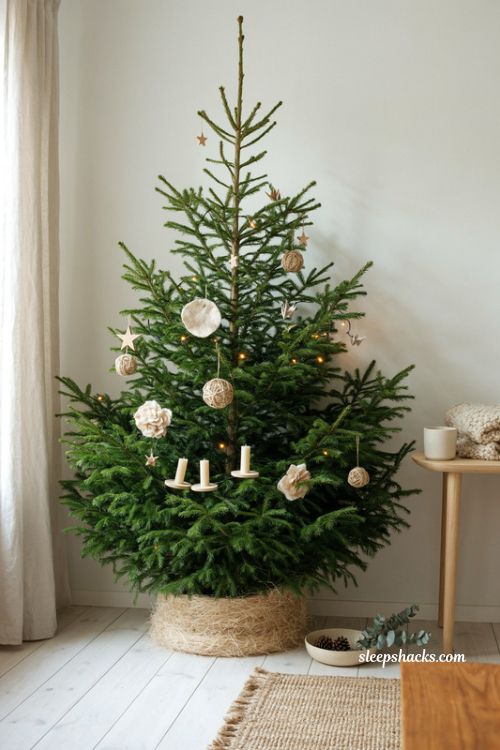
Here are 16 Scandi Christmas tree ideas, covering ornaments, toppers, skirts, red and white palettes, and even simple drawings and prints. Each idea includes notes on cost, effort, and fit, so you can build a tree that feels warm and honest with only a few well-chosen pieces. You don’t need to buy much, and many of these can be made at the kitchen table.
1. Classic Scandi Christmas Tree Ideas
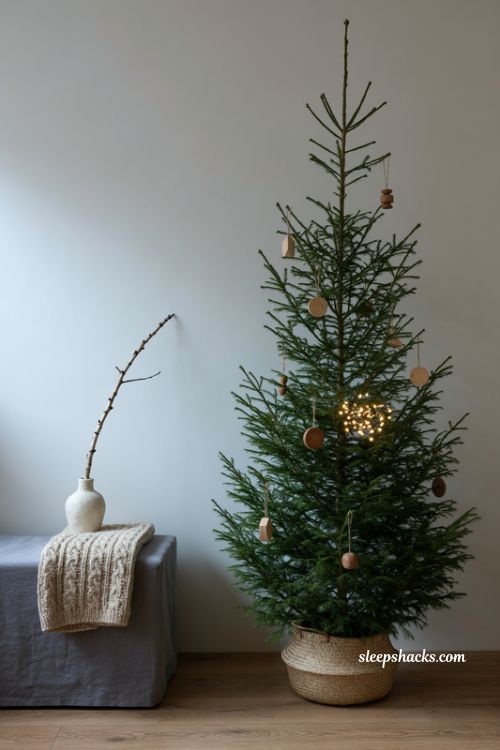
Picture a slim green fir with plenty of air between the branches, a few wooden ornaments, and a single strand of warm white lights glowing from within. Nothing is crowded, and each piece has room to be seen. Think of a forest at dusk rather than a department store.
Choose a tree that’s a little sparse instead of ultra-full, since gaps are part of the look. Real firs and slim artificial ones both work. Thirty to forty ornaments are plenty for a six-foot tree, which keeps costs low. It takes about an hour, and it suits anyone who prefers calm over sparkle.
2. Scandi Christmas Tree Decorations From Natural Materials

Imagine a tree hung with small wooden stars, woven straw bells, bundled cinnamon sticks, and tiny knitted mittens in oatmeal and gray. Everything is made of something that once grew or grazed, and the textures make the tree feel warm and lived in. Colors stay soft and earthy.
Natural materials are often the cheapest route, since straw, twine, and paper cost very little. Mix three or four materials, not ten, so the look stays calm. Keep paper and straw away from damp rooms and open flame, because both can be damaged easily. It suits people who like handmade touches and don’t mind a slightly rustic finish.
3. Red and White Scandi Christmas Tree

Picture a green tree dressed only in white wooden hearts and red wool pom-poms, with a long strip of red-and-white gingham ribbon looped between the branches. The two colors repeat evenly, so the tree reads as one clean pattern. It feels cheerful but never busy.
Limit yourself to red and white, and let the green do the rest. Gingham ribbon is cheap by the roll, and wool pom-poms can be made from yarn scraps. The look suits families who love tradition but want a fresher feel. It works especially well with warm white lights, while cool white tends to make red look harsh.
4. Scandi Christmas Tree With Subtle Red Accents

Imagine a mostly neutral tree with just five or six deep red touches: a few small felt hearts, one velvet bow tucked halfway down, and a red wooden bead garland low on the branches. The red appears like a quiet punctuation mark, never a shout.
This works for people who want a hint of tradition without going full red and white. Count the red pieces before you hang them, and stop at a handful. Brick or cranberry red reads softer than bright scarlet. It costs very little, since a few pieces are all you need, and you can swap them out each year.
5. Scandi Christmas Tree Ornaments in Wood

Picture a collection of small birch cutouts: a tiny reindeer, a fir tree, a heart, and a gnome with a pointed hat, each one left plain or touched with a single dot of paint. Light wood has a pale, honeyed look that suits the Scandi style perfectly. The simple outlines are what make them charming.
Wooden ornaments usually come in packs, so the cost per piece is low. Unfinished wood can be painted or left bare, and it lasts for years if stored dry. Choose shapes with thick outlines, because thin legs and antlers snap easily. They’re sturdy enough for homes with kids and pets, which makes them a practical choice for busy households.
6. Himmeli and Straw Ornaments
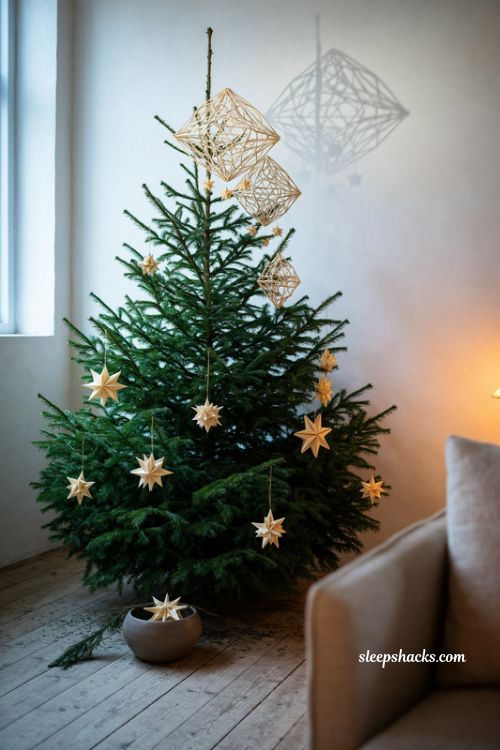
Imagine a delicate geometric mobile made of straw tubes threaded together into diamonds and stars, hanging from a thin thread. Himmeli is a traditional Finnish craft, and the shapes cast fine shadows that move gently in warm light. Pale gold straw looks lovely against dark green needles.
Straw tubes come in craft packs for a few dollars, and one pack makes many pieces. The first few take patience, since keeping the thread tight matters, but simple diamonds are manageable for beginners. Keep these away from candles and damp spots, because straw is delicate and can mold. They’re light enough to hang from thin branch tips.
7. Woven Paper Heart Ornaments

Picture a small woven heart made from red and white paper strips, interlaced like a tiny basket, with a loop of ribbon at the top. These are a Danish tradition, and each one looks slightly different. The pouch shape can even hold a few sweets or nuts inside.
Paper hearts cost almost nothing, since a few sheets make a dozen. The weaving takes practice, and the first one is usually lopsided, which is fine. It’s a good project for older kids and adults on a winter evening. Keep paper ornaments dry, and store them flat in a box to protect their shape.
8. Scandi Christmas Tree Topper
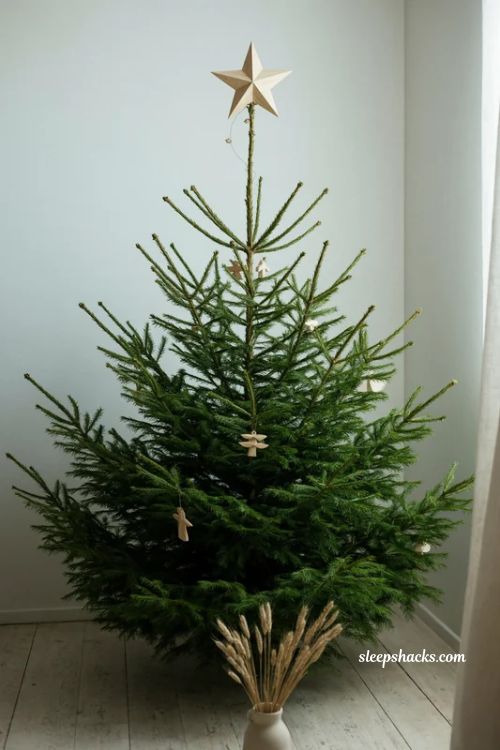
Imagine a simple wooden star at the very top, with clean points and a natural finish, or a single small straw star hanging from the tip. The topper stays modest so it doesn’t dominate the tree. Light wood echoes the ornaments below and ties the whole look together.
Choose a topper that matches the weight of your tree, because heavy ones can lean on thin tips. A straw or wooden star weighs very little and costs only a few dollars. Secure it with a bit of twine or floral wire. A star six to eight inches wide looks balanced on most six-foot trees. Skip glitter, since it fights the quiet mood.
9. Scandi Christmas Tree Skirt
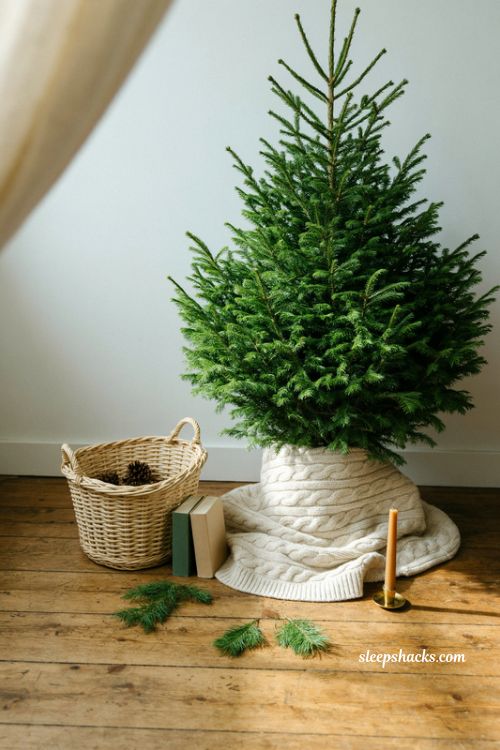
Picture a thick cream wool blanket wrapped loosely around the base of the tree, or a round linen skirt in oatmeal with a plain stitched edge. Alternatively, a woven basket circling the trunk hides the stand completely. The base grounds the tree and feels soft and tactile.
Measure the tree stand before you buy, since a skirt that’s too small looks lost. A basket costs more but doubles as storage afterward. Wool blankets are warm and work as throws after Christmas. If you have pets, choose a heavy basket that can’t be tipped easily, and keep fabric tucked in so claws don’t snag it.
10. Scandi Christmas Tree Aesthetic in Neutral Tones

Imagine a white or flocked tree with cream ornaments, pale wood beads, and sheepskin at the base, all under gentle warm light. The palette is quiet and almost monochrome, so the textures do the talking. It feels like a snowy morning.
Stick to three or four neutrals, such as white, oatmeal, pale gray, and natural wood. Mix matte and shiny finishes for depth. White trees show everything, so keep ornaments evenly spaced. This suits bright rooms best, since a pale tree can look flat in a dark corner. Costs vary, but reusing what you own keeps it cheap.
11. Candles and Warm Lights
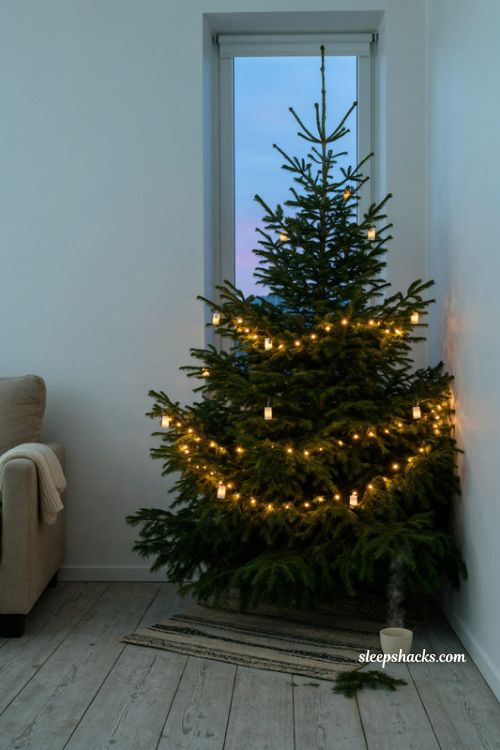
Picture a tree glowing with tiny warm white lights, the bulbs small and slightly yellow, like old-fashioned candlelight. Traditional Scandinavian trees once held real candles, but today most people use LED imitations that flicker softly. The light feels gentle rather than blinding.
Choose warm white LEDs, since cool white looks icy against natural materials. Flameless candle clips are available and much safer around dry branches. Never use real candles on a tree in a home. Wrap lights from the inside out so the glow comes from deep in the branches. A couple of strands usually cost under twenty dollars, and good lights matter more than any ornament.
12. Wooden Bead and Popcorn Garlands
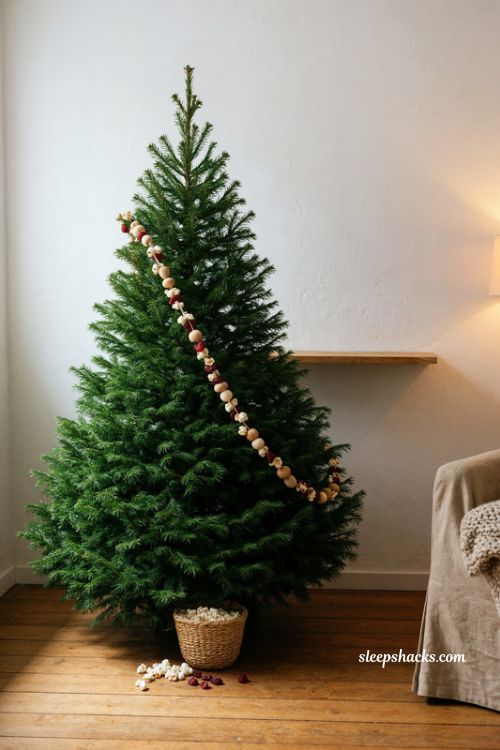
Imagine a long garland of natural wooden beads in two sizes, strung loosely and draped in soft curves down the tree. Or a string of plain popcorn alternating with dried cranberries. Both look humble and handmade, and both suit the Scandi spirit perfectly.
Wooden bead garlands last for years and cost a few dollars for a long strand. Popcorn garlands are best for one season and need a needle and some patience. Keep edible garlands away from pets, since strings can be harmful if swallowed. Drape the garland loosely, not tight, so it follows the branches naturally.
13. Scandi Christmas Tree Illustration Prints
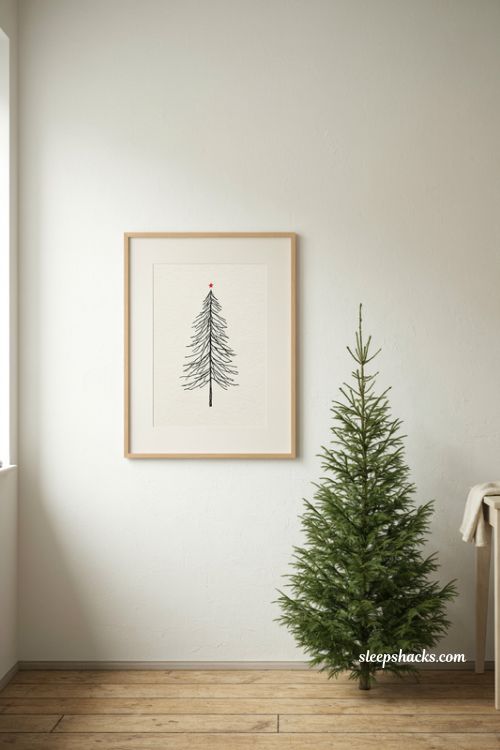
Picture a framed print on the wall beside the real tree, with a simple black line drawing of a fir on cream paper and a single red star at the top. The drawing echoes the tree and repeats the style in two dimensions. It looks minimal and calm.
Printable files are available at low cost, or free from designers who allow personal use, so check the license first. Print on matte, slightly heavy paper for a soft, crisp finish. A basic wooden frame costs a few dollars. This suits small apartments, where space doesn’t allow a big tree, and it can stay up long after the season ends.
14. Scandi Christmas Tree Drawing
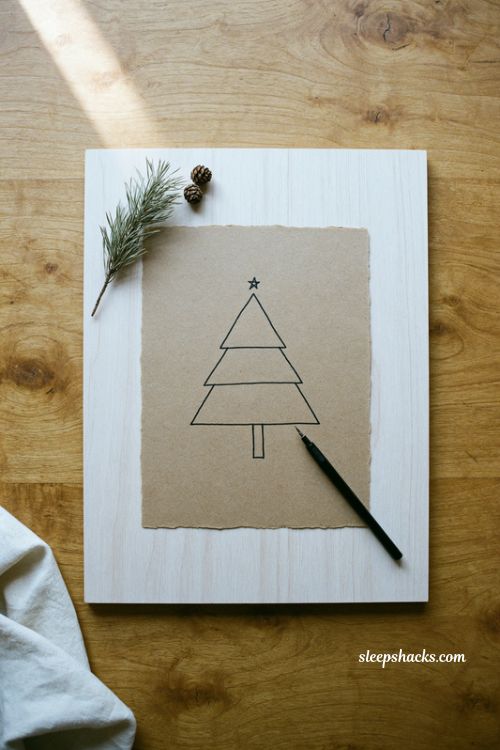
Imagine a simple tree sketch made from a few straight lines forming a triangle of branches, a short trunk, and one tiny star, drawn in black ink on kraft paper. The charm lies in its simplicity, which makes it easy for anyone to copy. A cluster of small trees looks like a forest.
Use a fine black marker or pen, and keep the lines straight and light. Draw on kraft cards for gift tags, or on plain paper to frame. It costs almost nothing and takes about five minutes. Kids can try their own versions, and the wobblier lines often look best. This is a good choice for anyone who thinks they can’t draw.
15. Tabletop Scandi Christmas Tree

Picture a small wooden cone tree, about twelve inches tall, standing on a pale wood tray with a few pinecones around its base. Or a mini fir in a clay pot with a tiny string of lights. It’s a modest tree, but it makes a whole shelf feel festive.
Tabletop trees suit apartments, offices, and small homes where a full tree won’t fit. Wooden cone trees cost a few dollars and last for years. Keep real mini trees watered and away from heaters. Add just two or three ornaments, or the little tree will look crowded and lose its calm.
16. Brown Paper Gift Wrap Under the Tree
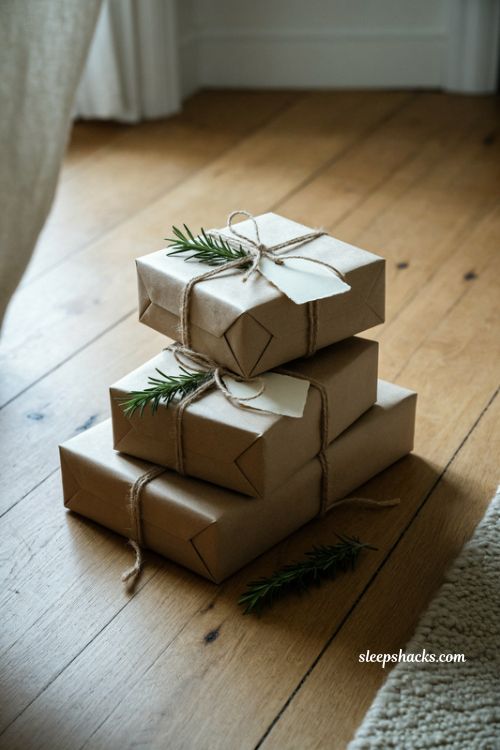
Imagine a stack of gifts wrapped in plain kraft paper, tied with natural twine, each with a sprig of rosemary or pine and a small handwritten tag. The warm brown tones echo the wood ornaments above, so the presents look like part of the decor.
Kraft paper is cheaper per foot than printed paper, and it’s recyclable. Twine and fresh greenery cost only a few dollars. Wrap every gift the same way to keep the look consistent, and stack boxes at different heights for interest. Fresh greenery can dry out in a warm room, so tuck it on just before gifts are opened.
Final Thoughts
A Scandi tree teaches something that applies well beyond December. It says that warmth doesn’t come from more, and that a home feels cozy when there’s space to breathe inside it. The empty branches, the plain wood, and the soft light aren’t absences. They’re the point.
Think about what you’d keep if you could only keep a few things. That small list probably tells you more about how you want your home to feel than any catalogue could. Let the tree reflect that list, and you’ll find it hard to overdecorate.
Frequently Asked Questions
Q: What makes a Christmas tree Scandi style?
Natural materials like wood, straw, and wool, a soft neutral palette with maybe a touch of red, and plenty of space between ornaments. Warm white light finishes the look.
Q: How many ornaments does a Scandi tree need?
Thirty to forty ornaments are usually enough for a six-foot tree. Leave bare branches showing, since the gaps are part of the style.
Q: Can I do a Scandi tree on a budget?
Yes, with paper hearts, straw stars, wooden beads, and kraft wrapping, most of which cost only a few dollars. Making a few pieces by hand keeps costs even lower.