

Here’s something designers know that most of us forget: the richest-looking trees usually aren’t the brightest. A tree dressed in fire-engine red can look loud and a little toy-like, while one in deep red feels settled, like it has always belonged in your home.
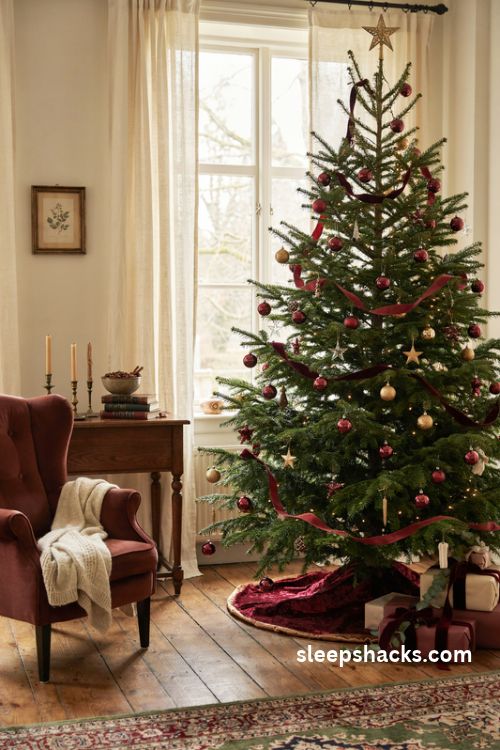
Deep red is the shade of cranberry sauce, red wine, and velvet curtains. It plays well with metallics, greens, creams, and even black. The ideas below show you how to use it on a tree of any size, from a full evergreen in the living room to a tiny tabletop one by the window.
1. Deep Red and Gold, Layered and Warm
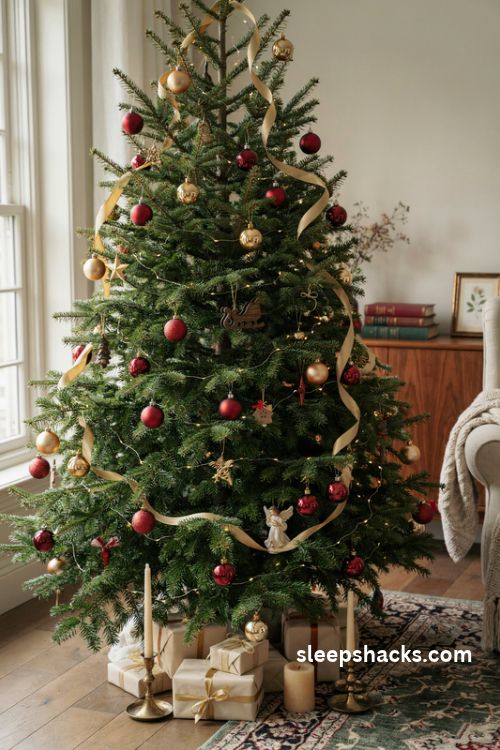
Gold is the easy partner for deep red, and it works every time. Hang matte red balls in several sizes through the branches, then weave in shiny gold ones so the tree catches light from every angle. The mix looks traditional without feeling stuffy.
Place your largest ornaments deep near the trunk so the tree has shadows and depth. Fill in with smaller ones toward the tips. Finish with a gold ribbon draped loosely from top to bottom, and the tree looks almost like a painting of an old-fashioned Christmas.
2. Forest Green Branches Doing the Heavy Lifting
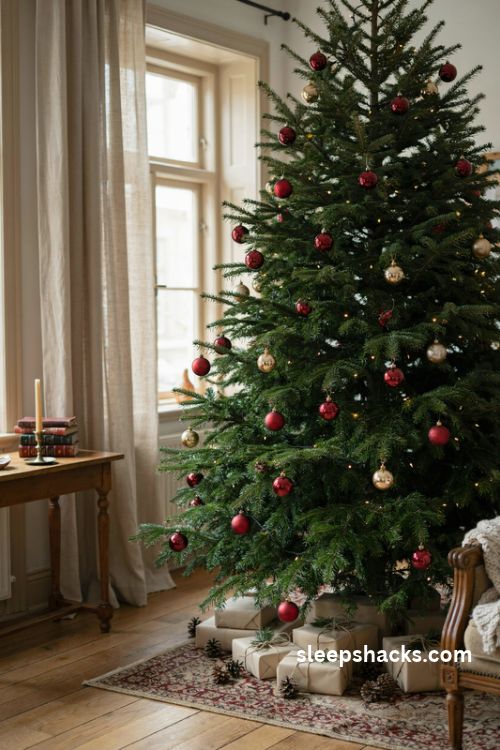
A full, dark green tree makes deep red look like jewelry. The two colors sit across from each other on the color wheel, so each one makes the other look stronger. Pick a tree with thick needles and avoid sparse ones that let the trunk show through.
Space your red ornaments evenly so the color feels like part of the tree, not a stack of sprinkles. Keep silver or gold as a small accent, about one ornament in five. Add warm white lights tucked inside the branches to give the whole thing a gentle glow.
3. Velvet Ribbon Swags in Rich Crimson
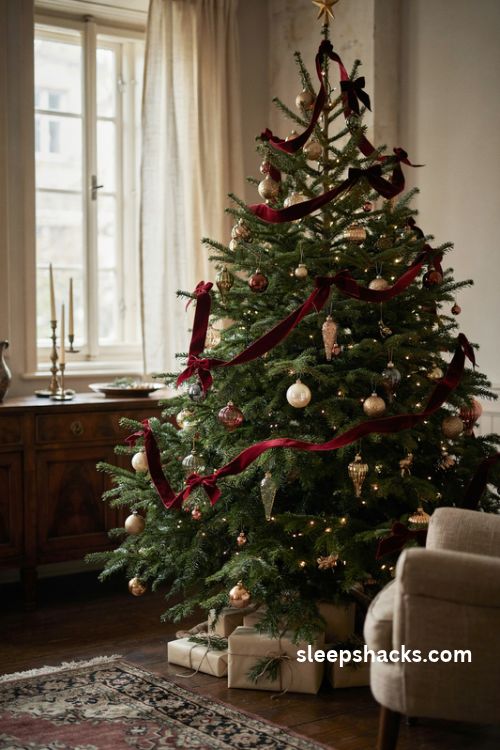
Few decorations feel as luxurious as velvet. Wide ribbon in deep red, draped in soft swoops around the tree, brings texture and a hint of old-world glamour. It also fills the gaps between ornaments, which makes the tree look fuller.
Anchor the ribbon at the top and tuck it into the branches every twelve inches or so, letting each loop dip a few inches. Wired edges hold their shape best. If you have leftover ribbon, tie it into bows and set them at the ends of branches for a polished finish.
4. A Flocked White Tree with Red Berries
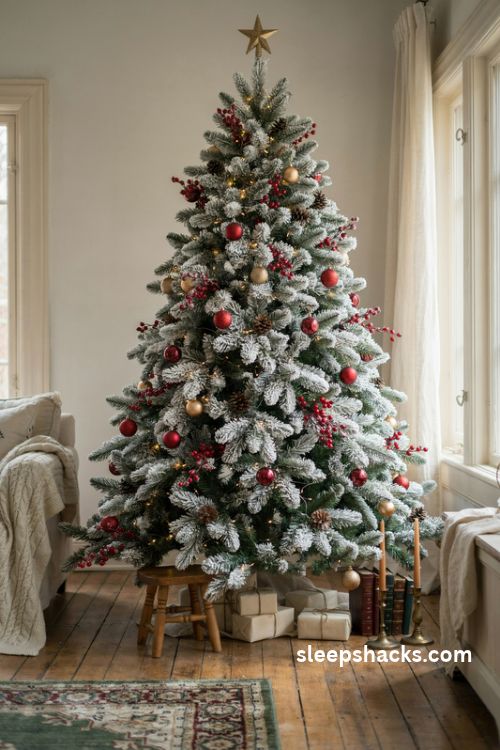
Deep red hits especially hard against snow-white branches. On a flocked tree, each ornament or berry stem looks like a drop of wine on a tablecloth, crisp and graphic. The result is dramatic, yet it still feels peaceful.
Use faux berry picks along with a few matte red balls so the red varies in texture. Tuck the berry stems into the branches at angles, so they look as if they grew there. Keep the lights warm white, since cool white can make the flocking look slightly blue.
5. Deep Red Mixed with Creamy Ivory
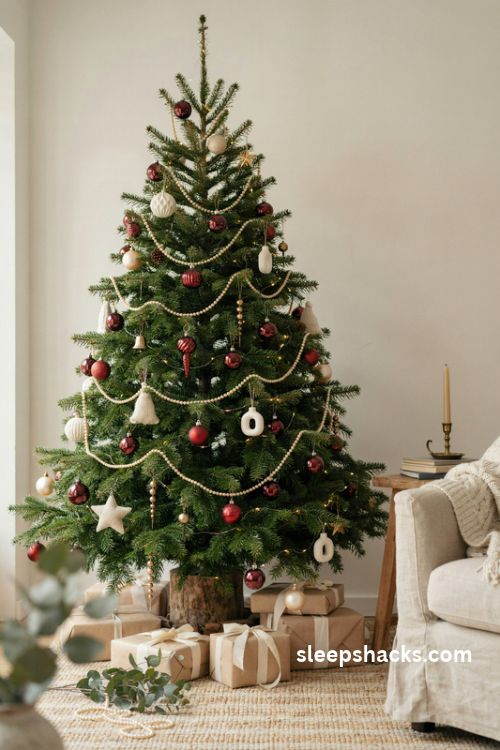
Cream softens red the way milk softens coffee. Pair deep red ornaments with ivory pearls, matte cream balls, and a few white ceramic-style shapes for a gentle, collected feeling. It’s a wonderful option for homes with neutral walls and wooden furniture.
Wrap a strand of faux pearls around the tree, spacing the loops about ten inches apart. Add a few knitted or fabric ornaments for a cozy edge. If the cream feels too plain, bring in a touch of brass or gold so the whole palette gets a warm lift.
6. Jewel-Toned Ornament Clusters
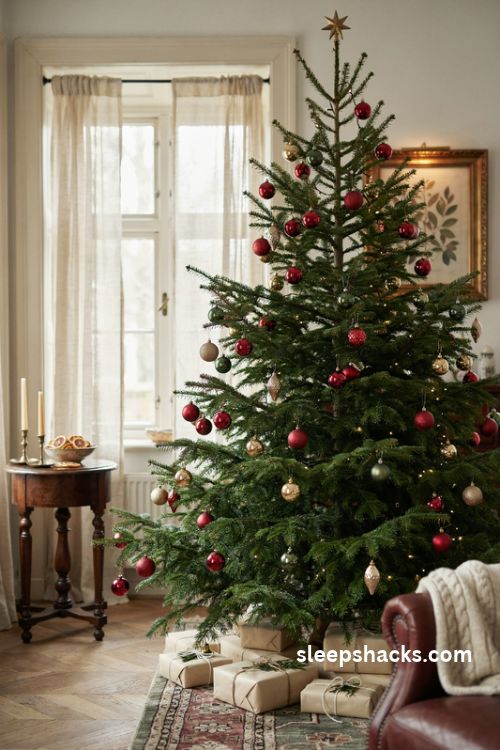
Instead of spreading ornaments out evenly, try grouping them in tight bunches of three to five. A cluster of deep red balls in different finishes reads like a bunch of grapes, and the tree looks full of small surprises as you walk around it.
Hang the group on a single branch using thin wire to keep it steady. Combine glossy, matte, and glittered surfaces within each cluster. This approach also saves ornaments, since a modest collection can look lavish when grouped instead of scattered thinly.
7. Plaid Bows with a Cozy Edge
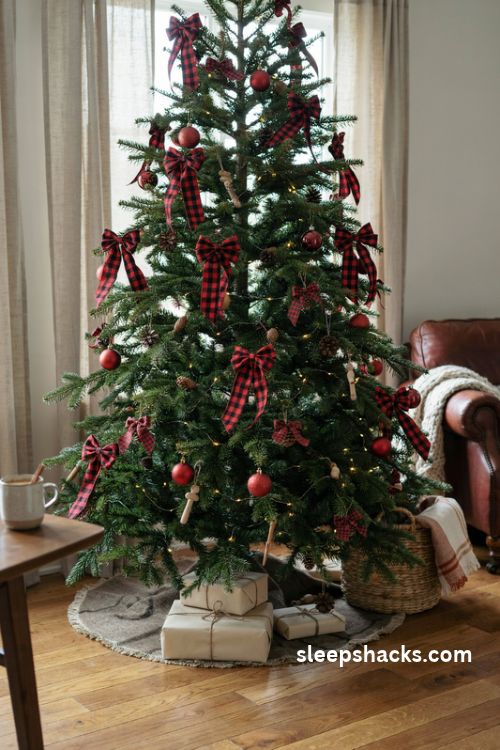
Pull out the plaid, and suddenly the tree feels like a cabin in the woods. Bows in a deep red and black or red and green check have a casual warmth that suits family rooms and open kitchens. They also work well when mixed with plain ornaments.
Make each bow with long tails, around eight inches, so they flow down the branches instead of sitting stiffly. Pin them in a loose diagonal pattern from the top to the bottom. Keep the other decorations simple, with solid red balls and a few wooden accents, so the plaid stays the star.
8. Deep Red with Copper Shine
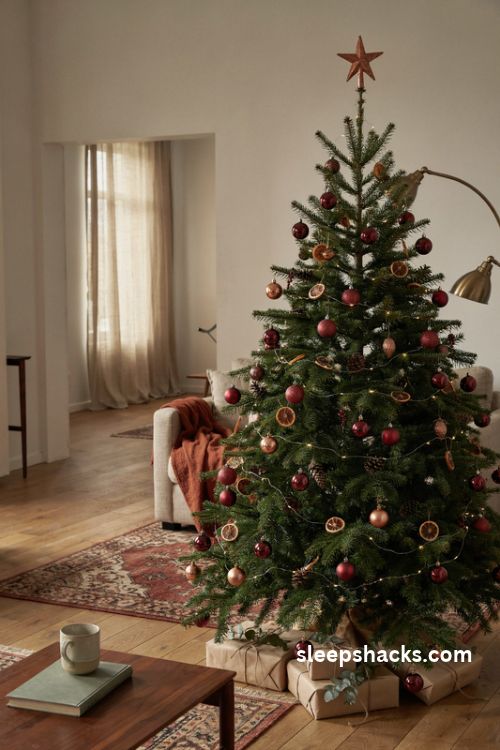
Copper is a smart alternative if gold feels too expected. Its warm, slightly pink metallic glow brings out the depth in deep red and gives the tree a modern, handcrafted feel. You’ll notice it especially when the lights are dim.
Choose hammered or brushed copper ornaments rather than overly shiny ones, which can look cheap. Add a copper wire garland with tiny lights woven in for a soft sparkle. A few dried orange slices tucked among the branches make the palette feel even more natural.
9. Red Berry Stems and Dried Florals
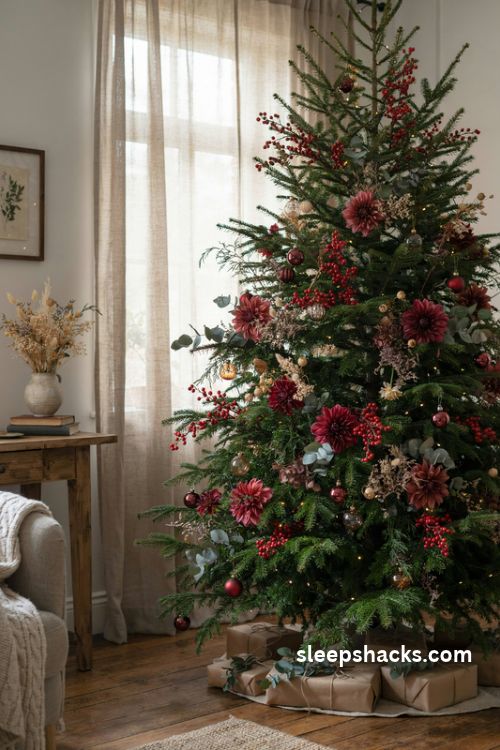
Natural elements add something ornaments never can. Stems of deep red berries, burgundy dahlias, and dried seed pods bring a garden-like richness to the tree and soften its edges. They look particularly good fanning out near the top.
Cut stems to about twelve inches and push them deep into the branches so they stay put. A dab of floral wire can help heavier flowers. Add a few sprigs of eucalyptus or cedar nearby, and the colors will look even more vivid by contrast.
10. A Plush Tree Skirt or Basket Collar
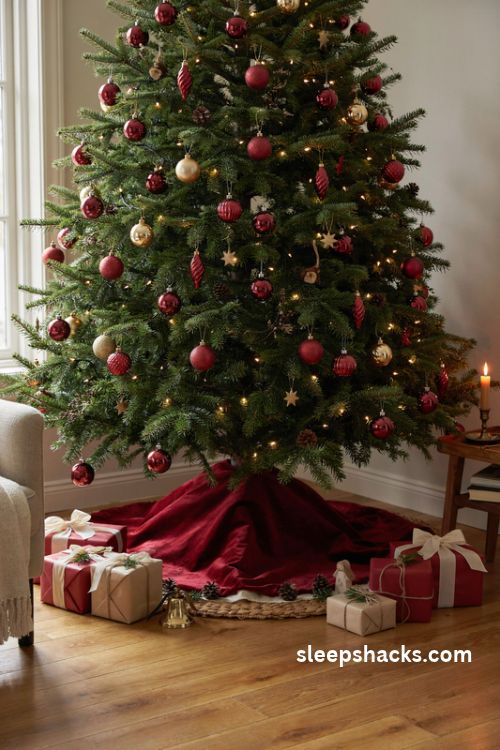
The base of the tree often gets overlooked, but it frames the entire display. A deep red velvet skirt feels luxurious, while a woven basket collar adds a rustic, farmhouse feeling. Either one hides the stand and finishes the look.
Measure the width of your tree before you buy, because a skirt that’s too small leaves the stand peeking out. If you choose a basket, line it with a small piece of fabric to protect the floor. Surround the base with presents wrapped in matching tones for a cohesive scene.
11. Warm White Lights Tucked Inside
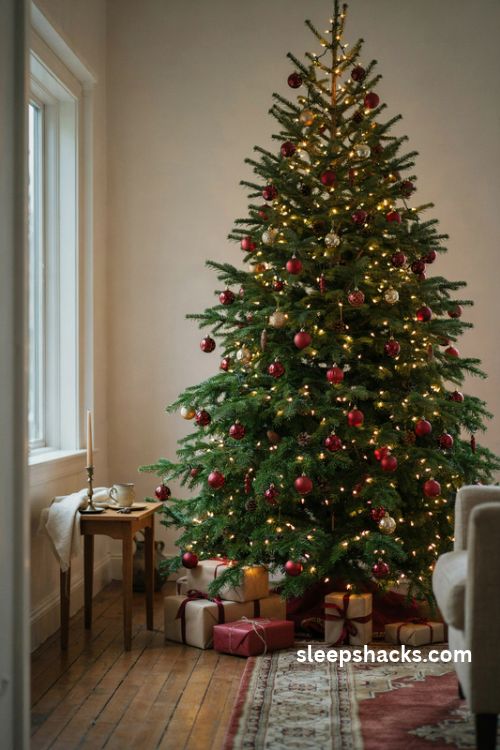
Lighting changes how deep red reads. Warm white or soft gold bulbs bring out the red’s richness, while harsh white tones can make it look flat. Choose small, tightly spaced bulbs so the tree glows rather than glares.
Start at the trunk and run the lights outward along each branch, then back in again. This inside-out method makes the tree feel lit from within. Plan on about one hundred bulbs for every foot of height, and add a timer so you never have to bend down to plug anything in.
12. A Big Bow or Star as the Topper
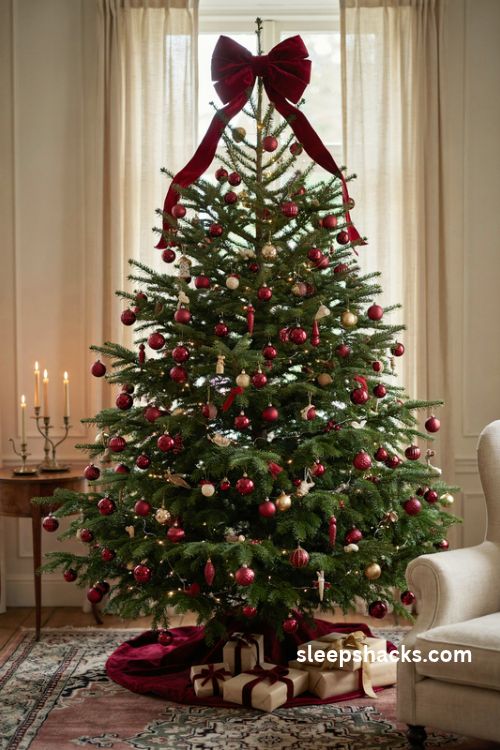
The topper sets the tone for everything below it. A giant bow made from wide velvet ribbon in deep red looks soft and handmade, while a brushed gold star feels classic and polished. Either one gives the eye a place to land.
For a bow, use about two yards of wired ribbon and let the tails fall in long ribbons down the sides of the tree. For a star, secure it with floral wire so it doesn’t tilt. Match the topper to your main ornament finish for a pulled-together look.
13. Deep Red with Black Accents for a Moody Look
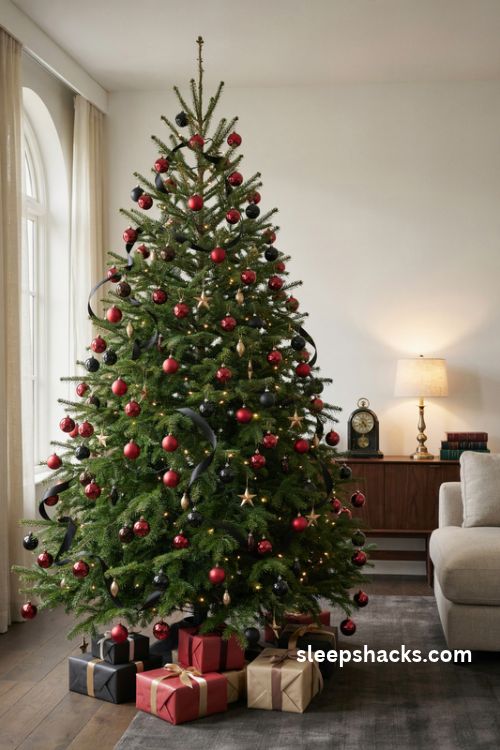
If you like your decor a little dramatic, try pairing deep red with matte black. The two shades feel dark, glamorous, and just a bit mysterious, like a vintage theater at night. It works particularly well in modern rooms with simple lines.
Use black ornaments sparingly, about one in six, so the red still leads. Add gold or brass to prevent the palette from feeling too heavy. Black ribbon with a satin finish makes an elegant garland, and a black tree stand keeps the base from drawing attention.
14. A Tabletop Tree in Deep Red
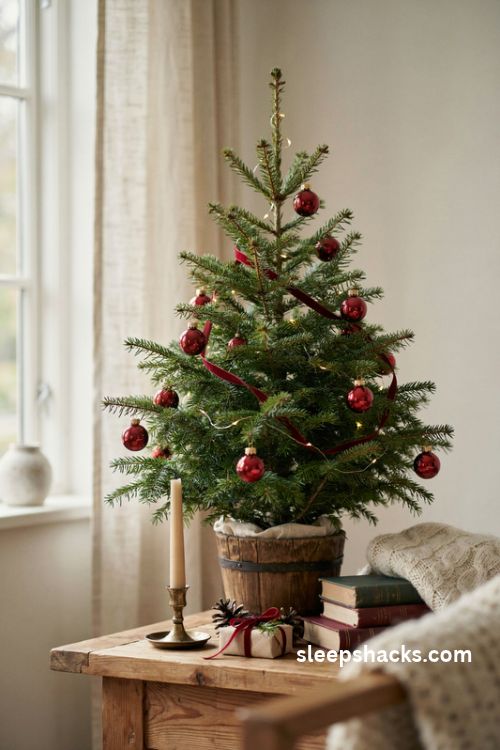
Small spaces deserve a little drama too. A two-foot tree dressed in deep red ornaments and a thin ribbon can transform a side table, desk, or windowsill into a festive corner without taking over the room.
Use tiny ornaments, about an inch across, so they stay in proportion. Stand the tree in a simple pot or a wooden bucket for a tidy base. Battery-powered lights are easiest here, since you won’t have a cord trailing across your furniture.
15. Wooden Beads and Natural Textures
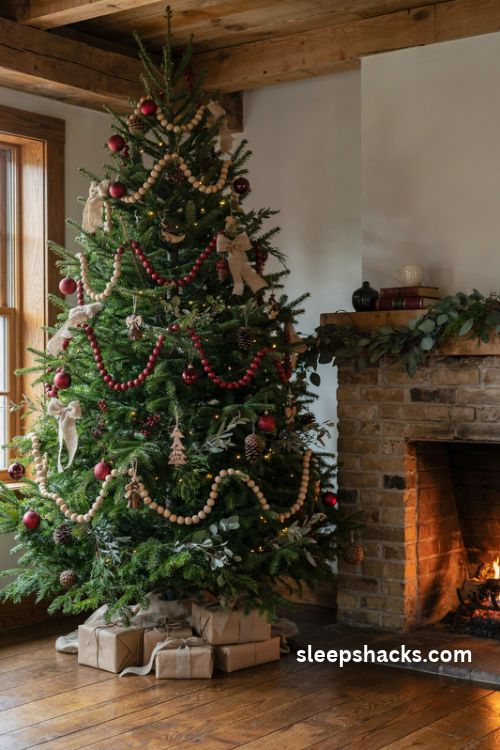
Texture keeps a deep red tree from looking too polished. Strands of chunky wooden beads, stained in a warm red or left natural, loop around the branches and bring a handmade charm that glass can’t match. They’re also light enough for thin branches.
Drape the beads in loose swags and vary the spacing for a relaxed look. Add burlap bows, pinecones, and a few wooden ornaments to build the rustic feel. This style looks great beside a fireplace or in a room with exposed beams.
16. Presents Wrapped to Match the Tree
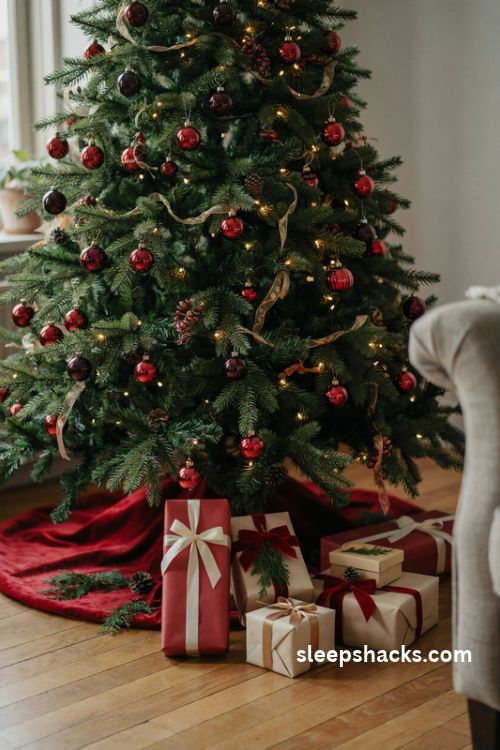
What sits under the tree finishes the picture. Wrap boxes in deep red paper with cream ribbon, or use kraft paper tied with wide red velvet. The matching colors make even a few gifts look generous and planned.
Stack boxes in different sizes so there’s a mix of heights. Tuck a sprig of pine or a small ornament into each bow for a bit of detail. If you want contrast, wrap two or three gifts in cream or soft gold to break up the red.
Final Thoughts
What does your tree look like at eleven at night, with only the lights on and the house quiet? That’s probably the moment you’ll remember when you think of this season, more than any perfect photo.
Deep red happens to be at its best in that light, glowing and a little mysterious. So when you decide on a plan, ask yourself which of these ideas will feel right in that quiet hour, and let that choice guide your tree this year.
Frequently Asked Questions
Q: What colors go best with a deep red Christmas tree?
Gold, forest green, cream, and copper are the safest choices, and black works if you want a moodier look. Choose one or two so the red stays the main color.
Q: Is deep red the same as burgundy?
They’re close relatives. Deep red is a touch brighter, while burgundy leans toward purple, but both sit in the same rich, dark family of tones.
Q: What lights should I use on a deep red Christmas tree?
Warm white or soft gold lights bring out the richness of the color. Avoid cool white bulbs, which can make deep red look dull.