

There’s something about a weathered wooden fence that makes a garden feel completely at home. It doesn’t matter how small the yard is or how simple the planting — add the right rustic fence and the whole space suddenly has character.
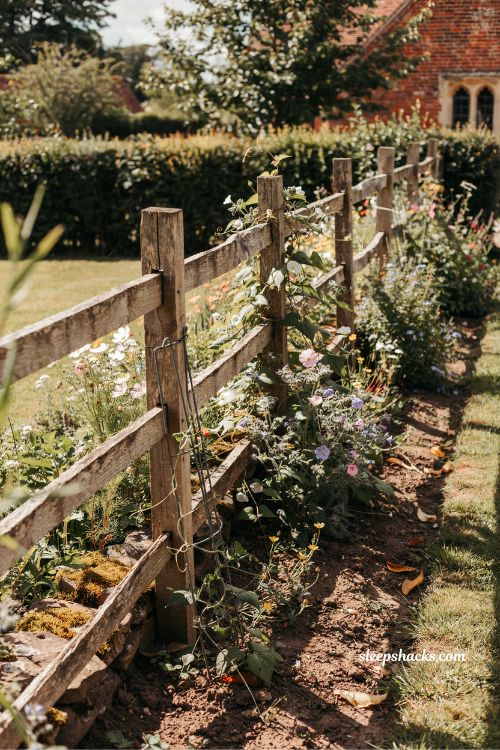
I’ve been thinking about this a lot lately, and honestly, the options are so much better than most people realize.
Whether you’re starting from scratch or trying to add a little life to what you’ve already got, this list covers some of the most beautiful, practical, and creative ideas out there. Some are cheap. Some take a weekend. Some just take a handful of branches from your own backyard.
1. A Split Rail Fence Along the Property Edge
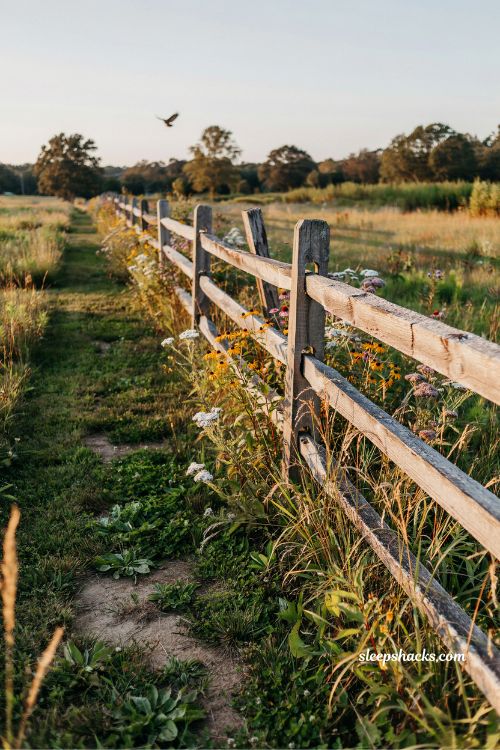
Split rail fencing is one of those ideas that looks like it’s always been there. Two or three horizontal rails resting in notched wooden posts, no paint, no stain — just the natural grain of the wood doing the work. It’s especially beautiful along a meadow-style garden where wildflowers or ornamental grasses spill over the bottom rail and soften the whole line.
2. Woven Wattle Panels Made From Willow or Hazel
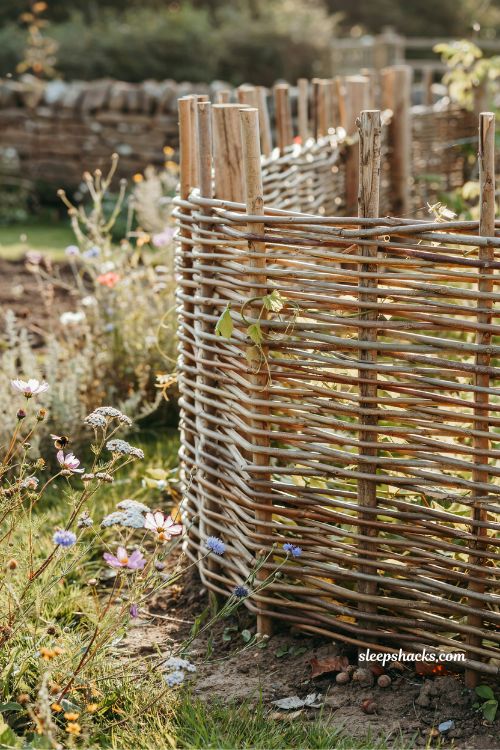
Wattle fences are one of the oldest fence styles in the world, and once you see a well-made one, it’s hard not to want one immediately. You weave flexible branches — willow and hazel are the most common — back and forth between upright stakes to create dense, organic panels. They’re sturdy enough for a garden border and beautiful enough to be a feature on their own.
3. Cedar Posts With Chicken Wire for a Chicken Yard Entrance
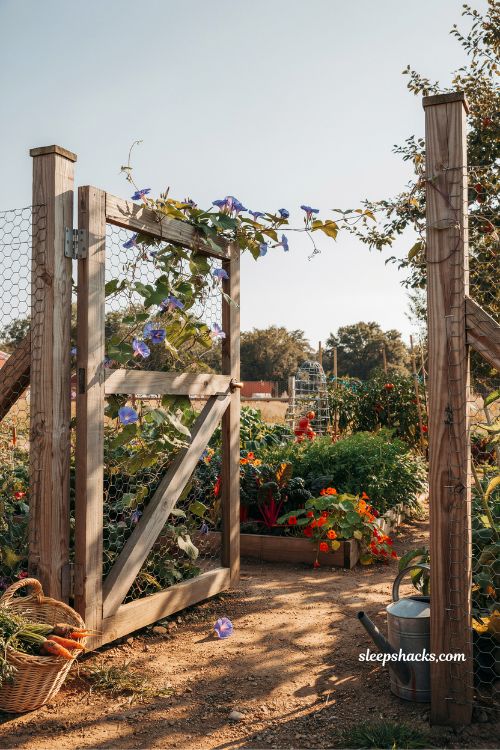
If you’re fencing off a chicken yard or kitchen garden, cedar posts are worth every penny. Cedar is naturally rot-resistant, so even without treatment it holds up for years. Pair it with simple chicken wire stretched between the posts and you’ve got something that’s functional, honest-looking, and genuinely charming — especially once climbing beans or morning glories start working their way up.
4. Driftwood Pieces Arranged Into a Decorative Border
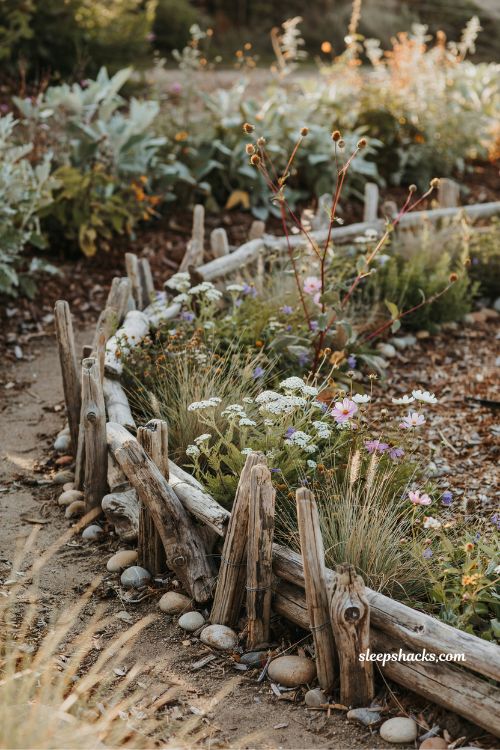
This idea works best as a short decorative accent rather than a full perimeter fence. Collect a handful of driftwood pieces in varying heights, partially sink them into the ground along a garden edge, and wire or screw the horizontals in place. It’s low-effort, free if you’re near water or woods, and the result looks like it belongs in a seaside cottage garden or a whimsical woodland corner.
5. Rustic Bamboo Panels for Fast, Natural Privacy
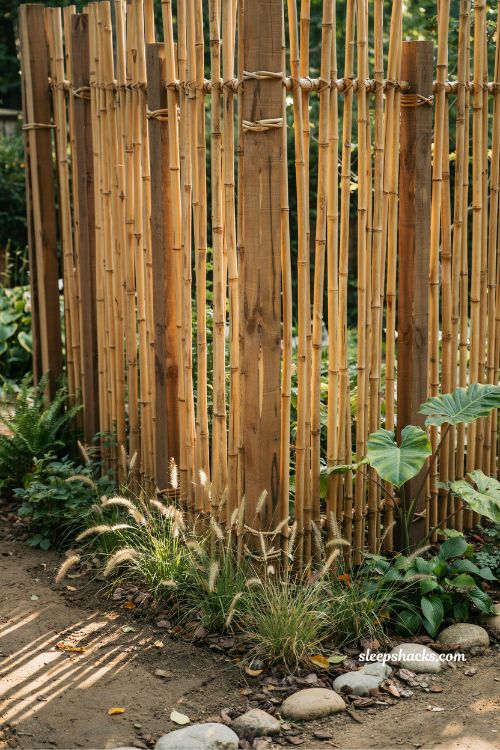
Bamboo grows fast enough that most people treat it as a nuisance — but as a fence material, it’s genuinely useful. Bundle the canes together and wire them between wooden posts for dense screening that has a natural, slightly tropical feel. The golden color it takes on as it weathers looks great alongside ornamental grasses or large-leafed tropicals like elephant ears.
6. Branches and Twigs Woven Into a Low Garden Edging Fence
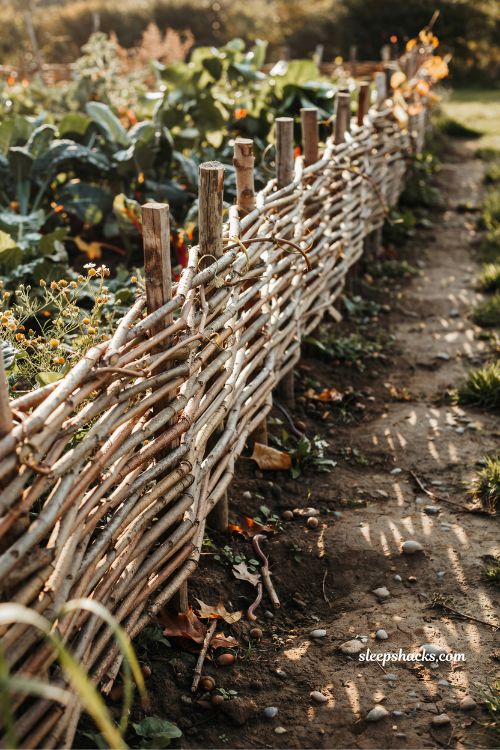
You don’t need to buy a single thing for this one. Gather branches about half an inch in diameter from trimming your trees, pound short posts into the ground at even intervals, and weave the branches in and out between them — exactly like basket weaving. Grape vines work especially well because they’re flexible and last longer than soft green branches. It’s the kind of project you can finish in an afternoon and still feel proud of years later.
7. A Weathered Picket Fence With Uneven Heights
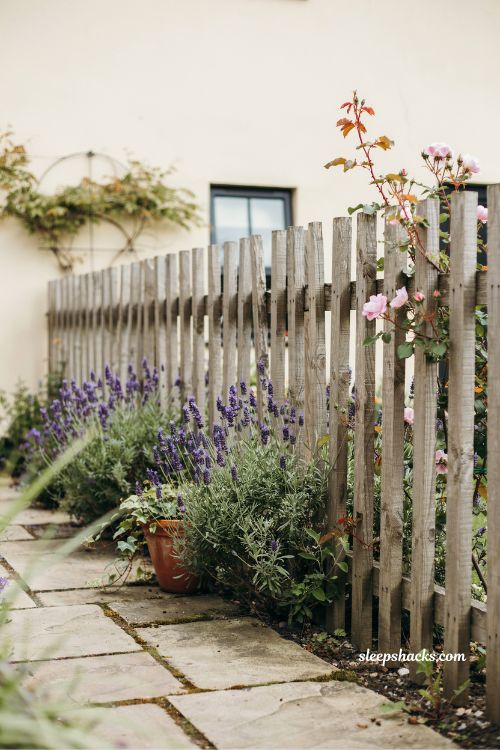
A picket fence doesn’t have to be perfect to be beautiful. In fact, slightly irregular heights and spacing — some posts taller, some shorter, the wood left unpainted and allowed to grey naturally — gives this classic style a relaxed, lived-in feel that works much better in a cottage or farmhouse garden than anything crisp and uniform would. Plant lavender or climbing roses along the base and it really comes into its own.
8. Stone Pillars Paired With Wooden Rails
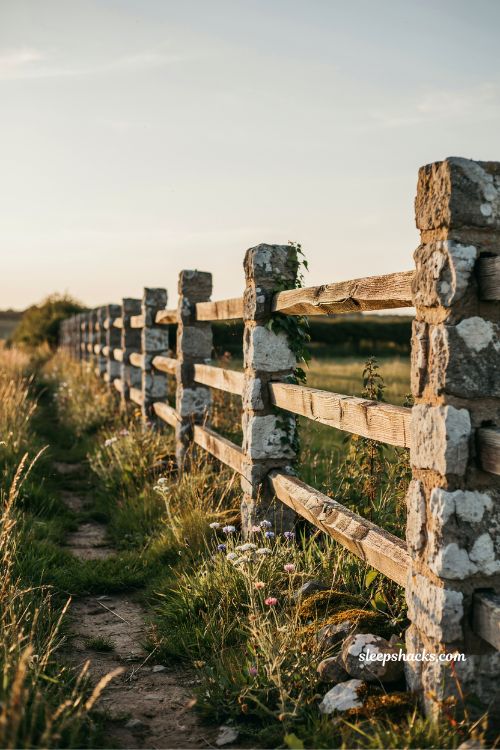
This combination is surprisingly versatile. Rough-stacked stone pillars at each post position, connected with simple wooden rails or even rough-sawn planks, gives you something that feels old in the best possible way — like it’s been part of the landscape for decades. It’s more work to build than a pure wood fence, but the result is substantial and virtually maintenance-free once the stone is in place.
9. A Rustic Wooden Gate From Found Cedar Trees
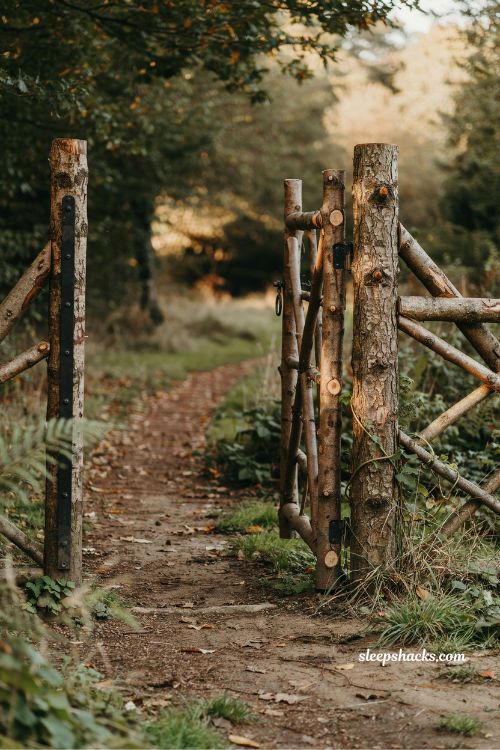
If you have cedar trees on your property, you already have most of what you need for a beautiful entrance gate. Use 5-to-6-inch-thick trunks as the side posts set deep into the ground, then build the gate frame from smaller cedar branches. Use proper gate hardware — not just standard hinges — and make sure the posts are dead level before you do anything else. The gate itself can go as wild and whimsical as you like once that foundation is solid.
10. Diagonal Branch Bracing for a Stronger Rustic Frame
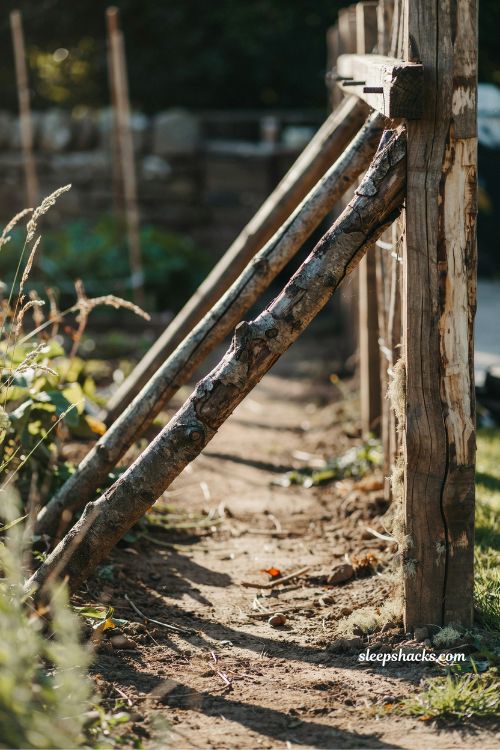
One of the most practical tips for any rustic log or branch fence is to add diagonal braces at the corners. Cut your branch pieces to fit at 45-degree angles and notch them slightly into the horizontal rails so they sit flush. It prevents the frame from racking over time, keeps the whole structure square, and honestly just looks better — more intentional, more finished, even while keeping all the natural roughness you want.
11. A Snow-Covered Coyote Fence for a Southwestern Feel

Coyote fences are a New Mexico tradition — upright branches or small logs set close together vertically, lashed to horizontal rails. The densely packed poles give a solid wall of natural wood that’s excellent for privacy and looks incredible in winter when snow settles into the gaps. They work beautifully in any climate, not just the Southwest, and they’re easier to build than they look.
12. Sunflowers and Climbing Vines Growing Against Raw Wood
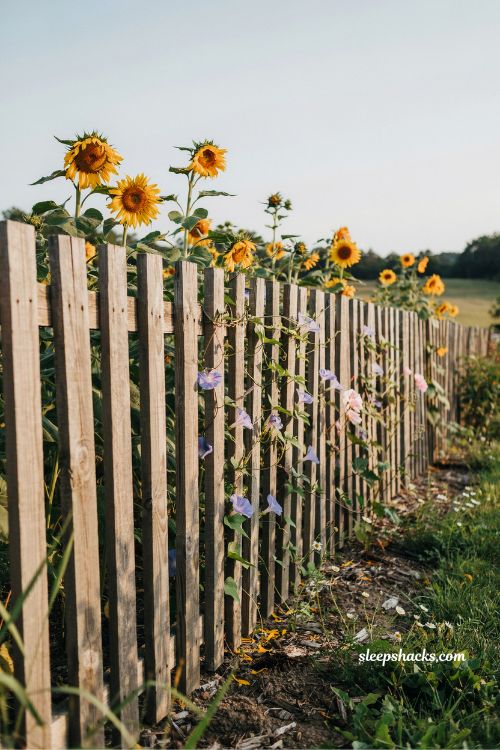
A fence doesn’t have to do all the visual work on its own. Plant sunflowers, pole beans, or morning glories along the base of any simple wooden fence and let them do what they do — climb, sprawl, and eventually make the fence look like it grew there on purpose. This works especially well with rough, unfinished wood that ages naturally, because the plants become part of the structure rather than just decorating it.
13. A Wattled Privacy Fence With Alder or Birch Saplings
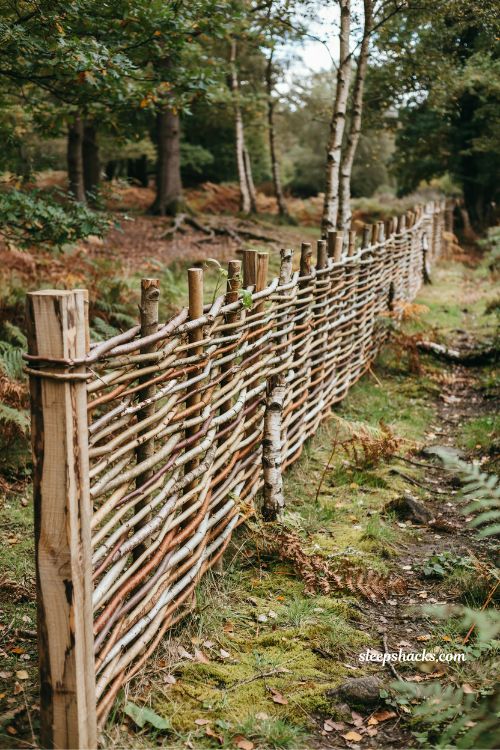
If you have access to a wooded area being cleared or thinned, alder saplings make fantastic wattle fencing material. You’ll need a lot — typically three truckloads for a medium-length run — but the result is dense, genuinely private, and completely natural-looking. Use stout cedar posts for the uprights since they resist rot far better than most other woods, and your fence will outlast even a bad storm season.
14. Barbed Wire With Wooden Posts for a Ranch Aesthetic
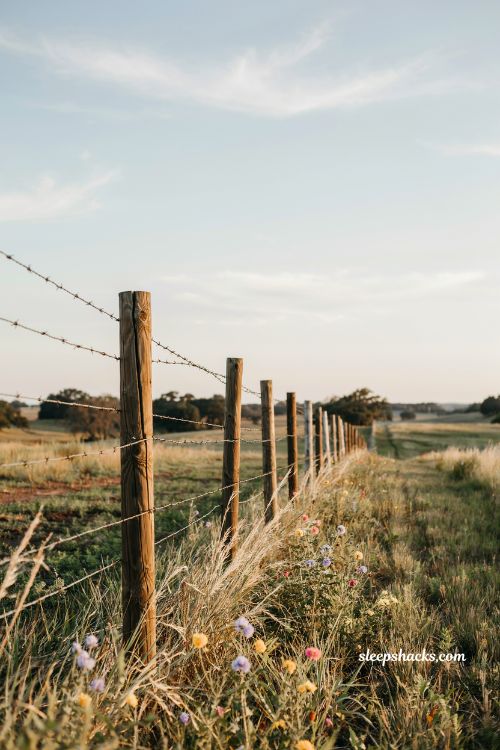
Barbed wire might not be the first thing you picture in a garden, but on a property with a rural or ranch aesthetic, it’s absolutely appropriate. Stretch two or three strands between rough-hewn wooden posts and you’ve got a boundary that’s both practical and completely in character with a farmhouse garden, a wildflower field, or an acreage with animals. It’s honest, unpretentious, and ages beautifully.
15. A Wreath or Seasonal Decor Hung on a Wooden Gate
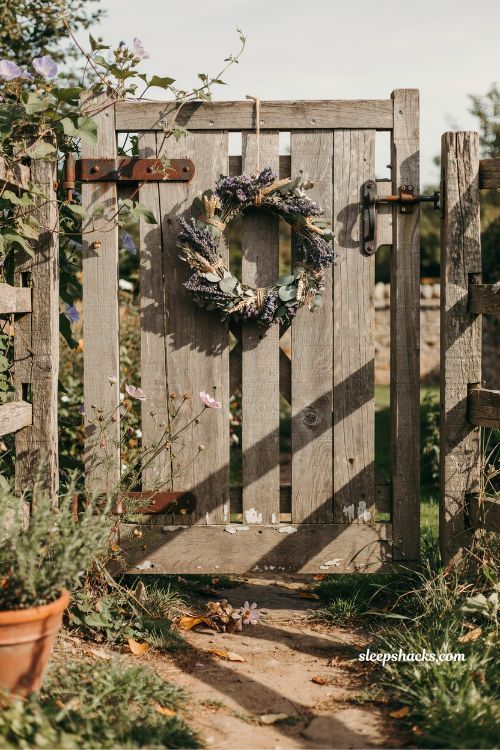
Sometimes the smallest detail makes the biggest impression. A weathered wooden gate with a simple handmade wreath hung on it — dried flowers, evergreen branches, even just a bundle of lavender — turns a functional entry into something genuinely welcoming. Swap the wreath with the seasons and the gate earns its place as a proper garden feature, not just a means of getting in and out.
16. Painted White Pickets Left to Peel Naturally
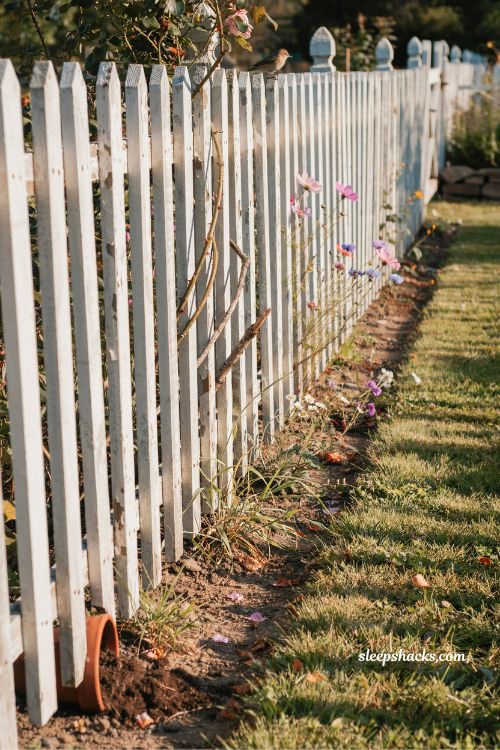
There’s a specific kind of charm in a white picket fence that’s been left to its own devices — the paint lifting at the edges, the wood greying underneath, the whole thing looking like it came from a movie set in a very good way. Don’t over-restore it. If it’s structurally sound, that worn, peeling surface is the aesthetic. A few wildflowers growing through the gaps and you’ve got something nobody could plan on purpose.
17. A Moss-Covered Stone Wall as a Low Garden Boundary
A dry-stacked stone wall doesn’t technically need mortar — the weight and placement of the stones keep everything in place when it’s done right, and that’s a technique that’s been working for centuries. Keep the wall low, under two feet, and let moss and creeping plants establish naturally between the stones. It reads instantly as something old and rooted, which is exactly the feeling a rustic garden is built around.
Frequently Asked Questions
Q: What is the best wood to use for a rustic garden fence?
Cedar is the top choice — it’s naturally rot-resistant and holds up outdoors for years without treatment. Split logs, rough-sawn oak, and reclaimed timber are also great options depending on the look you want.
Q: How do I keep a rustic wooden fence from rotting?
Removing the bark before installation slows rot significantly, since bark traps moisture against the wood. Cedar and treated posts will always last longer than untreated softwood, especially for anything set directly in the ground.
Q: Can I build a rustic fence without power tools?
Yes — woven twig fences, wattle panels, and driftwood borders are all built by hand with basic tools like a mallet, wire, and pruners. These styles are actually better suited to hand-building than precision cutting.
Q: How long does a wattle fence last?
With good rot-resistant upright posts like cedar, a wattle fence can last five to ten years or more. The woven branches typically need replacing before the posts do.