

There’s a particular kind of table that makes you want to slow down before you even sit — the kind where the tablecloth, the china, and the centerpiece all feel like they were chosen by someone who actually lives with beautiful things instead of just displaying them.
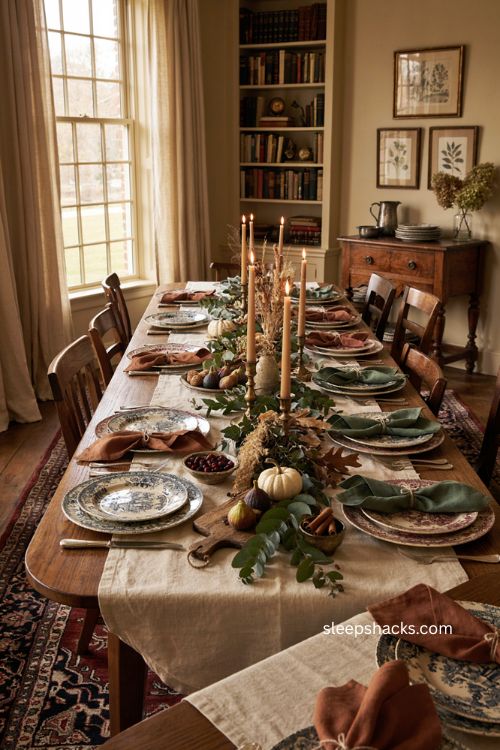
That’s the feeling a Ralph Lauren thanksgiving table gives off, and the good news is you don’t need his budget to borrow the philosophy. It’s built on mixing textures, layering unexpected colors, and never being afraid to pull something out of a closet you already own. Whether you’re working with heirloom china or a stack of mismatched plates, these fifteen ideas will help you build a table that feels rich, warm, and a little unexpected.
1. Use a Wool Plaid Blanket as a Tablecloth
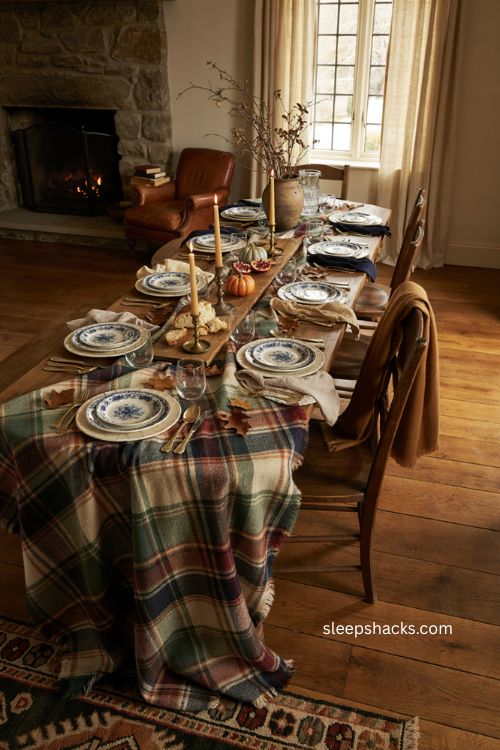
Skip the traditional linen tablecloth and reach for a wool plaid blanket instead — the kind you might already have folded on the back of a couch. The texture instantly makes the table feel more like a country house than a formal dining room, and the pattern gives you a color palette to build the rest of the setting around. A stadium blanket works just as well if that’s what you have on hand. The takeaway here is that the coziest tables often start with fabric that wasn’t designed for a table at all.
2. Mix Wicker Chairs with Elegant China
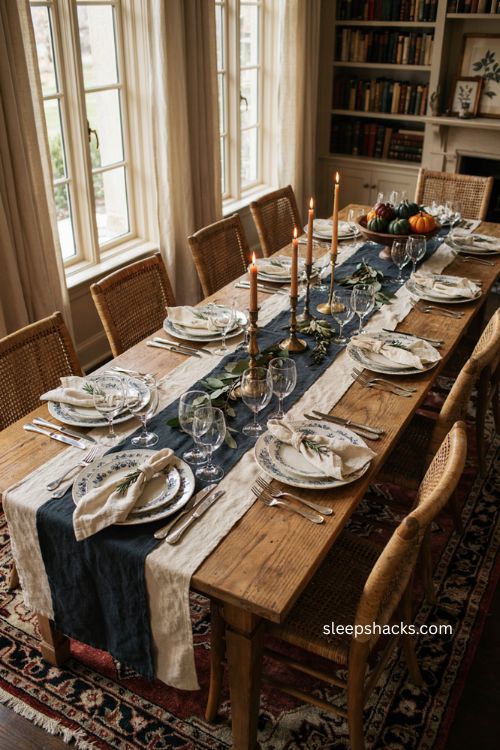
Pulling informal wicker chairs up to a table set with fine china creates the kind of contrast that makes a room feel curated instead of matched. The rough texture of the wicker plays against the smoothness of crystal and silver in a way that keeps things from feeling stiff. If you own a set of wicker or rattan chairs from another room, this is the season to bring them into the dining room. It’s a simple swap that changes the whole personality of the table without spending a dollar.
3. Add Velvet and Plaid Pillows for Contrast
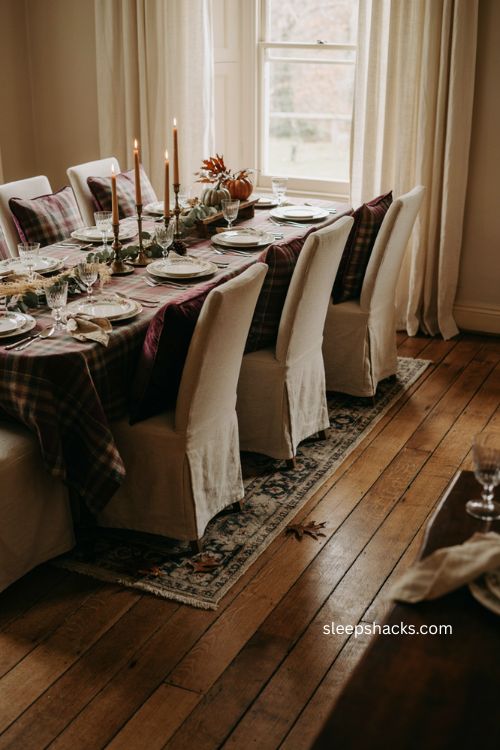
A couple of rich velvet pillows tossed onto dining chairs adds an unexpected pop of color and softness you don’t usually see at a holiday table. Pair them with a second pillow in a pattern that echoes your tablecloth, like plaid, so the whole look feels tied together rather than random. Purple is a surprisingly good choice against traditional fall tones, even though it’s not a color most people associate with Thanksgiving. Two pillows per chair is plenty — any more starts to feel cluttered.
4. Build a Centerpiece with Fruit, Antlers, and a Demi-John
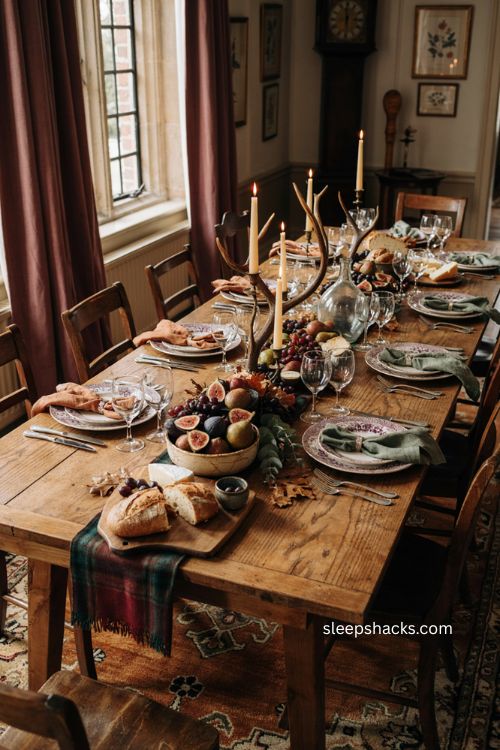
Instead of a floral arrangement, try grouping fresh fruit, a pair of antler candle holders, and a glass demi-john jug together as your centerpiece. It’s an easy combination to recreate because most of these pieces are things people already own or can find secondhand, and the fruit can simply be eaten afterward instead of thrown out like flowers. Let the colors of the fruit echo another element on the table, like the pillows or the napkins, so the whole setting feels intentional rather than thrown together at the last minute.
5. Set the Centerpiece on a Lazy Susan
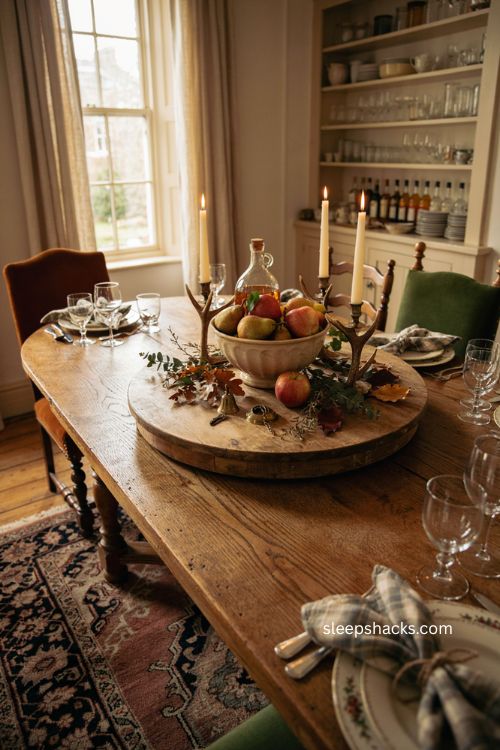
Placing your centerpiece on a lazy Susan does double duty — it elevates the display slightly so it reads as more important, and it lets guests spin the candles or fruit bowl closer to them without anyone having to reach across the table. This works especially well on a long table where the centerpiece might otherwise only be visible to the people seated nearest to it. It’s a small hosting trick that makes a big difference once everyone actually sits down to eat.
6. Add Deep Red Roses in Julep Cups
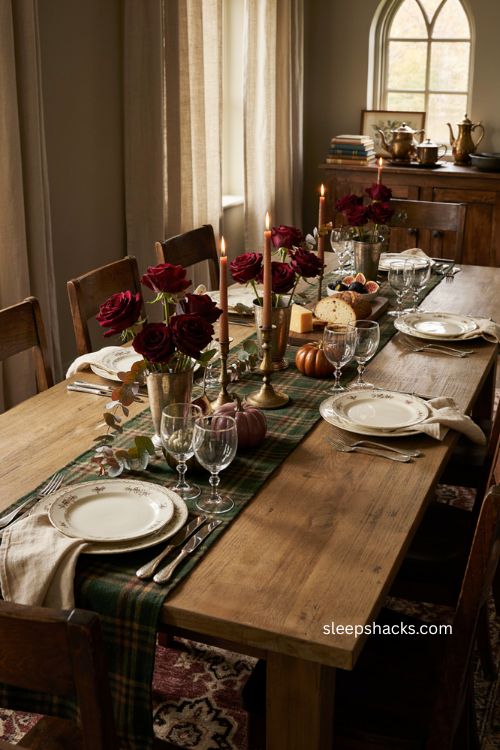
A cluster of deep red roses tucked into small julep cups and spaced down the table adds a formal, romantic touch without requiring a single large arrangement. The metal cups catch candlelight beautifully, which makes the whole table glow a little once the lights are dimmed. Group two or three cups together rather than spacing them out evenly, since clustering tends to read as more polished than a perfectly even row. This is an easy way to work in a bold color without it overwhelming the rest of the setting.
7. Layer Crystal, Silver, and Plaid China
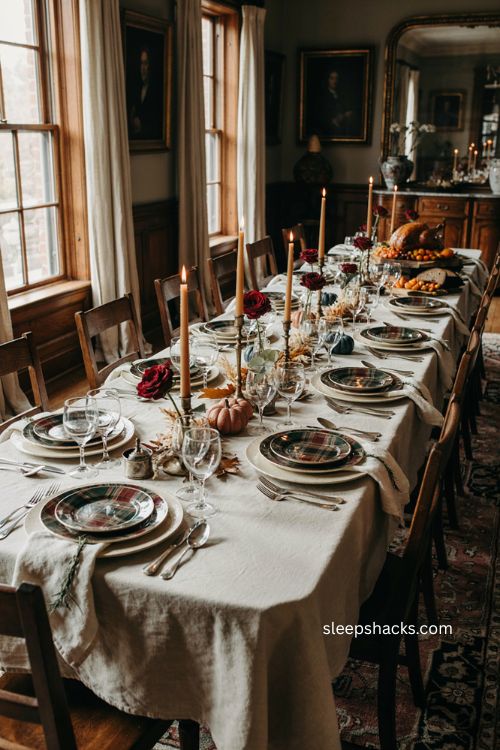
A table that mixes formal crystal glassware, silver flatware, and plaid patterned china together looks far more interesting than a single matched set ever could. This kind of eclectic layering is exactly the trick professional designers use to keep a holiday table from feeling like a rental catalog. Try holding one element steady, like the silver, while letting the china and glassware bring in pattern and color. Once you start mixing intentionally, you’ll probably never want to go back to a fully matched table again.
8. Use a Pewter Charger Under Each Plate
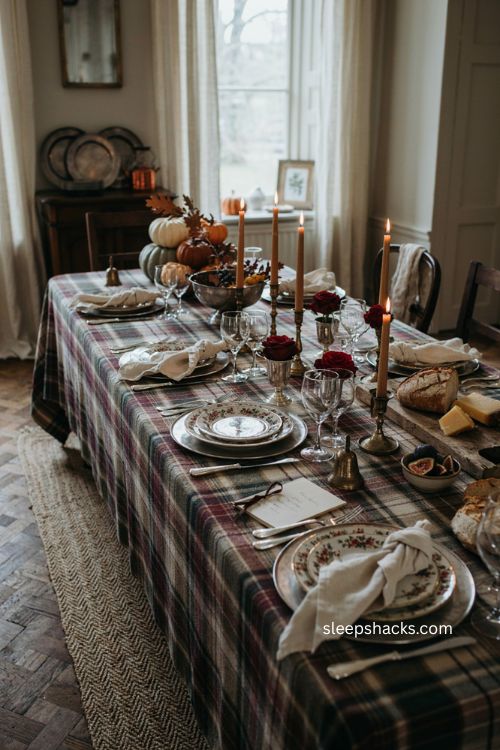
A pewter charger beneath each dinner plate adds weight and warmth to a place setting without competing with the patterns on your china. The muted metal tone works as a quiet frame that pulls the whole plate together, especially against a plaid or printed tablecloth. If you don’t own chargers yet, this is a piece worth investing in since they work across nearly every holiday and season. It’s a small detail, but it’s the kind of thing guests notice even if they can’t say exactly why the table looks so finished.
9. Choose Linen Napkins with a Seasonal Motif
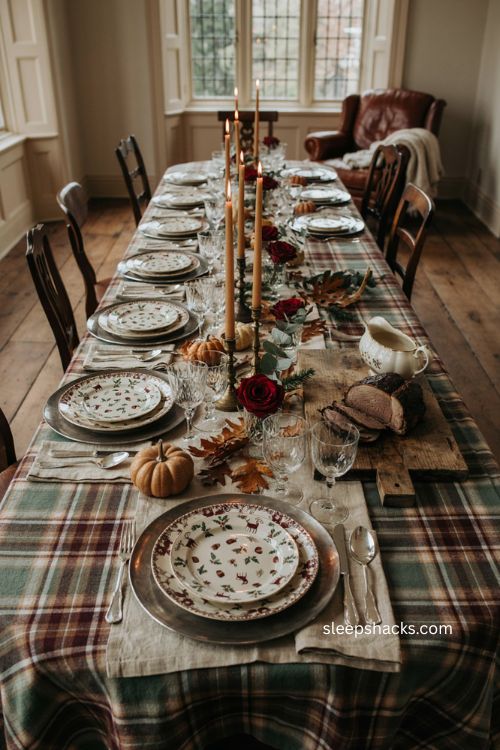
Linen napkins printed with a subtle seasonal motif, like a reindeer or a leaf pattern, add a layer of detail that plain napkins simply can’t match. The nice part is that a motif like this can often carry through from Thanksgiving straight into Christmas without needing to buy a whole new set. Fold them simply and lay them flat on top of each plate rather than fussing with elaborate folds, since the print itself is doing most of the visual work already.
10. Add Napkin Rings with Personality
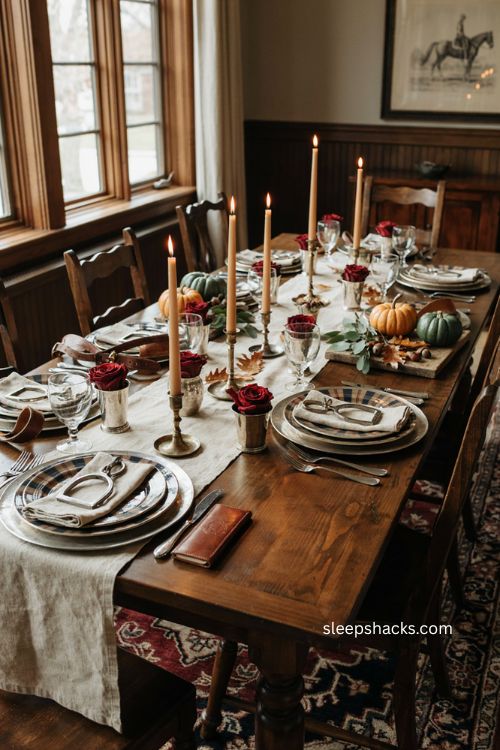
A napkin ring shaped like something unexpected, such as a miniature stirrup, turns a purely functional item into a small conversation piece at each place setting. Heavier metal rings tend to feel more substantial in the hand and photograph better than lightweight versions. If you’re building a table around a theme, like equestrian or lodge style, this is one of the easiest ways to reinforce it without adding anything bulky to the table itself.
11. Keep the Lighting Understated
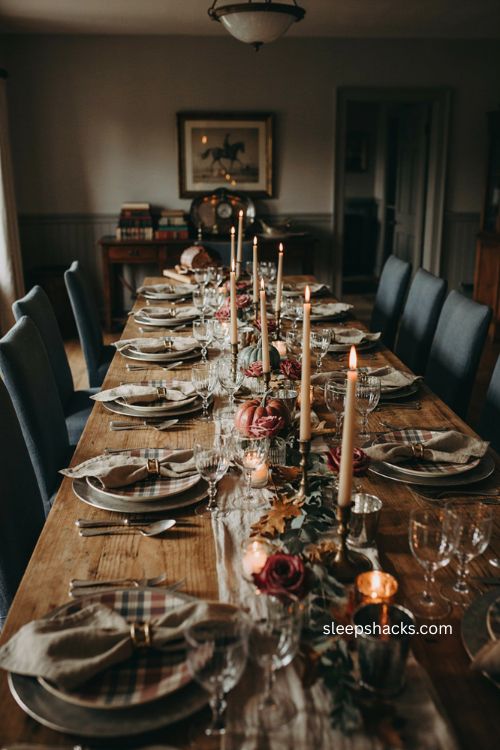
Skip bright overhead lighting entirely and let a few well-placed candles or a single dimmed fixture set the mood instead. Understated lighting makes silver and crystal catch the light in a way that overhead bulbs simply flatten out. If you’re hosting over multiple days or events, try changing the lighting setup slightly each time so the same table feels fresh for every gathering. Dim, warm light is one of the fastest ways to make a table feel considered rather than default.
12. Embrace an Eclectic Mix of Serving Pieces
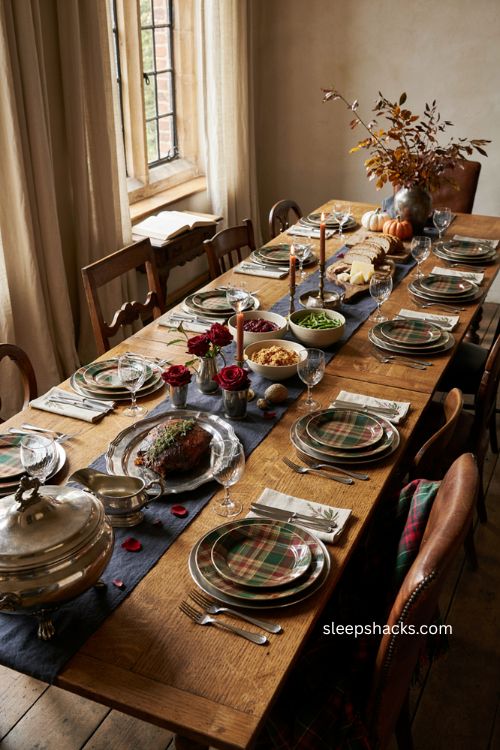
Traditional silver tureens and serving platters paired with modern porcelain pieces create the kind of eclectic table that designers reach for again and again. A tartan-patterned china collection is a good anchor for this approach since it pairs naturally with both traditional silver and simpler modern serveware. The practical benefit is that once you own a versatile pattern like this, you can rework it into dozens of different table looks for years without ever feeling like you’re repeating yourself.
13. Color Outside the Lines
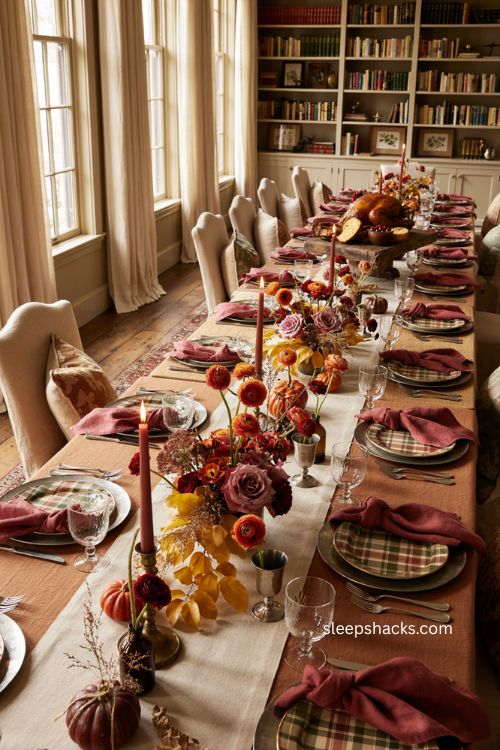
Holiday tables don’t have to stick to red and green or red and white just because that’s tradition. Try red layered with raspberry tones, or lean into orange with big bouquets of orange blooms and lemon leaves for something that still feels seasonal but slightly unexpected. Pick one unconventional color to introduce through napkins, pillows, or flowers rather than overhauling the entire palette, so the table still feels cohesive rather than scattered.
14. Bring the Outside In with Greenery
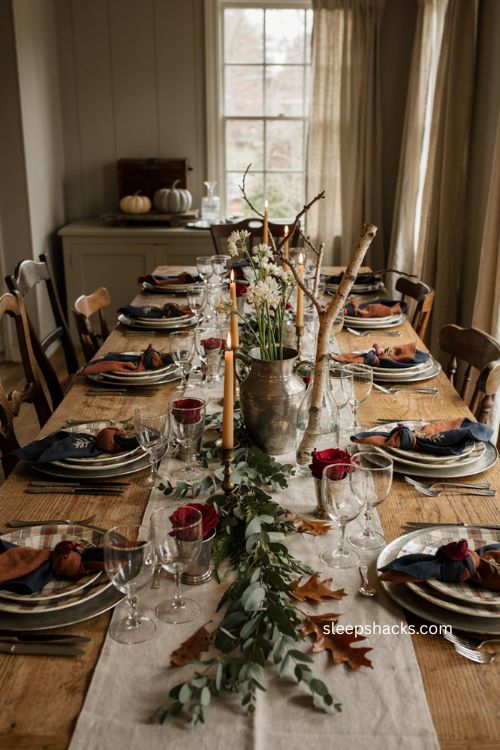
A silver cachepot filled with paperwhites or a simple collection of dried birch branches in a glass vase brings a modern, natural element into the table setting without much upkeep. Both options last for days without needing much water or care, which makes them ideal for a table you’re setting up ahead of a busy hosting week. Keep the greenery lower than eye level if guests will be sitting across from each other, so conversation isn’t blocked down the length of the table.
15. Set Up a Buffet for a Bigger Crowd
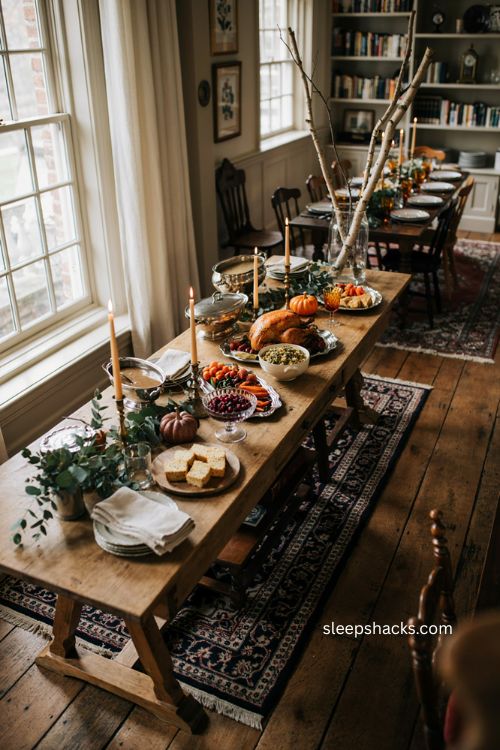
When the guest list grows past what the table can comfortably hold, move the meal to a buffet setup on a sideboard or console table nearby. Serving the food on elegant footed trays keeps the presentation feeling just as considered as a seated dinner, even though guests are filling their own plates. This approach also frees the host from playing server all evening, which means more time actually enjoying the gathering instead of running back and forth from the kitchen.
Final Thoughts
What makes a Ralph Lauren thanksgiving table work so well isn’t any single piece — it’s the confidence to mix textures and eras without overthinking it. A wool blanket under fine china, wicker chairs beside crystal glassware, fruit and antlers standing in for flowers — none of it matches in the traditional sense, and that’s exactly the point. Take one or two ideas that genuinely fit the pieces you already own, and build outward from there instead of trying to buy your way into the whole look at once. However you put it together, the goal is a table that feels lived-in, generous, and entirely your own.
Frequently Asked Questions
Q: What makes a table look “Ralph Lauren” style for Thanksgiving?
It usually comes down to mixing formal pieces like crystal and silver with casual, textural elements like wool blankets and wicker chairs, plus warm, understated lighting.
Q: Do I need matching china to get this look?
No — an eclectic mix of traditional silver, modern porcelain, and patterned china is actually part of the style, so mismatched pieces often work better than a fully matched set.
Q: What’s an easy centerpiece idea inspired by this style?
Group fresh fruit with a few candle holders and a glass jug or vase, since it’s affordable, reusable, and the fruit can be eaten after the meal instead of thrown away.