

There’s a certain kind of Christmas tree that doesn’t try to be bright and cheerful — it leans into shadow instead, and somehow feels even warmer for it.
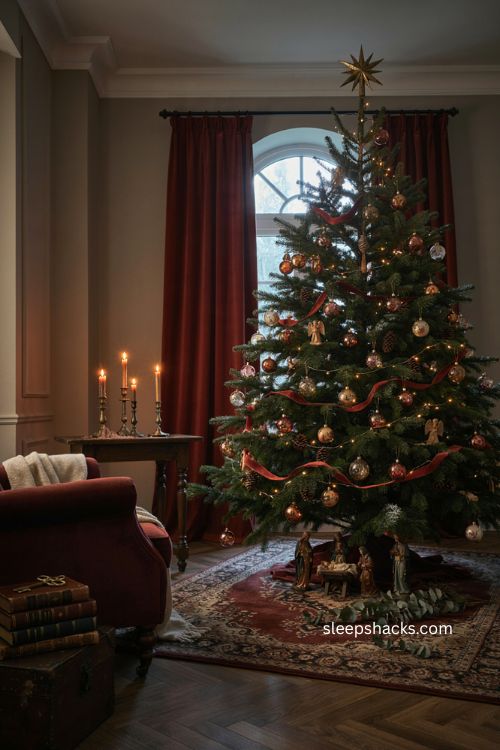
Picture a living room lit low, a tree glowing in deep greens and burgundy instead of the usual reds and golds, ornaments catching candlelight instead of shouting for attention. That’s the moody Christmas tree trend, and it’s quietly taking over holiday decorating this year. It’s not about ditching tradition — it’s about giving it more depth. If you’ve got a box of old ornaments and a little curiosity, you can build one of these trees without buying a single new decoration. Here are fifteen ways to bring that rich, moody feeling into your own living room this season.
1. Deep Burgundy and Plum Ornaments
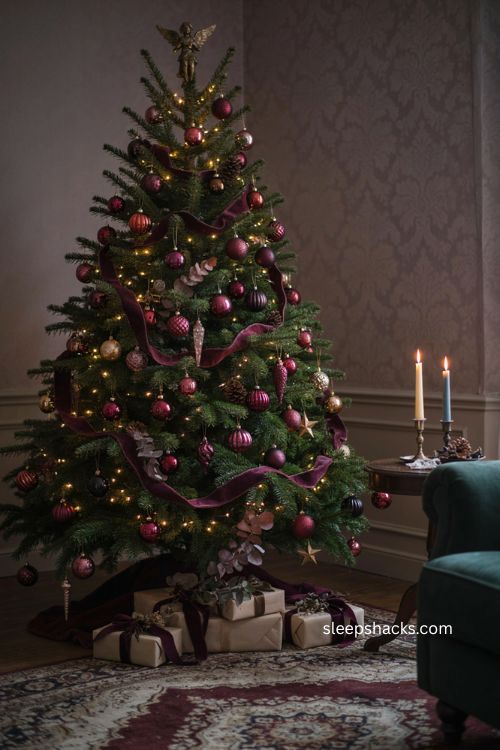
Swap your usual reds for something with more shadow in it. Burgundy and plum ornaments catch light differently than bright red ones — they glow instead of glare, especially under warm white bulbs. Mix matte and glossy finishes in the same tone so the tree doesn’t look flat. A good starting point is layering three or four shades of the same color family, from wine to eggplant, so the branches feel full without ever getting busy. Tuck a few dried floral picks in similar tones near the base for texture. It’s an easy switch if you already own red ornaments — you’re just building on what you have.
2. Matte Black Christmas Tree
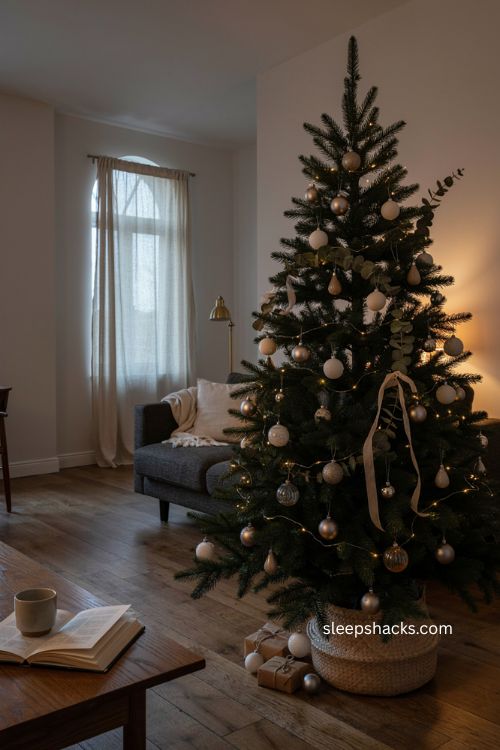
A black tree sounds dramatic on paper, but in person it’s surprisingly calm. The dark branches act like a blank canvas, letting whatever ornaments you hang really stand out. Go bushy and full for a bohemian feel, or pick a slim profile if your space is tight — either works. Pair it with cool white lights for something sleek and modern, or warm gold bulbs if you want it to feel cozier. One tip: because the branches are dark, ornaments in metallics or pale colors will pop the most, so save your true blacks and deep greens for the ribbon and garland instead.
3. Forest Green and Gold Accents
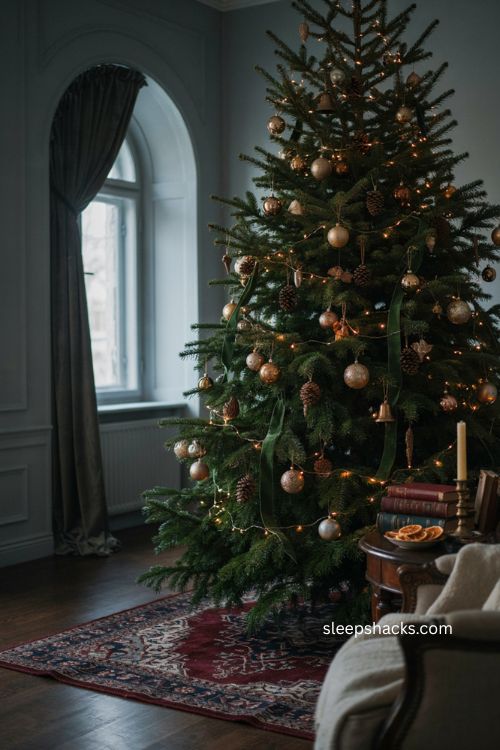
Nothing says moody quite like a deep forest green paired with old-world gold. Skip the shiny craft-store gold and look for antiqued or brushed finishes instead — they read as richer and less plastic. Layer in gold pinecone ornaments, small brass bells, or vintage-style baubles with a slightly dulled shine. For placement, cluster the gold pieces toward the middle and top of the tree where light hits them, and let the deeper greens fill in the lower branches. A strand of warm fairy lights woven through, rather than wrapped tight, keeps the whole look soft instead of stiff.
4. Midnight Blue Ornament Palette
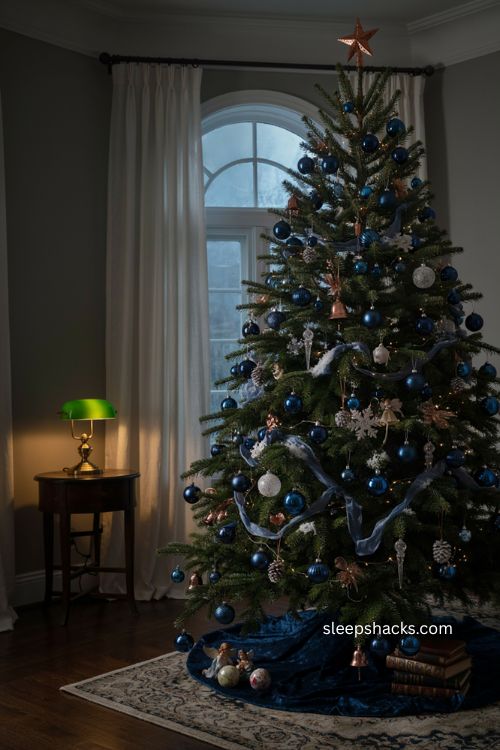
Midnight blue is the color people forget about until they see it on a tree, and then they can’t stop staring. It reads almost black in low light but flashes a rich blue when it catches a lamp or string light. Combine it with silver and icy white accents for a cool, wintery feel, or add a touch of copper for warmth. A velvet blue tree skirt at the base ties the whole palette together without needing extra ornaments. If you’re working with a smaller budget, even a handful of blue glass balls mixed into your existing collection will shift the whole tree’s mood.
5. Velvet Ribbon Details
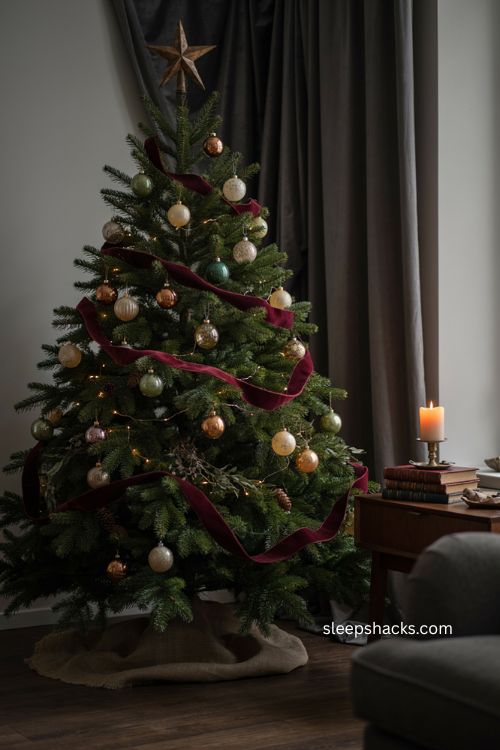
Ribbon does more work than people give it credit for, and velvet especially changes how a tree feels the moment you add it. Choose a wide velvet ribbon in wine, forest, or charcoal, and weave it through the branches in loose loops rather than a tight spiral — it should look like it’s cascading, not wrapped like a present. A few extra-long tails left hanging near the bottom third of the tree add movement and draw the eye downward. Velvet also photographs beautifully, picking up shadow and light in a way that satin or wired ribbon just can’t match.
6. Faux Fur Tree Skirt
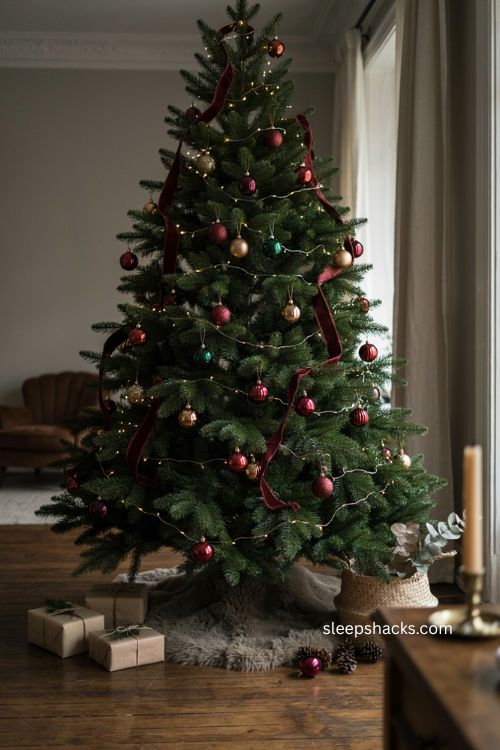
The base of the tree gets overlooked constantly, but a faux fur skirt in charcoal, black, or deep brown instantly makes the whole setup feel more finished and luxurious. It softens the transition between tree and floor, which matters more than people expect once the presents pile up. Look for a skirt with some texture or slight shag to it rather than something flat — it reads richer in photos and in person. If your tree already leans dark or jewel-toned, a fur skirt in a lighter charcoal actually creates nice contrast instead of blending in completely.
7. Dark Foliage and Fresh Greenery
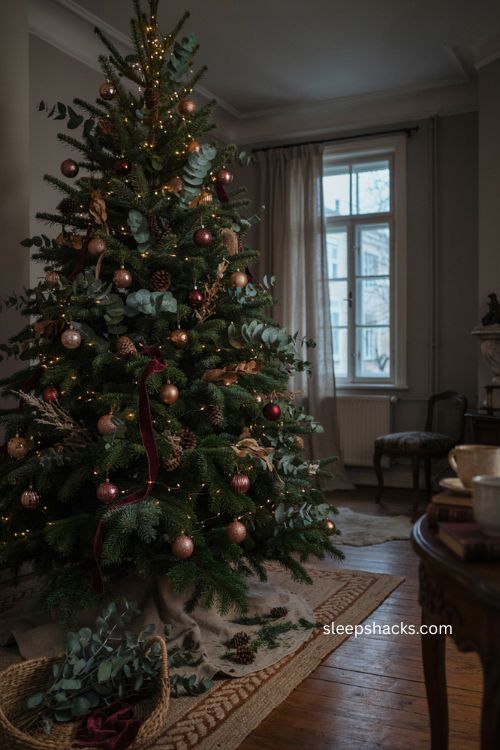
Fresh greenery brings a moody tree to life in a way plastic branches never quite manage. Tuck sprigs of cedar, eucalyptus, or dark pine into the gaps between your existing branches for extra fullness and a little bit of real scent. Look specifically for deeper, blue-green varieties rather than bright grassy greens — they blend better with jewel-toned ornaments. A few dried seed pods or pinecones wired in among the greenery add texture without adding more color. This is one of the cheapest upgrades on this list, since a single bundle of greenery from a garden center goes a long way.
8. Charcoal Gray and Silver Mix
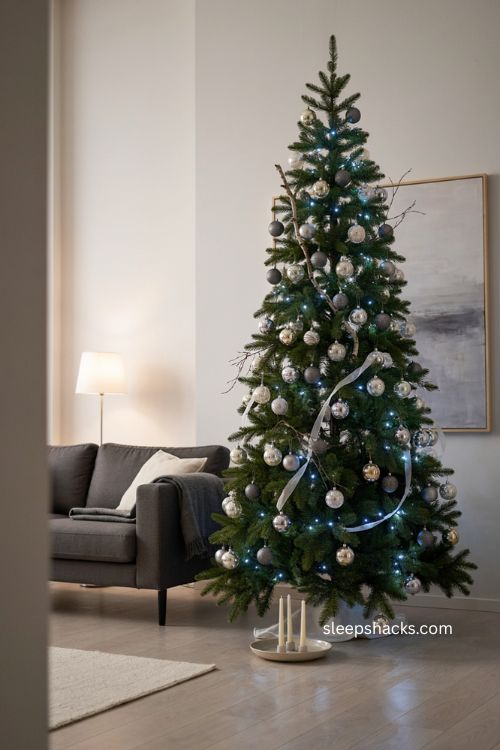
Gray doesn’t get enough credit as a holiday color, but paired with silver it creates a cool, sophisticated look that still feels festive. Mix brushed silver ornaments with matte charcoal ones so the finishes contrast instead of blending into one flat shade. A few mercury glass pieces add sparkle without tipping the whole tree into “shiny and bright” territory. This combination works especially well in modern or minimalist rooms where a traditional red-and-gold tree would clash with the existing decor. Keep the lights cool white here rather than warm gold to stay true to the icy, refined feel.
9. Black and White Contrast Tree
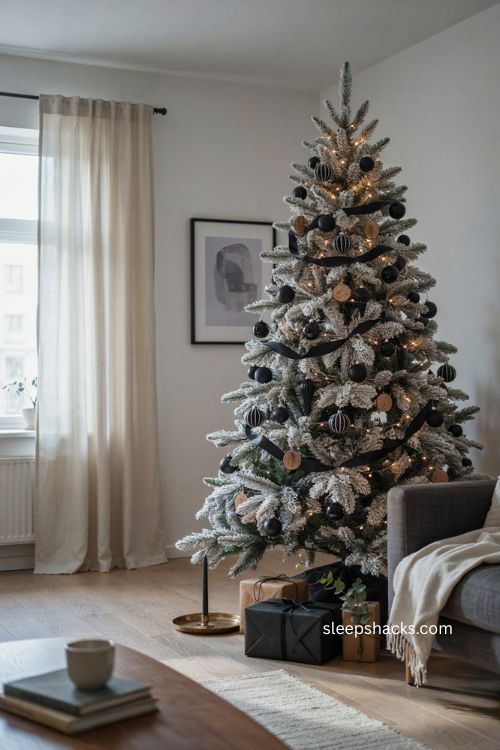
High contrast can be just as moody as an all-dark palette, and black and white together prove it. Start with a white or flocked tree as your base, then layer in black ornaments, ribbon, and even black-wrapped gifts underneath. The trick is balance — don’t let one color dominate the tree completely, or it starts to look one-note. A mix of solid black balls, black-and-white striped ornaments, and a few natural wood pieces keeps things from feeling too stark. This combination photographs incredibly well, which makes it a favorite for anyone sharing their tree online.
10. Burnt Sienna and Copper Tones
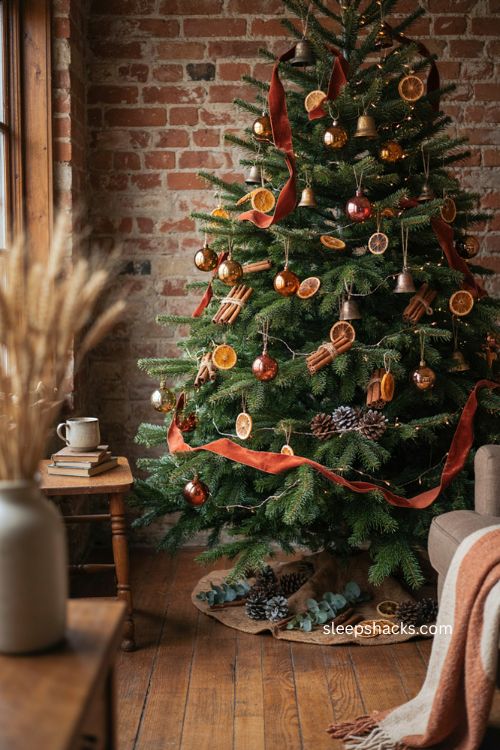
Warm, earthy tones like burnt sienna and copper bring a completely different kind of mood than the cooler blues and blacks on this list. Think of it as an autumn palette that carried over into December. Copper bells, rust-colored ribbon, and warm amber glass ornaments all work together here, especially against a backdrop of deep green branches. This palette pairs beautifully with wood tone furniture and exposed brick, making it a natural fit for rustic or farmhouse-style homes. Add a few dried orange slices or cinnamon sticks tucked into the branches for a subtle, seasonal scent.
11. Metallic Mixed-Finish Ornaments
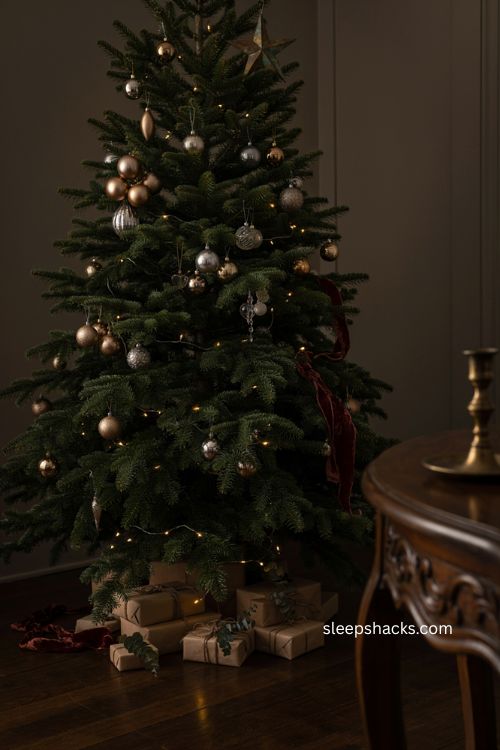
Don’t feel locked into just one metallic — mixing gold, silver, bronze, and pewter finishes together actually creates more depth than sticking to one. The key is varying the finish, not just the color: pair a shiny gold ball with a matte bronze one and a hammered pewter piece nearby. This works especially well on darker trees, where the metallics catch light and stand out against the shadowy branches. Group similar tones together in small clusters rather than scattering them randomly, so the eye can rest in a few spots instead of bouncing around the whole tree.
12. Dark Wrapped Gifts Underneath
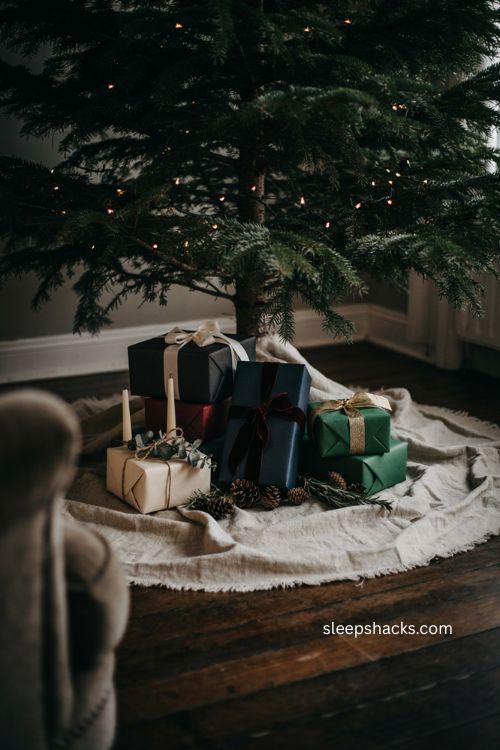
The presents under the tree are part of the display too, and dark wrapping paper pulls the whole moody theme together from top to bottom. Choose deep colors like black, navy, or hunter green paper, then tie each box with a contrasting ribbon in gold, cream, or burgundy so the gifts don’t disappear into the tree skirt. Varying box sizes and stacking a few at slightly different heights adds visual interest under the branches. This is a small, low-cost detail that makes a big difference in photos, since it frames the base of the tree instead of leaving it as an afterthought.
13. Moody Garland with Berry Accents
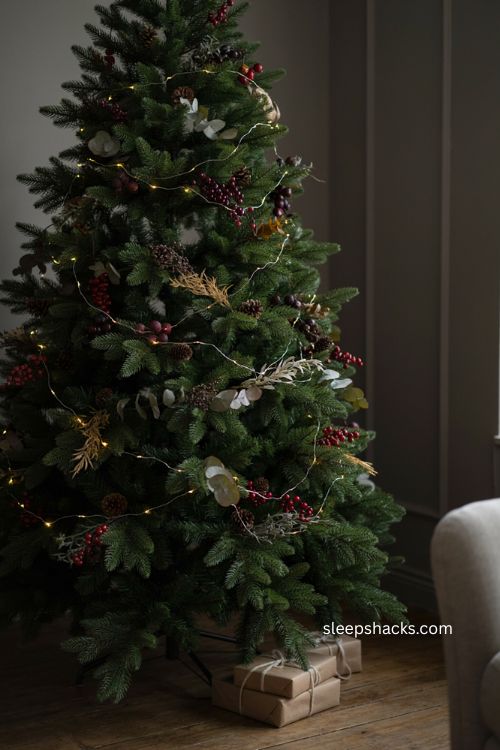
Garland sets the tone for the whole tree just as much as the ornaments do. Choose a deep green base and tuck in small clusters of berry picks in burgundy, plum, or deep red to add pops of color without overwhelming the palette. Twinkling warm lights woven loosely through the garland add glow without competing with the berries. Drape it in soft, uneven swags rather than perfectly even loops — a little asymmetry actually reads as more natural and less store-bought. This detail works on any tree style, from a black modern tree to a traditional full green one.
14. Warm Amber Fairy Lights
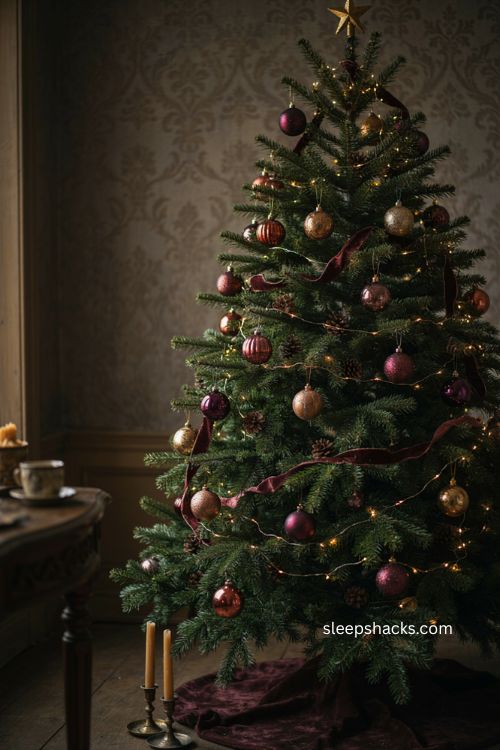
Lighting changes the entire personality of a tree, and warm amber bulbs are the quiet hero of the moody look. Skip the bright white LEDs and go for a warmer, almost candlelit tone instead — it makes dark ornaments glow rather than disappear into shadow. Layer two strands at different depths, one closer to the trunk and one on the outer branches, for more dimension than a single wrap provides. This kind of lighting is especially worth it if you’re photographing your tree, since warm light flatters jewel tones and deep colors far better than cool white ever does.
15. Jewel-Toned Peacock Colors
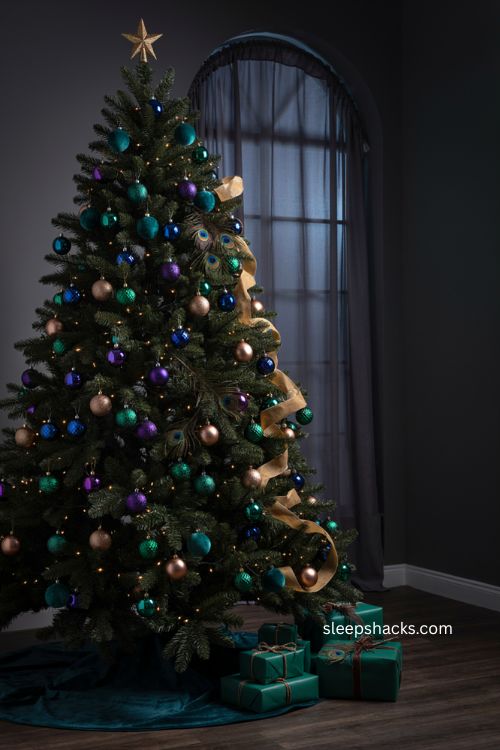
For something bolder, lean into a full peacock palette of deep teal, sapphire blue, emerald, and violet all on the same tree. It sounds like a lot, but against dark branches or a black tree, these colors read as rich rather than chaotic. Add metallic gold or bronze accents to tie the different hues together instead of letting them compete. This combination works especially well for anyone who wants a moody tree that still feels colorful and lively, rather than muted or somber. It’s a striking option for a main living room tree that guests will remember.
Final Thoughts
A moody Christmas tree isn’t about spending more — it’s about looking at what you already have with fresh eyes. Swap a few ornaments, add a length of velvet ribbon, switch your lights from cool white to warm amber, and the whole feeling of your tree changes. Start with just one or two ideas from this list rather than trying to do everything at once. Pick the palette that matches your existing decor, build from there, and let the rest of the room follow the tree’s lead. Once you see how much depth and warmth a darker palette adds, it’s hard to go back to the same bright red-and-gold tree every year.
Frequently Asked Questions
Q: What colors work best for a moody Christmas tree?
Deep burgundy, forest green, midnight blue, charcoal, and black are the core moody Christmas tree colors, often paired with gold, copper, or silver accents.
Q: Do I need to buy all new ornaments for a moody tree?
No — most moody trees are built by re-sorting existing ornaments by color and adding a few new pieces like ribbon or greenery to shift the palette.
Q: Is a black Christmas tree hard to decorate?
Not at all — black branches actually make ornaments and lights stand out more, so it’s often easier to get a polished look than with a traditional green tree.