

Your master bedroom is the one room in the house that belongs entirely to you. Not the kitchen, which everyone passes through. Not the living room, where guests sit.

This room — your room — is where the day ends and begins. So why does it so often end up last on the renovation list? If you’ve been putting off refreshing your space, this is the sign to start. These master bedrooms decor ideas will help you build a suite that actually feels like a retreat, not just a place to sleep.
Here’s what you’ll take away:
- How to create a layered, cohesive look without starting from scratch
- Which 2026 trends are worth following — and which are built to last
- Simple, actionable changes that make an immediate difference
1. Let the Bed Lead Everything Else
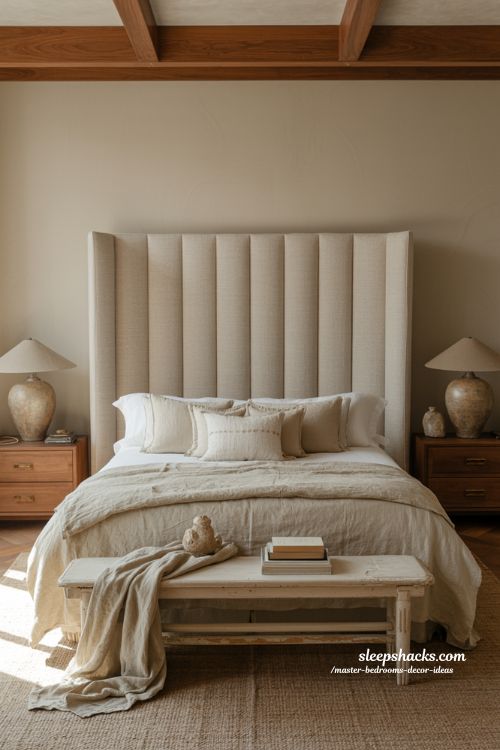
The bed is the undisputed focal point of any master bedroom, and every other decision should follow from it. A channelled upholstered headboard in warm linen reads as quietly luxurious. A solid timber frame with clean lines anchors the room with natural warmth. Whatever you choose, the silhouette sets the tone before a single accessory is placed.
- Invest in the highest-quality mattress your budget allows — you spend a third of your life here
- Choose a headboard tall enough to make a visual statement against the wall
- Match the bed base and headboard finish to at least one other element in the room for cohesion
2. Build Your Color Palette Around Warm Neutrals
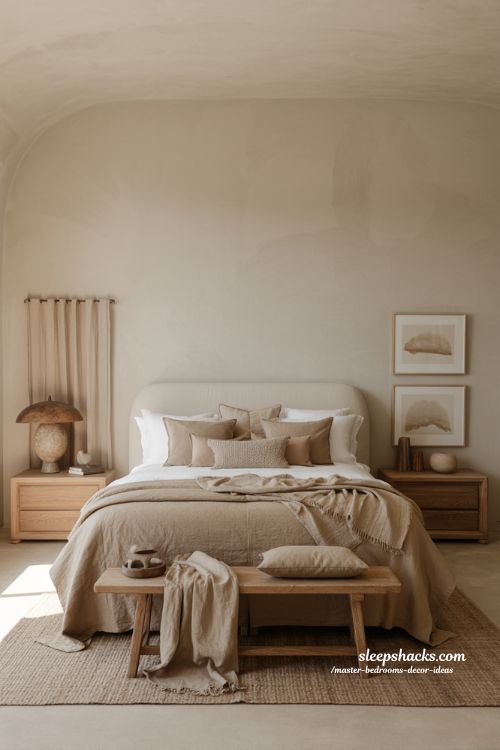
In 2026, warm neutrals have overtaken the cool grays and blues that dominated master bedroom design for years. Ivory, almond, taupe, and soft terracotta feel grounding and immediately restful. A 2026 study of over 3,000 bed purchases found 56% of buyers preferred neutral warm tones, with earthy browns rising steadily — and cooler shades in clear decline.
- Start with walls in a warm off-white or soft greige as your base
- Layer in deeper earthy tones through textiles — throws, cushions, and a bedroom rug
- Avoid more than three dominant tones to keep the palette cohesive and calm
3. Choose a Statement Headboard That Does the Work

A bold headboard is one of the most cost-effective master bedroom decor ideas available. Floor-to-ceiling fabric panels, a sculptural arched frame, or a deep-tufted design in velvet create an instant focal wall without any painting or wallpaper. I love how a single well-chosen headboard can make even a sparsely furnished room feel considered and complete.
- In spacious rooms, go oversized — proportion matters and bigger reads as intentional
- In smaller bedrooms, a slimline padded design adds softness without crowding the space
- Stick to a fabric or finish that complements the bedding palette, not competes with it
4. Layer Your Lighting — Never Rely on One Source
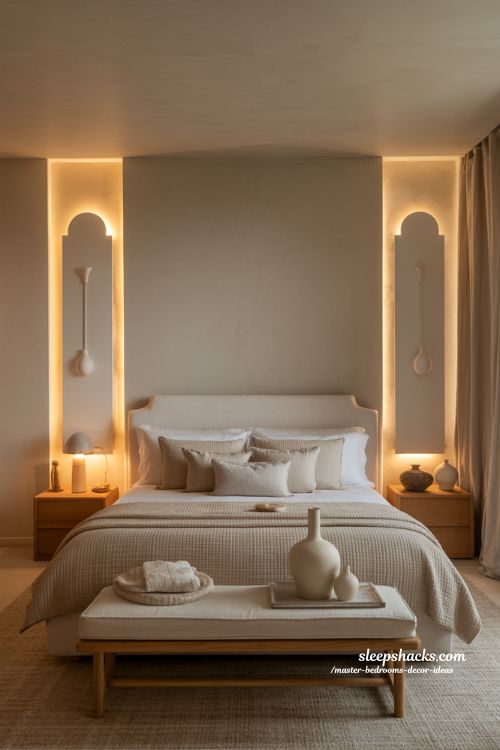
Flat overhead lighting is one of the most common master bedroom mistakes. A single ceiling fixture creates harsh, unflattering light that works against the restful atmosphere you’re trying to build. Layered lighting — ambient, task, and accent — changes everything.
- Install dimmer switches on every circuit so you can shift the mood instantly
- Use wall sconces on either side of the bed to free up nightstand space and create soft symmetry
- Choose warm white bulbs around 2700K for a glow that supports winding down at night
5. Use Symmetry to Create Instant Calm
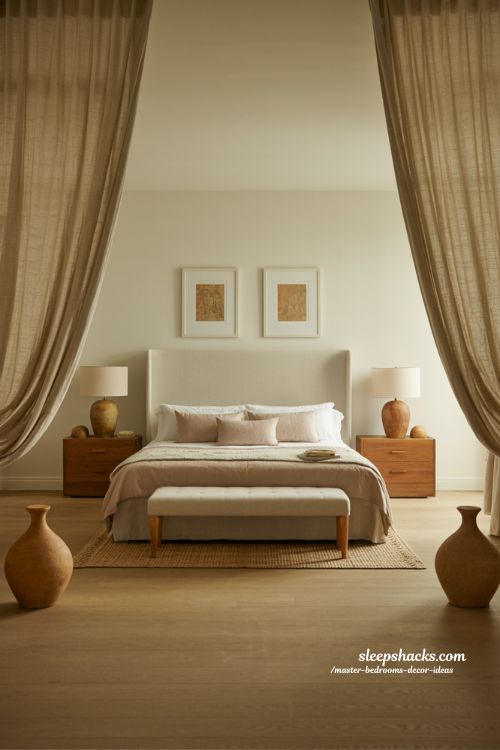
Symmetry is psychologically soothing — designers have known this for decades. Matching nightstands, paired lamps, and mirrored artwork on either side of the bed create visual balance that makes a room feel finished without elaborate styling. It’s one of those master bedrooms decor ideas that works at every budget level.
- Matching bedside tables don’t need to be expensive — consistency matters more than cost
- Allow slight variation in height or texture between the two sides to keep it feeling alive
- If you share the room with a partner, symmetry also communicates that both sides are equally considered
6. Bring Timber In for Warmth and Natural Texture
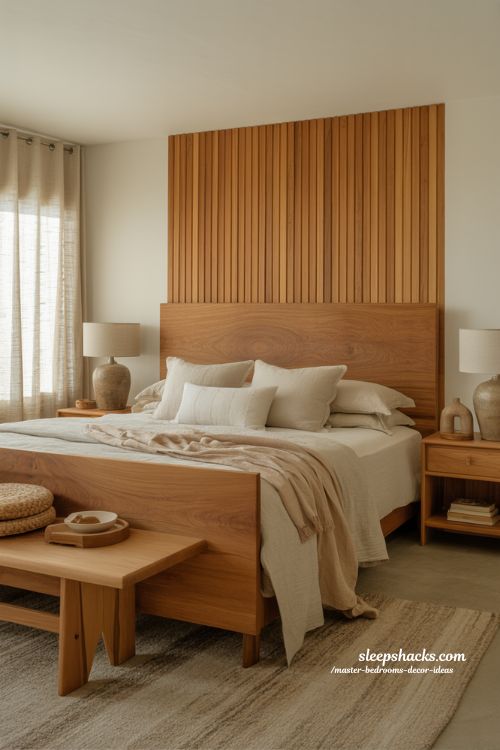
Natural wood has made a strong return to master bedroom design — and it earns its place. Natural oak, American walnut, and smoked timber finishes bring an organic warmth that painted surfaces simply can’t replicate. Whether it’s a bedside table, bed legs, or a full timber feature wall, wood grounds the space in a way that feels timeless.
- Pair light timber tones like natural oak with soft ivory or linen textiles for a fresh, airy feel
- Use smoked oak or walnut for a moodier, more sophisticated palette
- Echo the timber finish across at least two pieces of furniture to create visual continuity
7. Apply Japandi Principles for a Clutter-Free Space
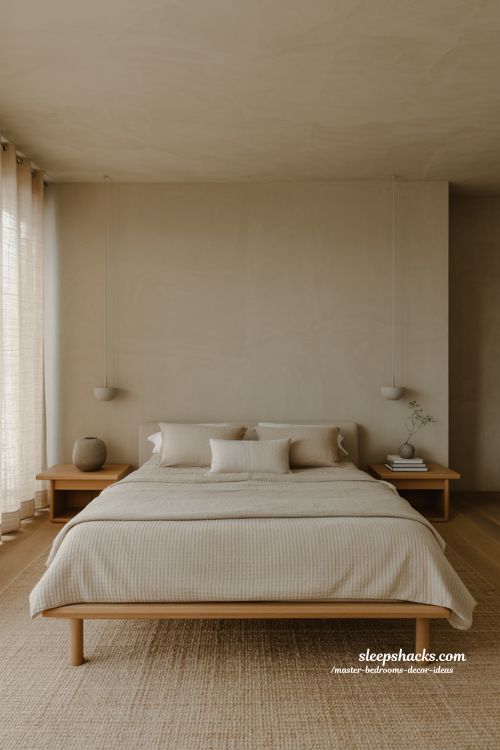
Japandi — the hybrid of Japanese simplicity and Scandinavian warmth — continues to define the most admired master bedroom interiors of 2026. It’s not about stripping everything back to nothing. It’s about choosing fewer, better things and making sure each one earns its place. One of my favorite things about this approach is how achievable it is — it costs nothing to edit.
- Remove anything that doesn’t serve a purpose or bring genuine pleasure before adding anything new
- Style surfaces with three to five meaningful objects: a ceramic, a plant, a book
- Choose furniture with clean, low profiles and natural material finishes throughout
8. Create a Sitting Area for a True Suite Experience
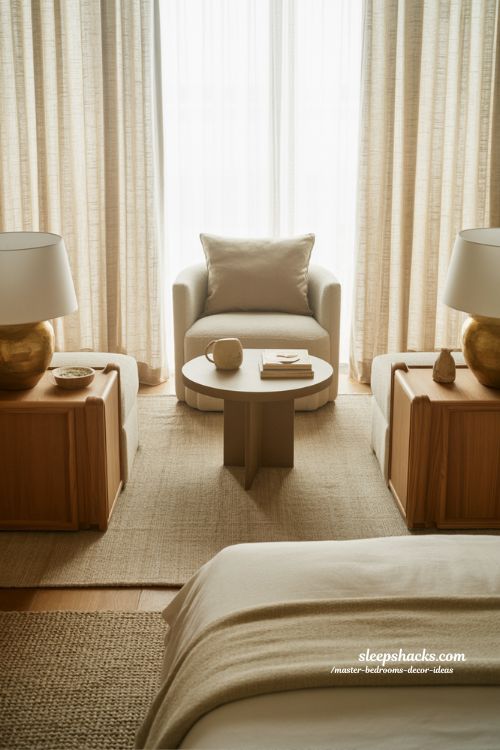
A master bedroom with a reading chair and a small side table crosses over from bedroom into suite. This is one of those master bedrooms decor ideas that transforms how you actually use the room — not just how it looks. You don’t need a large footprint. Even a compact armchair angled in a corner creates a separate zone worth settling into.
- Style the chair with a throw and a cushion in a contrasting but complementary texture
- Keep a low side table within reach for a cup of tea or a small stack of books
- If space allows, a two-seater sofa against the wall takes the concept even further
9. Anchor the Room With a Statement Rug
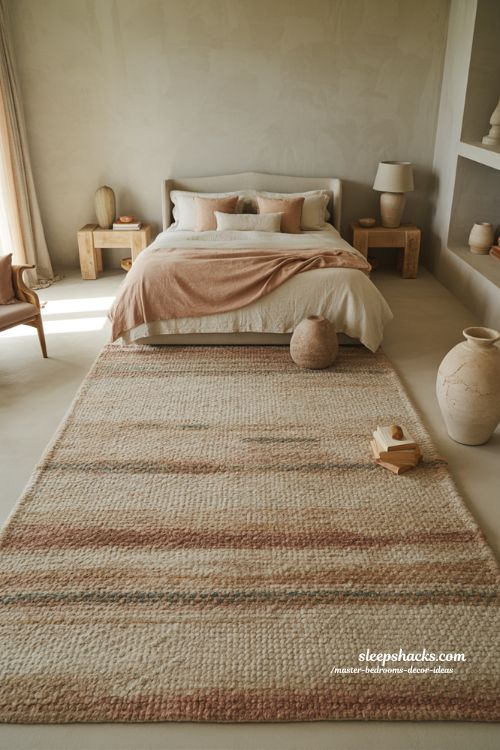
A large bedroom rug that extends beyond the sides and foot of the bed makes the entire space feel more expansive and intentional. Getting out of bed onto something soft and warm every morning is a small luxury that adds up. Lighter-toned rugs work especially well in master suites because foot traffic is low — they stay looking fresh far longer than in high-traffic rooms.
- Size up rather than down — a rug that’s too small makes the room feel disconnected
- Choose high-pile or hand-loomed textures for a plusher, more indulgent underfoot feel
- Dusty rose, warm sand, sage, or soft stone all work beautifully as neutral accent tones
Master Bedroom Style Comparison
Use this table to match your preferred aesthetic to the right design direction before committing to furniture or color choices.
| Style | Key Colors | Materials | Best For |
| Japandi | Ivory, warm white, muted sage | Timber, linen, ceramic | Clutter-free, minimal spaces |
| Coastal | Soft blue, white, sand | Rattan, cotton, bleached wood | Airy, light-filled rooms |
| Farmhouse | White, cream, warm grey | Shiplap, cotton, rustic wood | Relaxed, family-oriented homes |
| Contemporary | Greige, charcoal, taupe | Velvet, marble, steel | Sleek, polished aesthetics |
| Organic Modern | Clay, terracotta, almond | Stone, bouclé, natural oak | Warm, earthy, textured rooms |
10. Layer Texture Through Fabric — Not Just Color
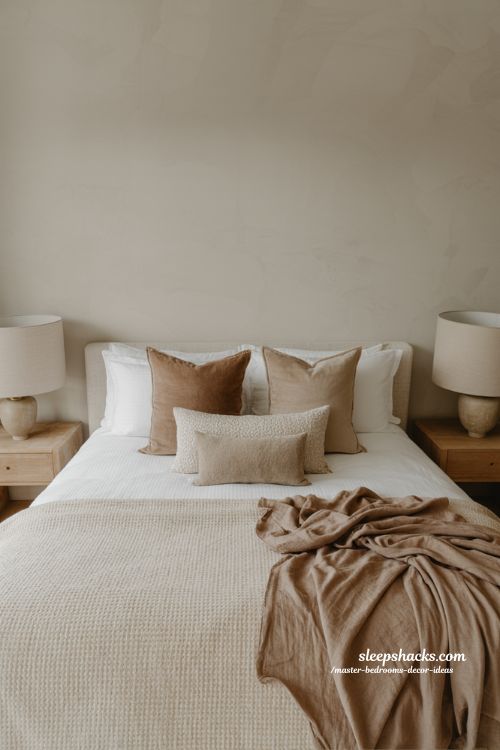
In 2026, master bedroom trends are moving away from bold color statements toward tactile layering. Bouclé, linen, velvet, and waffle-knit cotton all read differently under natural light, and together they create a richness that paint alone can’t achieve. The result is a room that invites touch as much as it invites rest.
- Mix a smooth velvet cushion against a nubby bouclé throw for deliberate contrast
- Use crisp percale sheets against a chunky-knit blanket at the foot of the bed
- Limit the color range across all textiles to keep the layering feeling intentional, not chaotic
11. Choose Full-Length Drapery Over Blinds
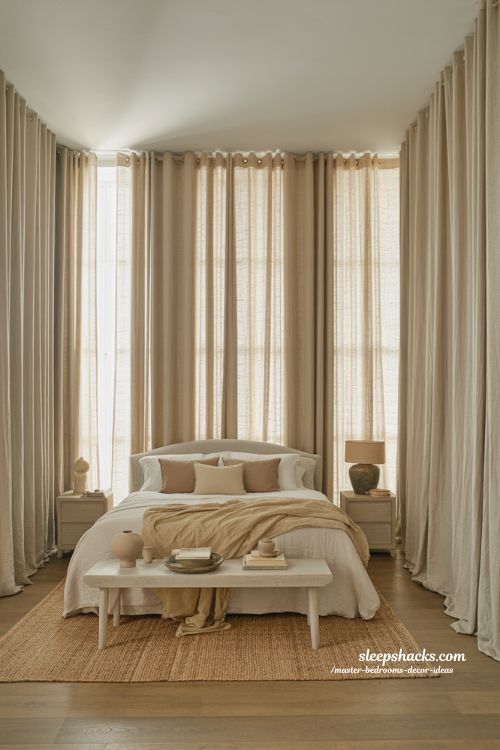
Floor-to-ceiling curtains do something no blind can replicate — they make a room feel taller, softer, and more composed. In a master bedroom, full-length drapery in natural linen or cotton diffuses light gently, softens acoustics, and adds privacy that feels genuinely luxurious rather than functional. It’s one of the simplest upgrades with the most immediate visual impact.
- Hang the rod as close to the ceiling as possible to maximize the sense of height
- Let fabric pool slightly on the floor for an effortlessly relaxed, elegant finish
- Choose curtains one tone deeper than the walls — warm white against ivory, greige against stone
12. Make Storage Invisible and Surfaces Clear
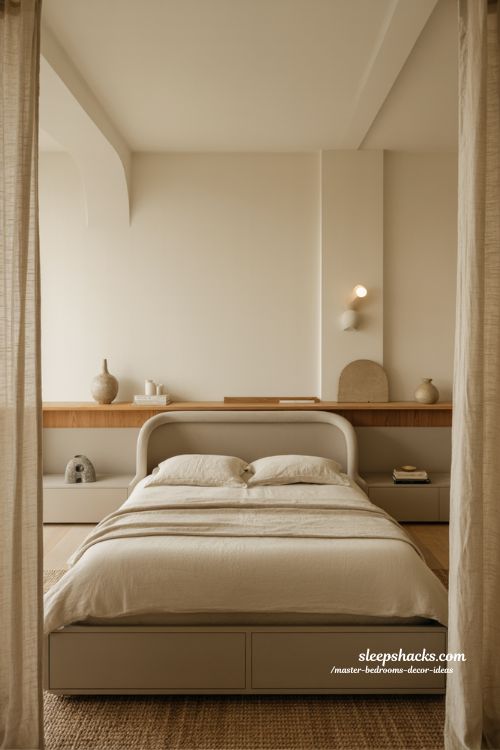
Nothing disrupts the calm of a master bedroom faster than visual clutter. Feng shui principles — increasingly influential in contemporary interior design — emphasize clear surfaces and organized spaces as essential to genuine rest. The goal isn’t minimalism for its own sake. It’s creating an environment where the mind can actually switch off.
- Choose beds with integrated storage drawers to keep linens and extras out of sight
- Use nightstands with concealed compartments rather than open shelving
- Group any decorative objects on surfaces in threes or fives for visual rhythm without crowding
Master Bedroom Decor Budget Guide
Whether you’re working with a modest refresh budget or a full renovation, here’s a realistic range for the most impactful master bedrooms decor upgrades.
| Upgrade | Budget Range | Impact Level |
| New bedding set (quality cotton or linen) | $80–$300 | High |
| Statement bedroom rug | $200–$1,200 | High |
| Upholstered headboard | $300–$1,500 | Very High |
| Dimmable lighting + warm bulbs | $100–$400 | High |
| Full-length curtains | $150–$600 | Medium–High |
| Timber bedside tables (pair) | $300–$900 | Medium |
| Bedroom armchair | $400–$1,500 | Medium |
13. Hang Art That Holds Personal Meaning
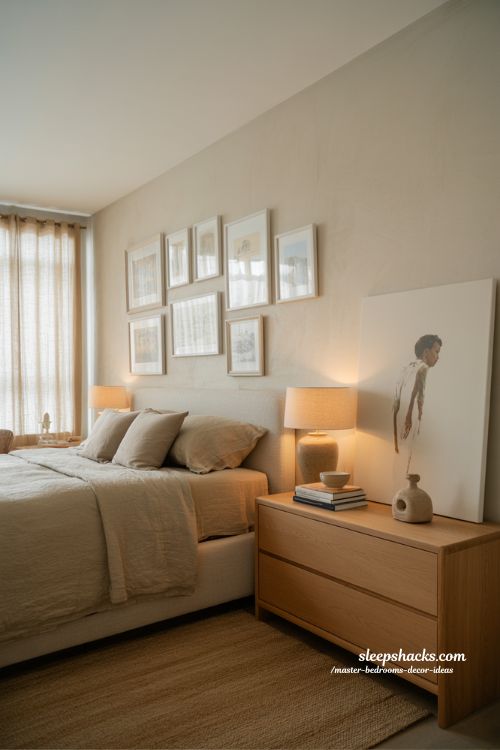
Generic wall prints work fine — but in the most personal room in the house, they’re a missed opportunity. Artwork that connects to somewhere you’ve traveled, a piece by an artist you genuinely love, or even a framed photograph from a meaningful moment will make the space feel irreplaceable. The master bedroom is where personal expression matters most.
- A single large canvas above a low dresser reads as confident and deliberate
- A gallery wall above the bed, kept cohesive in frame style, adds personality without noise
- Don’t hang art too high — eye level when seated on the bed is the right placement point
14. Try a Dark Accent Wall for Drama and Depth
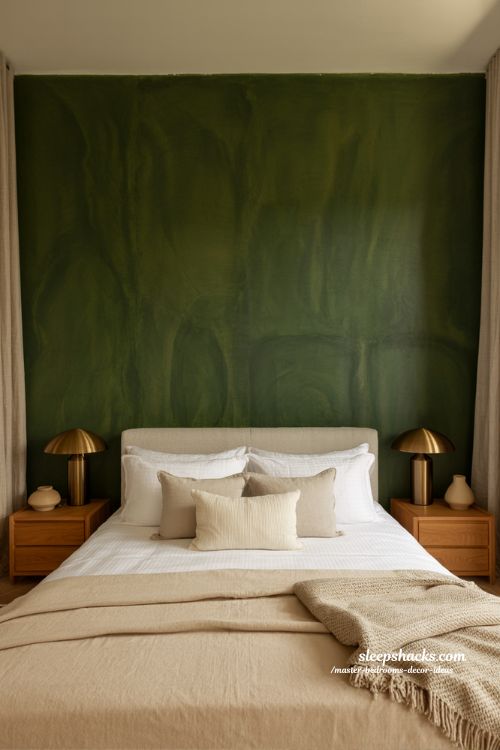
A single richly toned wall can transform a master bedroom without touching the rest of the room. Deep forest green, inky navy, charcoal, or warm chocolate brown behind the bed creates a dramatic backdrop that makes the bed itself feel more prominent and intentional. It’s a bold choice that reads as sophisticated rather than overwhelming.
- Keep bedding light — white or cream against a dark wall creates striking contrast
- Pair dark walls with warm timber furniture and matte black or brass hardware
- Consider limewash or textured paint finishes for depth that flat paint can’t achieve
15. Bring Natural Elements Indoors
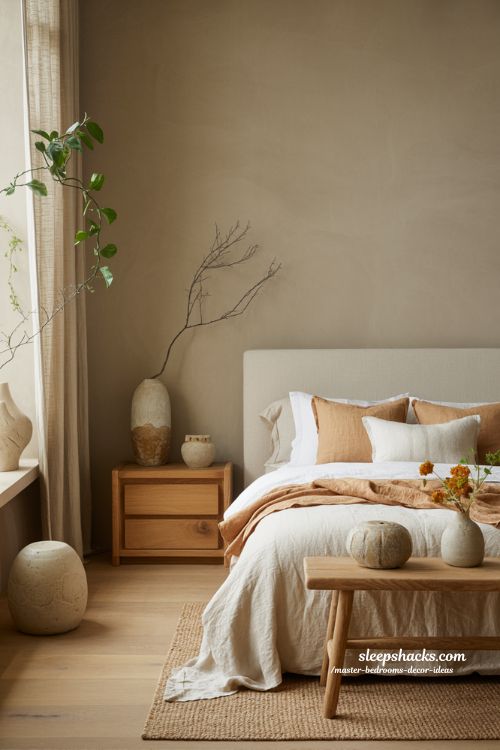
Biophilic design — connecting interior spaces to the natural world — has a measurable positive effect on sleep quality and mental ease. In a master bedroom, this doesn’t require an elaborate plant wall. A single trailing pothos on a shelf, a sculptural dried branch in a tall vase, or a smooth stone bowl on the nightstand is enough to shift the atmosphere.
- Use natural materials throughout: linen bedding, a wool rug, ceramic accessories, timber furniture
- Position a plant near a window where it will thrive without becoming a maintenance burden
- Rotate fresh-cut flowers on the nightstand seasonally for a simple, living touch
16. Style the Nightstand Like a Curated Vignette
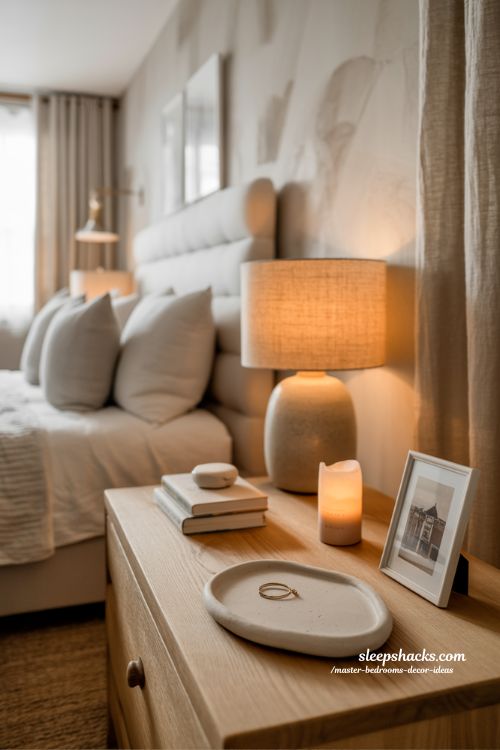
The nightstand is the last thing you see before sleep and the first thing you reach for in the morning — so it deserves real thought. A small stack of books, a candle in a scent you love, a ceramic dish for jewelry, and a lamp is genuinely all you need. Restraint is the operating principle here.
- Limit the nightstand surface to five objects maximum — more than that reads as clutter
- Include one personal item: a travel find, a small print, something that tells your story
- Choose a lamp with a shade that diffuses light softly rather than directing it harshly downward
17. Finish With Scent, Sound, and the Softest Details
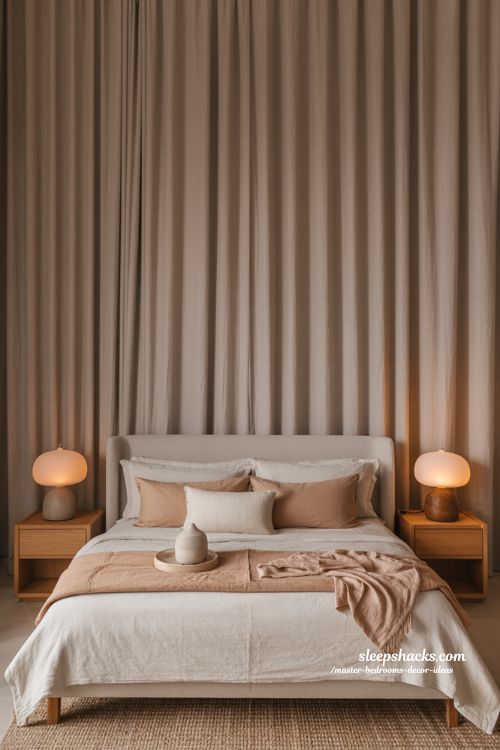
The final layer of a well-designed master bedroom isn’t visual at all — it’s sensory. A signature room scent through a diffuser or candle, a white noise machine tucked discreetly on a shelf, and the softest possible sheets against your skin complete what the furniture and paint started. These details are easy to skip and impossible to replicate once you have them.
- Choose grounding scent notes — sandalwood, cedarwood, or warm vanilla — to cue relaxation
- Invest in the highest thread count you can afford in a natural fiber like linen or long-staple cotton
- Treat the master bedroom as a no-phone zone at least one hour before sleep — the room will feel different for it
Frequently Asked Questions
What is the most important element in master bedrooms decor?
The bed frame and mattress. Everything else in the room — textiles, furniture, lighting, art — layers on top of this foundation. A well-chosen bed that’s properly scaled for the room makes every other decision easier, and investing in quality here pays off every single morning for years.
What colors work best for a master bedroom in 2026?
Warm neutrals are leading the way: ivory, almond, taupe, soft terracotta, and warm greige. These tones feel grounding and restful without being cold or clinical. If you want some color, add it through textiles rather than walls — dusty sage, muted blush, or soft clay all work beautifully as accent tones against a neutral base.
How do I make a small master bedroom feel larger?
Use a large rug that extends beyond the bed frame on all sides. Hang curtains from ceiling to floor, even if the windows are small. Keep the color palette light and consistent, and choose furniture with slim, elevated profiles that allow light to move under and around each piece. Mirrors opposite windows also expand the perceived depth of any room.
How many throw pillows should a master bed have?
For a king bed, four to six pillows is the sweet spot — two sleeping pillows per person, plus two to four decorative cushions in varying sizes. For a queen bed, four pillows total works well. The goal is layered and full-looking without becoming something you have to excavate every night before you can actually sleep.
What lighting setup is best for a master bedroom?
Layer three types: ambient (a ceiling fixture on a dimmer for general light), task (wall sconces or bedside lamps for reading), and accent (a floor lamp or LED strip behind the headboard for atmosphere). Use warm white bulbs around 2700K throughout. Dimmer switches on every circuit give you complete control over the mood at any hour.