

Let’s start with a simple truth: green does more of the heavy lifting at Christmas than most people give it credit for.
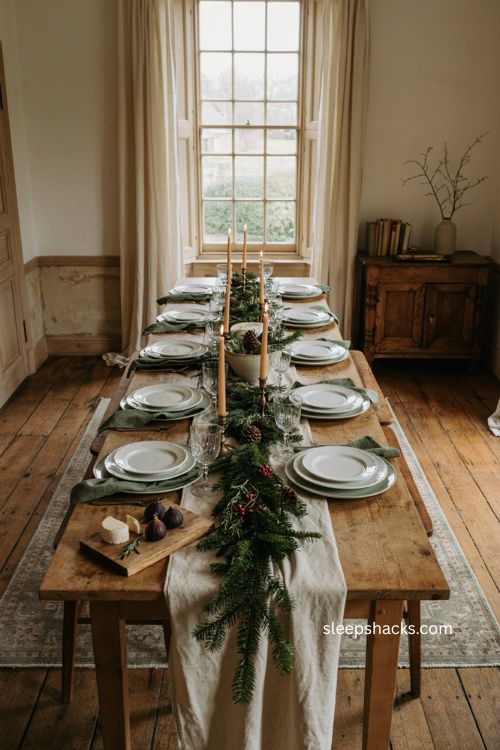
Red tends to get all the attention, but a table built around green — whether it’s deep pine, sage, or emerald — reads as fresher, calmer, and honestly a little more elegant. It photographs beautifully against white china, and it pairs easily with almost any metal accent you already own, gold or brass or black. If you’ve been leaning on the same red-and-gold table year after year, here are 15 green Christmas table setting ideas worth trying instead.
1. Layer Multiple Garlands for a Lush Runner
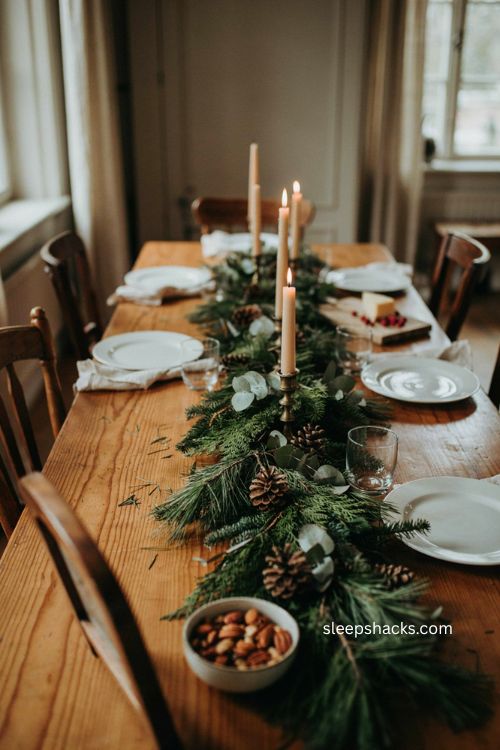
Rather than relying on one thin garland down the center of the table, braid two or three types together — a traditional faux cedar, something lush like eucalyptus, and a pine-and-cone mix all work well combined. Twisting them together as you lay them down creates real volume, often enough that you can skip a table runner entirely underneath. This trick is what makes the difference between a garland that looks a little sparse and one that looks genuinely full and intentional, and it costs nothing extra beyond garlands you likely already have or can find inexpensively.
2. Add a Gold Starburst Centerpiece
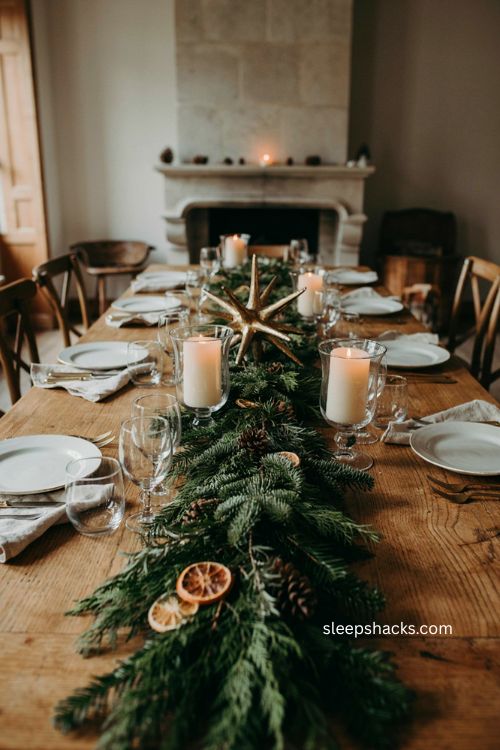
A gold starburst decoration placed between two glass hurricane vases with cream pillar candles gives the center of your green table a warm, metallic focal point without introducing a second competing color. The gold catches candlelight beautifully once the room dims, and the shape adds visual interest without taking up much actual table space. This pairing works especially well nestled right into your garland, so the starburst appears to rise up out of the greenery rather than sitting separately on top of it.
3. Keep the Centerpiece Low Profile
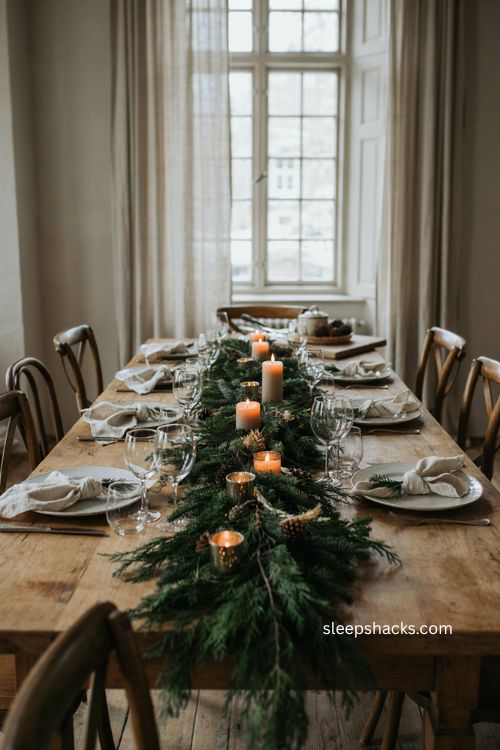
For a dining table where guests are actually going to sit and talk, keep whatever you place at the center low enough that people can see each other clearly. A flat garland with a scattering of low candles does this far better than tall arrangements or oversized displays. This isn’t just a styling preference — it’s genuinely what makes a holiday dinner feel comfortable rather than visually blocked, and it’s one of the easiest adjustments to make if your usual centerpiece tends to run a little tall.
4. Mix Brass and Black Candlesticks at Varying Heights
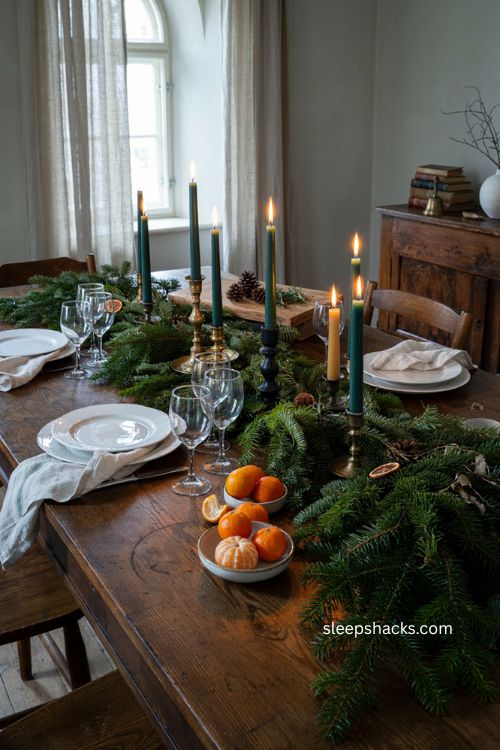
Alternating brass and black candlesticks down the length of the table, mixed with gold and green candles, adds rhythm to an otherwise flat green surface. Varying the heights slightly rather than keeping every candlestick identical creates a more natural, collected look, almost like the candlesticks arrived at different times rather than as one matched set. This mix of metals also means you don’t need everything on the table to be gold or everything to be black — a little variation reads as more curated than a single uniform metal.
5. Choose Whimsical Tree-Shaped Taper Candles
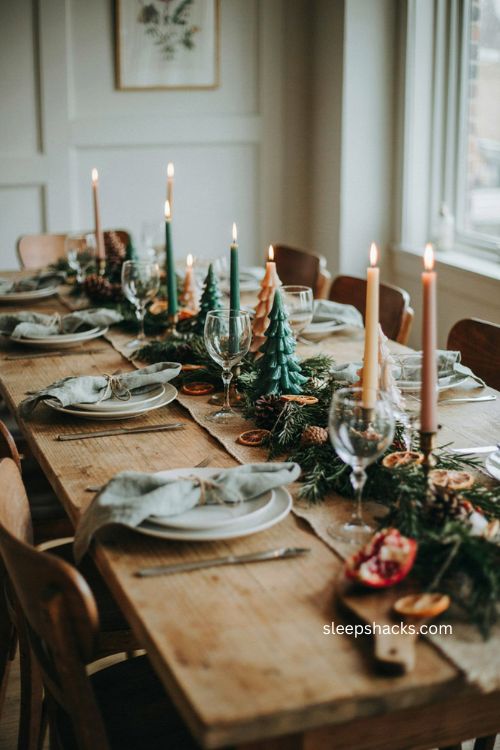
Novelty tree-shaped taper candles bring a playful note into an otherwise classic green tablescape, especially if the rest of your setting leans toward jute, cedar, and natural textures. They don’t need to be expensive or elaborate — small seasonal finds from a discount or dollar section often work perfectly. The key is restraint: one or two per place setting or a small cluster near the centerpiece reads as a fun detail, while too many can tip the table from elegant into overly themed.
6. Layer Jute Placemats With a Green Charger
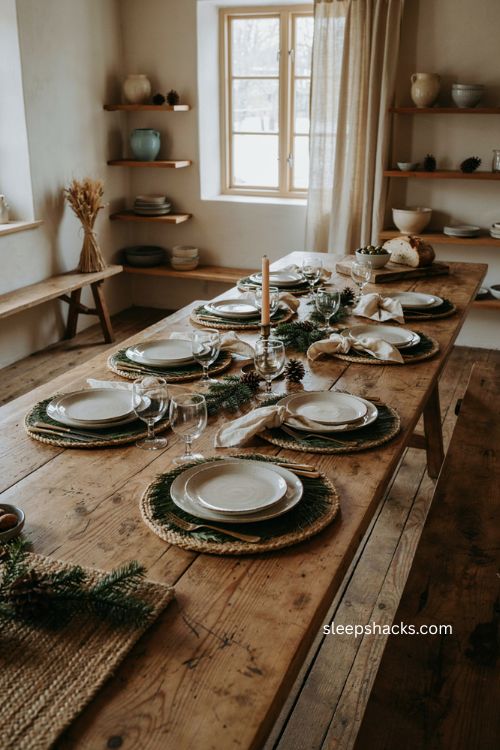
Start each place setting with a jute placemat as your neutral base, then add a faux cedar or green charger on top before your dinner plate. This layering approach works well across seasons, not just Christmas, since jute is a fairly neutral material that pairs with almost any holiday palette. The cedar charger specifically adds a textured green layer right where your eye naturally lands first, before you even notice the plate or napkin sitting inside it.
7. Add a Holly Leaf Runner or Napkins
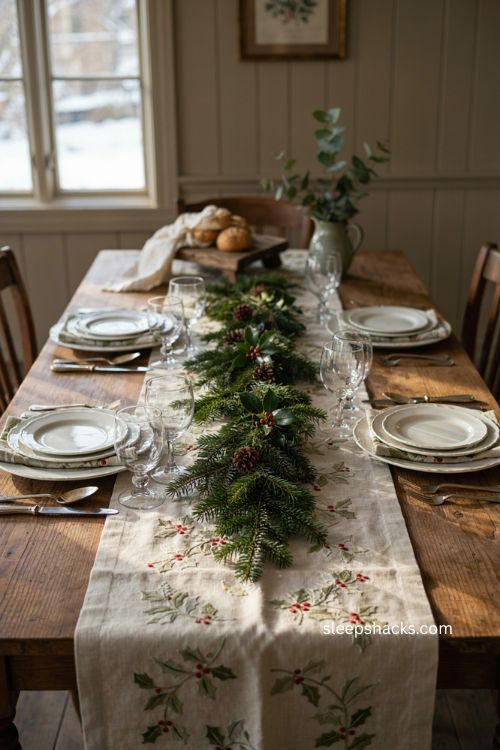
A runner or set of napkins embroidered with holly leaves and berries brings a classic, recognizably Christmas pattern into the green color story without requiring red anywhere else on the table. The berry accents add just enough contrast to keep the green from feeling flat or one-note. This is an easy swap if you already own a green tablescape from a previous year and want to freshen it up with one new textile rather than replacing everything at once.
8. Use a Green Tablecloth as Your Base
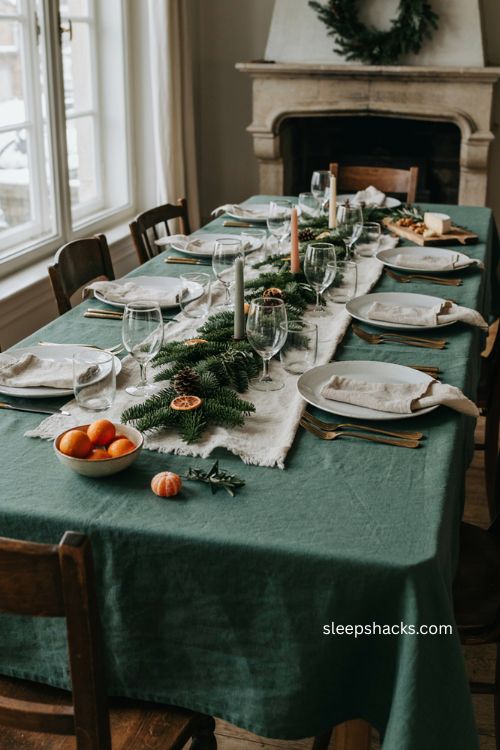
Swapping a white or cream tablecloth for a solid green one changes the entire feel of the table before you add a single decoration. It works especially well for a more casual gathering, paired with a neutral runner layered on top for texture, or on its own for a simpler, cleaner look. If you’re using disposable dinnerware for easier cleanup, a green tablecloth also does a lot of visual work on its own, since paper plates alone often look a little plain without a colored base underneath them.
9. Add Green Velvet Ribbon Napkin Rings
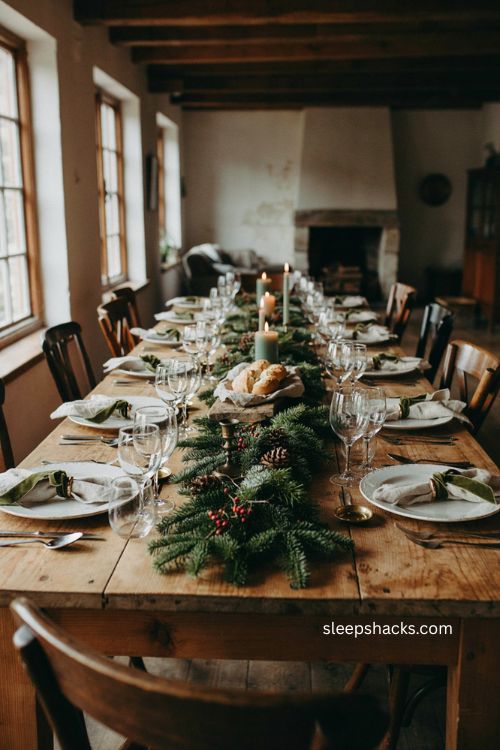
Threading soft green velvet ribbon through simple napkin rings, tied in a loose bow, is a small detail that ties the whole place setting back to your main color scheme. This works particularly well if the rest of the table leans red, gold, or white, since the green ribbon becomes the connecting thread between courses and place settings. It’s also one of the least expensive upgrades on this whole list, since a single spool of ribbon can style an entire table’s worth of napkins.
10. Try Sage Green Candles for a Softer Look
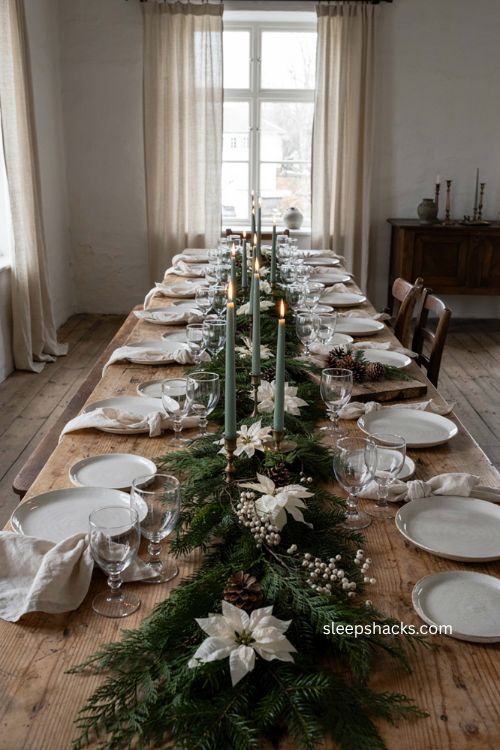
If deep forest green feels too bold for your space, sage green candles offer a softer, more muted take on the same color family. Paired with white poinsettias, brown pinecones, and clusters of white berries, sage creates a calmer, almost neutral-adjacent palette that still reads clearly as Christmas. This combination has become increasingly popular for a reason — it photographs well in almost any lighting and doesn’t compete with existing wall colors the way a brighter green sometimes can.
11. Add a Poinsettia Centerpiece
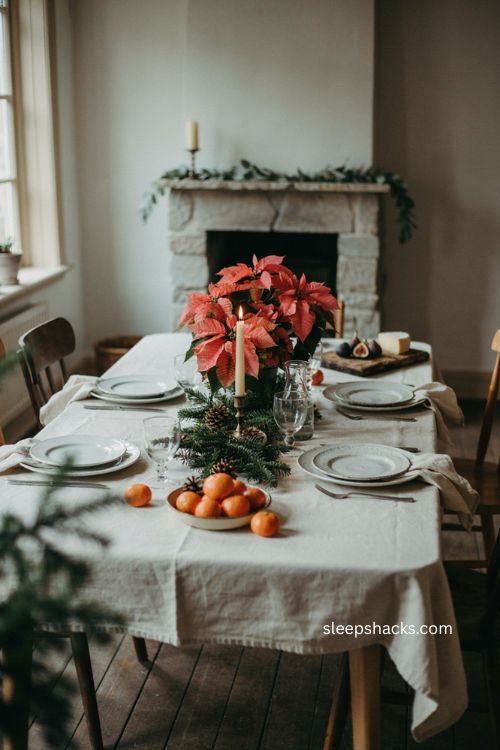
A cluster of poinsettias, real or faux, arranged around a candle holder with pine branches and pinecones tucked in between, makes for a centerpiece that feels traditionally Christmas without requiring anything elaborate. Gold poinsettias specifically bridge the gap between a green table and metallic accents elsewhere in the room. Keep the arrangement circular and relatively compact so it doesn’t compete for space with the food once dinner is actually served.
12. Weave Red Berries Through Your Green Garland
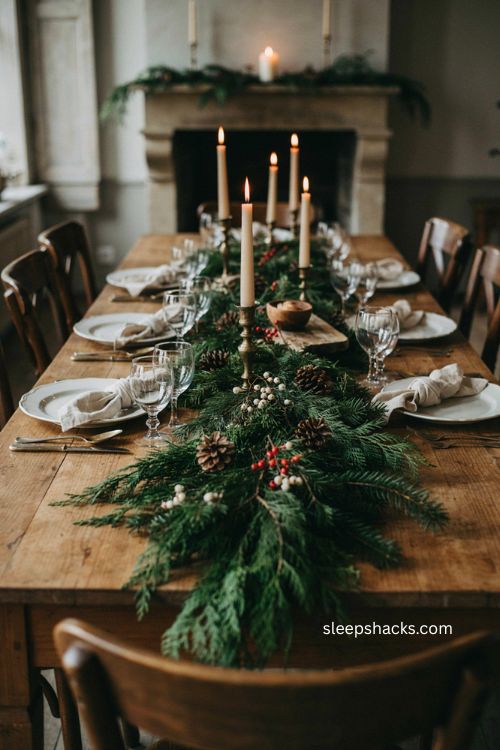
A little bit of red goes a long way when it’s added sparingly into an otherwise green table. Wiring in white or red berry sprigs throughout your garland gives the eye small points of contrast to land on, without turning the whole table into a red-and-green scheme. This is a good middle ground if you love the classic Christmas palette but don’t want it to feel as loud or as expected as a fully red tablescape would.
13. Hang a Green Wreath With a Gold Bow Behind the Table
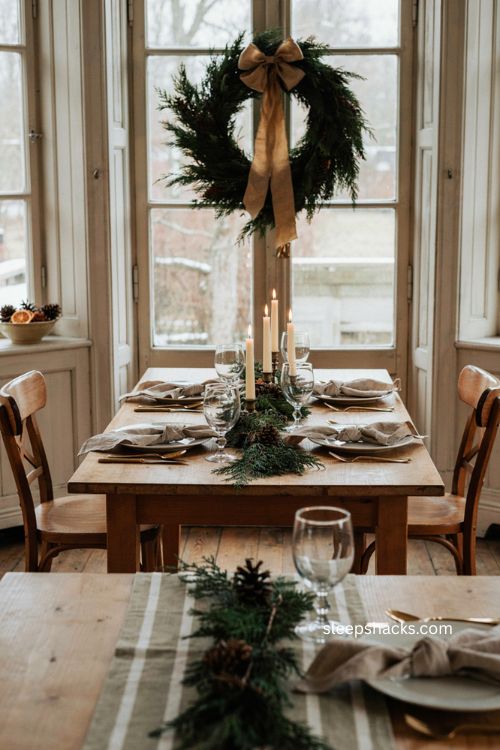
If your dining table sits near a window, mirror, or set of doors, a green wreath finished with a gold bow extends your table’s color story vertically instead of keeping everything confined to the surface itself. This is an easy way to make the whole space feel more finished without adding anything else to the table itself, which matters once you’re trying to leave room for actual food and serving dishes.
14. Go Disposable With Green for Easy Cleanup
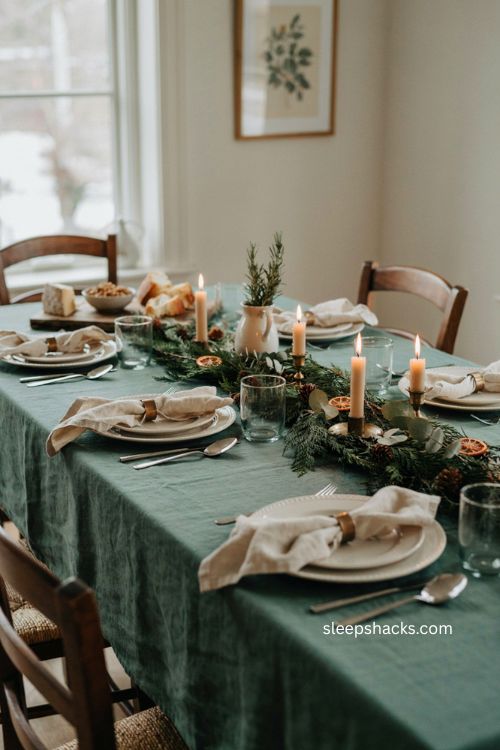
A green tablecloth paired with disposable plates, cups, and utensils is a genuinely underrated option for a bigger, more casual holiday gathering. It looks surprisingly put-together once you add a garland runner and a few candles, and it means far less cleanup once the meal is over. This approach works particularly well for family gatherings where the goal is spending time together rather than managing a formal table all evening.
15. Add Gold-Rimmed White China for Elegance
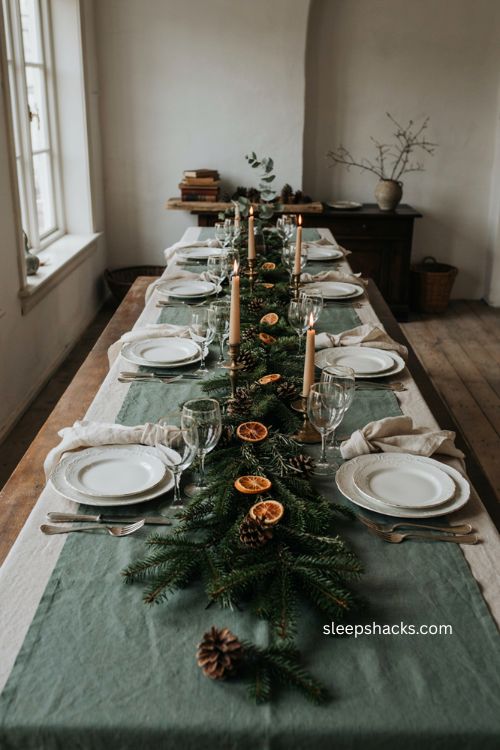
Classic white china with a thin gold rim sits beautifully against a green tablescape, since the white keeps the plates from disappearing into the color scheme while the gold rim quietly echoes any metallic accents elsewhere on the table. This combination tends to feel more “everyday elegant” than overtly festive, which makes it a good choice if you want your green Christmas table to still feel appropriate the rest of the winter season, not just for one meal.
Final Thoughts
Green rarely gets the spotlight the way red and gold do at Christmas, but it might be the most versatile color you can build a table around. It works whether you’re going for sage and understated or deep emerald and dramatic, and it plays well with nearly every metal or accent color you’re likely to already own. Honestly, once you try layering a green garland with just a bit of gold or brass, it’s hard to go back to anything else.
Frequently Asked Questions
Q: What colors go well with a green Christmas table setting?
Gold, brass, cream, and white all pair naturally with green, and small touches of red or berry tones add contrast without overwhelming the palette.
Q: How do I make a green Christmas table look fuller?
Braid two or three types of garland together down the center of the table instead of using just one thin strand.
Q: Is a green Christmas tablescape too casual for a formal dinner?
Not at all — pairing green with gold-rimmed china, brass candlesticks, and cream candles gives it an elegant, formal feel just as easily as red does.