

Here’s something you might not expect: the simplest color combination in all of Christmas decorating — just red and white — is often the one that gets people talking the most. There’s no color-matching headache, no wondering if gold clashes with silver, just two bold shades doing all the work. A candy cane tree leans into that simplicity and turns it into something genuinely joyful, especially if you’ve got kids who want to get involved in decorating.
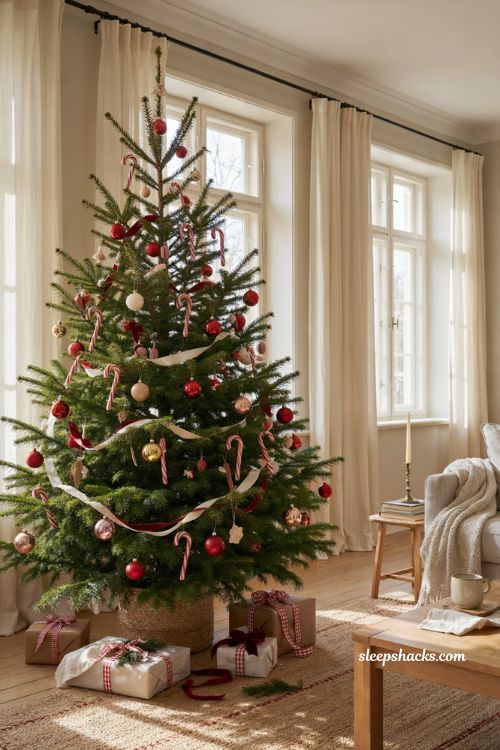
It’s nostalgic without trying too hard, and it photographs beautifully against almost any room. If you’re ready to build one, here are 15 candy cane tree decoration ideas to get you started.
1. Start With Red and White Ribbon
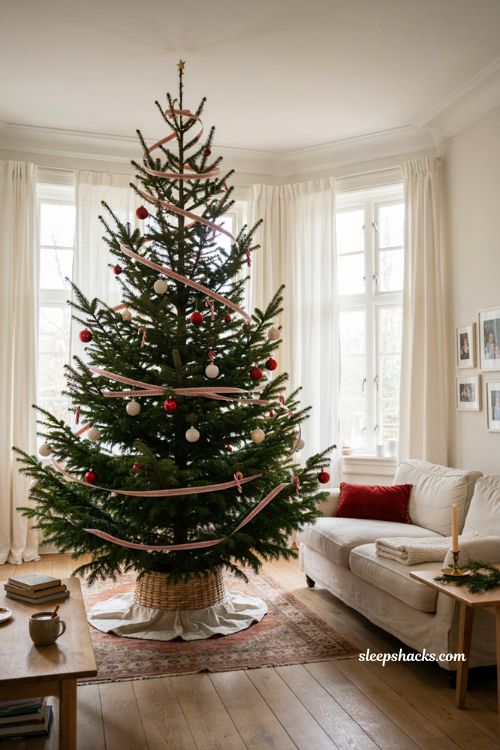
Ribbon is the backbone of a candy cane tree, and wire-edge ribbon holds its shape far better than regular fabric once it’s wrapped or bowed. Weave a wide red-and-white striped ribbon in a diagonal spiral around the tree before you add a single ornament, since this gives you the classic candy cane pattern as your foundation rather than an afterthought. Leave a few extra loops loose here and there to add dimension instead of pulling everything perfectly flat. This one step does more to establish the theme than almost any other decoration you’ll add.
2. Add Classic Candy Cane Stripe Ornaments
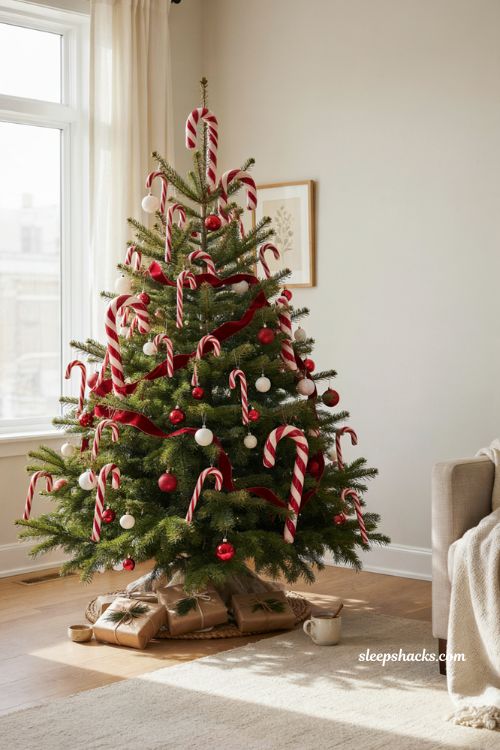
Nothing says candy cane tree quite like the ornaments shaped like the treat itself. Look for shatterproof plastic versions in a mix of sizes, from small clip-ons tucked deep into the branches to larger 15 or 16-inch statement pieces that anchor the design from a distance. Shatterproof material matters here especially if pets or little ones are around the tree often. Hang them at slightly different depths rather than all at the very tips of branches, since that variation in placement is what keeps the tree from looking flat or one-dimensional up close.
3. Layer in Peppermint and Lollipop Picks
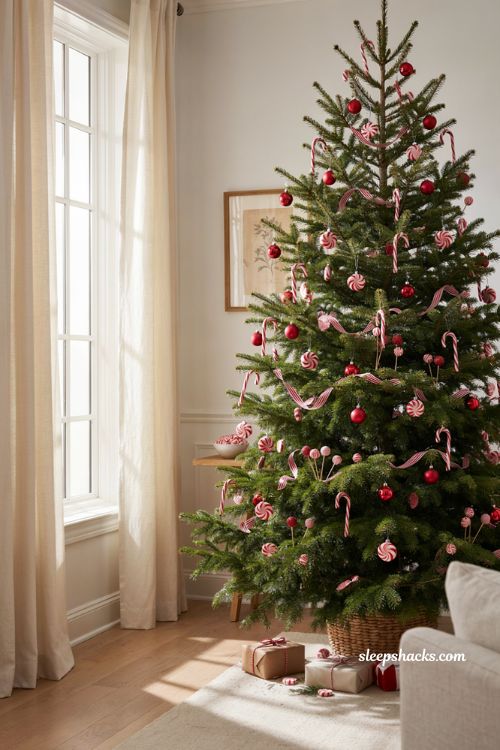
Small foam or glitter lollipop and peppermint picks tuck easily into gaps between branches where bigger ornaments won’t fit. They’re inexpensive, so you can buy a generous bundle and scatter them generously throughout the tree without worrying about the cost adding up. Mix a few glittered ones in with plain matte picks for a bit of shine without going overboard on sparkle. These smaller details are often what make a candy cane tree feel fully realized rather than sparse, since they fill in the in-between spaces larger ornaments naturally leave behind.
4. Use Deco Mesh for a Fuller Look
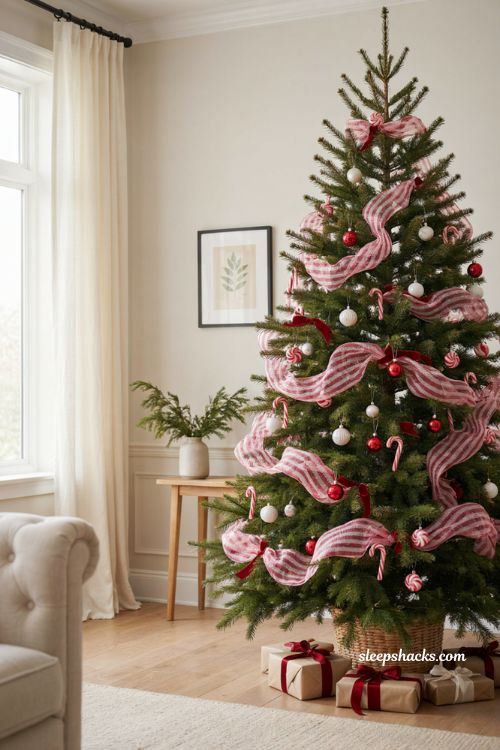
If your tree still looks a little thin once the ornaments are up, red-and-white striped deco mesh solves that fast. Weave strips of it in and out of the branches the same way you would ribbon, letting some sections puff outward for volume. It reads almost like fabric garland once it’s in place, and it hides bare spots near the trunk especially well. This is a favorite trick among people who decorate trees professionally, since it adds bulk and texture in a fraction of the time it would take to fill those gaps with individual ornaments.
5. Add a Coordinating Tree Skirt
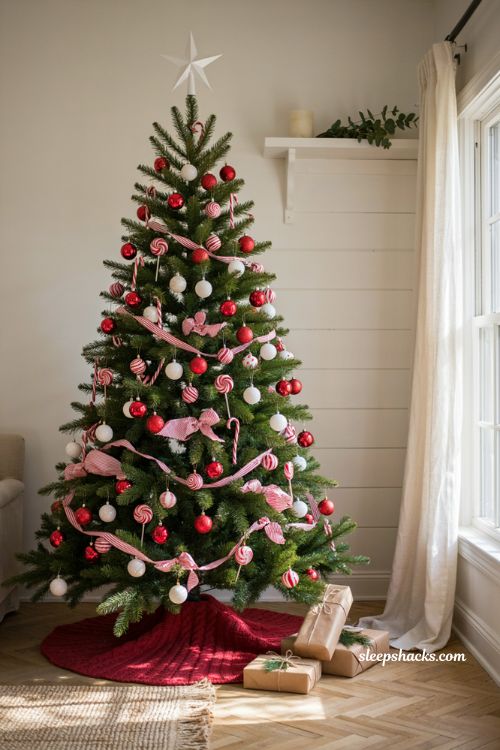
A red-and-white knitted or wicker willow tree skirt finishes the base of the tree the same way a runner finishes a table. Knitted skirts bring in a soft, textured contrast against the shinier ornaments above, while a wicker style leans more rustic if that fits your overall room better. Either way, the skirt closes out the color story from top to bottom instead of leaving the tree stand exposed and undecorated. It’s an easy detail to overlook, but it’s usually one of the first things people notice once they’re standing right in front of the tree.
6. Include Berry and Pom Pom Sprays
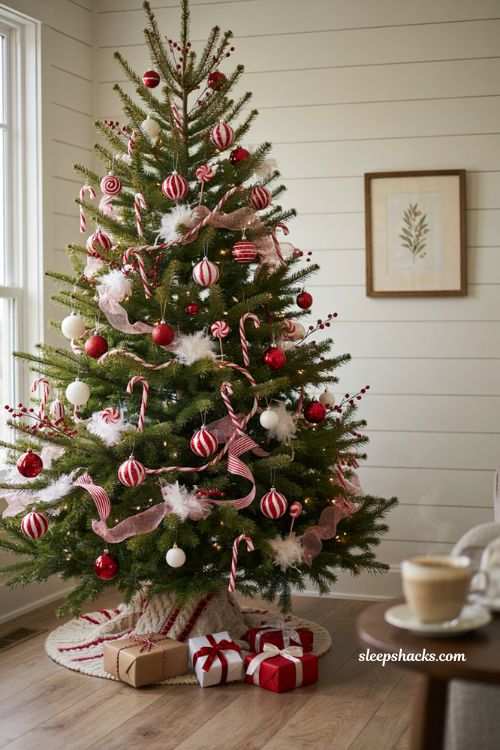
Red berry sprays and fluffy white pom pom sprays add a softer, more organic texture next to all the smooth, glossy candy cane pieces. Tuck a few stems in near the ornaments rather than clustering them all in one spot, so the texture reads as woven throughout rather than added on as an afterthought. The contrast between the fuzzy pom poms and the glossy stripes of the candy canes is what keeps the whole tree from feeling one-note, even though you’re only working with two colors overall.
7. Mix In a Few Oversized Candy Cane Props
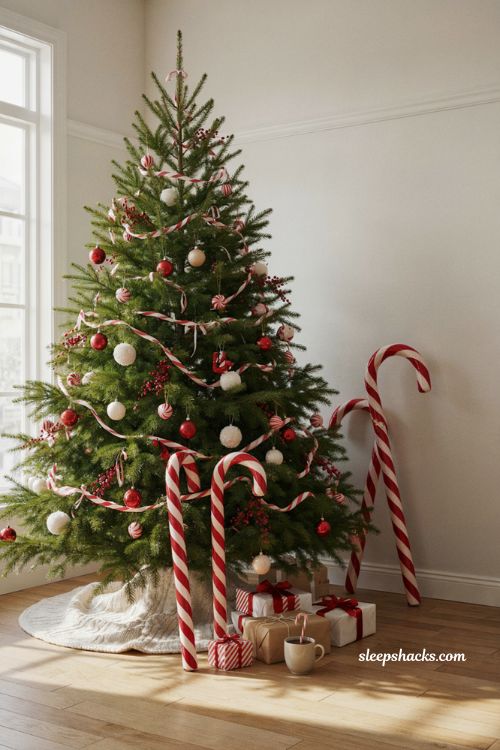
A couple of oversized candy canes, the kind that stand taller than your regular ornaments, make a real statement when placed near the base of the tree or leaned against a nearby wall. These larger props work well as a photo backdrop element too, especially if you’re setting up a spot for holiday pictures. Just make sure they’re weighted or secured well if there are kids or pets running through the room, since their size makes them more likely to get bumped than a small hanging ornament would be.
8. Add a Red Star or Bow Tree Topper
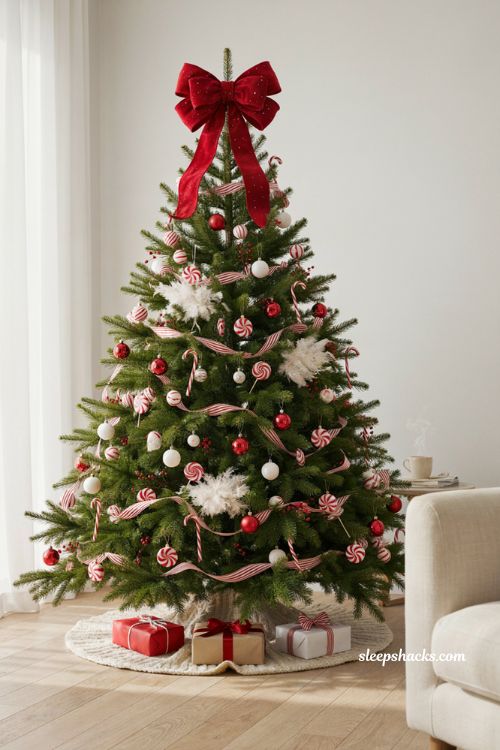
Skip the traditional angel topper and go with a bold red star or an oversized bow instead, ideally in a fabric or ribbon that matches the stripes used lower on the tree. A large red velvet bow with a polka dot pattern picks up the playful spirit of the theme while still looking intentional rather than cluttered at the very top. This is the first thing people see when they look at the tree overall, so it’s worth choosing something with real presence rather than a small, understated finial that gets lost.
9. Weave In Gingerbread Accents
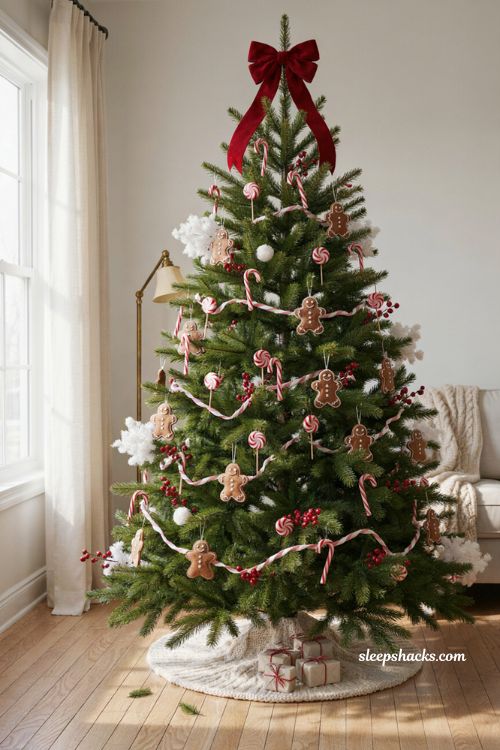
Felt gingerbread picks and small gingerbread figures add a warm, sweet-shop feeling that pairs naturally with the candy cane theme without competing with the red and white palette. Their brown tones actually read as a neutral against all that red and white, giving your eye a small resting point among the brighter colors. Tuck a few in near the base of the tree or scattered through the middle branches, rather than clustering every gingerbread piece in one corner, so they feel woven into the design instead of dropped on top of it.
10. Add Whimsical Candy-Themed Stems
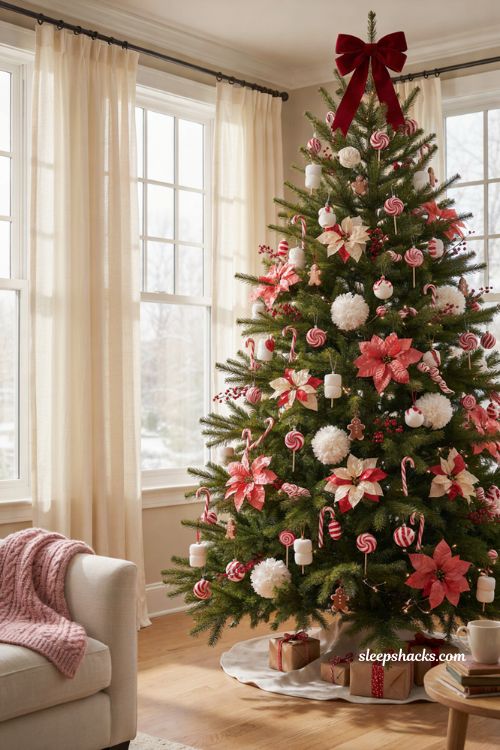
Marshmallow stems, sugar spice poinsettia stems, and other novelty candy-shaped picks bring a playful, almost storybook quality to the tree that plain ornaments alone can’t quite achieve. These work especially well if you’re leaning into a full candy-shop aesthetic rather than a more traditional Christmas look. Space them out across different heights on the tree so no single area feels overloaded with novelty pieces. A few well-placed stems go much further than a dense cluster of them all in one spot.
11. Include Shatterproof Baubles in Red and White
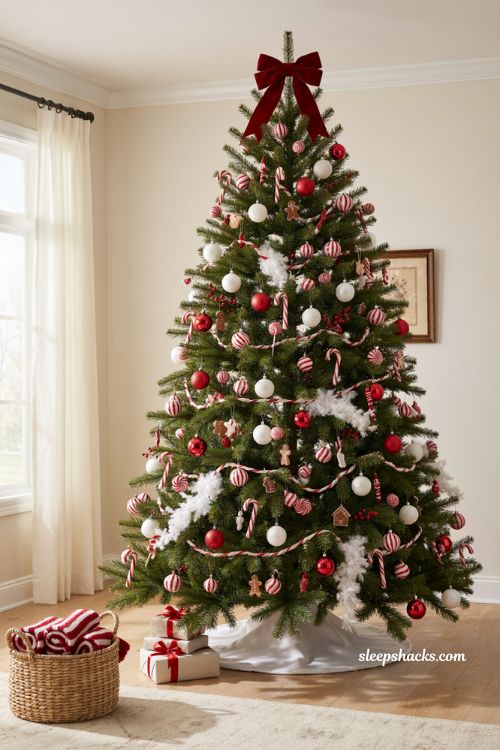
Round baubles in solid red, solid white, and swirled combinations of both give your tree a base layer of color before you add any of the more decorative candy cane shapes. Mixing matte and glossy finishes across the baubles adds subtle depth even within a simple two-color scheme. Shatterproof versions are worth the small extra cost, especially on lower branches where bumps and tugging happen most often. These baubles essentially do the quiet background work that lets your more eye-catching candy cane pieces stand out on top of them.
12. Add a Candy Cane Lane Sign or Two
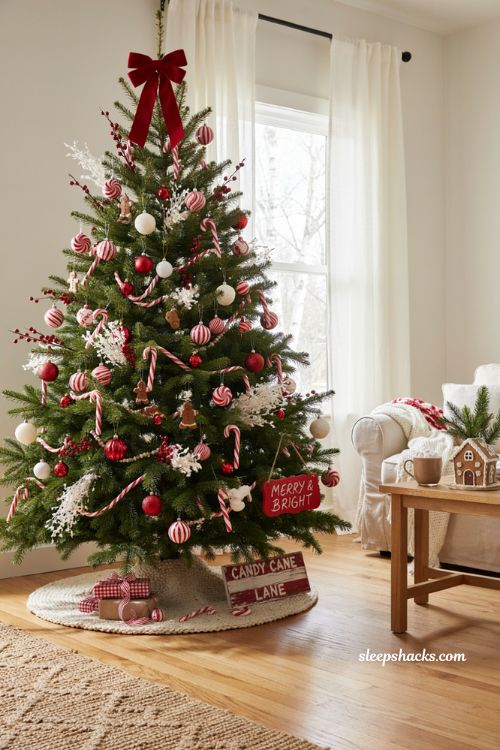
A small red or white sign reading “Candy Cane Lane” or something similarly playful adds a bit of personality and humor to the display, especially if you’re setting up a full tabletop or display area around the tree rather than just the tree alone. Lean it against the tree stand or hang it from a lower branch where it’s easy to read at a glance. This kind of small text element gives the whole display a sense of place, almost like you’ve built a tiny scene rather than just decorated a tree.
13. Use Twisted Glitter Picks for Sparkle
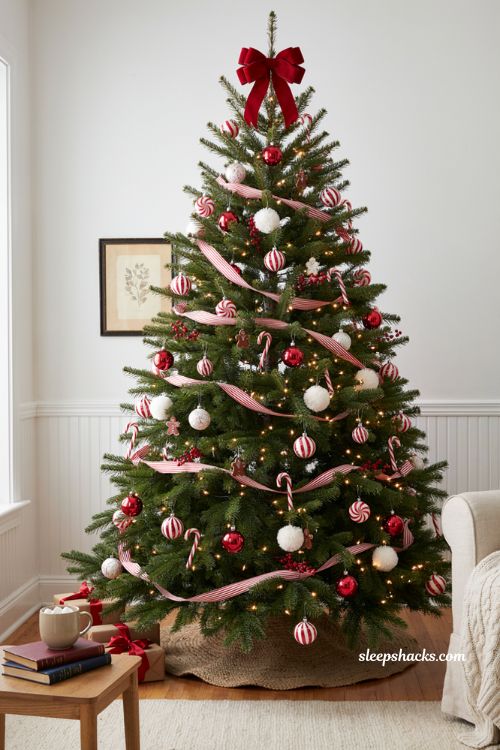
Twisted glitter picks in red or white catch the light in a way that flat ornaments simply can’t, adding a bit of sparkle without introducing a whole new color into the mix. Slide a few in near your existing ribbon spiral so the glitter picks up and echoes the same diagonal line already running through the tree. This is a small, inexpensive addition, but it makes a noticeable difference once the tree lights are on in the evening, since the glitter catches and reflects the warm glow beautifully.
14. Add Bottle Brush Trees Around the Base
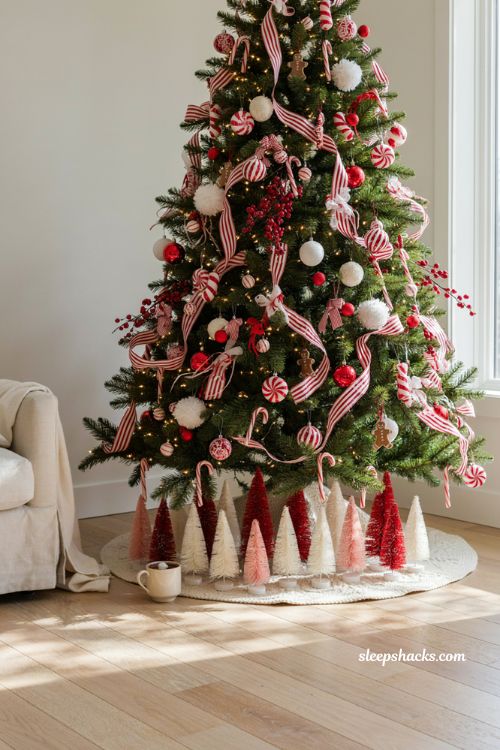
Small bottle brush trees in red, white, or even a soft peppermint pink clustered around the base of the main tree extend the theme beyond just the branches themselves. Vary their heights so they read as a little forest rather than a uniform row, and tuck a few candy cane picks or tiny ornaments among them for extra detail. This is a particularly good option if you have a bit of extra floor space near the tree stand that would otherwise sit empty and undecorated for the whole season.
15. Finish With a Red and White Garland
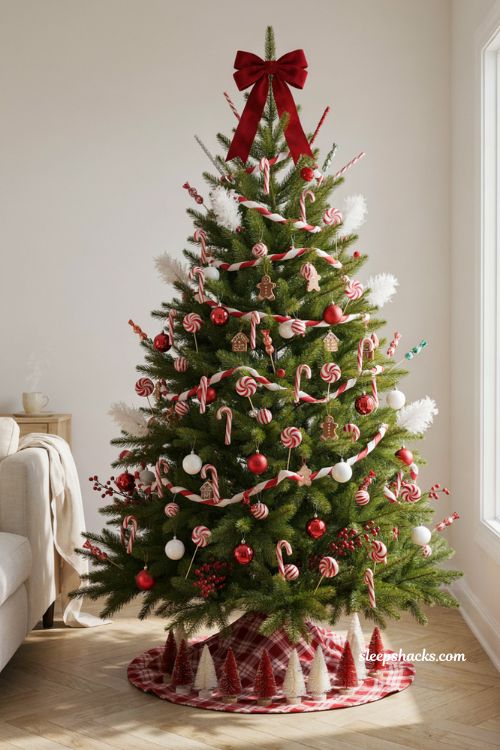
A striped or twisted red-and-white garland draped in loose swags across the tree, rather than tightly spiraled, adds one more layer of pattern to tie everything together. Let it hang a little looser than your ribbon underneath, so the two elements read as distinct layers instead of blending into one another. This garland is often the last piece added, since it sits on top of the ornaments and ribbon already in place, giving the whole tree a finished, cohesive look once it’s draped on.
Final Thoughts
There’s something almost nostalgic about walking into a room and seeing a tree built entirely around a color scheme this simple and this bold. Maybe it’s the memory of unwrapping an actual candy cane as a kid, or maybe it’s just how satisfying two colors done well can look next to a hundred colors done halfway. Either way, once you’ve layered in the ribbon, the ornaments, and a few playful extras, you’re left with a tree that looks like it took far more planning than it actually did. What might your own candy cane tree look like once it’s finished?
Frequently Asked Questions
Q: What colors are used for a candy cane themed Christmas tree?
A candy cane tree sticks to red and white, sometimes with small touches of green or brown from berries or gingerbread accents.
Q: How do I make my Christmas tree look fuller for a candy cane theme?
Weave deco mesh and ribbon into the branches before adding ornaments, since both add volume and texture faster than ornaments alone.
Q: What ornaments go on a candy cane Christmas tree?
Look for candy cane shaped ornaments, red and white shatterproof baubles, peppermint picks, and berry or pom pom sprays for the classic look.