

Your front lawn is the first thing anyone sees when they pull up to your house. It sets the tone before anyone even knocks on the door — and whether you have a sprawling yard or a tight little strip of grass, there’s always room to make it look genuinely beautiful. The good news is that front lawn landscaping doesn’t have to be expensive or complicated.
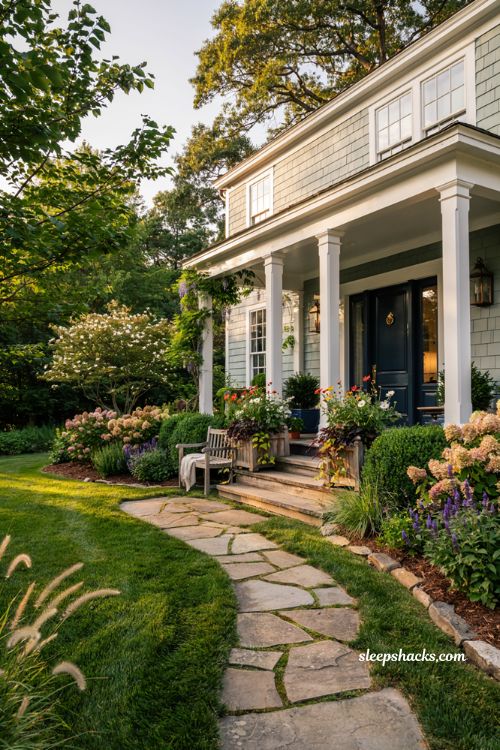
Sometimes it’s as simple as swapping out a tired plant, adding a curved pathway, or letting a flowering shrub do all the heavy lifting. These 15 ideas pull from real design strategies that actually work — whether your home is a classic colonial, a cozy craftsman, or a modern minimalist build.
1. Line Your Walkway with Low-Growing Flowering Plants
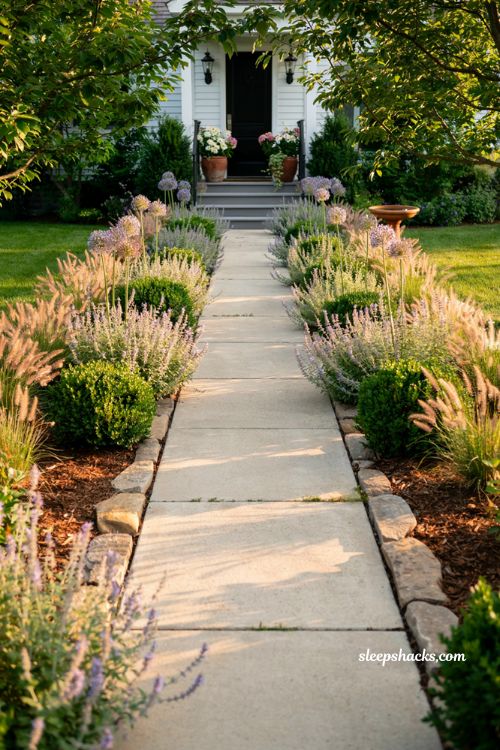
A plain concrete path to your front door is a missed opportunity. Flanking it with low-growing flowering plants — think pink muhly grass, catmint, or ornamental onion — immediately adds color and movement without eating up much space. The trick is choosing plants that stay below knee height so the path stays visually open while still feeling lush and inviting. You don’t need many; even a single row on each side makes a dramatic difference. Pick varieties that bloom in different seasons so there’s always something going on from spring through fall.
2. Add a Curved Pathway Instead of a Straight One
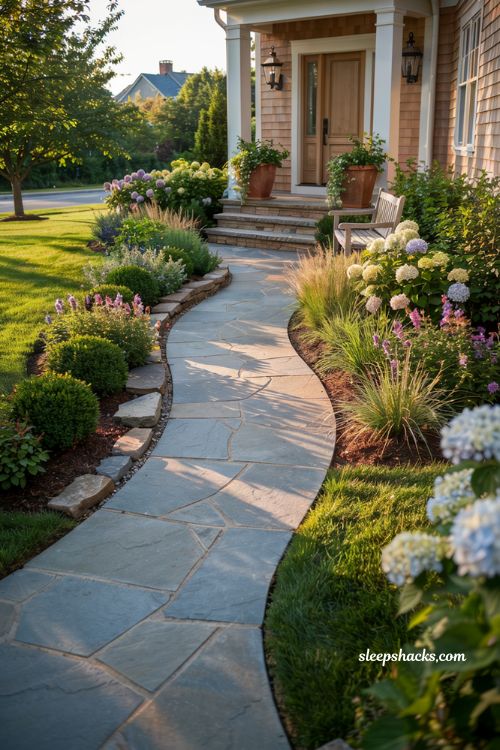
Straight paths are functional, but a gently curving walkway adds something a straight line never can — a sense of journey. It slows people down, creates natural planting pockets on either side, and makes even a small front yard feel more intentional and designed. Bluestone, brick pavers, and flagstone all work beautifully for curved paths. Wide, gentle curves are easiest to maintain if you have a lawn on either side since mowing around sharp corners is a headache you don’t need. The curve doesn’t have to be dramatic — even a subtle arc makes the whole entrance feel more polished.
3. Swap Turf for Ornamental Grasses in Dry Climates
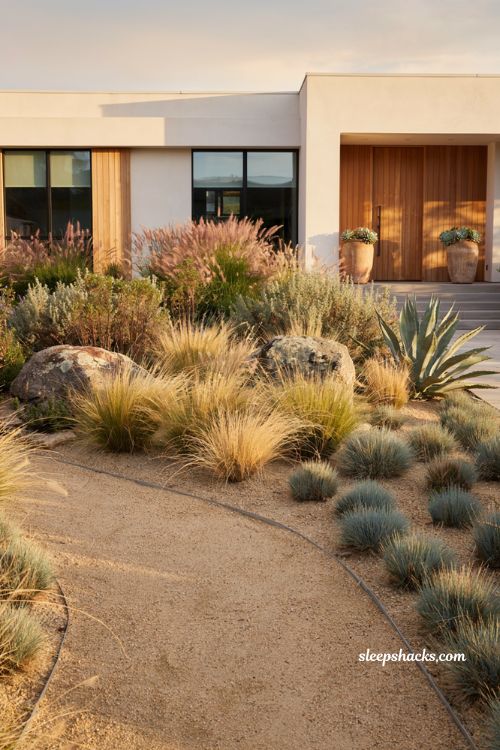
Grass lawns are high-maintenance, especially in hot or dry regions where keeping them green is a constant battle. Ornamental grasses like Mexican feather grass, blue fescue, or pink muhly grass give you that flowing, alive feeling without the watering schedule. They move in the breeze, they look beautiful in every season, and most of them ask almost nothing from you once they’re established. This works particularly well for modern or contemporary homes where clean lines and textural plants complement the architecture. Pair them with gravel or decomposed granite mulch for a truly low-maintenance front lawn design.
4. Plant a Statement Tree as a Focal Point
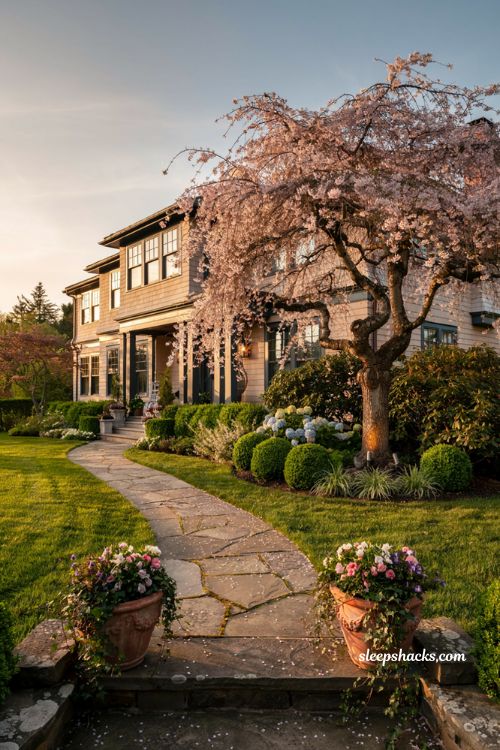
Every great front yard has at least one strong vertical element, and a well-chosen tree delivers that better than anything else. A weeping cherry, a paperbark maple, or a trio of white birch trees draw the eye upward and give the whole yard a sense of scale and maturity. Position it off-center rather than dead center in the yard — it looks more natural and leaves room for foundation plantings around it. Uplighting the tree at night turns it into a living sculpture and adds serious curb appeal after dark. One good tree can define your entire front lawn for decades.
5. Create a Terraced Garden on a Sloping Front Yard
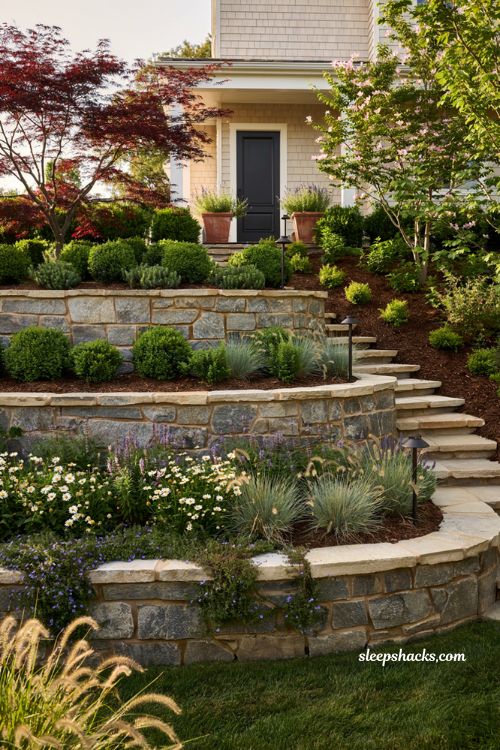
A slope is one of the trickier front yard challenges, but terracing turns the problem into a feature. By building retaining walls — whether in stone, brick, or timber — you create flat planting beds at different levels, which actually gives you more planting space than a flat yard would. Each terrace can hold a different plant palette: evergreen shrubs at the top, flowering perennials in the middle, and low groundcovers at the base. This approach also manages rainwater runoff better than bare grass on a slope. The result looks intentional, structured, and genuinely impressive from the street.
6. Use Evergreen Shrubs for Year-Round Interest
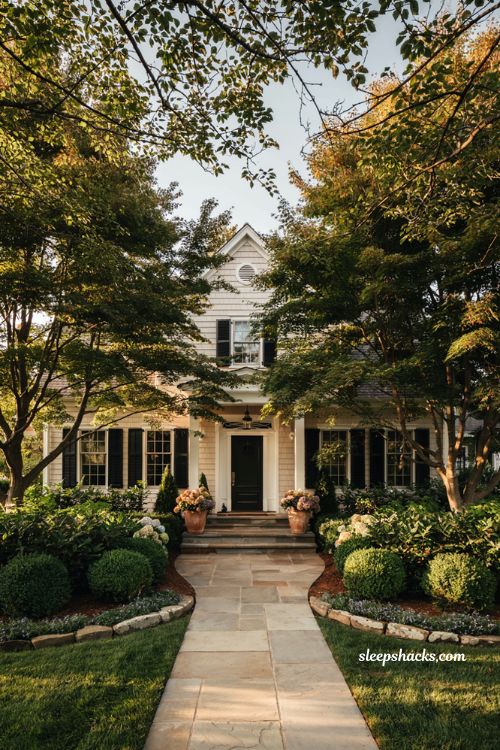
If you want a front lawn that looks good in January just as much as it does in June, evergreen shrubs are your best tool. Boxwoods, hollies, and dwarf conifers give you structure and color throughout the year without asking for much attention. Look for varieties with naturally compact growth so you’re not constantly pruning them back. Mix different shades of green — deep forest green, gray-green, gold-tipped — for texture and depth. Evergreens also work beautifully as a neutral backdrop that makes any seasonal color planting pop, whether that’s spring tulips or summer annuals in pots.
7. Install Landscape Lighting Along the Path and Beds
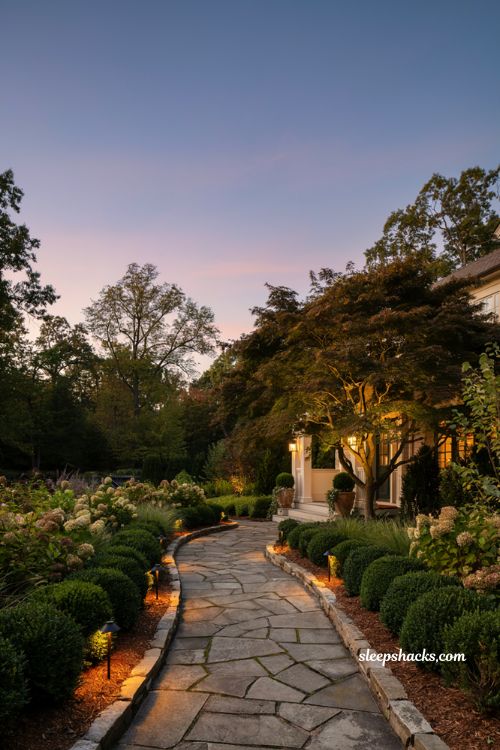
Good lighting is one of the most underused front lawn upgrades. Path lights keep walkways safe and welcoming at night, while uplighting in the garden beds adds depth and drama after dark. The key is choosing fixtures that match your home’s style — lantern-style lights suit traditional homes, while sleek low-profile stakes fit contemporary spaces. Focus light on your most interesting plants or the tree you love most. You don’t need a lot of fixtures to make an impact; a few well-placed lights do more than a dozen randomly scattered ones. It’s the detail that separates a fine-looking yard from a truly memorable one.
8. Add Window Boxes for Extra Color at Eye Level
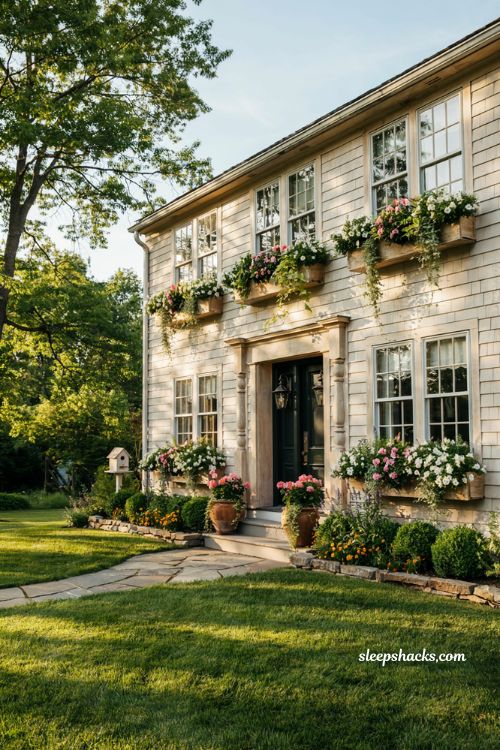
Most front yard landscaping stays low to the ground, which means adding something at window height creates a layered, fully dressed look that feels complete. Window boxes filled with cascading annuals — petunias, sweet potato vine, or begonias — bring color right up to the architecture of the house itself. Keep the planting design consistent across all boxes so the look feels coordinated rather than patchy. Change them out seasonally: bright summer annuals, then fall mums and ornamental cabbage, then evergreen boughs in winter. It’s a small investment that pays back in curb appeal every single day.
9. Build a Stone or Brick Retaining Wall with Planting Pockets
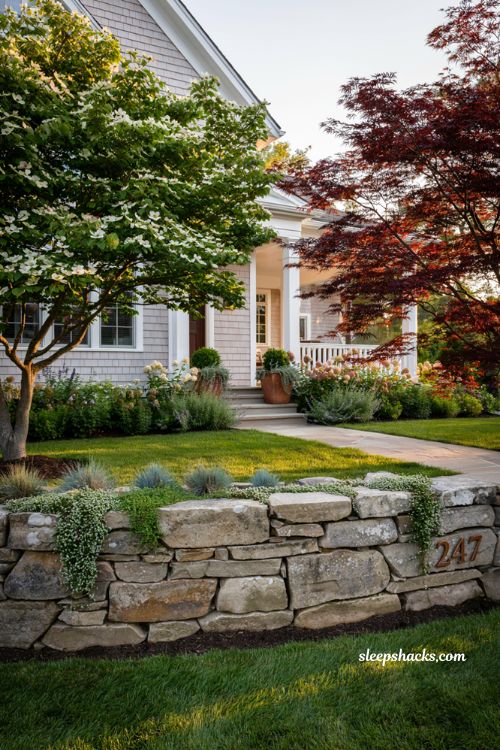
A low retaining wall along the front of your property does more than hold back soil — it defines the yard with a permanent, structural edge that looks intentional and sharp. Stone walls suit cottage or traditional homes; formed concrete or board-formed walls lean modern. Either way, the top of the wall becomes a natural planting ledge for trailing plants, sedums, or small ornamental grasses that soften the hard lines. Even a wall that’s only 12 to 18 inches tall adds a sense of enclosure and privacy without blocking sight lines. Custom house numbers mounted to the wall are a great finishing detail.
10. Plant Native Species for a Low-Maintenance Lawn
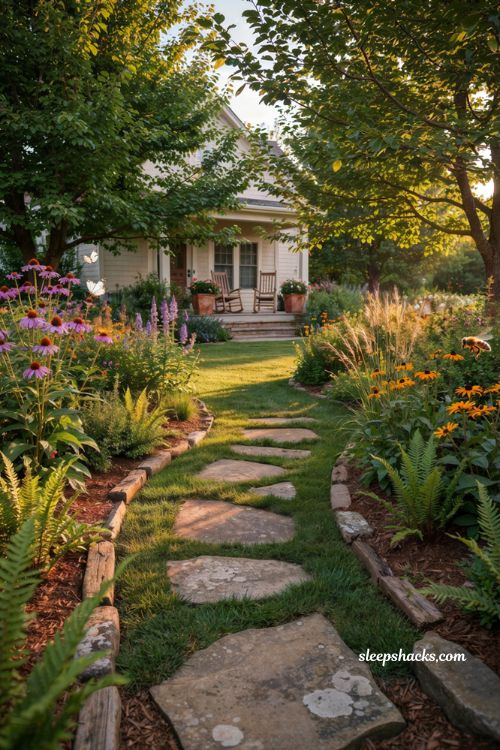
Native plants are the smartest choice for almost any front yard because they evolved to thrive in your specific climate without extra help. They handle drought, pests, and local soil conditions far better than imported varieties, which means you spend less time babying them and more time enjoying the result. Native coneflowers, wild bergamot, black-eyed Susans, and ornamental ferns all work beautifully in a front yard setting depending on your region. They also support local pollinators — bees, butterflies, and hummingbirds — which adds real life and movement to the landscape. A native garden looks abundant and intentional, never neglected.
11. Create Symmetry with Mirror-Image Foundation Plantings
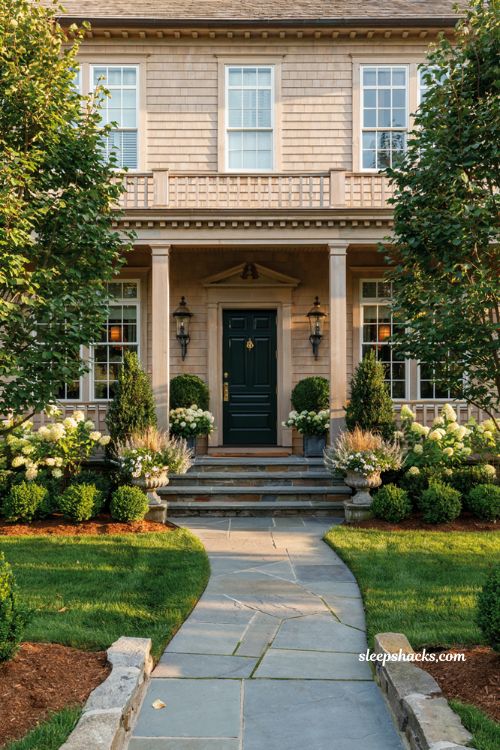
Symmetry is one of the oldest tricks in garden design, and it works because it signals care and intention without you having to say a word. Planting identical shrubs or small trees on either side of your front door — boxwood balls, columnar hollies, or matching hydrangeas — gives the entry a polished, formal look that suits traditional and colonial-style homes especially well. The key is keeping both sides truly matched in size and shape, which means a little pruning discipline each season. Pair the symmetrical foundation plants with asymmetrical path plantings for a balanced but not rigid overall design.
12. Mix Annuals and Perennials for Season-Long Color
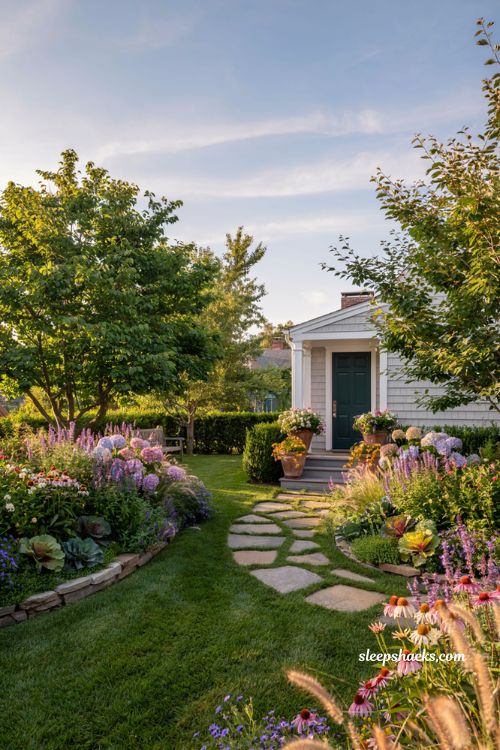
A front lawn that only looks good for six weeks a year is a missed opportunity. The solution is layering annuals and perennials so something is always blooming or adding color. Perennials like salvia, coneflower, and ornamental grasses give you the bones that return every year, while annuals fill the gaps with bold color in whatever hue suits the moment. Plant for sequence: spring bulbs first, then early perennials, then summer annuals, then fall bloomers like ornamental kale and late asters. This kind of planting plan takes a season or two to dial in, but once it’s working, your front yard basically runs itself.
13. Use Boulders and Rocks to Define Planting Beds
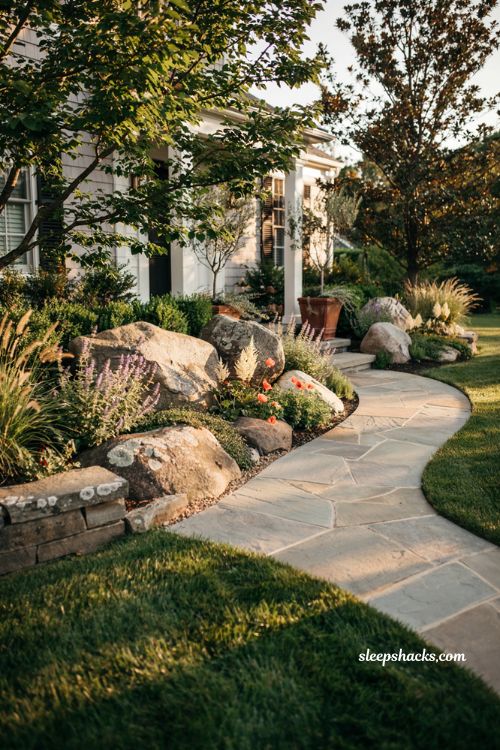
Large stones aren’t just filler — used well, they’re design elements that give your front yard a grounded, natural quality that plants alone can’t achieve. A few well-placed boulders surrounded by low-water perennials and succulents create a landscape that feels like it belongs there rather than something that was installed. This approach works particularly well on slopes where boulders can also serve a structural role holding soil in place. Choose stones that complement the material of your home — warm-toned granite for a brick house, gray fieldstone for a white or gray exterior. Odd numbers of rocks always look more natural than even groupings.
14. Install a Rose-Covered Arbor at the Entry Gate
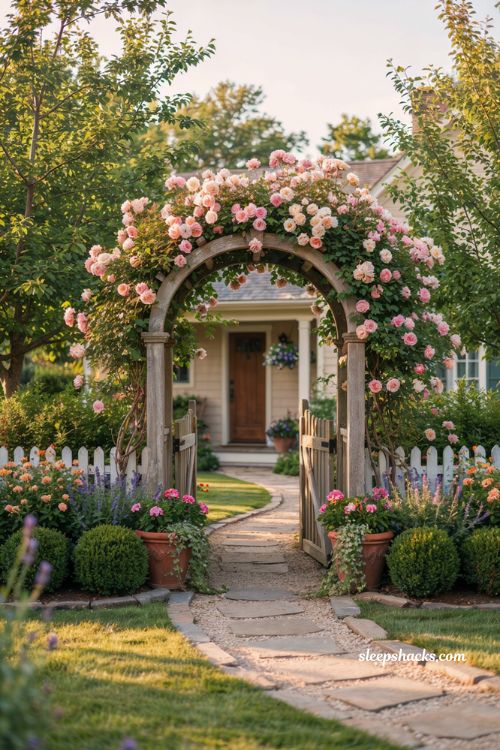
Few things say “welcome” the way a flowering arbor does. A simple wooden or metal arch covered in climbing roses frames the entry to your front yard with color, fragrance, and undeniable charm. Nearly thornless varieties like ‘Zéphirine Drouhin’ or ‘Mortimer Sackler’ are ideal for entries where people will brush past the canes. Keep the arch in proportion with your gate and fence — a too-tall arbor on a low fence looks awkward, while a well-scaled one looks like the yard was designed by someone who really knew what they were doing. Add a simple gravel or stone path underneath to complete the picture.
15. Choose Plants That Match Your Home’s Exterior Colors
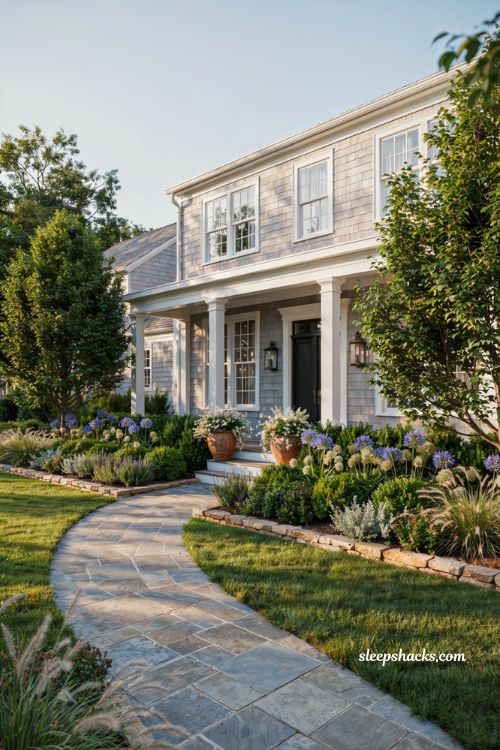
One of the easiest ways to make a front yard feel truly pulled-together is to let your home’s paint colors guide your plant palette. A gray house with white trim looks stunning with soft blue agapanthus, white coneflowers, and silver-leafed plants like lamb’s ear. A warm brick or cream exterior pairs beautifully with gold ornamental grasses and rust-toned sedums. Deep green shutters? Echo that with glossy evergreens and add a pop of red knockout roses. This kind of color coordination makes the house and the landscape feel like one cohesive design rather than two separate things that happen to be near each other.
Final Thoughts
The front lawn is worth investing in — not just because it affects how your home looks from the street, but because it’s what you see every single time you come home. You don’t need to redo everything at once. Pick one idea from this list that feels doable right now, whether that’s adding path lighting, planting a statement tree, or swapping tired foundation shrubs for something with more personality. Small, deliberate changes add up faster than you’d think. Over a season or two, your front yard can go from the thing you barely notice to the thing your neighbors stop to compliment. Start small, choose plants you actually like, and let the space grow into itself.
Frequently Asked Questions
Q: What are the best low-maintenance front lawn landscaping ideas?
Ornamental grasses, evergreen shrubs, and native perennials are all excellent low-maintenance choices because they require little watering or pruning once established. Replacing high-maintenance turf with gravel, groundcovers, or mulched planting beds also significantly reduces upkeep.
Q: How do I landscape a small front yard on a budget?
Focus on a few high-impact changes like adding path edging, planting one statement shrub or tree, and using annuals for seasonal color — these cost far less than a full landscape overhaul. Buying small plants and letting them mature over a season or two is the most budget-friendly approach.
Q: What plants look good in a front yard all year?
Evergreen shrubs like boxwood, holly, and dwarf conifers provide year-round structure and color, while ornamental grasses add seasonal texture and movement. Pairing these with spring bulbs and summer or fall annuals gives you continuous interest across every season.