

A bedroom where the walls hold the soft, weathered blue of an old French shutter — not stark navy, not pastel sky, but somewhere warm and dusty in between. That particular shade has a way of making a room feel both grounded and airy at once, which is probably why it shows up again and again in cottage retreats, coastal escapes, and old-world master suites alike.
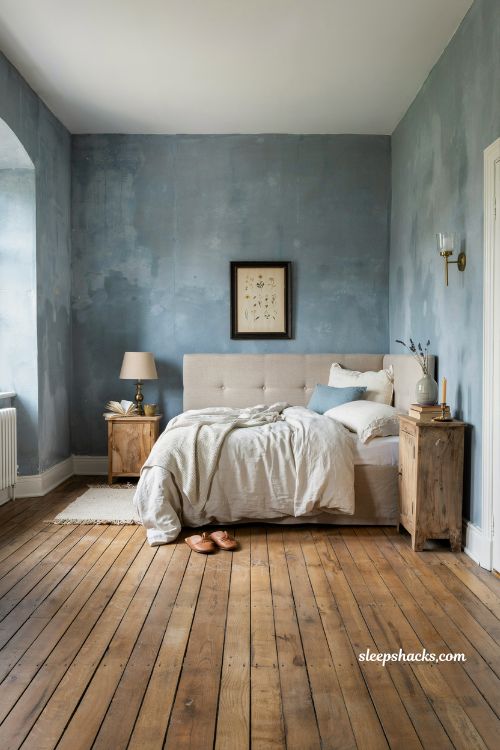
French blue isn’t loud. It’s the kind of color that lets linen bedding, brass hardware, and a worn wood floor all feel like they belong together. If you’ve been hunting for a palette that feels collected rather than decorated, these fifteen ideas pull together everything from paint and wallpaper to lighting and bedding so you can bring that quiet French charm into your own bedroom.
1. Icy Blue Wall Paneling With Flax Linen
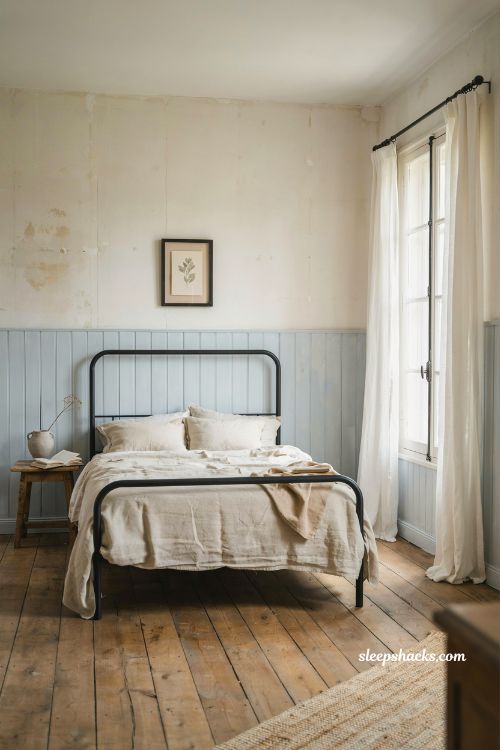
Wall paneling painted in a pale, almost chalky blue gives a bedroom French country bones without tipping into anything fussy. Pair it with bedding in a soft flax linen and keep the upper walls in a warm ivory so the two tones blend rather than compete. Black iron hardware on the windows or a simple iron bed frame adds just enough contrast to keep things from feeling too soft. The real trick here is restraint — one strong color paired with natural materials reads as collected, not themed, which is exactly what makes this look feel timeless instead of trendy.
2. A Deep Blue Accent Wall Behind the Bed
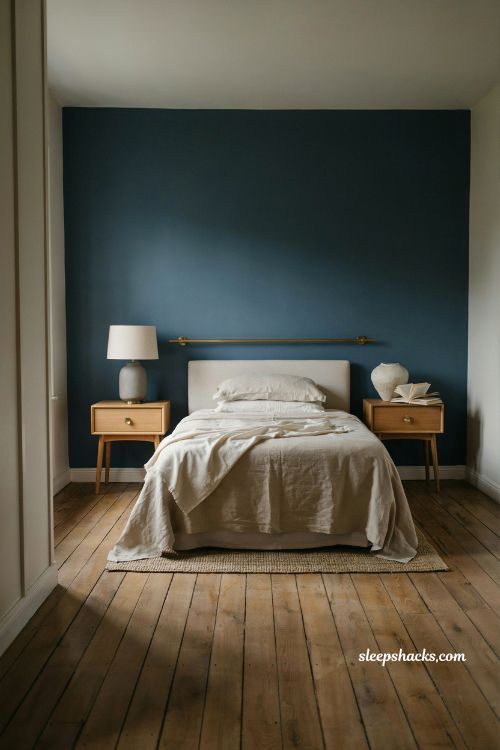
Behind the headboard, a single wall in deep, almost midnight blue creates instant depth without overwhelming the whole room. Keep the nightstands and other walls light so the dark wall reads as a deliberate accent rather than a heavy backdrop. Brass or warm gold hardware on the nightstands picks up the richness of the blue and keeps the look from feeling cold. This is an easy way to add drama to a primary bedroom that otherwise leans neutral, and it’s a change you can make in a single weekend with just one wall and a few cans of paint.
3. Blue and White Toile for Old-World Charm
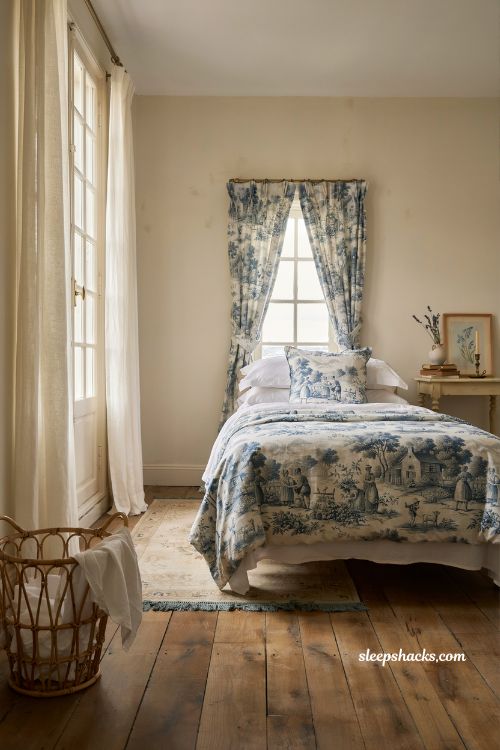
Toile fabric — those small-scale pastoral scenes printed in a single ink color — is one of the fastest ways to bring French character into a bedroom. Use it on the duvet, a pair of drapery panels, or even just one accent pillow if you want a lighter touch. Blue toile against crisp white sheets keeps the pattern from feeling heavy, especially in a room with plenty of natural light. Because the print carries so much of the room’s personality on its own, you can keep the furniture simple and let the fabric do most of the talking.
4. Chinoiserie Ginger Jar Lamps as Accent Pieces
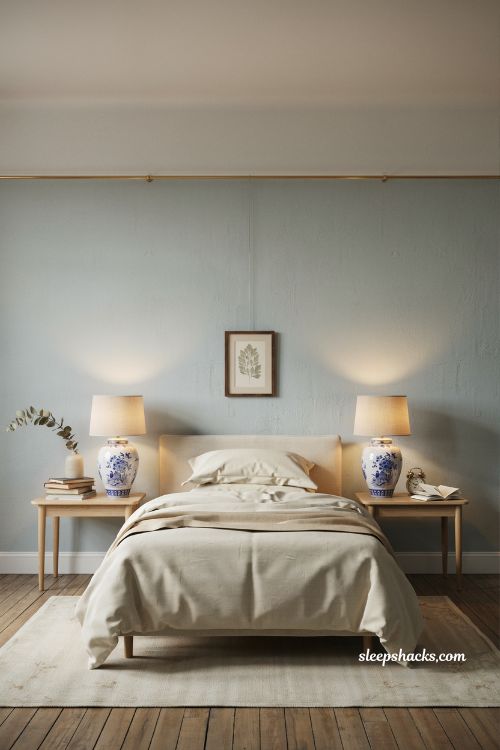
A pair of blue and white ginger jar lamps on either side of the bed brings old-world polish to a French blue bedroom in a single move. The classic chinoiserie shape — rounded body, narrow neck, simple floral or landscape motif — pairs naturally with linen shades and brass bases. Set them on matching nightstands for symmetry, or mix slightly different sizes for a more collected, lived-in feel. Because the lamps do so much visual work on their own, you can keep the rest of the nightstand styling minimal: a small stack of books, maybe a single stem in a vase.
5. Ticking-Stripe Bedding for an Easy Classic Look
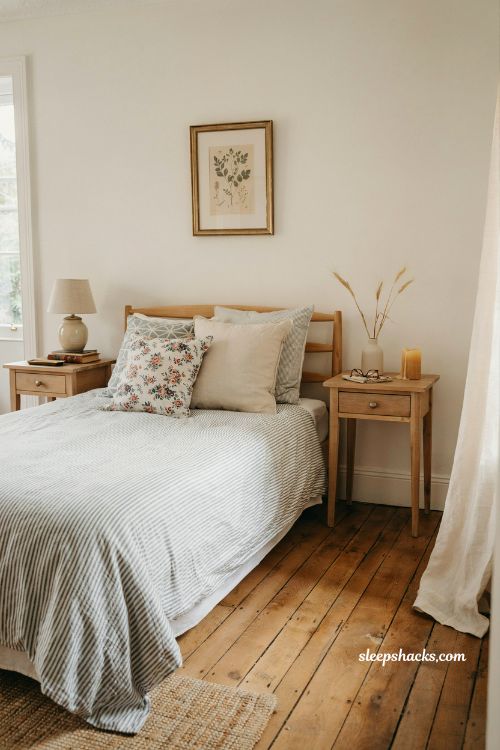
Ticking stripe — that narrow, classic blue-and-white striped fabric originally used on mattress covers — has become a quick shortcut to an effortlessly French-feeling bed. Use it on a duvet cover or as the base layer, then add a few differently patterned throw pillows so the look doesn’t feel too matchy. The stripe reads as casual and a little vintage, which makes it a good fit for guest rooms or any space that wants to feel relaxed rather than formal. It’s also one of the easiest patterns to find affordably, so it’s a low-risk way to test the look.
6. A Ruffled Bed Skirt on an Antique Iron Frame
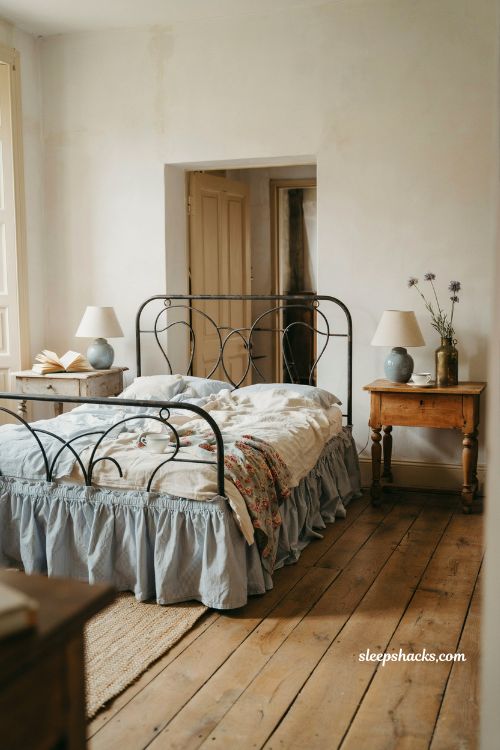
An antique iron bed frame paired with a ruffled, gathered bed skirt brings a soft, slightly romantic edge to a French blue room. Make the skirt yourself from a few yards of fabric if you want a fuller, more custom drop than most store-bought versions offer — most ready-made skirts skimp on fabric and rarely hit the right length. Choose a blue ticking or small floral print to tie the skirt back into the room’s palette. The ruffle softens the hard lines of the iron frame, which keeps the whole bed from feeling too stiff or formal.
7. Soft Blue Wallpaper With Crisp White Linens
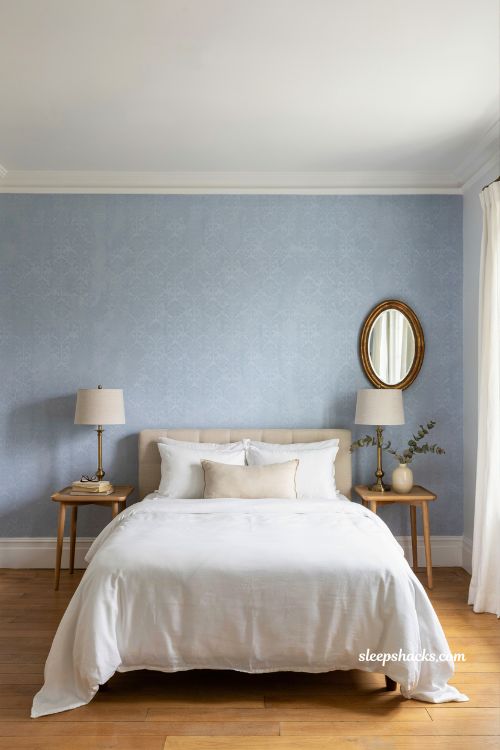
Subtle blue wallpaper, paired with crisp white bedding and a cozy upholstered headboard, gives a bedroom the polish of a boutique hotel room. Look for a small-scale print — stripes, a faint damask, or a delicate floral — so the wallpaper reads as texture rather than a bold statement. Vintage-inspired accessories, like a brass mirror or an antique-style lamp, round out the look without adding visual noise. This combination works particularly well in a primary bedroom where you want the space to feel elevated and restful at the same time.
8. Warm Yellow and Gold Accents Against Blue
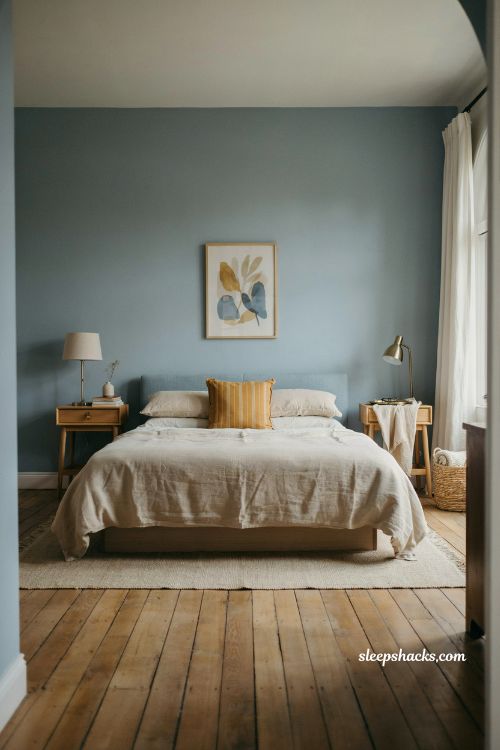
Blue and yellow might not be the first pairing that comes to mind for a French-inspired room, but the combination brings real warmth and a touch of playfulness to what could otherwise feel like a cool, formal palette. Use yellow sparingly — a striped pillow, a small lamp, a piece of art — so it acts as an accent rather than competing with the blue. Golden or mustard tones work especially well, since they read as rich rather than bright. The contrast keeps the room feeling alive instead of overly serious.
9. Jewel-Tone Navy With Gold and Fuchsia
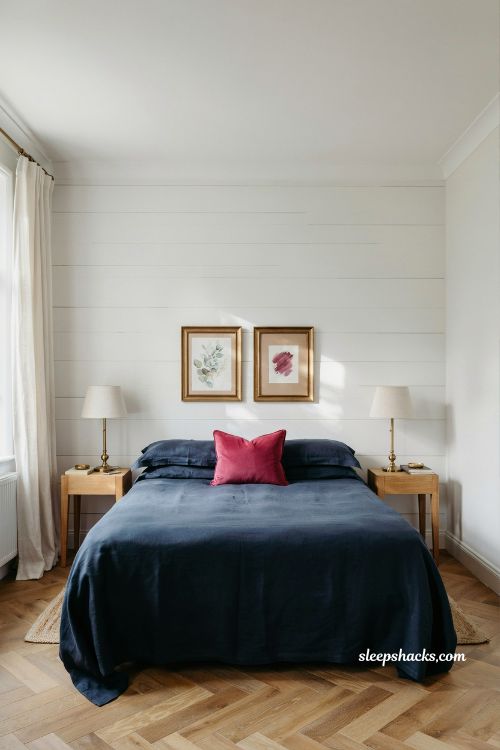
For a bolder take on French blue, go with a deep navy and let it carry real contrast against white shiplap or paneled walls. Bring in gold accents through lamp bases or picture frames, then add a single saturated color, like fuchsia, in a throw pillow or piece of art to keep the room from feeling too cool. This combination leans more glamorous than cottage, so it works best in a primary suite where you want the palette to feel a little more dressed up than your average guest room.
10. Layered Shades of Blue for a Softer Look
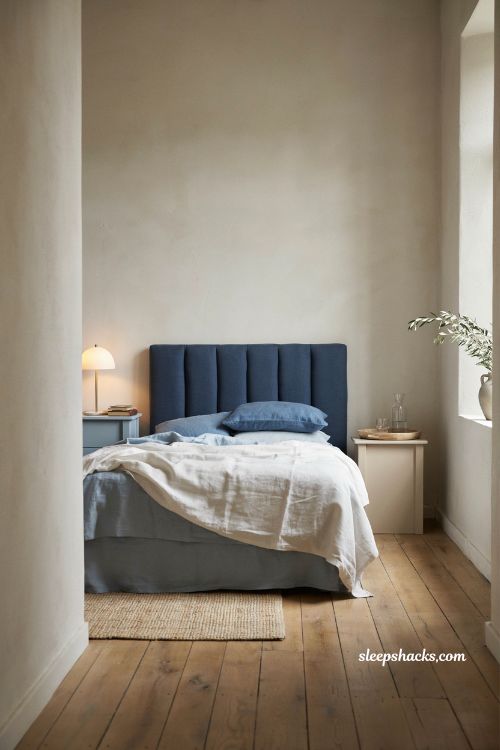
Instead of picking just one blue, layer several shades together — a navy headboard, a lighter blue side table, and pale blue-and-white bedding — to create a softer, more gradient-like effect across the room. The range of tones lowers the overall contrast, which makes the space feel calmer and a little more casual than a stark navy-and-white pairing. Keep the walls a simple white or off-white so the blues have room to do the work. This approach is a good fit if you love blue but want the room to feel relaxed rather than dramatic.
11. French Blue Trim and Board-and-Batten Walls
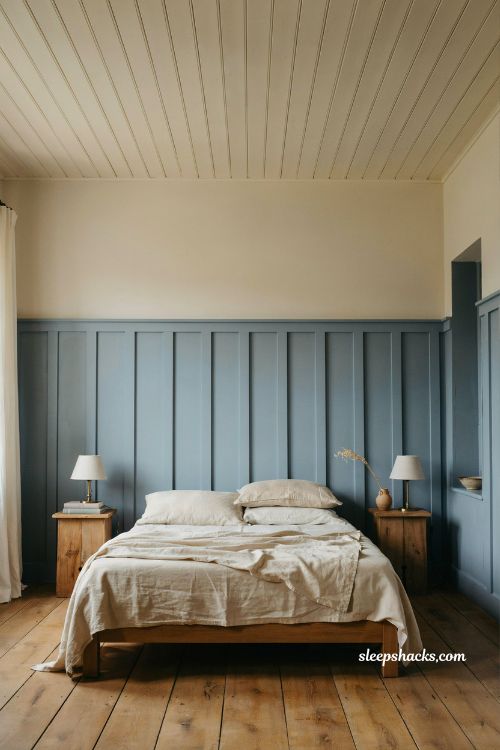
French blue board-and-batten or simple painted trim along the lower half of the wall brings cottage character to a bedroom without committing to a full wall of color. Pick a true, slightly dusty blue rather than anything too bright, then leave the upper wall in a soft white or warm cream. Bead board on the ceiling or in a nearby nook can echo the same painted detail for a more finished, custom-built feel. This treatment works especially well in older homes or anywhere you want a sense of architectural history, even if the walls are brand new.
12. Brass Sconces Against Natural Blue and White Textures
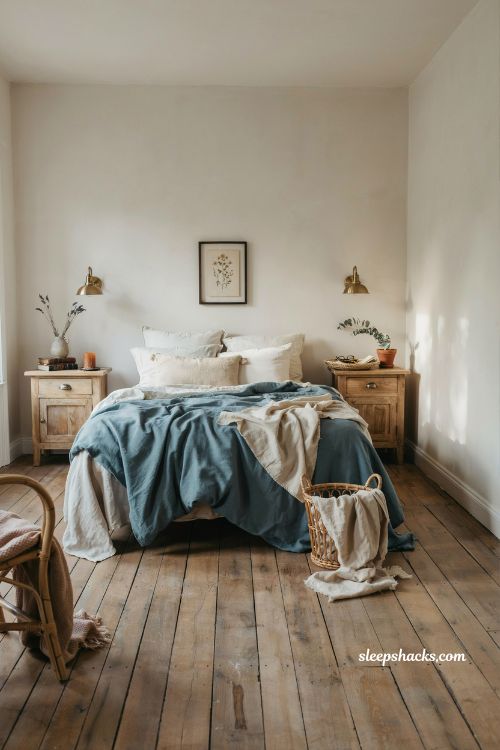
Pairing blue and white with natural materials — sandy tans, woven textures, raw wood — gives the palette a coastal, lived-in feel rather than a strictly formal one. Desaturate the blues slightly so they read as soft rather than crisp, and let the natural tones do most of the grounding work. Brass sconces mounted above the nightstands add a subtle glamorous contrast without pulling the room away from its relaxed mood. This combination is a good choice if you love the blue-and-white look but want the room to feel breezy rather than buttoned-up.
13. A Painted Blue Ceiling for Whimsy
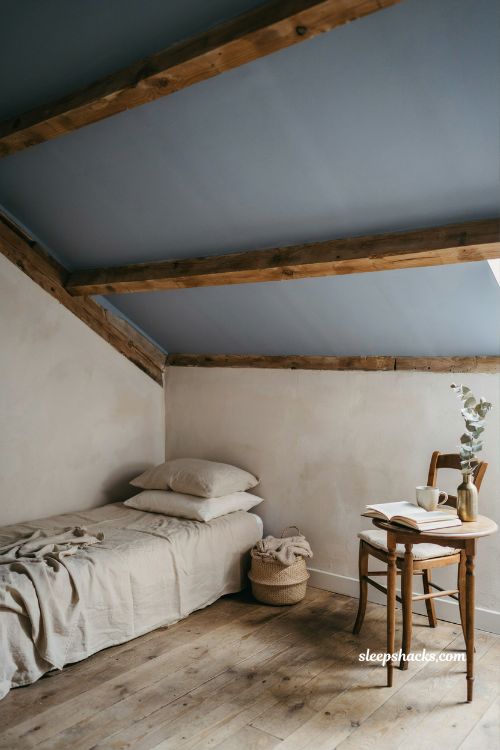
Painting the ceiling a soft, dusty blue is a centuries-old trick that instantly makes a room feel a little more magical, especially in an attic space or anywhere with interesting roofline angles. Keep the walls white or a very pale neutral so the ceiling color reads as the room’s focal point rather than competing with everything else. This treatment works well above a daybed or reading nook, where you naturally spend time looking up. It’s a small, contained project — usually just one ceiling’s worth of paint — that makes an outsized difference in how the room feels.
14. Mixing Floral Wallpaper With Stripes or Plaid
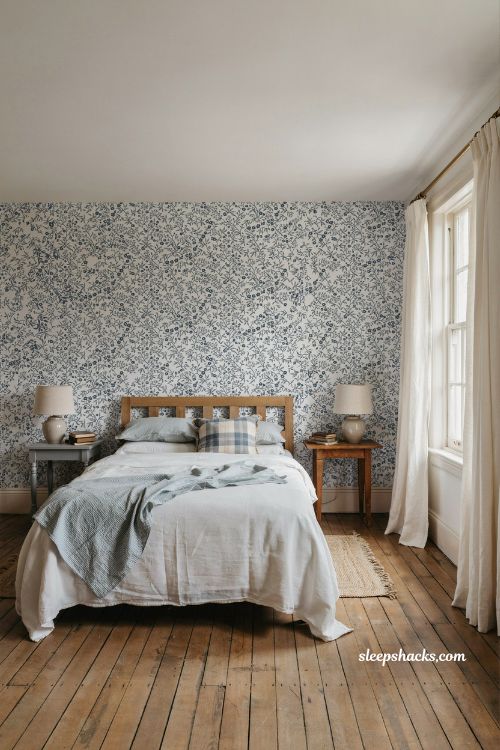
Mixing a floral wallpaper with a striped or plaid textile is a classic French way to layer pattern without the room feeling chaotic. The key is keeping the color palette consistent across both patterns — if the wallpaper carries blue and white, pull the same two tones into the stripe or plaid fabric. Add a few solid pieces, like a plain wood headboard or simple white bedding, to give the eye somewhere to rest. This approach takes a little more confidence than a single-pattern room, but it’s one of the most distinctly French-feeling choices on this list.
15. Custom French Blue Cabinetry-Inspired Built-Ins
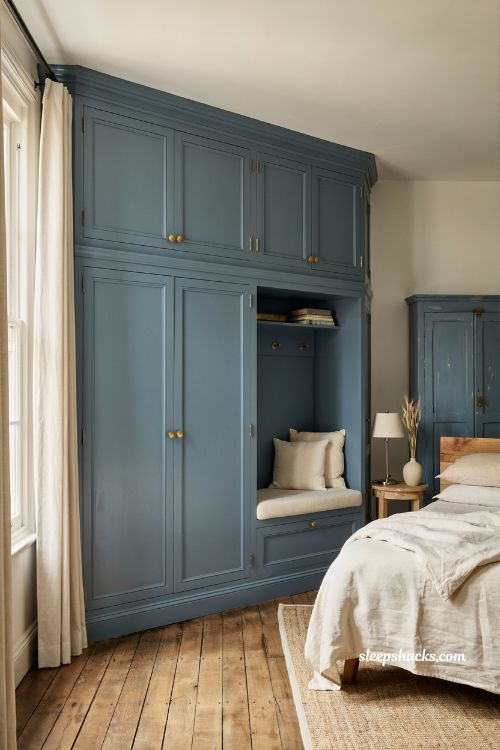
If you want a bedroom that feels custom-built rather than decorated, look to French blue cabinetry as inspiration for a built-in dressing nook, window seat, or wardrobe wall. A true French blue — something like a deep Newburyport or Wedgwood shade — looks especially rich against brass or unlacquered hardware. Even a single piece, like a vintage armoire repainted in this color, can anchor the whole room. Because the color is so saturated, it pairs best with otherwise simple, uncluttered surroundings so the cabinetry itself stays the clear focal point.
Final Thoughts
None of these ideas require a full renovation, and that’s really the point. French blue works because it’s flexible — a single accent wall, a pair of lamps, or even just a ticking-stripe duvet can shift the whole feel of a room without a major budget or a long timeline. Start with whichever idea feels most doable right now, live with it for a while, and add from there. The rooms that feel most genuinely French were rarely finished all at once. They were built slowly, piece by piece, by someone paying attention to what they actually loved.
Frequently Asked Questions
Q: What is French blue exactly?
French blue is a muted, slightly grayed-down shade of blue — somewhere between dusty and classic — often associated with antique French furniture and shutters. It’s typically softer and less saturated than a true navy or cobalt.
Q: What colors pair well with French blue in a bedroom?
Warm whites, flax or cream linen, brass and gold hardware, and soft yellow accents all complement French blue nicely. Black iron details also work well if you want a bit more contrast.
Q: Is French blue too dark for a small bedroom?
Not if you use it carefully — try it on trim, one accent wall, or furniture instead of every wall, and keep the rest of the room light. Used as an accent rather than the dominant color, French blue can actually make a small room feel cozier rather than cramped.