

When I first started paying attention to kitchen design, I didn’t expect something as simple as a brick backsplash to completely change the mood of a space. But honestly, the moment you see that raw texture behind a stove or sink, the whole kitchen feels more grounded and real.
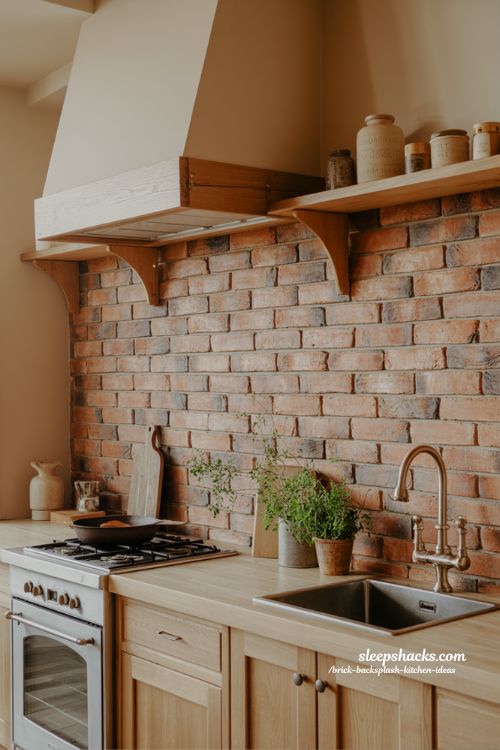
It stops feeling like a showroom and starts feeling like a place where life actually happens. That’s the quiet power behind brick backsplash kitchen ideas, and it’s why they stay so popular.
There’s something comforting about the mix of old-world texture and modern living. I’ve seen small kitchens feel bigger, plain kitchens gain personality, and cold spaces suddenly feel warm without changing much else. It’s not about perfection at all. It’s about character, and that slightly imperfect surface that makes everything around it feel more human and lived in every single day.
- Brick adds natural warmth and texture without overcomplicating the kitchen
- It works with both modern and traditional interiors very easily
- Even small changes can shift the entire mood of a space
6 Amazon Best-Sellers That Give Your Kitchen That Brick Backsplash Look — No Contractor, No Mess
Real brick backsplashes are timeless, warm, and endlessly stylish. They’re also expensive, messy to install, and permanent. These 6 Amazon best-sellers give you every bit of that exposed-brick character in an afternoon — with peel-and-stick simplicity that renters, homeowners, and first-time DIYers can all handle. Here’s the breakdown from the most realistic to the most dramatic.
Commomy 3D Faux Brick Peel & Stick Wall Panels — Whitewash Red Brick, 10 pcs (22.48 sq ft)
Commomy 3D Faux Brick Peel & Stick Tiles — Retro White / Warm Whitewash, 10 pcs (9.7 sq ft)
Art3d Peel & Stick Brick Kitchen Backsplash — 3″ × 6″ Subway Tiles, 102-Piece Grey Marble / Stone Design
STICKGOO Thicker Design Peel & Stick Backsplash — Beige & White, 12″×12″, 10 Sheets
StyloVue 100-Piece Peel & Stick Subway Tile — 3″×6″ White Brick Style, Stacked or Offset Layouts
Yipscazo 2026 Upgrade Peel & Stick Backsplash — Beige Rocks / Rustic Stone Brick, 10–20 Sheet Packs
1. Classic Red Brick Backsplash With Timeless Warmth
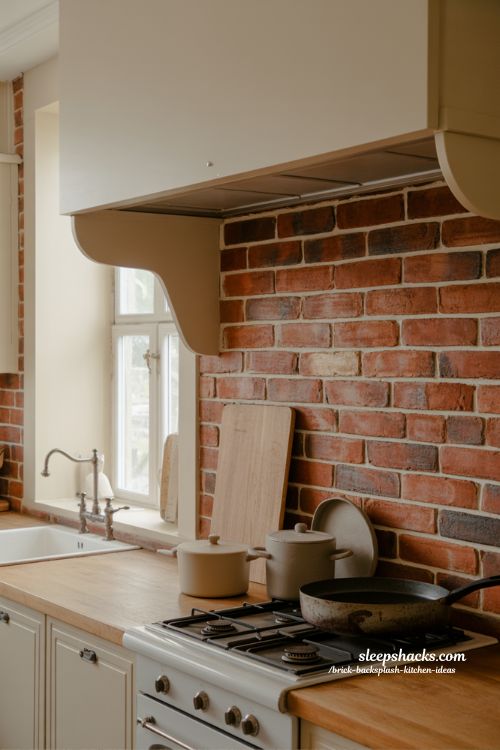
Red brick has a way of making a kitchen feel instantly familiar, almost like it has always been there. It carries that warm, grounded feeling that softens modern edges and brings comfort into the room. I’ve always noticed how it pairs beautifully with simple cabinetry, because the brick already carries enough visual weight on its own.
What makes this idea work so well is its honesty. It doesn’t try to look perfect or polished. Instead, it embraces texture, small imperfections, and natural color variation. When light moves across it during the day, the kitchen feels alive in a very subtle but powerful way that never really gets old or boring.
2. Whitewashed Brick for a Soft Modern Feel
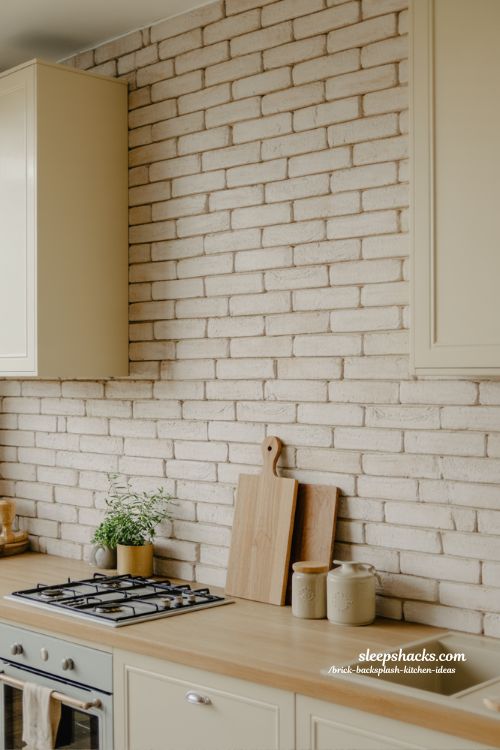
Whitewashed brick feels like a gentle version of the classic brick look, and it completely changes the atmosphere of a kitchen. Instead of heavy warmth, you get softness and light. I’ve seen it transform darker kitchens into brighter, more open spaces without removing the charm of the original brick surface underneath.
The beauty of this style is its balance. It keeps texture visible but reduces visual noise, which makes it perfect for smaller or less-lit kitchens. It blends easily with modern cabinets and neutral tones, creating a calm environment that still feels interesting and layered without becoming overwhelming or visually heavy.
3. Black Brick for Bold, Modern Kitchens
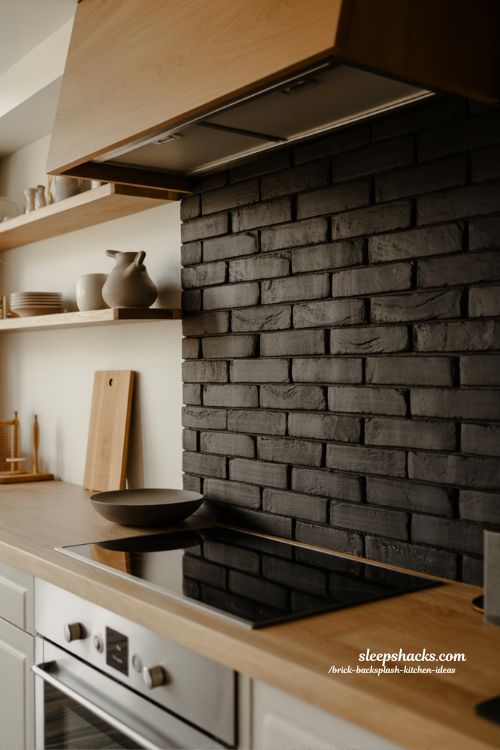
Black brick brings a completely different energy into a kitchen. It feels bold, structured, and a little dramatic in a way that immediately draws attention. I’ve noticed it works best when paired with lighter elements so the contrast doesn’t feel too heavy or enclosed in the space.
This style is less about softness and more about confidence. It creates a strong backdrop that anchors the entire kitchen design. When used thoughtfully, it can make even simple layouts feel intentional and refined, almost like every detail was carefully chosen rather than placed randomly or without thought.
4. Thin Brick Veneer for Easy Transformation
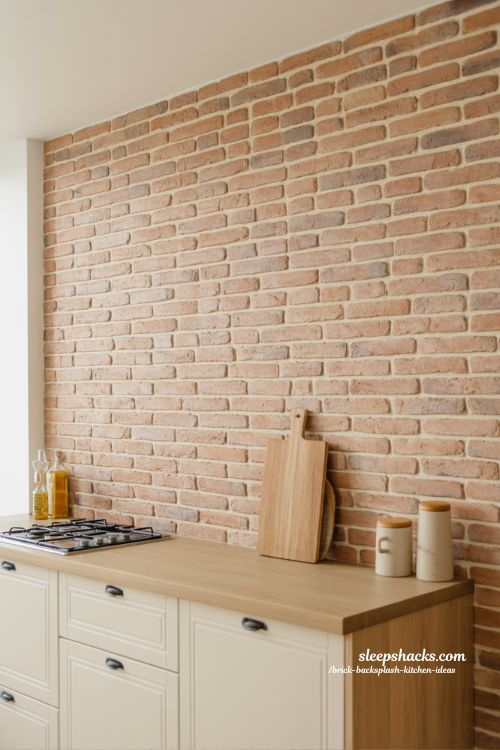
Thin brick veneer is one of those practical design choices that surprises people once they see the result. It gives you the look of real brick without the weight or structural challenges. I’ve seen it used in apartments where full brick simply wasn’t an option, yet the effect still felt authentic and warm.
What makes it so appealing is flexibility. It can be installed over existing surfaces without major renovation work, which saves both time and effort. The final result still carries that familiar brick texture, just in a lighter, more adaptable form that fits modern living very well.
Brick Style Comparison Table
Before choosing a brick style, it helps to understand how each one behaves in everyday kitchen use. Some are more decorative, while others focus on practicality or ease of maintenance. This simple comparison helps make the decision clearer without overthinking every small detail.
| Brick Type | Look & Feel | Maintenance | Best Use |
| Red Brick | Warm & rustic | Medium | Traditional homes |
| Whitewashed Brick | Soft & bright | Low | Small kitchens |
| Black Brick | Bold & modern | Medium | Statement walls |
| Thin Veneer | Light & flexible | Low | Renovations |
After looking at them side by side, it becomes easier to see that no option is strictly better than the other. Each one simply creates a different mood, and the right choice depends on how you want your kitchen to feel every day.
5. Industrial Brick With Metal Accents
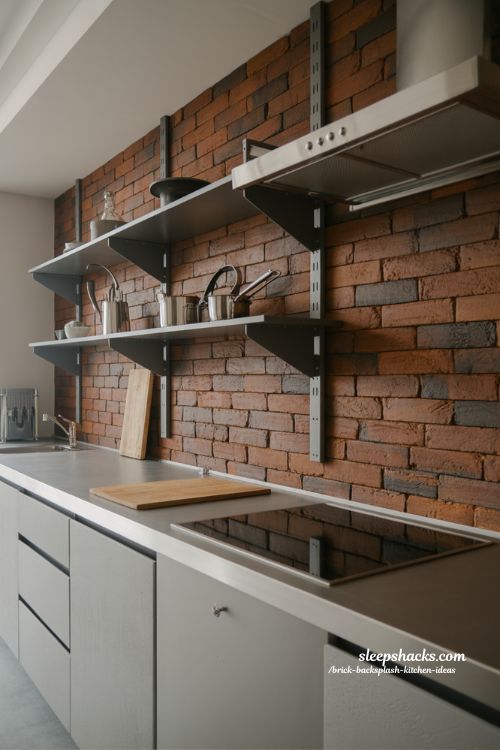
Industrial-style kitchens have a raw, honest feel that comes from combining strong materials. Brick paired with metal shelves or steel finishes creates a space that feels practical and grounded. I’ve always liked how this style avoids unnecessary decoration and focuses more on structure and materials instead.
The result is a kitchen that feels open and functional. It works especially well in larger spaces where textures can breathe. The contrast between rough brick and smooth metal gives the room depth, making it feel both modern and slightly rugged at the same time.
6. Brick With Wooden Open Shelving
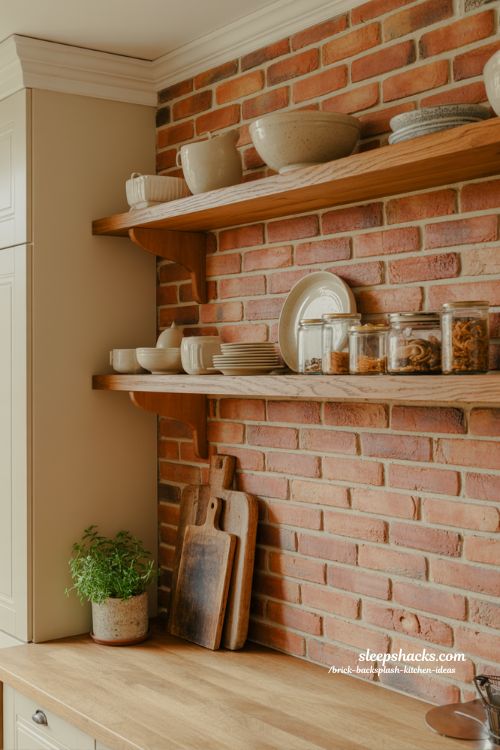
When brick meets wood, the space suddenly feels warmer and more personal. Open shelving against a brick wall creates a relaxed atmosphere that feels lived in, almost like the kitchen naturally grew over time instead of being designed all at once.
This combination works because both materials feel honest and natural. There’s no attempt to hide anything. Even simple objects on the shelves become part of the design. It’s a style that feels easy, comfortable, and very human without needing much decoration or planning.
7. Herringbone Brick Pattern for Subtle Movement
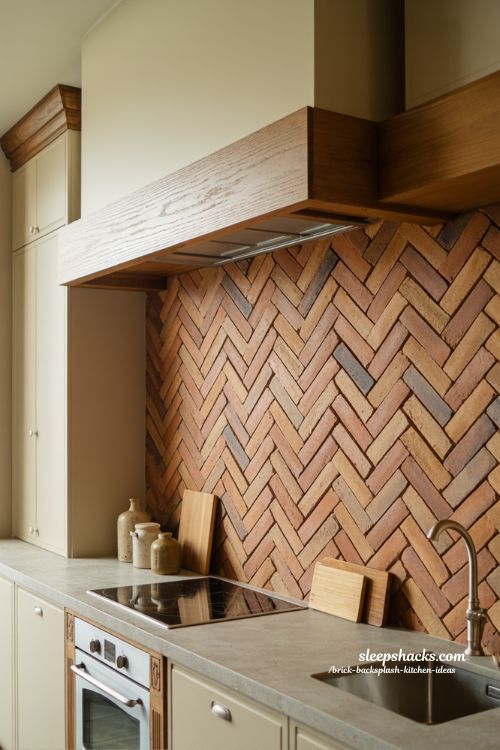
The herringbone pattern adds movement to a surface that would otherwise feel static. It gently guides your eye across the wall without being too loud or distracting. I’ve always felt it works best in small focal areas where you want interest without overwhelming the rest of the kitchen.
It does require more careful installation, but the result feels more refined. It brings a sense of craftsmanship into the kitchen, almost like the wall itself has been thoughtfully designed rather than simply built or covered in a standard way.
8. Mixed Brick and Tile Combination Design
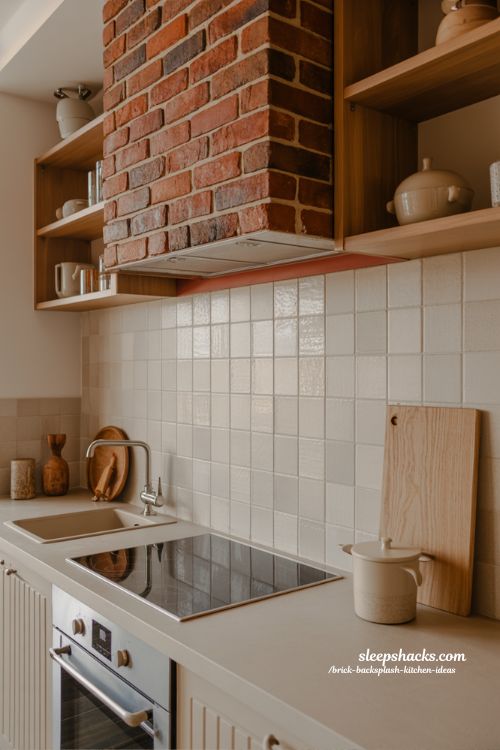
Combining brick with tile creates a nice balance between texture and smoothness. Brick brings warmth and character, while tile adds clarity and easy maintenance. I’ve seen this work especially well in kitchens where function and style need to meet in a practical way.
It also helps divide visual zones naturally. For example, brick can sit behind decorative areas while tile covers heavy-use sections. This approach keeps the kitchen both beautiful and easy to live with every day without sacrificing either side of the design.
Material Combination Guide
When working with mixed materials, it helps to understand how each pairing changes the feel of a kitchen. Some combinations are bold, while others feel soft and balanced. This table simplifies those relationships so decisions feel more intuitive.
| Combination | Visual Effect | Practical Benefit |
| Brick + Tile | Balanced texture | Easy cleaning zones |
| Brick + Glass | Light reflection | Heat protection |
| Brick + Metal | Modern contrast | Durable finish |
Once you see how each pairing behaves, it becomes easier to design a kitchen that feels intentional instead of random. The goal is always balance between beauty and everyday function.
9. Small Kitchen Brick Accent Wall
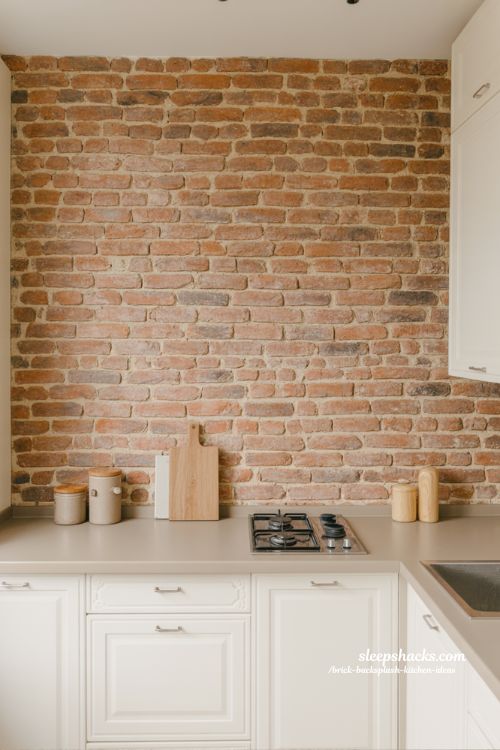
In smaller kitchens, using brick on just one wall can completely change the feeling of the space. It adds personality without making the room feel crowded or heavy. I’ve seen this approach turn simple kitchens into spaces that feel thoughtfully designed.
The key is restraint. You don’t need brick everywhere for it to have impact. One well-placed wall is often enough to set the tone and bring warmth into the room without overwhelming the limited space available.
10. Farmhouse Brick With Soft Neutrals
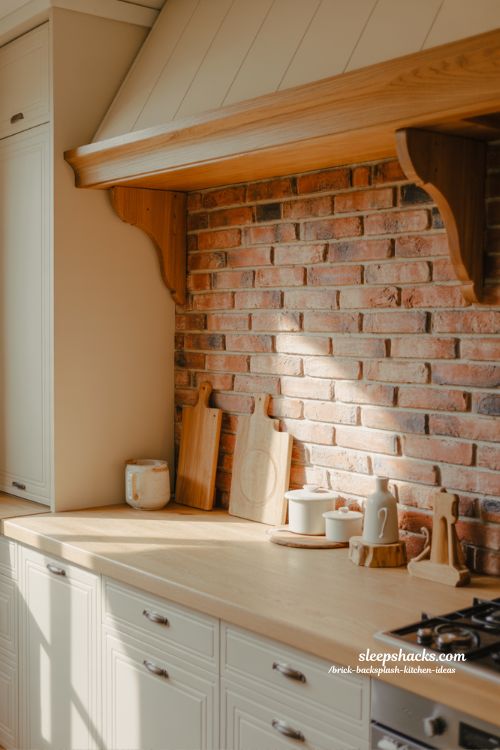
Farmhouse kitchens rely on warmth, simplicity, and a sense of comfort. Brick fits naturally into this style because it already feels familiar and grounded. When paired with soft whites, creams, and wood tones, the whole space feels welcoming without trying too hard.
It’s the kind of design that feels easy to live in. Nothing feels overly styled or artificial. Instead, it creates a quiet sense of comfort that makes the kitchen feel like the emotional center of the home.
11. Modern Minimal Brick Layout
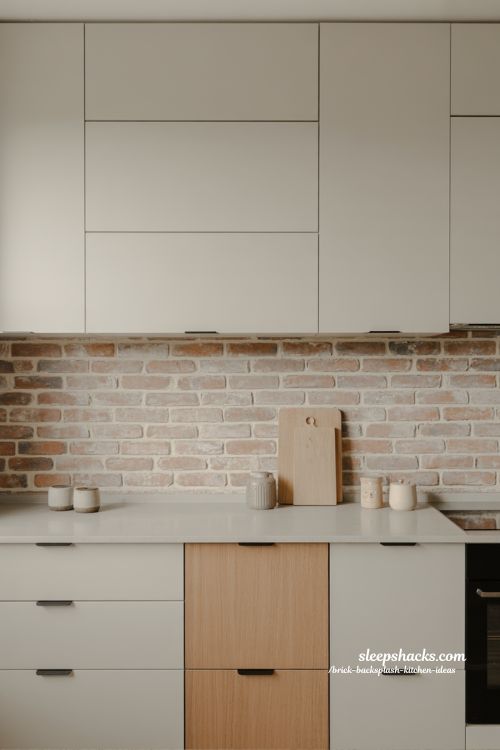
Minimal kitchens usually avoid heavy textures, but brick can actually add depth without disrupting simplicity. When used carefully, it supports the clean design instead of competing with it. I’ve seen it used as a subtle background that still adds warmth.
The trick is balance. Everything else in the kitchen needs to stay simple and uncluttered. That way, the brick becomes a soft visual layer instead of a dominant feature, keeping the overall space calm and controlled.
12. Arched Brick Feature Design
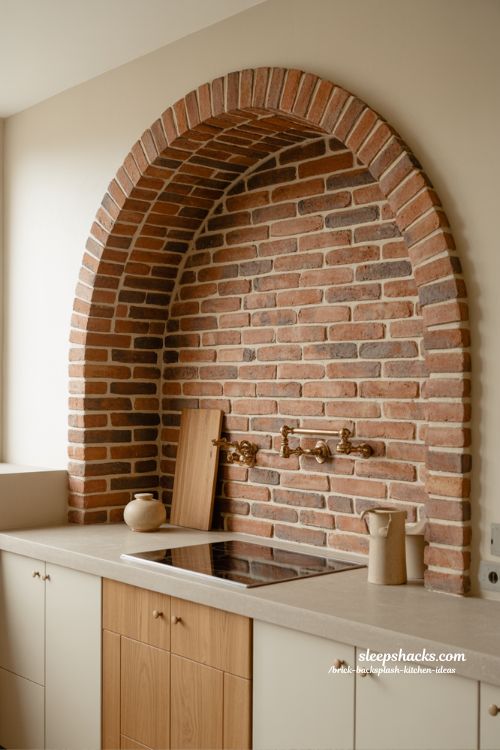
Arched brick details bring softness into structured kitchen layouts. They break away from straight lines and introduce a gentle architectural flow. I’ve always found this style feels more custom, like it belongs to a space that was carefully shaped over time.
It works best when used as a focal point. Whether behind a stove or sink, the arch naturally draws attention without needing extra decoration. It feels artistic but still grounded in everyday kitchen use.
13. Glossy Seal Brick for Easy Maintenance
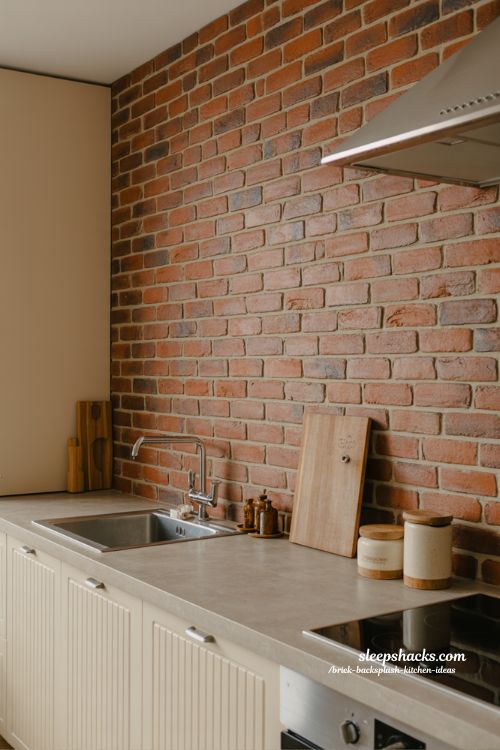
Sealing brick changes how it performs in a kitchen environment. It makes cleaning easier and helps protect the surface from stains and moisture. This is especially important in cooking areas where splashes happen regularly and consistency matters.
The visual look stays mostly the same, but the surface becomes more practical. It’s one of those small steps that doesn’t change the design but makes it much easier to maintain over time without stress.
14. Rustic Cottage Brick Style
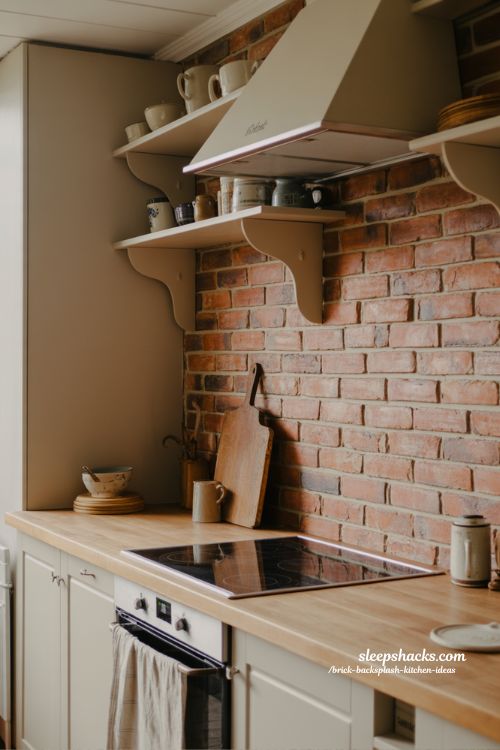
Cottage-style kitchens feel relaxed and slightly imperfect in a very natural way. Brick supports that feeling by adding warmth and texture that doesn’t feel overly designed. It makes the space feel lived in from the very beginning.
This style is less about perfection and more about comfort. Everything feels approachable, simple, and familiar. It’s the kind of kitchen that encourages slow mornings and quiet moments without needing anything fancy or complicated.
15. Ceiling Height Brick Extension
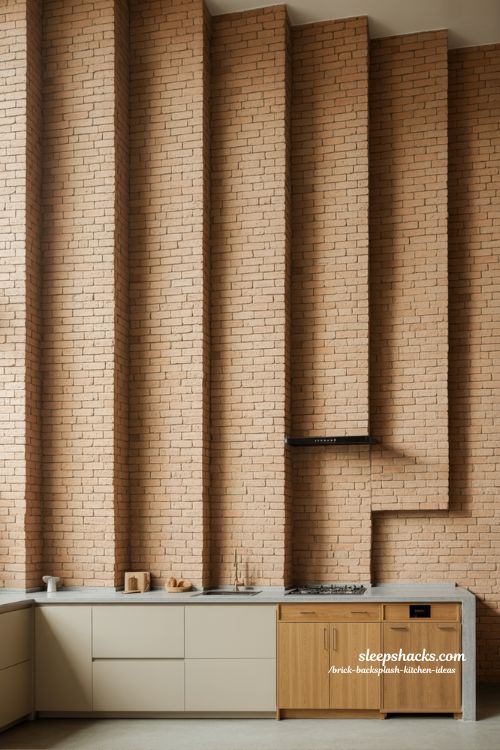
Extending brick all the way up the wall creates a strong visual statement. It draws the eye upward and makes the kitchen feel taller and more open. I’ve seen this work especially well in homes with higher ceilings.
It’s a bold design choice, but when balanced correctly, it feels cohesive rather than heavy. The vertical texture adds rhythm to the space and makes the entire kitchen feel more architectural and intentional.
16. Brick Behind Stove Focal Point
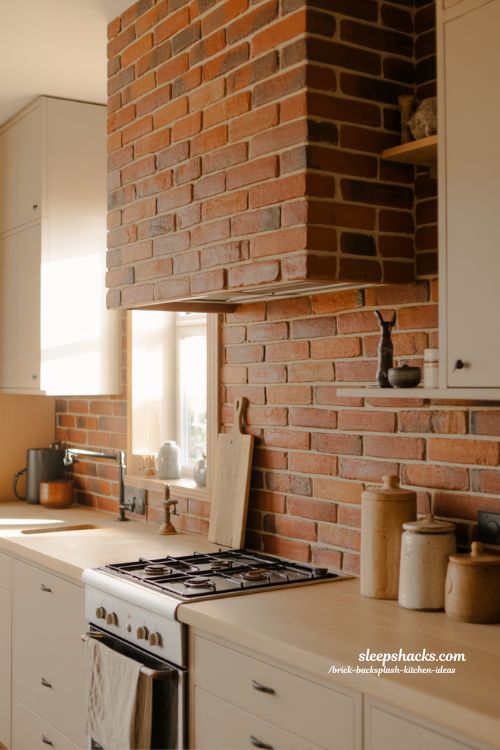
Using brick behind the stove is a classic design choice that naturally creates a focal point. It anchors the kitchen visually without needing extra decoration or complexity. I’ve always found it to be one of the most effective uses of brick.
It also makes practical sense since this area is often exposed to heat and splashes. The texture hides wear well while still looking intentional and visually strong in the overall kitchen layout.
17. Soft Lighting With Brick Texture Highlight
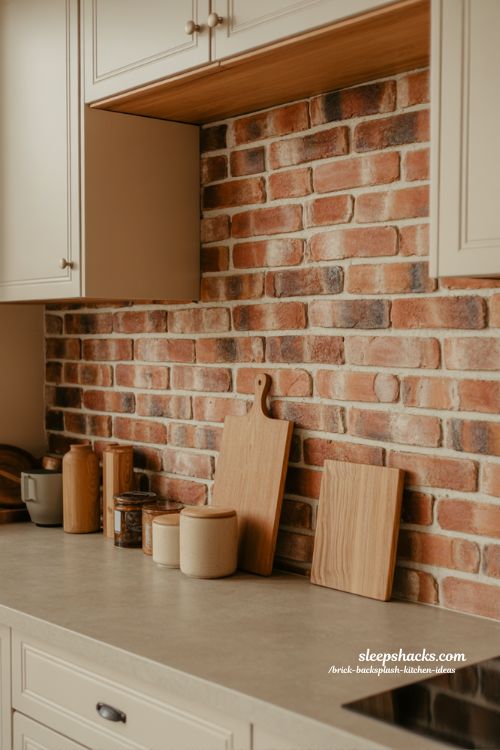
Lighting completely changes how brick feels in a kitchen. Warm light brings out depth, shadows, and texture in a way that makes the surface feel almost alive. Without it, brick can look flat and less engaging.
When lighting is done right, the kitchen feels warmer and more inviting. Even simple layouts become more atmospheric. It’s a reminder that design isn’t only about materials, but also about how those materials are revealed through light.