

You’re probably tired, a little excited, and maybe a bit overwhelmed by the number of tabs you’ve opened for nursery inspiration. That’s completely normal. Between the crib reviews, paint swatches, and everyone’s opinions, it’s easy to forget that this room is supposed to feel peaceful, not like a project that needs managing.
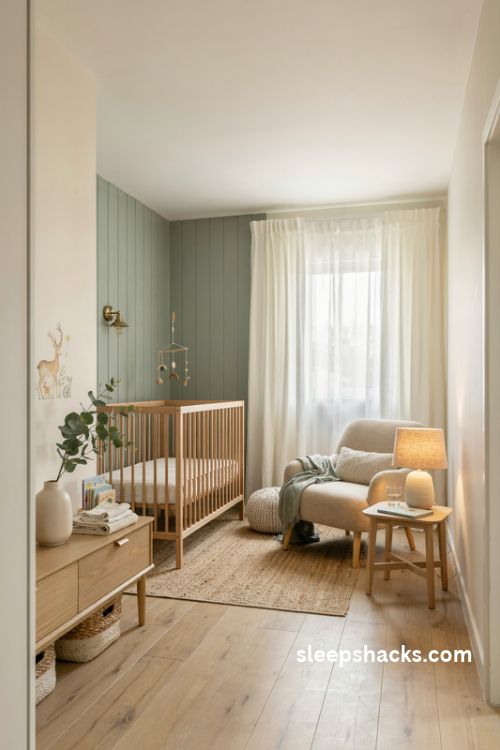
A baby boy nursery doesn’t have to mean baby blue and trucks, either. The most loved rooms tend to be calm, layered, and personal, with colors that soothe and details that tell a small story. Below are 17 ideas, from sage walls and board and batten to woodland themes and soft lighting, all chosen to be practical for real life with a newborn. Take what fits, skip what doesn’t, and trust your instincts.
1. Soft Sage Green Walls
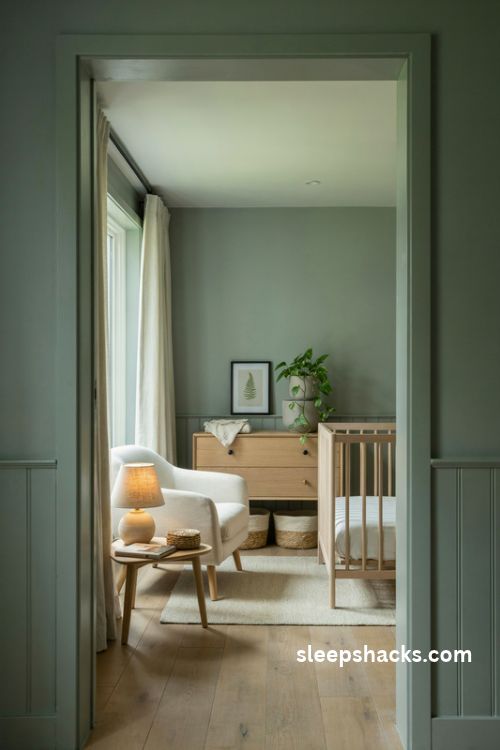
Sage green is calm without being boring, and it looks beautiful with natural wood and white bedding. It feels like a quiet forest in the morning, which is just the mood a nursery needs.
Choose a shade with a touch of gray so it reads soft rather than minty. A matte or eggshell finish is easy to wipe clean and hides small scuffs. Pair it with cream curtains, a light wood crib, and a few black or brass accents for contrast. Paint the ceiling a lighter tint of the same color to keep the room airy.
2. Navy and Cream Pairing
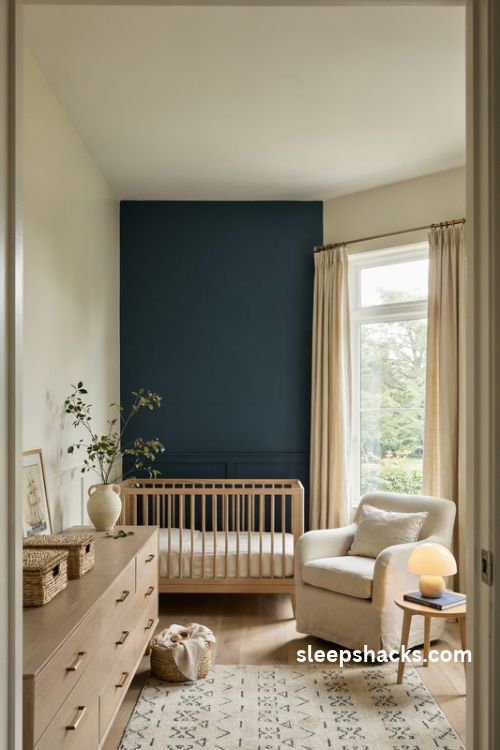
Navy brings depth and a classic, tailored feel, while cream keeps it from becoming too heavy. Together they feel timeless, the kind of palette that won’t look dated in five years.
Use navy on one accent wall behind the crib, or on the lower half of the walls with cream above. Add textured bedding in oatmeal or ivory, and brass hardware for a touch of warmth. Keep the rest of the room light so the navy feels intentional, not gloomy. A rug in cream with a subtle pattern helps ground the space.
3. Board and Batten Walls
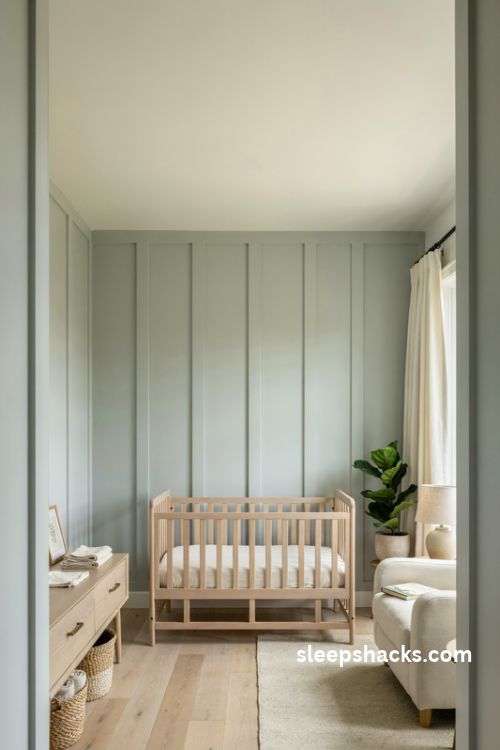
Board and batten adds architectural character without any fuss. The clean vertical lines make the ceiling look taller and give the room a polished, custom feel.
Install it about two-thirds of the way up the wall, using primed MDF strips spaced roughly 12 inches apart. Paint the whole thing in one color, such as soft gray, sage, or navy, for a seamless finish. It’s a weekend project even for beginners, and it protects the lower walls from the scuffs a growing toddler will eventually cause.
4. A Neutral Safari Theme
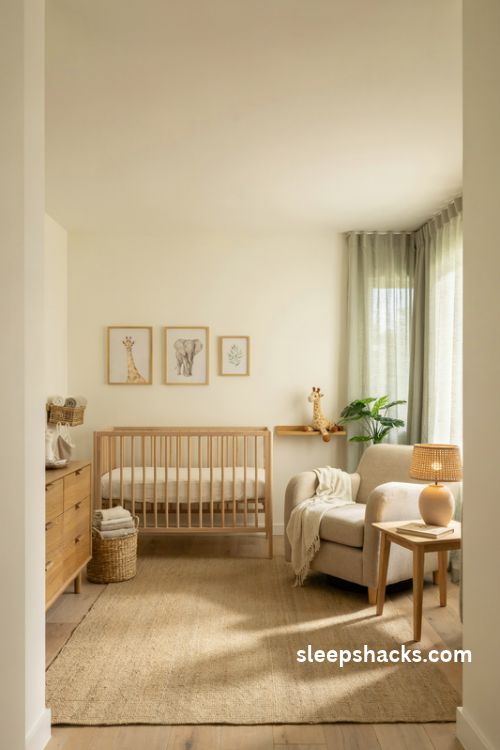
Safari themes are sweet and playful, and when you keep the palette neutral they feel stylish instead of childish. Think soft tan giraffes, gentle elephants, and tiny paper palm leaves in warm earthy tones.
Choose a few meaningful pieces, such as a framed animal print, a plush giraffe, and a woven basket, rather than covering every surface. Cream, tan, and sage look lovely together. A jute rug and rattan accents carry the theme without being too literal. This look also transitions easily into a big-kid room later on.
5. A Woodland Forest Theme
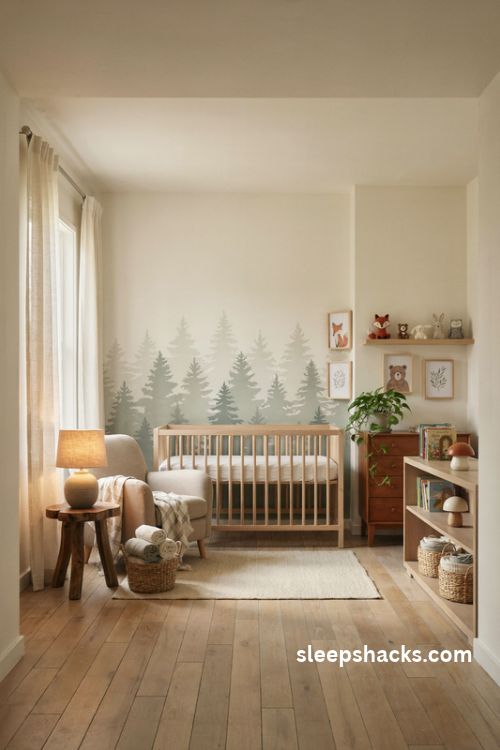
Woodland nurseries feel like a storybook, with foxes, bears, and tall pine trees peeking from the walls. The palette of forest green, warm brown, and soft cream is gentle and grounding.
Hang a few tree-shaped wall decals or a mural of pine silhouettes behind the crib. Add felt animals, a log-shaped stool, and wooden shelves to complete the story. Keep the colors muted so the room stays restful. A soft plaid blanket draped over the glider adds a cozy cabin touch.
6. A Painted Arch Mural
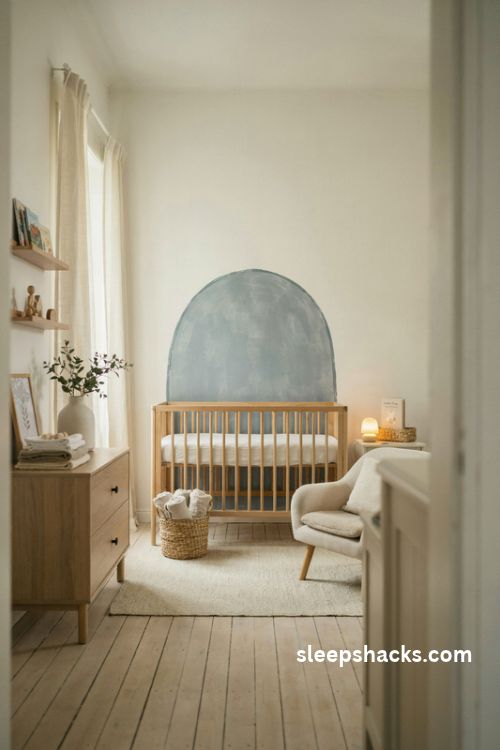
An arch painted on the wall behind the crib creates an instant focal point with just a can of paint. The curved shape softens a room full of straight lines and feels modern and friendly.
Trace a large arch with a pencil and a string tied to a pin for a perfect curve. Use painter’s tape for crisp edges, then fill it in with a color like muted blue, terracotta, or deep green. Choose a base wall color in cream or white so the arch pops. It’s inexpensive, easy to repaint later, and always photographs well.
7. A Natural Wood Crib
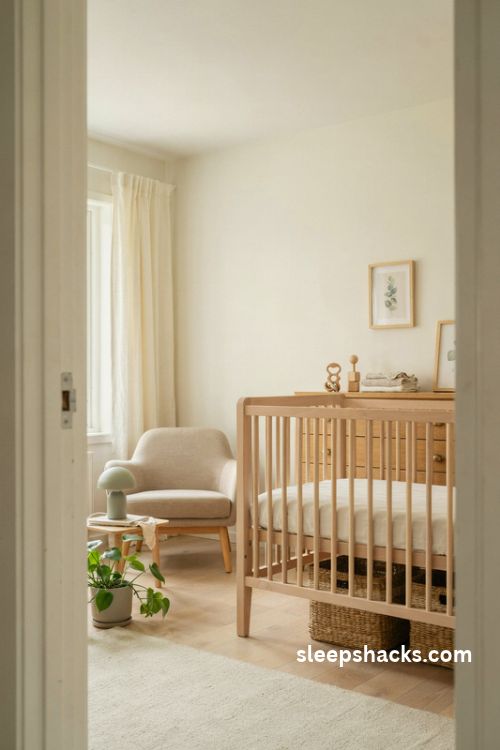
A wood crib in a light oak or natural finish brings warmth and a calm, Scandinavian feeling to the room. It blends with almost any color scheme and ages gracefully.
Check that the crib meets current safety standards and has a firm, fitted mattress. Keep the sleep space bare, with no pillows, bumpers, loose blankets, or toys, as safe sleep guidelines recommend. Place it away from windows, cords, and shelves. Let the wood grain be the decoration, and keep the surrounding decor soft and simple.
8. A Cozy Glider and Feeding Nook
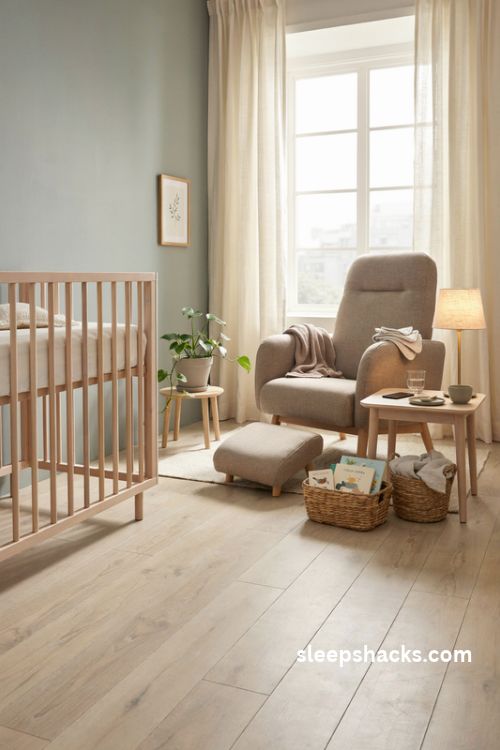
You’ll spend a surprising amount of time in your feeding chair, so it deserves some thought. A comfortable glider, a small side table, and a soft light turn a corner into a calm retreat.
Choose an upholstered chair in a performance fabric that wipes clean easily, since spills and spit-up are guaranteed. Add a small table for water, burp cloths, and your phone. A dimmable lamp keeps the room gentle for night feedings. A basket of board books nearby turns the nook into a future story-time spot.
9. A Gallery Wall of Soft Prints
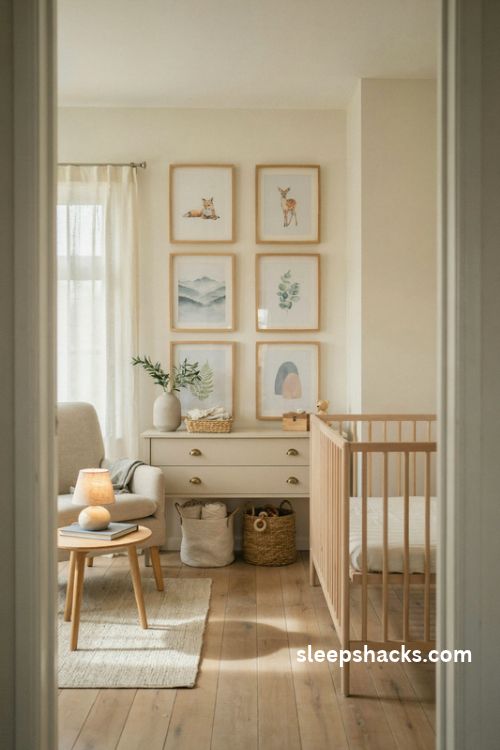
A gallery wall adds personality and tells a sweet visual story. Prints of animals, mountains, and simple quotes in matching frames make the room feel curated.
Pick frames in one finish, such as black, white, or natural wood, so the wall looks cohesive. Lay the arrangement on the floor first, then trace each frame on paper and tape it to the wall to test the layout. Keep about two inches between frames. Use lightweight frames and secure hooks, and keep the wall away from the crib’s reach.
10. A Plush, Washable Rug
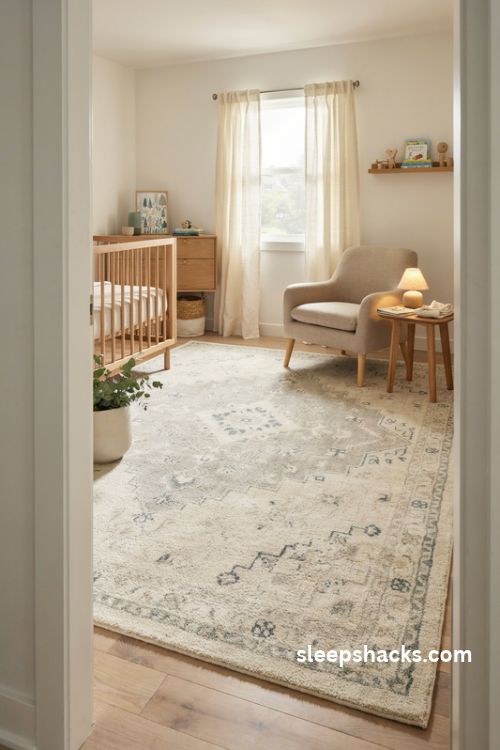
A soft rug warms up the floor and gives baby a cozy spot for tummy time later on. It also absorbs sound, which helps keep the room peaceful.
Choose a washable rug in cream, gray, or soft blue so accidents don’t cause panic. Low-pile styles are easier to clean and safer for crawlers than shaggy ones. A non-slip pad prevents sliding. Pick a size big enough that the front legs of the crib and chair rest on it, so the room feels pulled together.
11. Blackout Curtains for Better Naps
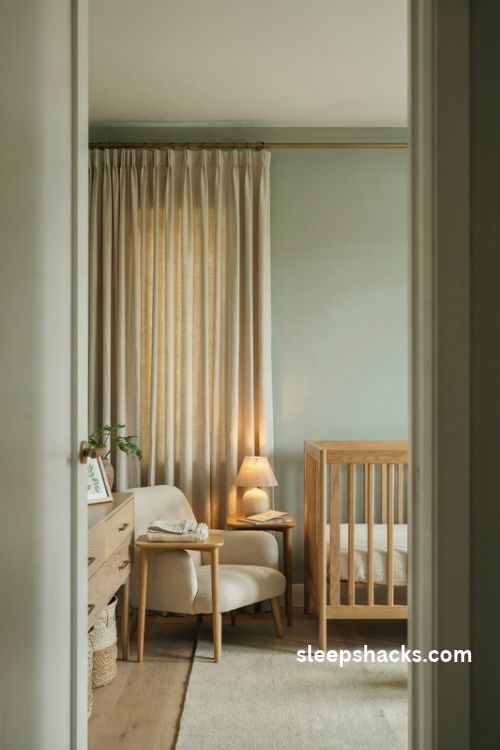
Good sleep is the real luxury in a nursery, and blackout curtains help babies nap during bright afternoons and sleep later in summer mornings.
Choose curtains with a thermal lining so they also insulate against drafts. Hang the rod a few inches above the window and extend it past each side so no light leaks around the edges. Pick a fabric in a calm color, such as oatmeal or sage, so the curtains blend in. Use cordless designs, since cords are a safety hazard for babies.
12. A Vintage Adventure Theme
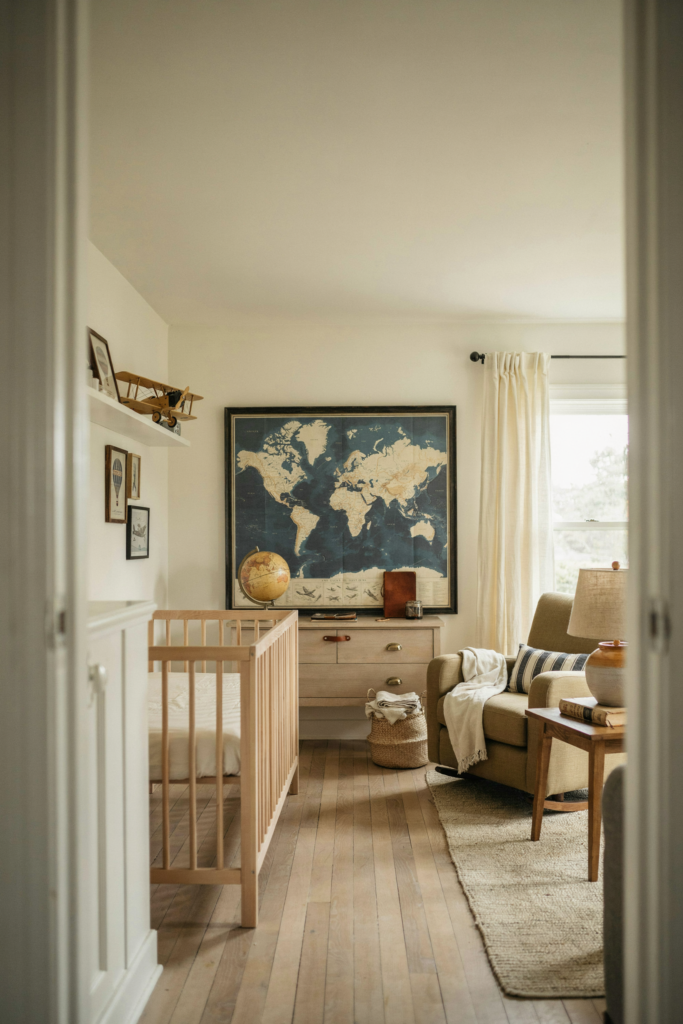
Vintage maps, airplanes, and hot air balloons add a sense of wonder and fit a little explorer perfectly. The muted colors keep the theme feeling grown-up.
Hang a framed vintage map above the dresser and add a small wooden airplane on a shelf. Use navy, khaki, and cream for the palette, with leather or canvas touches. A globe on the dresser adds a classic accent. Keep the pieces few and meaningful, so the room feels charming rather than themed to the extreme.
13. Floating Shelves for Books
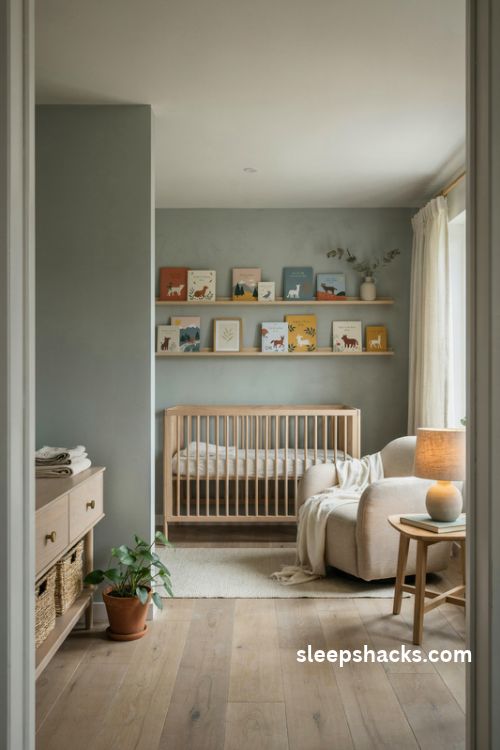
Floating shelves keep the floor clear while giving you a place to display books and keepsakes. Front-facing book displays also let colorful covers become part of the decor.
Mount them into wall studs, at least four feet from the floor, and well away from the crib. Place heavier items on lower shelves, and keep small objects out of reach. Choose shelves in white or light wood to match the room. Rotate the books every few weeks to keep the display fresh and interesting.
14. Dusty Blue and Terracotta
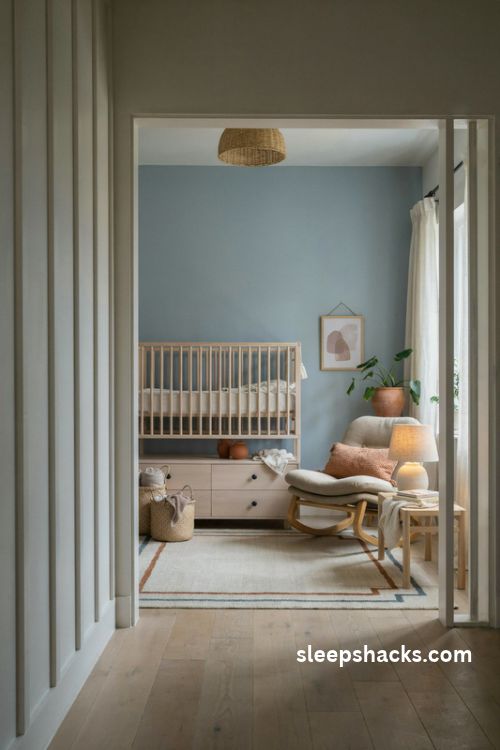
Blue and terracotta are opposites on the color wheel, which makes them an unexpectedly beautiful pair. Soft dusty blue is calm, and terracotta adds a sun-warmed glow.
Use dusty blue on the walls or the crib bedding, then bring in terracotta through pillows, a rug, or a piece of art. Add warm woods and woven textures to tie it together. Keep the terracotta in small doses, around a quarter of the palette, so it complements rather than competes. It’s a fresh alternative to the usual pastels.
15. Layered, Dimmable Lighting
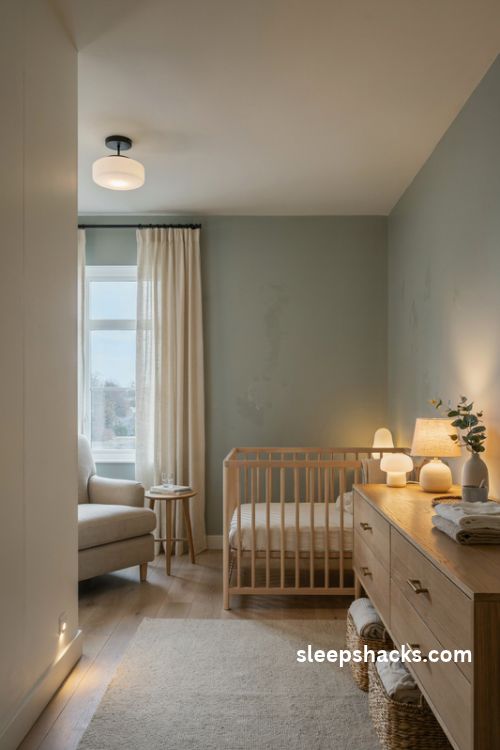
Nursery lighting has to handle bright diaper changes and sleepy midnight feedings, so layers are your friend. A single overhead bulb simply won’t cut it.
Install a dimmer on the ceiling light and add a small lamp on the dresser. A plug-in night light near the door helps you move around quietly. Choose warm white bulbs, around 2700 Kelvin, which feel gentle on tired eyes. A cordless rechargeable lamp avoids cords near the crib and offers flexibility when you need it.
16. Striped Wallpaper Accent
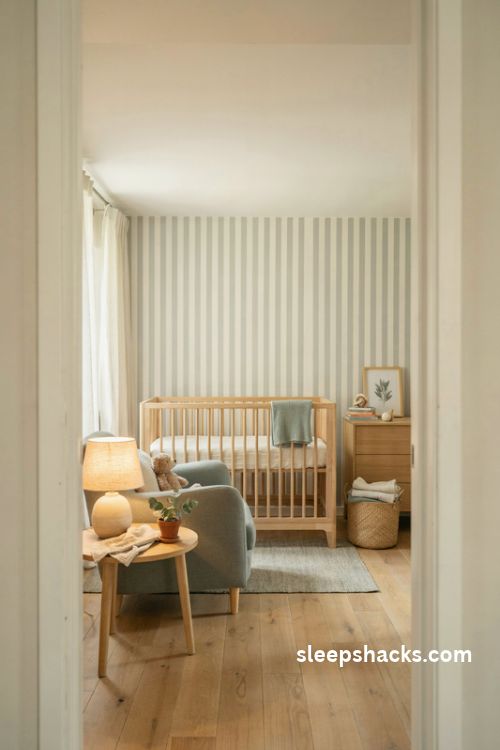
Stripes bring a tailored, cheerful look and make a room feel taller when they run vertically. In soft colors, they feel crisp and calm.
Choose a pattern with thin stripes in cream and sage, navy, or soft gray. Peel-and-stick wallpaper is renter-friendly and easy to hang. Apply it to one wall, usually the one behind the crib, and keep the others plain. Use a smoothing tool as you go to avoid bubbles, and line up the stripes with a level.
17. A Personalized Name Sign and Keepsakes
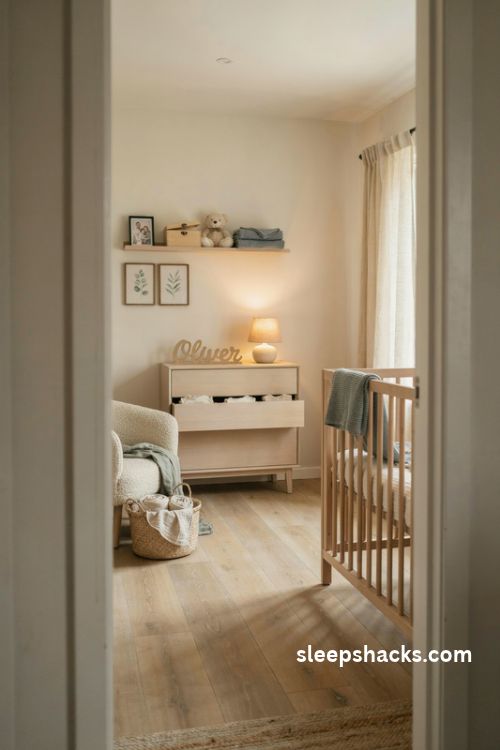
Few details make a room feel more like his than his own name on the wall. A wooden sign, painted letters, or a framed print gives the nursery a personal anchor.
Hang it above the crib or dresser, securely mounted and out of reach. Add a shelf with a few keepsakes, such as a hospital bracelet, a first stuffed animal, or a family photo. These small touches turn a decorated room into a home. Choose a simple font and soft colors so the sign blends with the palette.
Final Thoughts
It’s tempting to see the nursery as a finish line, a box to check before the baby arrives. But picture the room two years from now: the crib is a toddler bed, the glider holds a pile of picture books, and there’s a crayon mark somewhere you pretend not to notice.
Seen that way, a nursery isn’t a display. It’s a place where a family is learning to be a family, one quiet night at a time. The decor matters less than the feeling, which is why the best rooms are the ones that welcome you back, again and again, even at three in the morning.
Frequently Asked Questions
What colors work best for a baby boy nursery?
Sage green, navy, dusty blue, cream, and warm neutrals are popular because they’re calm and timeless. They also make the room easy to update as he grows.
How do I decorate a small baby boy nursery?
Use light colors, wall-mounted shelves, and a compact crib to save space. A single accent wall adds personality without crowding the room.
What should not go in a baby’s crib?
Keep the crib free of pillows, blankets, bumpers, and stuffed toys, and use only a firm, fitted mattress sheet. This follows standard safe sleep guidance.