

A knitted Christmas tree is the best kind of holiday project, and that is not an exaggeration. It works up fast, it uses leftover yarn, and it ends up on a shelf or branch where everyone can admire it. Nothing in a shop can match the soft, slightly lumpy charm of something you made yourself.

The patterns below run from a flat garter stitch triangle that a beginner can finish in an evening to cabled and Fair Isle versions that stretch your skills. Each one comes with practical tips on yarn, needle size, and finishing, so you can cast on tonight and have a tree before the weekend.
1. Garter Stitch Triangle Tree
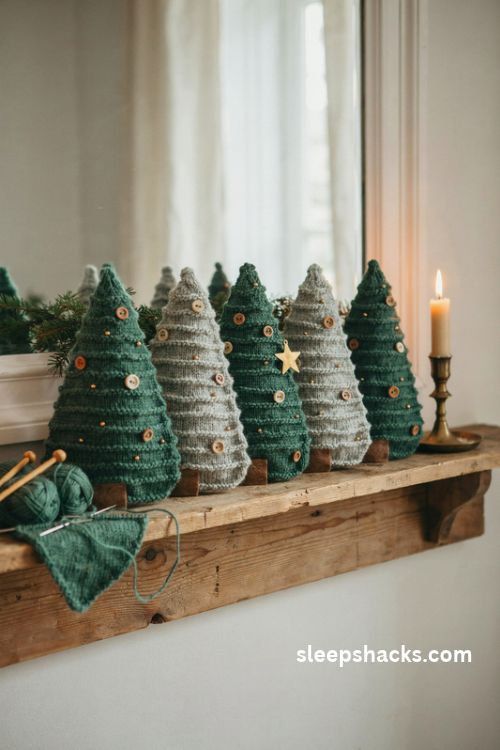
The easiest tree you can knit is a simple triangle worked in garter stitch. Cast on about 31 stitches in green worsted yarn, knit every row, and decrease one stitch at each end every other row until only a few stitches remain. The ridged texture looks like layered branches without any extra effort.
Use needles one size smaller than the yarn label suggests, so the fabric stays firm and holds its shape. Finish with a small brown square at the base for the trunk, then sew on tiny buttons or beads as ornaments. This one is ideal for a first project, and a few of them make a sweet garland.
2. Stuffed Cone Tree Knit in the Round

For a tree that stands up on its own, knit a cone in the round. Cast on 40 stitches with double-pointed needles, work in stockinette, and decrease four stitches evenly every fourth round until the top closes. The rolled, smooth fabric gives the tree a plump, toy-like look.
Stuff it firmly with polyester fiberfill, and add a spoonful of rice to the base for weight. Stitch a flat circle of felt underneath so it sits level on a table. Pick a rich
or a soft sage, and top it with a little yellow star. Make three in different heights for a charming tabletop forest.
3. Cabled Evergreen Ornament
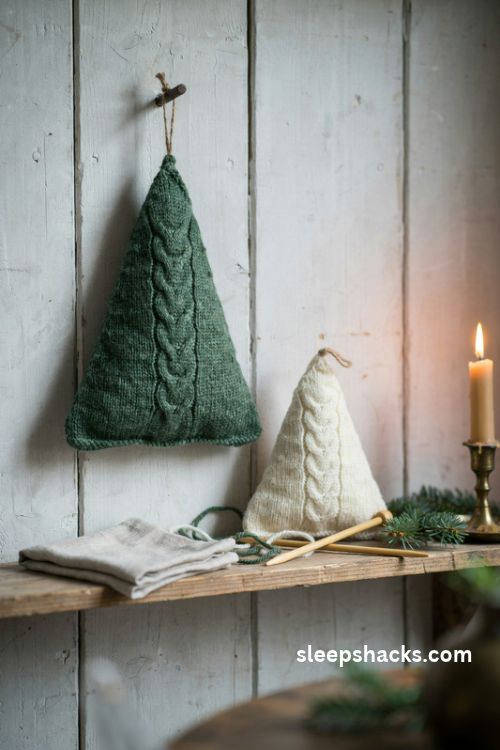
A single cable twisted up the middle gives a small tree real elegance. Work a six-stitch cable on a reverse stockinette background, and shape the outline with decreases on both sides so the piece narrows toward the top like a fir. The raised cable reads like a trunk of braided branches.
Choose a wool-blend yarn in deep green or cream, since it holds the cable crisply. Block the finished piece flat and let it dry fully before you sew the back panel in place. Stuff lightly, add a loop of twine at the top, and the ornament is done. It makes a lovely gift for a knitter friend.
4. Striped Mini Trees from Scrap Yarn
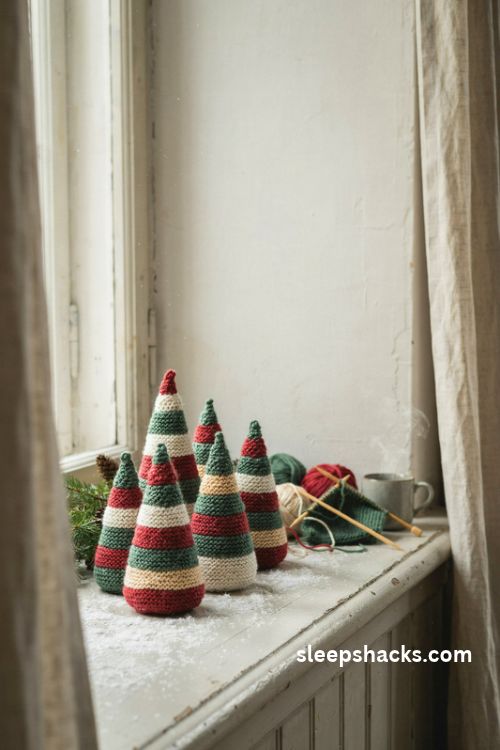
Leftover yarn finds a happy new life in a striped tree. Knit a small cone in the round, changing colors every two rows, and mix greens with an occasional stripe of red or cream so it looks decorated even before you add anything on top. The pattern is forgiving, and no two trees come out alike.
Weave in the ends as you go by knitting over the tails for a few stitches. Use a sock yarn weight for tiny ornaments about three inches tall, or worsted weight for something bigger. Group several on a windowsill with a bit of faux snow beneath them, and the whole display looks like a candy-colored village.
5. Eyelet Lace Tree
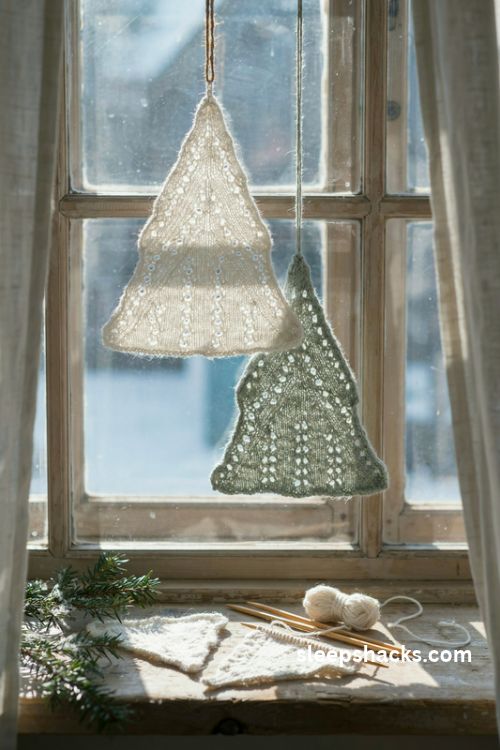
Lace gives a tree a delicate, airy feel, and a simple eyelet pattern is easier than it looks. Work a repeat of yarn over, knit two together across every fourth row, and shape the triangle with edge decreases. The little holes catch the light like tiny stars.
Use a smooth, light yarn in white or pale green, and block the piece aggressively with pins so the eyelets open wide. Hang it in a window where the sun shines through, or slip a strip of colored felt behind it for a stained glass effect. Take your time on the decrease rows, since lace punishes mistakes.
6. Fair Isle Tree Garland
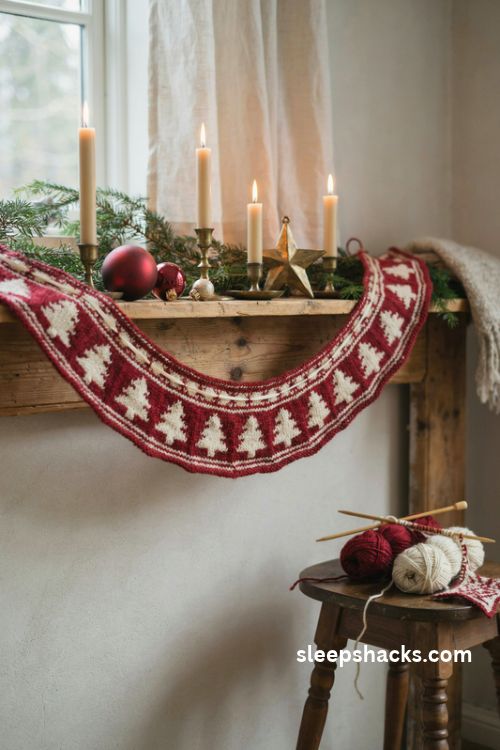
A row of tiny trees in a Fair Isle pattern makes a charming mantel garland. Chart a simple tree motif about seven stitches wide, and repeat it across a long strip knit in the round on a small circumference. Cream trees on a deep red background look especially classic.
Carry the unused color loosely along the back, catching it every four or five stitches to avoid long floats. Block the finished tube flat, then thread twine through it or sew a ribbon along the top. A garland about six feet long uses about two skeins in each color, and the pattern repeats beautifully.
7. Intarsia Tree on a Stocking
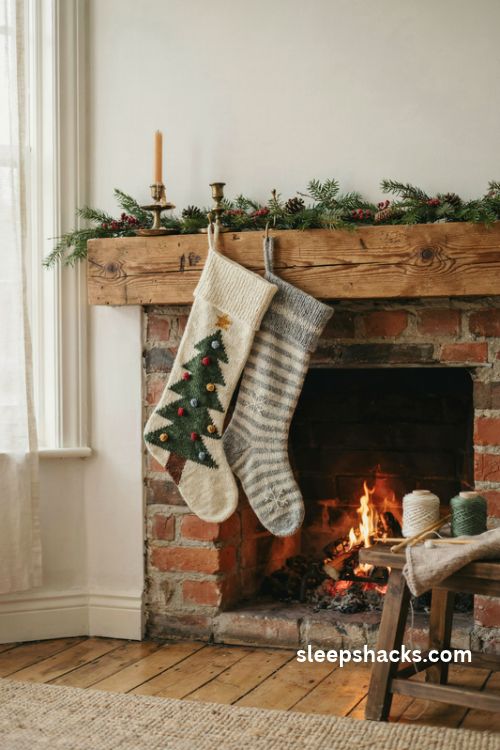
A knitted stocking with a green tree in the middle turns a plain project into a keepsake. Work the stocking body in cream or gray, and chart a simple triangle tree in intarsia, using small bobbins of green and a little brown for the trunk. Add a yellow star at the top.
Twist the yarns at each color change to avoid gaps, and keep your tension gentle. Embroider ornaments on afterward with French knots in red, gold, and blue. A name along the cuff completes it. Because the motif sits in the center of the leg, it shows clearly when the stocking hangs on the mantel.
8. Tree-Shaped Dishcloth
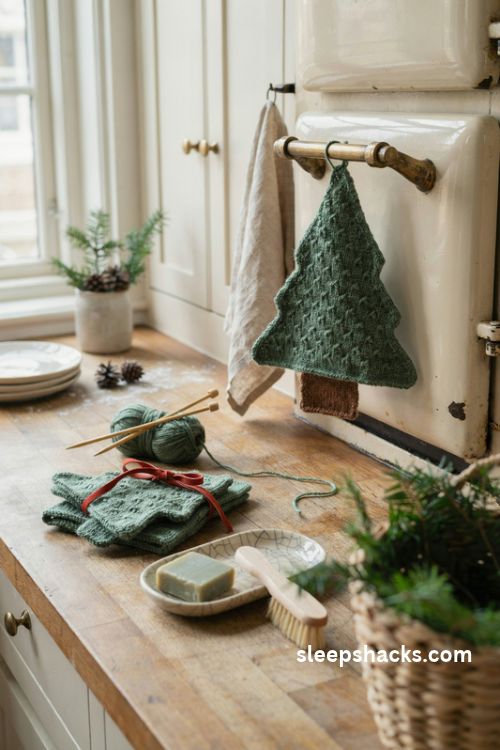
Practical and festive, a tree-shaped dishcloth makes a wonderful gift. Knit it in cotton yarn, since cotton absorbs water well and holds up to scrubbing. Cast on a few stitches at the top, increase at the edges every other row, and add a small square at the bottom for the trunk.
Choose a bright green cotton and use a textured stitch like seed or moss stitch so the cloth scrubs well. Bundle three together with a ribbon and a bar of soap for a quick present. They wash easily and look cheerful hanging from the oven handle all December, long after the cards have been put away.
9. Bobble Ornament Tree
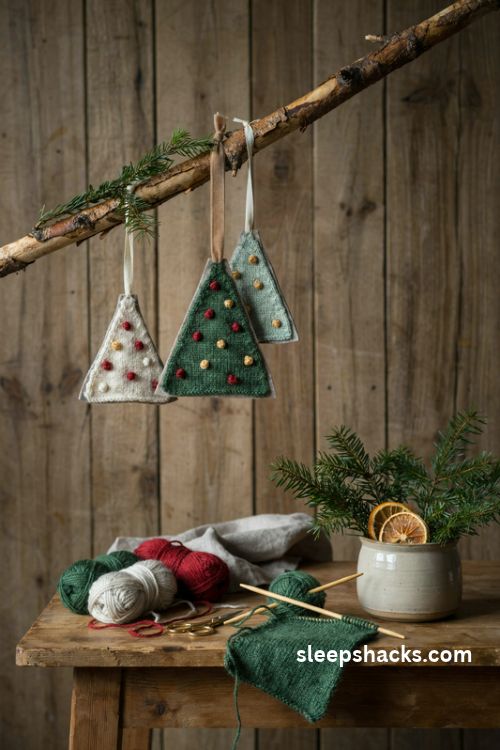
Bobbles give a tree little pops of texture that look like baubles. Knit a simple triangle in stockinette, then add bobbles at scattered points by working five stitches into one and turning several times before decreasing back. Use a contrasting color for the bobbles, such as red or gold.
Space them out over the piece in a loose diagonal pattern so the tree looks balanced. Keep the bobbles small and tight, since larger ones tend to flop. A little practice swatch helps before you commit. Finish with a flat felt back and a ribbon loop, and it becomes a keepsake ornament.
10. Chunky Yarn Tabletop Tree
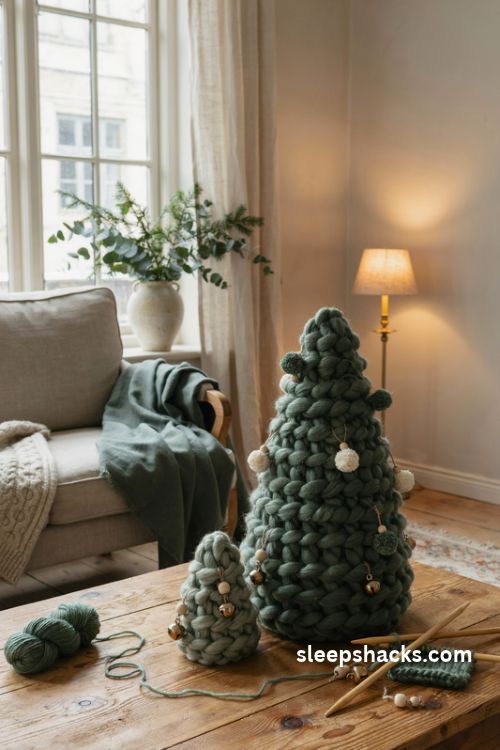
For fast results, use jumbo yarn and big needles. Knit a wide rectangle in garter stitch on size 15 needles, then wrap it around a cardboard cone and stitch the seam closed. A single skein can make a tree about fifteen inches tall in a single evening.
Pick a thick green wool or chenille for a plush finish. Glue the knitted piece to the cone with a bit of craft glue at the bottom edge to keep it steady. Decorate with pom-poms, wooden beads, or tiny bells. It sits happily on a coffee table or a shelf and makes an easy first project.
11. Fair Isle Mittens with Tree Motif
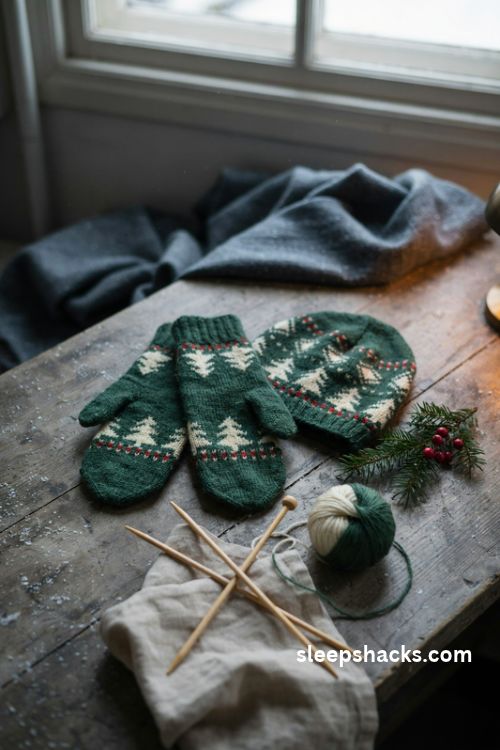
Mittens with trees marching around the cuff look straight out of a winter storybook. Chart a small tree motif nine stitches wide, and repeat it around the hand in cream on a deep green or navy background. A band of tiny dots at the top and bottom frames the pattern nicely.
Work the mittens in fingering weight wool on size 2 needles for a snug, warm fit. Add a thumb gusset in the plain background color so it does not interrupt the design. Pair the mittens with a matching hat for a gift set. Wash them gently and lay flat to dry so the colors stay crisp.
12. Tiny Gift Topper Trees
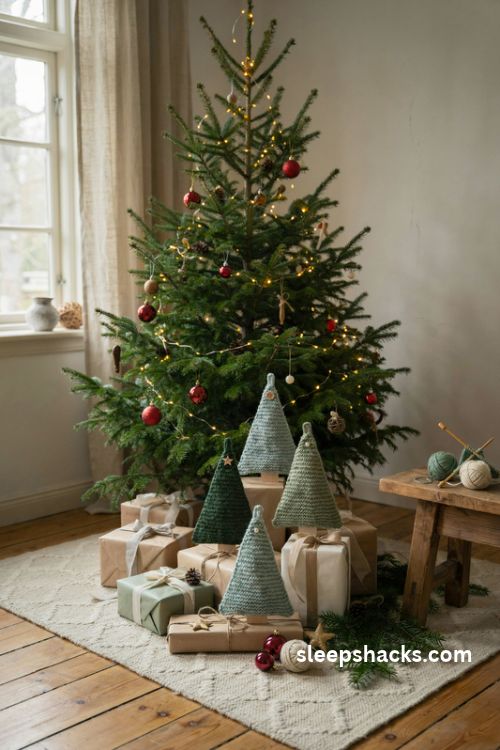
Small trees on top of wrapped presents feel thoughtful and cost almost nothing. Cast on about twelve stitches in a lightweight yarn, work a short garter stitch triangle with decreases at each end, and finish with a tiny sewn-on pearl bead or a tiny star button.
Each tree takes about twenty minutes, so you can make a dozen in an evening. Tie them to the ribbon with a loop of thread so they sit upright on the package. The recipient can hang them on the tree afterward, which makes the wrapping part of the gift. Pick a few different greens for a pleasing range.
13. Christmas Tree Pillow Cover
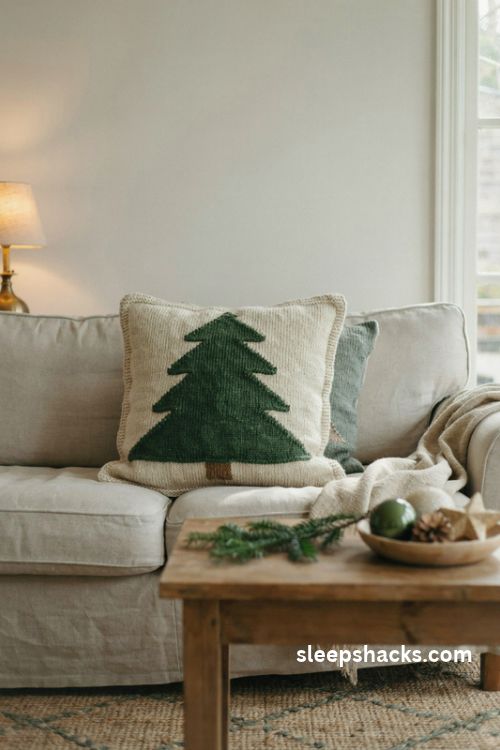
A cozy pillow with a bold tree in the center makes a statement on the couch. Knit a square panel in a creamy background yarn, and chart a large tree in a rich green using intarsia or duplicate stitch embroidery. A border of seed stitch around the edge keeps everything tidy.
Duplicate stitch is easier for beginners, since you can add the tree after the panel is finished, just by stitching over the knit stitches with a tapestry needle. Sew the panel to a fabric back with an envelope closure, and slip in a pillow form. Store it flat after the holidays to keep the tree sharp.
Final Thoughts
So, here is what I hope you take from all this. Every stitch you work into one of these little trees is a small piece of time you gave to the season, and that time stays in the finished piece, long after the needles are put away.
Grab a skein of green yarn and pick the pattern that makes you smile. If it comes out a bit crooked, hang it on the tree anyway and tell the story when someone asks. The best handmade things come with a story, and yours has only just begun.
Frequently Asked Questions
Q: What is the easiest Christmas tree knitting pattern for beginners?
A: A garter stitch triangle is the simplest, since it uses only the knit stitch and a few decreases. It is a great first project and takes under two hours.
Q: What yarn should I use for a knitted Christmas tree?
A: Wool or a wool blend holds its shape best, while cotton works well for dishcloths. Choose worsted weight for ornaments and bulky yarn for tabletop trees.
Q: How do I make a knitted Christmas tree stand up?
A: Stuff it firmly with fiberfill and add a little rice or a felt base for weight. A cone of cardboard inside also helps larger trees stay upright.