

Walk through a historic village in December and you notice something right away. Nothing is plastic, nothing blinks, and almost every decoration looks like it came straight out of the garden or the pantry. Apples, pine, candles, and a bit of red ribbon do all the talking.
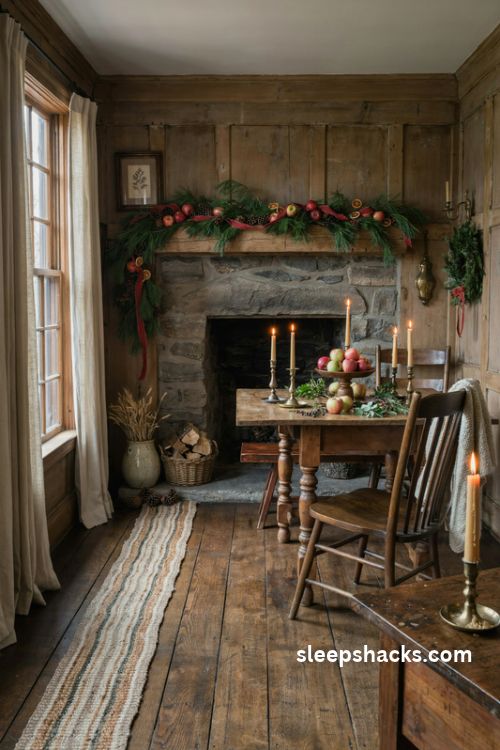
That is the heart of colonial style, and it is easier to copy than you might think. The look relies on real materials, simple shapes, and a restrained palette of red, green, and warm brass. These fourteen ideas show how to bring it home, whether you live in an old farmhouse or a new apartment. Gather a few things from the market and let the season arrive quietly.
1. Williamsburg-Style Fruit Wreath
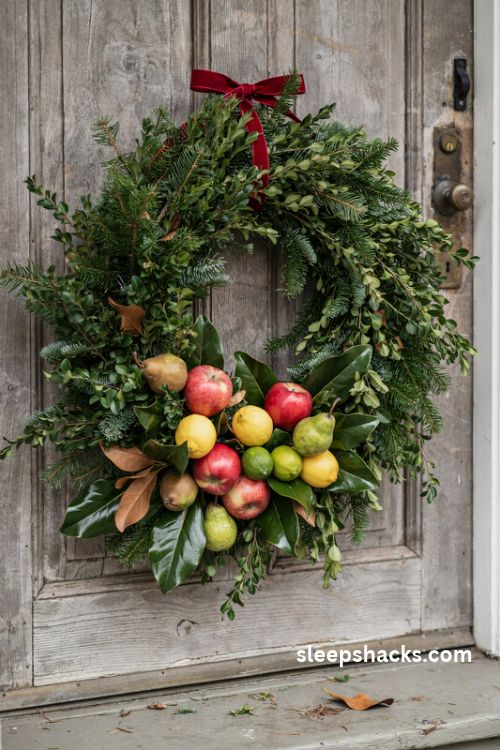
The signature colonial wreath is built from real fruit and greenery, not plastic. Start with a boxwood or pine wreath base, then wire on apples, lemons, limes, and small pears in a loose, generous cluster that sweeps across the lower half. Add magnolia leaves behind the fruit for a glossy backdrop.
Push a florist pick or a length of wire through each piece of fruit before attaching it to the base. Fresh fruit lasts about two weeks in cold weather, so hang the wreath outside on a sheltered door. Tie a simple red ribbon at the top, and leave the tails short and plain. Replace any fruit that starts to soften.
2. Boxwood and Magnolia Mantel Garland
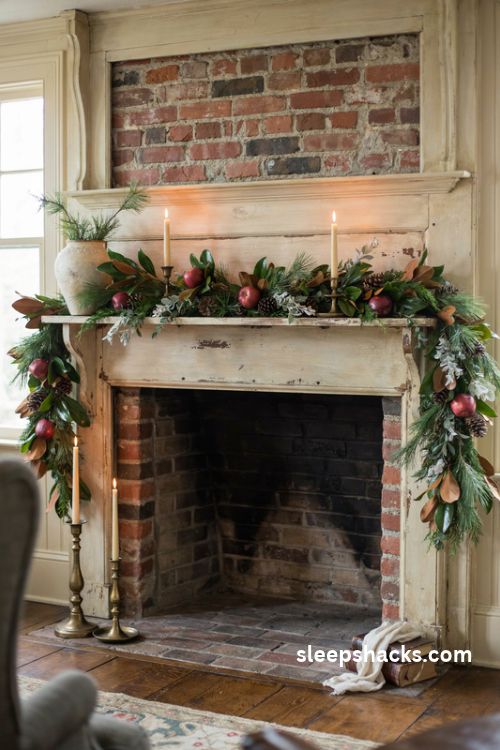
A thick garland of boxwood, magnolia, and white pine across the mantel is the foundation of the whole look. The mix of small round leaves and large glossy ones gives the greenery depth, and it smells like a winter woodland the moment you walk in.
Lay it along the mantel with the heaviest swags at each end, and tuck in a few red apples and pinecones to break up the green. Secure the garland with removable hooks. Fresh cuttings drink water poorly once cut, so mist them every couple of days. A faux garland of good quality works well if you want a version that lasts the whole month.
3. A Single Candle in Every Window
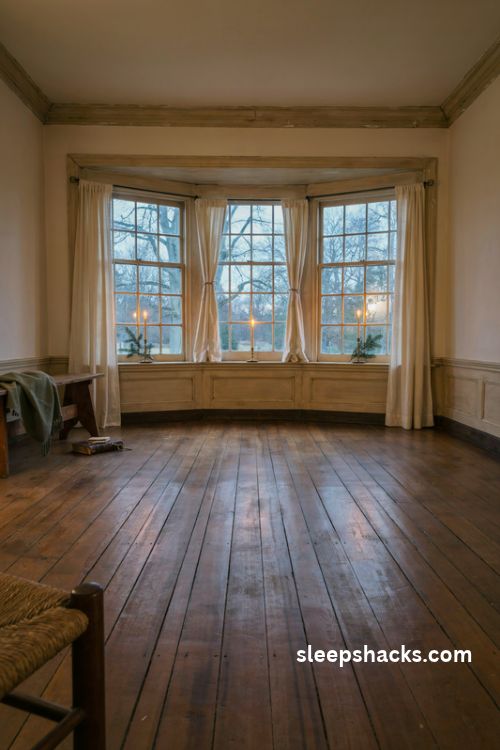
Nothing says colonial Christmas quite like one plain candle glowing in each window. It is simple, welcoming, and instantly recognizable from the street. Choose slim electric candles with a warm amber bulb, and place one in the center of each sill.
Use a timer so they switch on at dusk without you thinking about it. Keep the arrangement identical across the front of the house for the cleanest effect, and avoid adding extra decor around them. If you want a bit of garnish, tuck a small sprig of pine at the base. Real flames near curtains are risky, so electric versions are the safer choice.
4. Apple and Pine Pyramid Centerpiece
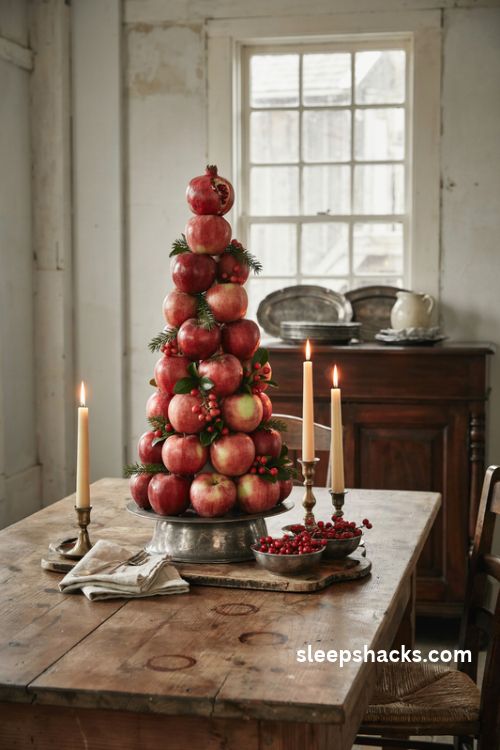
The apple pyramid is a Williamsburg classic that looks elegant on a dining table or sideboard. Stack red and green apples in a cone shape on a wooden or pewter base, secure them with toothpicks, and tuck sprigs of pine, boxwood, and berries into the gaps.
Start with a foam cone or a stack of cans to give you the shape, then cover it with apples working from the bottom up. Add a small pineapple or a pomegranate at the top for height. The whole thing keeps for about two weeks in a cool room. Set it on a tray to catch any juice.
5. A Pineapple for Welcome
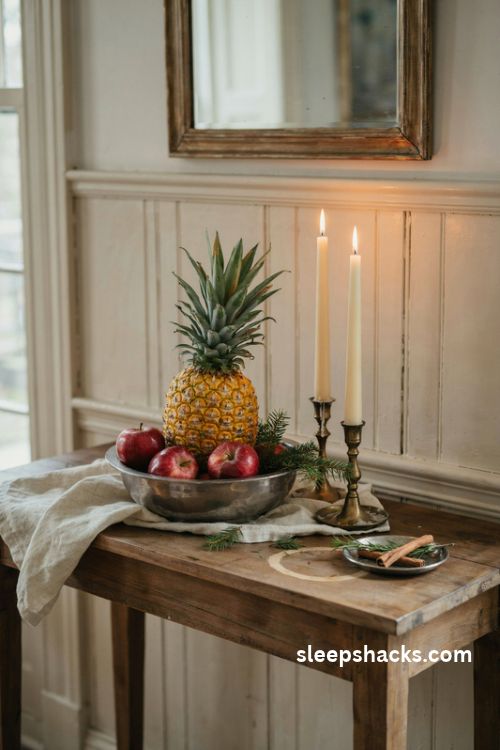
In colonial times a pineapple stood for hospitality, and a fresh one set on the table or mantel signals that guests are welcome. Place a single fruit in a pewter bowl, or on a pedestal, and surround it with greens and a few red apples.
You can also use a carved wooden or brass pineapple for a lasting version. Position it where people will see it as they come in, such as the entry table. A fresh pineapple lasts about a week, so buy it close to the day you want it on display. Add a candle or two nearby for warmth, and keep the surroundings simple.
6. Cranberry and Popcorn Garland
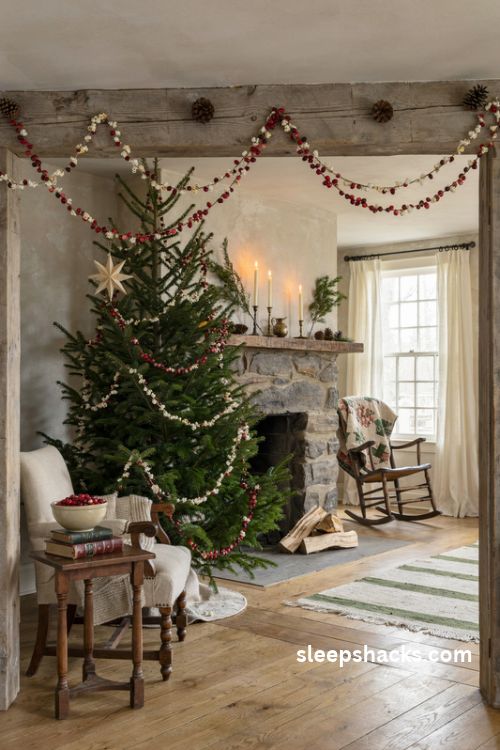
String fresh cranberries and plain popcorn on strong thread, alternating them in a loose pattern, and drape the strand on a tree, a mantel, or a window frame. The red and white look cheerful and old-fashioned, and the whole garland costs only a few dollars.
Use day-old popcorn so it does not crumble, and a sharp needle with doubled thread for strength. Pause to knot the thread every foot or so to prevent unraveling. Hang the garland indoors, or outside for the birds once the holiday ends. Keep it away from heat sources, and expect the berries to firm up and darken over a few days.
7. Orange and Clove Pomanders
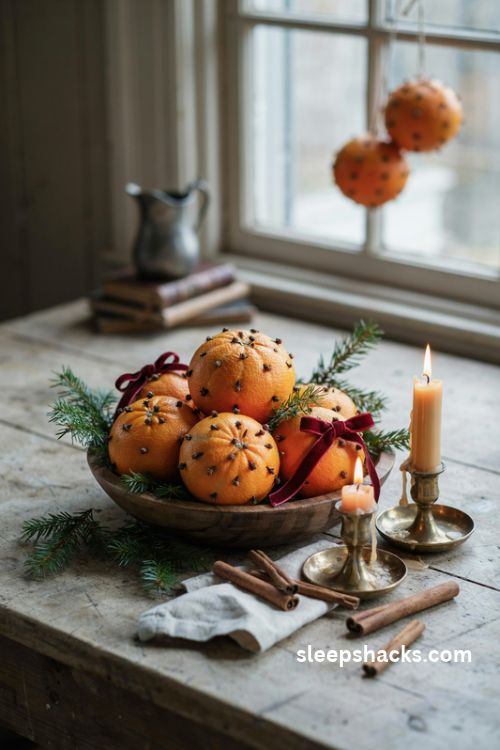
A pomander is an orange studded with whole cloves, and it fills a room with a sweet, spicy scent. Poke holes with a toothpick first, then press the cloves in a spiral or a grid, covering the whole surface, and leave a small gap for a ribbon.
Roll the finished pomander in a bit of ground cinnamon, and let it dry in a warm, airy spot for about two weeks. Tie a velvet ribbon around it and hang it in a window or on a bedpost. Pile several in a wooden bowl on the table for a fragrant centerpiece that lasts well past the holidays.
8. A Fruit Fan over the Door
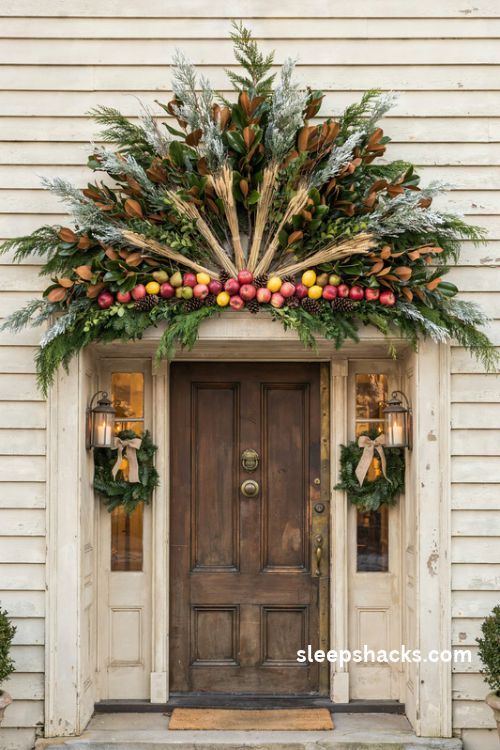
A fan-shaped arrangement of fruit and greenery above the front door is one of the most recognizable colonial touches. Build it on a wooden or wire frame, then radiate pine, magnolia, and boxwood out from a central point, and tuck in apples, lemons, and pinecones along the bottom edge.
Secure the frame above the door with sturdy hooks, and check the weight so nothing falls on a guest. Choose a mix of dull and glossy surfaces for variety. Faux fruit works if you want a reusable version, and a bit of dried wheat tucked among the greens adds a rustic finishing line.
9. Pewter and Brass Candlesticks
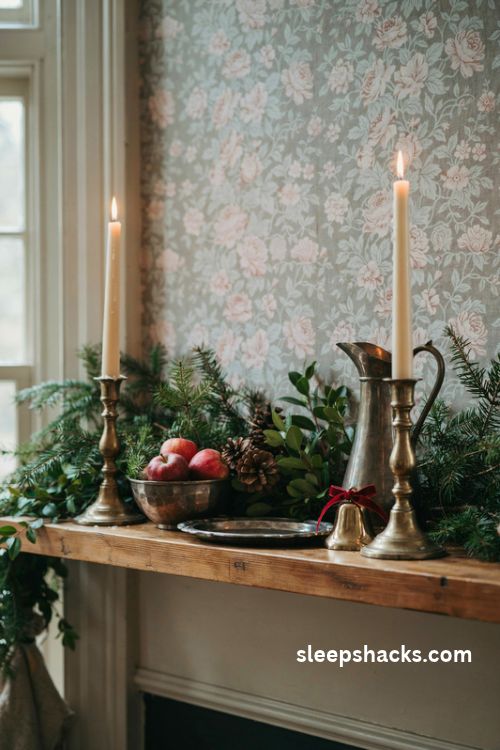
Old metals give a colonial room its warm, quiet glow. Set a pair of brass candlesticks on the mantel or table, and add pewter bowls, trays, and pitchers in the same area. The soft shine looks beautiful by candlelight and does not compete with the greenery.
Look for secondhand pieces at estate sales and antique shops, since slightly tarnished metal adds character. Use dripless ivory tapers, and trim the wicks before lighting. A polished brass bell tied with a ribbon makes a charming doorknob decoration. Rub the metal gently with a soft cloth, and avoid harsh cleaners that remove the patina.
10. Punched Tin Lanterns
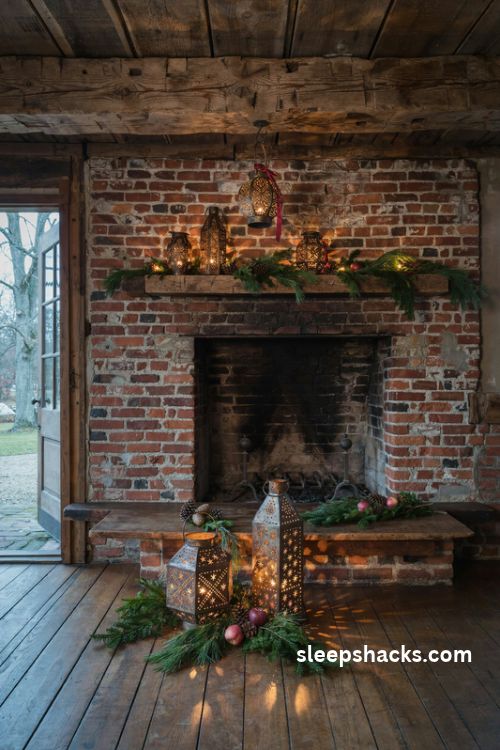
Pierced tin lanterns scatter tiny stars of light across the walls, and they look right at home on a porch, hearth, or table. The punched patterns, often stars or diamonds, glow beautifully when a candle sits inside, filling the room with a warm, flickering pattern.
Choose battery candles for safety, or real ones only on a stable surface and under supervision. Hang a few from hooks on a porch beam, or line several along a mantel in varied sizes. Reproduction lanterns are available at most home stores, and you can make your own by punching holes into a tin can with a nail.
11. A Natural Wheat and Berry Wreath
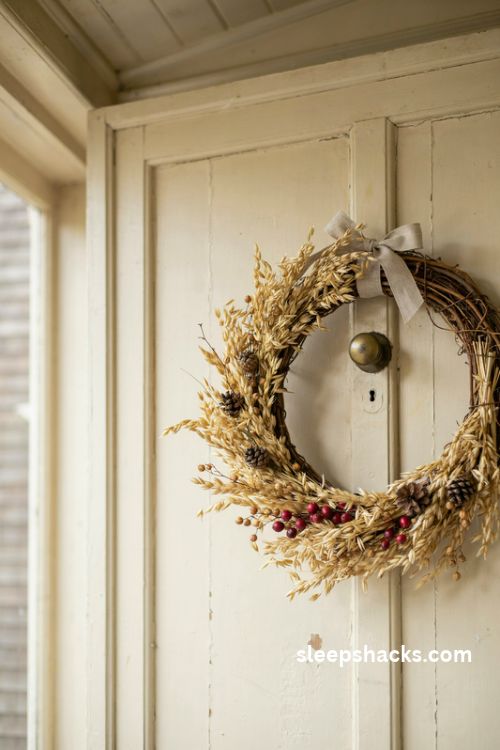
A wreath made from dried wheat, red berries, and seed pods feels like it came straight from a harvest field. The golden color and fine texture look soft against a painted door, and it suits colonial style perfectly.
Start with a grapevine base, then tuck bundles of wheat in one direction so the stems overlap like feathers. Add clusters of red berries and a few pinecones near the bottom. Finish with a plain linen ribbon. Hang it under a covered porch to keep the wheat dry, and handle it gently, since the seed heads are fragile.
12. Paper Star Ornaments
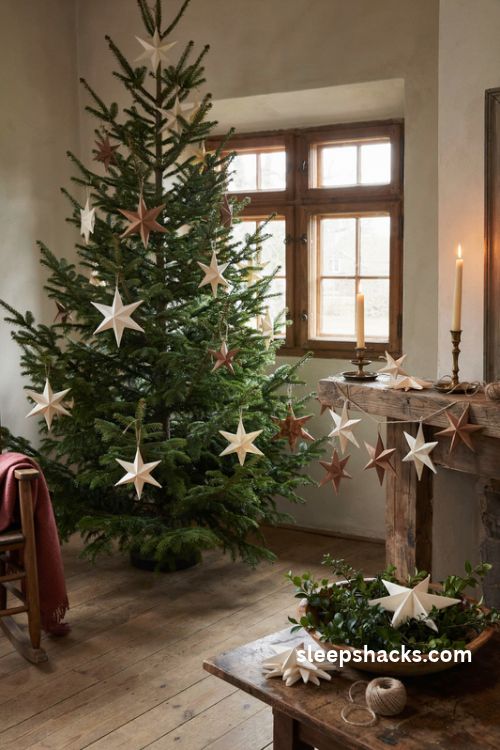
Folded paper stars are an old, simple decoration that fits the colonial look without trying. Cut strips of cream or kraft paper, weave them into five-pointed stars, and hang them from a tree or window with a loop of twine. They look surprisingly elegant when grouped together.
Use heavier paper so the points stay crisp, and press them flat under a book once they are finished. Tuck a few stars into a wreath or a bowl of greens for a lighter touch. A bundle of twenty or thirty makes a whole garland. Kids love making them, and they cost almost nothing, which suits the practical spirit of the style.
13. Homespun Stockings and Wool Throws
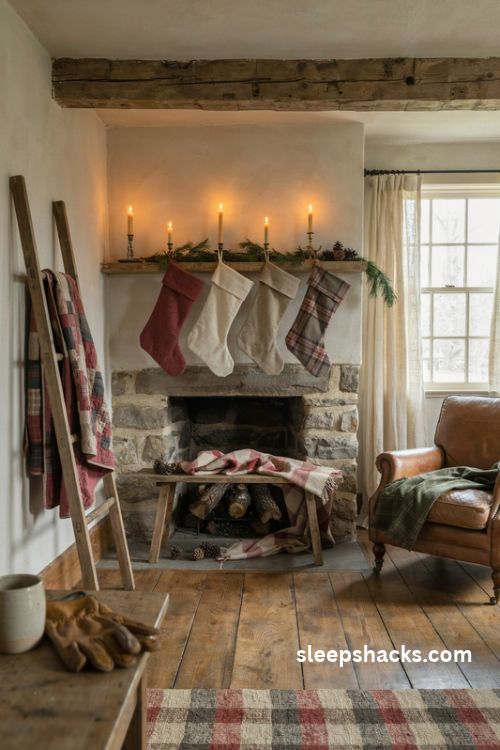
Rough linen or wool stockings in red, cream, or plaid look just right hanging from a wooden mantel or a row of iron hooks. Keep the shapes simple, with a wide cuff and a plain loop, and avoid anything glittery or heavily embroidered.
Pair them with a folded wool blanket in a soft check draped over a chair or bench. The textures feel warm and lived in, and they invite people to sit down. Old quilts work beautifully on a bed or a ladder. Choose muted, natural dyes over bright ones, and wash everything gently so the fabric stays soft.
14. A Wooden Bowl Table with Pomegranates
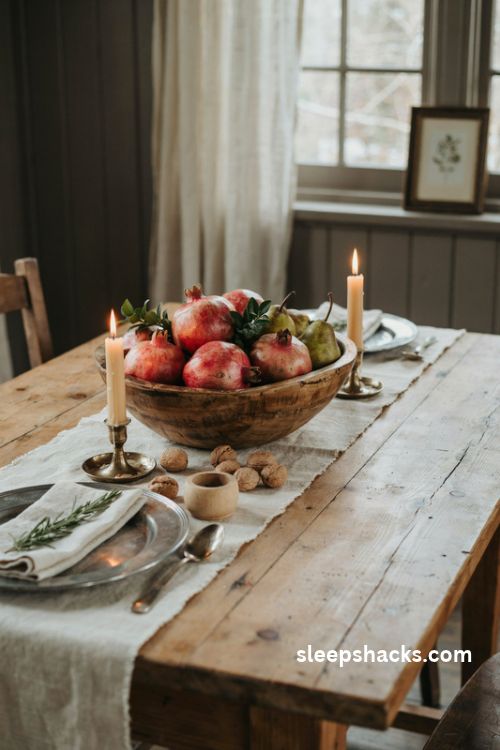
Pomegranates have a deep red color and a jewel-like look, and they were prized fruits in colonial homes. Pile several in a large wooden bowl with a few sprigs of boxwood, and set it on the table as an easy centerpiece.
Add a few pears or walnuts for variety, and place two beeswax candles beside the bowl. The whole display needs no assembly, which makes it ideal for a busy week. Fruit lasts about three weeks in a cool room, and you can eat any leftovers once the season ends. Keep the bowl out of direct sunlight.
Final Thoughts
Colonial decorating quietly asks a different question than most of us are used to. Instead of asking how much more you can add, it asks what is already here that you could gather. A bowl of apples, a few pine branches, a candle: that is already a complete holiday.
Seen that way, the style is less about history and more about attention. You are not recreating the past so much as slowing down enough to notice what the season truly offers, which may be the most generous gift December has to give. Everything else is only decoration.
Frequently Asked Questions
Q: What colors are used in colonial Christmas decorating?
A: Deep red, forest green, warm brass, and natural wood tones define the palette. Cream, pewter, and soft gold add quiet contrast.
Q: Did colonial homes really decorate with fruit?
A: Yes, apples, oranges, lemons, and pineapples were popular, since they were seen as signs of welcome and abundance. Williamsburg’s fruit wreaths grew out of that tradition.
Q: How do I keep fresh fruit decorations from spoiling?
A: Display them in a cool spot away from heat and direct sun, and replace any piece that softens. Using firm, slightly underripe fruit helps it last longer.